
Long before the start of the digital era consolidated most of our interactions with the world into a compact smartphone, you had gadgets. The 1980s were a decade driven and marketed on the notion of single-purpose hardware. This came in part because of the surge forward in technology, with widely available microprocessors and transistors being cheaper than ever while miniaturization marched forward. The economic boom that came about with Reagan’s first term was directly shown in just how many of these forgotten gadgets ended up in every household.
Unlike the smart devices of today, the gadgets of yesteryear were immediately tactile. It took time and effort to learn the quirks and workings of any gadget you brought home. Still, there is something to be said about the tech-savvy den of the 1980s. The blinking 7-character LED displays, the hums of transformers, and the satisfying mechanical noises that were emitted when you ever started something up. Today, we’re taking a look at those forgotten gadgets to see what you’re really missing some 40 years on from the Reagan years.
Answering Machines
©yodamclaren/Shutterstock.com
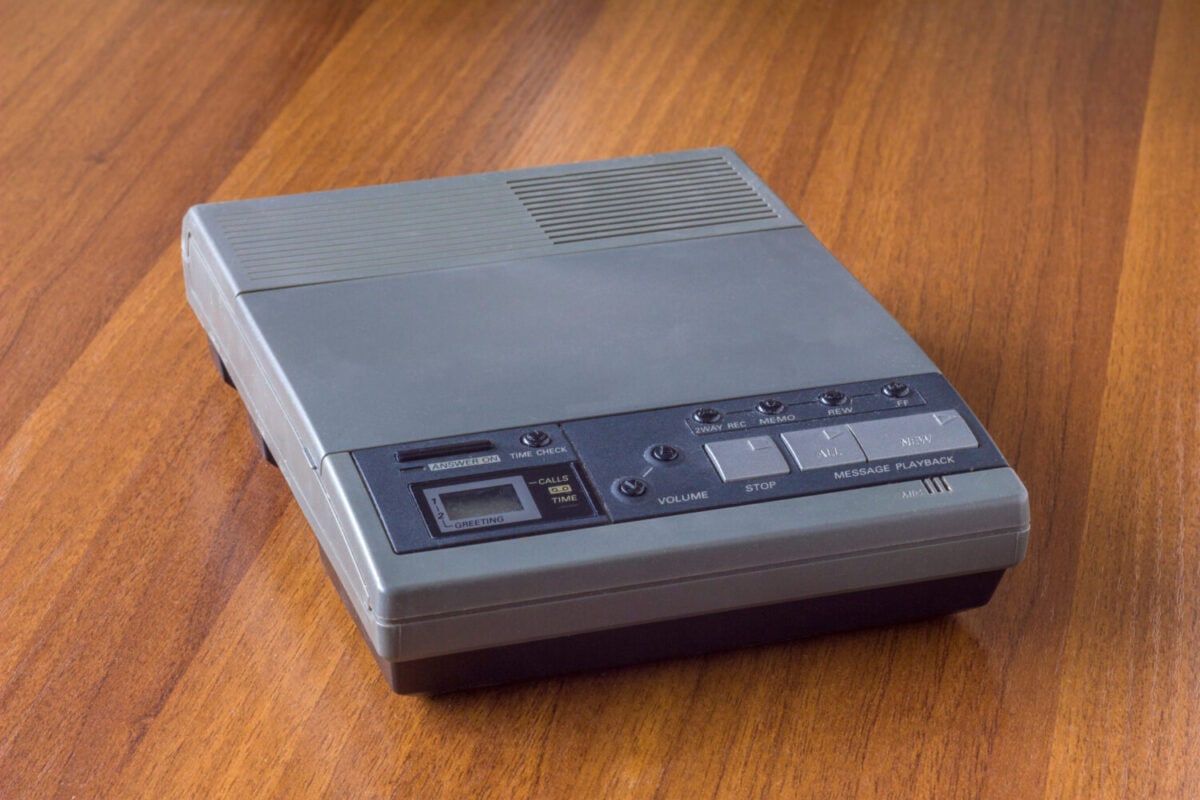
Voicemail is a necessary evil these days, but is largely integrated into the cloud with your wireless provider. One of the most common forgotten gadgets of the 1980s comes in the form of the answering machine, a physical device that was meant to receive and record messages when you were out and about. These varied in design, but often contained an audio cassette with a short message recorded to let the caller know who they were contacting and leaving enough space for short messages.
The earliest examples of the answering machine often featured two full-sized cassettes, one to broadcast the greeting, and the other to record any sort of incoming messages. It was a common ritual for any working adult of the 1980s to come home, hang their keys up, and check to see if there were any new messages waiting on the machine. Flashing lights on some models indicated that messages were ready, while a solid light indicated there was nothing to worry about.
The physical act of checking your messages is something that has been lost to the sands of time. That said, the answering machine persisted well into the 2000s with its 1980s configuration. It was crude and downright primitive when going by wireless standards of today. However, you didn’t have to worry about a signal outage meaning you were unable to receive your messages.
Portable Televisions

©Ned Snowman/Shutterstock.com
It used to be that if you wanted to catch something on TV, it was a rather deliberate act. Just about every household had a central living area with a CRT TV. These heavy machines were far smaller than you might think, with even large models spanning less than 40 inches on the diagonal. If you wanted something a little more portable, you had to go with a micro-TV, which is one of those forgotten gadgets that you’ll see proliferating thrift stores across the country these days.
Devices like the Panasonic TravelVision and Sony Watchman brought the idea of a tube TV to the great outdoors or on the road. You didn’t have to worry about missing the news, as these devices were small enough to tidily fit into a car trunk or glove box. These were often black-and-white displays, with screens measuring between 2 and 4 inches on the diagonal. These were miracles of engineering, making use of flat cathode ray tubes to project images. Later models would feature early LCD screens, with all the flaws and foibles you’d expect of such early tech.
It wasn’t all smooth sailing using one of these devices. They were finicky to hone in on the signal, relying heavily on line-of-sight from nearby broadcast towers to be used effectively. If you were watching one of these on the road, a sudden pass under a bridge was enough to send the whole set into a mess of static and garbled audio. They were notoriously hungry as well, making use of at least 4 AA batteries to power them for just a few hours. That said, if you were looking to catch the baseball game or the evening news, it was either a portable TV or your car radio.
Microcassette Recorders
©tomeqs/Shutterstock.com
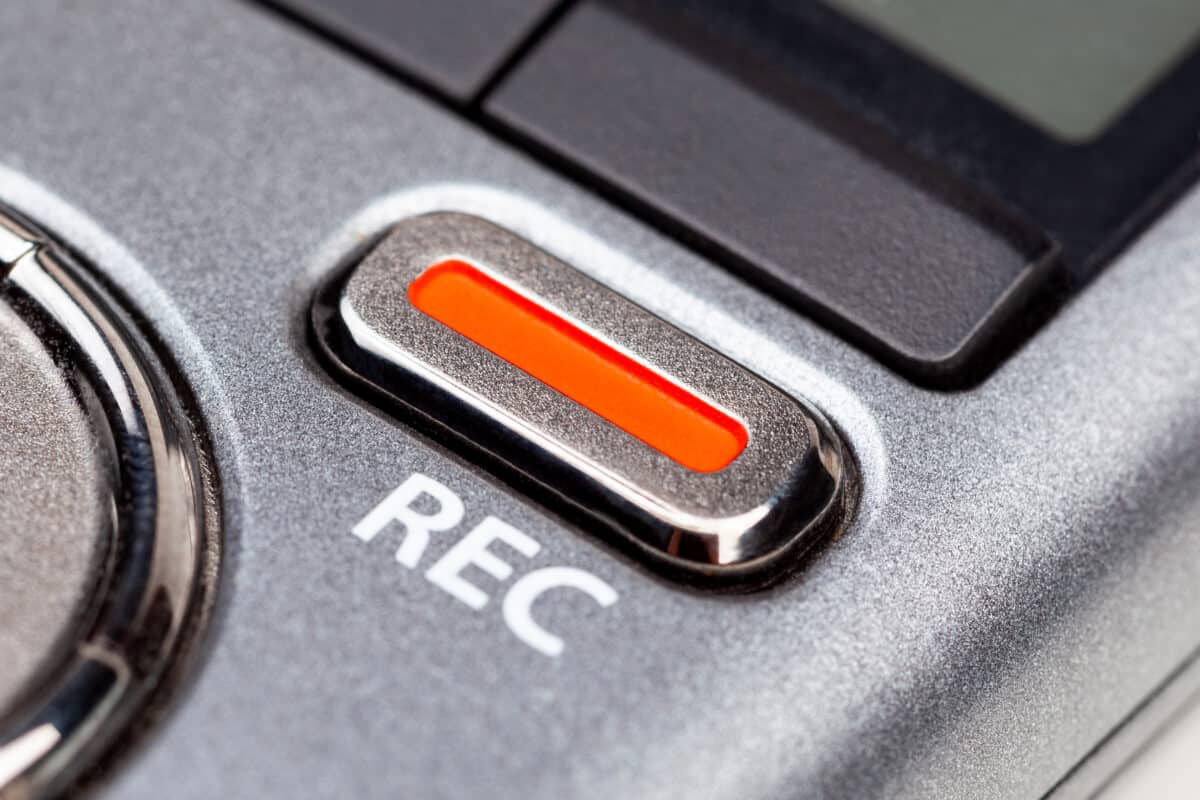
Recording voice notes these days is simply a matter of downloading an app and placing your phone in a location where it catches everything. If you were looking to dictate notes, capture part of a lecture, or record your thoughts during the 1980s, you had to make use of one specialized forgotten gadget. When it came to the dominant audio formats of the 1980s, things were fairly fragmented. The vinyl still reigned supreme for at-home listening, but if you were on the go you were likely familiar with the audio cassette.
There were certainly portable cassette recorders, but these had large footprints, with the shoebox recorders of the 1970s being compact in the sense that they weren’t the size of a whole media tower. The microcassette gave the flexibility and ease of a cassette recorder in a far smaller package. Your average microcassette recorder was small enough to fit in the palm of your hand, while capturing mostly clear audio recordings. The tiny cassettes were capable of storing about 30 minutes per side, or an hour in total.
The microcassette was a fixture in journalism, offices, and classrooms for years. Smartphones largely displaced these devices, but you certainly have to admire the engineering that went into miniaturizing a format that was already built upon the idea of compromise. Microcassettes weren’t a perfect solution, but they were more than enough for people looking to record their thoughts.
Digital Diaries and Personal Organizers
©"CASIO SF-4300R old digital diary" by ronybc.com is licensed under CC0 1.0. – Original / License
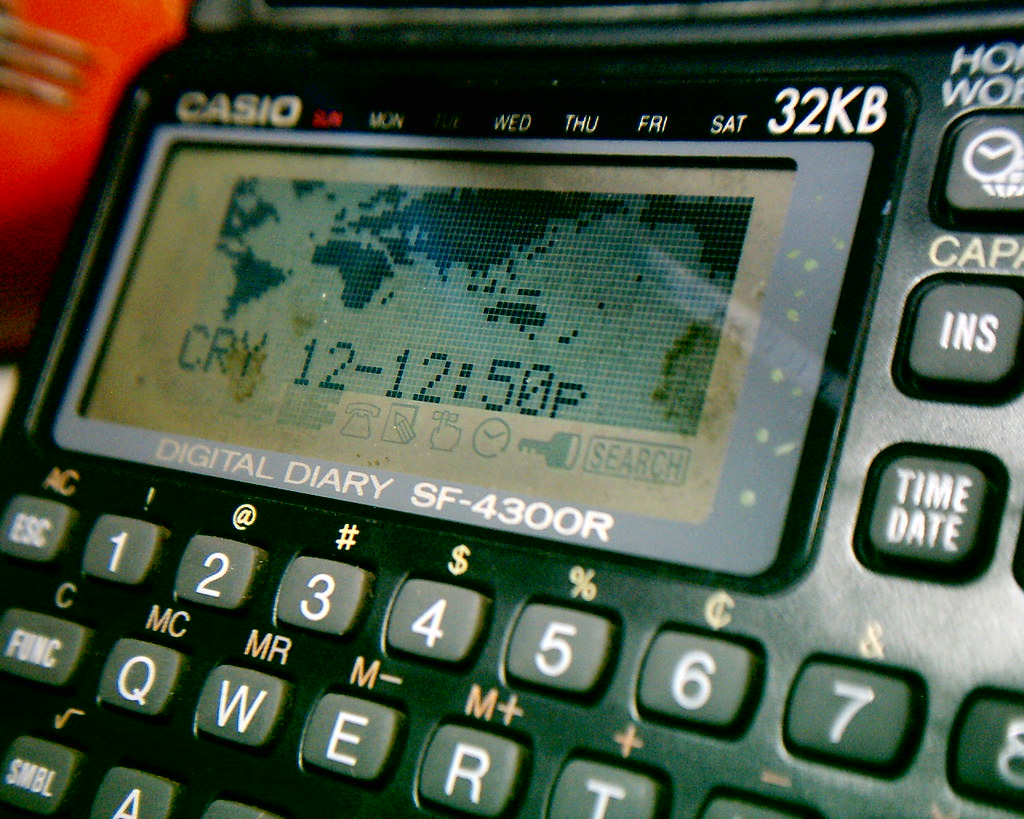
The 1980s are defined by the hustle and boom of the era. If you were involved in any sort of business dealings, you were networking and meeting with all sorts of folks. This required dense scheduling, and things like old-fashioned personal organizers and Rolodexes only did so much. The early electronic organizer, a precursor to devices like smartphones and PDAs, proved to be highly popular during the 1980s.
Despite their status as a forgotten gadget these days, devices from Casio and Sharp gave high-powered business people the ability to keep track of their schedule on a portable device. Design-wise, they aren’t too far off from later PDAs like the Palm Pilot. They came with rubber QWERTY keyboards enclosed in a clamshell case. Screens were non-backlit LCD displays, only capable of displaying a handful of lines at a time. Battery life was ample, relying on button batteries to stay operational for weeks at a time.
Navigating one of these forgotten gadgets required a serious investment of time and learning. Data entry was slow, deliberate, and often required some degree of familiarity with the operation of the device. If mastered, the payoff was immediate. You could find your next luncheon, meeting, or find a contact with a simple search. While seemingly quaint these days, they paved the way for later devices that have become integral to modern living.
Conclusion
If there is one thing we can take away from the forgotten gadgets of yesteryear, it is very much a transitional era in technology. Microprocessors are getting cheaper and cheaper, devices are getting smarter, but there are still analog holdovers to contend with given the limitations of the era. They were tactile devices, often requiring time and energy to effectively use. Compared to the smartphone era, they were lacking in terms of overall functionality. Still, if you had any one of these devices during the 1980s, you were on the cutting edge of technology, which always makes for a fascinating look back in time.
The image featured at the top of this post is ©Piyapong Wongkam/Shutterstock.com