




















20 Gadgets and Toys That Defined ’80s Kids’ Bedrooms
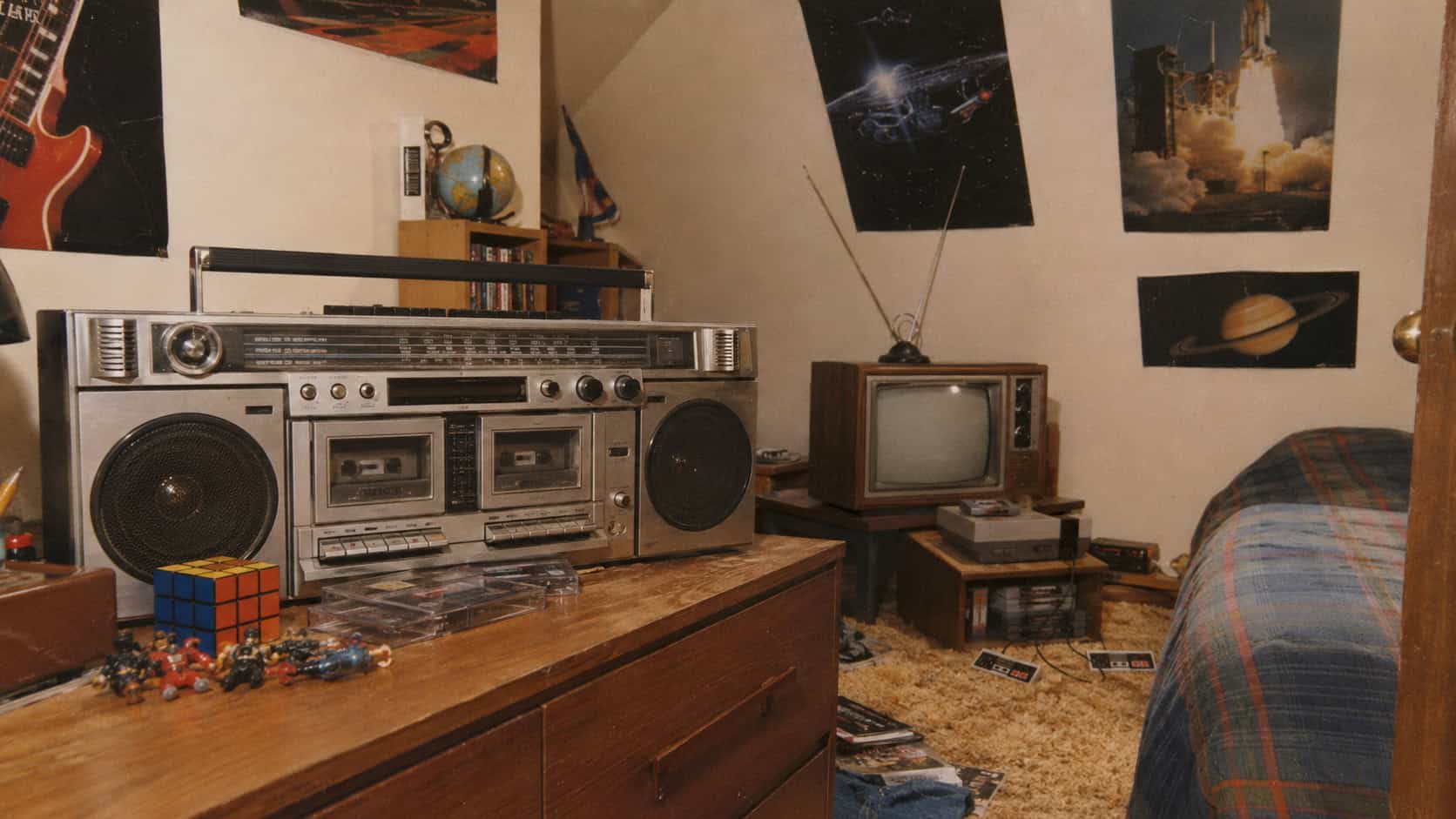
A child’s bedroom in the 1980s was more than a place to sleep. It was often a personal media center, miniature arcade, music studio, toy showroom, and homework station packed into one room. Long before smartphones combined entertainment, communication, and games on a single screen, kids relied on a collection of separate devices and objects. A television needed an antenna, music lived on cassettes, video games came on cartridges, and even an interactive story required a stack of books.
The posters, electronics, toys, and school supplies found in these rooms reveal how quickly technology was entering everyday childhood. Some were genuine breakthroughs, while others were simple products transformed into cultural phenomena by clever design and relentless advertising. These 20 bedroom staples capture what it felt like to grow up during the decade when entertainment was becoming increasingly personal, portable, and electronic.
The Atari 2600 Brought the Arcade Home
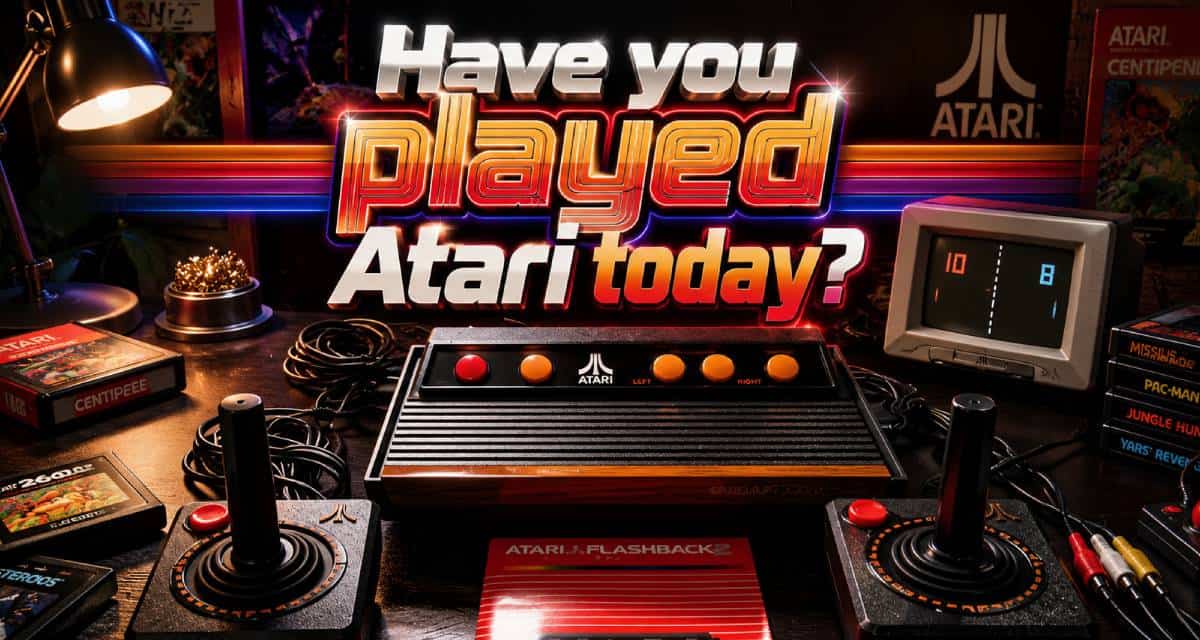
Atari released its Video Computer System in 1977 and later renamed it the Atari 2600. By the early 1980s, it had become one of the defining home consoles of the era. Its interchangeable cartridges let a single machine play games such as Space Invaders, Asteroids, Pitfall!, and Adventure. Atari says the system eventually sold nearly 30 million units worldwide, helping establish the cartridge-based business model that consoles still use in evolved form today.
The hardware was wonderfully simple: a wood-grain console, joystick, and one red button. Cartridges were commonly stacked beside the television or tossed into a shoebox. Atari’s success also exposed the risks of a poorly controlled software market. A flood of uneven games, competition from home computers, and other problems contributed to the North American video game crash of 1983. The much-maligned E.T. game became its symbol, though no single title caused the collapse.
Posters Were the Original Profile Page
Long before kids could customize an online profile, they used bedroom walls to announce their interests. Posters of Madonna, Michael Jackson, Duran Duran, Bon Jovi, and Mötley Crüe competed with images from Back to the Future, The Goonies, and other blockbuster movies. Record stores, mall shops, magazines, and fan clubs made mass-produced images affordable enough for young people to create a space that felt separate from the rest of the house.
The technology was basic, but the function now feels remarkably modern. A poster collection displayed identity, fandom, humor, and social allegiance to anyone invited into the room. Tape usually damaged the corners, thumbtacks left holes, and rolled posters refused to lie completely flat. None of that mattered. The wall acted as a constantly editable feed, except every update required a trip to the mall and enough patience to hang the new image without tearing it.
Kenner’s Star Wars Figures Changed Movie Toys
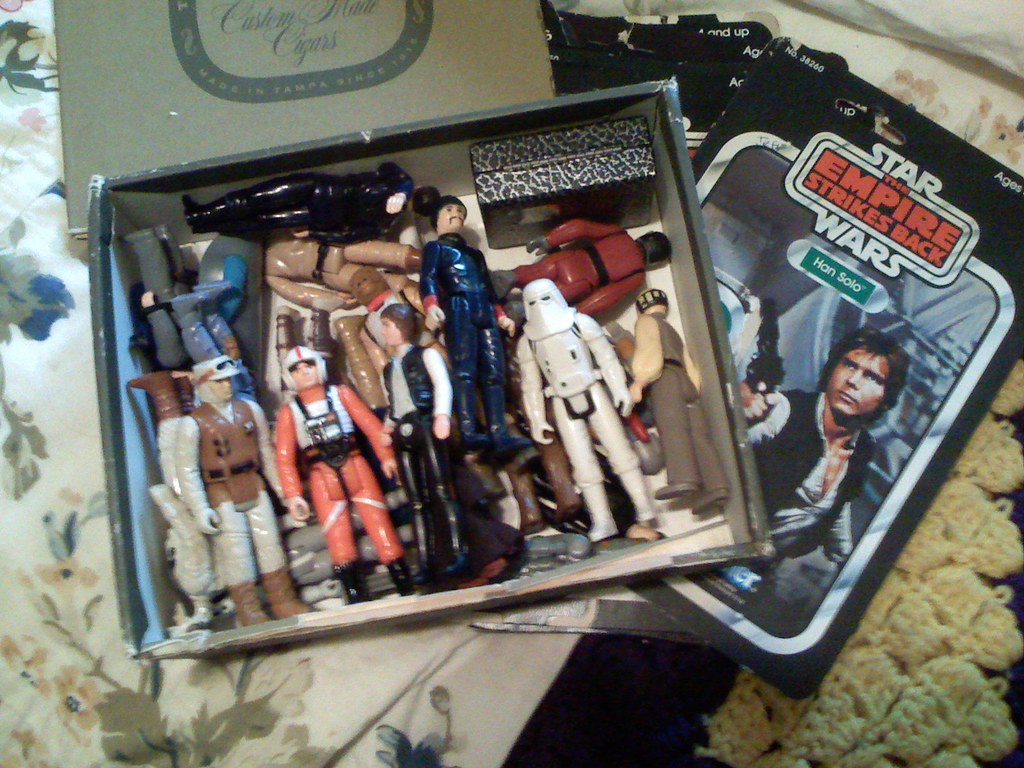
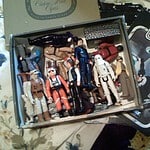
Kenner began selling its 3.75-inch Star Wars action figures in 1978, and the original run continued through 1985. The smaller format used less plastic than larger action figures and made vehicles and playsets more practical to produce. More than 100 characters eventually appeared, ranging from Luke Skywalker and Darth Vader to aliens that were visible onscreen for only a few moments. That depth encouraged kids to keep collecting long after they had assembled the main cast.
The figures also helped transform a movie into a world that could be continued at home. A bedroom floor became Tatooine, Hoth, or the Death Star, while beds and dressers served as improvised terrain. Kenner’s approach demonstrated how toys could extend a film franchise between releases, creating a model that studios and manufacturers have followed ever since. Today, rare variations command enormous prices, but most original figures survived with missing capes, weapons, or limbs after years of actual play.
The Boombox: A Personal Music Station
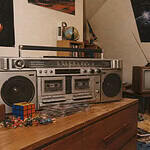
Before playlists and wireless speakers, a boombox could handle nearly every part of a kid’s music routine. It combined an AM/FM radio, cassette deck, amplifier, and speakers in one portable case. Some models included two tape decks, allowing users to copy a cassette without connecting separate stereo components. Brands such as Sony, Panasonic, JVC, and Sharp competed with increasingly large speakers, graphic equalizers, and rows of buttons that made the machines look almost professional.
The record function was just as important as playback. Kids waited beside the radio for a favorite song, then pressed play and record together before the first note. The resulting tape often included a DJ talking over the introduction or a few seconds of the previous song. It was an imperfect system, but it gave young listeners an early way to capture, organize, and replay music on demand.
Cabbage Patch Kids and the Toy Craze of 1983
Xavier Roberts began creating handmade dolls in the 1970s, presenting them as children available for “adoption” rather than ordinary products. A 1982 licensing agreement with Coleco led to mass-produced Cabbage Patch Kids, which officially debuted the following year. Each came with a name, birth certificate, and adoption papers. Coleco even used computer-generated combinations to help create the impression that each doll had its own identity.
Demand overwhelmed stores during the 1983 Christmas season. Shoppers waited for hours, and news reports showed crowds fighting over limited stock. The frenzy became an early example of a product craze amplified by television coverage, scarcity, and a strong emotional hook. Once the supply caught up, Cabbage Patch Kids moved from impossible-to-find gifts to familiar bedroom residents. Their adoption concept also anticipated the personalized marketing later used for countless toys and digital products.
The NES Rebuilt America’s Console Market
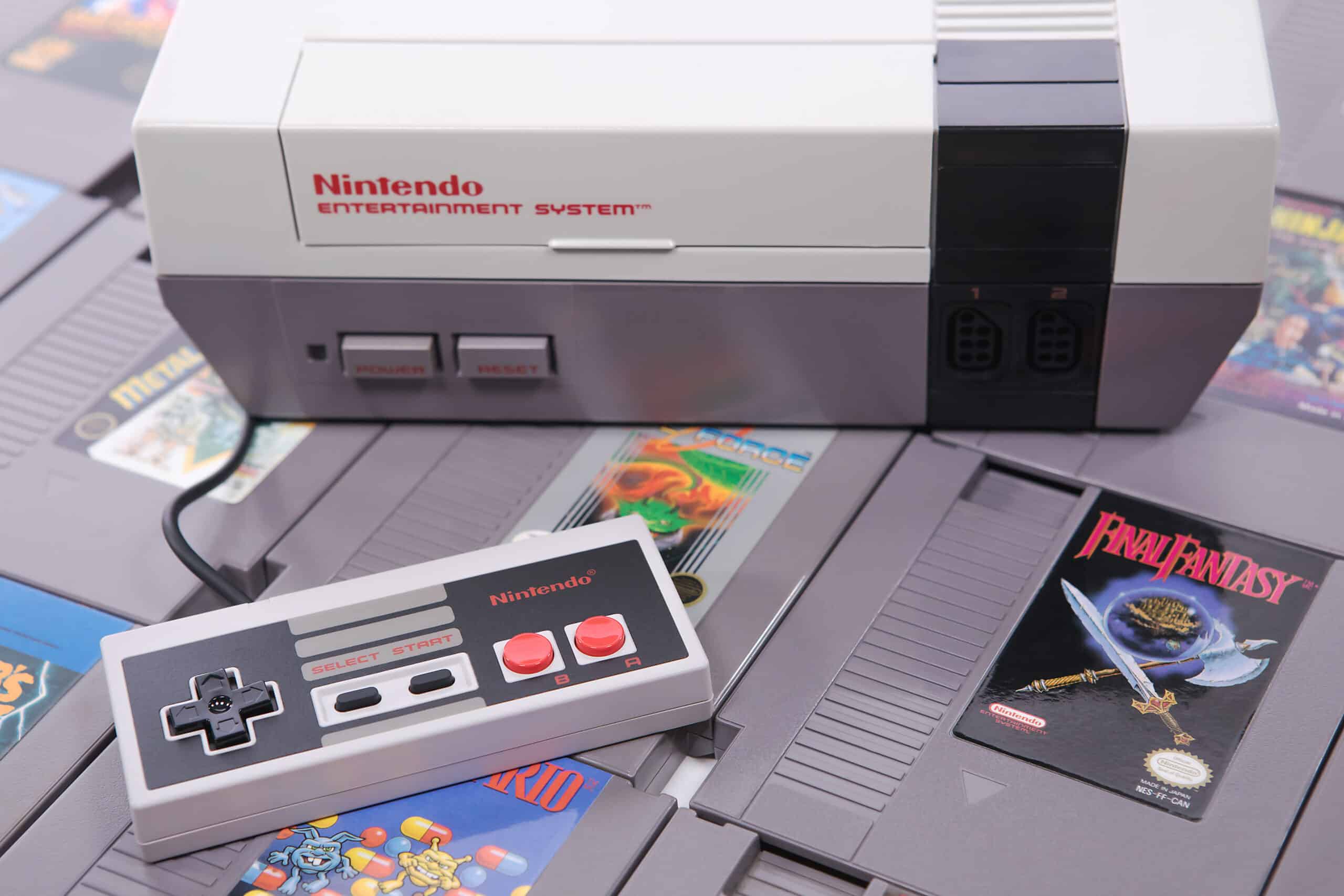
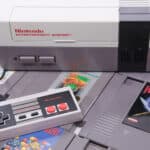
Nintendo introduced the Nintendo Entertainment System in a limited New York test launch in 1985 before expanding across the United States in 1986. The timing mattered. Retailers had become wary of home consoles following the 1983 market crash, so Nintendo presented the gray machine as an “entertainment system” and packaged some versions with R.O.B. the robot or the Zapper light gun. Its front-loading cartridge slot even made it resemble a piece of home electronics rather than an older game console.
Nintendo also controlled which games could run on the system through licensing rules and a lockout chip. The strategy was restrictive, but it helped the company avoid the uncontrolled flood of software associated with the previous crash. Super Mario Bros., frequently bundled with the NES, demonstrated how much richer home games had become. By the late 1980s, cartridges, controllers, and rituals for getting stubborn games to load had become fixtures in countless bedrooms.
The Trapper Keeper Made Organization Look Cool
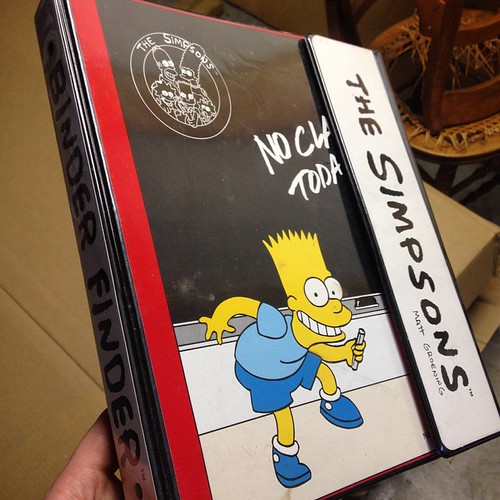
Mead test-marketed the Trapper Keeper in Wichita, Kansas, in 1978. The system paired a wraparound binder with removable “Trapper” folders whose pocket design helped prevent loose papers from sliding out. Early binders closed with a metal snap, but Mead replaced it with a Velcro strap about three years later. That familiar ripping sound became nearly as memorable as the product’s brightly colored covers.
Although intended for school, the Trapper Keeper often lived on a bedroom desk, holding homework, drawings, notes, and anything else a child considered important. Its greatest innovation may have been turning basic organization into a form of personal branding. Kids could choose artwork that matched their interests rather than carry an anonymous binder. In that sense, its interchangeable folders and expressive covers were a paper-era ancestor of the customizable cases, wallpapers, and digital folders used to personalize devices today.
Glow-in-the-Dark Stars Created a Ceiling Galaxy
Plastic stars turned an ordinary ceiling into a low-cost planetarium. The material absorbed energy from daylight or a nearby lamp and slowly released it as visible light after the room went dark, a process known as phosphorescence. Most children did not arrange the pieces into accurate constellations. They simply added as many as possible above the bed, creating a scattered green galaxy that looked most impressive during the first few minutes after lights-out.
The stars were simple compared with today’s app-controlled projectors and color-changing LEDs, yet they produced a similar effect without batteries, wires, or software. Their fading glow was part of the experience. As the stored energy dissipated, the bright shapes slowly disappeared into the ceiling. The adhesive did not always age gracefully, and removing the stars could reveal cleaner spots in the paint, but an entire generation remembers staring at them while waiting to fall asleep.
Rubik’s Cube Became an Analog Algorithm
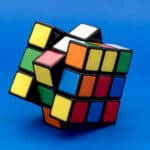
Hungarian design teacher Ernő Rubik created the first version of his rotating puzzle in 1974. Ideal Toy renamed it Rubik’s Cube and began selling it internationally in 1980. The response was extraordinary: roughly 100 million cubes were purchased within two years. Its appeal came from a brilliant contradiction. The object was easy to understand and nearly impossible for an untrained player to solve once all six colored sides had been scrambled.
Solving guides became bestsellers because success depended less on improvisation than on learning repeatable sequences of moves. In modern language, players were executing algorithms by hand. A solved cube might sit untouched on a bedroom shelf, while a scrambled one could remain abandoned for years. The puzzle introduced millions of kids to pattern recognition, spatial reasoning, and the idea that an intimidating problem could be reduced to a series of dependable steps.
Transformers Combined Engineering and Storytelling
Hasbro launched Transformers in the United States in 1984 after licensing shape-changing robot designs from Japanese toy company Takara. Marvel helped develop names, character profiles, and the conflict between the Autobots and Decepticons, while an animated television series gave the machines distinct personalities. The result was more than a toy line. It was a connected system of products, stories, advertising, and media that reinforced itself across several formats.
The transformation mechanism was the real technical attraction. A truck, jet, car, or cassette player could be folded and rotated into a humanoid robot through a carefully designed sequence. Some models were easy enough to change from memory, while others sent kids searching for the instruction sheet. Transformers rewarded spatial reasoning and patience in a way ordinary figures could not, and the satisfying conversion from machine to character kept them in active play long after the accompanying cartoon episode had ended.
Mixtapes Were Handmade Playlists
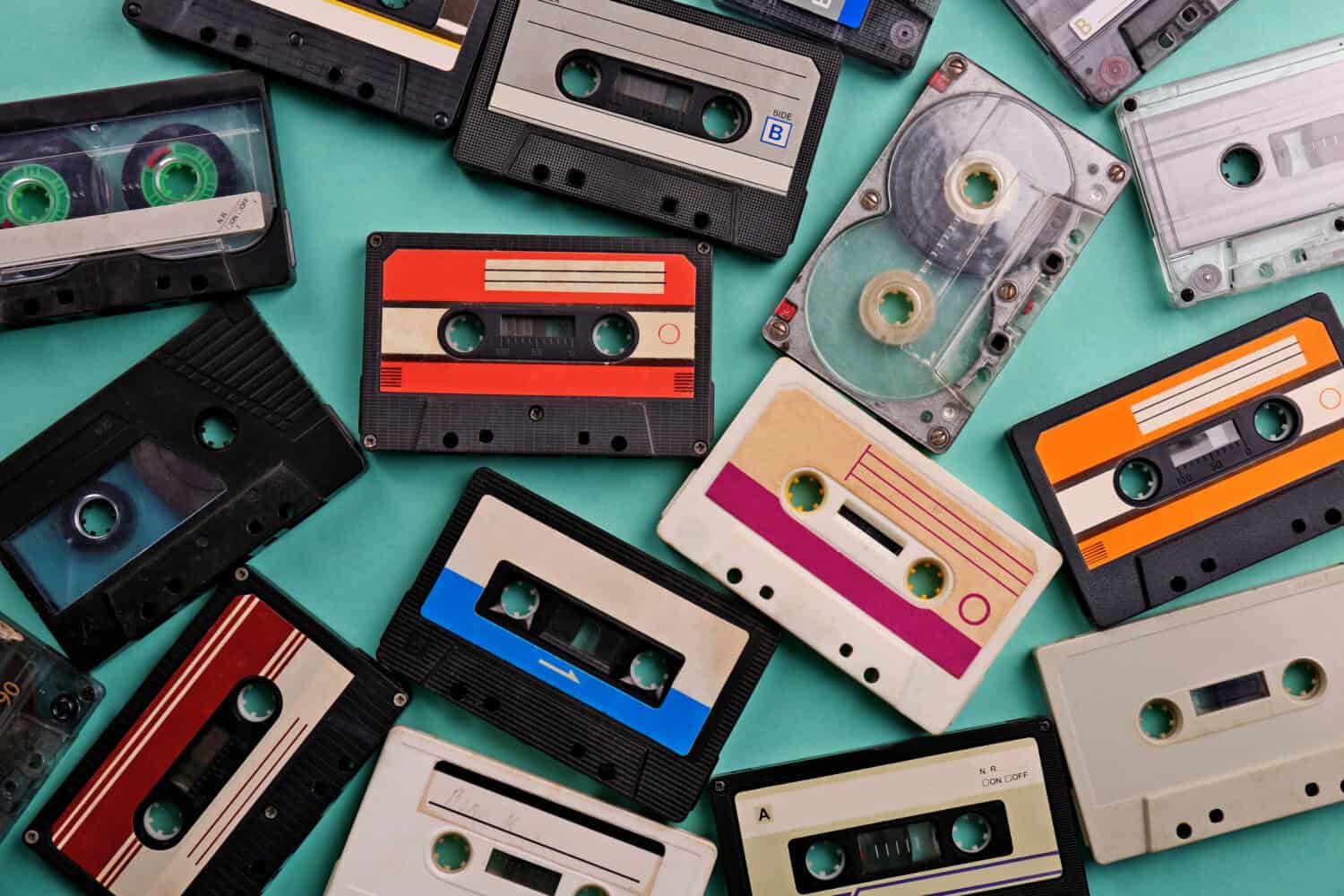
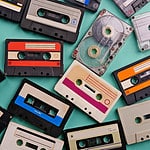
A mixtape required more work than tapping “add to playlist.” Songs had to be recorded from the radio, copied from another cassette, or transferred from a record. The creator also had to consider running time because each side of the tape had a fixed capacity. A poor calculation could cause the final song to cut off abruptly. The handwritten J-card listed the tracks and often included artwork, jokes, or a message explaining who the tape was for.
The compact cassette made music recordable and portable for ordinary consumers, giving kids a level of control that earlier formats had not offered so cheaply. Technical flaws became part of the ritual. Radio recordings captured station identifications, DJs interrupted introductions, and worn tape sometimes spilled from the shell. A pencil inserted into the reel could wind it back into place without wasting batteries. Each cassette was both a music collection and a physical record of the person who assembled it.
A Bedroom Television Meant Control of the Dial
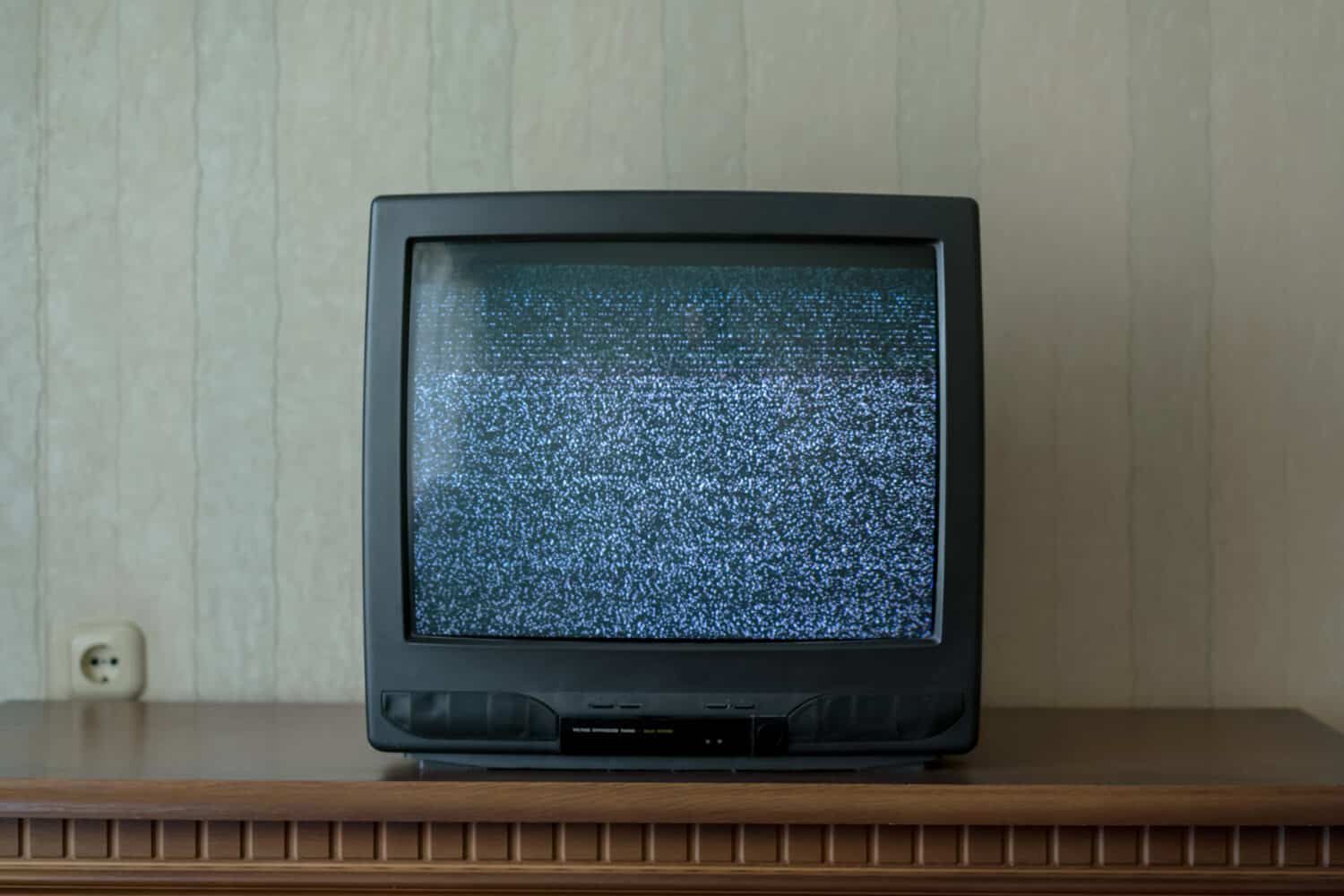
A small television in the bedroom gave a child something that was still unusual in many households: control over what to watch. Sets around 13 inches were common, with rotary dials or push buttons, rabbit-ear antennas, and an RF connection for a game console. Reception could change when someone moved around the room, and finding a clear picture sometimes required adjusting both antenna rods with the concentration of a radio engineer.
Access varied widely. Some bedroom sets received only local broadcasts, while others were connected to cable and opened the door to MTV, Nickelodeon, and a rapidly expanding selection of channels. Unlike a modern screen, the television did not automatically provide content at any hour or save anything for later. Viewers had to know the schedule and be present when a program aired. Even so, moving television away from the shared living room was an important step toward today’s individualized media habits.
Garbage Pail Kids Turned Parody Into Collectibles
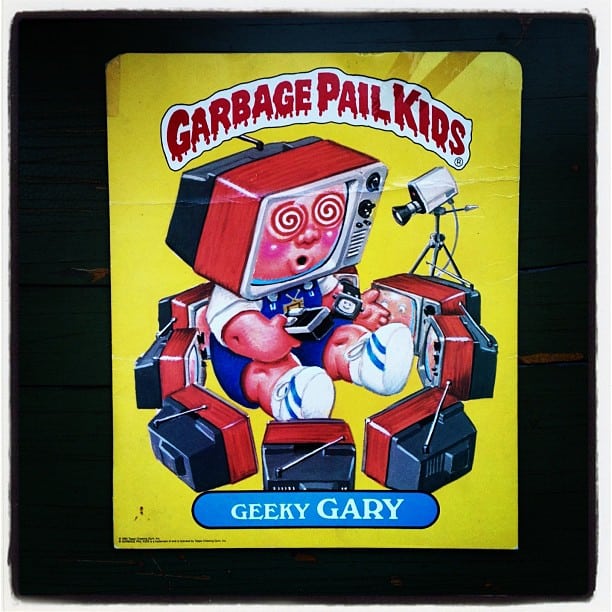
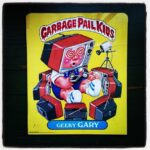
Topps introduced Garbage Pail Kids cards in 1985 as a grotesque parody of Cabbage Patch Kids. Each card paired a cartoon child with a pun-filled name and an exaggerated disaster involving slime, explosions, strange mutations, or other gross-out humor. The formula was perfectly designed for schoolyard circulation. Kids could buy inexpensive packs, compare characters, and trade duplicates without needing a board, console, or organized game.
Adults often disliked the cards for exactly the reasons children loved them. Some schools prohibited them, which only increased their reputation as forbidden collectibles. Topps released 15 original series in the United States between 1985 and 1988, generating hundreds of characters and variations. Collections were stored in shoeboxes, albums, and desk drawers, where condition was rarely a concern. Decades later, scarcity and professional grading turned the cleanest surviving examples into valuable artifacts of 1980s counterculture for kids.
He-Man Built a Multimedia Toy Universe
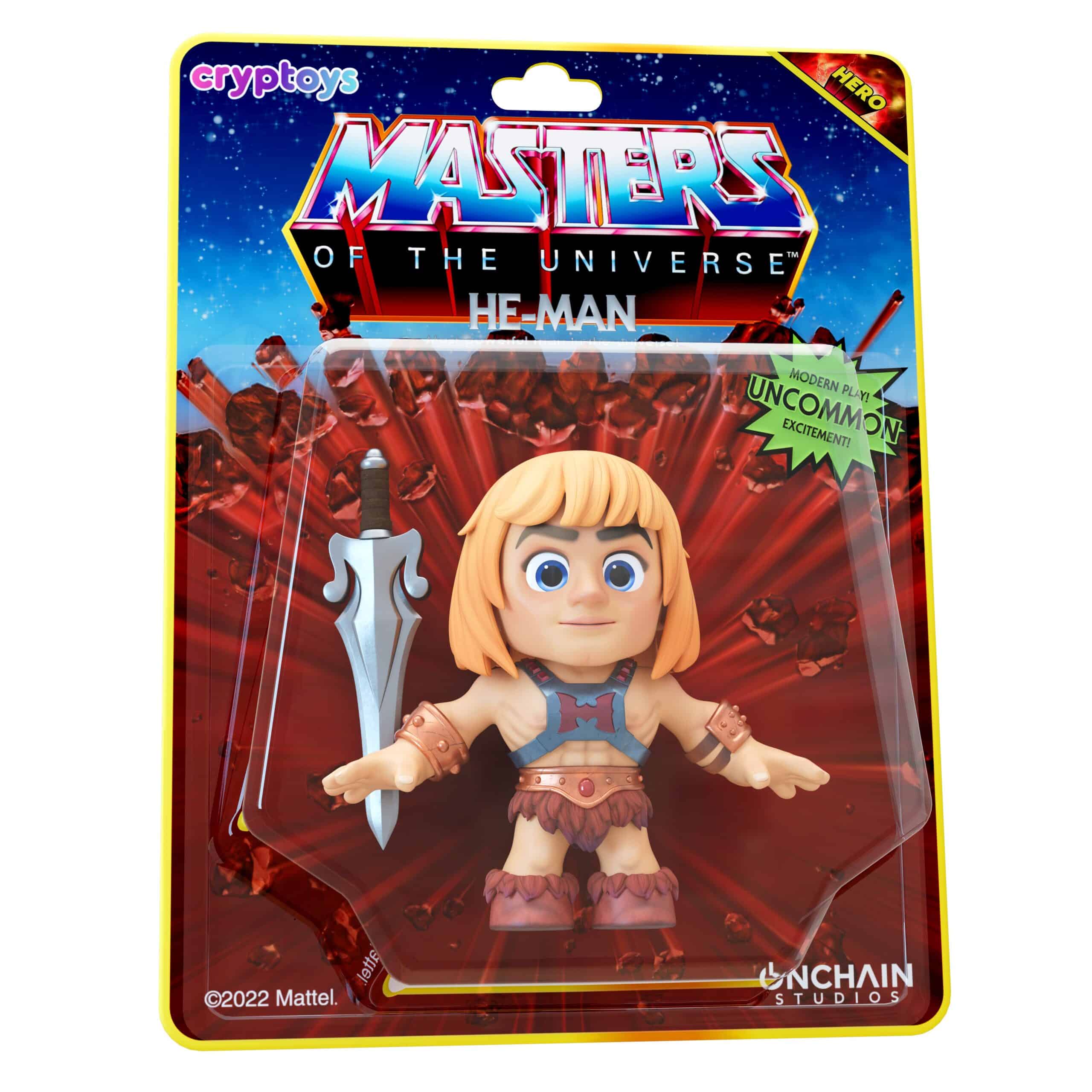
Mattel introduced the Masters of the Universe toy line in 1982, followed by the He-Man and the Masters of the Universe animated series in 1983. The figures were broader and more muscular than Kenner’s Star Wars characters, and many included spring-loaded action features. Twisting a figure’s waist could trigger a punch or sword swing, giving the toy a mechanical behavior that was easy to activate during a bedroom-floor battle.
Castle Grayskull was the centerpiece. The large hinged playset opened into a fortress with platforms, a trapdoor, and room for an expanding cast of heroes and villains. The combination of television, comics, toys, and playsets created a self-contained fictional universe before that kind of cross-platform franchise became routine. Kids could watch He-Man confront Skeletor on television, then continue the story using the same characters in a world assembled beside the bed.
The Walkman Made Music Private and Portable
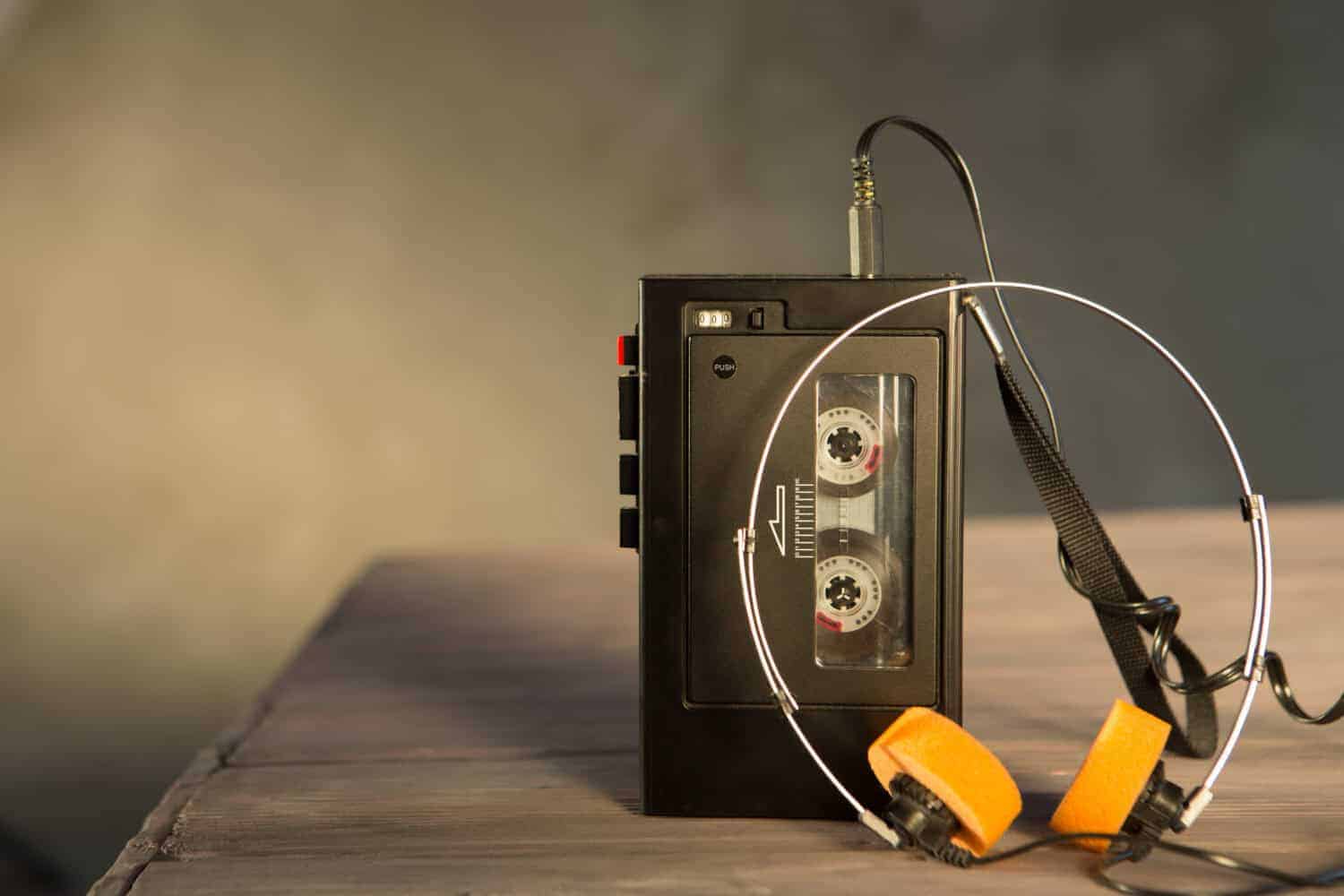
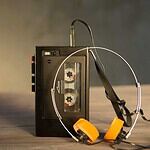
Sony released the original TPS-L2 Walkman in Japan in 1979, and portable cassette players soon became one of the decade’s most influential technologies. The breakthrough was not simply that the machine was small. It paired personal stereo sound with lightweight headphones, allowing people to carry a private soundtrack through public spaces. Competitors quickly produced cheaper alternatives, and “Walkman” became a widely used shorthand for the entire product category.
In a bedroom, the player often sat beside a pile of commercial albums and homemade mixtapes. Outside it, music no longer had to come from a car stereo, radio, or speaker that everyone nearby could hear. That shift anticipated the individualized listening culture later built around MP3 players, smartphones, and earbuds. Batteries drained, tapes warped, and foam headphone pads disintegrated, but the basic promise was revolutionary: your music could follow you almost anywhere without becoming everyone else’s music.
Sticker Collections Became a Schoolyard Economy
Sticker collecting turned inexpensive bits of adhesive paper and plastic into a surprisingly complex hobby. Scratch-and-sniff designs might smell like strawberry, pizza, popcorn, or root beer, while puffy, fuzzy, metallic, and holographic versions offered different textures and effects. Kids organized them in albums, covered bedroom furniture with them, or kept the best examples untouched because using a favorite sticker meant permanently choosing where it belonged.
Duplicates created an informal trading market on buses, playgrounds, and bedroom floors. Value came from appearance, scent, rarity, and whatever happened to be popular within a particular group of friends. The habit resembled later systems built around digital badges, skins, and virtual collectibles, except ownership was physical and trades were final. Even teacher-issued “Great Job” stickers could enter a collection, proving that scarcity and social meaning can make almost any small object feel valuable.
Choose Your Own Adventure Made Books Interactive
Bantam launched the Choose Your Own Adventure series in 1979 with Edward Packard’s The Cave of Time. Instead of following one fixed narrative, readers made decisions and jumped to different numbered pages, producing multiple paths and endings. The original run ultimately included 184 titles and sold more than 250 million copies worldwide between 1979 and 1999. Its second-person format made the reader the story’s central character.
The books functioned like branching software printed on paper. A choice acted as an input, the page number redirected the reader, and the sequence produced a different outcome. Kids replayed the same title to map alternate routes, sometimes marking successful paths with fingers to avoid starting over. The structure anticipated decision-based video games and interactive fiction, showing that meaningful user control did not require a screen. It only required a cleverly designed network of choices.
The Clock Radio Automated the Morning
The digital clock radio combined several everyday technologies in one compact box: a time display, alarm, AM/FM receiver, speaker, and sleep timer. Red LED numerals remained visible in a dark room without requiring the user to press a button. Sliding switches determined whether the morning began with a buzzer or a radio station, while the large snooze control could usually be found without opening both eyes.
For many kids, it was one of the first electronic devices they were expected to program correctly. Setting the alarm required attention to AM and PM, and a mistake could mean oversleeping before school. Waking to the radio added an unpredictable element because the first sound might be a favorite song, a commercial, or a DJ discussing traffic. Clock radios quietly introduced bedrooms to the idea of automated routines, decades before phones began managing alarms, sleep schedules, weather reports, and morning news.
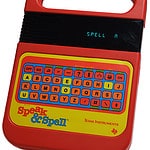
Speak & Spell Put a Synthetic Voice in a Toy
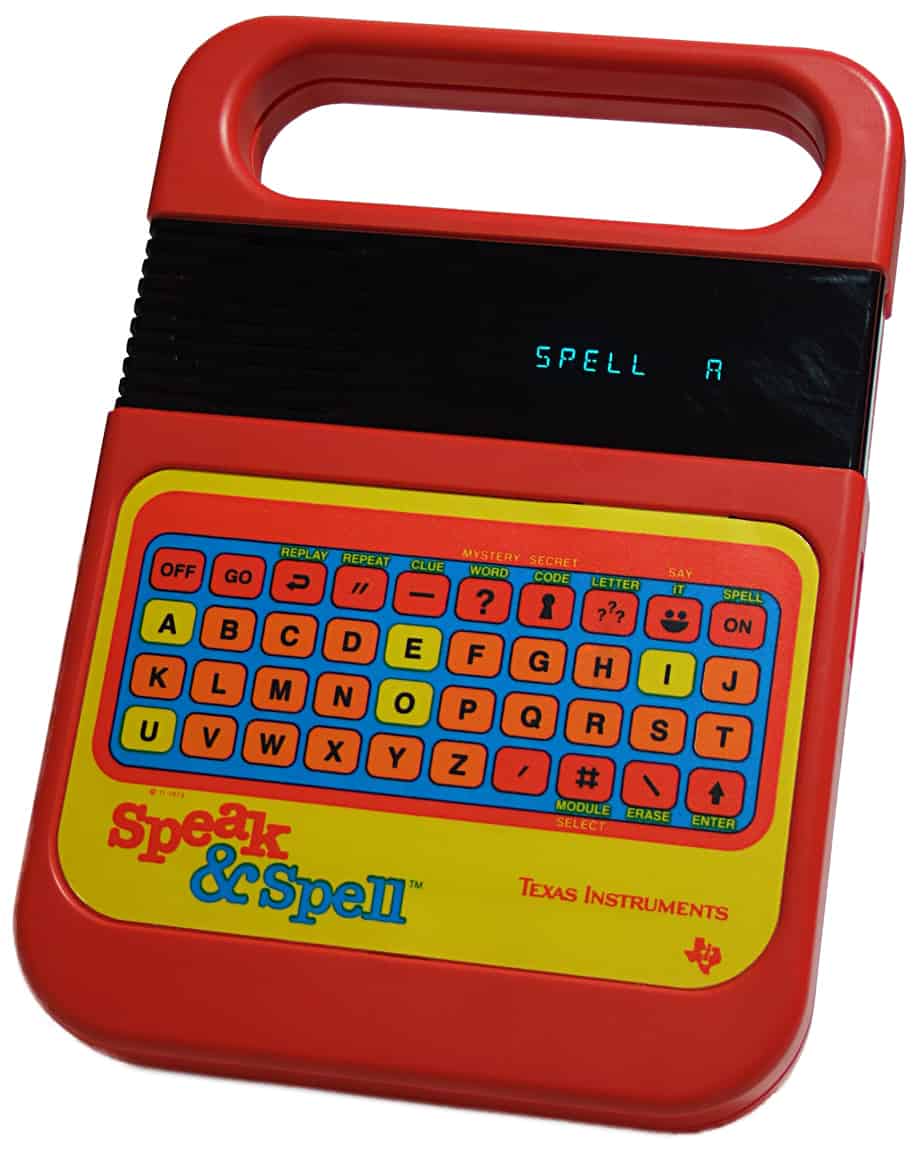
Texas Instruments introduced Speak & Spell in 1978, placing advanced speech-synthesis technology inside a child’s learning device. Rather than playing prerecorded phrases from tape, the machine used integrated circuits and digital signal processing to generate words electronically. Its orange case, membrane keyboard, display, and unmistakable robotic voice made it feel far more futuristic than an ordinary spelling workbook.
The device asked users to spell words and immediately announced whether an answer was correct. That simple exchange was an early consumer encounter with a machine that appeared to listen and respond, even though its capabilities were tightly limited. Its appearance in the 1982 film E.T. the Extra-Terrestrial strengthened its pop-culture status. Children also discovered that entering nonsense could make the synthetic voice attempt strange pronunciations, turning an educational product into an electronic toy through experimentation.
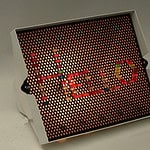
Lite-Brite Turned Pegs Into Pixels
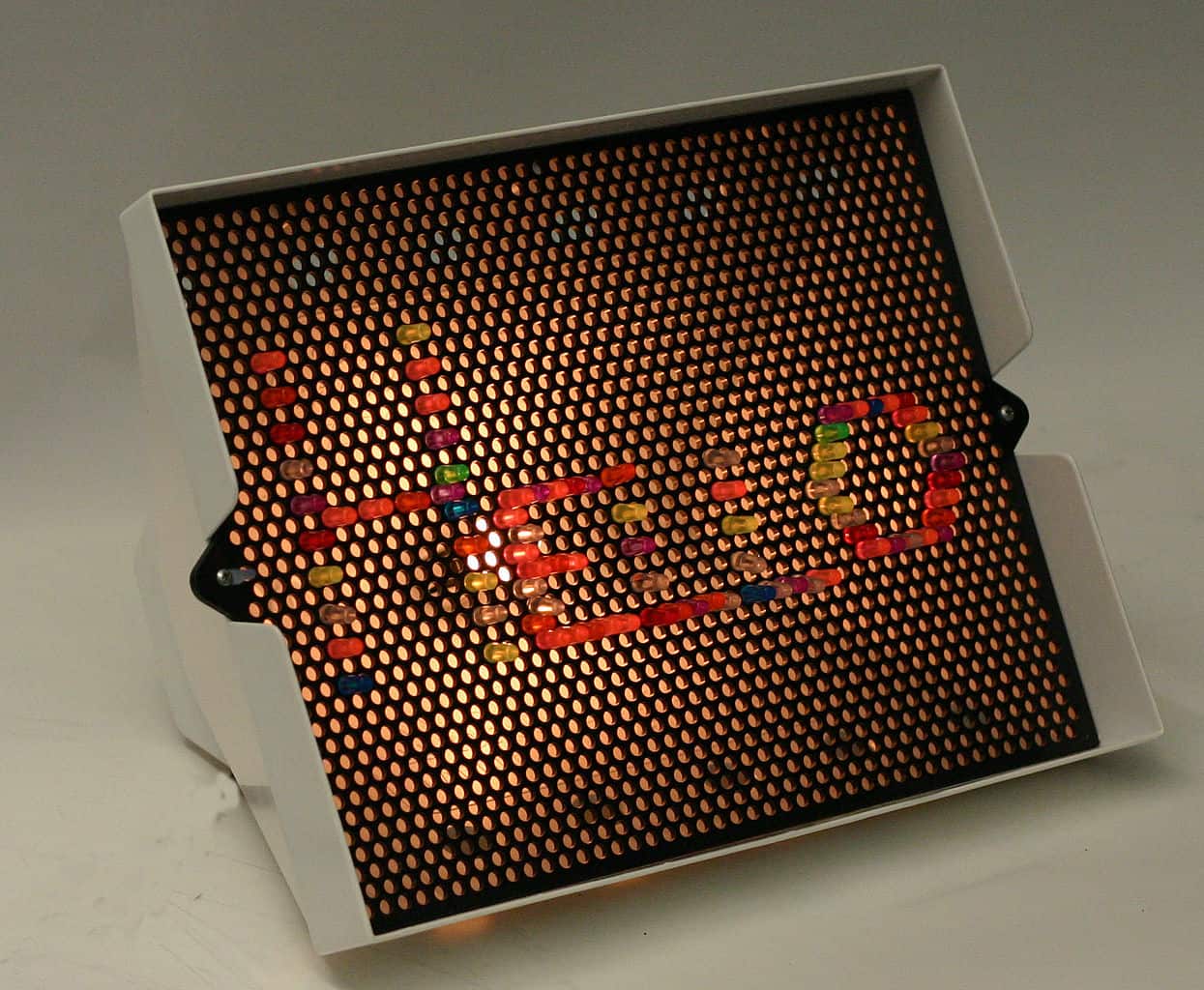
Lite-Brite debuted in 1967 but remained a familiar bedroom toy throughout the 1980s. Children pushed translucent colored pegs through black paper into a perforated screen illuminated from behind. Printed templates could produce recognizable characters or scenes, while a blank sheet allowed free-form designs. The concept was simple, but the glowing grid gave ordinary plastic pegs the appearance of tiny points of colored light.
Viewed today, the toy resembles a hands-on introduction to pixel art. Each peg occupied a fixed position and acted as a single colored unit within a larger image. Curves and details had to be approximated using the available grid, much like graphics on early computers and game consoles. Original versions used an incandescent bulb that could warm the plastic housing during long sessions. Pegs constantly disappeared into carpets, but the surviving design could transform a dark room into a small illuminated display.