



















15 of the Most Powerful Coaching Quotes in Sports History
The greatest coaches in sports history are remembered for their championships, legendary teams, and unforgettable moments, but their influence extends beyond the field. Coaches are ultimately teachers and motivators tasked with convincing athletes to accomplish things they may not believe are possible. Over the decades, some coaches have managed to summarize entire philosophies in just a sentence or two. From Vince Lombardi's obsession with winning to John Wooden's very different definition of success, History Computer has put together some of the greatest coaching quotes in the history of sport.
Here is a look at the greatest coaching quotes in sports history:
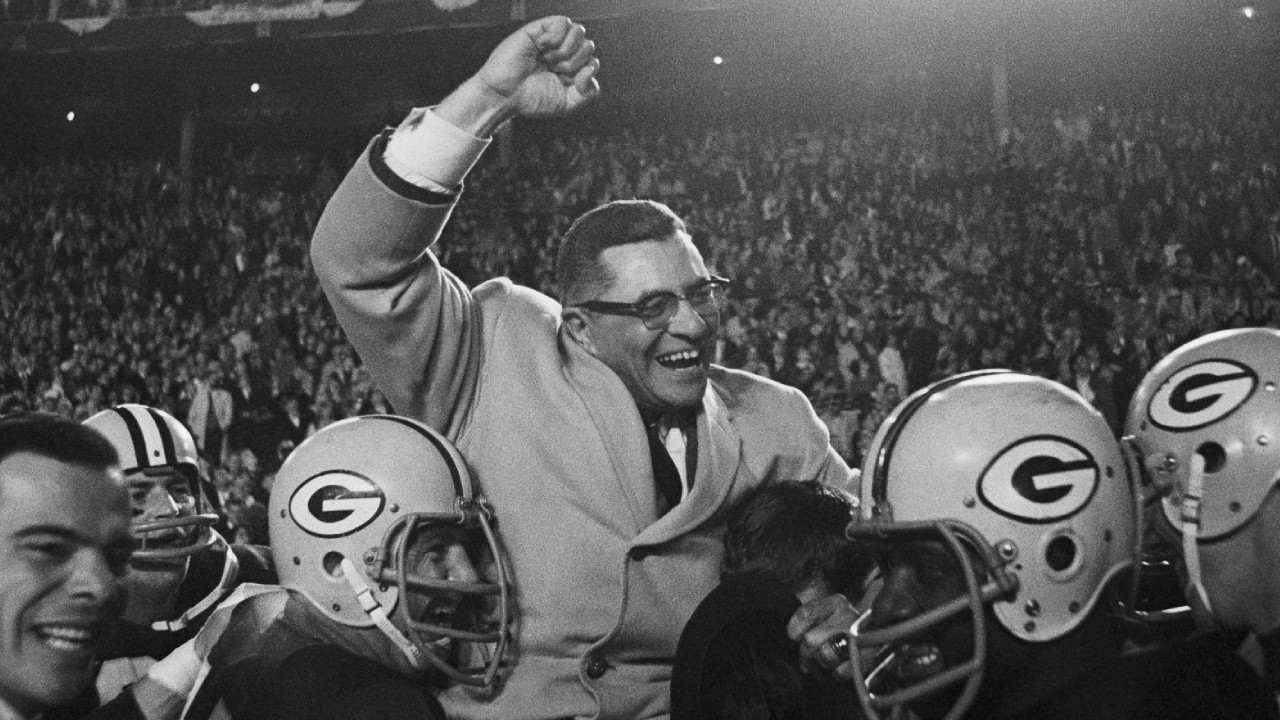
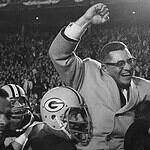
“Winning isn't everything; it's the only thing.” - Vince Lombardi
Few quotations are more closely associated with American sports than “Winning isn't everything; it's the only thing.” Vince Lombardi made the line famous while building the Green Bay Packers into an NFL dynasty during the 1960s, although he wasn't its originator. UCLA football coach Red Sanders had used a version years earlier. Under Lombardi, however, the saying became synonymous with relentless preparation and competitive excellence.
His Packers won five NFL championships in seven seasons, including the first two Super Bowls. Interestingly, Lombardi later expressed concern that people interpreted the quotation too literally. His philosophy wasn't simply that losing was unacceptable; he emphasized making the commitment and sacrifice necessary to pursue victory. That distinction helps explain Lombardi's enduring influence. The Super Bowl trophy bears his name today, and the quotation remains inseparable from his legacy, representing an era when Lombardi helped establish the modern image of the demanding, intensely driven championship coach.
“Success comes from knowing that you did your best to become the best that you are capable of becoming.” - John Wooden
John Wooden measured success differently from most coaches. Winning certainly mattered, but the legendary UCLA basketball coach believed that a scoreboard couldn't determine whether someone had truly succeeded. His philosophy centered on preparation, effort, discipline, and the maximization of individual potential. That approach produced extraordinary results. Between 1964 and 1975, Wooden's UCLA teams won 10 NCAA championships in 12 seasons, including seven consecutive titles. His teams also produced an 88-game winning streak that remains one of college basketball's defining achievements.
Wooden developed these ideas into his famous “Pyramid of Success,” which emphasized qualities ranging from industriousness and self-control to cooperation and competitive greatness. His definition of success therefore wasn't simply motivational language—it reflected the system he used to build one of the greatest dynasties in American sports. Wooden's words remain influential because they offer a definition of achievement that applies far beyond basketball: control your preparation and effort rather than allowing the final result alone to define you.
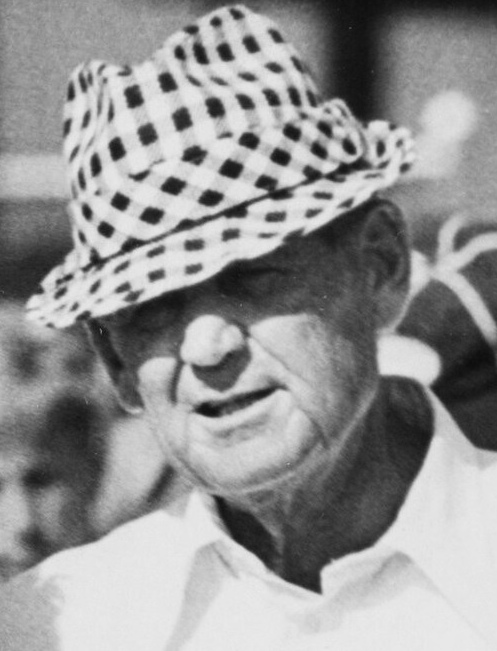
“It's not the will to win that matters—everyone has that. It's the will to prepare to win that matters.” - Bear Bryant
Paul “Bear” Bryant understood that almost every athlete wants to win once competition begins. What separates champions, in his philosophy, is what happens long before game day. Bryant became legendary for demanding preparation, conditioning, discipline, and attention to detail from his players, making this quotation a fitting summary of the coaching philosophy associated with him. During 25 seasons at Alabama, Bryant transformed the Crimson Tide into one of college football's defining programs, winning six national championships and 13 Southeastern Conference titles.
His practices could be notoriously demanding, particularly during an era when college football coaches exercised enormous control over their programs. Bryant's methods would not all translate directly to modern athletics, but his fundamental point remains relevant: wanting success is easy; preparing for it requires sustained effort. That distinction has helped the quote endure far beyond football. Athletes, coaches, and business leaders still invoke the same principle—that championship performances are usually determined by the work completed when nobody is watching.
“Great moments are born from great opportunity.” - Herb Brooks
“Great moments are born from great opportunity” has become inseparable from one of the greatest upsets in sports history: the United States' victory over the Soviet Union at the 1980 Winter Olympics. There is an important distinction, however. The exact speech familiar to millions was delivered by actor Kurt Russell portraying Herb Brooks in the 2004 movie Miracle, rather than being a verbatim historical transcript of Brooks' pregame remarks. Yet it captures the philosophy behind Brooks' remarkable coaching achievement.
The Soviet team had dominated international hockey, while Brooks assembled a young American squad largely composed of college players. He subjected them to intense conditioning and deliberately created a shared identity capable of overcoming individual rivalries. The Americans defeated the Soviets 4–3 before beating Finland to secure the gold medal. Whether remembered as a movie line or a distillation of Brooks' message, the quote endures because it captures what made the Miracle on Ice compelling: an extraordinarily difficult challenge became an equally extraordinary opportunity.
“You are what your record says you are.” - Bill Parcells
Bill Parcells had little patience for moral victories. His famous observation, “You are what your record says you are,” perfectly captures the results-oriented philosophy that defined his NFL career. Teams could point to injuries, bad calls, difficult schedules, or games they nearly won, but Parcells understood that professional football ultimately measures success in wins and losses. That mentality helped him turn struggling organizations into contenders repeatedly. Parcells won two Super Bowls with the New York Giants and later led the New England Patriots to Super Bowl XXXI.
He also took the New York Jets to the AFC Championship Game and helped restore credibility to the Dallas Cowboys. His ability to improve several different franchises reinforced the authority behind his words. The quotation remains popular because of its simplicity. Statistics and circumstances can explain why a team succeeded or failed, but Parcells' message eliminates excuses. At some point, performance has to produce results—and the standings provide the clearest accounting of whether it did.
“You can't always be the strongest or most talented or most gifted person in the room, but you can be the most competitive.” - Pat Summitt
Pat Summitt couldn't guarantee that Tennessee would have the most naturally gifted player on the court every night. What she could demand was that her players compete harder than anyone else. That philosophy helped Summitt build the Tennessee Lady Volunteers into one of the dominant programs in college basketball history. Across 38 seasons, she compiled 1,098 victories and won eight NCAA championships, helping elevate women's college basketball to unprecedented national prominence. Summitt was famous for her intensity, particularly the piercing sideline stare that could communicate dissatisfaction without a word. Behind that intimidating presence, however, was a philosophy centered on accountability and maximizing what athletes could control.
Talent varies. Size, speed, and natural ability vary. Competitive effort does not have to. Her quote, therefore, reaches beyond basketball because it dispels the convenient excuse of not being the most gifted person in the room. Summitt's message was that competitiveness itself can become an advantage—and throughout her career, Tennessee repeatedly proved how powerful that advantage could be.
“Do your job.” - Bill Belichick
Few coaching philosophies have ever been condensed into three words as effectively as Bill Belichick's “Do your job.” The phrase became synonymous with the New England Patriots dynasty and represented a deceptively simple organizational principle: understand your responsibility, prepare for it thoroughly, and execute it without becoming distracted by someone else's assignment. Under Belichick, that approach helped New England build one of the most successful dynasties in NFL history. The Patriots won six Super Bowls during his tenure as head coach, frequently succeeding with players who were asked to perform highly specialized roles within constantly changing game plans.
Belichick emphasized situational football, preparation, versatility, and minimizing mistakes rather than relying exclusively on individual star power. “Do your job” captured all of those concepts in language every player could understand. The saying eventually escaped football and entered workplaces, military discussions, and popular culture. Its longevity comes from its simplicity: when everyone executes their individual responsibility correctly, the entire organization becomes considerably more difficult to defeat.
“The strength of the team is each individual member. The strength of each member is the team.” - Phil Jackson
Phil Jackson faced a challenge few coaches encounter: convincing some of basketball's biggest superstars that individual brilliance alone wasn't enough. Coaching Michael Jordan's Chicago Bulls and later Shaquille O'Neal and Kobe Bryant's Los Angeles Lakers required more than drawing plays. Jackson had to transform extraordinary individual talent into cohesive teams, making this quote an appropriate summary of the philosophy associated with his career. He famously incorporated concepts drawn from mindfulness, meditation, Native American traditions, and Zen Buddhism into his coaching while relying strategically on the triangle offense.
The unconventional approach produced remarkable results. Jackson won six NBA championships with Chicago and another five with Los Angeles, giving him a record 11 championships as an NBA head coach. His greatest skill may have been managing personalities while convincing stars to operate within a larger system. The quotation captures that balance perfectly: teams need talented individuals, but those individuals become stronger when they trust and depend upon the group around them.
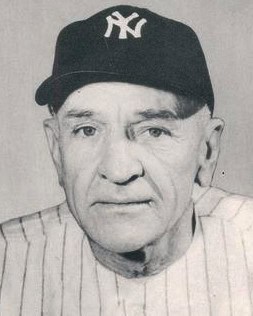
“The secret of successful managing is to keep the five guys who hate you away from the four guys who haven't made up their minds.” - Casey Stengel
Casey Stengel understood something about managing that statistics couldn't capture: sometimes the hardest part of coaching professional athletes is managing the athletes themselves. His famous line about keeping “the five guys who hate you away from the four guys who haven't made up their minds” reflects the humor and practical wisdom that made Stengel one of baseball's greatest characters. Beneath the joke is a serious point about clubhouse politics. Managers must make decisions about playing time, lineups, pitching assignments, and personnel that inevitably disappoint some players.
Stengel proved exceptionally capable of navigating those personalities while managing the New York Yankees. From 1949 through 1953, his Yankees won an unprecedented five consecutive World Series championships, and he ultimately won seven titles with the franchise. Stengel later became the colorful first manager of the expansion New York Mets. His quote survives because every coach eventually encounters the same problem: tactics matter, but maintaining enough trust inside a locker room can determine whether those tactics ever work.
“A basketball team is like the five fingers on your hand. If you can get them all together, you have a fist.” - Mike Krzyzewski
Mike Krzyzewski's five-finger metaphor provides a remarkably simple explanation of team basketball. Five players can operate independently and still possess tremendous talent, but bringing them together around one objective creates something considerably more powerful. “Coach K” spent more than four decades demonstrating that principle at Duke, transforming the Blue Devils into one of college basketball's premier programs. He won five NCAA championships, reached 13 Final Fours, and retired with more Division I men's basketball victories than any coach before him.
Krzyzewski also coached the United States men's national team to three consecutive Olympic gold medals, successfully managing NBA superstars accustomed to being the focal points of their own franchises. That experience made his philosophy of unity particularly meaningful. Great teams require individuals to sacrifice touches, minutes, statistics, and sometimes personal recognition for collective success. The fist metaphor endures because it makes that complicated dynamic instantly understandable: individual fingers have value, but their combined strength is far greater when they move together.
“Football, bloody hell.” - Alex Ferguson
Sometimes the greatest sports quotes aren't carefully prepared motivational speeches. Sir Alex Ferguson's “Football, bloody hell” came moments after one of the most extraordinary finishes in soccer history. Manchester United entered stoppage time of the 1999 UEFA Champions League final trailing Bayern Munich 1–0. Teddy Sheringham equalized in the 91st minute before Ole Gunnar Solskjær scored again moments later, giving United an almost unbelievable 2–1 victory. When Ferguson was interviewed afterward, his short reaction perfectly captured the chaos and emotion of what had just occurred.
The victory completed Manchester United's historic Treble of the Premier League, FA Cup, and Champions League. Ferguson ultimately spent more than 26 years managing United, winning 13 Premier League titles and two Champions League trophies while building multiple generations of championship teams. His quote became legendary precisely because it wasn't polished. Three words summarized the unpredictability, frustration, drama, and exhilaration that make sports compelling—and few coaches experienced those extremes more successfully than Ferguson.
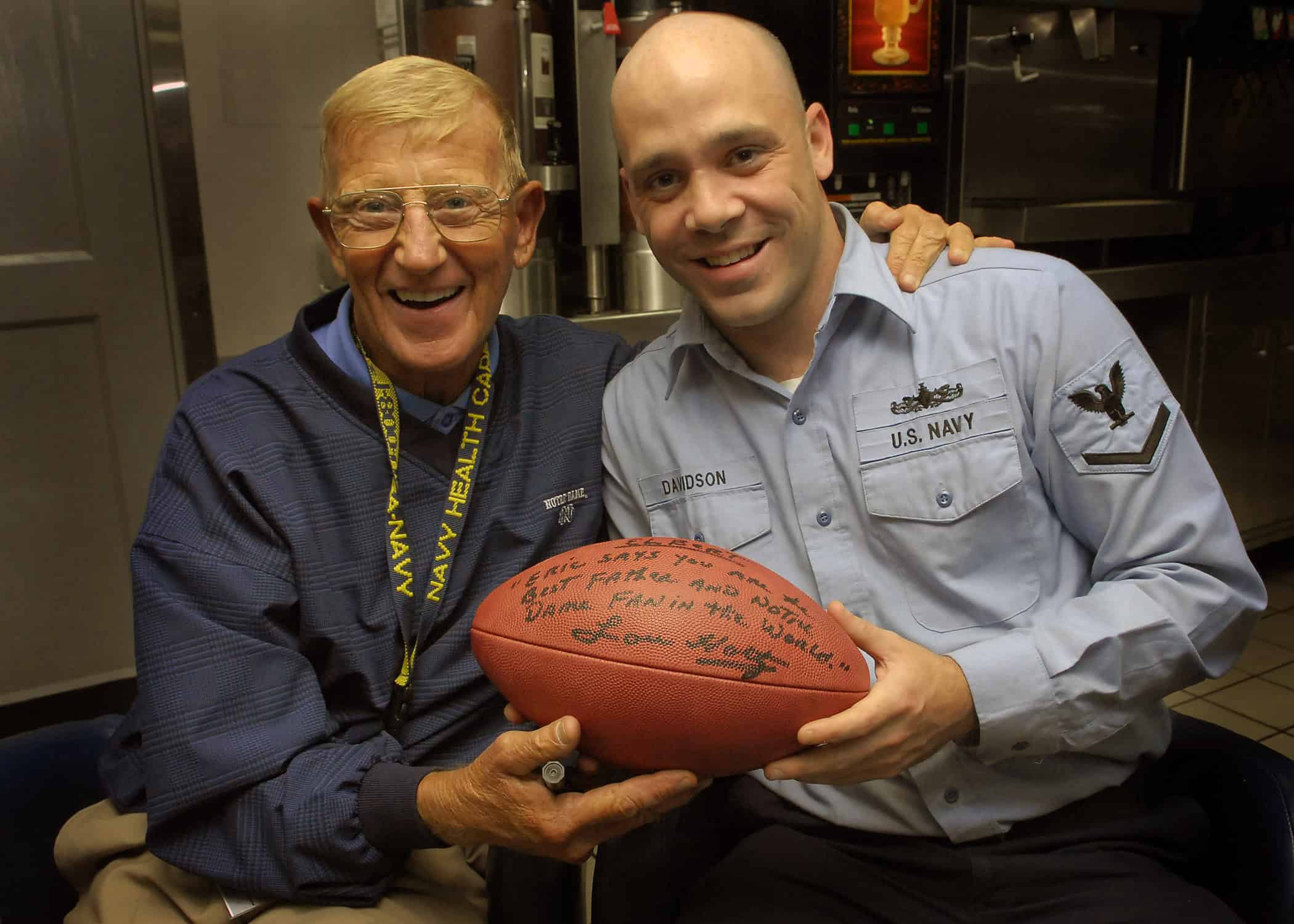
“Ability is what you're capable of doing. Motivation determines what you do. Attitude determines how well you do it.” - Lou Holtz
Lou Holtz built much of his coaching philosophy around the idea that talent is only one component of success. His famous observation separates performance into three parts: ability establishes what someone potentially can accomplish, motivation determines whether that potential is actually used, and attitude influences the quality of the resulting effort. It's a philosophy that fit Holtz's reputation as one of college football's most recognizable motivators. During a coaching career that included stops at Arkansas, Minnesota, South Carolina, and several other programs, Holtz achieved his greatest success at Notre Dame.
His 1988 Fighting Irish went undefeated and captured the national championship, while his teams remained national contenders through much of his tenure. Holtz became almost as famous for motivational speaking as coaching after leaving the sideline, helping his sayings reach audiences far beyond football. This quote remains especially popular because it rejects the idea that natural talent determines everything. Ability matters, but Holtz's message emphasizes that motivation and attitude ultimately determine what someone does with it.
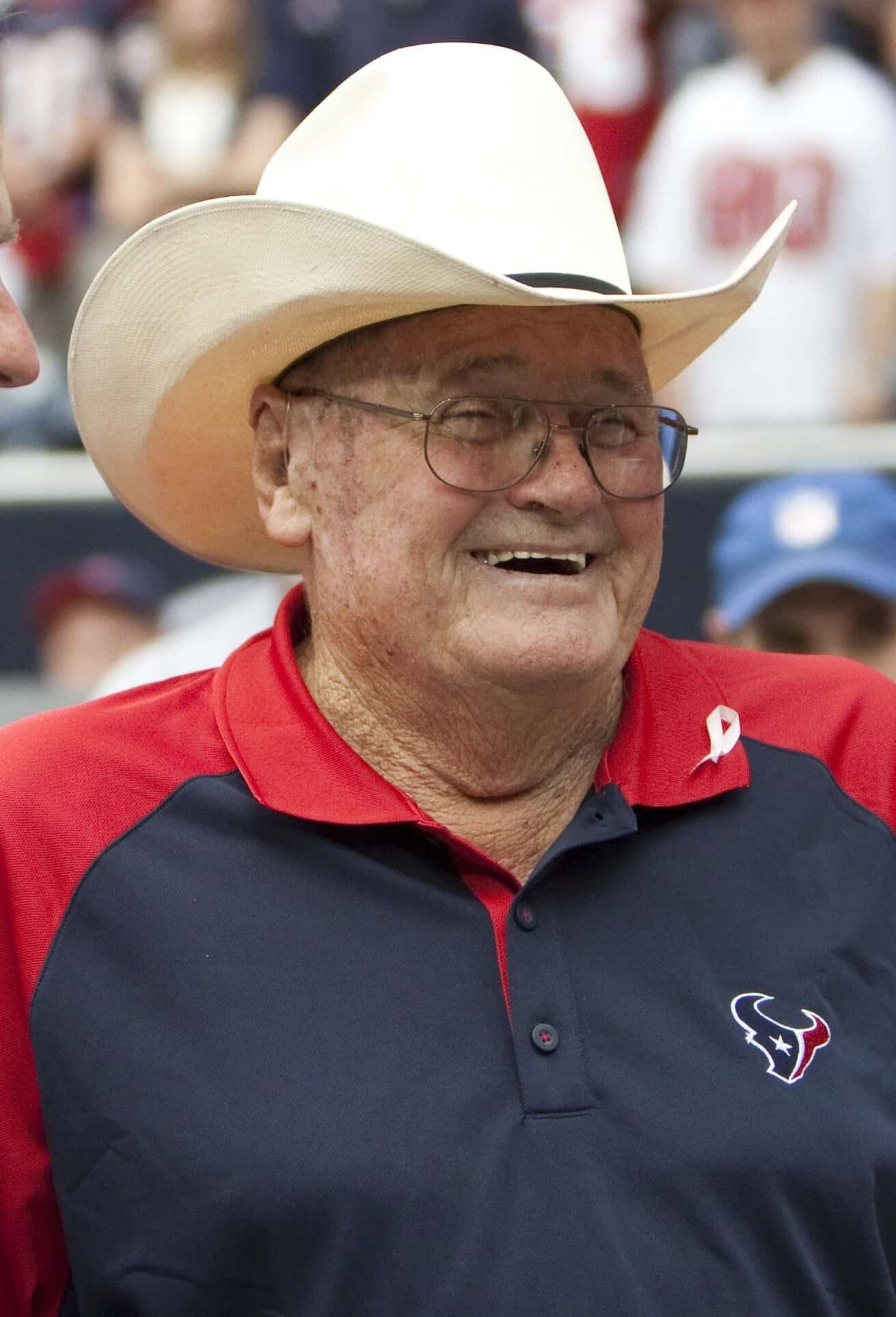
“There's two kinds of coaches, them that's fired and them that's gonna be fired.” - Bum Phillips
Bum Phillips understood the precarious nature of professional coaching, and few quotes capture it better than his observation that there are only two kinds of coaches: those who have already been fired and those who eventually will be. Delivered in Phillips' unmistakable Texas style, the line is funny because it contains an uncomfortable amount of truth. Professional sports coaches work in an industry where even years of success may not guarantee job security after a disappointing season. Phillips experienced both sides during his NFL career.
As head coach of the Houston Oilers, he became enormously popular while leading the franchise to consecutive AFC Championship Games following the 1978 and 1979 seasons. The “Luv Ya Blue” Oilers became a Houston phenomenon, yet Phillips was fired after the 1980 season. He later coached the New Orleans Saints. His quote has endured because the profession hasn't changed much. Championships may buy coaches time, but expectations eventually catch almost everyone—and Phillips managed to summarize that reality with humor rather than bitterness.
“I'm in favor of it.” - John McKay
John McKay's most famous quote reportedly came during one of the darkest stretches any NFL franchise has endured. Asked what he thought about his team's “execution” after another poor Tampa Bay Buccaneers performance, McKay supposedly replied, “I'm in favor of it.” The line became one of sports history's greatest examples of gallows humor, although its exact origin and wording have been debated over the years.
What isn't disputed is how difficult McKay's early Tampa Bay tenure was. The expansion Buccaneers lost their first 26 regular-season games across the 1976 and 1977 seasons, giving their coach plenty of opportunities to develop memorable one-liners. McKay had arrived in Tampa as one of college football's most accomplished coaches, having won four national championships at USC. Remarkably, he eventually turned the Buccaneers around, leading them to the 1979 NFC Championship Game. The quote endures because it captures McKay's personality perfectly: dry, sarcastic, and capable of finding humor even while overseeing a historically unsuccessful football team.
“A coach is someone who tells you what you don't want to hear, who has you see what you don't want to see, so you can be who you have always known you could be.” - Tom Landry
Tom Landry's description of coaching focuses on something deeper than strategy: forcing athletes to confront uncomfortable truths about themselves. Improvement often requires hearing criticism, recognizing weaknesses, and changing habits that have become comfortable. Landry spent nearly three decades applying that philosophy as the first head coach of the Dallas Cowboys. Initially, success came slowly, but the organization eventually became one of professional football's model franchises. From 1966 through 1985, Dallas posted 20 consecutive winning seasons, reached five Super Bowls, and won two championships.
Landry became known for his calm sideline demeanor, meticulous preparation, and willingness to innovate, including important developments in defensive schemes and offensive formations. His quote captures the less visible responsibility behind those accomplishments. A coach isn't simply someone who tells athletes what they're doing well. Great coaches identify what prevents them from reaching their potential and demand that they address it. That message helps explain why Landry's words continue to resonate far beyond football.
The image featured at the top of this post is ©DAZN / Original