
Coaching is built on pressure. A season can turn on a single play, a career can unravel after one bad decision, and every reaction is captured by cameras in front of thousands of fans. Most coaches manage to stay composed. Every so often, though, the frustration boils over in unforgettable fashion.
These 10 incidents include explosive press conferences, sideline confrontations, and physical outbursts that crossed the line. Some became legendary sports moments, while others damaged reputations or ended careers altogether. Years later, fans are still replaying these coaching meltdowns and debating what pushed each one past the breaking point.
Lou Piniella Turns First Base Into a Projectile
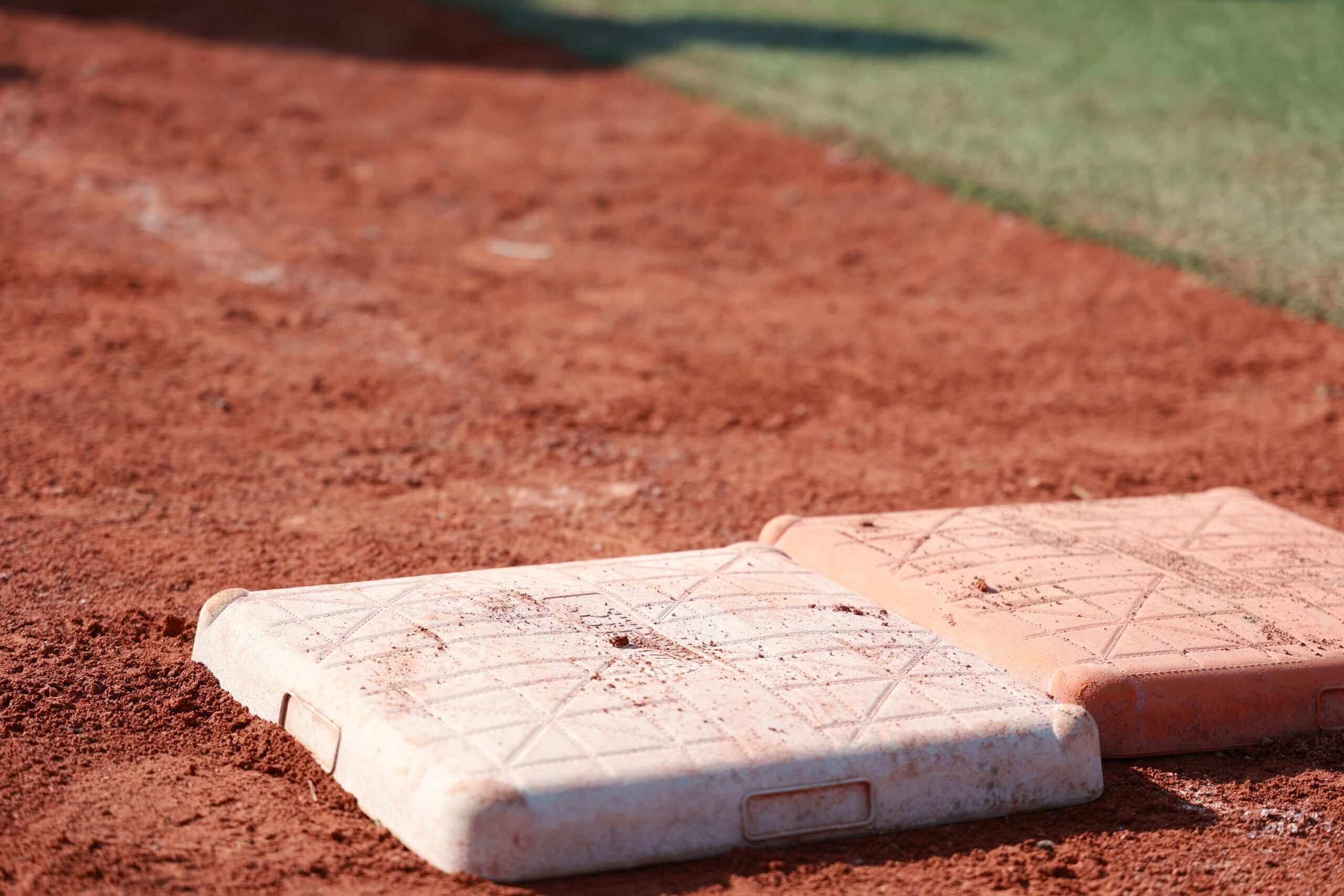
Lou Piniella built a reputation as one of baseball’s most combustible managers, but his most famous prop-assisted eruption came on August 21, 1990. Managing the Cincinnati Reds against the Chicago Cubs, Piniella charged from the dugout after Barry Larkin was called out while trying to beat a double play. He argued with first-base umpire Dutch Rennert, slammed down his cap, and was ejected. Instead of leaving, Piniella pulled first base from the ground, threw it, retrieved it, and launched it again into right field. The Reds went on to win 8-1, ending a five-game losing streak.
The scene became part of Piniella’s legend because it looked spontaneous while also carrying the timing of a practiced performance. He later recalled that Yankees owner George Steinbrenner had once encouraged him to put on a show during arguments because fans enjoyed the spectacle. Piniella finished his managerial career with 64 ejections, but the flying base remains the image most closely associated with his temper. It captured an era when managers could turn a disputed call into several uninterrupted minutes of live theater before replay reviews and rapid video clips changed the rhythm of the game.
Jim Playfair Shatters Two Sticks on the Bench

Jim Playfair’s eruption arrived during an American Hockey League game on March 27, 2010, when his Abbotsford Heat faced the Hamilton Bulldogs. Abbotsford forward J.D. Watt received a five-minute charging major and a game misconduct after colliding with Hamilton goaltender Cedrick Desjardins. Playfair strongly disagreed with the decision. Standing on the bench, he screamed toward the officials, grabbed a hockey stick, and repeatedly smashed it against the boards until it splintered. He tore off his suit jacket, climbed higher onto the bench, and destroyed a second stick before being removed from the game.
Hamilton won 4-0, but the score was quickly overshadowed by video of Playfair’s reaction. The Heat included the outburst in an online highlight package, helping the clip spread far beyond the usual audience for a minor-league game. Playfair was fined an undisclosed amount by the league and later admitted it was not one of his proudest moments, though he stopped short of offering a full apology. The meltdown became especially memorable because colleagues described him as intense but generally controlled. In less than a minute, a routine officiating dispute turned a relatively obscure AHL game into one of hockey’s earliest viral coaching clips.
Woody Hayes Punches an Opposing Player

Woody Hayes’ legendary career at Ohio State ended in a few chaotic seconds during the Gator Bowl on December 29, 1978. Clemson led 17-15 late in the fourth quarter when linebacker Charlie Bauman intercepted an Art Schlichter pass and was forced out of bounds near the Ohio State sideline. As Bauman got up, the 65-year-old Hayes grabbed him and struck him. Players and staff rushed into the confrontation, creating a scene that immediately eclipsed the rest of the game. Clemson held on to win, but the final score became secondary to footage of one of college football’s most respected coaches crossing an unmistakable line.
Ohio State fired Hayes the following morning, ending a 28-season tenure that included 205 victories, 13 Big Ten championships, and three recognized national titles. The speed of the dismissal reflected how little room the university had to defend what millions of television viewers had seen. Hayes remained a celebrated figure among many former players and fans, but the punch permanently complicated his legacy. It is remembered not as a colorful sideline tantrum or a heated argument with an official, but as an act of physical aggression that ended a Hall of Fame-level coaching career almost immediately.
Mike Gundy Declares, “I’m a Man! I’m 40!”
Mike Gundy entered his postgame press conference on September 22, 2007, carrying a copy of an article that had criticized Oklahoma State quarterback Bobby Reid. The Cowboys had just defeated Texas Tech 49-45, but Gundy had little interest in discussing the victory. He accused the article of unfairly attacking a college athlete, waved the newspaper in the air, and told reporters that criticism should be aimed at adults instead. Then came the line that instantly defined the moment: “Come after me! I’m a man! I’m 40!” The combination of anger, rhythm, and repetition made the clip ideal for the emerging age of online sports video.
Many viewers initially celebrated the rant as a coach publicly protecting one of his players. The story became more complicated months later when Reid told ESPN that the episode had not felt as supportive from his perspective and had contributed to an extremely difficult period in his life. That later account does not erase Gundy’s stated objection to personal criticism of college athletes, but it changes how the performance can be interpreted. What looked like a simple display of loyalty became a much messier story about media pressure, coaching power, and a young quarterback whose experience was largely overlooked while the coach’s catchphrase became famous.
Lee Elia Turns His Anger on Cubs Fans

The Chicago Cubs fell to 5-14 after losing at home to the Los Angeles Dodgers on April 29, 1983. A small Wrigley Field crowd had spent much of the afternoon booing, and manager Lee Elia arrived at his postgame media session furious. Rather than criticizing his team’s performance, Elia directed a profanity-filled monologue at the fans. He complained that the players were working hard, mocked the spectators who came to daytime games, and suggested they should experience what he considered real work. The tirade lasted roughly three minutes and was recorded by Chicago radio reporter Les Grobstein.
Because the recording could be replayed, Elia’s words traveled far beyond the small group of reporters who heard them in person. The rant became one of baseball’s most notorious audio clips, partly because it targeted the very supporters who bought tickets and followed the struggling team. Elia later said he had been venting about a vocal portion of the crowd rather than every Cubs fan, but the distinction was lost once the tape circulated. He remained manager for several more months before being dismissed in August 1983. His career in baseball continued for decades, yet one furious afternoon became the moment attached most firmly to his name.
John McEnroe’s Player Meltdown Becomes a Catchphrase

John McEnroe was not a coach when he produced this eruption, making his appearance the lone true player meltdown in the group. During an early-round Wimbledon match against fellow American Tom Gullikson on June 22, 1981, McEnroe became enraged after a serve he believed had touched the line was called out. He pointed to the chalk and demanded an explanation from chair umpire Edward James before shouting, “You cannot be serious!” The confrontation continued, earning McEnroe a warning and later a point penalty after he insulted the official. He still won the match in straight sets.
The outburst survived because the phrase was short, theatrical, and easy to repeat. McEnroe went on to defeat Bjorn Borg in the final and win his first Wimbledon singles championship, but the argument became almost as recognizable as the title itself. He later used You Cannot Be Serious as the name of his autobiography, while broadcasters, advertisers, and comedians recycled the line for decades. The moment also captured the contradiction at the center of McEnroe’s public image: he was one of the most gifted players of his generation, yet his confrontations with officials became a separate form of entertainment that often threatened to overshadow his tennis.
Bobby Knight Hurls a Chair Across the Court

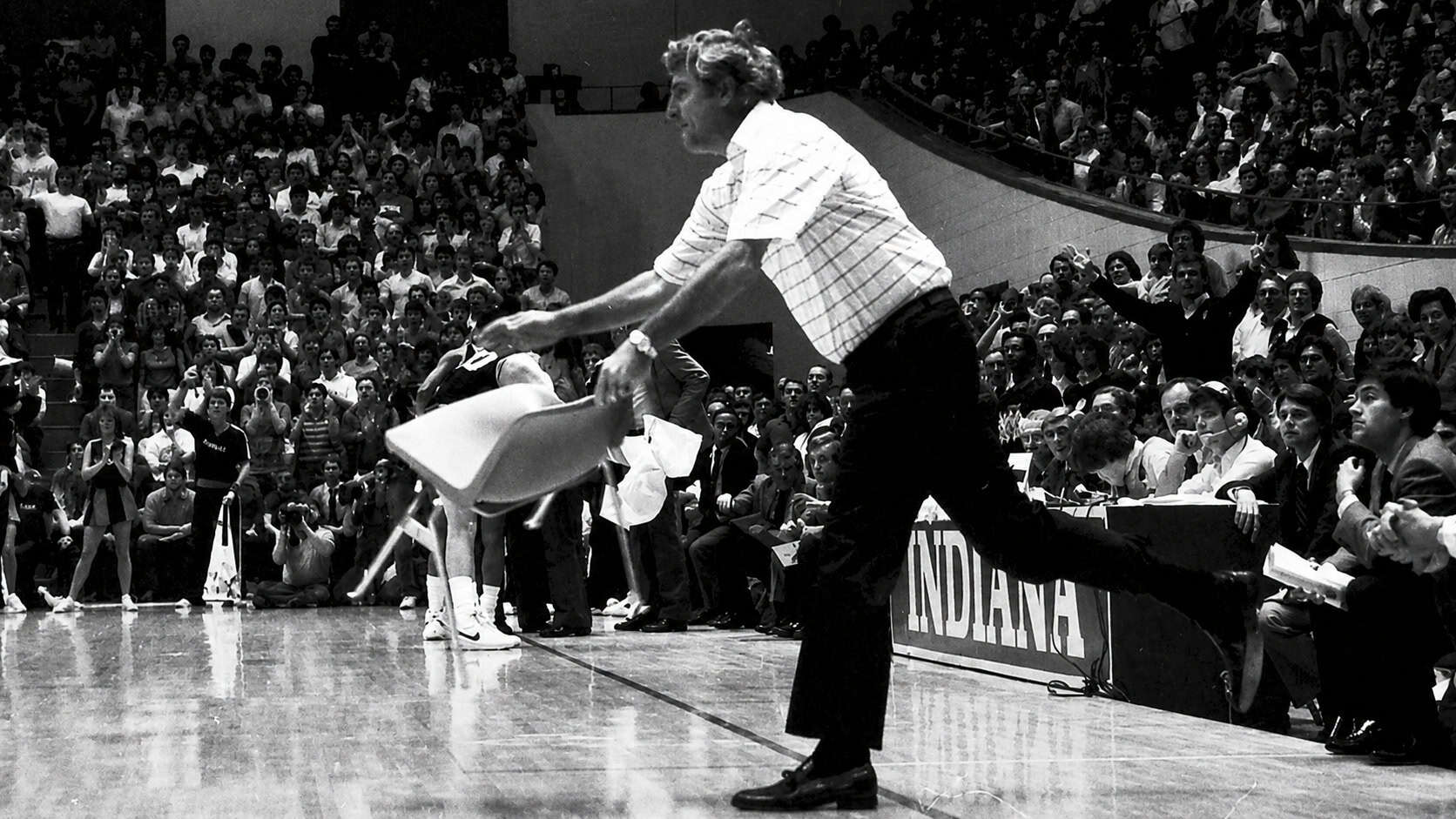
Indiana’s rivalry game against Purdue on February 23, 1985, was barely five minutes old when Bobby Knight lost control. The Hoosiers had been called for six fouls, including three in a span of less than a minute, and Knight drew a technical while arguing with the officials. As Purdue’s Steve Reid prepared to shoot the resulting free throws, Knight grabbed the red plastic chair from his bench and flung it across the court. The chair skidded past the free-throw area as officials issued additional technical fouls and ejected him. Purdue eventually won the game 72-63.
The reaction inside Assembly Hall made the scene even stranger. Many Indiana fans chanted Knight’s name as he resisted leaving and was eventually escorted away. The Big Ten suspended him for one game, and Knight later acknowledged that his behavior had been inappropriate. He also transformed the episode into a joke, telling David Letterman that he had only been trying to send the chair to an elderly woman who needed a seat. That explanation was comedy, not history, but it helped preserve the event as sports folklore. Decades later, the chair toss remains the most recognizable symbol of Knight’s brilliance, volatility, and ability to inspire loyalty even at his worst.
Jim Mora Cannot Believe Anyone Asked About the Playoffs

Jim Mora’s Indianapolis Colts had just lost 40-21 to the San Francisco 49ers on November 25, 2001. Peyton Manning threw four interceptions, the Colts committed five turnovers, and Mora opened his press conference by angrily describing the performance as disgraceful. Then a reporter asked whether Indianapolis still had a realistic chance to reach the postseason. Mora stared back in disbelief and repeated a single word with an unforgettable rise in his voice: “Playoffs?” He followed by saying the team should not be discussing the postseason when he was simply hoping it could win another game.
The clip lasts only seconds, but its delivery turned it into one of the NFL’s most durable sound bites. Mora later argued that he had given an honest response to a reasonable question rather than staged a tantrum, which is probably true. The humor came from the distance between the reporter’s optimism and the coach’s complete disgust with what he had just witnessed. Indianapolis finished the season 6-10, and Mora did not return as head coach the following year. His long career included 125 regular-season NFL victories, but for generations of fans, one incredulous word became a faster way to identify him than any statistic.
Dennis Green Says the Bears Were Who He Thought They Were

©Frame Stock Footage / Shutterstock.com – Original / License
The Arizona Cardinals appeared ready to upset the unbeaten Chicago Bears on Monday Night Football on October 16, 2006. Arizona led 20-0 at halftime and 23-3 during the third quarter, while Chicago quarterback Rex Grossman committed six turnovers. The Bears still escaped with a 24-23 victory because their defense scored twice and rookie Devin Hester returned a punt for a touchdown. After watching a 20-point advantage disappear without Chicago’s offense scoring a touchdown, Cardinals coach Dennis Green arrived at his press conference furious over what he considered a completely avoidable loss.
Green insisted the Bears had played exactly as Arizona expected, then slammed the podium and shouted, “They are who we thought they were, and we let them off the hook!” He left moments later, but the line immediately took on a life of its own. It was repeated by commentators, remixed into comedy clips, and later incorporated into a Coors Light commercial. The rant endured because it expressed something every sports fan understands: the frustration of preparing correctly, controlling most of a game, and losing anyway. Green had led successful teams during a long NFL career, but this brief collapse became his most replayed public moment.
Earl Weaver Makes Arguing With Umpires an Art Form

Baltimore Orioles manager Earl Weaver did not need one defining meltdown because arguing with umpires became a recurring part of his job. He was ejected 96 times across 2,541 major-league games, which placed him among the most frequently tossed managers in baseball history. Weaver would turn his cap backward, move inches from an umpire’s face, and deliver rapid arguments filled with sarcasm and profanity. One of the most famous confrontations occurred on September 17, 1980, when umpire Bill Haller was wearing a microphone. The recording preserved their heated exchange in unusually vivid detail.
Weaver’s temper could make him look like a man ruled by impulse, but his managerial record tells a different story. He won 1,480 games, guided Baltimore to four American League pennants and the 1970 World Series championship, and entered the Baseball Hall of Fame in 1996. He was also an analytical thinker who valued pitching, defense, and power hitting while rejecting many traditional small-ball strategies. That contrast is what keeps his arguments fascinating. The same manager who appeared completely unhinged during an ejection was often several tactical steps ahead of everyone else once play resumed.
The image featured at the top of this post is ©NCAA Archives