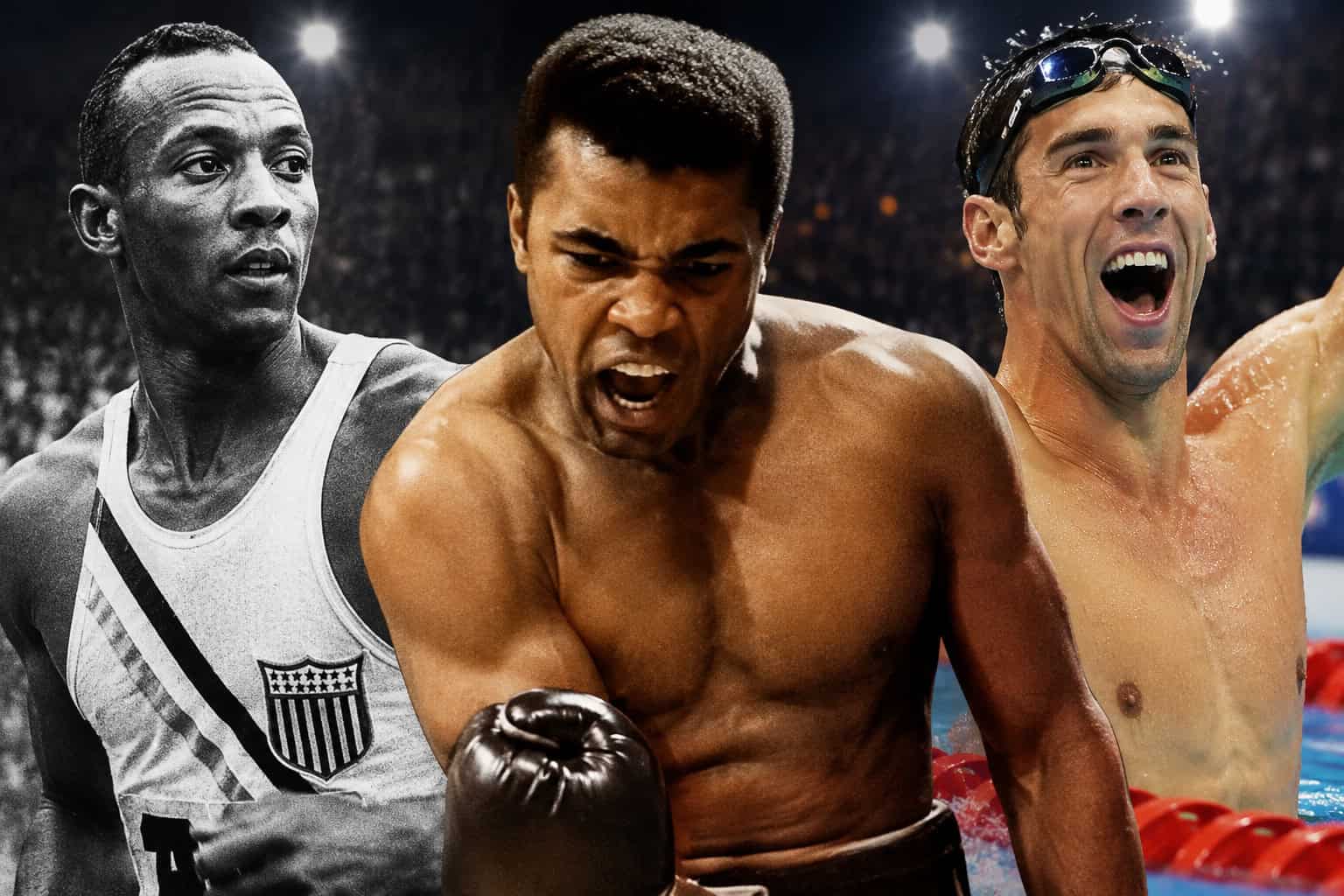

Sports history is often reduced to final scores, but the moments that endure represent something larger. Some broke records experts once considered unreachable. Others challenged segregation, defeated overwhelming favorites, or turned a painful setback into courage seen worldwide. Together, they show how competition can reflect politics, technology, culture, and the changing limits of human performance. From Jesse Owens defying Nazi propaganda to Shohei Ohtani creating a new statistical club and Rory McIlroy completing golf’s career Grand Slam, these events did more than produce winners. They altered careers, inspired generations, and changed what fans believed athletes could accomplish.
Jesse Owens Defies Nazi Propaganda in Berlin (1936)
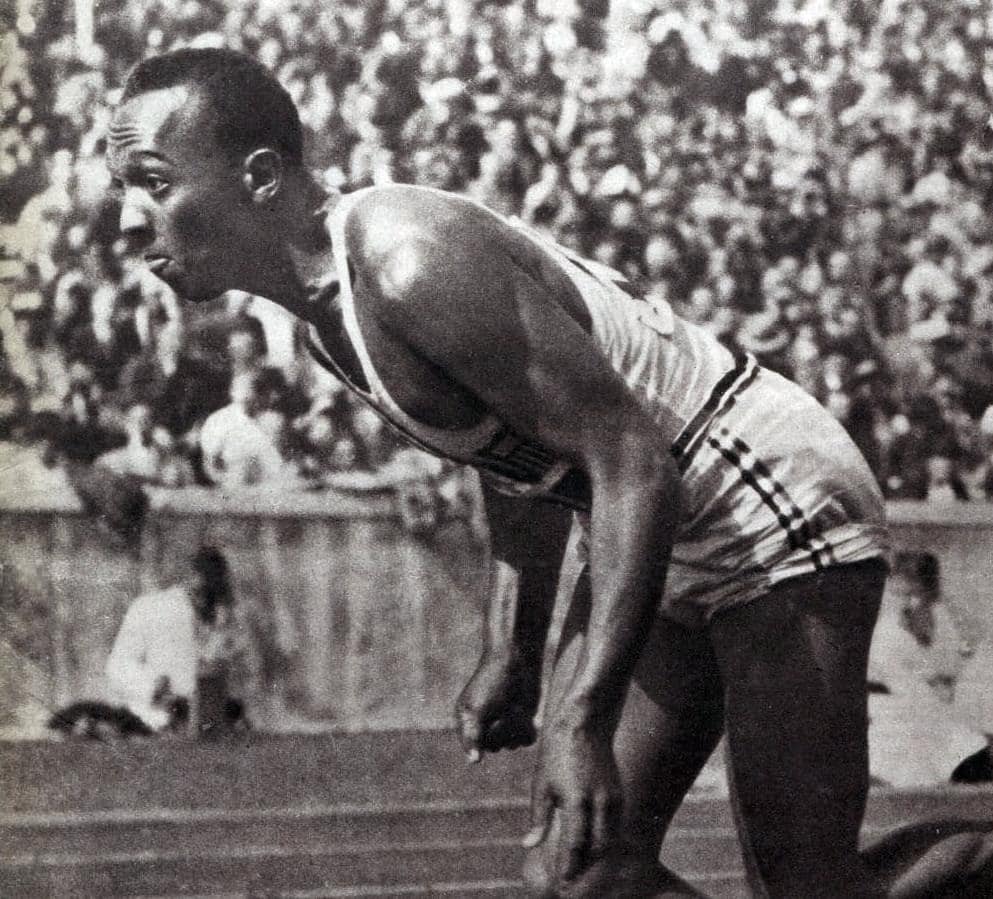
Jesse Owens won four gold medals at the 1936 Berlin Olympics.
Jesse Owens arrived at the 1936 Berlin Olympics as Adolf Hitler’s government attempted to present the Games as proof of so-called Aryan superiority. Owens answered with one of the greatest performances in Olympic history, winning gold in the 100 meters, 200 meters, long jump, and 4×100-meter relay. His long-jump duel with German athlete Luz Long also produced a lasting story of sportsmanship, as the two competitors formed a friendship despite the politics surrounding them. Owens did not end racism at home or abroad, but his victories publicly contradicted Nazi racial propaganda and made him the most celebrated athlete of the Berlin Games.
Jackie Robinson Breaks Baseball’s Color Barrier (1947)
When Jackie Robinson started at first base for the Brooklyn Dodgers on April 15, 1947, he became the first Black player in the modern major leagues. Baseball had enforced a color barrier for decades, and Robinson entered the National League under intense scrutiny, enduring racist abuse from crowds, opponents, and even some fellow players. He responded with discipline and exceptional play, winning Rookie of the Year in 1947 and the National League MVP award two years later. Robinson’s debut did not erase segregation, but it forced America’s most prominent professional sport to confront it and opened opportunities for generations of Black and Latino players who followed.
Roger Bannister Breaks the Four-Minute Mile (1954)
On May 6, 1954, Roger Bannister ran one mile in 3 minutes, 59.4 seconds at Oxford’s Iffley Road track, becoming the first person to officially break the four-minute barrier. The achievement had been treated as one of sport’s most daunting limits, even though serious runners were steadily closing in on it. Bannister balanced elite training with medical studies and relied on pacemakers Chris Brasher and Chris Chataway to establish the necessary tempo. His record lasted only 46 days, but that almost strengthened its legacy. Once the psychological wall fell, other runners followed, proving that a supposedly impossible number had been a target waiting to be reached.
Muhammad Ali Shocks George Foreman (1974)
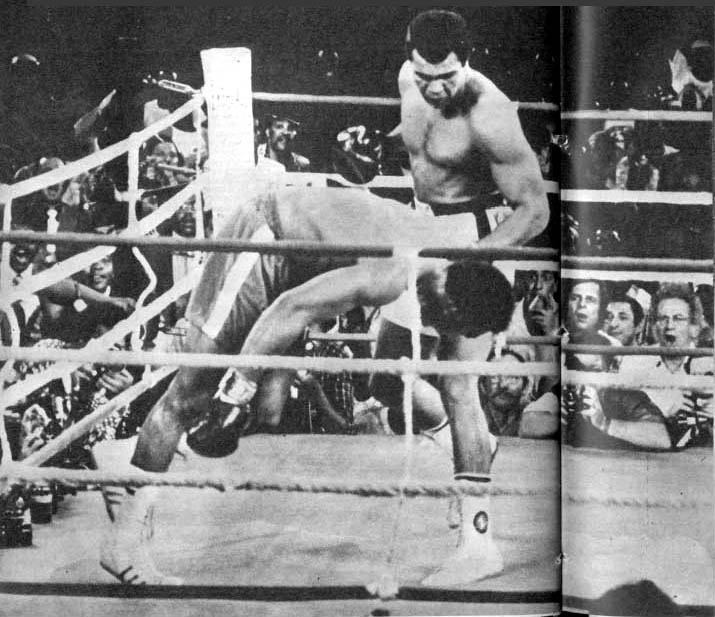
Muhammad Ali knocked out unbeaten champion George Foreman in 1974.
George Foreman entered the 1974 Rumble in the Jungle as the unbeaten heavyweight champion and a frightening puncher who had overwhelmed Joe Frazier and Ken Norton. Muhammad Ali, then 32, was widely viewed as the fading former champion. In Kinshasa, Zaire, Ali surprised Foreman by leaning against the ropes, blocking and absorbing punches while urging the champion to exhaust himself. The approach became known as the rope-a-dope, although Ali still fought actively and landed sharp counters. In the eighth round, he struck with a fast combination that sent Foreman to the canvas. The upset restored Ali’s heavyweight title and reinforced his reputation as boxing’s most inventive strategist.
The Miracle on Ice Stuns the Soviet Union (1980)
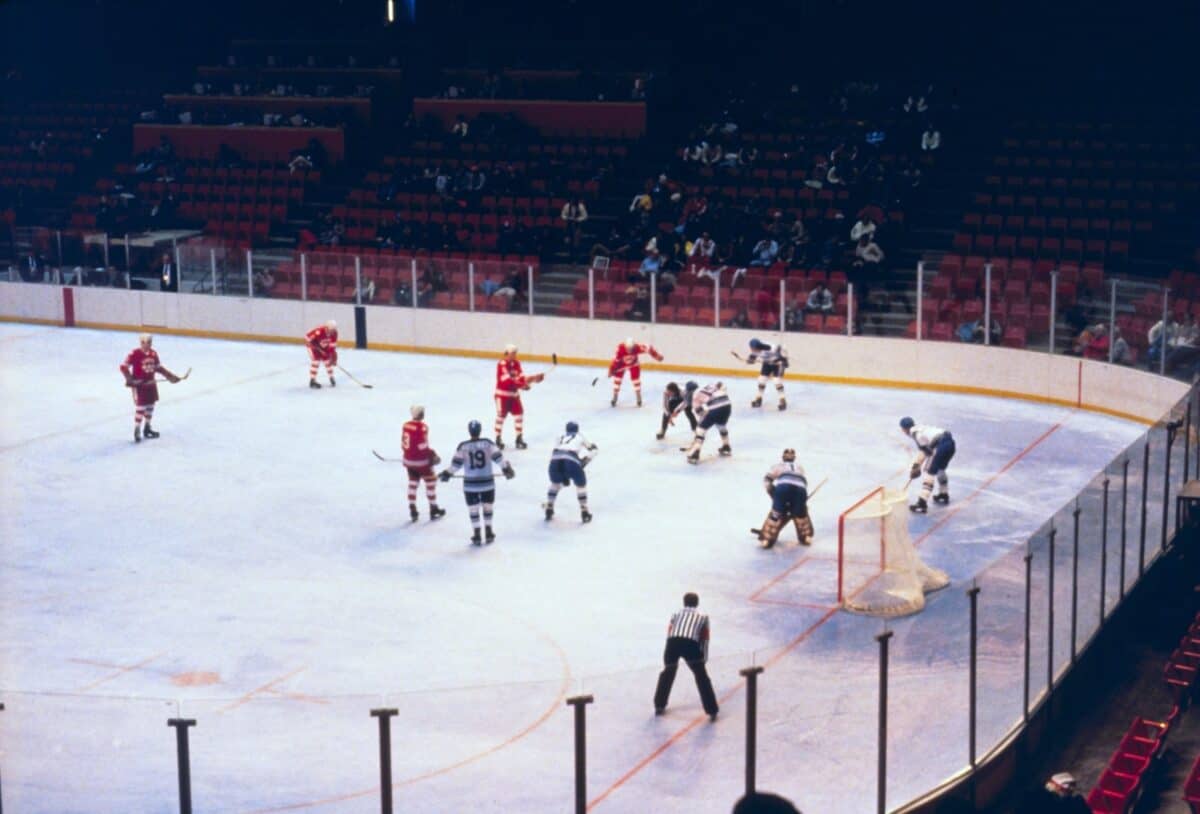
The United States stunned the Soviet Union 4-3 at Lake Placid.
©Dr. John Kelley, NOAA/NOS/COOPS / Public domain – Original / License
Few upsets carried more cultural weight than the United States hockey team’s 4-3 victory over the Soviet Union at the 1980 Winter Olympics in Lake Placid. The Soviet program had dominated international hockey for years, while the American roster was built largely from young college players. Mike Eruzione scored the go-ahead goal with 10 minutes remaining, and goaltender Jim Craig protected the lead through a frantic finish. The win did not technically secure the gold medal, since the United States still had to defeat Finland, but it became the tournament’s defining event. Against the backdrop of the Cold War, the game felt like far more than an athletic upset.
Derek Redmond Refuses to Abandon the Race (1992)
Derek Redmond’s 400-meter semifinal at the 1992 Barcelona Olympics is remembered even though he did not win, finish officially, or advance. About 150 meters into the race, the British runner tore his right hamstring and collapsed on the track. Redmond rejected the stretcher and began hopping toward the finish on one leg. His father, Jim, came down from the stands, pushed past officials, and placed an arm around his son as they completed the final stretch together. Because Redmond received assistance, the result was recorded as a did-not-finish, but the technical outcome became irrelevant. The scene endured as a powerful image of perseverance, parental support, and dignity in defeat.
Tiger Woods Makes the Chip Heard Around the World (2005)
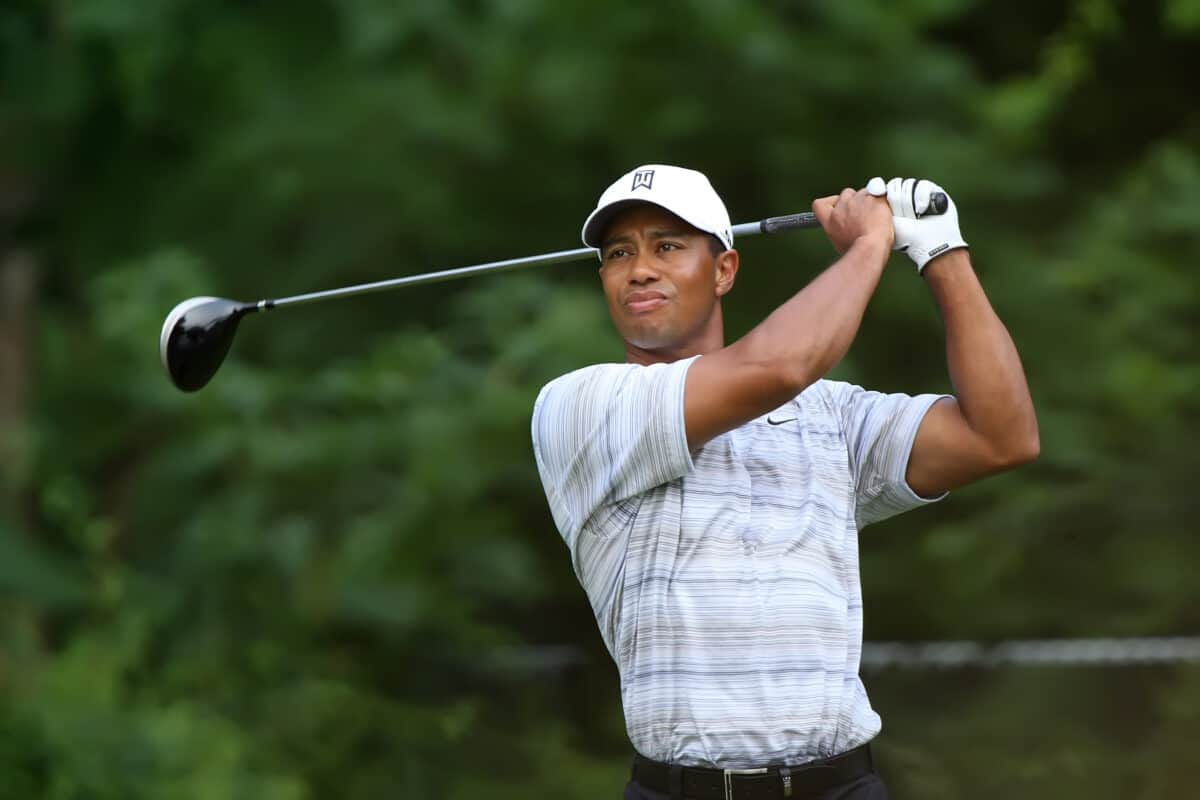
Woods’ chip-in on No. 16 became one of golf’s defining shots.
©Tiger Woods drives by Allison.jpg: Keith Allisonderivative work: Muhammad / CC BY-SA 2.0 – Original / License
Tiger Woods faced a nearly impossible recovery shot on the 16th hole during the final round of the 2005 Masters. His ball rested in thick grass behind the green, leaving a steep downhill path that curved sharply toward the cup. Woods aimed far to the left, chipped onto the slope, and watched the ball roll slowly across the green. It paused dramatically on the edge before dropping for birdie, producing one of golf’s most replayed images. The shot was not merely decorative. Woods later lost his lead, tied Chris DiMarco after 72 holes, and won on the first playoff hole. Without the birdie at 16, he likely would not have captured his fourth green jacket.
Michael Phelps Wins an Unprecedented Eight Gold Medals (2008)
Michael Phelps entered the 2008 Beijing Olympics chasing a standard that had stood since Mark Spitz won seven gold medals in 1972. Phelps competed in eight events and won all eight, setting seven world records and one Olympic record along the way. Several victories were astonishingly close, including the 100-meter butterfly, which he won by one-hundredth of a second. His performance required endurance across 17 races in nine days, with success in individual events, relays, multiple strokes, and distances from 100 to 400 meters. The eight-gold haul transformed Phelps into a global sports icon and remains the largest gold-medal total by one athlete at a single Olympics.
The Chicago Cubs End 108 Years of Heartbreak (2016)
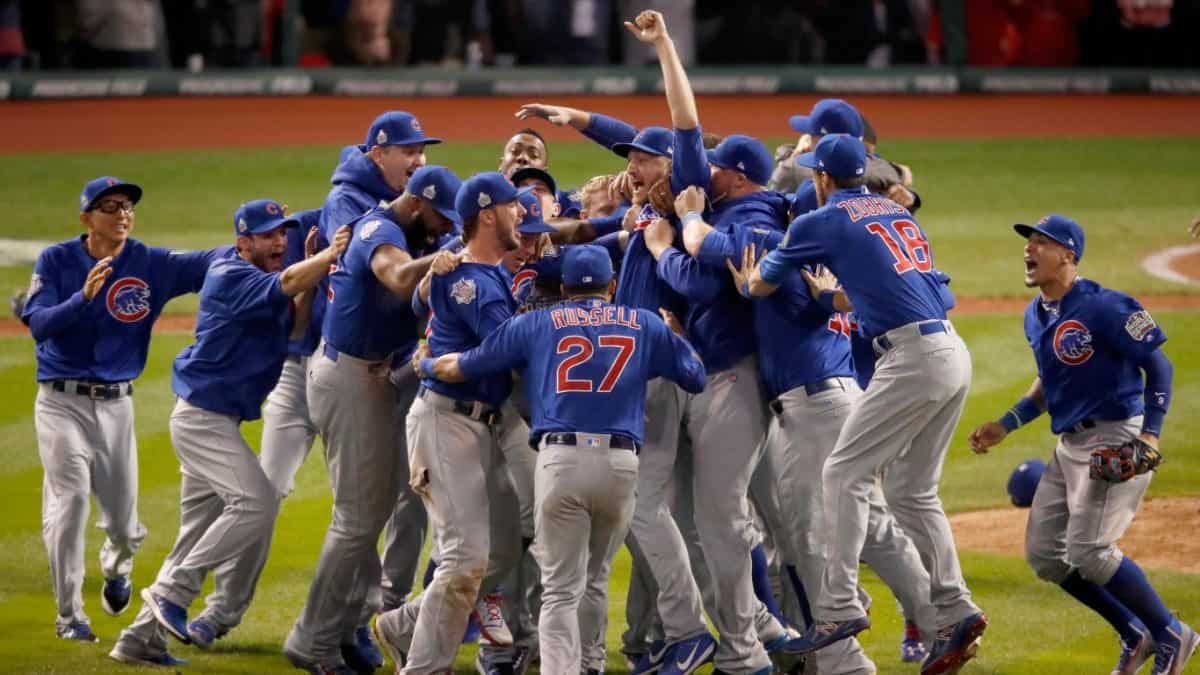
©Gregory Shamus / Getty Images
The Chicago Cubs entered the 2016 World Series carrying a championship drought that stretched back to 1908. When Cleveland took a 3-1 series lead, the familiar story of Cubs disappointment appeared ready to repeat itself. Instead, Chicago won three straight games, including an extraordinary Game 7 that featured a blown late lead, a brief rain delay, and extra innings. Ben Zobrist’s 10th-inning double helped the Cubs secure an 8-7 victory and their first title in 108 years. The moment mattered because several generations of fans had lived and died without seeing it, turning a baseball championship into a shared release of frustration, memory, and family history.
Tiger Woods Completes an Unlikely Masters Comeback (2019)
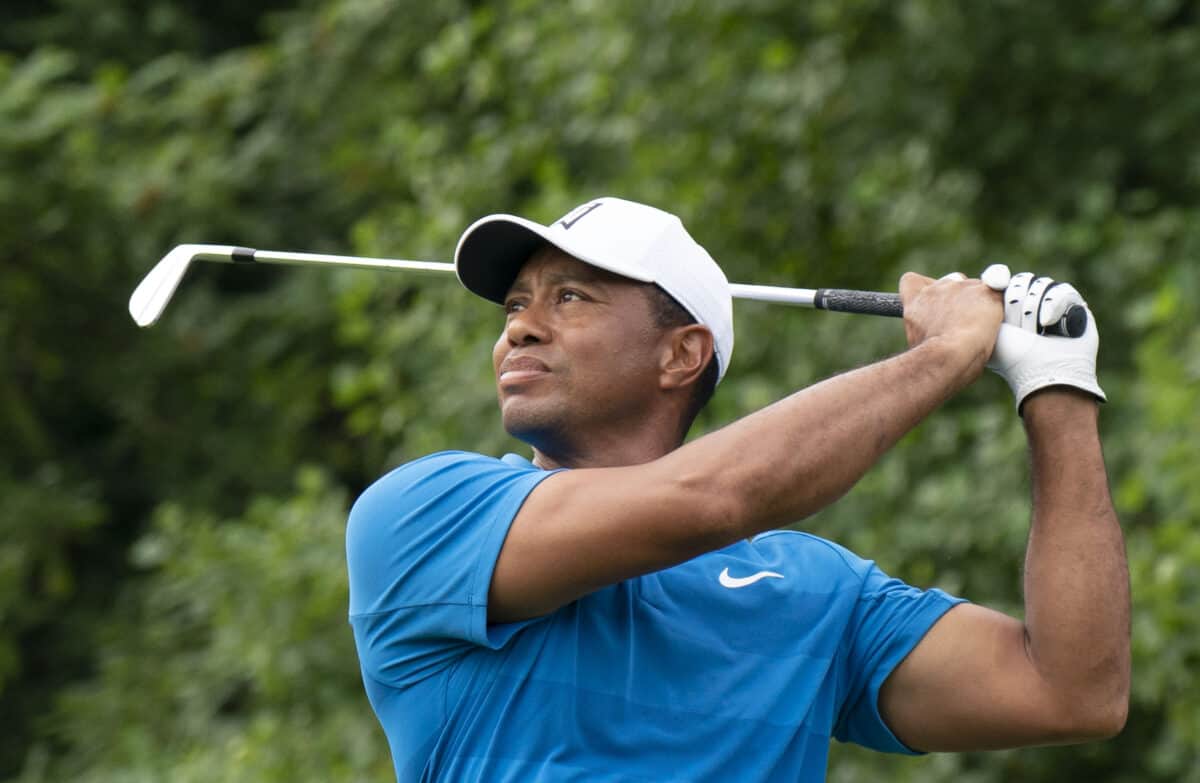
Woods won his fifth Masters and first major in nearly 11 years.
©KA Sports Photos from Hanover, MD, USA / CC BY-SA 2.0 – Original / License
Tiger Woods’ victory at the 2019 Masters carried a different kind of drama from his earlier dominance. By then, he had endured public scandal, repeated injuries, and multiple back surgeries, including spinal fusion. He began the final round two strokes behind Francesco Molinari but played patiently as several contenders found trouble at Augusta National. Woods took control on the back nine and finished at 13 under par, one stroke ahead of three runners-up. It was his fifth Masters title, his first major championship in nearly 11 years, and the first time he had won a major after trailing through 54 holes. The comeback restored a career many observers believed was effectively over.
Lionel Messi Finally Captures the World Cup (2022)
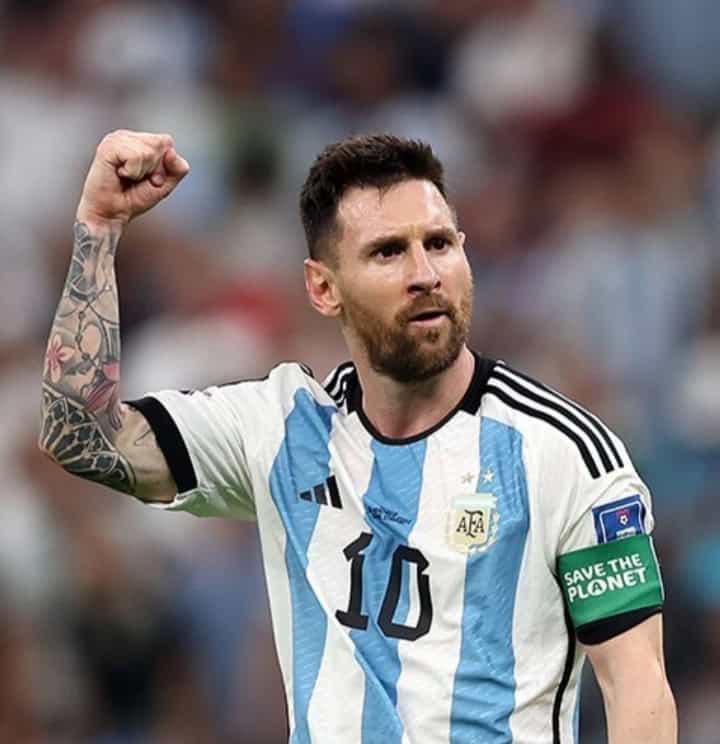
Lionel Messi had won nearly every major prize in soccer before the 2022 World Cup, but the trophy most closely tied to national greatness had remained out of reach. In Qatar, he led Argentina to the final against defending champion France and scored twice in a match that ended 3-3 after extra time. Kylian Mbappé answered with a hat trick, forcing a penalty shootout after one of the tournament’s most dramatic finals. Argentina prevailed 4-2 on penalties, giving the country its first World Cup title since 1986. Messi also became the first player to score in the group stage and every knockout round of a single men’s World Cup, completing the defining chapter of his international career.
Shohei Ohtani Creates Baseball’s 50-50 Club (2024)
Shohei Ohtani created a statistical category of his own on September 19, 2024, becoming the first Major League Baseball player to record at least 50 home runs and 50 stolen bases in one season. He reached the milestone during a remarkable game against Miami, going 6-for-6 with three home runs, two stolen bases, five extra-base hits, and 10 runs batted in. Ohtani had already changed expectations by succeeding as both an elite pitcher and hitter, but elbow surgery limited him to designated-hitter duties in 2024. Rather than producing a lesser season, he used his speed and power to create the 50-50 club, setting a benchmark that had never previously existed in the majors.
Simone Biles Returns to the Top in Paris (2024)
Simone Biles returned to the Olympics in Paris in 2024 after withdrawing from several events in Tokyo three years earlier while experiencing the dangerous spatial disorientation gymnasts call the twisties. Her comeback was not simply a return to competition. Biles helped the United States regain the women’s team title, won the individual all-around and vault, and added silver on floor exercise. She left Paris with four medals, including three golds, and became the first woman to win two nonconsecutive Olympic all-around titles. The performance expanded her legacy beyond medal counts, showing that stepping away for safety and mental health could be part of an elite athlete’s path back to the top.
Rory McIlroy Completes Golf’s Career Grand Slam (2025)

Rory McIlroy arrived at the 2025 Masters carrying more than a decade of pressure. He had already won the U.S. Open, PGA Championship, and Open Championship, leaving Augusta as the final requirement for a career Grand Slam. McIlroy surrendered a late lead during a tense final round but recovered to force a playoff with Justin Rose. On the first extra hole, he hit his approach close and made birdie to win his first green jacket. The victory made him only the sixth man to complete the modern career Grand Slam, joining Gene Sarazen, Ben Hogan, Gary Player, Jack Nicklaus, and Tiger Woods. His emotional reaction showed how one missing title had shaped years of expectation.