
20 Vintage Lunchboxes That Are Worth Serious Cash Today
There was a time when every cafeteria was filled with lunchboxes featuring the trendy pop culture references of the day. You picked your box based on what you loved and wore those colors proudly. Whether it kept your sandwich cold or not was a mere afterthought.
Decades later, some of these very lunchboxes have proven to be highly sought-after pieces of childhood memorabilia. Character licensing turned these boxes into collector bait, and the resale market has only gotten hungrier. Below is a list of the 20 most recognizable vintage lunchboxes that have sold recently on eBay.
The Beatles (1965)
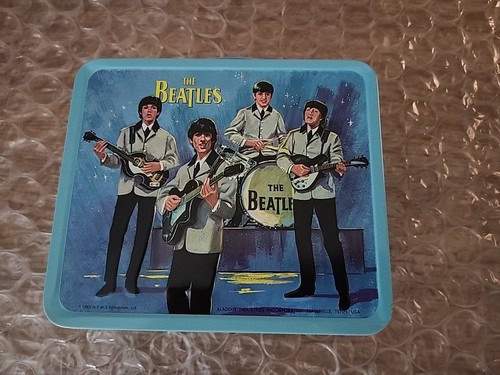
By 1965, the Beatles were more than just a band, they were a cultural phenomenon whose influence extended from hairstyle trends to merchandise of every kind. Beatlemania hype made the band into one of the world's most marketable acts at the time, and this box was just one piece of that wave. The Beatles' original 1965 Aladdin lunchbox sold for $2,700, making it the most expensive item on this list.
The Jetsons (1963)
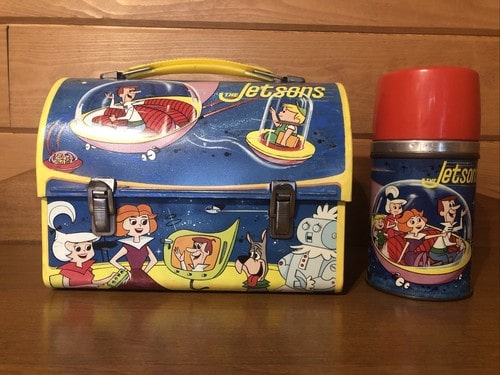
Hanna-Barbera created The Jetsons as a futuristic version of The Flintstones, complete with flying cars and robot maids. The show only lasted one season, but its imagery lives on. This particular lunchbox hit shelves while that first season was still airing, a small artifact of mid-century excitement about where technology was headed. This 1963 Jetsons lunchbox and thermos sold for $2,600, proof that a vision of the future from over sixty years ago still has pull, even though that future never quite arrived.
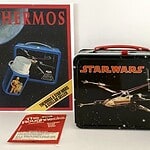
Star Wars (1977)
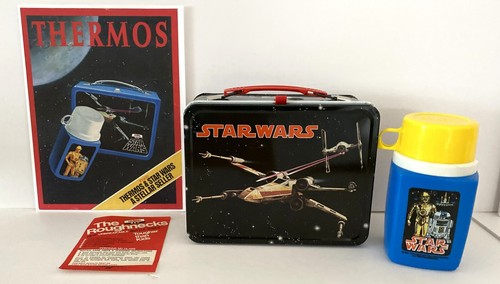
Few movies have impacted pop culture like Star Wars did when it first premiered in 1977, and the marketing that went into its merchandise played a big role. The same year that Star Wars was released, the lunchbox, featuring an X-wing fighter, and its matching thermos, decorated with C-3PO and R2-D2, appeared in cafeterias right alongside the regular classroom supplies. There's been no noticeable decline in demand for it in the decades since. This particular lunchbox was auctioned for $1,124.99.
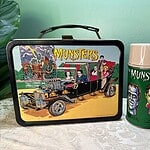
The Munsters (1965)
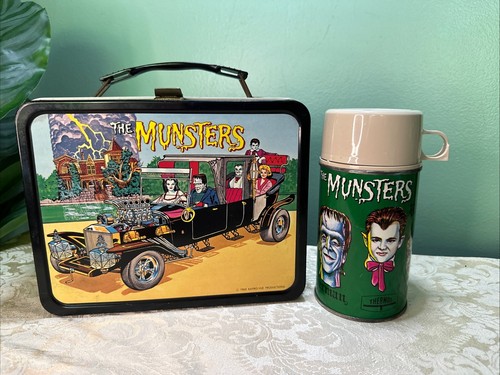
The Munsters took the standard format of an ordinary TV series and turned it into a haunted house series about a family of monsters who considered themselves perfectly normal. The show was around for just two seasons but created one of the most unique lunch box designs ever, thanks to its gothic look and deadpan humor. It sold for $1,150, holding its value better than plenty of shows that lasted much longer on television.
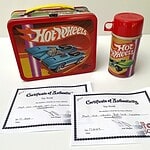
Hot Wheels (1969)
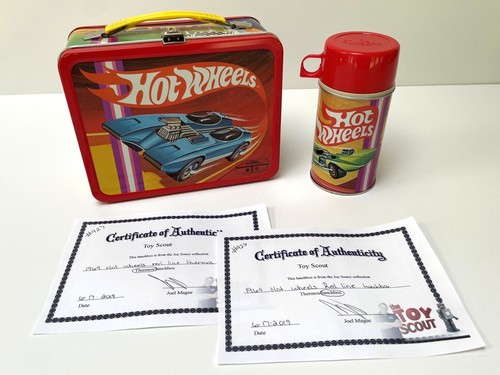
Mattel introduced this toy car line in 1968, turning miniature cars into an instant obsession and going up against the more established Matchbox line. This 1969 Red Line lunchbox and thermos set came out the very next year, riding that wave with the same red design and racing-stripe look that made the cars' packaging instantly recognizable. It recently sold for $1,450.

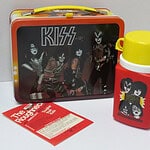
Kiss (1977)
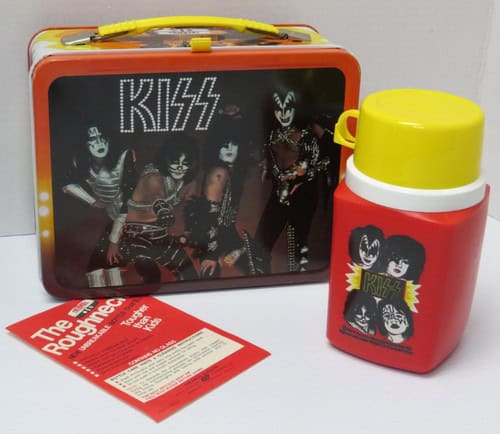
Kiss reached stardom thanks to its over-the-top showmanship, including its iconic face paint and memorable performances. Its merchandising was ubiquitous at the time, and you could see its logo on pretty much anything. This lunchbox, featuring the full lineup in face paint, is a perfect example of a band that mastered marketing as well as they did the music itself. This particular piece fetched $750, a reminder that the band's commercial instincts in the '70s were just as sharp as their stage show.
Evel Knievel (1974)
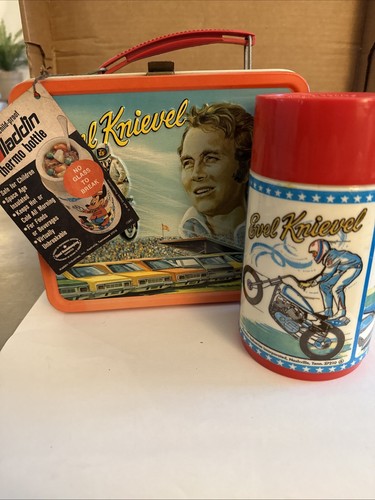
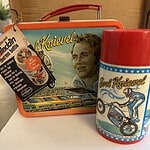
Evel Knievel wasn't a movie or cartoon character. He was a real person doing some unreal stunts. His motorcycle jumps propelled him into stardom in America during the early '70s. This fame led to an extensive range of toys and other merchandise, including lunchboxes. This Evel Knievel lunchbox, depicting one of his stunts, sold for $1,050, more than several entries here built around licensed characters rather than a real person.
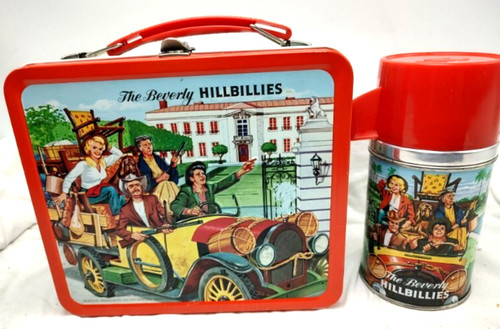
The Beverly Hillbillies (1963)
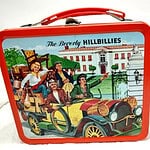
An oil-rich backwoods family moving to one of the country's wealthiest neighborhoods, with none of the polish to fit in. The Beverly Hillbillies took a simple fish-out-of-water premise and turned it into one of the most popular sitcoms of the decade. It had all the right ingredients to become an obvious choice for adaptation as a lunch box cover from very early on in the series' life cycle. This one sold for $645, holding up well for a show that's now over six decades old.
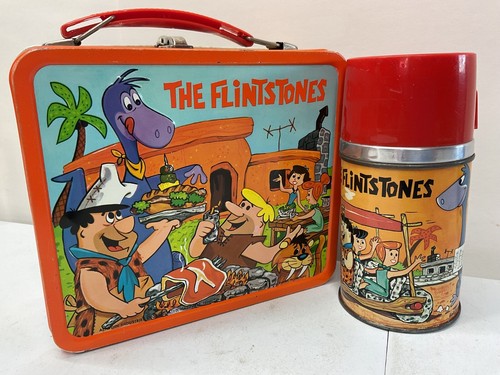
The Flintstones (1962)
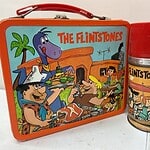
The Flintstones followed a Stone Age family living an oddly familiar suburban life, complete with everyday conveniences reimagined as prehistoric gadgets, foot-powered cars, bird-beak record players, the whole bit. It became the first animated series to air in prime time, proving that cartoons could be loved by kids and grown-ups alike. This lunchbox, showing Fred grilling up a backyard barbecue on a rock slab, sold for $500, a solid price for a box that predates most of the other entries here, depicting a family that predates modern civilization itself.
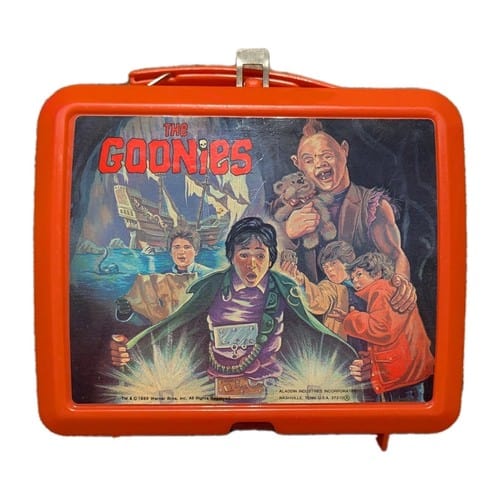
The Goonies (1985)
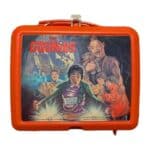
The Goonies wasn't a huge success during its theater run, but viewers eventually caught on, and the film managed to accumulate enough of a fan base to become one of the definitive adventure movies of the decade. That slow-burn popularity is part of why its merchandise still draws die-hard fans decades later. This particular lunch box was auctioned off for $495, a reasonable price for a piece of one of the most rewatched movies of the '80s.
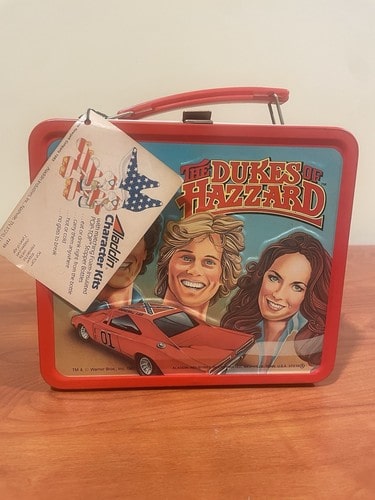
The Dukes of Hazzard (1983)
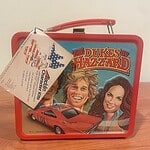
Car chases, a souped-up Charger, and a catchy theme song all made The Dukes of Hazzard into a ratings juggernaut for CBS during the early 1980s. Back in the day, the show was a symbol of a very particular brand of rural American culture that dominated television. The lunchbox put Bo, Luke, and Daisy Duke front and center, with the General Lee parked right below them, and sold for $450.
The Brady Bunch (1970)
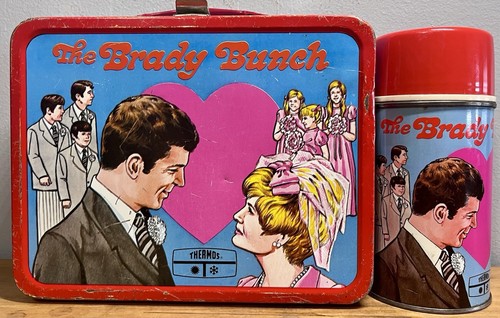
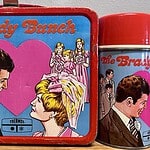
The Brady Bunch followed the Mike and Carol Brady wedding, two single parents merging their households into one. It turned ordinary, relatable suburban chaos into one of the most quotable sitcoms of its era. Despite receiving poor ratings when it first aired, the show went on to become one of the most rerun sitcoms on television. This lunchbox, capturing the wedding day. It sold for $350, which isn’t bad for a show that didn’t do so well at the start of its run.
Scooby Doo (1973)
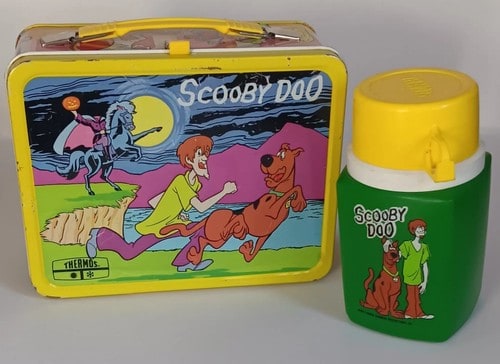
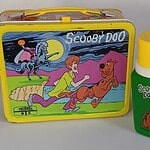
Scooby-Doo made its debut in 1969 and has stayed on the air one way or another ever since. It's one of the longest-running animated series on American television. The 1973 lunchbox portrays the original incarnation of Scooby-Doo, complete with a Headless Horseman chase scene straight out of one of the series’ most iconic episodes, before decades of spinoffs and reboots reshaped the franchise. It was sold for $373, which is a deal considering how successful the franchise is today.
He-Man and the Masters of the Universe (1984)
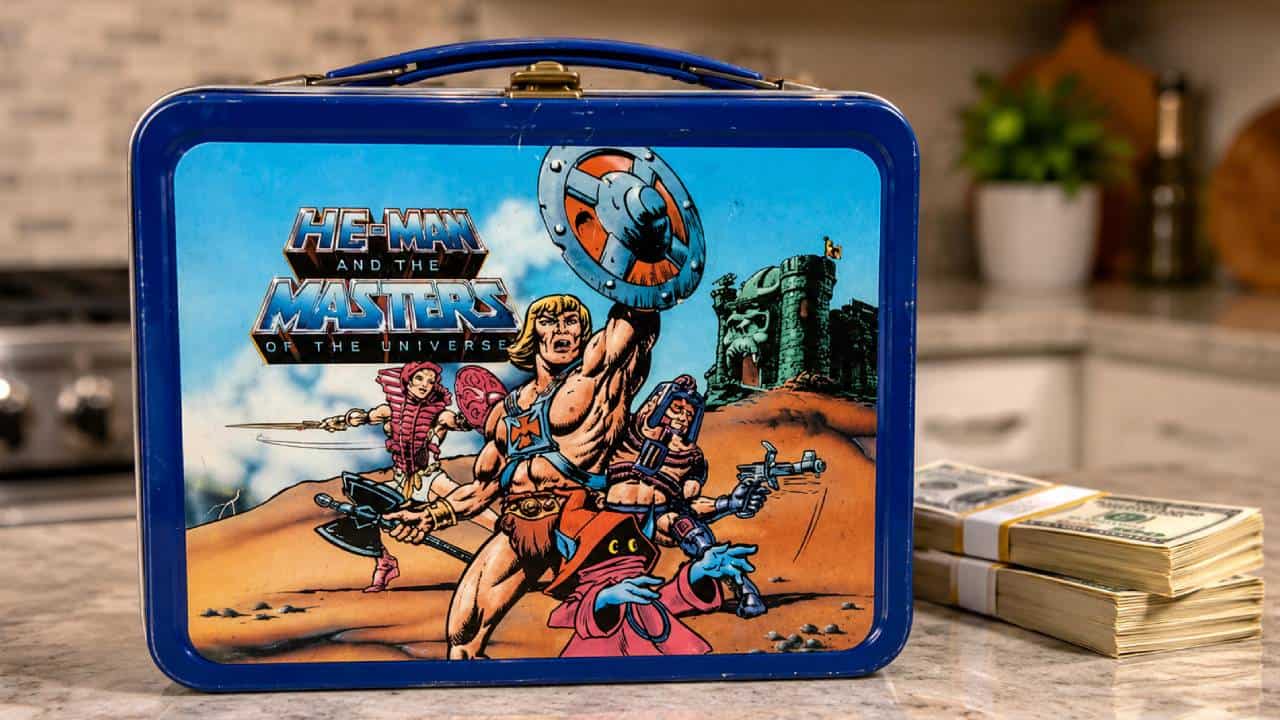
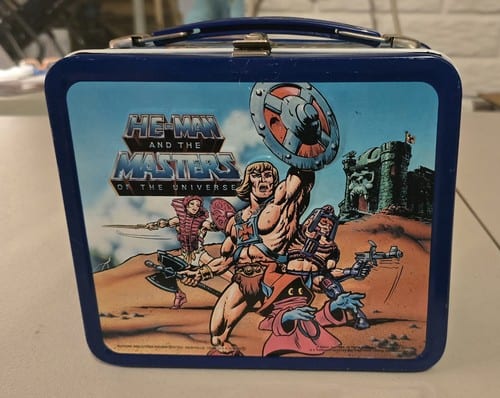
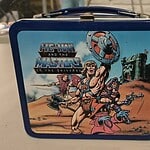
He-Man capitalized on the '80s action figure craze, created as a toy line first and a cartoon later. The show followed a barbarian prince defending the magical realm of Eternia from the villainous Skeletor. This lunchbox, showing He-Man with Castle Grayskull in the background, sold for $275, modest compared to other entries here, especially considering it's one of the decade's biggest cartoons.
The Six Million Dollar Man (1974)
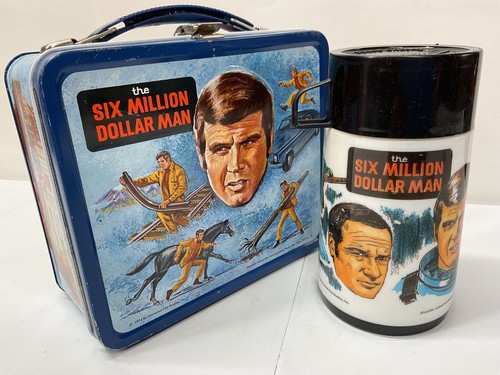
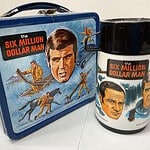
Steve Austin was an astronaut rebuilt with bionic limbs after a near-fatal crash, and his second life as a secret agent who used those abilities to fight crime turned The Six Million Dollar Man into a '70s phenomenon. That premise, a hero pulled from the jaws of death and rebuilt into something more than human, got copied across the genre for decades to follow. The lunchbox was sold for $275.
E.T. (1982)
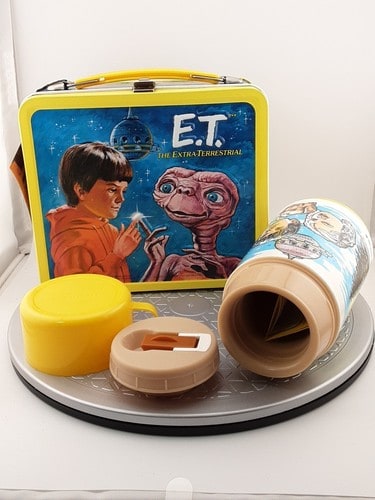
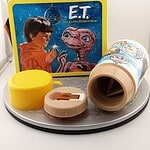
Steven Spielberg's movie about an alien marooned on Earth and the boy who befriends him was the most successful movie released in 1982, and one of the most iconic films of the era. The alien itself was especially marketing-friendly, and the E.T. craze spread to all types of products, including lunchboxes. This one captures the glowing-finger moment between Elliott and E.T., and was sold for $275.55, a relatively low price given its popularity.
Knight Rider (1982)
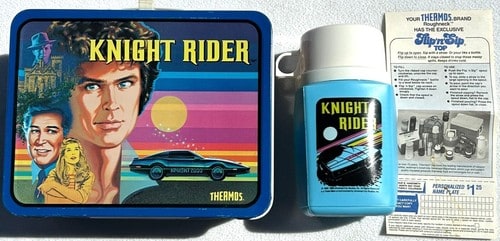
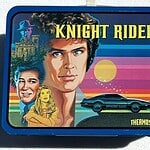
Knight Rider's talking car, KITT, was such a scene-stealer that it's fair to wonder who was actually the star of the show. The series became a massive hit in the '80s and turned its lead into an international name. The lunchbox sold for $299.85, a fair price for a piece of peak '80s television memorabilia.
Smurfs (1983)
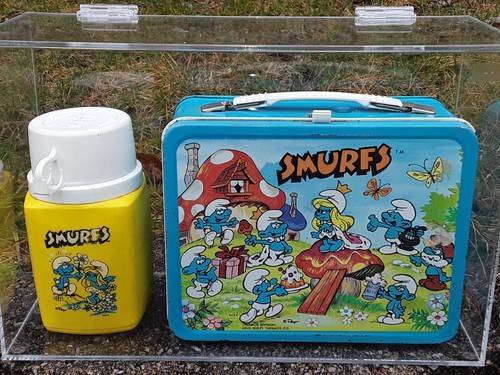
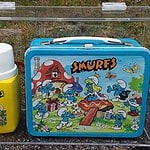
From its humble beginnings as a comic strip from Belgium, The Smurfs rose to fame and became a true American merchandising phenomenon in the early 1980's, when the TV show turned the tiny blue creatures into a fixture in every kid's home. This lunchbox is part of a line of products that had toys, books, mini-figures, board games, cereal, you name it. At the price of $699.99, this lunchbox performed quite well, especially for a brand existing today mostly on reruns.
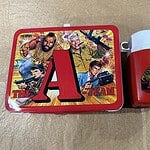
The A-Team (1983)
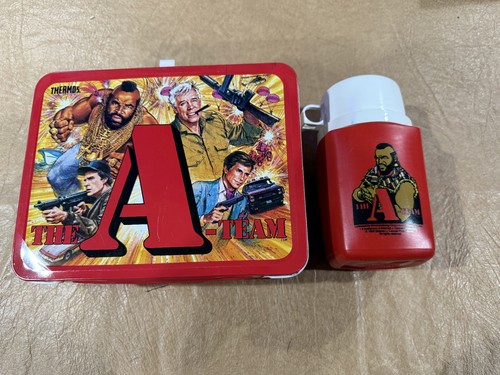
The A-Team follows a group of renegade mercenaries who use their military background to fight crime. Mr. T's eccentric look, the Mohawk haircut and gold chains, was an important factor in the show's success and made him one of the most memorable figures to grace TV screens in the mid-1980s. The show was packed with chaotic action scenes and catchy phrases, and that energy translated easily into lunchbox form. This one sold for $425 and it was probably a hit for whoever first took it to school back in the 80s.
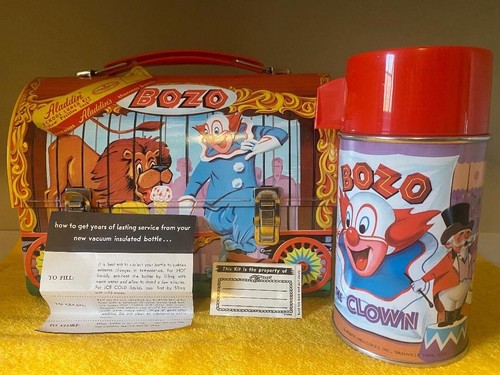
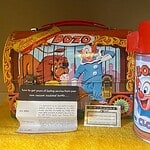
Bozo the Clown (1963)
Bozo was not featured in any particular TV series. He was a staple of local TV across the country, with stations licensing the character and hiring someone to play him for decades. That local presence is exactly what made Bozo one of the best-known characters in children's television, years before national syndication became the norm. This particular lunchbox fetched $1,750, a surprisingly strong number for a character whose fame was built on local airwaves rather than a single national hit.