





















10 “Historical Facts” Invented to Sell You Something
History has a way of smoothing over its own rough edges. A polished version of history is simply easier to sell than the messy one. What gets passed down as cultural wisdom or scientific consensus often began as a pitch deck.
Some of these manufactured facts are benign. Others have led to major behavioral changes among consumers, making a lot of money for those who invented them. All of them worked. Once a narrative manages to get into the minds of people, it stays there no matter what.
Diamonds Are Rare
De Beers spent much of the 20th century building the myth of diamond scarcity. It had control of the entire distribution network, so much so that it could hold back huge reserves of diamonds while releasing them in measured quantities in order to keep prices high. Diamonds are not rare stones, geologically speaking. In fact, they are the world's most commonly occurring precious gems, with deposits found all over Africa, Russia, Canada, and Australia, none of them mined to capacity yet.
The "A Diamond is Forever" slogan carried a secondary, practical instruction: never resell. This was because once there was a secondary market where diamonds were being sold, their true value would be revealed. De Beers' control over supply depended on there being no alternative price signal.
With the association of diamonds with eternal love and marriage, the idea of reselling became morally suspect. People hung onto the diamonds that could have been resold because the ad had framed selling as a betrayal of the commitment the stone was meant to represent.
Bad Breath Is a Medical Emergency
Listerine was originally invented in 1879 as an antiseptic for surgical purposes. For the next several decades, it was used as a floor cleaner and a dental office product. It was temporarily marketed as a treatment for gonorrhea. It was not a household name until the 1920s when advertising transformed halitosis from a minor social imperfection into an embarrassing medical condition that needed urgent treatment.
In fact, Gerald Lambert, son of the formula's owner, found the obscure term "halitosis" in an old medical journal and started using it in print ads along with cautionary tales of unmarried women who had no faults other than bad breath. Sales grew from some $115,000 annually in 1921 to over $8 million by 1927. Halitosis had been used in the language of medicine since 1874, when it was coined by Dr. Joseph William Howe. Listerine invented the urgency around the word and then sold the cure.
Santa Claus Wears Red
The jolly man in the red suit dates back to Saint Nicholas, various Northern European folklore, and Clement Clarke Moore's poem from 1822 that described a plump, fur-clad figure. The modern image, though, solidified somewhere else entirely.
In 1931, Coca-Cola advertising decided to enlist Haddon Sundblom to paint a more wholesome Santa Claus for their winter campaigns. Sundblom chose a retired salesman as his live model and based his painting on Moore's description that had already established the red coat.
The red suit was not invented by Coca-Cola because there were depictions of Santa in a red suit before 1931. What the campaign did was make it so omnipresent that it crowded out all others. Sundblom was painting the Santa ads for 33 consecutive years. By the time he stopped in 1964, the image was considered an ancient tradition.
You Need Eight Glasses of Water a Day
No controlled study has ever confirmed that the average healthy adult needs eight daily glasses of water. This myth goes back to the 1945 US Food and Nutrition Board recommendation for adults to drink about 2.5 liters of water daily. Crucially, the very next sentence stated that most of this water was present in prepared foods. That qualifier got stripped away somewhere between the government report and people's knowledge.
In 2002, Heinz Valtin, a Dartmouth Medical School physician, published a widely cited review in the American Journal of Physiology, finding no scientific evidence supporting the eight-glasses rule and even adding that the healthy kidneys handled the excess water efficiently. The multi-hundred-billion-dollar bottled water industry, which grew from a niche product in the 1970s, had obvious commercial reasons to keep the guideline circulating.
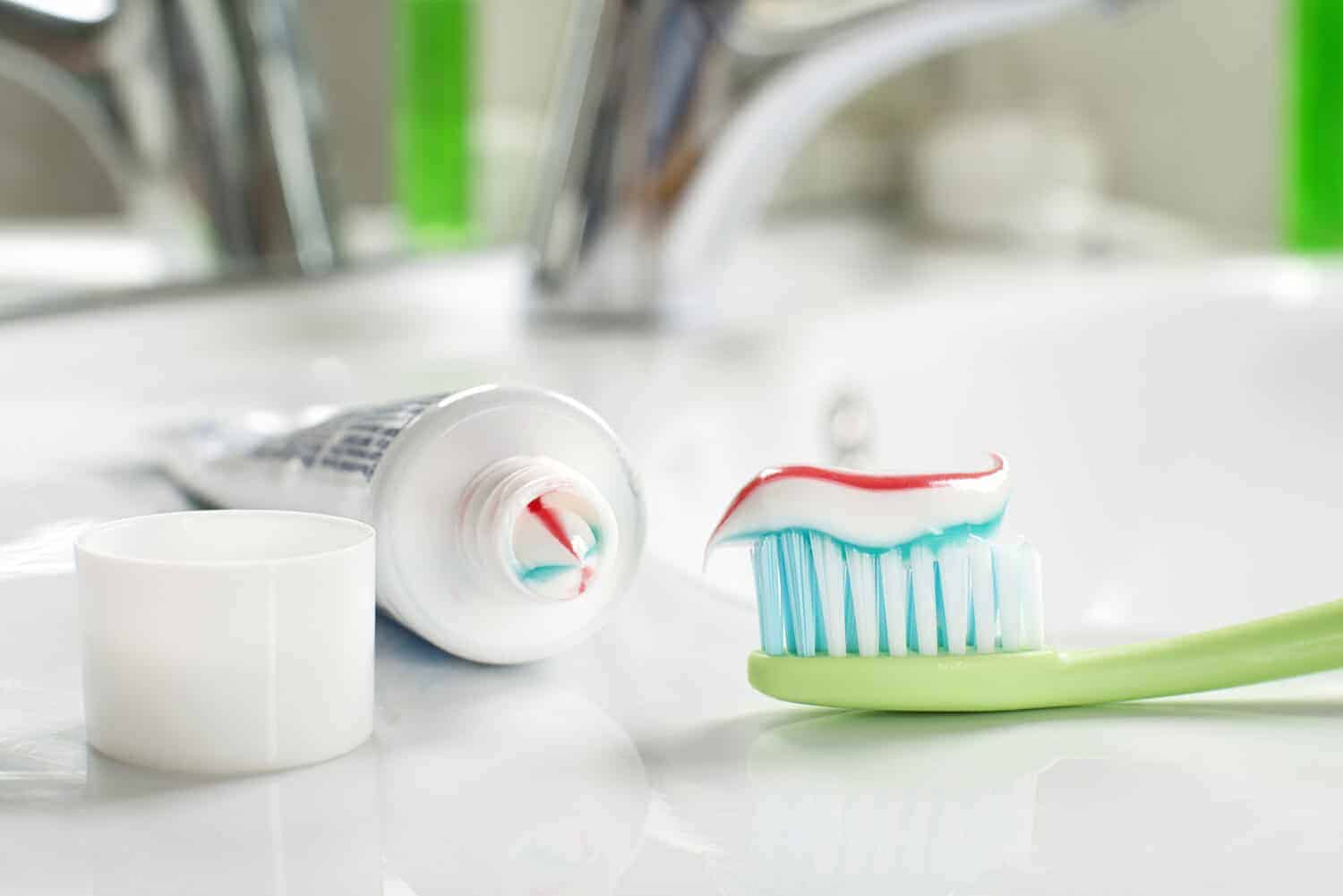
Toothpaste Needs to Foam
The foam effect in toothpaste is achieved thanks to sodium lauryl sulfate, a detergent introduced into toothpaste because it gives the sensation of cleanliness. Studies have found that SLS contributes little to oral hygiene and may trigger canker sores in sensitive individuals. Sodium lauryl sulfate was popularized by manufacturers in the middle of the twentieth century, who understood that a product that foams seems like it’s working. Companies learned about the effect of foam and included surfactants industry-wide after that. Many dentists now recommend SLS-free toothpaste for patients prone to mouth ulcers. The foam was always theater.
Breakfast Is the Most Important Meal of the Day
The most noticeable early use of the whole “breakfast is the most important meal of the day” phrase as a marketing technique dates back to 1944 when General Foods company (which made Grape-Nuts) launched an advertising campaign under the slogan "Eat a Good Breakfast, Do a Better Job" with the distribution of pamphlets in grocery stores and radio ads that declared that "Nutrition experts say breakfast is the most important meal of the day."
The phrase appeared in print even earlier, back in 1917 in a magazine called Good Health, edited by John Harvey Kellogg, but it was the General Foods campaign that drove it into mass culture.
Recycling Is Your Personal Responsibility
The 1971 campaign ad of Keep America Beautiful featured a figure supposedly representing a Native American who paddled through polluted waterways with a single tear rolling down his cheek. The image became one of the most recognized pieces of environmental advertising ever made. The model in this case was Espera Oscar de Corti, an Italian-American born to Sicilian parents.
Keep America Beautiful was established in 1953 by industry executives from Coca-Cola, PepsiCo, and Anheuser-Busch, just one year after Vermont passed the first US bottle bill. The legislation would have made companies take back their own containers. The whole point of the campaign was to keep laws like that off the books. The 1971 ad ran between two rounds of federal lobbying by beverage industry trade associations to defeat container deposit legislation.
The campaign moved the burden of responsibility for pollution from corporations to individual citizens.
Napoleon Was Very Short
Napoleon Bonaparte had an approximate height of 5 feet 6 inches according to today's standards, which was the height of a normally proportioned Frenchman at the time. Two sources are behind this legend.
The first source was an incorrect conversion of units, whereby the French unit of measure "pouce" had a length of 2.71 centimeters, whereas the British inch had 2.54 centimeters. The height of Napoleon, as noted down by his personal doctor, was more than "5 pieds 2 pouces." When converted into English measurements, 5 feet 2 inches were used, producing a figure roughly 4 inches shorter than the correct conversion.
The second was paid propaganda. From 1797, the British government hired caricaturist James Gillray in secret. In 1803, when Napoleon was assembling his forces for invasion in Boulogne, Gillray came up with a series of cartoons called "Little Boney" showing Napoleon as a pint-sized figure in comically oversized boots, stamping and fuming as the rest of Europe watched.
This character was a calculated strategic move with a governmental sponsor behind it. It was a success enough that Napoleon, nearing the end of his days, once said that Gillray did him more harm with his cartoons than all the armies of Europe. The image of the short, furious tyrant outlasted the war, the empire, and the man himself.
"Blue Monday" Is the Most Depressing Day of the Year
Every January, media outlets report that a specific Monday of the month, usually the third, is scientifically the most depressing day of the year. This ongoing myth is based on a formula taking into account the weather, debts, days since Christmas, and broken New Year's resolutions. The term was coined in a 2005 press release from Sky Travel, a holiday booking company that had commissioned the formula specifically to encourage people to book a vacation.
The myth does not have any scientific basis whatsoever. It was claimed to have been devised by a Cardiff University tutor, Cliff Arnall, who, at a later date, made public protests regarding its use and clarified that he had never meant the date to be depressing. Mental health researchers have criticized the framing repeatedly, noting that it trivializes conditions like seasonal depression.
Body Odor Is a Social Crisis
Edna Murphey, in 1910, put the aluminum chloride antiperspirant developed by her surgeon father to keep his hands dry in the operating room under her armpits. She realized that starting a business out of it was a good idea. The company name became "Odorono", meaning "odor? Oh no!" Sales went almost nowhere. Most people who knew about the product thought antiperspirants were either unnecessary or harmful, or both. Sweating was just a fact of life.
This remained true until 1919, when copywriter James Webb Young at J. Walter Thompson ran an ad in the Ladies' Home Journal titled "Within the Curve of a Woman's Arm," framing perspiration as a social catastrophe that polite acquaintances would never mention to your face, but would absolutely discuss behind your back.
Approximately 200 readers were so offended by the article that they canceled their subscriptions. But Odorono's sales grew 112 percent in the subsequent year, reaching $417,000.
The image featured at the top of this post is ©Andrew Clemente