
American food has never been simple. The country is enormous, its regional traditions are wildly different, and centuries of immigration, invention, and culinary experimentation have produced dishes that range from world-class to completely baffling. Most Americans barely think twice about them. But try explaining a corn dog, a fluffernutter, or a bowl of savory Jell-O salad to someone overseas, and the conversation can change quickly. Some foods sound strange because of their ingredients, while others break rules about what breakfast, dessert, or even cheese is supposed to be. These are 12 classic American foods that often leave foreign visitors confused, fascinated, or wondering why anyone thought of them in the first place.
Candy Corn
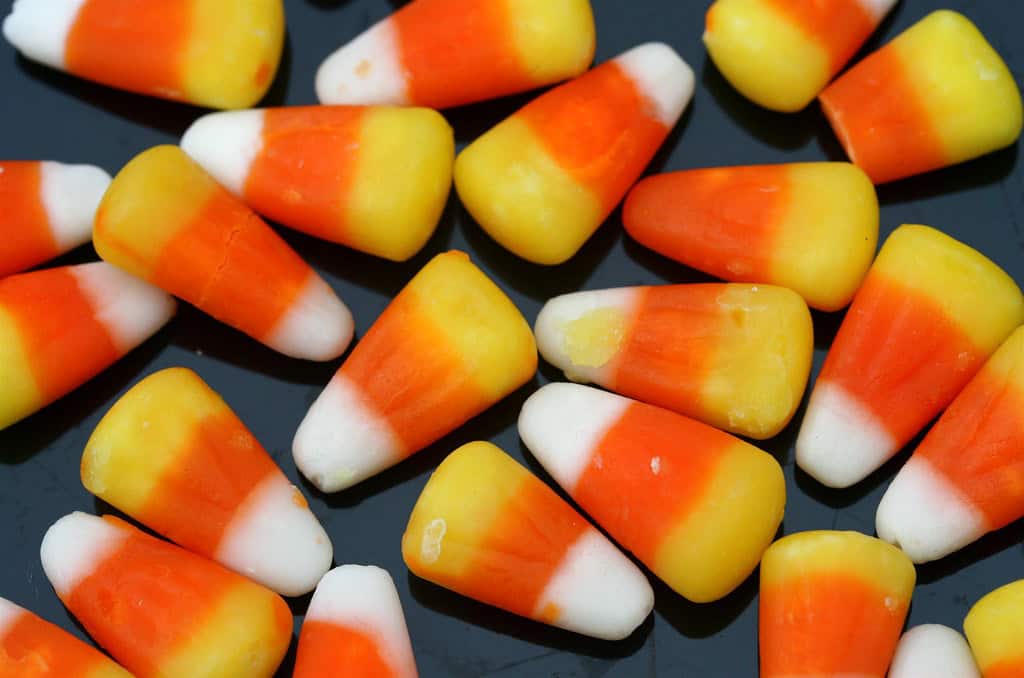
Candy corn has been part of American Halloween culture since the late 1800s, yet it remains one of the hardest seasonal treats to explain to someone who did not grow up with it. The tiny kernels are made mostly from sugar and corn syrup, giving them a firm, slightly chewy texture that critics often compare to a sweet candle. They are not fruity, chocolatey, sour, or gummy, and their flavor is difficult to describe beyond vanilla-like sweetness. That simplicity is exactly what confuses many first-time tasters. In countries with elaborate pastry and candy traditions, the idea of buying enormous bags of tri-colored sugar kernels every October can seem less like a treat and more like an inexplicable national ritual.
Deep-Fried Butter
Americans have a long tradition of deep-frying foods that were never designed for a fryer, but deep-fried butter still manages to stop people in their tracks. The version that won the 2009 Big Tex Choice Award at the State Fair of Texas used whipped butter formed into balls, frozen, covered in dough, and fried until the outside turned golden while the inside melted. It later appeared at fairs around the country, where excess is part of the attraction. What unsettles many outsiders is not merely the frying. Plenty of cultures fry rich foods. It is the complete lack of disguise. Deep-fried butter is exactly what the name promises: hot, sweetened dough wrapped around melting fat. There is no nutritional pretense, no subtlety, and absolutely no apology.
Processed Cheese Slices
Individually wrapped processed cheese slices are ordinary in American lunchboxes and refrigerators, but they can look almost futuristic to visitors from countries with long cheese traditions. U.S. regulations distinguish between pasteurized process cheese, process cheese food, and process cheese spread, depending on the recipe. That legal vocabulary alone can make outsiders suspicious. The texture is engineered to stay smooth and melt evenly, which is why the slices work so well on burgers and grilled cheese. Still, peeling a perfectly square orange slice from its own plastic wrapper feels strange to people accustomed to cheese being cut from a wheel or block. For them, the question is not whether it melts well, but whether something so uniform should count as cheese at all.
Peanut Butter and Jelly Sandwiches
©P Maxwell Photography/Shutterstock.com
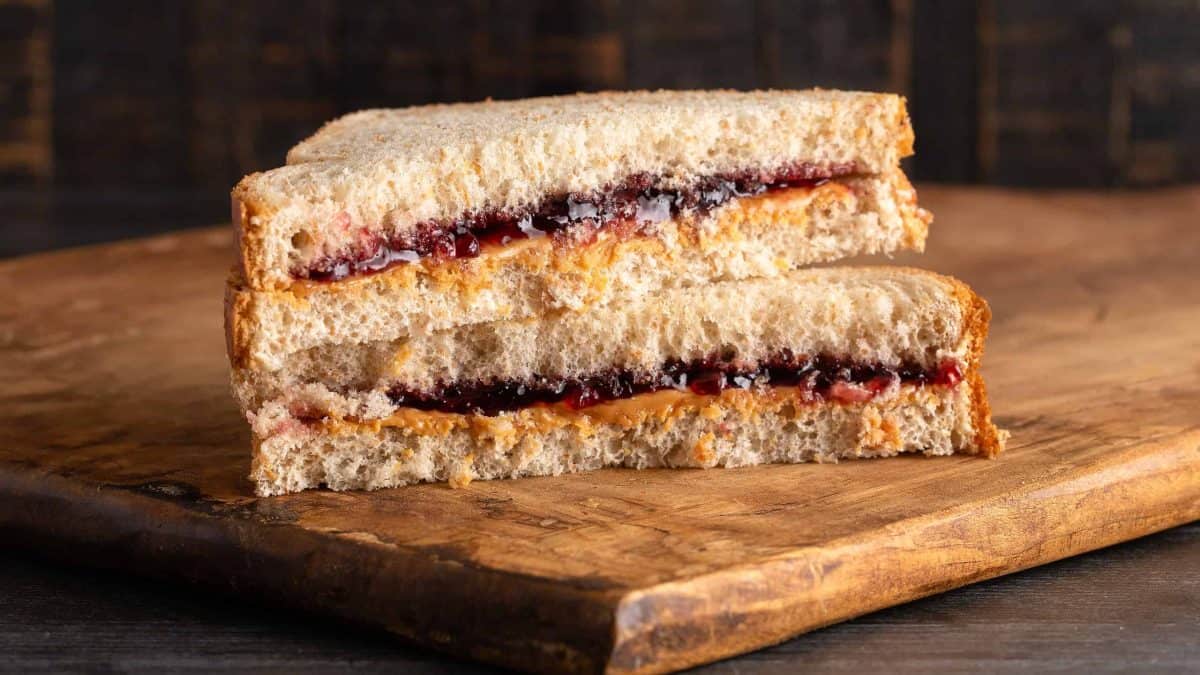
The peanut butter and jelly sandwich seems completely normal in the United States: inexpensive, easy to make, and familiar to generations of schoolchildren. Outside the country, however, the combination is far less common and can be surprisingly difficult to sell. Peanut butter and fruit preserves exist in many places, but spreading both onto soft white bread creates a sticky, sweet, almost dessert-like lunch that puzzles people used to savory sandwiches filled with cheese, meat, or vegetables. The bread adds another layer of culture shock. American sandwich bread is often softer and sweeter than European loaves, so the entire meal can seem closer to cake than lunch. To Americans, PB&J tastes like childhood. To many newcomers, it tastes like three sweet textures fighting for space.
Corn Dogs
A corn dog takes a familiar sausage, coats it in cornmeal batter, deep-fries it, and puts the entire thing on a stick. In the United States, that combination belongs naturally at fairs, carnivals, stadiums, and school cafeterias. To many foreign visitors, every part raises another question. Why sweeten the bread around a hot dog? Why fry a food that was already cooked? Why turn a sausage into something that looks like a giant lollipop? Food on sticks is common around the world, from satay to yakitori, but those dishes are unmistakably savory. The corn dog sits in a stranger category: part sausage, part fried bread, part portable novelty. It is easy to eat, hard to classify, and so thoroughly American that explaining it often sounds more bizarre than simply handing someone one.
Root Beer
Root beer is a distinctly American soft drink, but its flavor can be startling to anyone who associates wintergreen and herbal notes with medicine. Early versions used roots, bark, and herbs, including sassafras. Commercial manufacturers later shifted to safrole-free extracts and other flavorings after safrole was prohibited in food. The modern drink is sweet, creamy, spicy, and difficult to compare with cola or fruit soda. In parts of Europe and Asia, similar flavors appear in cough syrups, liniments, or medicinal products, so a first sip may trigger the wrong memory. Americans make the experience even stranger by pouring it over vanilla ice cream. A root beer float is nostalgic comfort at home, but abroad it can taste like dessert made with something from the medicine cabinet.
Fluffernutter Sandwiches
Sweet Homemade Peanut Butter Fluffernutter Sandwich with Marshmallow Fluff
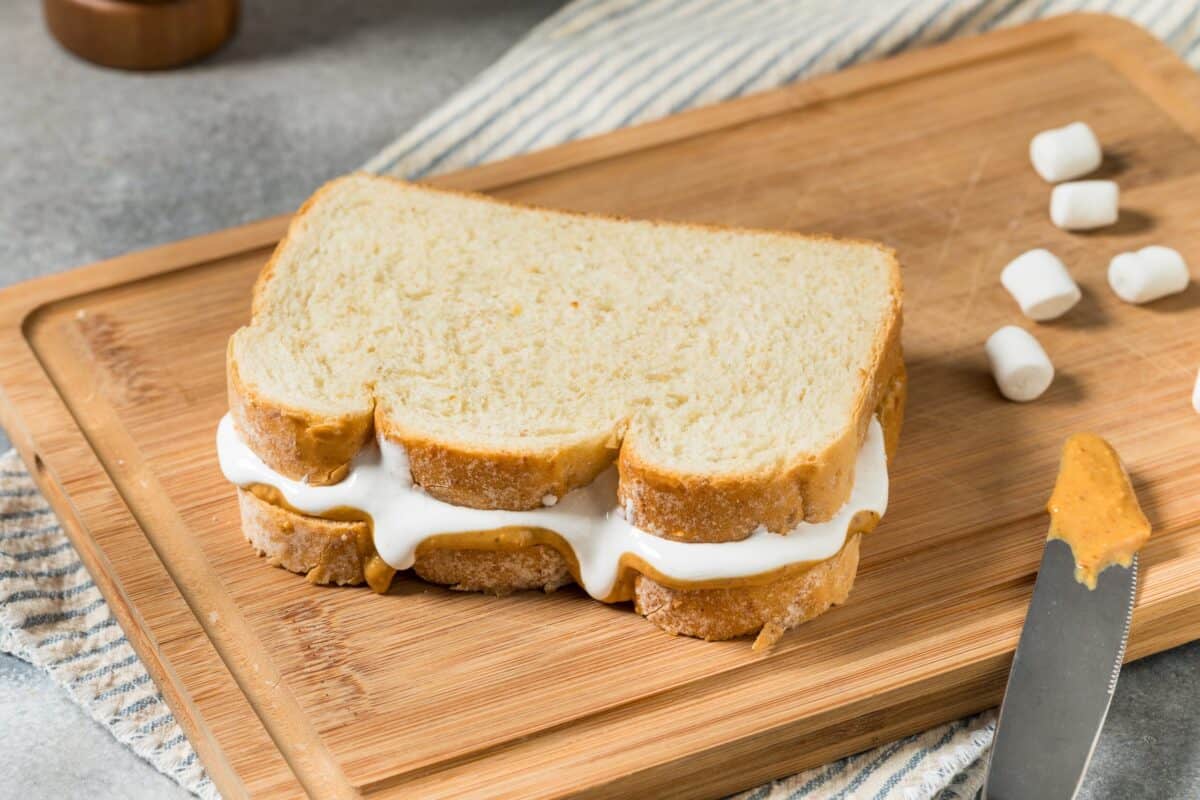
If peanut butter and jelly already seems strange, the fluffernutter takes the idea much further. The New England favorite combines peanut butter and marshmallow cream, usually on soft white bread, creating a sandwich that is sweet, salty, sticky, and almost impossible to eat neatly. Its roots go back to early-20th-century Massachusetts, where marshmallow creme became a regional product and recipes paired it with peanut butter. The name “fluffernutter” arrived later as a marketing term, but the sandwich developed a devoted following. Foreign visitors may struggle with the idea of calling it lunch rather than dessert. Two dense spreads cling to the roof of the mouth, the bread nearly disappears, and the whole meal feels like a childhood dare that somehow became a tradition.
Chicken and Waffles
Chicken and waffles is now famous beyond the United States, but seeing it for the first time can still confuse diners raised with a strict boundary between sweet and savory food. The modern soul-food version pairs crisp fried chicken with a breakfast-style waffle, then adds butter, syrup, honey, or hot sauce. The result is salty, sweet, crunchy, and soft all at once. Fried chicken and waffles became especially associated with Harlem nightlife in the 1930s, where late-night diners could order a meal that worked as both dinner and breakfast. That history gives the dish more depth than its novelty suggests. Still, the sight of maple syrup running onto fried chicken can be difficult for outsiders to accept. Americans see an ideal contrast; skeptics see two meals that collided on one plate.
Turducken
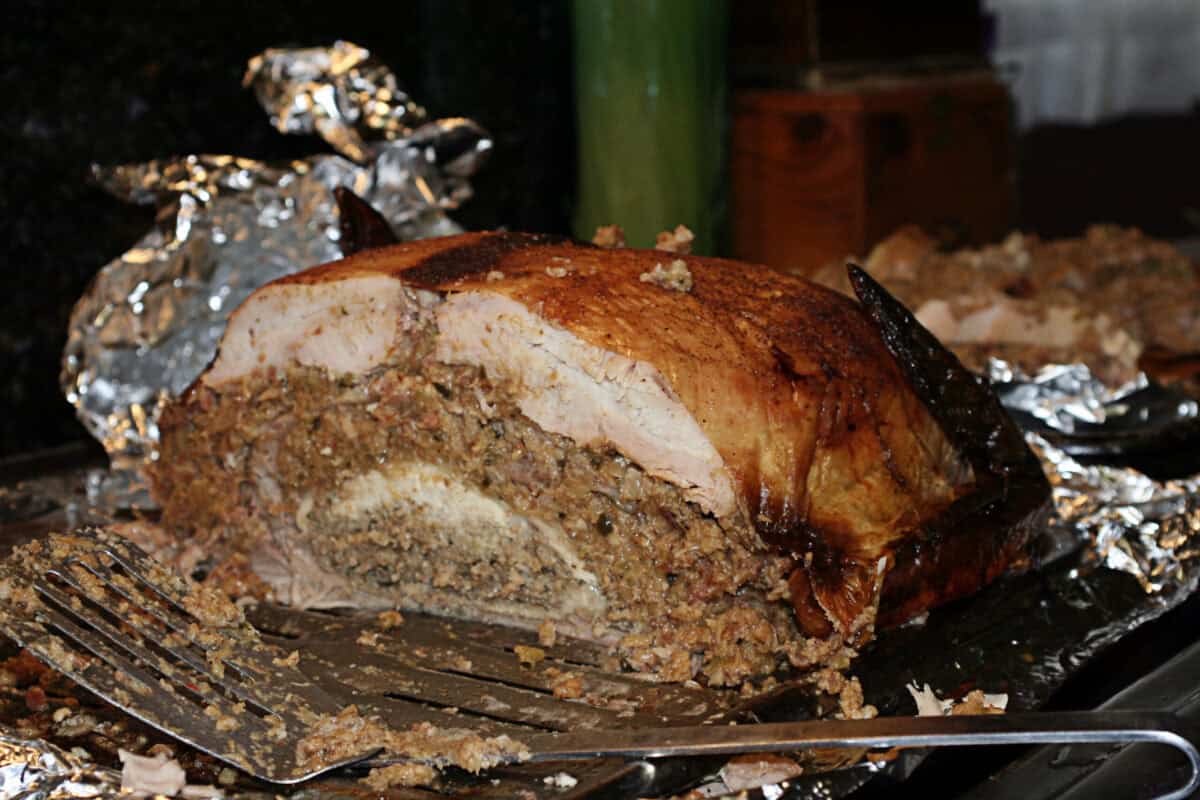
Sliced turducken for Thanksgiving
Turducken sounds fictional until someone brings one to Thanksgiving dinner. A deboned chicken is stuffed inside a deboned duck, which is then stuffed inside a deboned turkey, with dressing or sausage filling the gaps. The modern version became closely tied to Louisiana and was popularized by Cajun chef Paul Prudhomme, although its origin remains disputed. Abroad, the reaction is often immediate: three birds nested inside one another can feel less like cooking and more like culinary engineering. Many cultures have stuffed roasts, and eating chicken, duck, or turkey separately raises no alarm. Combining all three into one enormous centerpiece is what turns the dish into a symbol of American excess—and makes slicing it feel like opening a series of increasingly surprising packages.
Jell-O Salads
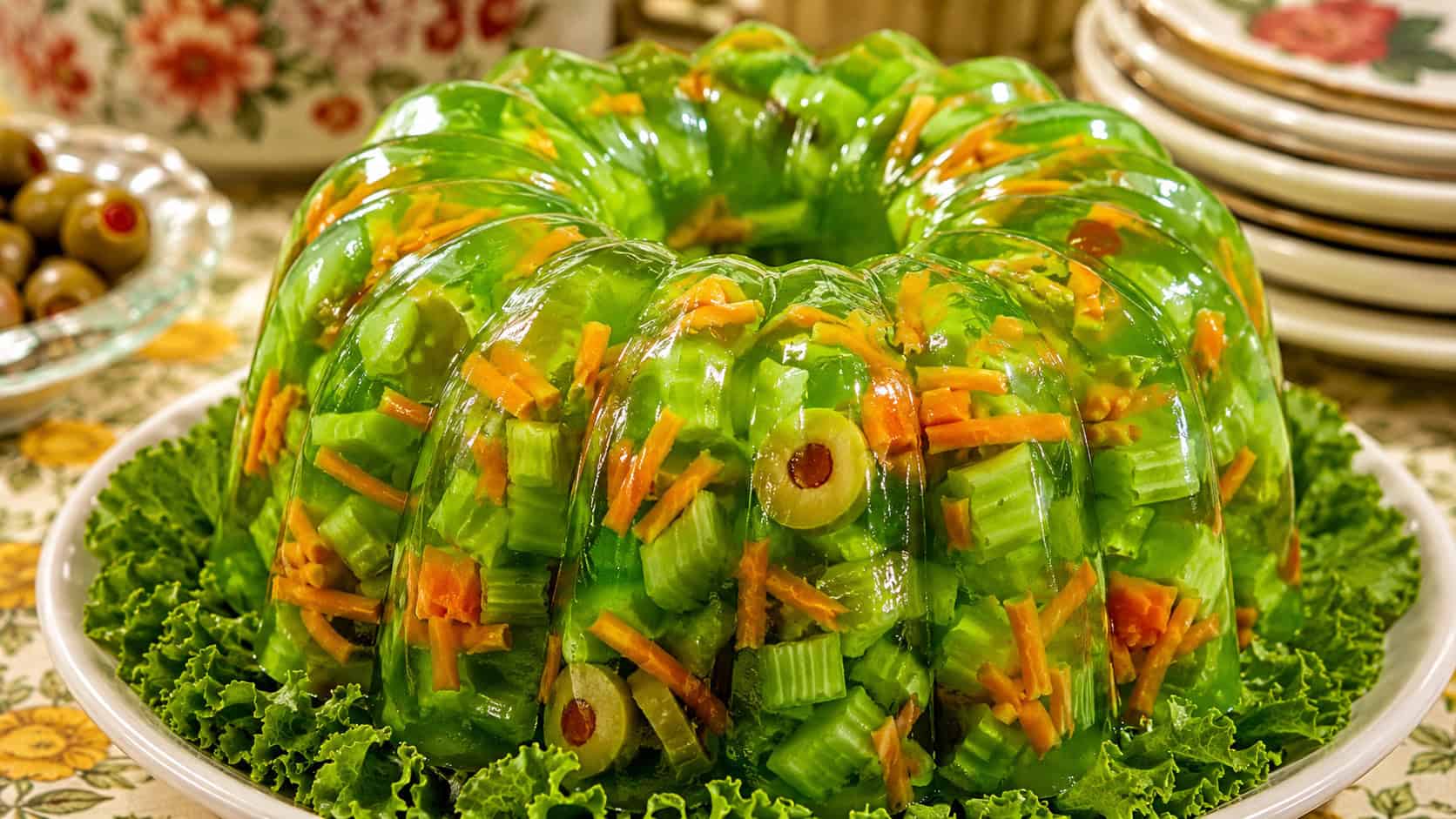
Jell-O salad may be the American dish most likely to make an unfamiliar diner question the word “salad.” These molded creations can contain fruit, nuts, cottage cheese, cream cheese, vegetables, mayonnaise, or even meat suspended inside brightly colored gelatin. They became fashionable in the mid-20th century, when packaged foods and modern refrigeration symbolized progress. At potlucks and family gatherings, a shimmering lime-green ring filled with carrots or pineapple could be presented as a proud centerpiece. Visitors from Europe and Asia know gelatin in desserts and savory aspic, but the casual blending of sweet gelatin, dairy, and vegetables breaks both categories at once. It looks festive, tastes nostalgic, and remains almost impossible to explain without sounding like a joke.
Pumpkin Spice Everything
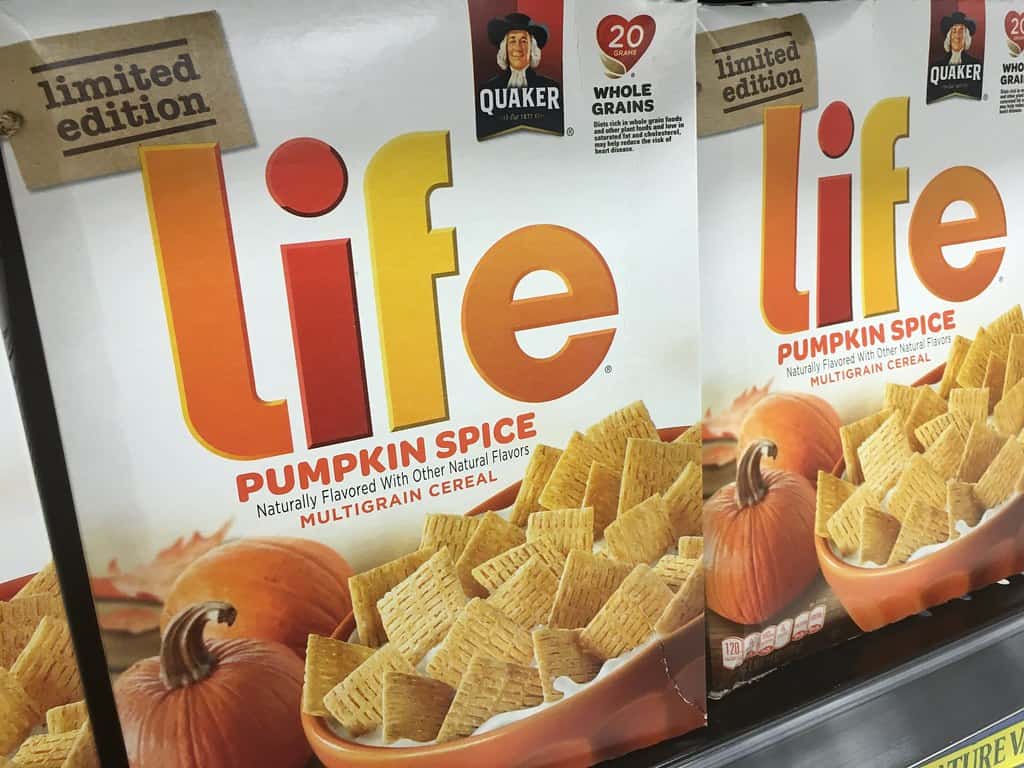
Pumpkin spice itself is not especially strange. The mixture of cinnamon, nutmeg, ginger, and cloves resembles blends used in desserts around the world. What surprises foreign visitors is the scale of America’s autumn obsession. By late summer, pumpkin spice appears in coffee, cereal, cookies, beer, protein powder, candles, soap, and products that contain no pumpkin at all. The flavor has become less of an ingredient than a seasonal signal announcing sweaters, falling leaves, and Halloween. Other countries celebrate autumn foods, but few turn one spice blend into a seasonal identity. For several weeks, nearly every grocery aisle seems to join the campaign. Americans call it cozy. Outsiders may reasonably wonder whether the entire country has been taken over by nutmeg.
Biscuits and Gravy
Biscuits and gravy sounds harmless until an American and a British visitor realize they are imagining completely different foods. In the United States, the dish usually means soft, flaky buttermilk biscuits covered in thick white gravy made from milk, flour, black pepper, and crumbled breakfast sausage. To someone expecting crisp cookies and brown meat gravy, the pale, lumpy plate can be alarming. The dish grew from practical Southern cooking, where inexpensive ingredients produced a filling breakfast for a long workday. Its appearance does not help its reputation abroad, but the flavor wins over plenty of skeptics. Rich, peppery, and deeply comforting, biscuits and gravy proves some American foods sound stranger than they taste—and photograph worse than almost anything.