

Throughout the years, scientists have gotten a fair number of things wrong. Confidently wrong, and for decades on end. Textbook truths, the kinds of facts that appeared on tests and were published in encyclopedias your parents bought from a door-to-door salesman. Fringe theories don’t make this list.
Most of the entries on the list aren’t ancient history. We’re talking about facts that you and most people alive today were taught as scientific certainties. Some fell apart under a microscope. Some took a Nobel Prize to confirm. But all of them were wrong. These are 8 scientific “facts” that turned out to be false.
Stomach Ulcers Are Caused by Stress
For most of the 20th century, doctors thought that ulcers were caused by excess acidity in the stomach, which was in turn a result of stress. Other causes like spicy foods were also thrown in the mix, but stress used to be the number one suspect. Antacid medications, bland diet, and lifestyle adjustments were the main treatment options. The idea that a bacterium might be the cause of ulcers was not seriously entertained. Bacteria could not live in such an acidic environment, and everyone knew that.
Australian doctor Barry Marshall and pathologist Robin Warren identified Helicobacter pylori in the stomachs of ulcer patients in 1982. No one listened. So, in 1984, Marshall drank the bacteria from a petri dish, developed gastritis within a week, and treated it with antibiotics and bismuth until it cleared. He never developed a full ulcer, but he made his point. Barry Marshall and Robin Warren won the Nobel Prize in Physiology or Medicine in 2005, and the stress theory had quietly disappeared from the curriculum.
Pluto Is a Planet

Shutterstock ID: 356797187, Photographer: Vadim Sadovski
©Vadim Sadovski/Shutterstock.com
Each and every kid who went to school before 2006 knew this by heart. Nine planets in the Solar System, Pluto being the last one. It had been classified as a planet since its discovery in 1930, and nobody challenged that classification for 76 years. This fact found its way into textbooks and science kits. Pluto as a golf ball was a staple of solar system diorama school projects. Then the International Astronomical Union came up with a definition of “planet” in August 2006.
Pluto did not meet two of the three criteria, so it was relegated to the new classification of “dwarf planet.” The debate surrounding this change was so intense that some states even tried legislating against it.
You Only Use 10% of Your Brain
This one is a Hollywood classic. It has been used as a throwaway line in countless films and even served as the entire premise for movies like Limitless and Lucy. It also found its way into textbooks. The idea that 90% of the brain sits idly inside our heads was popular among self-help writers, motivational speakers, and biology teachers until the 1990s. Nobody knows where it came from. The theory is often attributed to misquoted statements by Einstein or misread early studies in neurology. The theory had an obvious appeal as it implied each one of us is sitting on enormous untapped potential.
Brain imaging destroyed the premise. According to PET and fMRI scans, virtually all parts of the brain are active, and each one works for different activities at different times. In any given day, all parts of the brain are used. There is no 90 percent of the brain lying dormant. This myth survived for so long because it helped people sell stuff, and because nobody bothered challenging a claim that felt vaguely inspirational.
Dietary Fat Causes Heart Disease
In the 1950s, American physiologist Ancel Keys published research linking saturated fats in dietary habits to coronary heart disease. Keys’ Seven Countries Study, as it was called, served as the foundation for decades of dietary policy. By the 1980s, the low-fat diet became government doctrine. According to the USDA food pyramid, fats should be consumed with extreme moderation. Butter was out. Margarine was in. A generation grew up eating fat-free but filling up on sugar and carbohydrates.
The issue here is that previous work done by Keys used data from 22 different countries but focused only on those that fit his hypothesis. The Seven Countries Study itself was later criticised for inconsistent nutritional data and for ignoring contradictory evidence from countries like France, where saturated fat intake was high yet heart disease rates were low.
A recent reevaluation of the entire data set substantially weakened the association. Studies focused more on the impact of sugar and processed carbohydrates in causing cardiovascular risks. The low-fat era is now widely regarded as a public health misstep. Fat is no longer the villain.
Neanderthals Were an Evolutionary Dead End
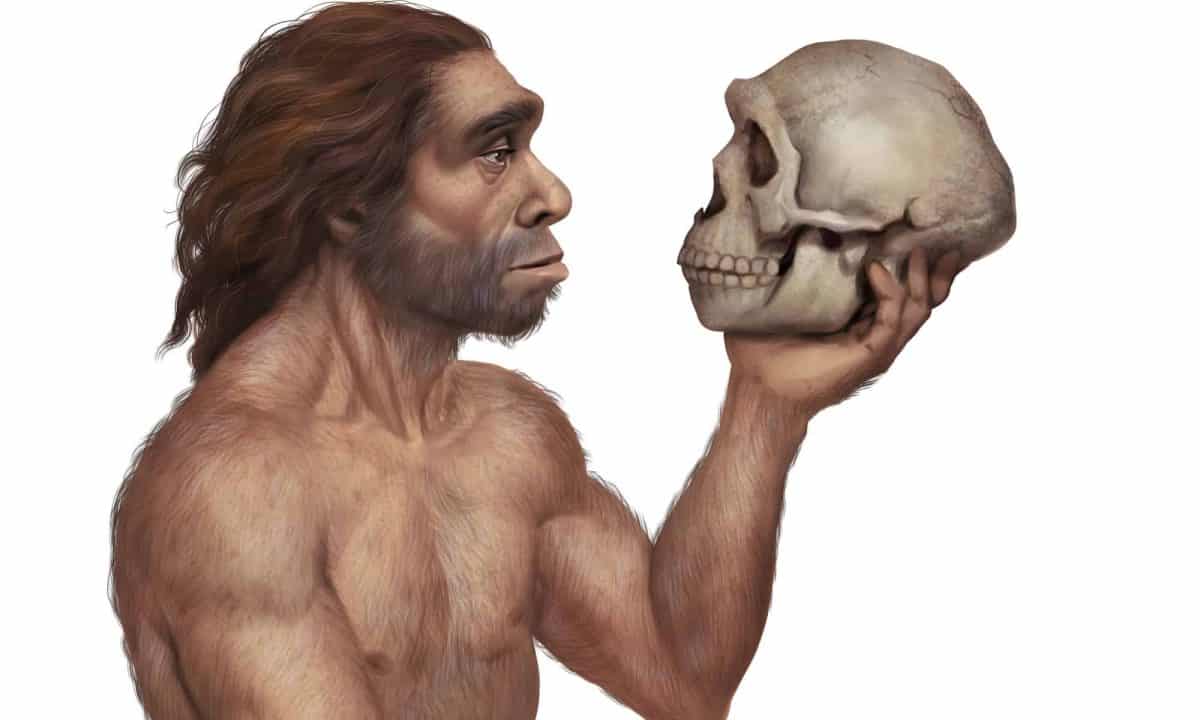
Full Color Realistic Illustration of Prehistoric Neanderthal Man Holding a Neanderthal Skull
©Roni Setiawan/Shutterstock.com
Neanderthals got a bad rep very early on. They were depicted as stooped, brutish creatures that were completely replaced by modern humans. Neanderthals were no match for Homo sapiens and went extinct around 40,000 years ago, without contributing anything to the modern human lineage. Schools never taught about co-existence, and certainly not about interbreeding.
In 2010, a team led by Svante Pääbo from the Max Planck Institute sequenced the Neanderthal genome and made a groundbreaking discovery: most people with non-African ancestry have 1-4% of Neanderthal genetic material, and some of those inherited genes appear to affect immune function. They may have even played a role in the adaptation of modern humans to non-African environments. In 2022, Pääbo won the Nobel Prize in Physiology or Medicine in part for this research.
Dinosaurs Were Cold-Blooded Reptiles
Through most of the 20th century, dinosaurs were grouped with lizards and crocodiles as cold-blooded ectotherms whose temperature regulation depended entirely on external sources. This led to the idea of lethargic, sluggish creatures who had to lie in the sun to generate heat. The well-known pose, the tail drag, the low-slung body, all fitted this picture perfectly. It was widely accepted and it shaped all depictions of dinosaurs in the documentaries made before the 1990s.
In the 1970s, palaeontologist Robert Bakker introduced the idea of warm-blooded, active dinosaurs based on bone structures and predator-prey proportions. The discovery of feathered dinosaur fossils in China through the 1990s confirmed it. The dinosaur from Jurassic Park, sunning itself as a cold-blooded lizard-dinosaur, is about 50 years behind the actual research.
The Universe’s Expansion Is Slowing Down
After the Big Bang, physicists predicted that gravity would cause the expansion of the universe to slow down. Everything was moving outwards, but over time, the gravitational attraction of all matter would bring everything to a halt. This theory was taught in textbooks up until the 1980s and the 1990s. The only uncertainty was whether the universe would continue expanding or eventually collapse back in on itself.
In 1998, two independent research teams working on distant supernovae found that the expansion was not slowing down; in fact, it was accelerating due to what the field calls “dark energy,” a force that we know very little about. The three scientists behind this discovery, Saul Perlmutter, Brian Schmidt, and Adam Riess, won the Nobel Prize in physics in 2011. Every cosmology textbook printed before 1998 had the direction of travel exactly backwards.
Adults Can’t Grow New Brain Cells

©imaginima / E+ via Getty Images
At the beginning of the twentieth century, the founding figure of modern neuroscience, Santiago Ramón y Cajal, stated that once the brain reached adulthood, its neurons were permanent, meaning that nothing new could grow. The brain you had as a young adult would lose some neurons, which could not be replaced. In biology classes, this principle was taught as a fact until the nineties.
In 1998, Fred Gage and his colleagues at the Salk Institute published evidence of neurogenesis in the adult human hippocampus, which is responsible for memory and learning. New neurons were forming in adult brains. This research completely overturned one hundred years’ established wisdom and changed the perception of depression, Alzheimer’s, and cognitive aging. Cajal’s “harsh decree,” as he called it, proved to be more provisional than he assumed.
The image featured at the top of this post is ©Andrew Clemente