
Few sights and sounds define a decade quite like the cacophony of noise and neon-soaked signs that adorned the local arcade. For the 1980s, the arcade industry had its golden age, and new titles were released monthly from some of the biggest names in video games. This wasn’t something you got at home either, as the arcade offered an experience that no home console could measure up to, in all honesty. If you wanted the best of the best when it came to gaming, you’d be paying a quarter per play, roughly.
For those who grew up in the 1980s, their formative years were spent placing quarters on cabinets to call next. The humble arcade was the stomping ground for youth culture, alongside the teen-centric dance clubs and radio stations that dominated discourse throughout the decade. Currency was relatively simple, as quarters were the order of the day at least before many converted to specialized tokens.
Arcade games weren’t designed to be beaten in the strictest sense. They were designed to wring out every hard-won quarter from your hands through psychological engagement, risk-reward mechanics, and brutal trial-and-error gameplay. Today, we’re looking at the top arcade games of the 1980s.
Space Invaders
©Sahara Prince/Shutterstock.com
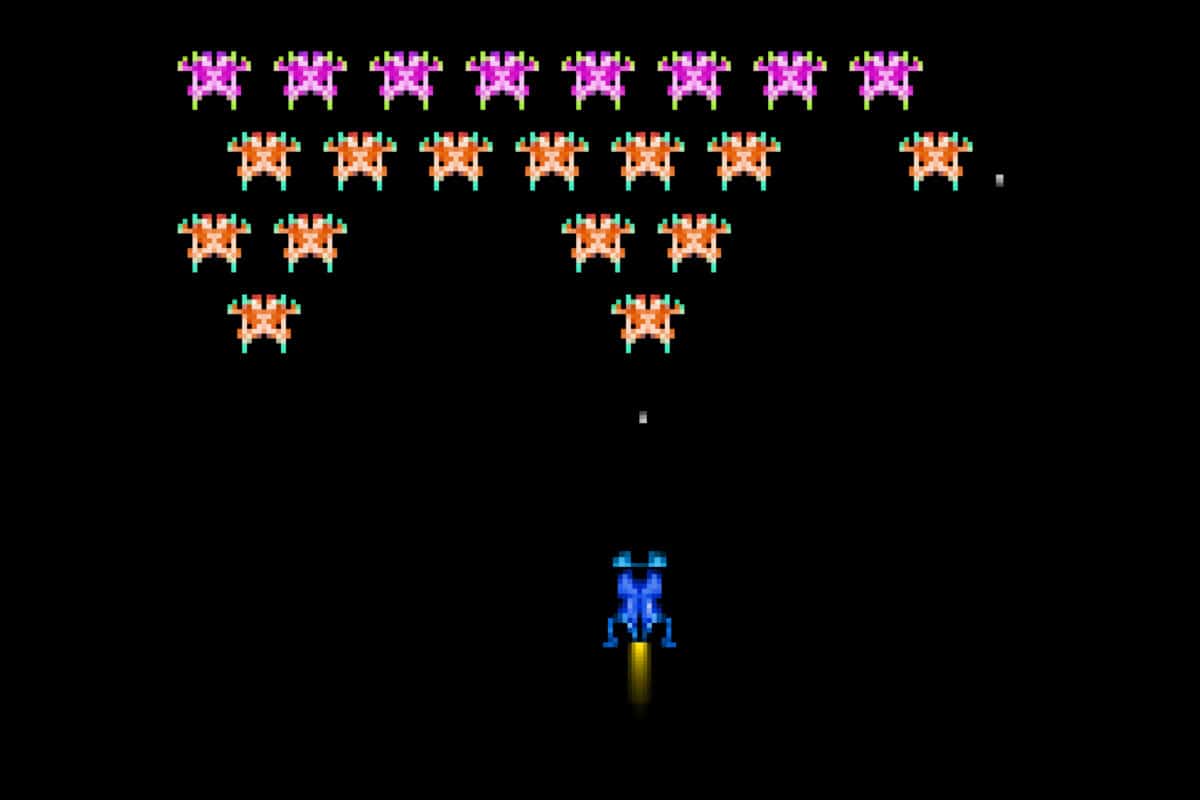
Technically, Taito’s Space Invaders started in the late 1970s, with the first cabinets appearing in the United States circa 1978. However, it wasn’t until 1980 that Space Invaders fever really took hold and signaled the golden age of arcades.
Space Invaders set the tempo for the whole of the decade when it came to arcade games, relying on escalating tension as you played. Each grid of alien invaders destroyed brought some needed relief to the anemic processor that ran the game, and your enemies started to get faster and faster until you got down to the last one.
This was accompanied by the thudding, four-note bassline that played as you fired shot after shot. With each passing moment, the wave of invaders dropped, and the tempo of the music grew in intensity to get your heart pumping. While admittedly quite primitive compared to some of the other titles we’re covering, Space Invaders relied on player panic and anxiety to drive sales, and it worked wonders for the cabinet.
Pac-Man & Ms. Pac-Man
©Marcin Wichary, CC BY 2.0 <https://creativecommons.org/licenses/by/2.0>, via Wikimedia Commons – Original / License
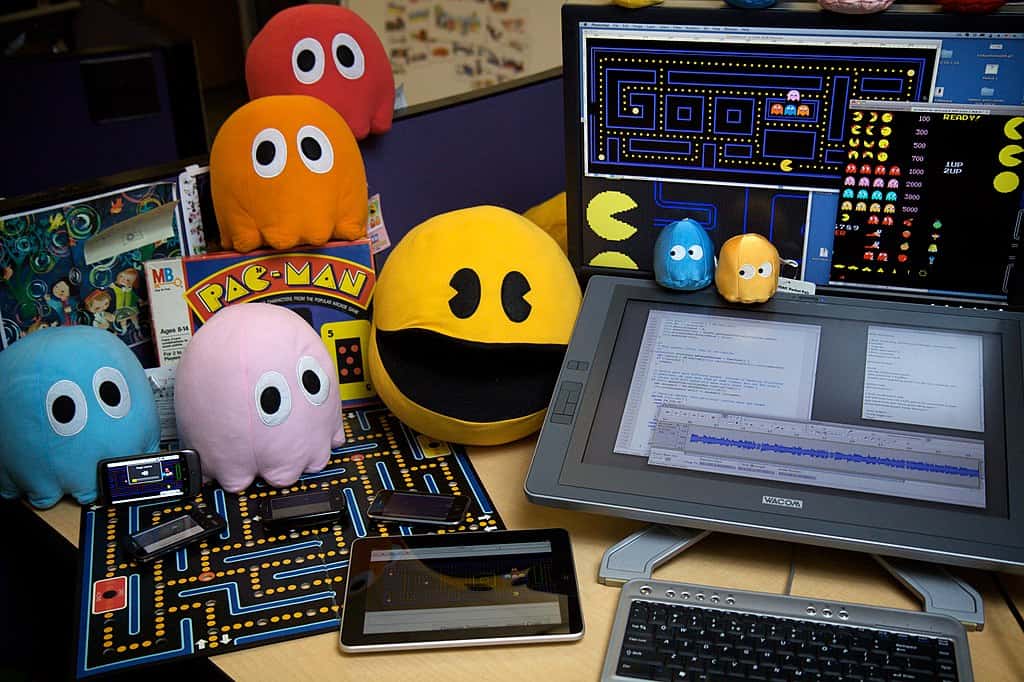
If Space Invaders set the arcade game industry on its path toward dominance, Pac-Man and its sequel, Ms. Pac-Man, are what really kicked things into overdrive. By 1981, the proliferation of space shooters had led to arcades being stereotyped as a hangout for teenage boys. Pac-Man brought color and whimsy and became an international sensation as a result.
Underneath the cute aesthetic and cartoony cabinet side panels, Pac-Man and its sequel were ruthless games. The game made use of a rather sophisticated enemy system for the time, which saw the 4 ghosts showing their own behavioral patterns. Some chased you directly, others ambushed, and others attempted to close space to get the player to panic and make a wrong move.
It also operates under an illusion of control on the player’s side. Each maze came with a handful of power pellets that negated the threat of the ghosts, but this relief was temporary at best. They lasted long enough to eat all 4 ghosts, but then you were out of a useful resource to attempt finishing the level. Eventually, you might find yourself trapped in some dark corner of the maze, with time ticking down in the background as a ghost or two closes the distance. Ms. Pac-Man upped the difficulty, proving to be a more popular game for the diehard fans as a result.
Defender
©Atmosphere1/Shutterstock.com
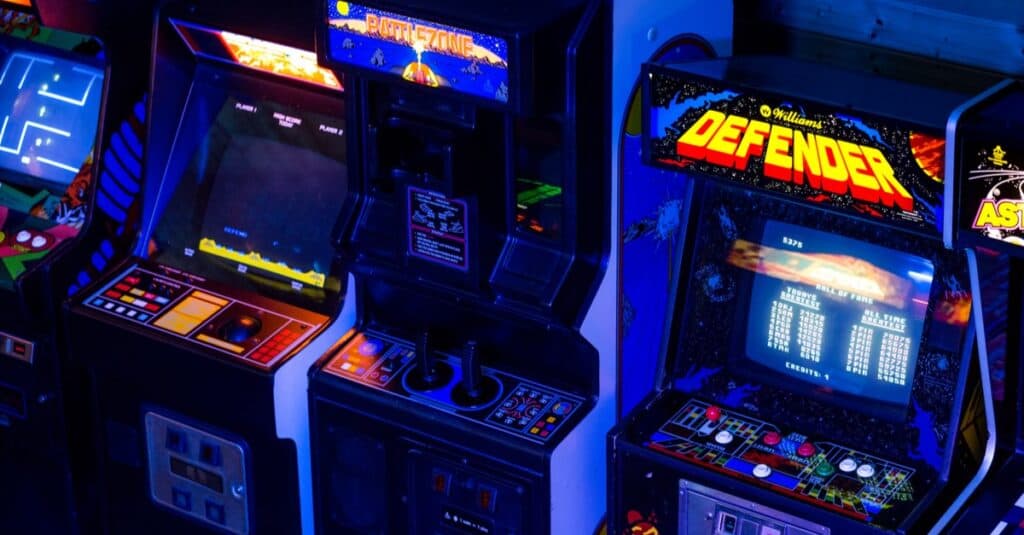
Williams Electronics is mostly consigned to the history books of video gaming these days, but they were a titan during the 1980s. Games like Joust and Defender were popular staples across the United States, and it isn’t too hard to see why. Defender, in particular, was a brutal shooter, upping the difficulty compared to more basic games like Galaga, Galaxian, or Space Invaders. Rather than having the action take place with rather rigid controls, Defender gives the player a surprising amount of freedom and creativity in how they approach the enemies.
One joystick controlled altitude, while a button could reverse direction. You also had a thrust button, fire button, and smart bomb button. In many ways, this template of control would inform later shooter games. The task was simple: players had to stop alien landers from abducting people before they were turned into mutants. If all the people are abducted, the planet explodes, and the screen turns into a maelstrom of enemies.
It wasn’t uncommon for a novice to last a whopping 30 seconds or so the first time they played Defender. Its complexity and difficulty made it something of a bragging right. If you were good at Defender, it was something to boast about before you placed a quarter in the slot and showed what you could do.
Dragon’s Lair
©"Game Vault, Morristown, NJ 9/1/18" by goodrob13 is licensed under BY 2.0. – Original / License
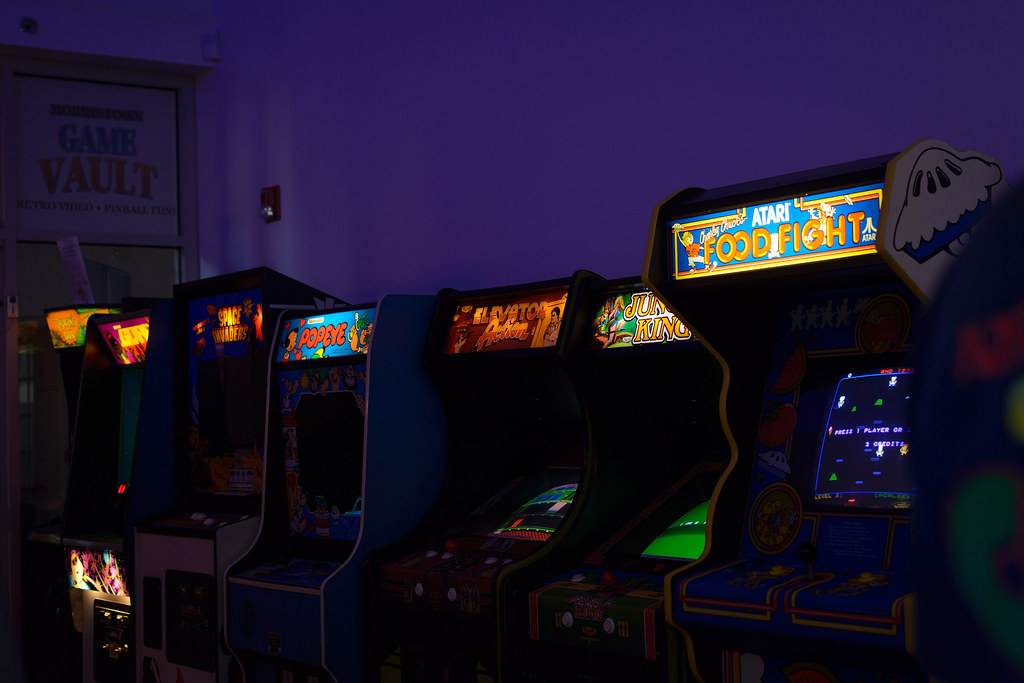
Every game we’ve covered so far is relatively crude, making use of cutting-edge hardware for the early 1980s. Dragon’s Lair was something special, making use of the talents of former Disney animator Don Bluth, and looking more like a Saturday morning cartoon than a pixelated mish-mash of shapes. This complexity upped the price, and it wasn’t uncommon to see a Dragon’s Lair cabinet run a staggering 50 cents per play when most cabinets took a single quarter.
In motion, Dragon’s Lair is a breathtaking game, filled with fluid animation as Dirk the Daring traverses a treacherous castle. Crowds gathered around cabinets just to see the game in motion. Despite its appearance, Dragon’s Lair is a notorious arcade game for its sheer difficulty. Each action you take relies on split-second timing, or you die. There was no getting better at the game either, unless you count rote memorization and trial-and-error.
As such, Dragon’s Lair was a relatively expensive lesson in making those quarters stretch as far as possible. Sure, it was a sight to behold, but that doesn’t count for much if you’re dying repeatedly in the first 30 seconds because you have mere milliseconds to respond to the newest danger to pop on the screen.
Gauntlet
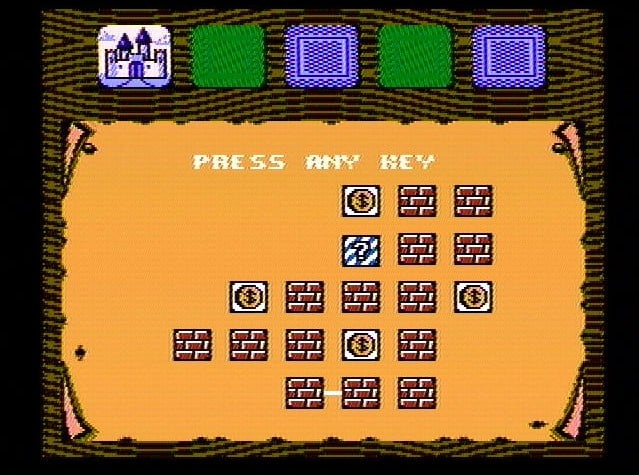
Many of the games we’ve featured so far are single-player only, meaning that you’d line up and wait for your turn. Gauntlet was a little different and allowed up to 4 players to take part in the action at the same time. Players could choose from the Warrior, Wizard, Valkyrie, or Elf as they descended into a dangerous dungeon across endless floors teeming with monsters.
Rather than giving players a set amount of lives like every other game featured so far, Gauntlet instead had players manage a steadily dwindling pool of health. It dropped a point with each passing second, regardless of whether you were fighting a monster or not. Getting hit only made that precious resource deplete even faster.
The only way to stave off defeat was to eat food or plunk in another quarter. It was a masterclass in social pressure in cooperative gaming. If your group was deep in the dungeon, there was an expectation that you’d plunk in another quarter to keep on going. If you didn’t, all that hard work slid right down the drain.
Out Run
©"Barcade, Jersey City, NJ, 8/20/11" by goodrob13 is licensed under BY 2.0. – Original / License
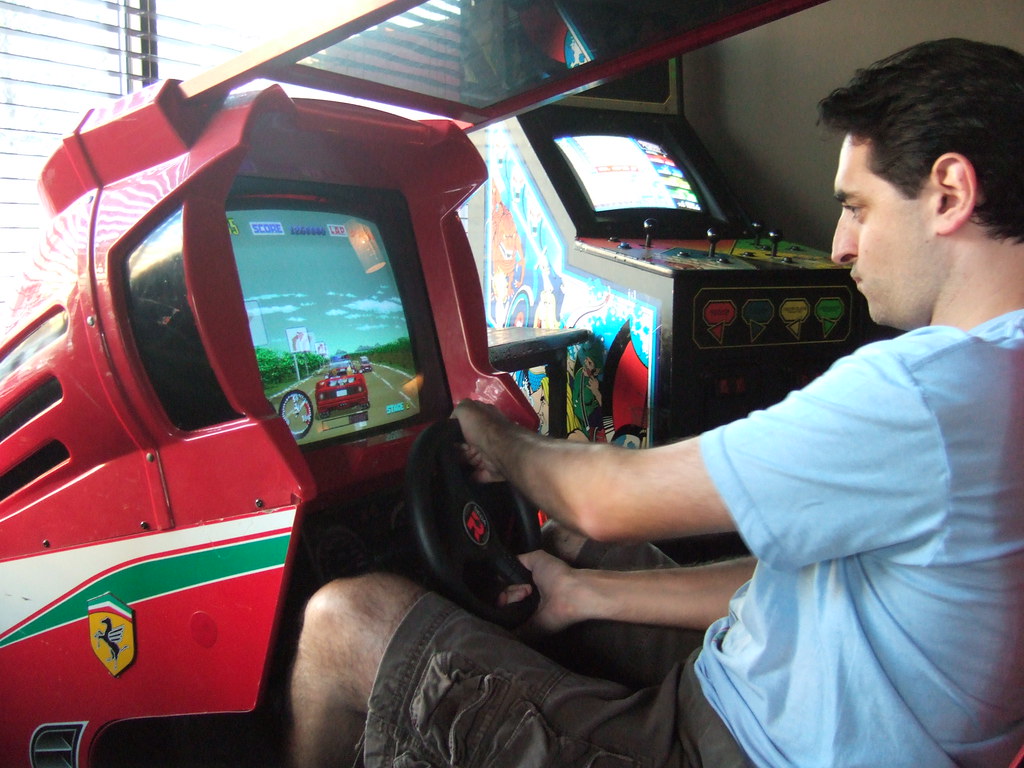
Our first, and only, entry from arcade game masters Sega doesn’t feature a blue hedgehog. Instead, it’s an exercise in escapism. Out Run had players taking control of a Ferrari Testarossa Spider in a sophisticated motion simulator. It also showed just how far arcade games went from the start of the decade. Rather than being tossed onto set paths, players had a shocking amount of freedom in choosing routes as they played.
While you were driving, your main antagonist wasn’t the likes of other racers, but rather a relentless countdown that ticked away in the background. Checkpoints could give you more precious seconds to cruise around, but they were spaced out, and a single mistake could see you have to pay for another round.
The branching paths, catchy music, and amazing visuals set the standard for what players would expect of Sega in the decade to come. It doesn’t come as a surprise, but they’d end up hitting things out of the park when the Mega Drive, or Genesis as it was known in the United States, debuted at the end of the decade.
Conclusion
By the end of the 1980s, the traditional model for arcades shifted. 16-bit consoles like the aforementioned Sega Genesis and Super Nintendo meant that players had something near enough to arcade quality with a one-time purchase. Home consoles never captured the same ambience of the local arcade, let alone coming close to scratching the same social itch. That said, it’s a bygone time, and we were more than glad to plunk a quarter into a cabinet for some cherished memories.
The image featured at the top of this post is ©iStock.com/gcammino