
PC gaming was a different beast well up until the 2000s. There weren’t algorithms to drive recommendations, high-speed digital storefronts, or massive day-one patches to clear bugs. Instead, PC gaming was something of an adventure, with gamers taking a gamble on random big boxes, jewel cases, and shareware games throughout the 1990s. Shareware was something of a revolutionary model for its time period. It was a way to keep costs down while letting gamers try out a healthy chunk of a game.
Further, it enabled independent developers and smaller software houses to actually make an impact on the market. Without the success of shareware games as a whole, franchises like Doom would’ve been consigned to the history books as an interesting footnote rather than being a modern staple. You’d often find shareware discs, floppy and CD alike, on wire racks or in bins at your local bookstore, pharmacy, or even grocery store. Often, these shareware discs were sold for a mere fraction of the cost, meaning they were incredibly enticing to kids who didn’t have a ton of disposable income.
The shareware era came to a close with the start of the digital storefronts and more mainstream attention in PC gaming. However, today we’re looking at some of the unsung titles that slipped through the cracks of the era.
Hugo’s House of Horrors
©Vladimir Sukhachev/Shutterstock.com
David Gray’s 1990 release, Hugo’s House of Horrors, is very much an independent game in the truest sense of the phrase. It was a handmade tribute to the Sierra On-Line adventures of the late 1980s, games like King’s Quest and Space Quest. The premise behind it was relatively simple: players were tasked with controlling Hugo and looking for his missing girlfriend inside of a creepy old mansion.
If you never played one of the old adventure games, Hugo’s House of Horrors is very much in line with the Sierra method of doing things. Navigation is handled with the arrow keys, and items are gathered or used through the use of a text parser. Progressing through the game meant you had to type commands, like “open door”, as opposed to simply clicking on them like a modern point-and-click adventure game. It might have been somewhat crude next to then-new games from the likes of Sierra and Lucasarts, but Hugo’s House of Horrors is a great time for fans of the genre.
Crystal Caves
©"Floppy disks" by jepoirrier is licensed under BY-SA 2.0. – Original / License
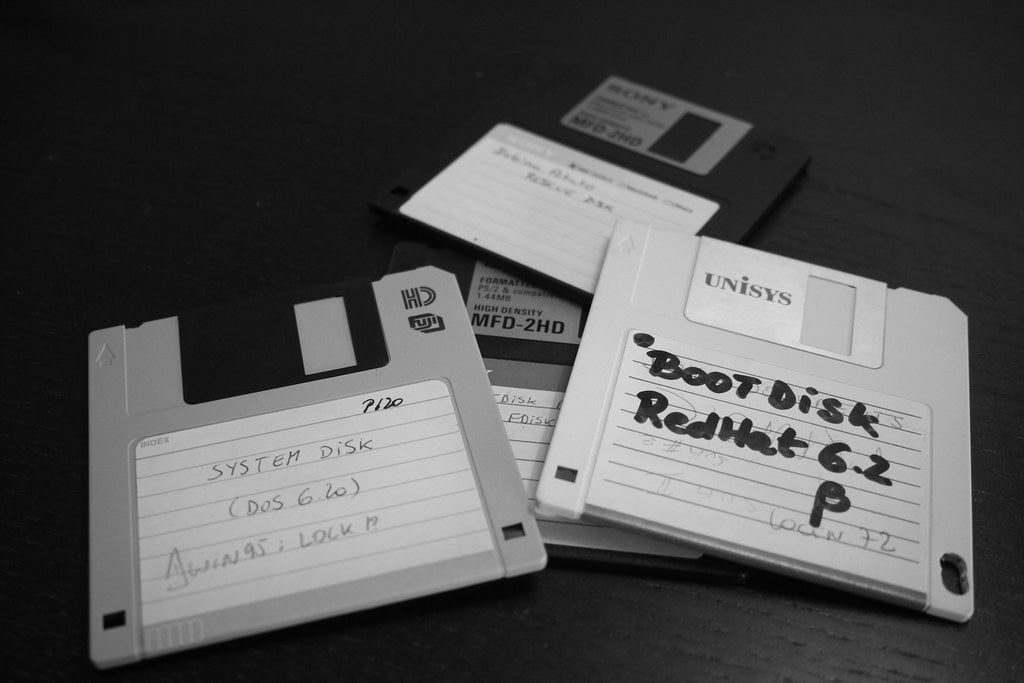
Apogee Software was a juggernaut of the 1990s PC gaming scene, with titles like Duke Nukem 3D, Rise of the Triad, and others frequently making top lists for classic PC games. However, long before they made their name in the gaming space, they started out as a humble little shareware provider. Crystal Caves was released in 1991 and has players controlling a space-miner navigating the eponymous Crystal Caves on the planet Altair, all to fund their dream of opening a burrito stand.
Gameplay mixes between puzzles and action. Each individual cave served as a self-contained level filled with traps, platforming challenges, and bizarre aliens you had to contend with. The player isn’t defenseless during any of this, as you’re armed with a rocket pistol to dispatch threats. However, ammunition is limited, so each shot had to count. This was an EGA title, meaning it was restricted to a 16-color palette. That said, the gameplay holds up fairly well with solid physics and novel mechanics. It might lack the sophistication of console platform games of the era, but it’s certainly worth a look if you enjoy PC platformers.
SkiFree
©photosthai/Shutterstock.com
If you went to school in the 1990s, you likely played SkiFree. This was a computer lab classic, and it had kids chasing high scores. Published in 1991 as part of the Microsoft Entertainment Pack, SkiFree was the personal project of Chris Pirih, who programmed it in Microsoft’s C programming language. It was pure chance that saw it included in the Entertainment Pack.
Gameplay is relatively simple, calling to mind arcade classics from the 1980s. Players had to navigate a skier down an endless, snowy mountain while dodging obstacles and other snowboarders. If you were lucky enough to move past the 2,000-meter mark in the game, you’d be set upon by a speedy snow monster that came from the edge of the screen. Inevitably, your poor skier would end up as the monster’s dinner, which was always a delight to see who could last the longest while playing.
Jazz Jackrabbit
©Gorodenkoff/Shutterstock.com
Long before they were known for Fortnite or even Unreal, Epic MegaGames was on a mission to prove that PCs could hang with even the flashiest of console games. Jazz Jackrabbit hoped to match the speed of games like Sonic the Hedgehog, and coupled high-octane gameplay with some of the best graphics of 1994.
Gameplay was smooth, and certainly evoked a polished feel when paired with a decent controller. The loop itself relied on the hectic pace of a game like Sonic the Hedgehog, paired with the intense combat of a title like Mega Man. Players blasted through futuristic cities, ruins, and psychedelic landscapes while they gathered up an arsenal of weaponry that would make titles like Doom blush. Doom might have blasted the doors of the hinges when it came to making PC gaming a household phenomenon, but Jazz Jackrabbit helped to prove there was space for all sorts of games.
Raptor: Call of the Shadows
©Wirestock Creators/Shutterstock.com
If you were into space shooters in the 1990s, you likely were a frequent visitor to the local arcade or one of the few people who invested in a Turbografx-16. PC gamers weren’t exactly given a lot of choices until Apogee’s 1994 release, Raptor: Call of the Shadows, came out. It brought the same fast-paced gameplay you’d expect of a game like Battle Garegga or Raiden, but you could play it easily on the confines of your home computer.
Compared to some of the other entries in today’s piece, Raptor stood out for its stellar production values. Graphically, it was highly detailed, fluid, and featured some of the best sprite work you’d find. Sound design excelled as well, and SoundBlaster owners likely remember the synth-rock soundtrack that called to mind titles like Thunder Force. It would take other titles like Tyrian to really capture the attention of gamers, but Raptor is still a classic, regardless of when you play it.
Commander Keen
©WeAre/Shutterstock.com
Long before they created Wolfenstein 3D or Doom, id Software was perhaps best known for Commander Keen, a platformer that had players take the role of Billy Blaze, a precocious 8-year-old kid. Most of the Commander Keen titles were shareware staples, but special mention has to be made of Goodbye, Galaxy, the fourth game in the series. This was id at the height of its powers when it came to platformers, and it shows.
Players were equipped with a stun pistol, a pogo stick, and a football helmet. From there, they’d navigate alien forests, ancient ruins, and high-tech outposts to keep aliens from destroying the galaxy. After years of releases, Commander Keen certainly stood among the best of the best when it came to other 1991 releases. It had challenging platforming, secret passages, and a complex alien language you could translate on your own with enough dedication. It might lack the glory kills of the most recent Doom games, but Commander Keen is sure to put a smile on your face.
Conclusion
The shareware model is something of a relic from an era where high-speed internet connections simply weren’t a thing. Given the nature of the media, it was surprisingly community-driven, with titles living and dying by word of mouth and sharing copies. It’s an era we sorely miss when it comes to PC gaming, when you didn’t have a fresh list of new titles to browse, but had to sift through floppies to find the gold waiting for you.
The image featured at the top of this post is ©CAESARstock/Shutterstock.com