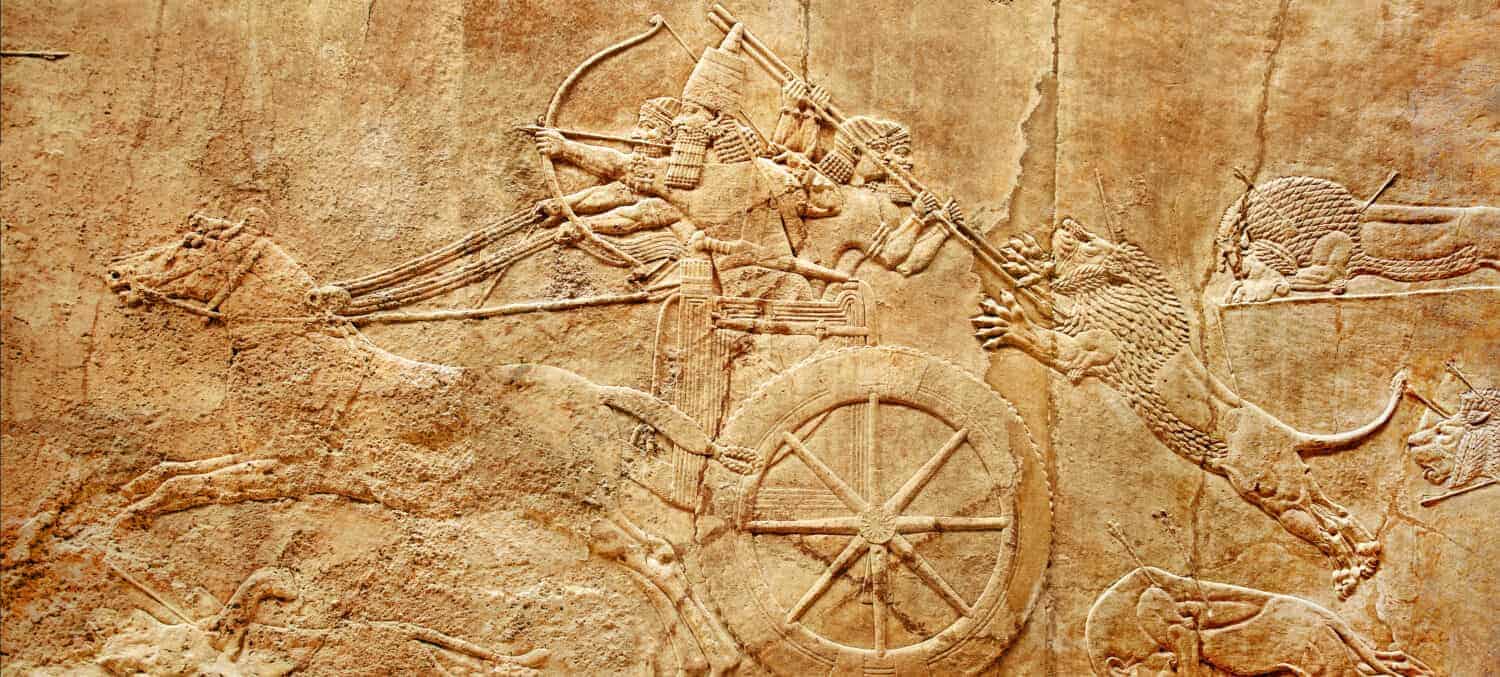

As mankind transitioned from hunter-gatherers to organized civilizations, the nature of warfare changed right alongside it. Warfare became an instrument of statecraft, rather than being done solely for resources. The most effective weapons of the ancient world certainly targeted lethality, but also had considerations like logistics, material restrictions, and tactical doctrines of their era to keep in mind.
With that in mind, let’s take a closer look at some of the most effective weapons of the era.
Composite Bow
©"composite bow (3)" by stevenarcherysupplier is licensed under BY-ND 2.0. – Original / License
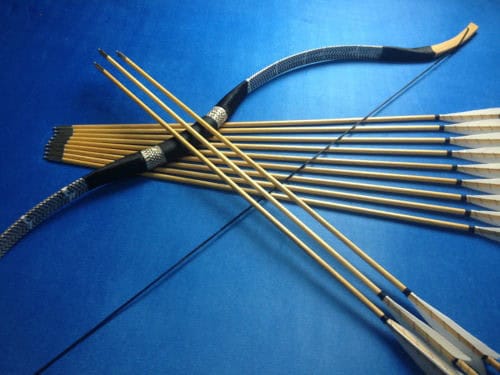
When looking at the most effective weapons of the era, there isn’t a technological leap forward quite like the composite bow. Bows were a fairly common sight on the battlefield of ancient warfare, dating back to the Stone Age. Rather than using just a simple piece of carved wood, a composite bow made use of lamination or a variety of materials. Early examples made use of a wooden core, animal horns for withstanding compression, and sinew to increase tensile strength.
These materials were bonded together with primitive glues, often derived from boiled skins or bones. The bow was able to shrink in terms of overall size while storing far more energy. The size reduction allowed archers to fire from horseback or while riding in a chariot. A master archer was able to utilize this additional power to reliably hit targets stretching out to ranges that doubled those of more traditional bows. It caused a shift in defensive planning for cities as walls had to grow higher to curtail the lethal range of these new bows.
Chariot
©"Painting depicting Ancient styled Egypt Chariot" by Vijay Singh is licensed under BY-SA 4.0. – Original / License
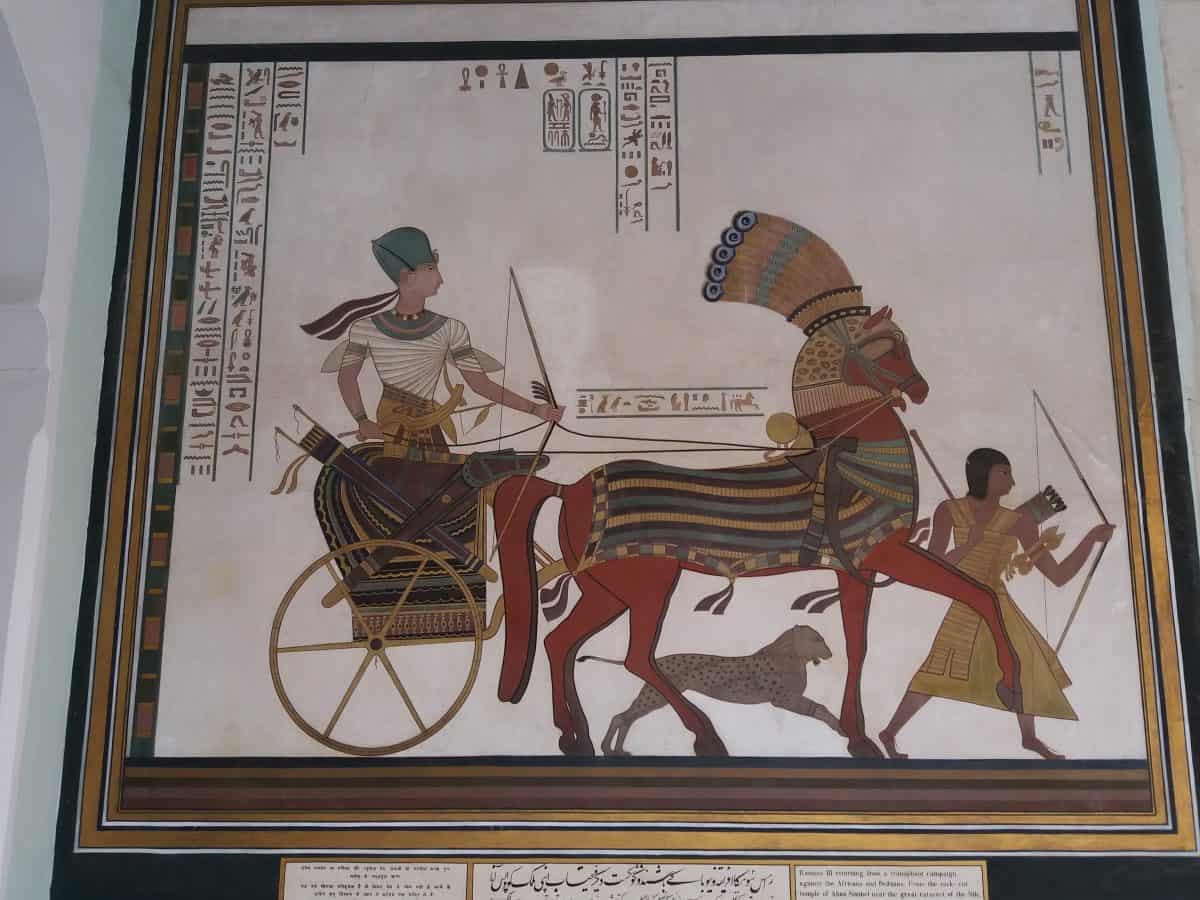
Animal husbandry is a fascinating subject that enabled much of the ancient world to flourish. One of the most effective weapons in ancient warfare came about thanks to these advances in domestication. A chariot was an industry unto itself, requiring specialized woodworkers, leatherworkers, and trainers to effectively utilize. This disciplined approach is also reflected in the men chosen to ride these chariots. Charioteers of ancient Egypt effectively became one of the first professional warrior castes, spending years mastering the art of firing a bow while being whipped around on a two-wheeled platform.
The chariot was one of the most effective weapons in part thanks to functioning as a mobile fire-support arm of any ancient army. They rarely crashed through infantry lines, despite popular conception, instead seeking to harass enemy formations on the flanks. This hit-and-run method of attacking allowed the nations that mastered the chariot to control vast territories without the need for huge standing armies.
Khopesh
©"Khopesh" by JimKalcich is licensed under BY 4.0. – Original / License
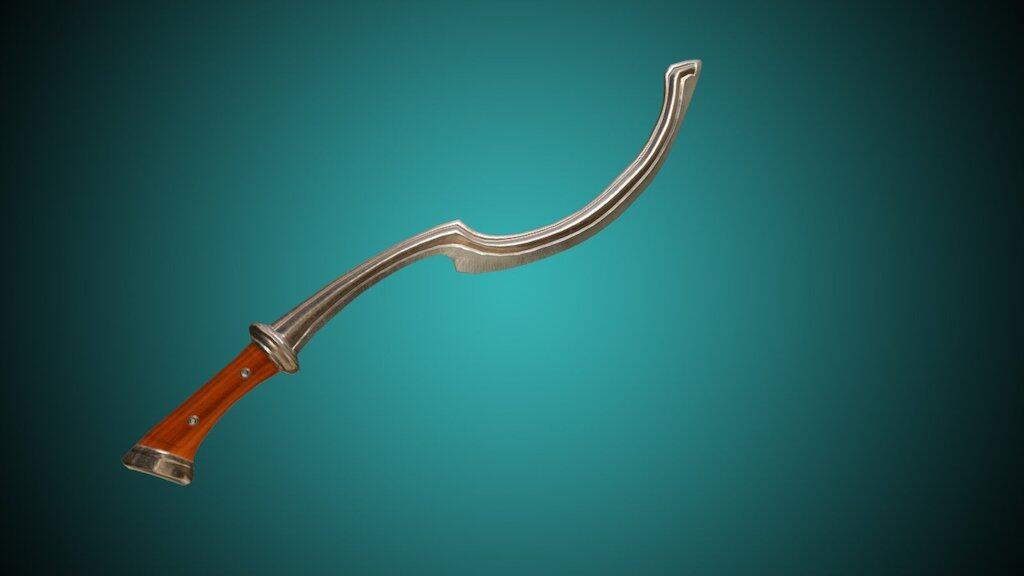
The earliest swords fell prey to the metalworking of the ancient world. In an era before the proliferation of steel or even iron, bronze proved to be too brittle for thinner blades. When smacking against a shield, they often broke. Ancient Egyptians solved this issue by making the blade thick and curving it. The balance of the khopesh concentrated the full brunt of the weight of the strike into the apex of the curve of the blade.
Khopesh swords were developed as a direct response to the rising use of heavy wooden and leather shields. Straighter swords were easily blocked, but the hook of the Khopesh allowed soldiers to snag the shield and yank it down. This opened up the shieldbearer for fatal strikes. The back of the blade was blunt, effectively acting as a giant metal club. The front of the blade kept a razor’s edge, best used for hacking wounds.
Spear
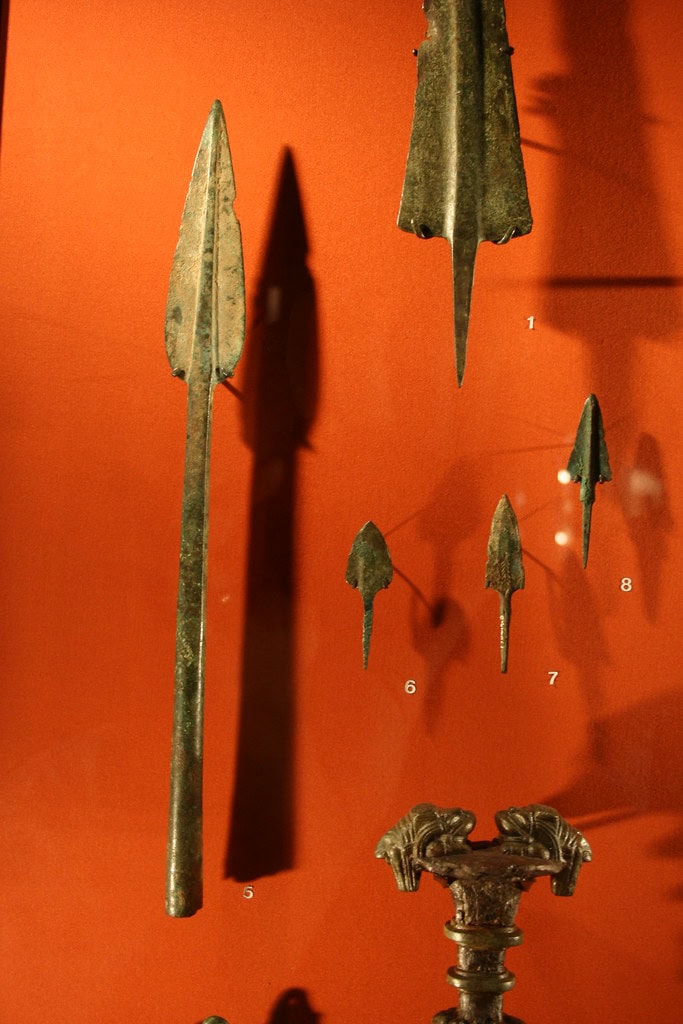
©"Luristan Bronze Spear & Arrow Points" by Gary Lee Todd, Ph.D. is licensed under CC0 1.0. – Original / License
It seems rather banal to single out the spear as the biggest game-changer in warfare, but it is perhaps the most influential weapon of the ancient world. Spears were cheap, making use of wood rather than ample amounts of metal. Further, their overall length and design promoted defensive infantry formations like the phalanx famously used by the ancient Greeks.
The spear allowed the first three ranks of a defensive shield wall to strike at the same time. An advancing enemy wasn’t just engaging a single person, but fighting multiple spear points at the same time. This required a professional army, something that was unseen in the ancient world before this. Ranks required discipline, and the phalanx became one of the predominant formations of the ancient world, driving the need for full-time soldiers.
Iron Weapons
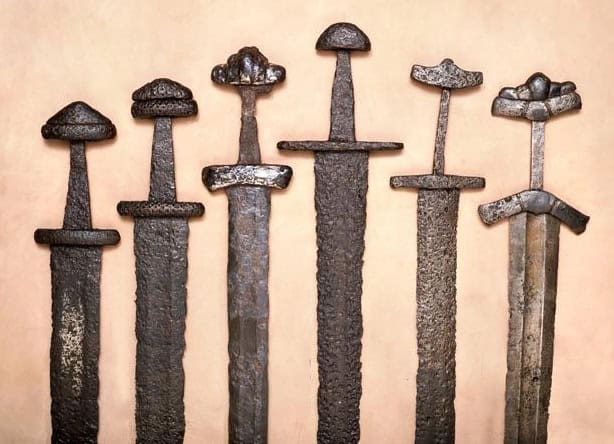
©"Late Iron Age swords found from Finland" by Museovirasto – National board of Aniqtuities of Finland is licensed under BY 4.0. – Original / License
There is no more disruptive event in ancient warfare than the transition from bronze to iron. Bronze requires copper and tin, often located hundreds or thousands of miles apart. This needed sophisticated trade routes. If those trade routes collapsed, the engine driving a nation’s military fell to pieces. The Assyrians mastered the smelting of iron, found in abundance near their borders.
The trade routes collapsing did happen, as the Bronze Age Collapse saw a massive upheaval. Militaries could no longer effectively arm their soldiers. Powerful empires like the Hittites and Egyptians would see their grasp of power slip, especially with the use of iron by the Assyrians.
They weren’t just using a better metal. They had far more of it. Every Assyrian soldier came with an iron helmet, breastplate, and longsword. Assyria’s enemies were still using levied armies, often armed by wealthy nobles. Assyria mastered something more approaching an industrialized army of the modern era. Iron equipment rendered the equipment of Assyria’s enemies obsolete overnight, resulting in a massive change in the power structures of the ancient world.
Sling
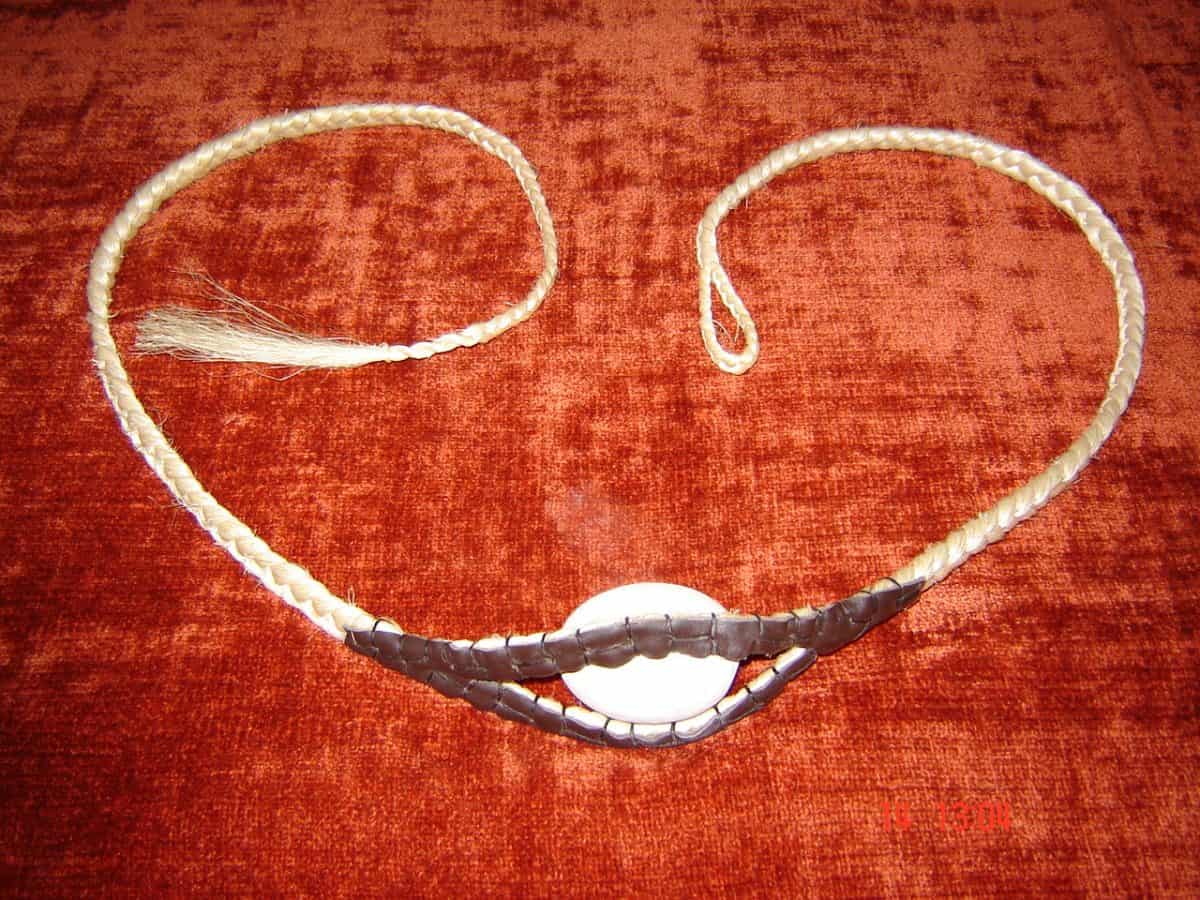
©Juan Costa /Creative Commons Attribution-Share Alike 3.0 Unported license – Original / License
Bows and swords are the weapons of heroes, or at least they are if you’re going by pop culture. Among the rank-and-file soldiers of the ancient world, these weapons were certainly worth fearing. However, the sling presented a far more present threat to the average soldier. Essentially just a leather pouch with two cords, it isn’t much to look at. In trained hands, it becomes a deadly weapon with little to curtail it.
Arrows were readily blocked by shields, often seen in flight. A sling bullet was far smaller, making it nearly invisible to the naked eye. Trained slingers, like those from Rhodes, could punch through bronze breastplates. Sling bullets were made out of cast lead, not unlike a musket ball. Trained users could readily hit targets at 300 yards, making it an invisible threat that could decimate a formation before ranks were closed.
Ram-Equipped Galleys
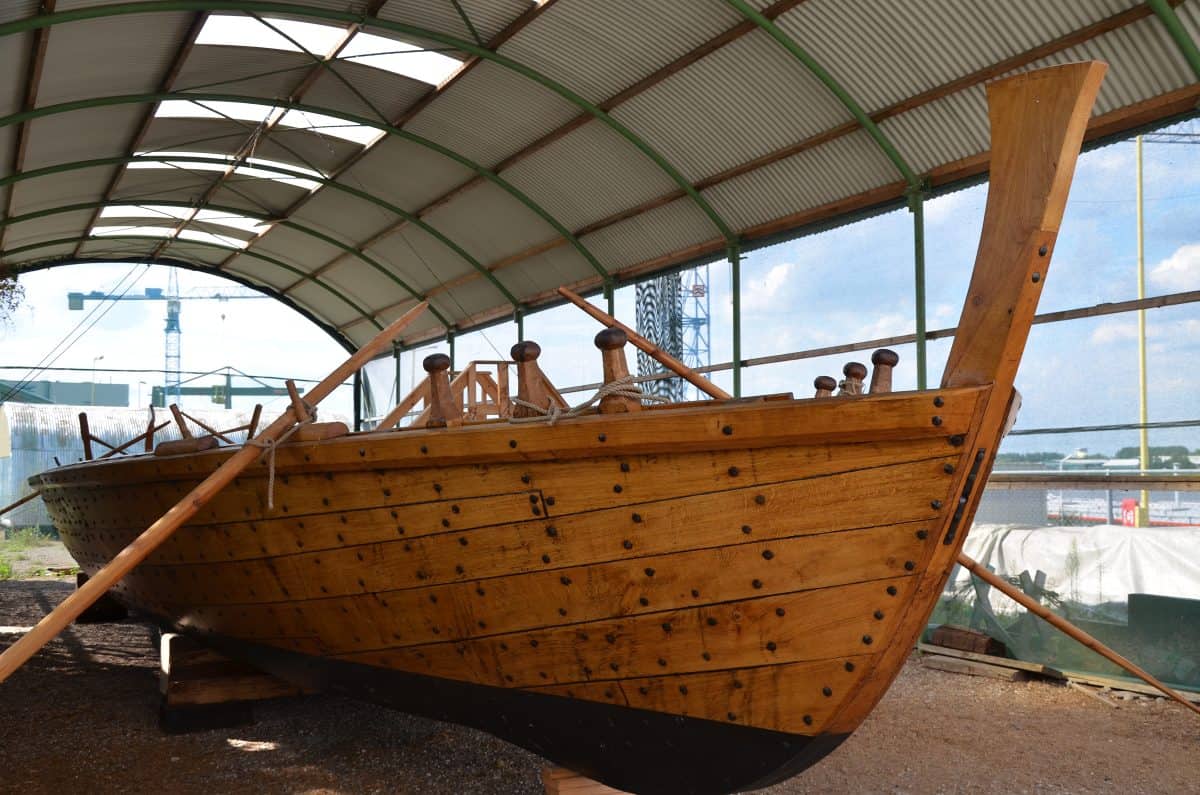
©"File:Full size replica of a 20 meter long Liburna, small galley used for raiding and patrols, particularly by the Roman navy, in Millingen aan de Rijn, Netherlands (9554338443).jpg" by Carole Raddato from FRANKFURT, Germany is licensed under BY-SA 2.0. – Original / License
The Mediterranean Sea saw the waterways of the ancient world become a battlefield. The most effective weapon in this scenario wasn’t a projectile. Ancient naval warfare was largely conducted through the use of ramming with the ship’s hull. All the major innovations in ancient naval warfare were about making these ships into deadly weapons. One of the most effective weapons was a bronze-shod battering ram, positioned right at the waterline.
These rams weren’t intended to function like a medieval lance, breaking when hit. They were typically reinforced with internal supports to distribute the shock of the impact across the whole of the ship’s frame. The goal of any seafaring captain was to approach on the flank, shearing off oars before lining their ship up for a final, lethal blow from the battering ram. Ships went from mere troop transports to a primary weapon system for defending trade routes. A well-appointed ship of the era could effectively punch through reinforced oak hulls, sinking an enemy ship in a matter of minutes.
Conclusion
The most effective weapons of the ancient world effectively changed the nature of warfare. Just about every major pivot point that we’ve covered today saw an upheaval of power structures. The control of natural resources, like smeltable metals, alongside the rise of professional armies, made or broke entire civilizations. It wasn’t enough to raise an army, especially if you were making use of obsolete weaponry.
The image featured at the top of this post is ©Viacheslav Lopatin/Shutterstock.com