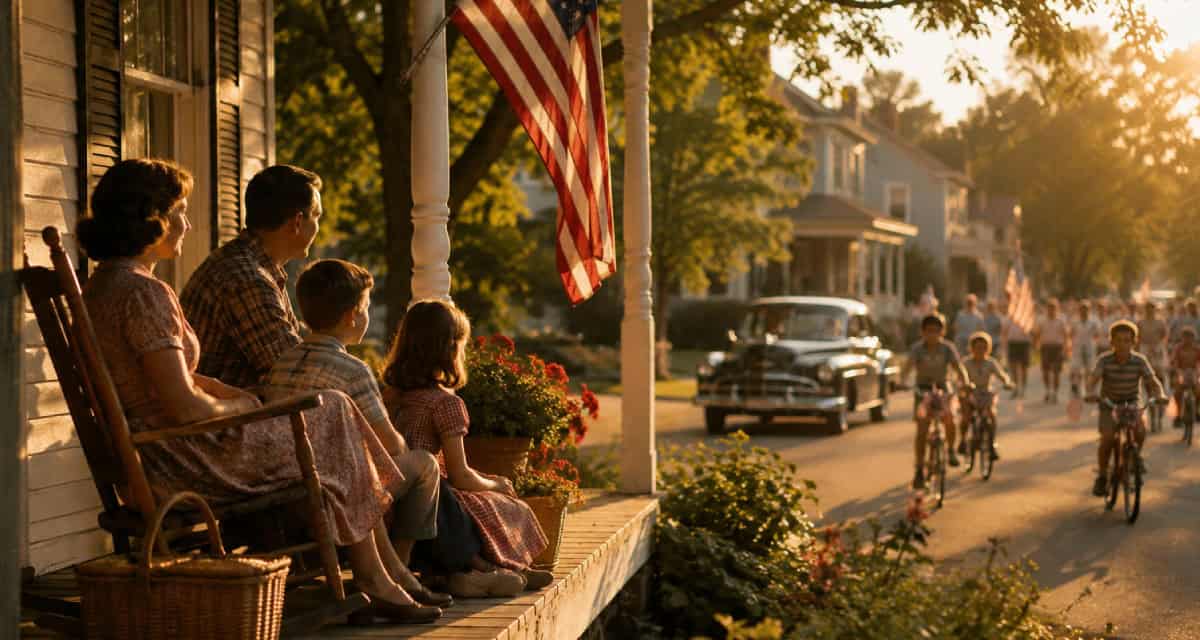

There’s a certain kind of change that never gets announced. A factory closes, and someone writes about it. A law passes, and people argue. But some habits just vanish without us noticing. Nobody calls a press conference or marks the date. One year, you are doing something, and then, at some point, you just stop doing it. You and everyone around you. It’s only when someone points it out that you realize it’s been a decade.
These are 20 things Americans stopped doing without even noticing.
Smoking Indoors, Everywhere

©chayanuphol/Shutterstock.com
In 1965, 42% of American adults were smoking. Smoking indoors was the default. Every office, restaurant, airplane, waiting room, and movie theater would have an ashtray on each table. Although the link between smoking and cancer was famously established in 1964, the culture was moving nowhere near as fast as the science.
It took until the 1980s, when the indoor ban movement slowly gained momentum. In 1994, California banned smoking in restaurants. In 1998, it banned it in bars. In the mid-2000s, the majority of major American cities had their comprehensive indoor bans in place. Americans born after 1990 don’t even know that smoking indoor used to be the norm. That’s probably a good thing.
Belonging to a Civic Club or Bowling League
In 1995, Harvard political scientist Robert Putnam published a research paper with a rather odd title, “Bowling Alone.” Putnam’s message was that Americans were bowling more than ever before in history, but bowling league membership was collapsing. The social organization around the sport was vanishing.
In 2000, Putnam developed his analysis into a full-length book about the widespread erosion of civic engagement in the latter half of the twentieth century. Membership of organizations such as the Rotaries, the Elks, the Moose Lodges, Parent-Teacher Association chapters, garden clubs, union halls, and others peaked sometime between the 1950s and the 1970s, then fell more or less continuously since then.
Television, suburban sprawl, generational change, and the gradual disintegration of community institutions that people once built their social lives around were named as the reasons for this pattern. The Internet followed, making everything Putnam had described even worse. The desire for community didn’t go away. The practice of organizing it face to face, in physical locations on a regular weeknight, mostly did.
Kids Roaming the Neighborhood Unsupervised
During the seventies and early eighties, American children traveled far and wide unsupervised. They rode their bikes and wandered empty lots and woods and the backyards of people they sort of knew. They always came home for dinner. There was no term for it then. It was simply called childhood.
According to psychologist Peter Gray, who has done extensive research on the phenomenon, there was a drop in independent children’s outdoor activity by 50% between 1970 and 1990, and the number kept declining ever since. The geographic range of American childhood compressed meaningfully, and most parents living through it didn’t notice it happening to them.
Dressing Up to Board a Plane

©ABGJ/Shutterstock.com
During the early days of commercial jet flights, travel was an event. Everyone dressed for the occasion. The children would also be dressed as if they were headed somewhere important, because they were. There was an unwritten dress code at the airports, and it would be followed by most passengers without any prompting.
The 1978 airline deregulation affected the economic aspect of flying more than anything else. Competitive pricing attracted a far wider public who had no real affection for the dressing standards of the former passenger class. By the 1980s, people wore casual clothes when traveling domestically. By the 2000s, the reversal was complete. Anyone wearing business clothes while flying domestically feels out of place.
Flying stopped being an event and became, for most Americans, a form of managed inconvenience.
Mailing Personal Letters to Stay in Touch
In 2001, at its peak, the U.S. Postal Service handled 103 billion pieces of first-class mail. It wasn’t all correspondence. Many of those were letters, notes, updates, replies, written, and sent. Typically answered within days. That was entirely normal.
First class mail volume declined in virtually every year after 2001. In 2023, the figure was around 23 billion, which marks an overall decline of over 75%. Emailing took over most of the volume initially, then texting took care of the rest.
Emailing was quick and free. The letter became obsolete before anyone thought to miss it.
Cooking from Scratch on Weeknights
Cooking from scratch every day was the foundation of the American kitchen at some point. There were convenience foods back then, and people enjoyed them, but the norm was cooking a meal from scratch, especially in the case of families with children. Cookbooks sold in enormous quantities back then and home economics was a real subject in school.
Meal kits and ready-made meals at every price point have compressed the expectation of what weeknight dinner requires. A generation of Americans has grown up in homes where cooking from scratch is a weekend project rather than a daily necessity.
Carrying Cash as the Default

©Pixel-Shot/Shutterstock.com
Cash was the norm. People held cash in their wallets, replenished it at the bank, and counted change back from the cashier. Kids earned cash as payment for completing tasks. Splitting up the bill in restaurants meant actually dividing the physical money.
The Federal Reserve’s consumer payments survey has monitored this transition. In 2012, cash accounted for around 40% of all consumer payments in the United States. That percentage fell below 20% in 2023. COVID-19 sped the process as many businesses switched to cashless purchases for months at a time and never looked back. Cash is still legal currency and is preferred by a sizable number of older Americans. But for a large portion of the population, cash has moved from the default to the fallback, and very few can pinpoint when that happened.
Leaving the Front Door Unlocked
Throughout most of the mid-20th century, leaving the front door unlocked during the day and even at night in certain neighborhoods was normal enough that locking it felt like a statement. You locked up when you left for a long trip. But other than that, the door was usually open.
Although the crime rate reached a high in the early 1990s and has been dropping sharply ever since, the percentage of Americans who claim they don’t feel safe in their communities has increased. The erosion of neighbors who knew each other and the culture that made every crime in the country seem local have changed the baseline completely. Locking the door went from optional to expected.
Knowing Your Neighbors by Name
This one is harder to assign to a particular decade. In American suburbs, getting to know your neighbors, truly getting to know them, learning their names, learning about their children and what they did for work, and what was going on with them was the norm. But somehow that turned into something that required too much effort.
In 2019, Pew Research found that roughly 57% of Americans knew only some of their neighbors, while 28% knew none. The 2023 Gallup Survey shows that fewer than one-third of Americans claimed to have a close relationship with their neighbors. Modern suburban architecture contributes to it too. Houses face the street and are backed up by fences and garage doors open and close without a wave. The front porch became a mere addition to the house. People live in neighborhoods without knowing who shares them.
Taking a Real Lunch Break
Up until very recently, the traditional lunch hour was a literal hour of rest for employees. They would leave the office and go somewhere and eat something before coming back. It was a structural part of the workday, not an optional one.
According to Tork’s survey conducted in 2019, only 22% of North American workers feel comfortable having a lunch break away from the desk, and in the majority of cases, this is mostly due to workplace culture and fear of being judged by their colleagues. Eating at your computer while continuing to work stopped being seen as exceptional and became, in many offices, the norm. It’s the baseline expectation of what a committed employee looks like.
Writing Thank-You Notes by Hand
A few decades ago, writing a thank-you note after receiving a gift or spending the weekend was not viewed as outdated. It was the bare minimum. You were brought up to do it as a kid, you kept doing it as a grown-up.
The practice is technically still alive. There are still plenty of people who write them. But the majority of young Americans think a text message is enough. Sometimes, no message at all is even needed. The thank-you note has moved from being an expectation to a pleasant surprise.
Mending and Repairing Clothes Instead of Replacing Them
Before the era of fast fashion and cheap clothes, repairs were a common practice. A damaged thread could be stitched. A worn heel could be resoled. Missing buttons would be sewn on rather than replacing the whole shirt. Sewing kits used to be common in every household, and basic sewing was something almost everyone knew how to do.
Nowadays, clothes have become relatively cheaper when compared to income. So much so that doing repairs has become economically illogical. The sewing kit went from something that was in every household to something people buy for a single repair and never use again
Negotiating Prices
The practice of negotiating prices was once much more widespread in American business life than people tend to recall today. It didn’t just apply in auto showrooms and pawn shops, where it remains in use, but in furniture stores, appliance stores, independent retailers, and in services where the price now seems completely fixed.
Knowing how to negotiate used to be an important skill. But consolidation in the retail sector helped bring it to a halt. The rise of national chains with their structured pricing system eliminated the local proprietor’s leeway and the incentive to satisfy a customer. “Big Box” retail and then online retailing further leveled the playing field for prices and left no room for negotiation.
Even the psychology behind it changed: published prices gained an authority that hand-written ones on small shop goods never quite managed. Most Americans under 40 have never negotiated a price in retail shops and would find it strange to start trying now.
Sending Kids Outside With No Set Plans
This entry is separate from but related to the phenomenon of unsupervised roaming. It’s about the particular habit of children leaving home in the mornings with nothing planned, nowhere to go with an adult, and little knowledge on the parents’ part as to where their children would wind up. The expectation was just: be back by dinner.
Organized sports, classes, enrichment programs, and supervised playdates took the place of what used to be a truly unstructured time frame. The activities were attractive as well as accessible, and unstructured unsupervised time had become, in many communities, socially unacceptable. A child sitting in a front yard doing nothing in particular now reads as either rare or faintly suspicious.
Sitting Down for Family Dinner Every Night

©iStock.com/AaronAmat
The family dinner was the cornerstone of domestic life in America through the greater part of the 20th century. Everybody would be in place by a certain time, dinner would be prepared and eaten while each family member talked about their day. It was so natural and ubiquitous that its representation became somewhat of a cliché.
Nowadays, the number of teenagers who eat family dinners frequently has been declining for years. The overscheduling of children, longer adult commutes, the spread of gadgets during dinners, and the overall disintegration of the 9-to-5 working schedule have all been contributing factors. Family dinners continue taking place in millions of homes, but they stopped being the default.
Making Small Talk With Strangers in Public
Waiting for a bus or sitting in a doctor’s waiting room? There was a time when small talk was almost instinctive in moments like these. The conversations weren’t necessarily important or profound, just part of the social fabric of public space.
That was taken up by the smartphone. It’s difficult to pinpoint the exact time at which waiting turned from downtime into screen time, but researchers investigating public behavior have noticed it. According to a 2019 paper published in the Journal of Experimental Social Psychology, people routinely underestimate the degree of enjoyment they would get from conversing with a stranger and overestimate the awkwardness associated with it. The use of earbuds and the downward gaze have made public small talk feel like an imposition rather than an ordinary exchange.
Sunday Being Off-Limits for Shopping
Blue laws prohibit business activities on Sundays to allow religious observance, were a part of American jurisprudence from the colonial period until the late twentieth century. Even in the year 1980, most of the states in the United States had blue laws in place. In many places, you couldn’t buy a car or alcohol or even open a shop on Sundays.
The change was gradual and took place state by state in the 1980s and 1990s through retail lobbying and court decisions as well as changing public attitudes towards the accommodation of religion in commercial law. Bergen County, New Jersey continued to have blue laws prohibiting retail business on Sundays until 2013.
The notion that Sunday was different from every other day when it comes to shopping, let alone legislation against it, is now so weird that most Americans are unaware the laws existed at all.
Giving Kids Real Household Chores
American kids used to participate actively in household labor. They were setting tables and cleaning them, doing dishes, cleaning rooms, feeding pets, you name it. Older kids were cooking meals, doing laundry, taking care of younger siblings, and handling the yard. That was not self-improvement as it is understood now.

A study conducted by social psychologist Marty Rossman from the University of Minnesota followed children who did household chores when they were young and found that it was one of the strongest indicators of adult competence and well-being. In spite of that, the number of kids who do regular chores has decreased. According to a 2014 survey conducted by Braun Research, 82% of adults used to perform chores, whereas only 28% of them made their kids do the same thing. Nobody made a rule against it. It just stopped happening.
Trusting a Handshake to Close a Deal
In the 20th century, a handshake meant something tangible, a seal of agreement for all types of deals and interactions. It was a social norm because the reputation of someone who didn’t keep their word given with a handshake mattered, especially in small communities.
The formalization of American commercial life through contracts and legal frameworks took over the handshake deal. The expansion of business relationships beyond local communities was also a factor.
After the COVID-19 pandemic, the handshake even stopped being used as a greeting, let alone a way to seal an agreement. The gesture is still alive in certain industries and regions, but its force as a binding social contract is mostly gone.
Reading the Newspaper at Breakfast
Morning newspapers were an integral part of American family life until the second half of the 20th century. They were delivered at your door every day and read while drinking coffee. That’s how people got their information. Some parts, like the crossword puzzles or the sports section, belonged exclusively to a certain member of the family.
The newspaper didn’t vanish all at once. Subscriptions were canceled one by one after people understood they could get the same information much faster from other sources. With this, a ritual of sitting still at the breakfast table, reading yesterday’s news, without interruption, was lost. TV and the internet took over that role.
The image featured at the top of this post is ©Andrew Clemente