
History is often explained in terms of forces so overwhelming that they seem to shape events regardless of individual influence. From economic, cultural, and technological forces to shifting alliances and political movements, these are usually the things we see as the defining factors behind major historical change. However, what we tend to miss is how often one individual’s decision determines which way these forces swing. Sometimes, history did not turn because of a movement, an election, a war, or a grand political strategy. Sometimes, it came down to one choice made in one moment, and that choice became bigger than the individual making it.
These are ten examples where a decision made by one single person changed the course of history. Some were calculated, some were impulsive, and others were made under enormous pressure, but each became a turning point. Together, they show that one person, in the right or wrong moment, can leave an everlasting impact on the world.
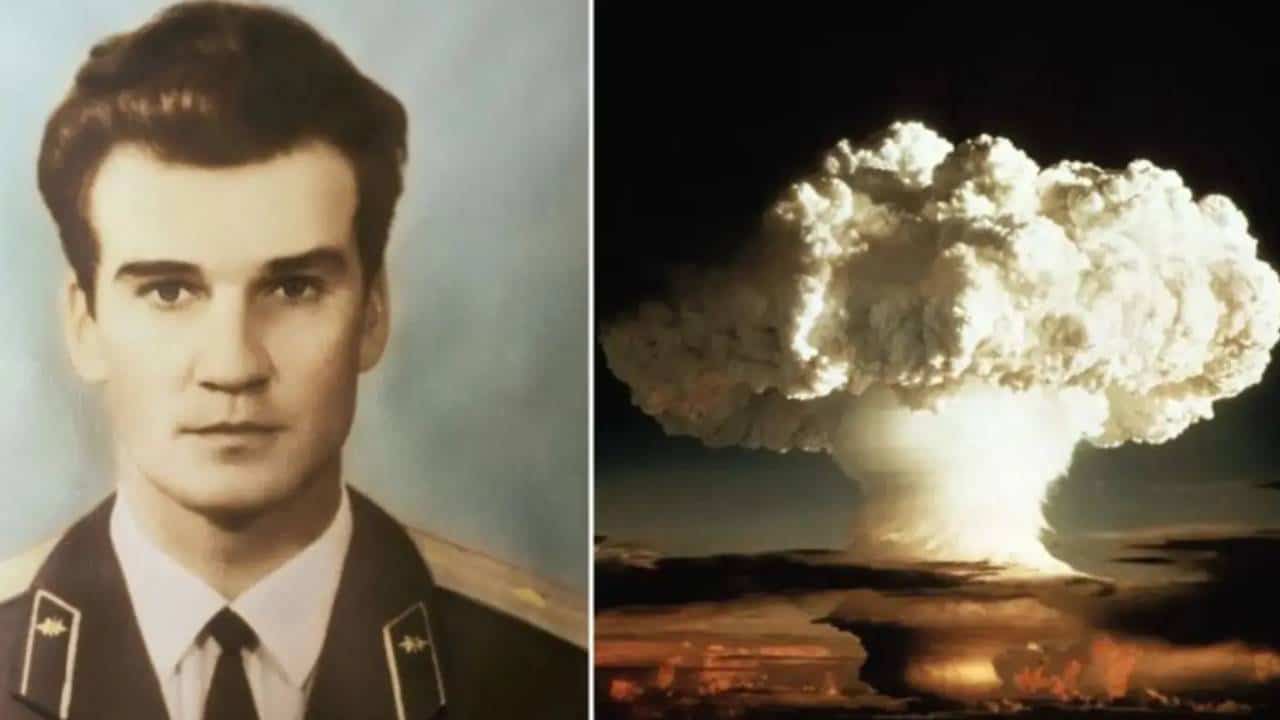
Stanislav Petrov Decides Not to Report (1983)
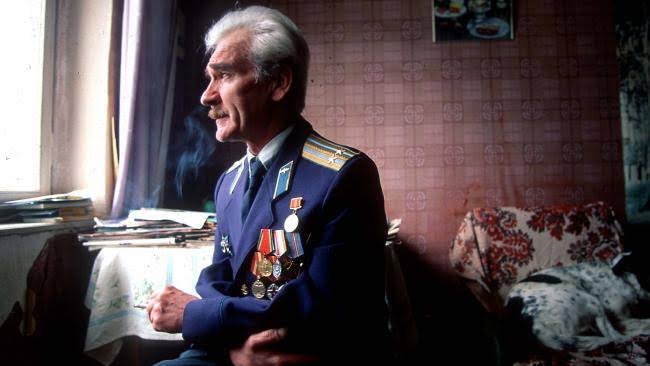
Sitting alone in a bunker outside Moscow, on September 26, 1983, Soviet Lieutenant Colonel Stanislav Petrov received reports of five American intercontinental ballistic missiles having just been launched. The protocol was clear. Report the incident up the chain of command, and the Soviet Union would counter-attack before the missiles arrived. But Petrov didn’t report it. He believed it to be a false positive, despite what the warning system was telling him. His logic was that America’s first strike would not consist of five missiles when they had thousands.
He was right. The early-warning system had mistaken sunlight reflecting off clouds for the exhaust of a missile. Had Petrov stuck to protocol, Soviet leadership would have gotten the report, with about fifteen minutes to authorize a counterstrike. The man on the phone decided it made no sense, and that quiet moment of skepticism is what kept the Cold War from heating up in an instant. He was not celebrated for it and was even reprimanded for failing to properly document the occurrence.
Gavrilo Princip Chooses His Spot (1914)
On June 28, 1914, Gavrilo Princip had already failed once. He was part of a group of assassins positioned along a route in Sarajevo for the assassination of Franz Ferdinand, and an earlier member of the group had attempted to throw a bomb at Franz Ferdinand, but he failed, injuring bystanders instead. Princip, dejected, reportedly stopped near a delicatessen on Franz Josef Street to collect himself.
The route was changed, but the Archduke’s driver took a wrong turn onto the original route. He was ordered to stop and reverse, but stalled directly in front of Princip. Princip fired twice, striking Franz Ferdinand and his wife. The Austro-Hungarian ultimatum to Serbia followed within weeks, and the chain of alliance obligations dragged Europe into war by August.
The First World War, with its 20 million dead, was caused by a simple wrong turn by the Archduke’s driver and one man still standing at the right corner. Two unrelated decisions that changed the course of history
Winston Churchill Refuses the Table (May 1940)
When Neville Chamberlain resigned from the post of British Prime Minister on May 10, 1940, and Churchill succeeded him, France was already collapsing. Within days, British and Allied forces found themselves trapped at Dunkirk. The Foreign Secretary, Lord Halifax, argued that Britain should open back-channel negotiations with Hitler with Mussolini as mediator.
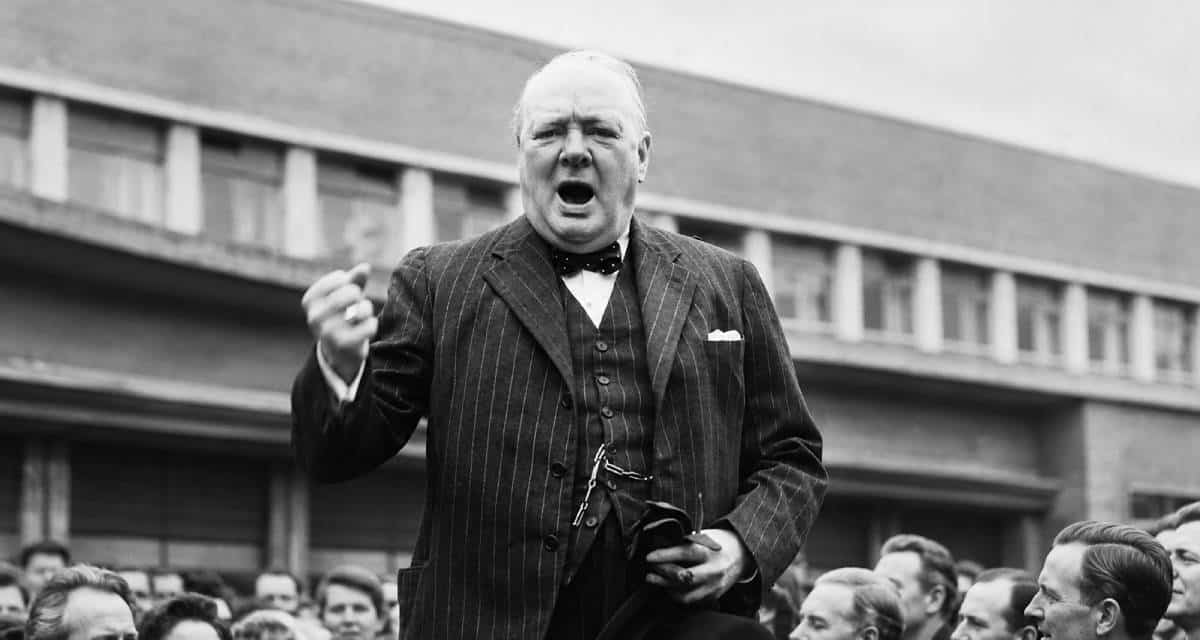
Between May 26 and 28, Churchill fought Halifax across several War Cabinet meetings before broadening the room to the full Cabinet on May 28, delivering an impassioned case urging continued resistance. Britain stayed in the war. In 1940, negotiation would have meant giving Hitler control over western Europe, allowing him to consolidate before turning east, leaving no staging ground from which the Allies could later mount a counter-invasion. It was all decided in one conference room by one stubborn man in the first fortnight of power.
Harry Truman Approves the Bombs (1945)
When Truman took office as president in April of 1945, he didn’t know about the Manhattan Project. It took Stimson and Groves thirteen days to brief him, and by then, Germany was already falling apart. The issue now became whether the bomb should be used on Japan. A committee deliberated. The military planners predicted catastrophic American casualties if an invasion of the Japanese home islands went through. Truman approved the use of atomic bombs on August 6 and 9, 1945.
It’s unclear whether Japan would have surrendered without the bombs, but when Truman gave the green light, it brought about the introduction of nuclear weapons into warfare and set the terms for the way that the post-war world would arrange itself. The Cold War’s logic of mutual deterrence, the entire doctrine of MAD, the arms race. It all stems from one man in Missouri who signed off on something he had not known existed three months earlier.
Napoleon Decides to March East (1812)
By 1812, Napoleon had redrawn Europe’s borders and was at the height of his power. He had defeated Austria, Prussia, and Russia on the battlefield, dictated peace treaties to all three while installing family members on thrones across the continent. The Russian campaign was not imposed upon him. He chose it himself, despite having already beaten Russia into a peace treaty just seven years earlier, certain that it would be a fast campaign that would bring Tsar Alexander I under pressure and force him to implement the Continental System blockade against Britain which Alexander had been quietly abandoning.
It took six months and cost Napoleon his Grande Armée. Only about 100,000 out of 600,000 troops who entered Russia in June 1812 returned in fighting condition. It was a complete disaster that inspired a coalition across Europe and started the series of campaigns that would culminate in Waterloo in 1815. That campaign set the terms for the conservative order that would follow in Europe and established Russia as a continental military power that would remain so through both world wars and beyond.
Rosa Parks Stays Seated (1955)
December 1, 1955. Rosa Parks boarded a bus in Montgomery, Alabama, after work, and took a seat in the first row of the “colored” section. When the white section filled, a driver ordered her to move further back along with three other Black passengers. The other three complied. Parks did not. This resulted in her arrest, a fine of ten dollars, and a bond provided by E.D. Nixon, former president of the local NAACP chapter.
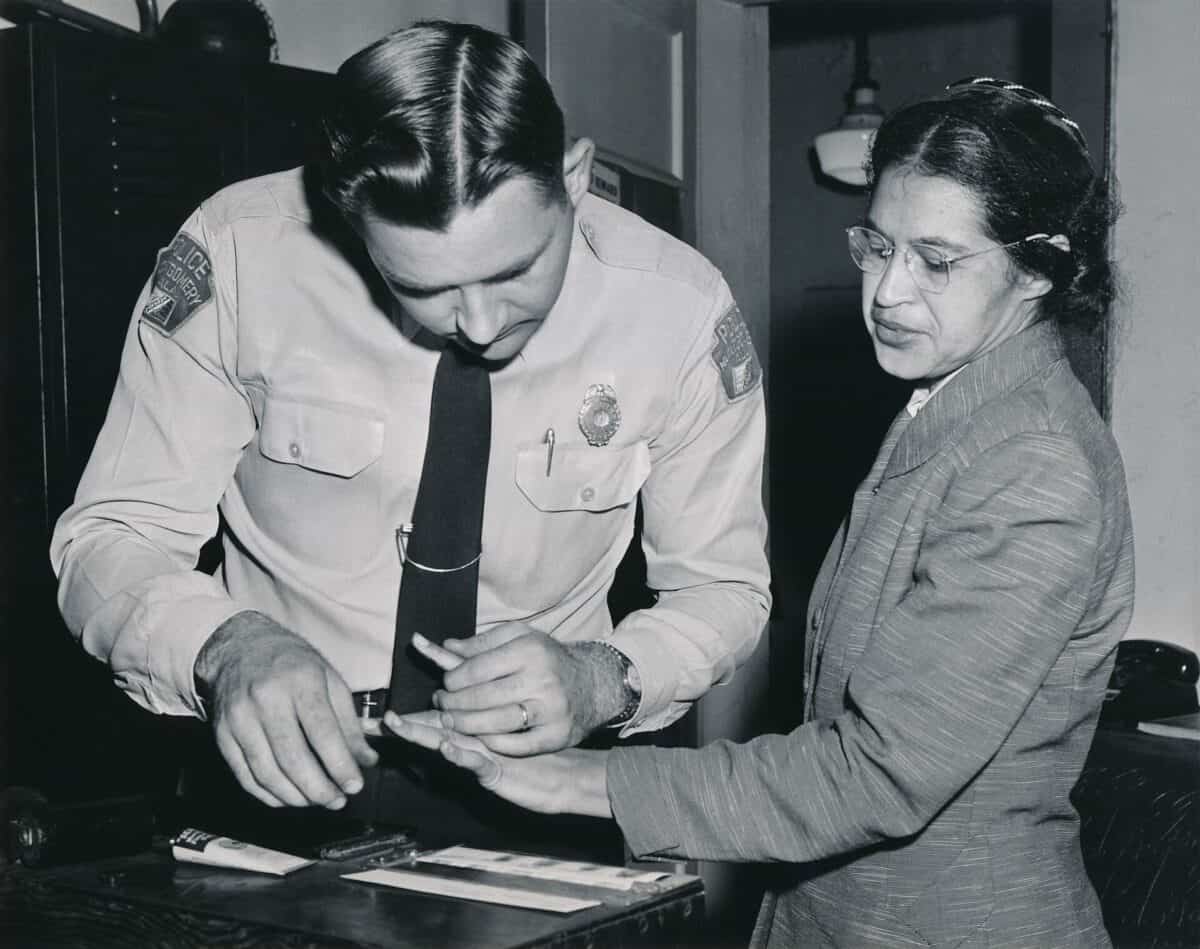
Rosa Parks’s work in the civil rights movement cements her status as one of the most famous people in history.
Parks’ decision was not spontaneous or accidental. Parks was a trained activist who attended Highlander Folk School that summer and understood what she was doing. The Montgomery Bus Boycott, organized shortly after her arrest, lasted for 381 days and ended with a Supreme Court ruling that segregation on public buses was unconstitutional. It also launched Martin Luther King Jr. as a national figure and proved that sustained economic pressure could force changes in law. Everything that came after transformed American civil rights laws and it started because one woman decided to keep her seat.
Bill Gates Insists on a License, Not a Sale (1980)
In the summer of 1980, IBM approached Microsoft in need of an operating system for their upcoming personal computer. Microsoft had no operating system at that time, so Bill Gates acquired 86-DOS from a company named Seattle Computer Products, paying them about $50,000, and then struck the deal with IBM: Microsoft licensed MS-DOS instead of selling it outright. IBM, which was in a rush to bring the PC out, accepted the terms, allowing Microsoft to license the operating system to other firms.
Within a year, Microsoft had licensed MS-DOS to 70 other companies as IBM PC clones flooded the market. Every machine running PC-compatible software was paying for Microsoft’s license. IBM had essentially donated the PC software industry away to a small firm in Albuquerque through a clause in their contract that they failed to scrutinize or simply didn’t think was a big deal. Gates was 24 years old when he negotiated it. The clause built the largest software company in the world and shaped the future of tech.
Einstein Signs the Letter (1939)
The Hungarian-born physicists Leo Szilard and Edward Teller had been trying to get word to the American government about the implications of nuclear fission for months. Szilard understood that the Germans, with the help of scientists such as Werner Heisenberg, were well placed to develop a fission weapon. But Szilard had no name, no credibility with heads of state, and no obvious path to the President. Albert Einstein did.
Szilard drove to Einstein’s vacation house on Long Island that July and explained what a chain reaction could produce. Einstein later said he had not considered the military application before that conversation.
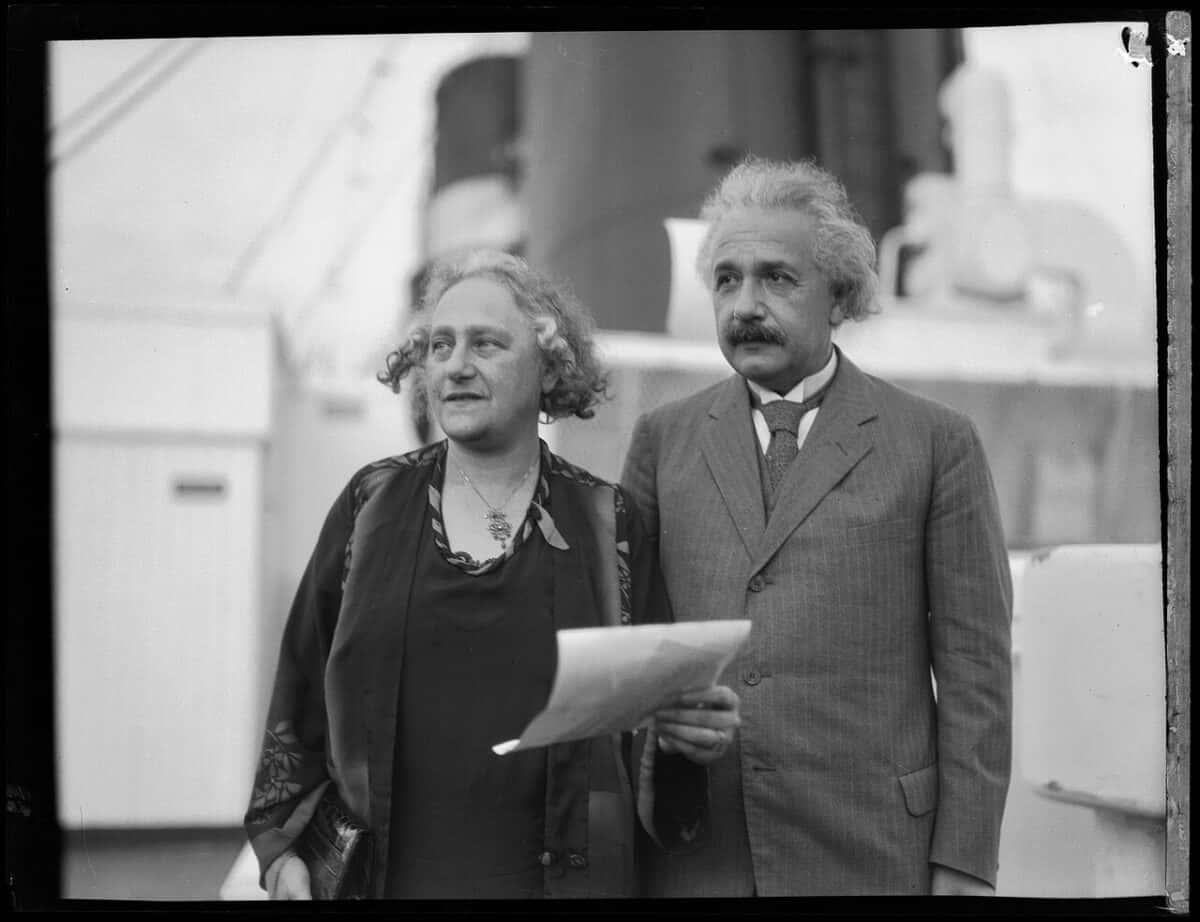
Szilard drafted two letters. Einstein chose the longer one, reviewed, revised, and signed it. The letter went to President Roosevelt in October 1939, warning that a new kind of extremely powerful bomb could be constructed and recommending that the United States coordinate its own research before Germany did. The President authorized an advisory committee that very day. This letter was the beginning of what came to be called the Manhattan Project. Einstein’s name opened a door that Szilard’s could not, although it’s hard to say whether that was a good thing.
Tim Berners-Lee Chooses Not to Patent It (1993)
Tim Berners-Lee invented the World Wide Web at CERN in 1989. CERN could license it, patent it, charge for it, develop businesses from it. The world was their oyster. But Gopher, a rival document retrieval technology developed at the University of Minnesota, had already shown what happened when you went the other way. Early in 1993, Minnesota announced plans to impose charges for commercial licenses. Developers and users abandoned it almost overnight. Charging for it had killed it.
Berners-Lee lobbied CERN to release the web’s source code into the public domain royalty-free and patent-free. On April 30, 1993, CERN signed the declaration and relinquished all its intellectual property rights to the code. Berners-Lee had just foregone a personal fortune. More importantly, he built the foundation for companies like Google, Amazon, and Facebook, without charging a single penny. But the truth is that a licensed web, with per-server fees and approval processes, would almost certainly not have become the web we know today. It would have been just another licensable product, along with countless others. The world would be a very different place if that had been the case.
Gorbachev Keeps the Tanks Home (1989)
The Soviet Union had a clear-cut strategy for dealing with popular uprisings within Eastern Bloc countries throughout much of the Cold War era. Nothing fancy about it, just stern military intervention. Hungary in 1956. Czechoslovakia in 1968. Come the autumn of 1989, all of the Eastern European satellite countries were in turmoil, and the Soviets could have used the same method. But Mikhail Gorbachev chose not to. He had signaled as much in speeches, but the proof came in that autumn as one government after another collapsed with no military intervention stifling uprisings. Gorbachev held his position even as events spiraled beyond anyone’s control, including the night the Berlin Wall came down not through any acts of force but because of the mistaken announcement by an East German official at a press conference that the borders were open “immediately, without delay.” The people gathered at the wall.
There were no tanks from the Soviet Union there. Poland, Hungary, Czechoslovakia, Bulgaria, Romania all made the transition in just a few months, with some being more violent than others. Gorbachev’s decision not to maintain his empire by force resulted in its collapse. The Cold War, which defined world politics for forty years, was over in two years after those decisive autumn nights.