

The Forgotten Battles and Sacrifices Behind Memorial Day
For many Americans, Memorial Day means backyard cookouts, long weekends, and the unofficial start of summer. But the holiday itself was created for a far more solemn reason: honoring the American troops who never made it home from war. Some of the deadliest and most important battles in U.S. history, from Battle of Antietam to Battle of Normandy, helped shape the national culture of remembrance that Memorial Day represents today. Here, History Computer is taking a closer look at battles Memorial Day was created to honor.
To determine the battles and sacrifices that Memorial Day was created to honor, History Computer reviewed various historical and military sources. We included supplemental information for these battles regarding the dates, locations, primary U.S. Forces involved, and ultimately the lasting legacy for each battle.
Here is a look at the battles and sacrifices that Memorial Day was created to honor:
Why Are We Covering This?
Understanding the battles and sacrifices behind Memorial Day is important because the holiday was created not to celebrate war, but to remember the Americans who never came home from it. From the devastating losses of the American Civil War to the beaches of Battle of Normandy and the mountains of Afghanistan, generations of service members paid an extraordinary price in conflicts that shaped the nation’s history. Many of these battles became permanent symbols of courage, endurance, and national grief, helping define how Americans honor military sacrifice today. By revisiting these battlefields and the stories attached to them, Memorial Day becomes more than a long weekend — it becomes a reminder of the human cost behind the freedoms and security the country often takes for granted.
Why Memorial Day Exists
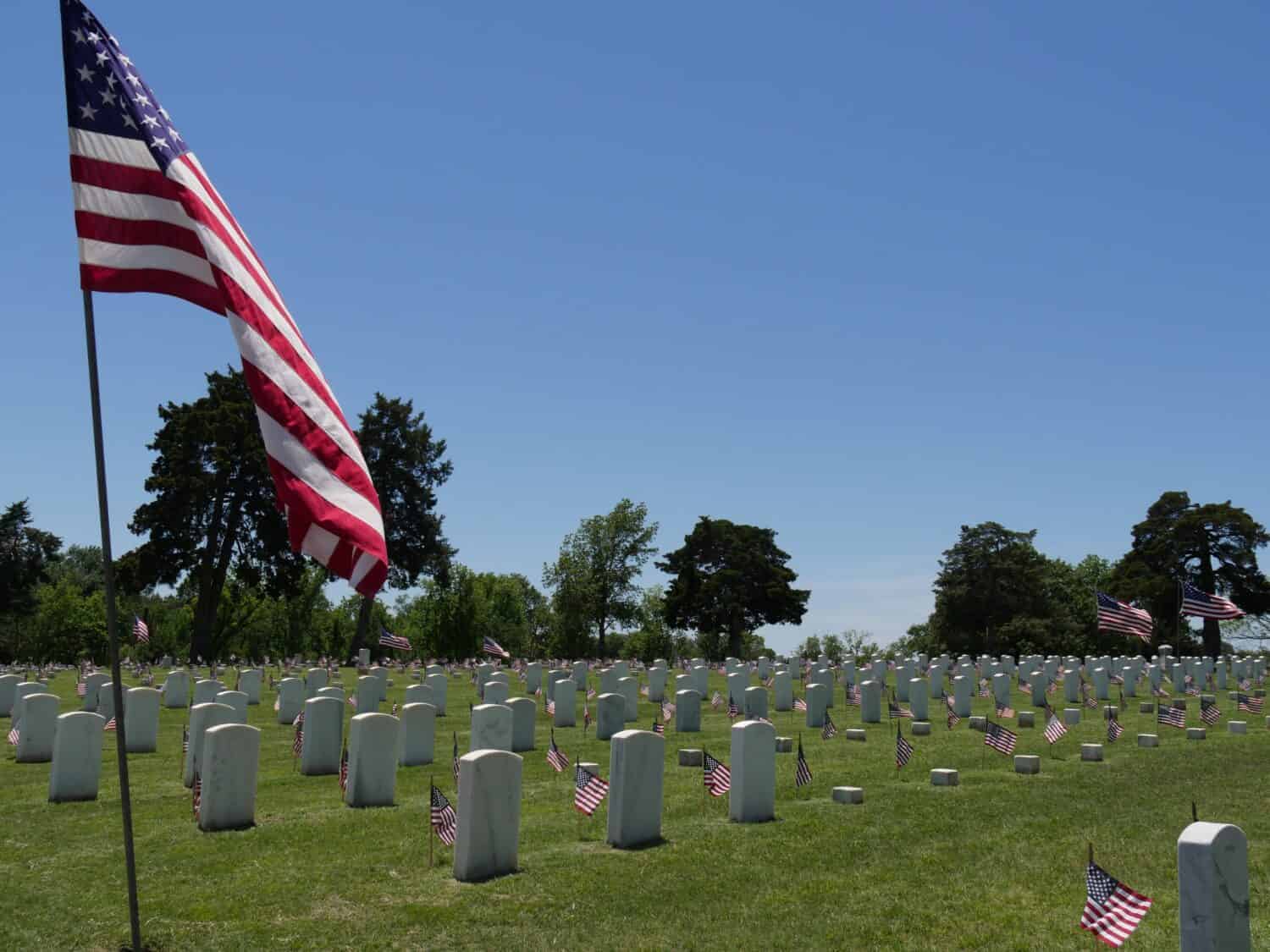
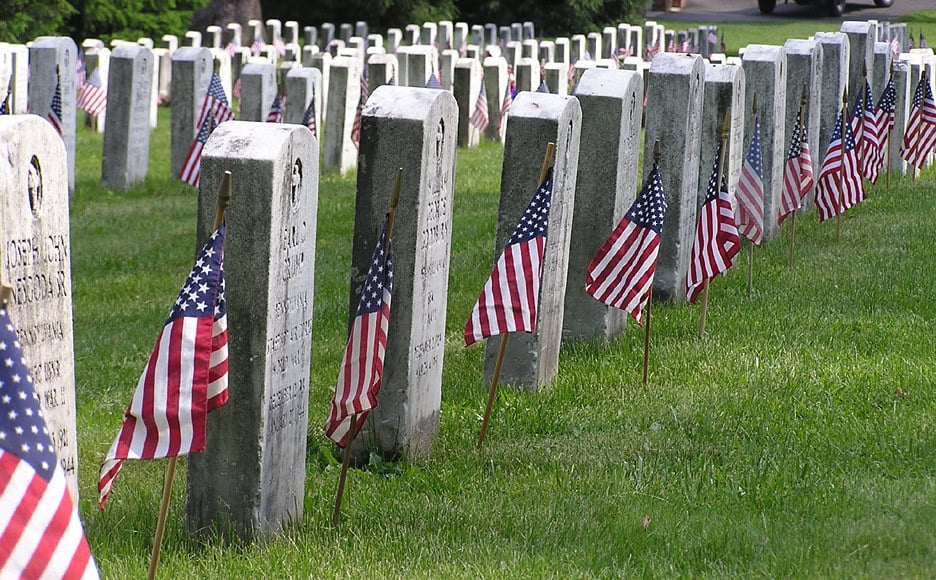
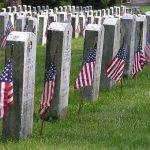
Memorial Day was created to honor the Americans who never returned home from war. Originally known as Decoration Day after the American Civil War, the observance began as communities decorated the graves of fallen soldiers with flowers and flags. Over time, the holiday expanded to recognize service members lost in every American conflict, transforming Memorial Day into one of the nation’s most solemn acts of remembrance.
The Civil War Battles That Shaped National Mourning
Battles like Battle of Gettysburg and Battle of Antietam produced casualty figures so staggering that they permanently changed the American understanding of war. Entire communities lost fathers, sons, and brothers in only a matter of days. The scale of death during the Civil War helped create the culture of remembrance that eventually evolved into Memorial Day itself.
World Wars That Defined a Generation of Sacrifice
From Battle of Normandy to Battle of Iwo Jima, the world wars demanded sacrifice on a scale few Americans had ever witnessed. Young Americans fought across Europe, the Pacific, and beyond in battles that became synonymous with courage and loss. Cemeteries stretching across foreign soil became lasting reminders of the enormous price paid to defeat tyranny and preserve freedom.
Remembering the Human Cost of Combat
Behind every battlefield statistic was a human story — soldiers enduring freezing winters at Battle of Chosin Reservoir, Marines fighting block by block in Battle of Fallujah, and troops surviving impossible conditions in wars spanning generations. Memorial Day exists not only to remember victories, but to recognize the pain, sacrifice, and lives forever altered by combat.
The Battles Americans Still Stop to Remember
The battles remembered on Memorial Day are more than chapters in military history. They became symbols of endurance, courage, and national sacrifice that continue to shape American identity today. From Civil War battlefields to modern conflicts overseas, these moments remind Americans that freedom often came at an extraordinary cost paid by ordinary men and women in uniform.
Battle of Gettysburg
- War / Conflict: American Civil War
- Year / Dates: 1863
- Location: Gettysburg, Pennsylvania
- Primary U.S. Forces Involved: Army of the Potomac
- Estimated U.S. Casualties: 23,000+
- Strategic Importance: Turning point of the Civil War
- Historical Outcome: Union victory halted Lee’s northern invasion
- Lasting Legacy: Symbol of sacrifice and Lincoln’s Gettysburg Address
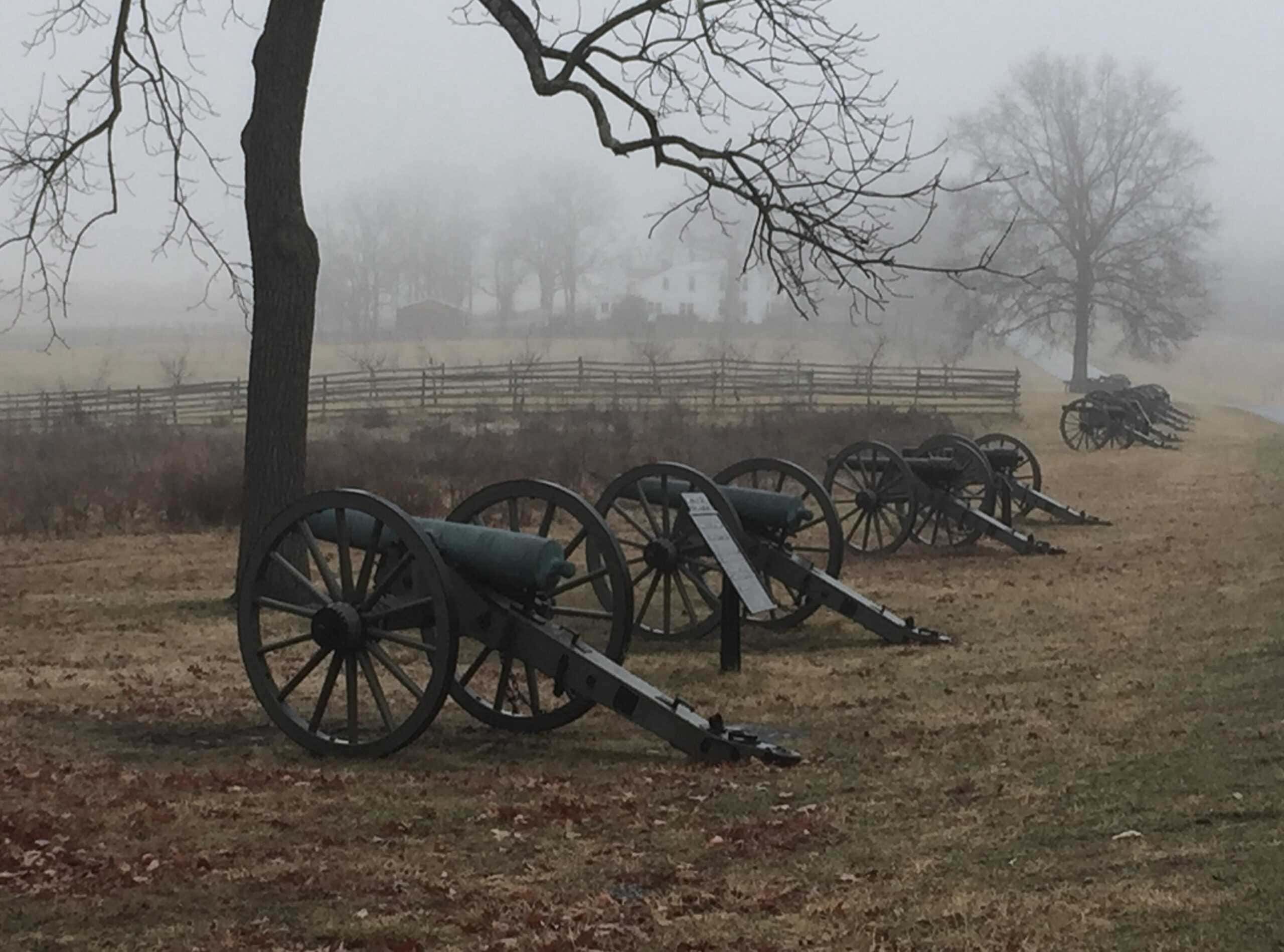
The Battle of Gettysburg became one of the defining moments of the Civil War and remains deeply tied to the spirit of Memorial Day. Over three days of brutal fighting, Union and Confederate forces suffered staggering casualties across the Pennsylvania countryside. The Union victory halted General Robert E. Lee’s invasion of the North and shifted momentum in the war. Gettysburg later became sacred ground in American memory, especially after President Abraham Lincoln delivered the Gettysburg Address there, transforming the battlefield into a lasting symbol of sacrifice, national unity, and remembrance.
Battle of Antietam
- War / Conflict: American Civil War
- Year / Dates: 1862
- Location: Sharpsburg, Maryland
- Primary U.S. Forces Involved: Army of the Potomac
- Estimated U.S. Casualties: 12,400+
- Strategic Importance: Bloodiest single day in American history
- Historical Outcome: Strategic Union advantage enabled Emancipation Proclamation
- Lasting Legacy: Central symbol of Civil War sacrifice
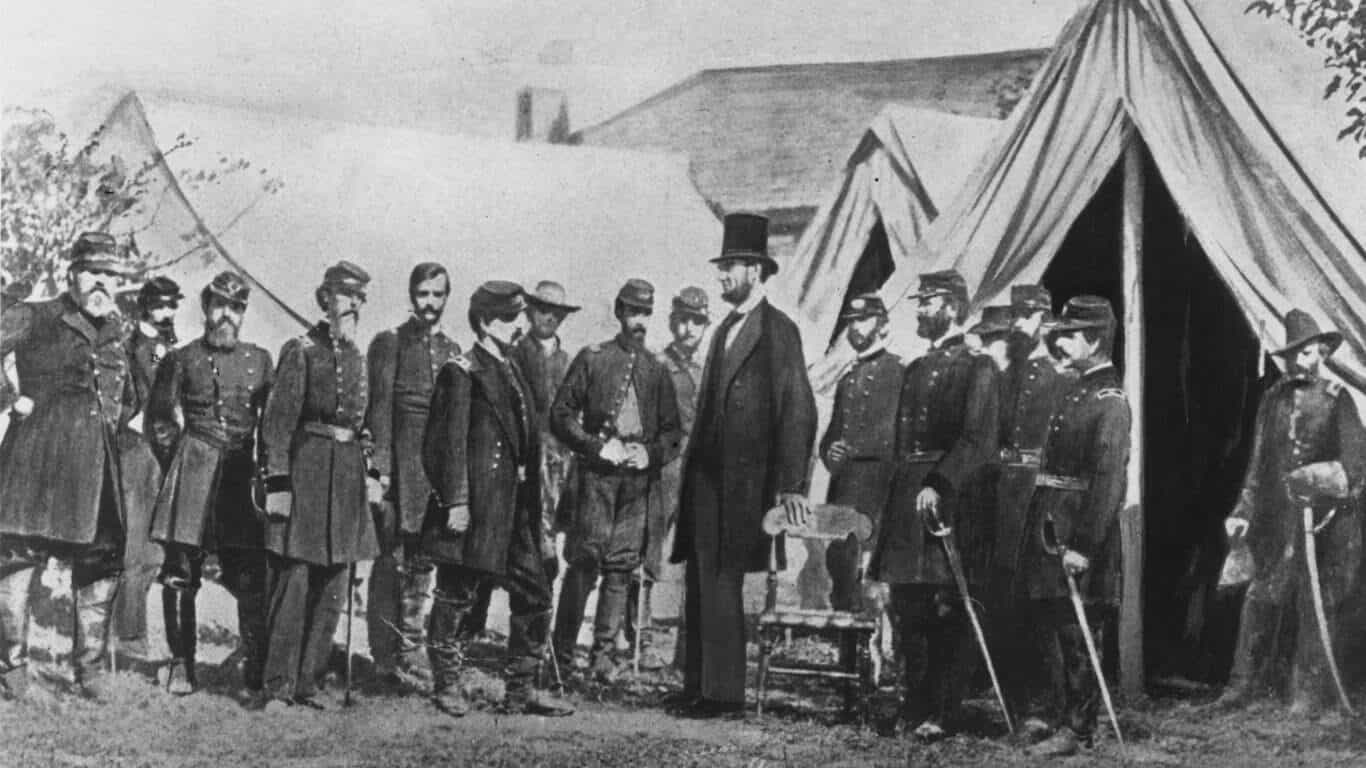
Antietam remains the bloodiest single day in American military history, with thousands of soldiers killed, wounded, or missing in just hours of combat. Fought near Sharpsburg, Maryland, the battle exposed the horrifying human cost of the Civil War to the entire nation. Graphic photographs from the battlefield shocked civilians and brought the realities of war directly into public view. Though tactically inconclusive, the Union’s ability to stop Lee’s advance gave President Lincoln the opportunity to issue the Emancipation Proclamation, forever linking Antietam to both sacrifice and national transformation.
Battle of Shiloh
- War / Conflict: American Civil War
- Year / Dates: 1862
- Location: Tennessee
- Primary U.S. Forces Involved: Army of the Tennessee
- Estimated U.S. Casualties: 13,000+
- Strategic Importance: Demonstrated industrial-scale warfare
- Historical Outcome: Union secured momentum in the Western Theater
- Lasting Legacy: Shocked the nation with casualty levels
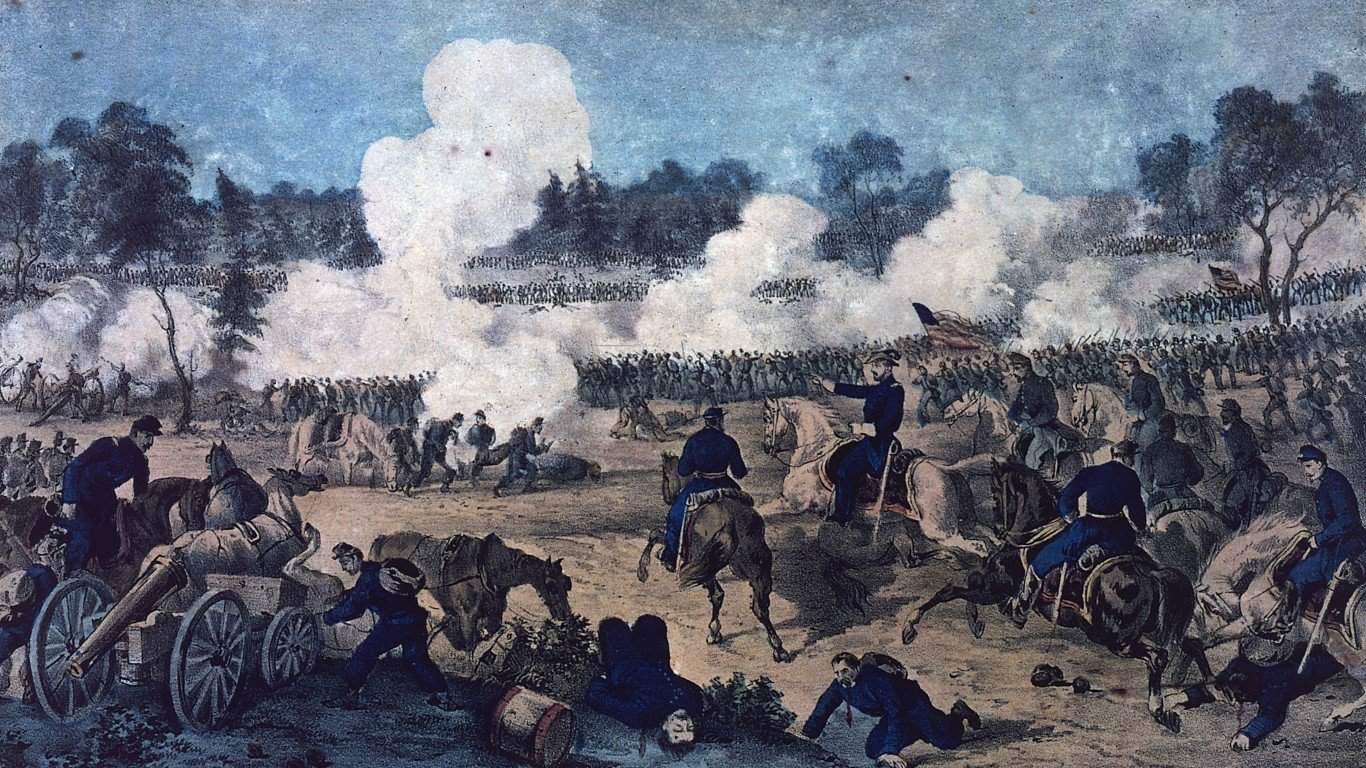
The Battle of Shiloh shattered early assumptions that the Civil War would end quickly or cleanly. Fought in Tennessee in 1862, the battle produced casualty levels that stunned Americans on both sides of the conflict. Union forces ultimately held the field, but the enormous losses demonstrated how industrial-era warfare would consume entire armies. Shiloh became one of the first major reminders that victory would come at an extraordinary human cost. Its legacy continues to reflect the sacrifice of ordinary soldiers who endured some of the war’s earliest large-scale bloodshed.
Battle of Cold Harbor
- War / Conflict: American Civil War
- Year / Dates: 1864
- Location: Virginia
- Primary U.S. Forces Involved: Army of the Potomac
- Estimated U.S. Casualties: 13,000+
- Strategic Importance: Highlighted brutality of trench warfare
- Historical Outcome: Confederate defensive victory
- Lasting Legacy: Remembered for devastating frontal assaults
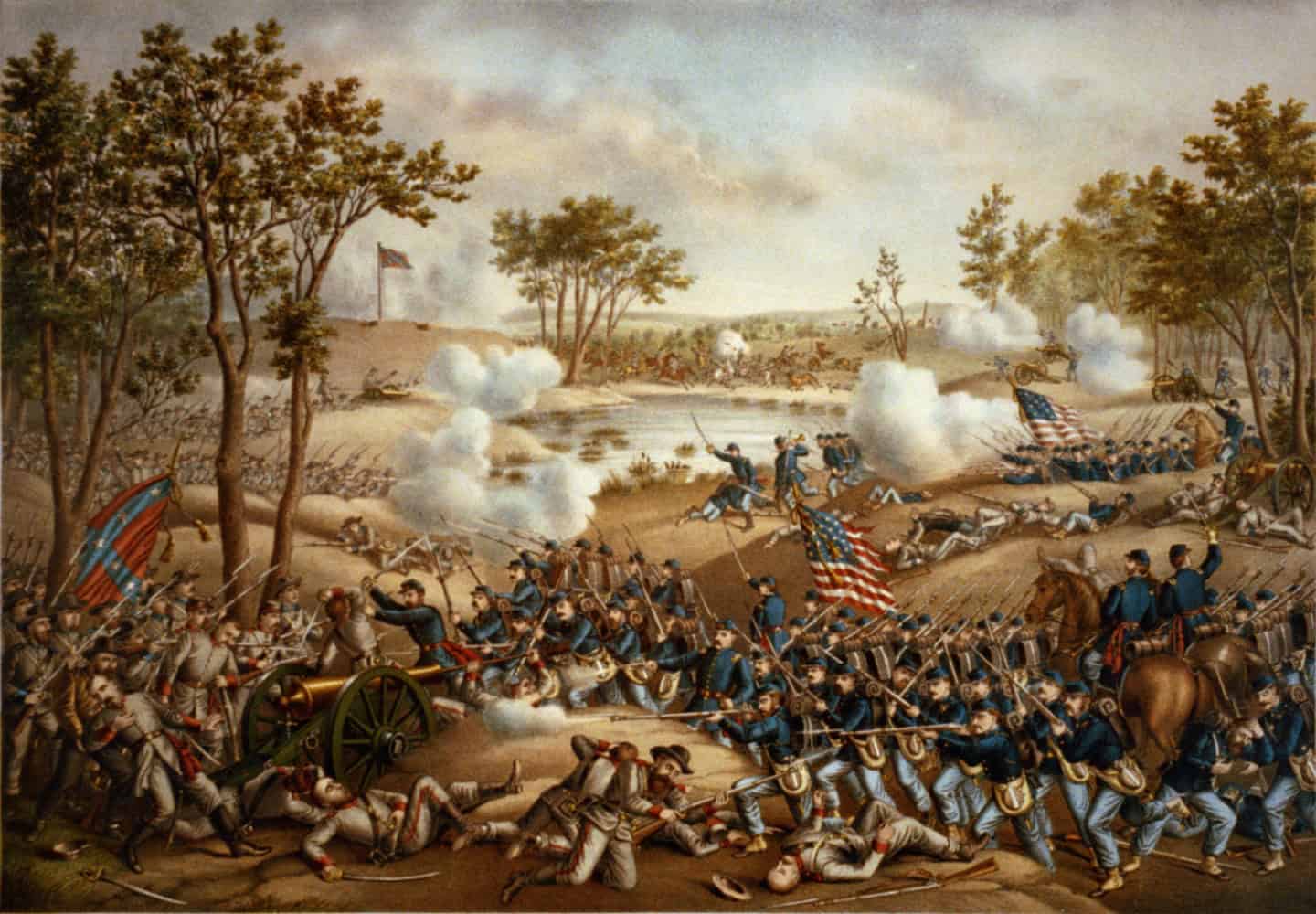
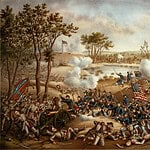
Cold Harbor became infamous for the devastating losses suffered during repeated Union assaults against entrenched Confederate defenses. In only a matter of minutes, thousands of Union soldiers fell under concentrated fire, making the battle one of the starkest examples of Civil War battlefield slaughter. Survivors later described the horror of lying wounded between the lines for days under intense heat and gunfire. The battle symbolized the brutal realities of trench-style warfare and remains remembered as a cautionary example of sacrifice in pursuit of military objectives during America’s deadliest conflict.
Battle of the Wilderness
- War / Conflict: American Civil War
- Year / Dates: 1864
- Location: Virginia
- Primary U.S. Forces Involved: Army of the Potomac
- Estimated U.S. Casualties: 17,500+
- Strategic Importance: Opened Grant’s Overland Campaign
- Historical Outcome: Indecisive but strategically significant
- Lasting Legacy: Known for horrific forest fighting and fires
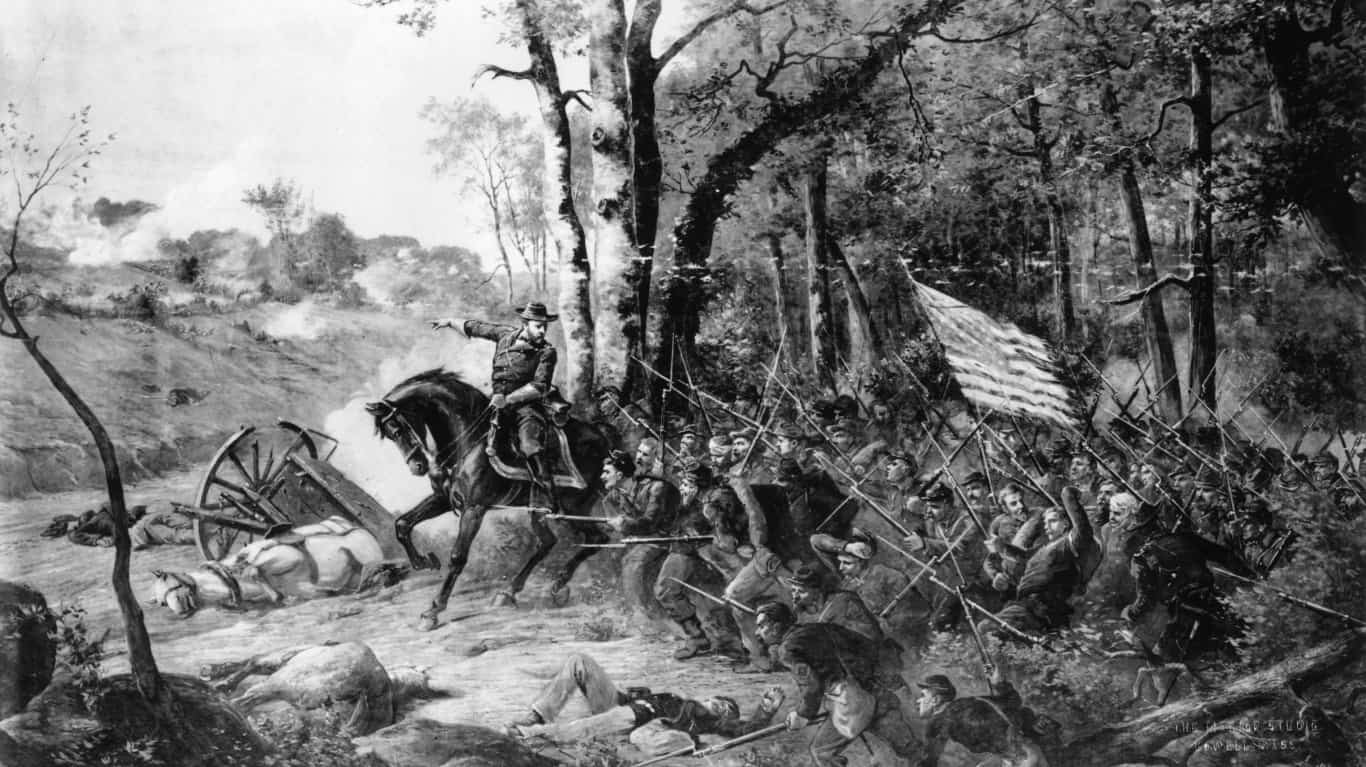
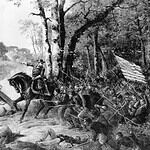
The Battle of the Wilderness plunged Union and Confederate forces into chaotic fighting across dense Virginia forests where smoke, fire, and confusion overwhelmed both armies. Soldiers often fought at close range with little visibility, while wounded men were trapped by spreading flames ignited during combat. Though tactically inconclusive, the battle marked the opening of General Ulysses S. Grant’s relentless Overland Campaign against Robert E. Lee. The Wilderness remains remembered not only for its strategic importance but also for the horrifying conditions endured by thousands of soldiers caught in some of the Civil War’s harshest fighting.
Battle of Belleau Wood
- War / Conflict: World War I
- Year / Dates: 1918
- Location: France
- Primary U.S. Forces Involved: U.S. Marine Corps
- Estimated U.S. Casualties: 9,700+
- Strategic Importance: Helped halt German advance
- Historical Outcome: Allied victory
- Lasting Legacy: Forged the Marine Corps’ modern combat reputation
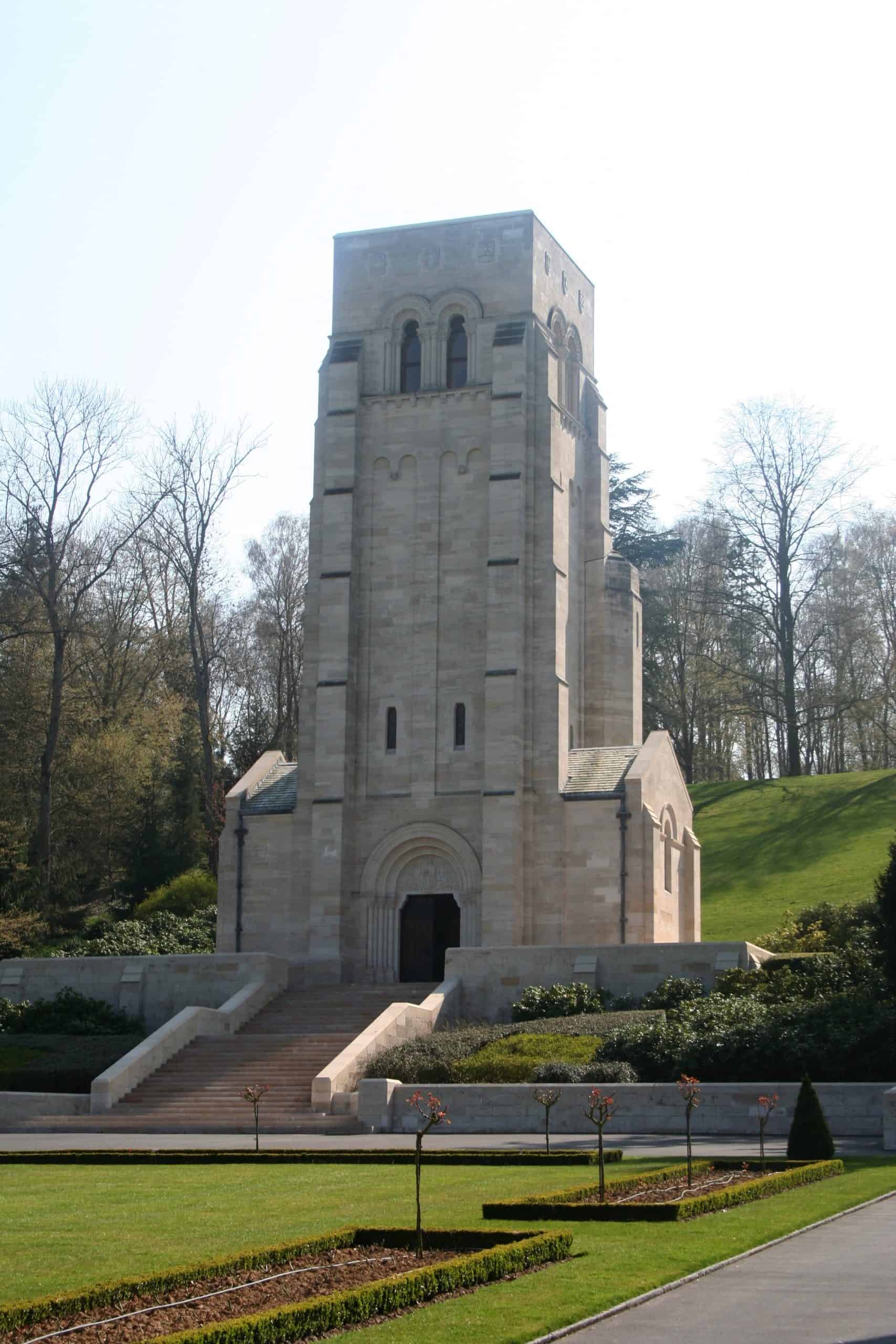
Belleau Wood became one of the most iconic battles in Marine Corps history and helped cement the reputation of American fighting forces during World War I. U.S. Marines and Army troops fought through forests, machine gun nests, and entrenched German positions in brutal close-quarters combat. The battle came at a tremendous cost, with thousands of Americans killed or wounded in only a few weeks. Belleau Wood later became a symbol of determination, courage, and sacrifice, helping shape the modern identity of the Marine Corps while reminding Americans of the heavy price paid in Europe.
Meuse-Argonne Offensive
- War / Conflict: World War I
- Year / Dates: 1918
- Location: France
- Primary U.S. Forces Involved: American Expeditionary Forces
- Estimated U.S. Casualties: 26,000+
- Strategic Importance: Largest U.S. offensive of WWI
- Historical Outcome: Contributed to German collapse
- Lasting Legacy: One of the deadliest campaigns in U.S. history
The Meuse-Argonne Offensive was the largest and deadliest operation ever conducted by the American Expeditionary Forces during World War I. Stretching across difficult terrain in northeastern France, the offensive involved over a million American troops fighting against heavily fortified German defenses. Casualties mounted rapidly as soldiers pushed through forests, trenches, and artillery fire during weeks of combat. The campaign played a major role in forcing Germany toward collapse and the eventual armistice. Its enormous human cost ensured that the sacrifices made during the offensive would remain central to America’s remembrance of World War I.
Attack on Pearl Harbor
- War / Conflict: World War II
- Year / Dates: 1941
- Location: Hawaii
- Primary U.S. Forces Involved: U.S. Pacific Fleet
- Estimated U.S. Casualties: 2,400+
- Strategic Importance: Brought the United States into WWII
- Historical Outcome: Japanese tactical victory but strategic turning point
- Lasting Legacy: Annual remembrance tied directly to national mourning
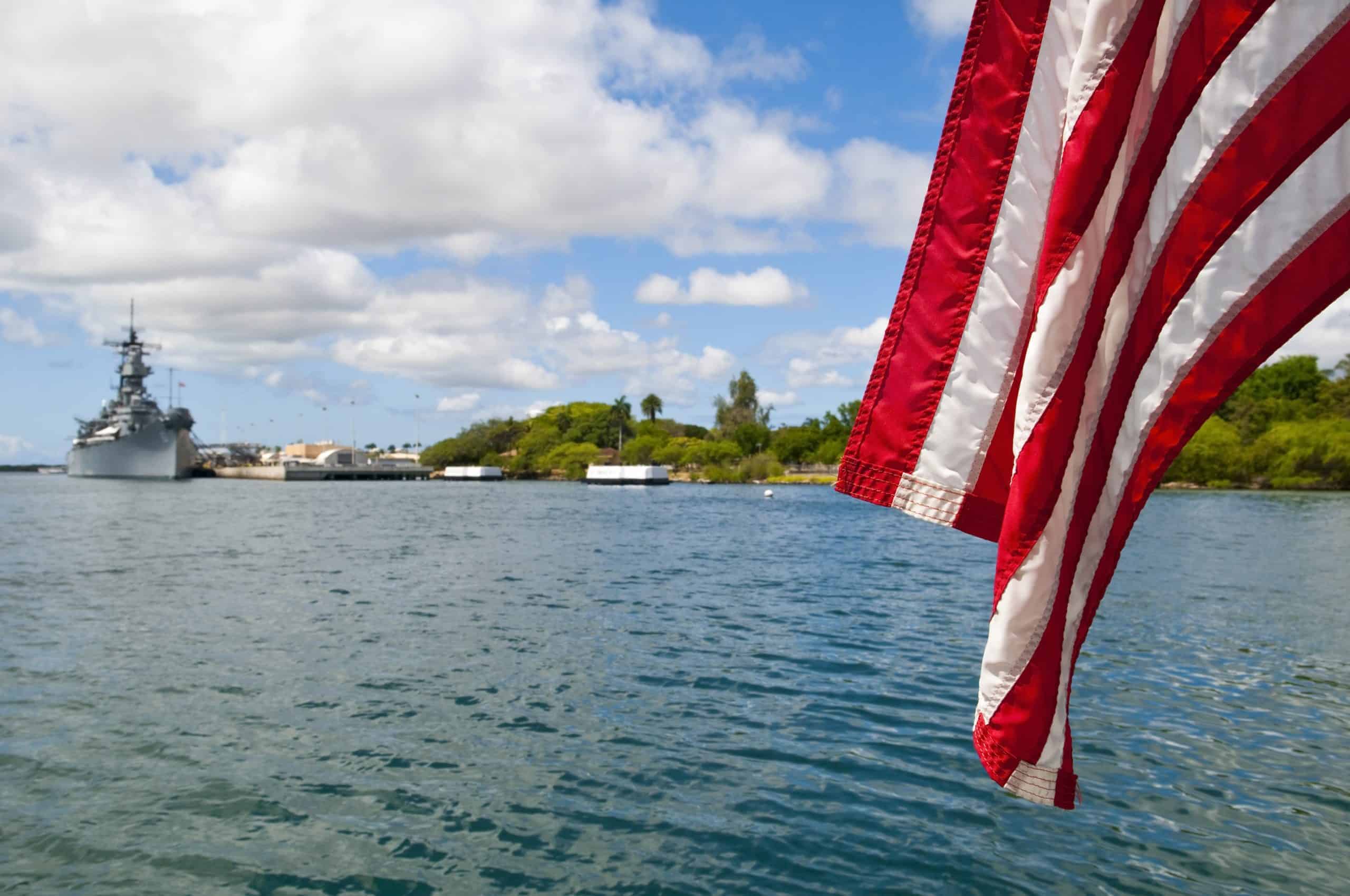
The attack on Pearl Harbor instantly transformed the United States from a nation watching the war abroad into a country fully committed to global conflict. Japanese aircraft devastated the Pacific Fleet in Hawaii, killing more than 2,400 Americans in a single morning. The destruction of battleships and loss of military personnel shocked the nation and united Americans behind the war effort. Pearl Harbor became more than a military disaster; it evolved into a national symbol of sacrifice, resilience, and remembrance that continues to shape Memorial Day reflections on those who died in service to the country.
Battle of Midway
- War / Conflict: World War II
- Year / Dates: 1942
- Location: Pacific Ocean
- Primary U.S. Forces Involved: U.S. Navy
- Estimated U.S. Casualties: 300+
- Strategic Importance: Shifted momentum in the Pacific
- Historical Outcome: Major American naval victory
- Lasting Legacy: Remembered as a decisive naval turning point
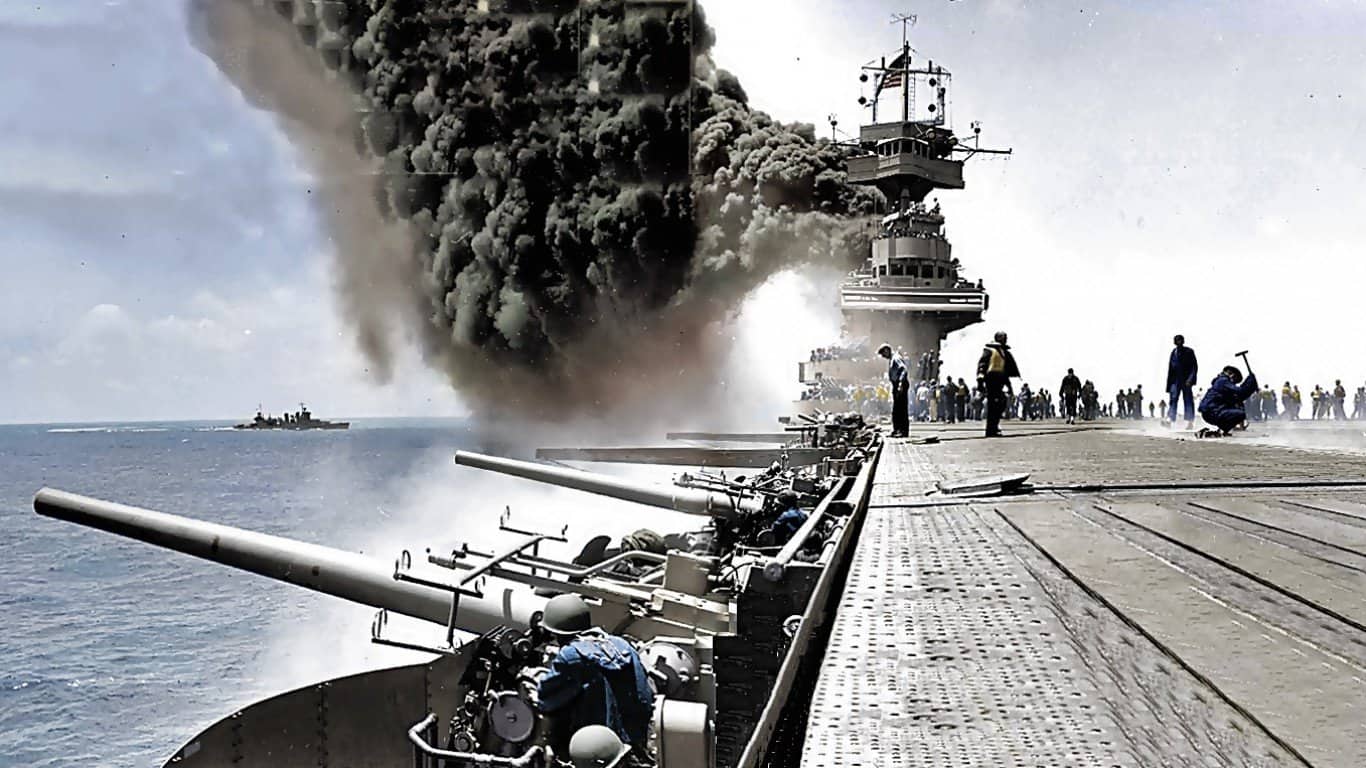
The Battle of Midway marked one of the most decisive naval victories in American history and shifted momentum in the Pacific during World War II. U.S. Navy aviators and sailors faced overwhelming risks as they launched repeated attacks against the Japanese fleet. American forces ultimately destroyed four Japanese aircraft carriers, fundamentally changing the balance of power in the Pacific. Though casualties were far lower than many later battles, Midway carried immense strategic significance. The courage displayed by pilots and sailors helped preserve the Pacific Fleet and became part of the broader legacy of sacrifice remembered from World War II.
Battle of Normandy
- War / Conflict: World War II
- Year / Dates: 1944
- Location: France
- Primary U.S. Forces Involved: U.S. Army and Allied Forces
- Estimated U.S. Casualties: 29,000+
- Strategic Importance: Opened Western Front in Europe
- Historical Outcome: Allied breakthrough into Nazi-occupied Europe
- Lasting Legacy: Linked to Normandy American Cemetery
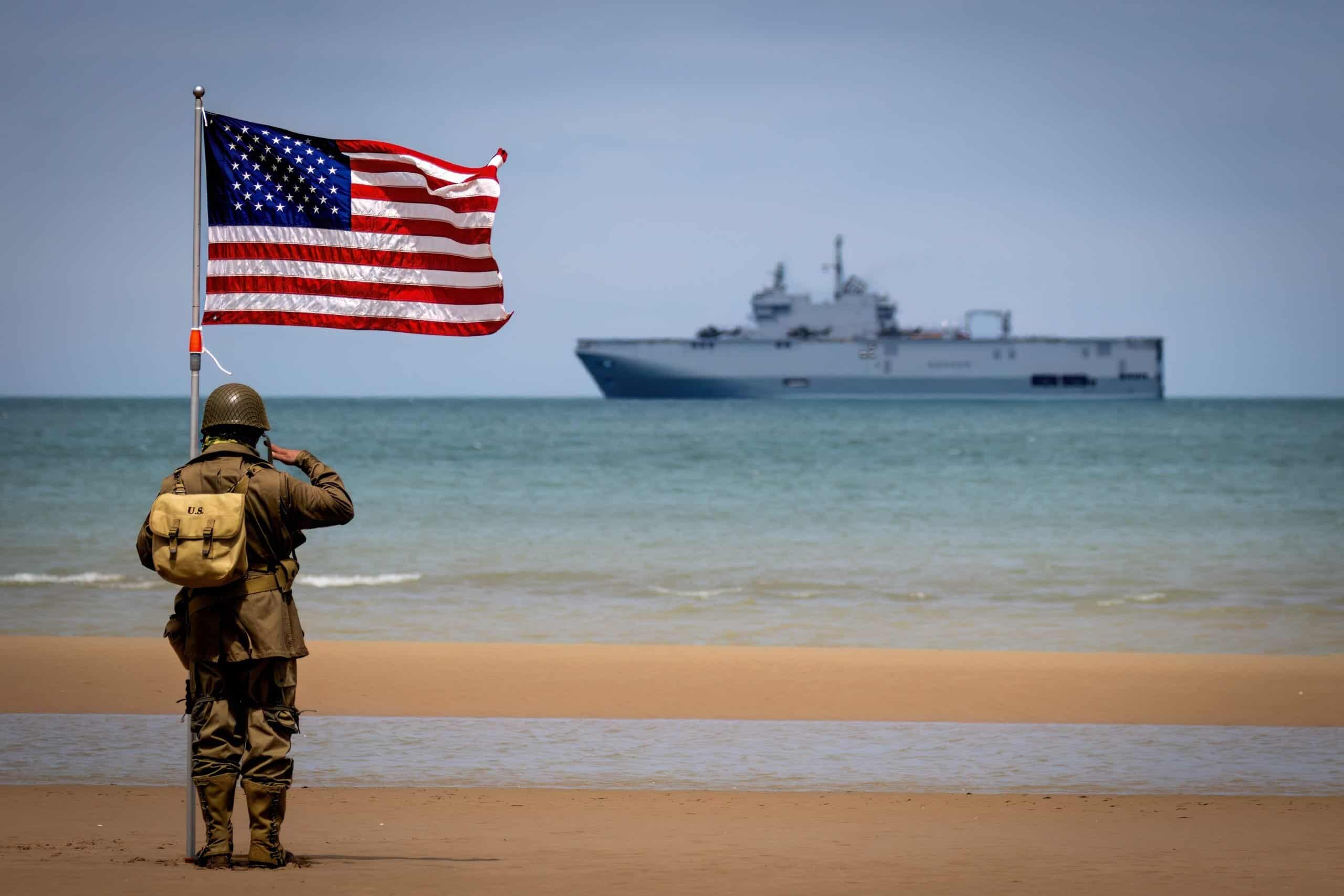
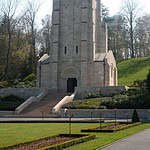
The Battle of Normandy opened the Western Front in Europe and represented one of the largest amphibious invasions ever attempted. American soldiers stormed heavily defended beaches under machine gun fire, artillery bombardment, and deadly obstacles placed along the coastline. Thousands were killed or wounded during the opening phases of the operation, particularly on Omaha Beach. Yet the invasion succeeded in establishing a foothold that would eventually lead to the liberation of Western Europe. Normandy remains one of the most enduring symbols of Allied sacrifice and is forever tied to the cemeteries and memorials honoring those who fell there.
Battle of Tarawa
- War / Conflict: World War II
- Year / Dates: 1943
- Location: Gilbert Islands
- Primary U.S. Forces Involved: U.S. Marine Corps
- Estimated U.S. Casualties: 3,000+
- Strategic Importance: Demonstrated cost of amphibious warfare
- Historical Outcome: American victory
- Lasting Legacy: Known for brutal close-quarters fighting
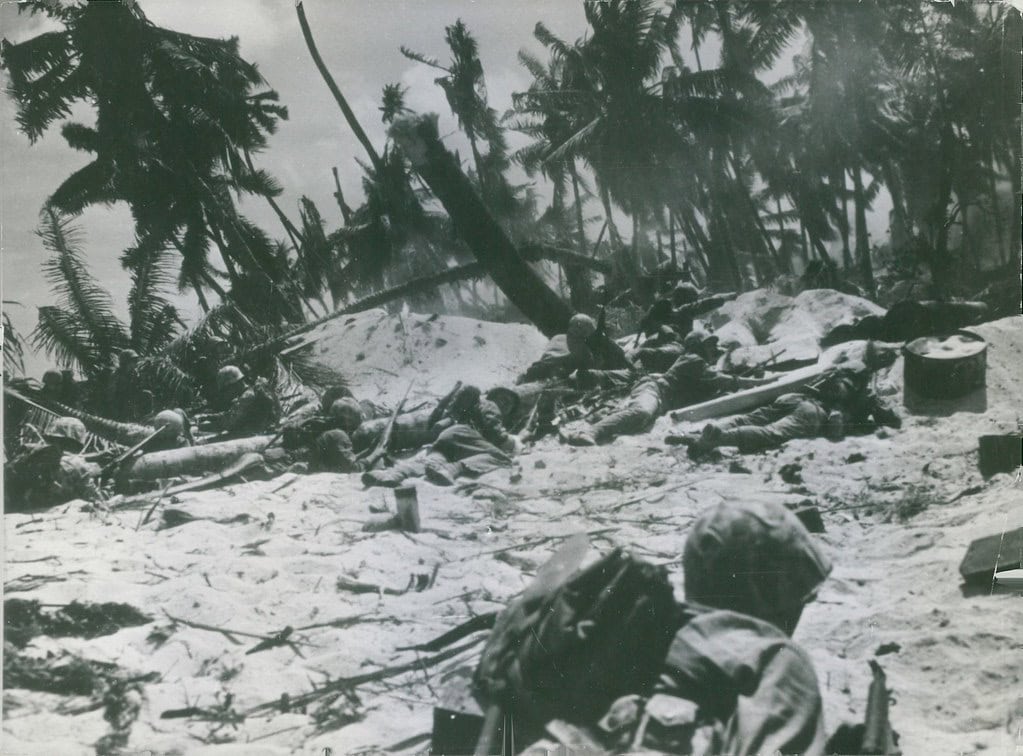
The Battle of Tarawa demonstrated the brutal realities of amphibious warfare in the Pacific Theater during World War II. U.S. Marines encountered fierce Japanese resistance while attempting to cross exposed reefs and beaches under relentless enemy fire. Many Marines were forced to wade through deep water while carrying heavy equipment before reaching the island itself. Casualties mounted rapidly in only a few days of combat, shocking Americans who followed the battle at home. Tarawa became an early warning of the immense sacrifices still required to advance across the Pacific toward Japan.
Battle of Iwo Jima
- War / Conflict: World War II
- Year / Dates: 1945
- Location: Japan
- Primary U.S. Forces Involved: U.S. Marine Corps
- Estimated U.S. Casualties: 26,000+
- Strategic Importance: Secured strategic Pacific airfield
- Historical Outcome: American victory
- Lasting Legacy: Iconic flag-raising became enduring symbol of sacrifice
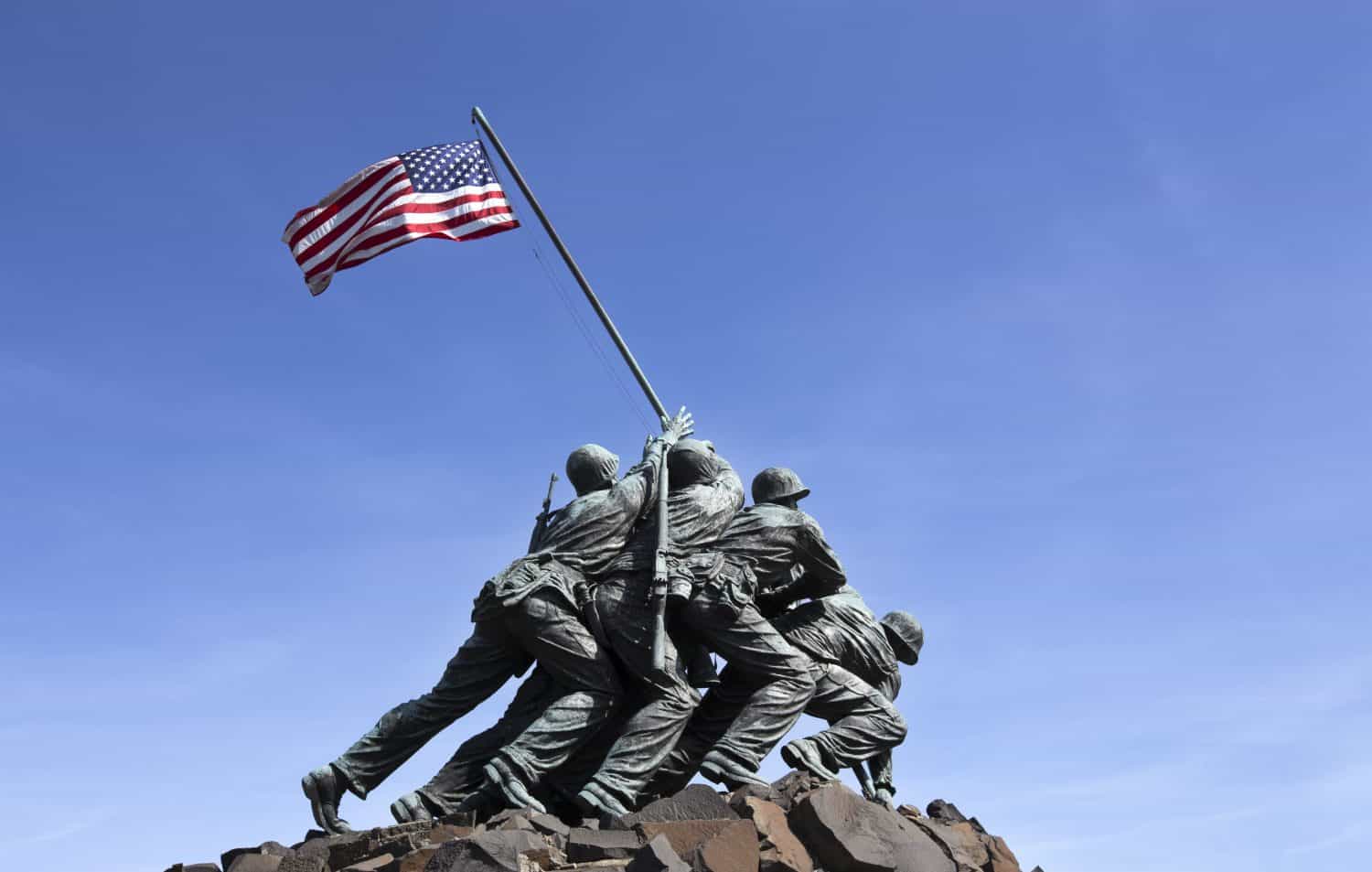
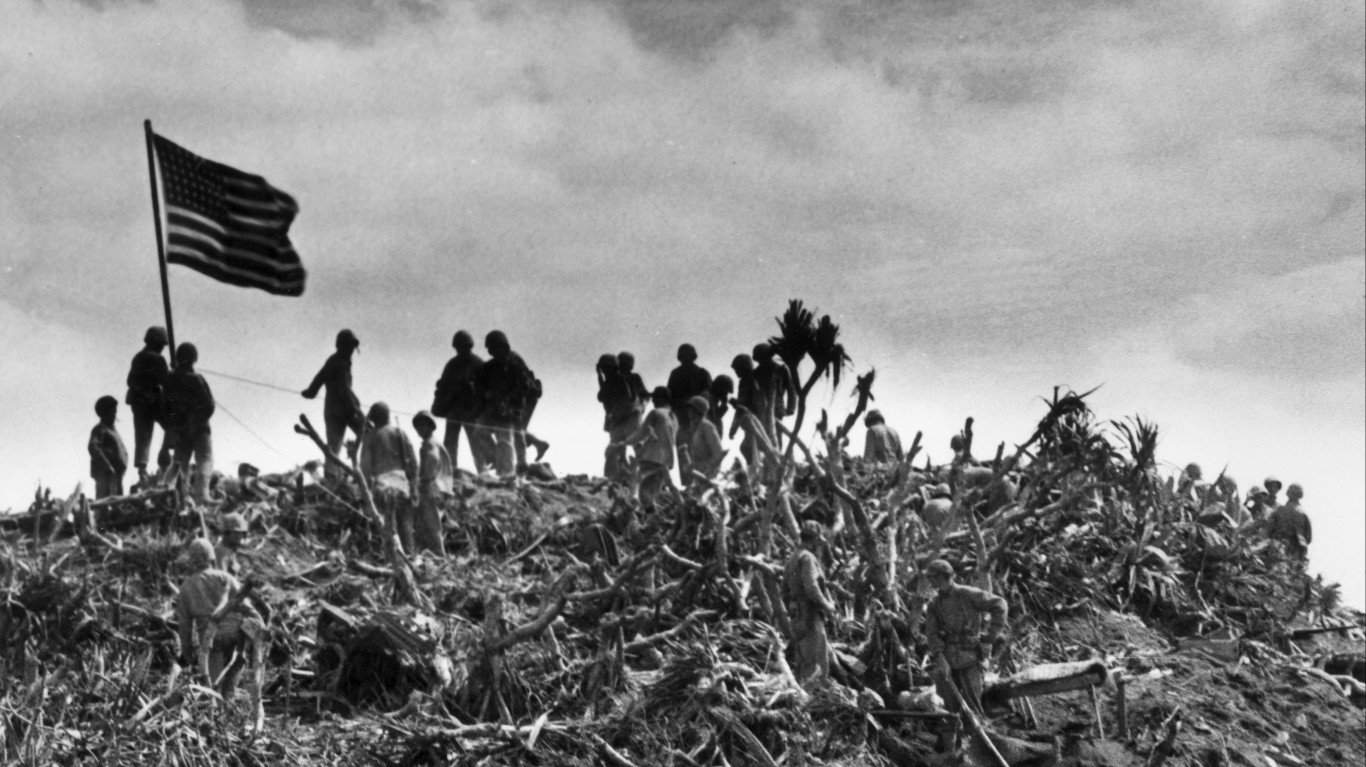
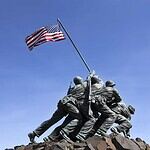
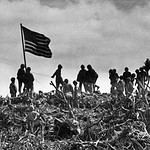
Iwo Jima became one of the most recognizable battles in American military history due to both its ferocious fighting and the iconic image of Marines raising the American flag atop Mount Suribachi. The volcanic island was defended by deeply entrenched Japanese forces who fought almost to the last man. U.S. Marines endured weeks of intense combat across tunnels, bunkers, and black sand terrain while suffering enormous casualties. The battle’s staggering human cost transformed Iwo Jima into a lasting symbol of courage, sacrifice, and perseverance that remains deeply connected to Memorial Day remembrance.
Battle of Okinawa
- War / Conflict: World War II
- Year / Dates: 1945
- Location: Japan
- Primary U.S. Forces Involved: U.S. Army and Marine Corps
- Estimated U.S. Casualties: 49,000+
- Strategic Importance: Final major Pacific battle
- Historical Outcome: American victory
- Lasting Legacy: One of the bloodiest battles of the Pacific War
The Battle of Okinawa was the largest and bloodiest battle of the Pacific War, involving massive American land, naval, and air forces fighting across the Japanese island for nearly three months. Soldiers and Marines encountered fierce resistance, kamikaze attacks, and brutal combat conditions that produced staggering casualty figures on all sides. The battle revealed how costly a potential invasion of mainland Japan might become and heavily influenced later strategic decisions. Okinawa’s legacy is inseparable from the sacrifices made by American service members during the final stages of World War II.
Battle of the Bulge
- War / Conflict: World War II
- Year / Dates: 1944-1945
- Location: Belgium and Luxembourg
- Primary U.S. Forces Involved: U.S. Army
- Estimated U.S. Casualties: 89,000+
- Strategic Importance: Stopped Germany’s final Western offensive
- Historical Outcome: Allied victory
- Lasting Legacy: Remembered for endurance in brutal winter conditions
The Battle of the Bulge represented Germany’s final major offensive in Western Europe during World War II and forced American troops into some of the harshest winter fighting of the war. Surprised by the German attack in the Ardennes, U.S. forces fought through freezing temperatures, snowstorms, and supply shortages while defending critical positions across Belgium and Luxembourg. Despite enormous casualties, American troops ultimately halted the offensive and regained the initiative. The battle became a symbol of endurance, resilience, and sacrifice under extreme conditions, securing its place in the nation’s collective military memory.
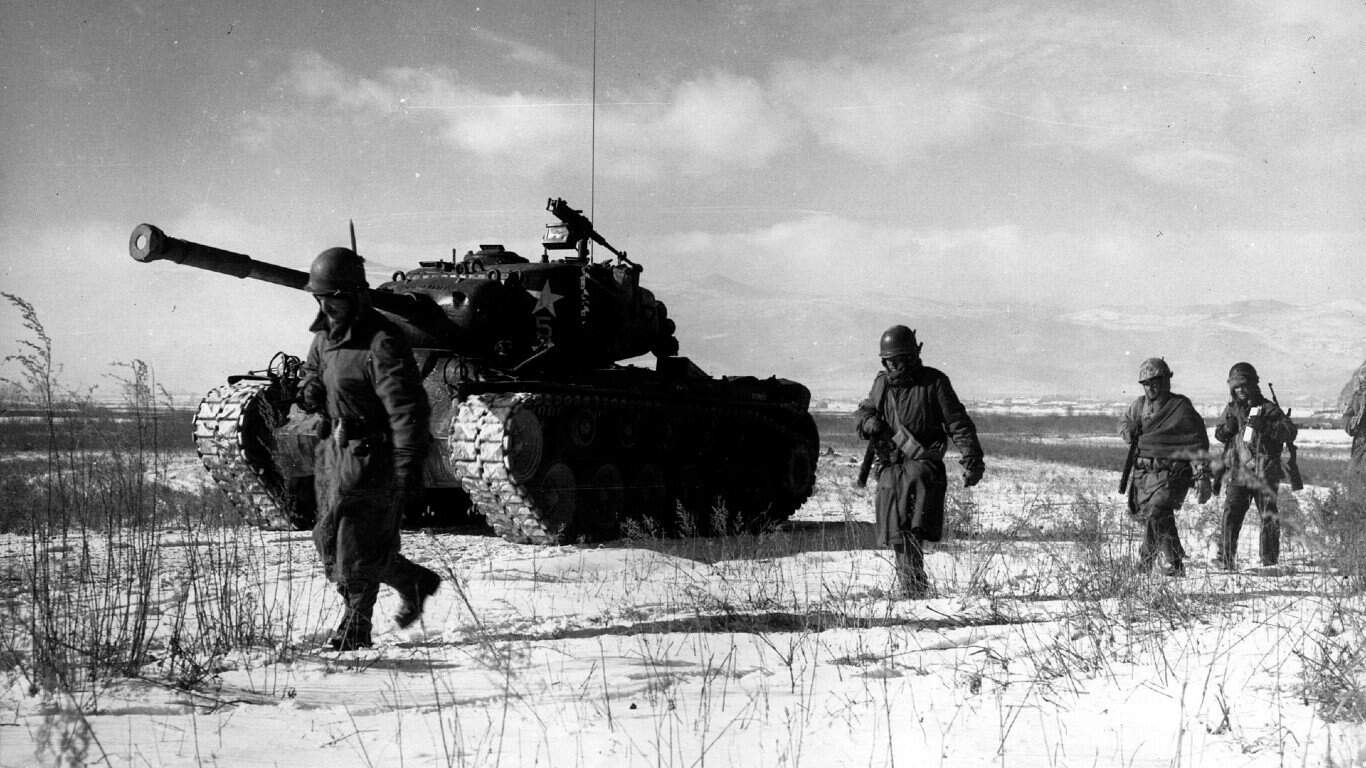
Battle of Chosin Reservoir
- War / Conflict: Korean War
- Year / Dates: 1950
- Location: North Korea
- Primary U.S. Forces Involved: 1st Marine Division
- Estimated U.S. Casualties: 17,000+
- Strategic Importance: Fighting withdrawal under extreme conditions
- Historical Outcome: UN evacuation succeeded
- Lasting Legacy: Legendary example of resilience and survival
The Battle of Chosin Reservoir remains one of the most legendary episodes in Marine Corps history because of the extraordinary fighting withdrawal carried out under freezing conditions in North Korea. Surrounded by massive Chinese forces, American troops fought their way south through snow-covered mountains while carrying wounded comrades and maintaining unit cohesion under constant attack. Frostbite and exposure claimed nearly as many casualties as enemy fire. Chosin became a defining symbol of perseverance and sacrifice, remembered for the determination displayed by soldiers and Marines facing overwhelming odds during the Korean War.
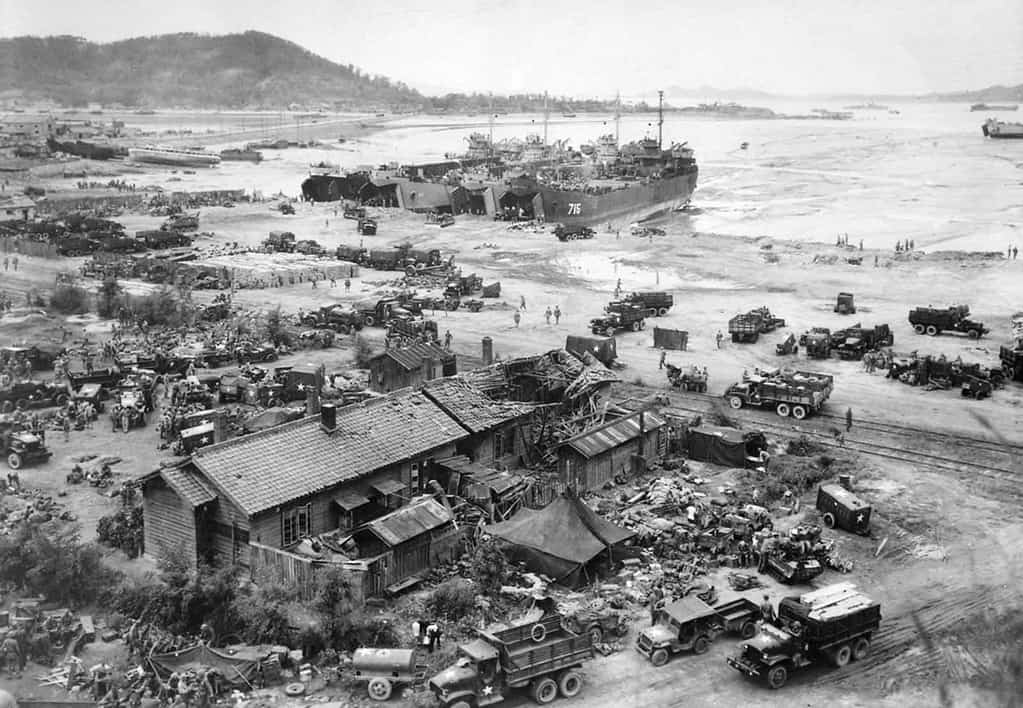
Battle of Inchon
- War / Conflict: Korean War
- Year / Dates: 1950
- Location: South Korea
- Primary U.S. Forces Involved: U.S. Army and Marine Corps
- Estimated U.S. Casualties: 3,500+
- Strategic Importance: Reversed early Korean War losses
- Historical Outcome: Major UN victory
- Lasting Legacy: Showcased bold amphibious warfare
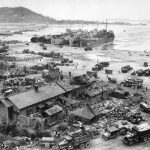
The landing at Inchon changed the course of the Korean War through a bold amphibious assault led by General Douglas MacArthur. American and United Nations forces struck behind North Korean lines, helping reverse months of retreat and pushing enemy forces back across the peninsula. The operation required difficult coordination, hazardous tides, and dangerous urban fighting once troops reached shore. Although ultimately successful, the battle came at significant cost and demonstrated the risks involved in large-scale amphibious warfare. Inchon remains remembered as both a strategic triumph and a testament to the sacrifices made during the Korean War.
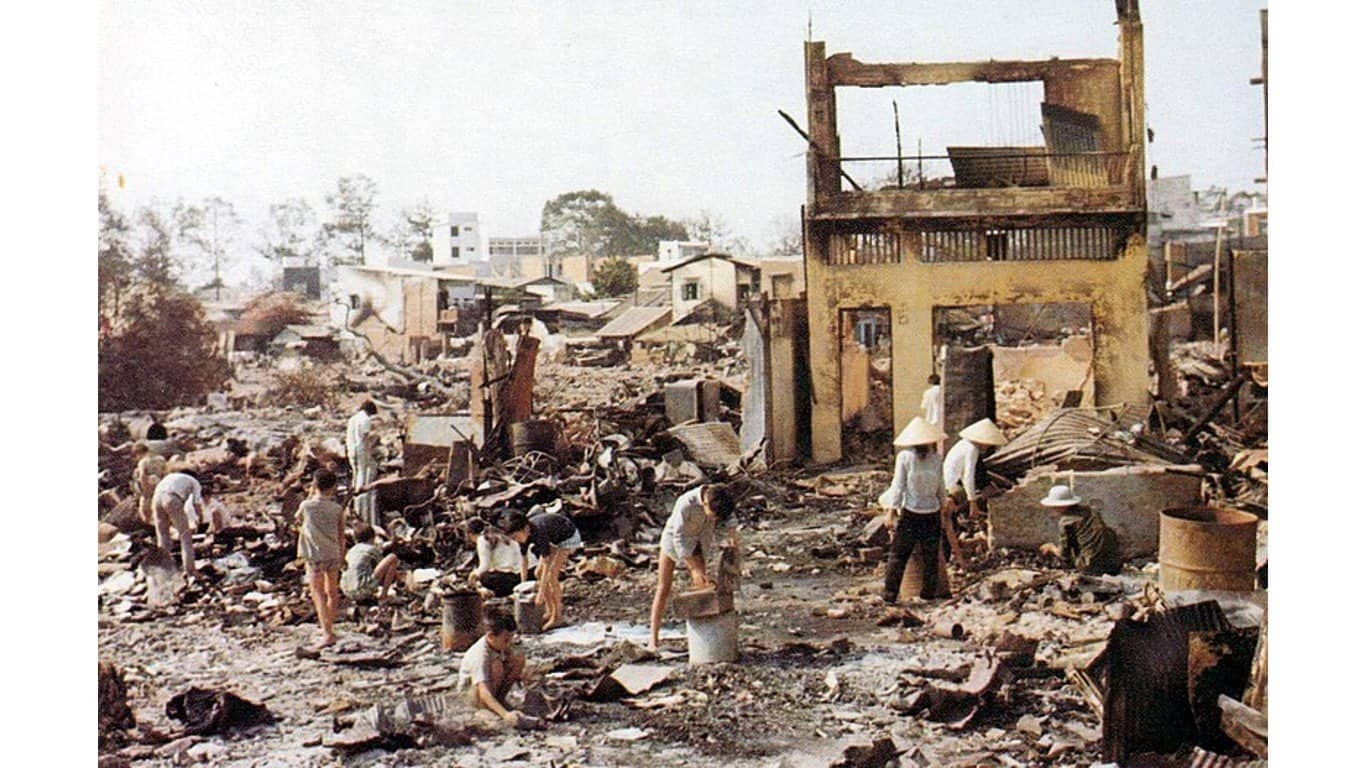
Tet Offensive
- War / Conflict: Vietnam War
- Year / Dates: 1968
- Location: South Vietnam
- Primary U.S. Forces Involved: U.S. and South Vietnamese Forces
- Estimated U.S. Casualties: 4,000+
- Strategic Importance: Changed public perception of the war
- Historical Outcome: Tactical Allied victory but strategic turning point
- Lasting Legacy: Major psychological turning point in American memory
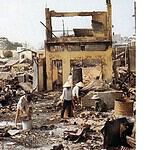
The Tet Offensive became one of the most important turning points of the Vietnam War because it dramatically changed how Americans viewed the conflict. Communist forces launched coordinated attacks across South Vietnam, including major cities and military installations previously believed secure. U.S. and South Vietnamese forces eventually repelled the offensive and inflicted severe losses on the attackers, but the scale of the fighting shocked the American public. The offensive intensified debates over the war while highlighting the sacrifices made by American troops who fought in brutal urban and jungle combat throughout Vietnam.
Battle of Hamburger Hill
- War / Conflict: Vietnam War
- Year / Dates: 1969
- Location: South Vietnam
- Primary U.S. Forces Involved: 101st Airborne Division
- Estimated U.S. Casualties: 372+
- Strategic Importance: Illustrated attritional jungle warfare
- Historical Outcome: American capture of the hill
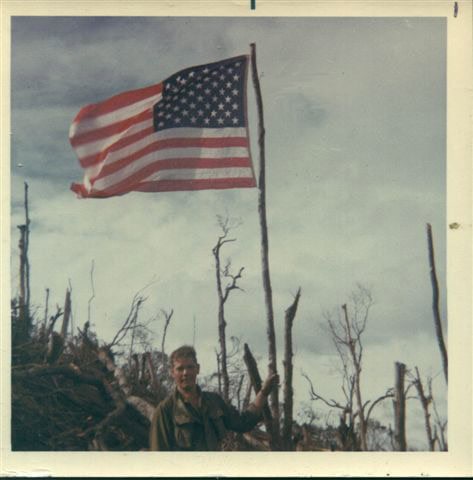
- Lasting Legacy: Symbol of Vietnam War sacrifice and controversy
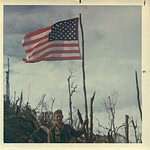
Hamburger Hill became one of the most controversial and emotionally charged battles of the Vietnam War due to the heavy casualties suffered during repeated assaults against fortified enemy positions. Soldiers from the 101st Airborne Division fought through dense jungle terrain and intense resistance while attempting to seize a remote hill near the Laotian border. Although American forces eventually captured the position, the hill was later abandoned, fueling public criticism over the cost of the battle. Hamburger Hill remains remembered as a symbol of sacrifice and the difficult realities faced by combat troops in Vietnam.
Second Battle of Fallujah
- War / Conflict: Iraq War
- Year / Dates: 2004
- Location: Iraq
- Primary U.S. Forces Involved: U.S. Marines and Army
- Estimated U.S. Casualties: 800+
- Strategic Importance: Major urban combat operation
- Historical Outcome: Coalition victory
- Lasting Legacy: One of the fiercest urban battles since Vietnam
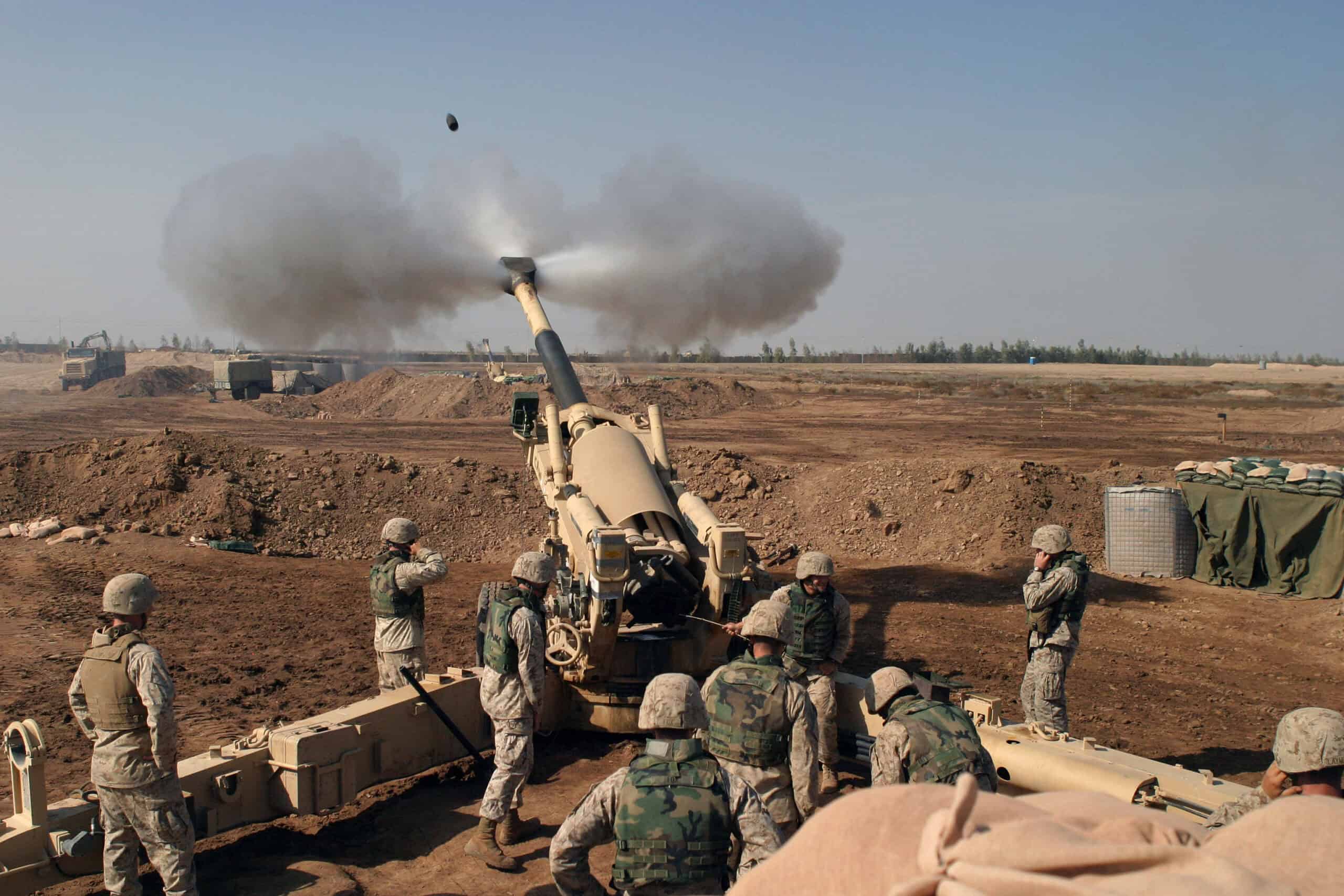
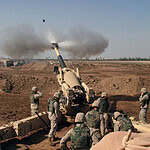
The Second Battle of Fallujah became one of the fiercest urban battles fought by American forces since Vietnam. U.S. Marines, soldiers, and coalition troops entered the Iraqi city in 2004 to eliminate entrenched insurgent strongholds responsible for ongoing attacks throughout the region. The operation involved intense house-to-house combat, sniper fire, and dangerous street fighting that placed enormous strain on frontline troops. Despite the eventual coalition victory, casualties were significant and the battle highlighted the brutal complexity of modern urban warfare. Fallujah remains closely associated with the sacrifices made during the Iraq War.
Battle of Kamdesh
- War / Conflict: War in Afghanistan
- Year / Dates: 2009
- Location: Afghanistan
- Primary U.S. Forces Involved: U.S. Army
- Estimated U.S. Casualties: 50+
- Strategic Importance: Defensive stand against overwhelming attack
- Historical Outcome: Outpost successfully defended
- Lasting Legacy: Associated with extraordinary acts of heroism
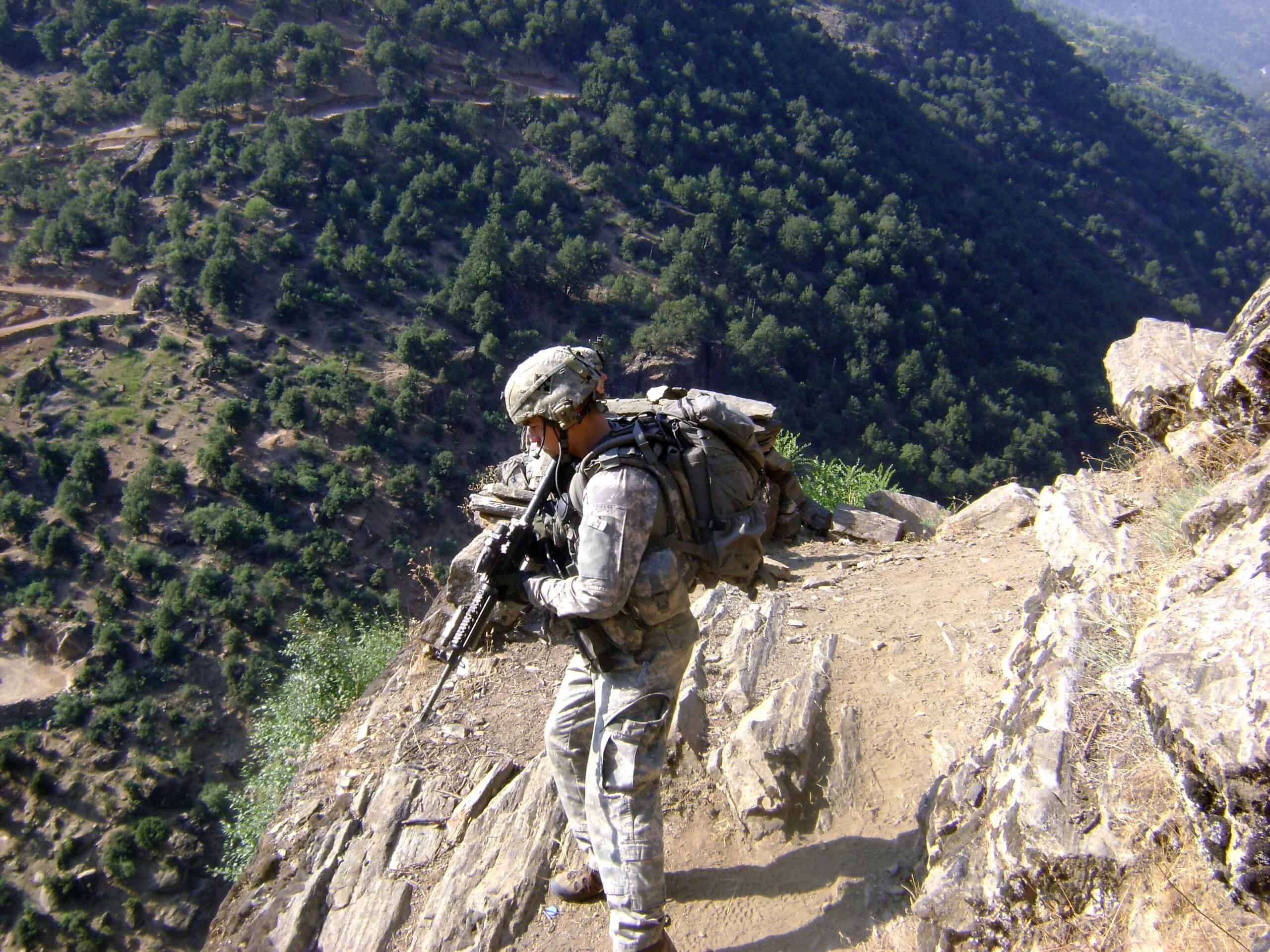
The Battle of Kamdesh demonstrated the extraordinary courage of American troops defending Combat Outpost Keating in Afghanistan against a massive Taliban assault in 2009. Surrounded by steep mountains and vulnerable terrain, the outpost came under overwhelming attack from hundreds of enemy fighters. Soldiers fought for survival while outnumbered and under constant fire, with several service members performing acts of heroism that later earned the Medal of Honor. Though the battle resulted in painful losses, Kamdesh became a modern symbol of resilience, sacrifice, and determination among American troops serving in Afghanistan.
The image featured at the top of this post is ©e-crow/Shutterstock.com