


The Rifles That Helped America’s Greatest Generation Win World War II
Some of the most famous military rifles ever produced were carried by American troops during World War II. From the semi-automatic firepower of the M1 Garand to the lightweight versatility of the M1 Carbine, these weapons helped American forces fight across Europe and the Pacific in some of the defining battles of the twentieth century. Many of these rifles became legendary because they combined reliability, battlefield effectiveness, and mass production at a scale never before seen in modern warfare. Today, they remain closely associated with the soldiers and Marines of America’s Greatest Generation and the military legacy they left behind. Here, History Computer is taking a closer look at these rifles.
To identify the rifles that armed America’s Greatest Generation, History Computer reviewed various historical and military sources. We included supplemental information for each rifle regarding the manufacturer, type, cartridge, primary WWII role, and the rifle’s postwar legacy.
Here is a look at the rifles that armed America’s Greatest Generation:
Why Are We Covering This?
Understanding the rifles that armed America’s Greatest Generation matters because these firearms helped shape the battlefield success, military identity, and combat doctrine of the United States during World War II. Weapons like the M1 Garand, M1 Carbine, and M1903 Springfield were carried through some of the most important battles in modern history, from the beaches of Normandy to the islands of the Pacific. These rifles represented major advancements in infantry firepower, reliability, and battlefield adaptability at a time when the United States was transforming into the world’s dominant military power. Beyond their technical significance, they became closely tied to the soldiers and Marines who carried them through war, making these firearms enduring symbols of sacrifice, resilience, and the combat legacy of the Greatest Generation.
The Rifles That Went to War With America
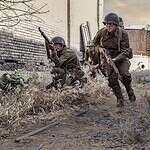
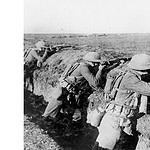
When the United States entered World War II after the attack on Attack on Pearl Harbor, millions of American soldiers and Marines suddenly found themselves preparing for combat across Europe, North Africa, and the Pacific. The rifles they carried became some of the most recognizable weapons in military history because they represented far more than battlefield equipment. These firearms became symbols of the generation that fought and won the largest war the world had ever seen. American troops depended on them in frozen forests, muddy trenches, dense jungles, and heavily defended cities where survival often came down to reliability, firepower, and ease of use under extreme pressure.
The M1 Garand Changed Infantry Warfare Forever
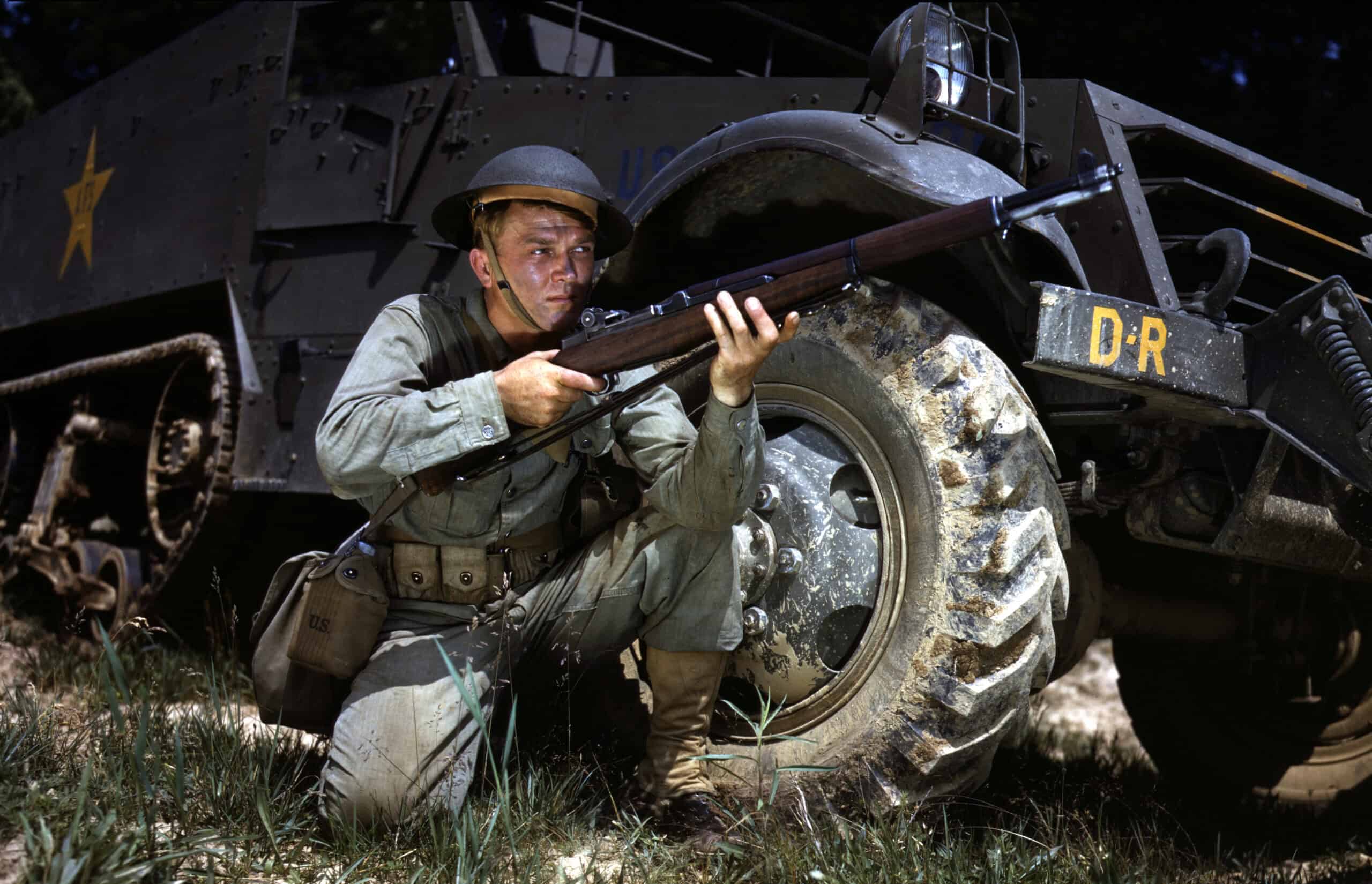
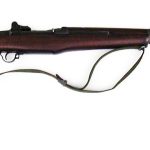
No American rifle became more closely tied to the Greatest Generation than the M1 Garand. At a time when many enemy armies still relied heavily on slower bolt-action rifles, the Garand allowed American infantrymen to fire rapidly without manually cycling the weapon after each shot. That advantage gave U.S. troops a much higher sustained rate of fire during combat engagements across both Europe and the Pacific. General George S. Patton famously described it as “the greatest battle implement ever devised,” and many historians still consider it one of the most influential infantry weapons ever fielded. The Garand helped establish America as a leader in semi-automatic infantry firepower and permanently influenced postwar rifle doctrine around the world.
Rifles Had to Survive Every Environment on Earth
World War II forced American rifles to function in some of the harshest combat environments ever faced by modern soldiers. Troops carried them through the bitter winter conditions of Battle of the Bulge, the volcanic ash and tunnel systems of Battle of Iwo Jima, and the humid jungles that defined much of the Pacific Theater. Weapons constantly faced mud, rain, sand, saltwater, and freezing temperatures that could easily disable poorly designed firearms. Reliability became one of the most important qualities any rifle could possess because soldiers depended on these weapons in life-or-death situations where malfunctions could prove fatal. The rifles that performed best earned lasting reputations among the troops who carried them through the war.
Specialized Rifles Created New Battlefield Roles
As the war evolved, American forces increasingly relied on specialized rifles designed for airborne units, snipers, support troops, and fast-moving offensive operations. The lightweight M1 Carbine became especially popular among paratroopers, officers, and support personnel who needed mobility without sacrificing firepower. Meanwhile, scoped rifles such as the M1903A4 Springfield helped establish the foundations of modern American sniper doctrine. These specialized firearms reflected the rapid evolution of infantry tactics during World War II and showed how American military planners adapted weapons to fit specific battlefield roles rather than relying on a single universal rifle for every combat situation.
Why These Rifles Still Matter Today
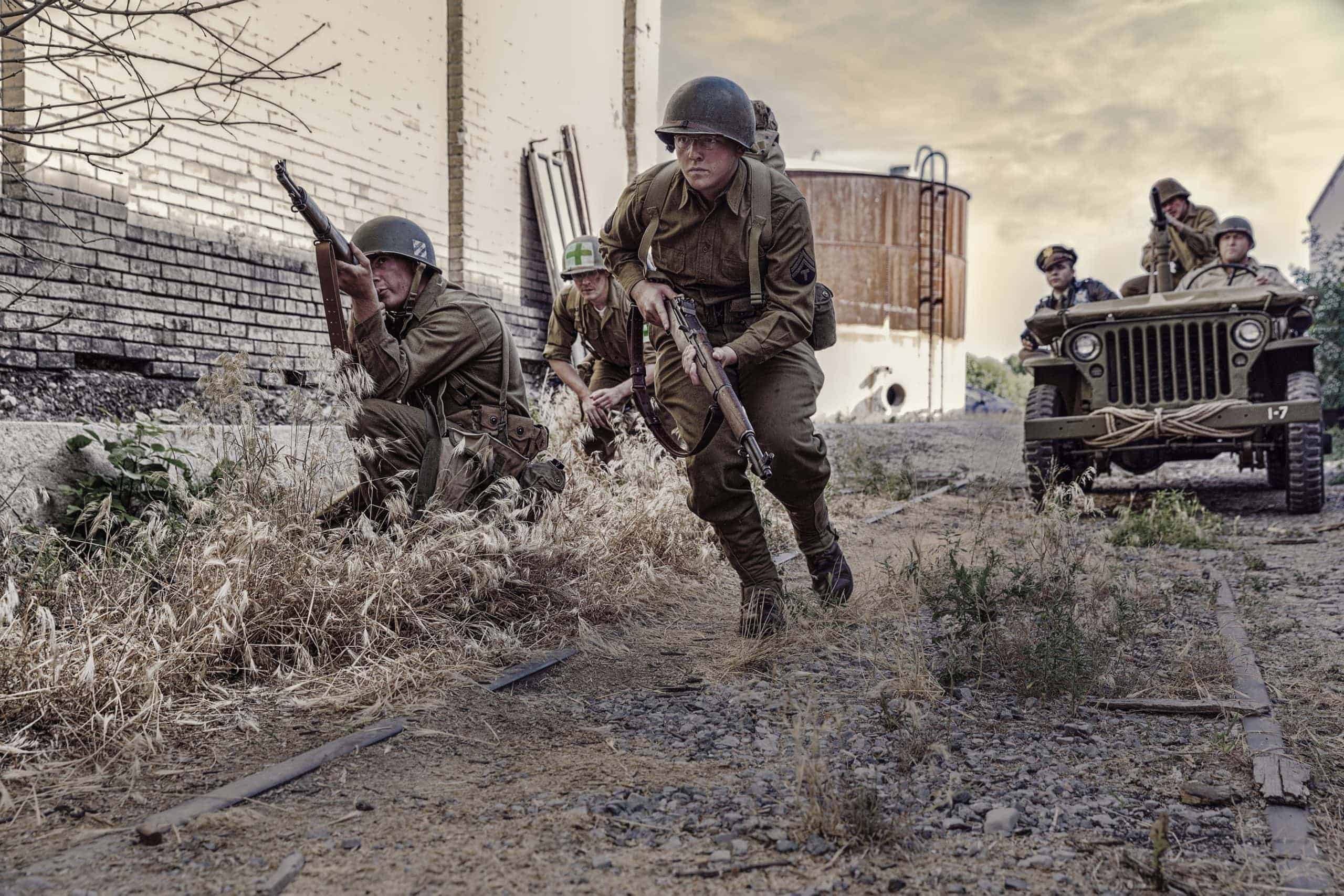
Many of the rifles carried by American troops during World War II remain highly respected among collectors, historians, competitive shooters, and military enthusiasts because they represent both engineering achievement and historical legacy. These weapons became closely tied to the soldiers and Marines who carried them through some of the defining battles of the twentieth century. Rifles like the M1 Garand and M1903 Springfield still appear in museums, memorial displays, ceremonial events, and historical reenactments because they symbolize the battlefield experience of America’s Greatest Generation. Decades after the war ended, these firearms continue to represent the discipline, sacrifice, and combat effectiveness that helped establish the United States as the world’s dominant military power.
M1 Garand
- Manufacturer: Springfield Armory / Winchester
- Type: Semi-automatic rifle
- Cartridge: .30-06 Springfield
- Action: Gas-operated semi-automatic
- Year Introduced: 1936
- Primary WWII Role: Standard infantry rifle
- Why Troops Valued It: Superior firepower compared to bolt-action rifles
- Postwar Legacy: Influenced postwar battle rifle development
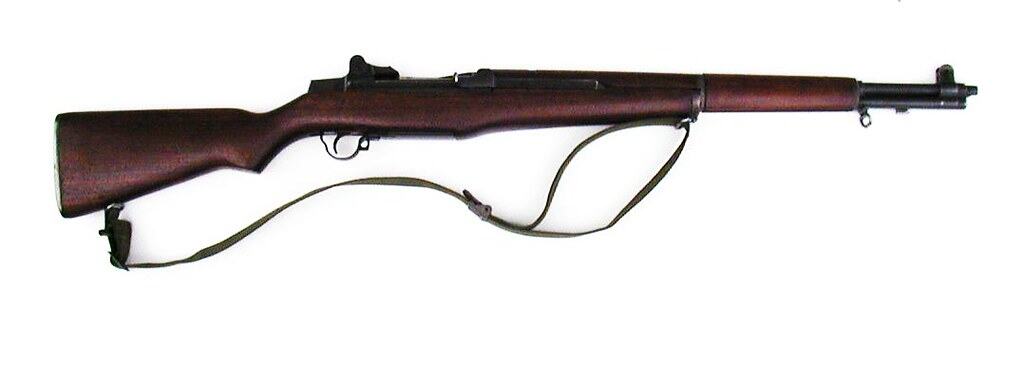
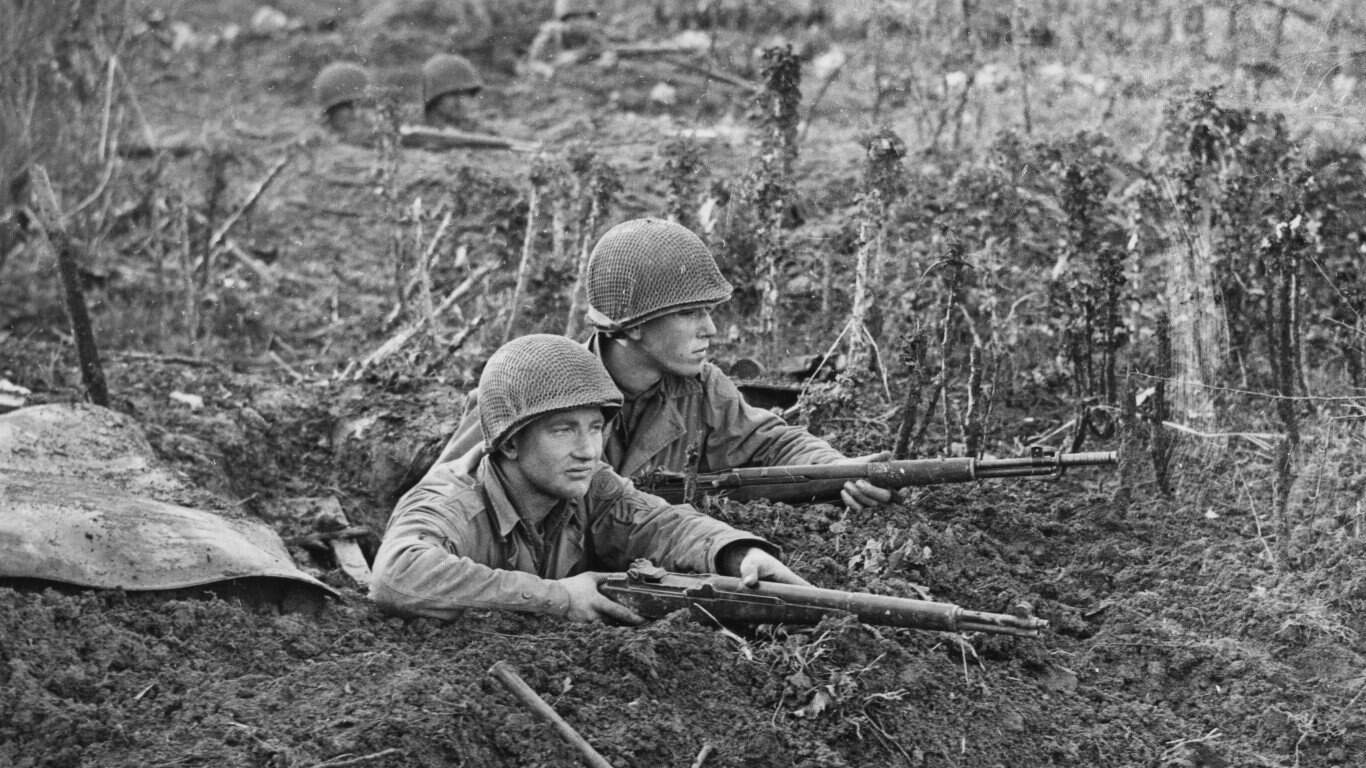
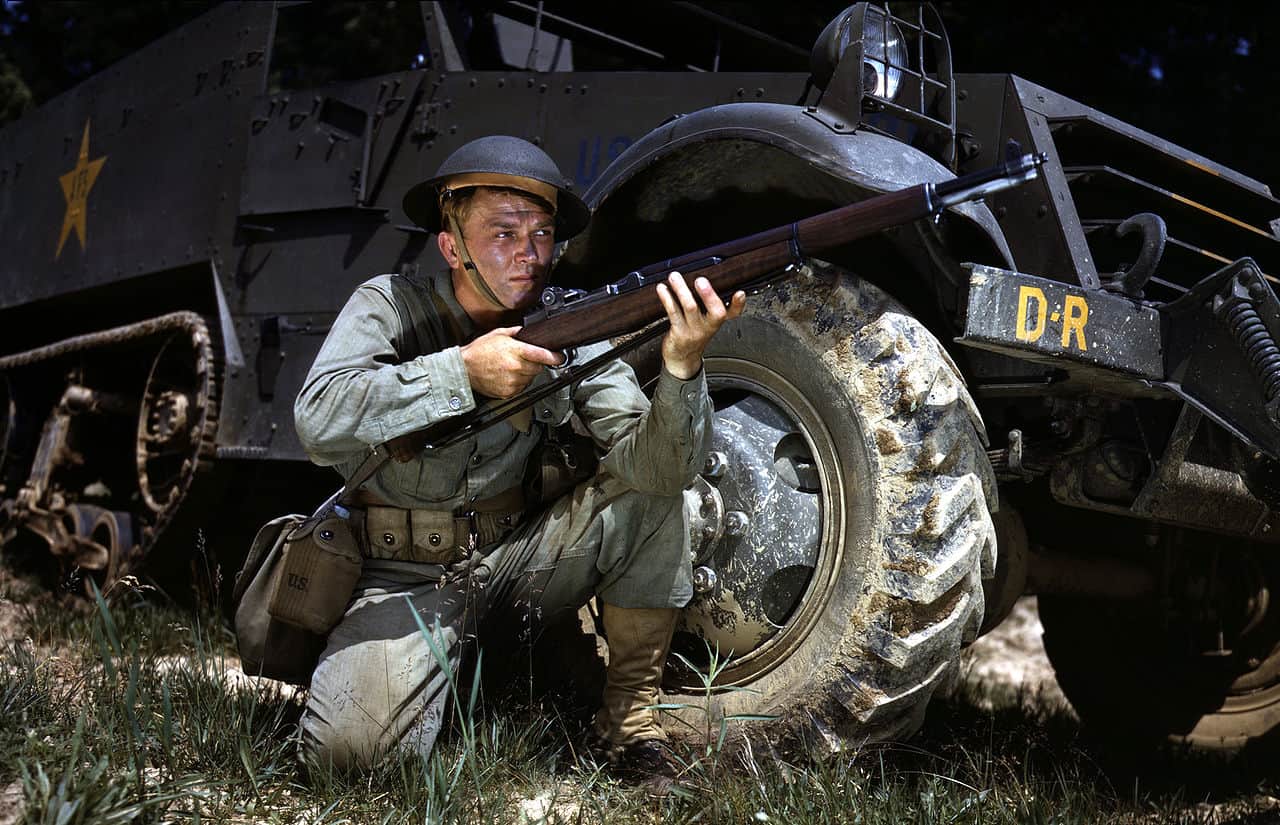
The M1 Garand became one of the most iconic American firearms of World War II because it gave U.S. infantrymen a major firepower advantage over enemy troops still relying heavily on bolt-action rifles. Designed by John Garand and officially adopted in 1936, the rifle allowed soldiers to fire eight rounds rapidly without manually cycling the action after each shot. General George S. Patton famously called it “the greatest battle implement ever devised.” The Garand proved highly reliable across Europe and the Pacific, and its battlefield success permanently influenced postwar American infantry doctrine and battle rifle development.
M1 Carbine
- Manufacturer: Winchester and others
- Type: Carbine
- Cartridge: .30 Carbine
- Action: Gas-operated semi-automatic
- Year Introduced: 1942
- Primary WWII Role: Support troops and officers
- Why Troops Valued It: Lightweight and compact for mobility
- Postwar Legacy: Became one of America’s most widely produced military firearms
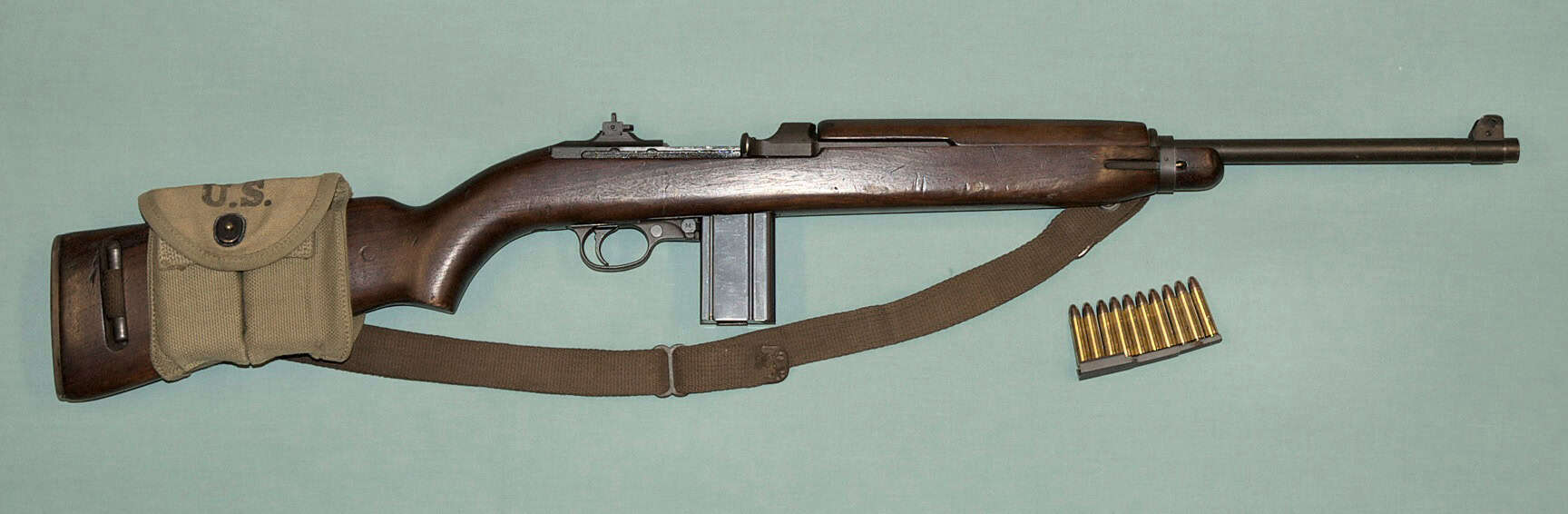
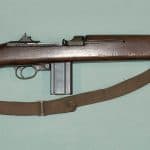
The M1 Carbine was designed to provide lightweight firepower to support troops, officers, paratroopers, and specialists who needed something more effective than a pistol but less cumbersome than a full-sized rifle. Compact and easy to carry, the weapon became extremely popular among airborne forces and troops operating in fast-moving combat environments. While some criticized its stopping power compared to the M1 Garand, soldiers appreciated its maneuverability and high magazine capacity. More than six million carbines were produced during the war, making it one of the most widely issued American firearms of World War II.
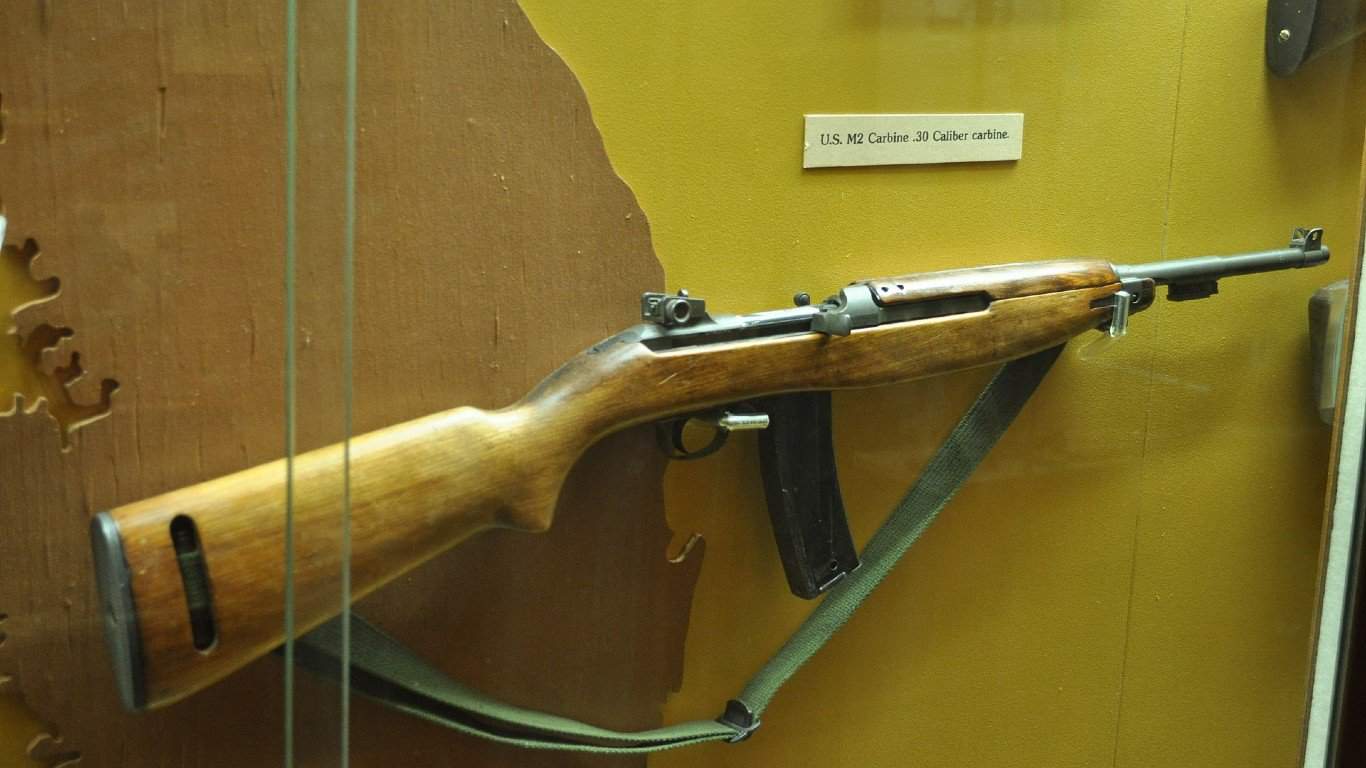
M2 Carbine
- Manufacturer: Inland Division / Winchester
- Type: Selective-fire carbine
- Cartridge: .30 Carbine
- Action: Selective-fire semi/full auto
- Year Introduced: 1944
- Primary WWII Role: Close-range automatic fire support
- Why Troops Valued It: Compact automatic capability
- Postwar Legacy: Influenced later lightweight assault rifle concepts
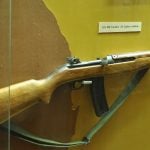
The M2 Carbine represented one of America’s earliest steps toward lightweight automatic infantry weapons and served as a bridge between traditional rifles and future assault rifle concepts. Introduced late in World War II, the M2 added selective-fire capability to the already popular M1 Carbine platform, allowing troops to switch between semi-automatic and fully automatic fire. The compact weapon proved especially useful in close-range combat and jungle fighting environments. Although it arrived too late to dominate the war, the M2 heavily influenced later American thinking regarding lightweight, high-capacity infantry firearms in the postwar era.
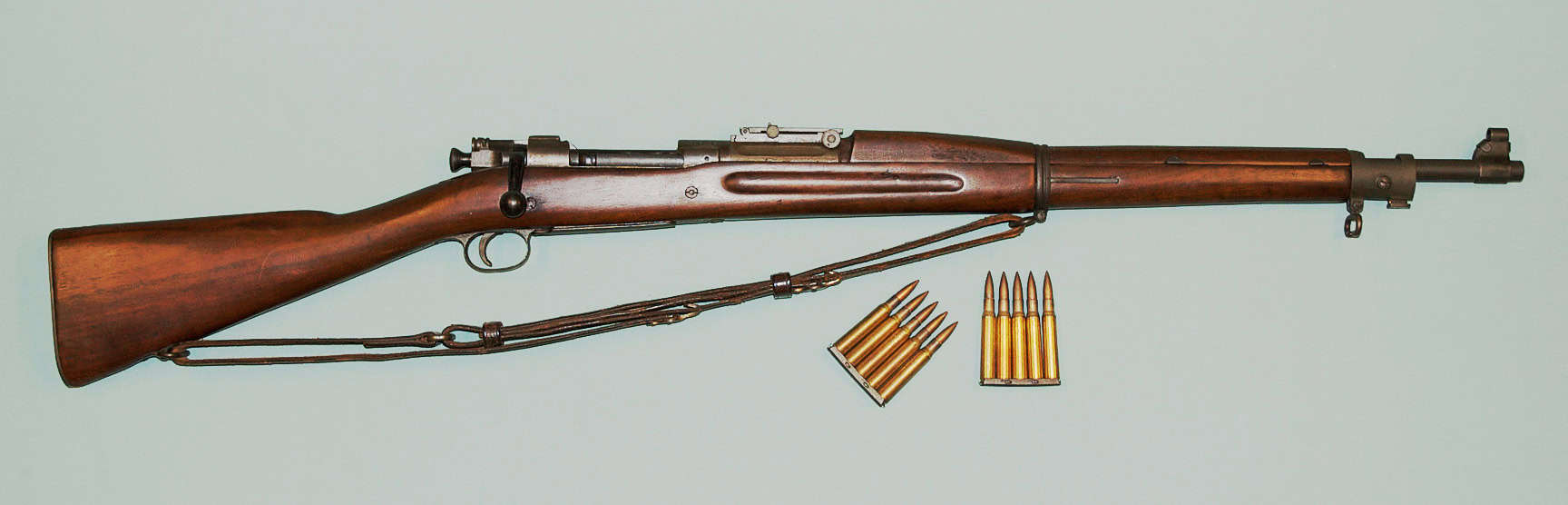
M1903 Springfield
- Manufacturer: Springfield Armory / Remington
- Type: Bolt-action rifle
- Cartridge: .30-06 Springfield
- Action: Bolt-action
- Year Introduced: 1903
- Primary WWII Role: Infantry rifle and marksman use
- Why Troops Valued It: Excellent accuracy and rugged reliability
- Postwar Legacy: Remained iconic long after WWII
The M1903 Springfield remained one of the most respected American rifles of World War II despite being officially replaced as the standard infantry rifle by the M1 Garand. Soldiers valued the Springfield for its exceptional accuracy, rugged construction, and reliability under harsh combat conditions. Many Marines continued using it during early Pacific campaigns, while marksmen and sniper teams favored the platform throughout the war. Its strong bolt-action design and .30-06 cartridge provided outstanding long-range performance. The rifle’s battlefield reputation helped cement its place as one of the most iconic military firearms in American history.
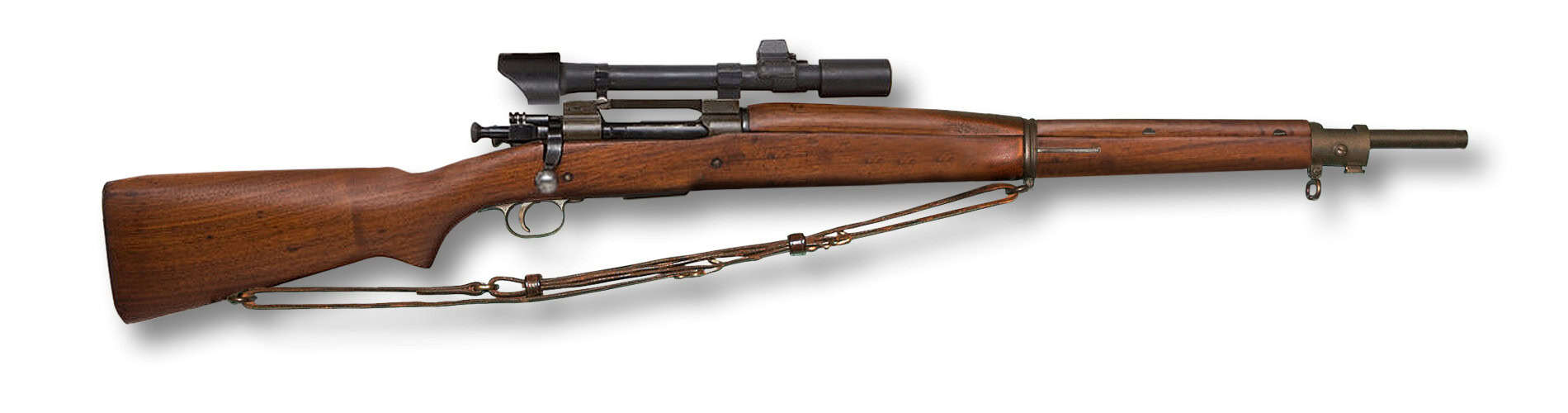
M1903A4 Springfield
- Manufacturer: Remington
- Type: Sniper rifle
- Cartridge: .30-06 Springfield
- Action: Bolt-action
- Year Introduced: 1943
- Primary WWII Role: Sniper and precision shooting
- Why Troops Valued It: Reliable long-range accuracy
- Postwar Legacy: Helped establish modern U.S. sniper doctrine
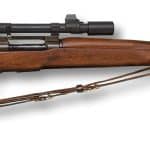
The M1903A4 Springfield became the primary American sniper rifle of World War II and played a major role in the development of modern U.S. military sniping doctrine. Based on the proven M1903 Springfield platform, the A4 variant featured a mounted scope and specialized modifications intended for precision shooting at extended ranges. American sniper teams used the rifle across Europe and the Pacific in reconnaissance, counter-sniper operations, and long-range engagements. Its reliability and accuracy made it highly respected among marksmen, and the rifle helped establish the foundations for dedicated sniper programs within the U.S. military.
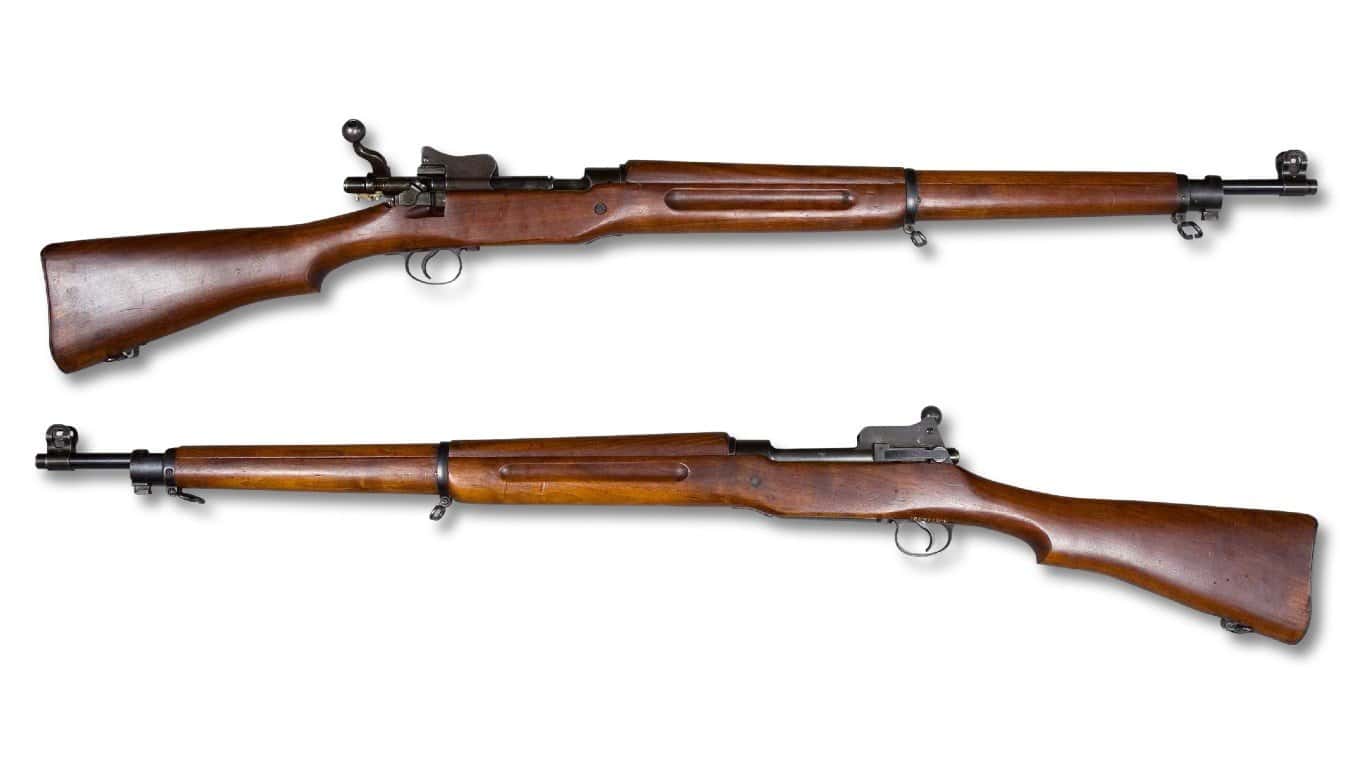
M1917 Enfield
- Manufacturer: Remington / Winchester / Eddystone
- Type: Bolt-action rifle
- Cartridge: .30-06 Springfield
- Action: Bolt-action
- Year Introduced: 1917
- Primary WWII Role: Supplementary infantry rifle
- Why Troops Valued It: Strong action and dependable performance
- Postwar Legacy: Continued service beyond WWI into WWII
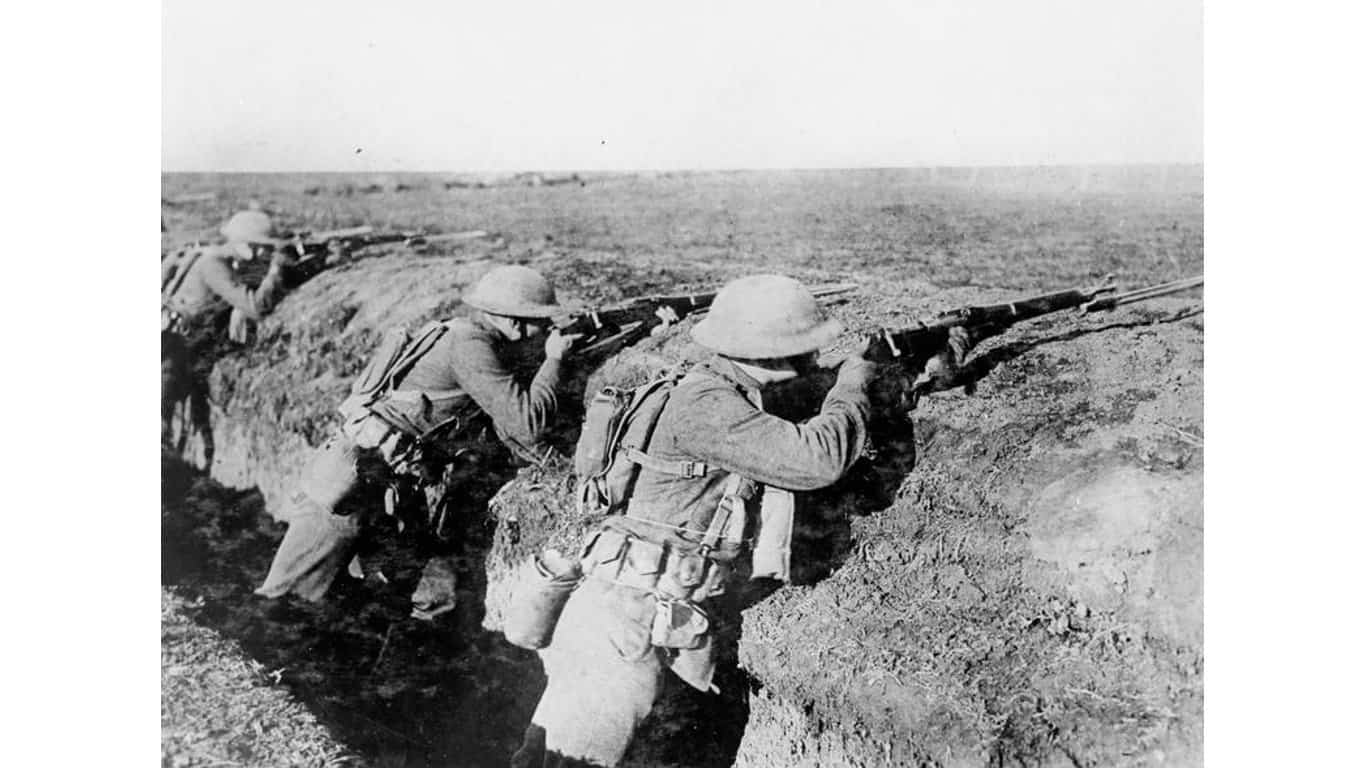
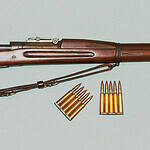
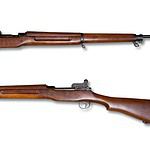
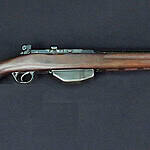
The M1917 Enfield remained an important supplementary rifle during World War II even though it was originally developed during World War I. Chambered in the powerful .30-06 cartridge, the rifle was known for its strong action, durable construction, and excellent accuracy. Large stockpiles remained available when America entered World War II, allowing the rifle to continue serving in training, reserve, and rear-echelon roles. Some sniper variants also saw specialized use during the conflict. The M1917’s continued service demonstrated the durability of early twentieth-century American rifle design and the importance of logistical preparedness during wartime mobilization.
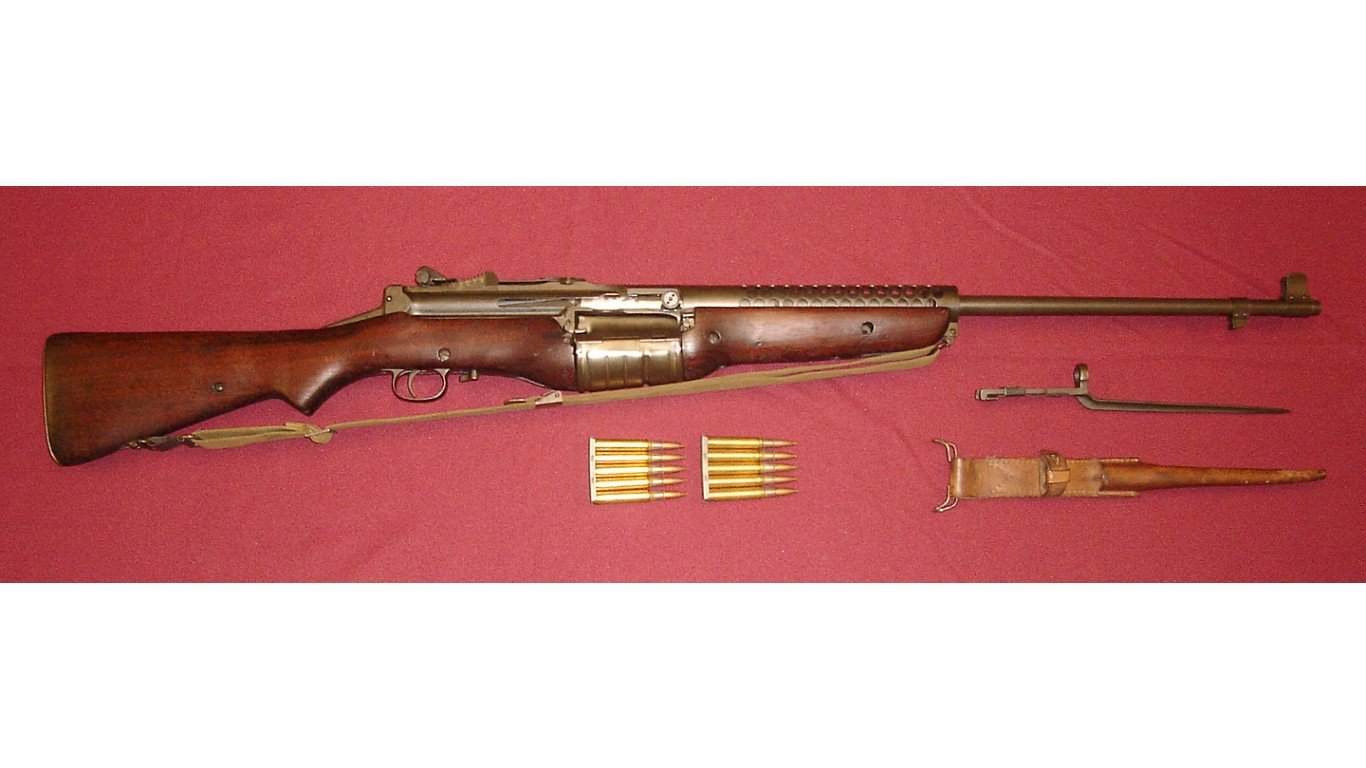
Johnson M1941 rifle
- Manufacturer: Johnson Automatics
- Type: Semi-automatic rifle
- Cartridge: .30-06 Springfield
- Action: Short recoil-operated semi-automatic
- Year Introduced: 1941
- Primary WWII Role: Marine and specialized combat use
- Why Troops Valued It: Smooth recoil and detachable magazine
- Postwar Legacy: Remembered as a rare alternative to the Garand
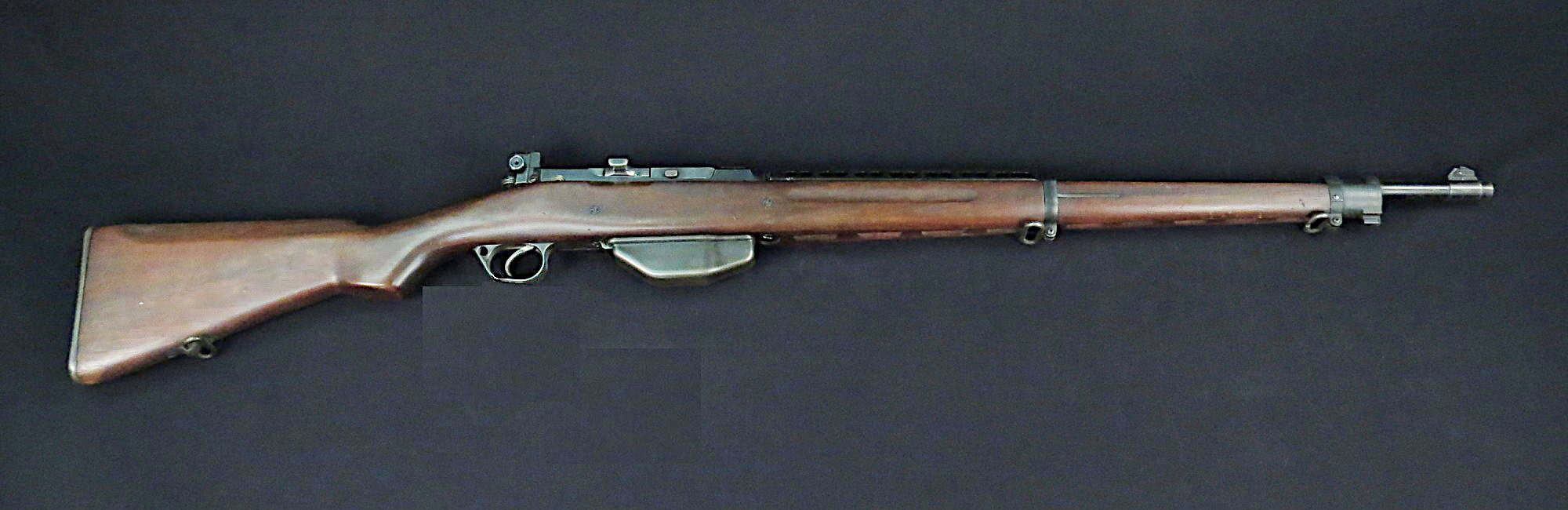
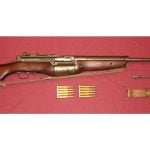
The Johnson M1941 rifle became one of the most unusual American rifles of World War II because it offered a viable alternative to the M1 Garand at a time when the military was searching for advanced semi-automatic infantry weapons. Designed by Melvin Johnson, the rifle featured a rotary magazine and recoil-operated system that produced relatively smooth shooting characteristics. Although it was never widely adopted by the Army, some Marine and special operations units used it in combat, particularly in the Pacific Theater. The Johnson rifle remains remembered for its innovative design and rarity among wartime firearms collectors today.
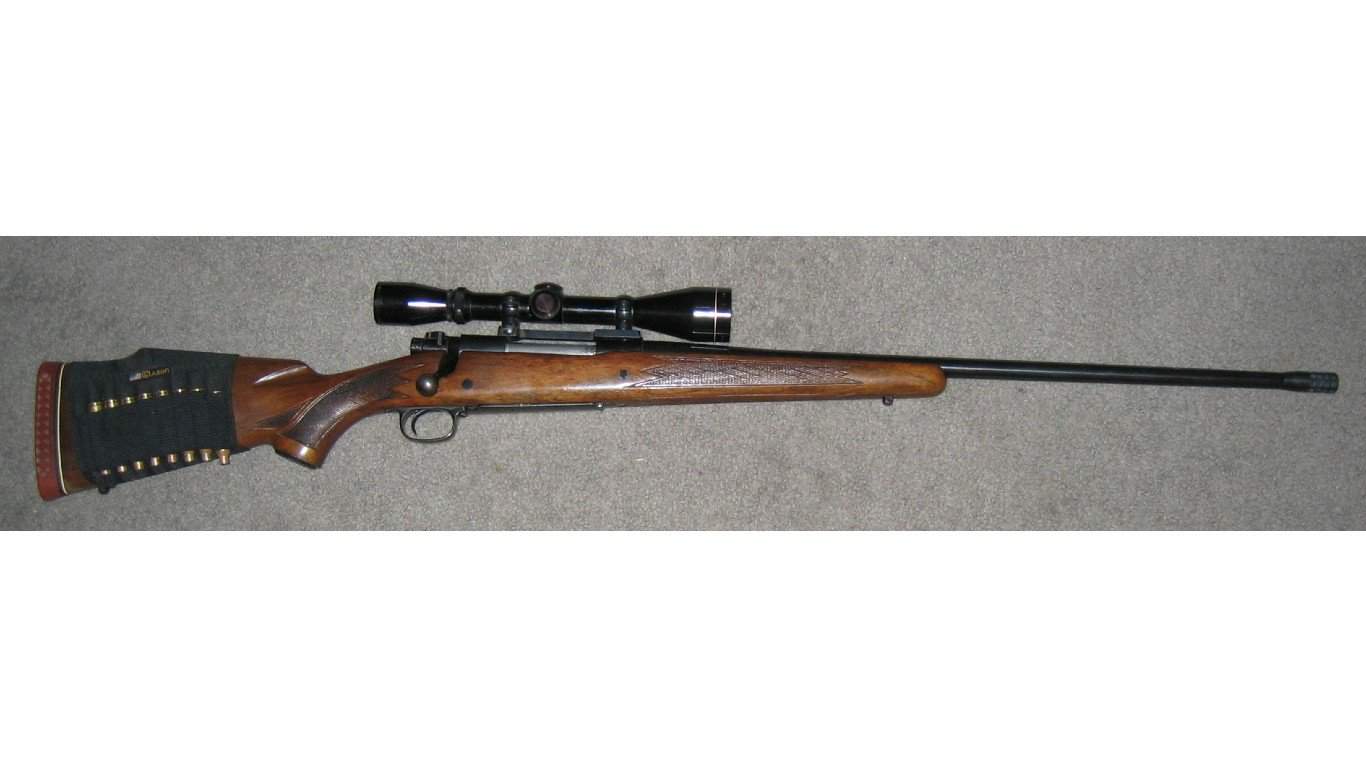
Winchester Model 70
- Manufacturer: Winchester
- Type: Bolt-action rifle
- Cartridge: .30-06 Springfield and others
- Action: Bolt-action
- Year Introduced: 1936
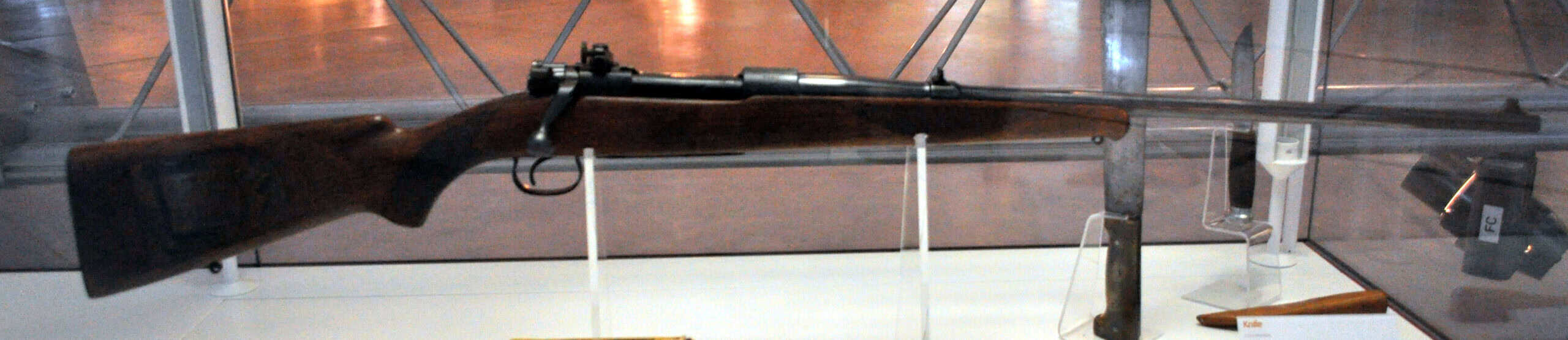
- Primary WWII Role: Sniper and sporting adaptation
- Why Troops Valued It: Exceptional precision and craftsmanship
- Postwar Legacy: Became legendary among snipers and hunters
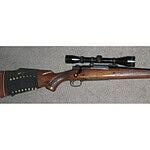
The Winchester Model 70 earned a reputation for exceptional precision and craftsmanship that eventually made it one of the most respected sporting and sniper rifle platforms in American history. Although primarily a civilian sporting rifle, select examples and modified variants found military applications during World War II in sniper and marksmanship roles. Built upon earlier Winchester bolt-action designs, the Model 70 delivered excellent long-range accuracy and smooth bolt operation. Its postwar influence became even greater as it developed a legendary status among hunters, precision shooters, and military marksmen who viewed it as one of America’s finest bolt-action rifles.
United States Rifle, caliber .22, M1922
- Manufacturer: Springfield Armory
- Type: Training rifle
- Cartridge: .22 Long Rifle
- Action: Bolt-action
- Year Introduced: 1922
- Primary WWII Role: Marksmanship training
- Why Troops Valued It: Low-cost rifle training
- Postwar Legacy: Helped prepare thousands of recruits for service
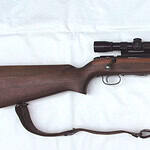
The United States Rifle, caliber .22, M1922 played a crucial role in preparing thousands of recruits for military service during the years surrounding World War II. Chambered in inexpensive .22 Long Rifle ammunition, the training rifle allowed soldiers to develop marksmanship fundamentals without the cost and recoil associated with larger service cartridges. The rifle closely resembled the handling characteristics of full-sized military rifles, making it highly effective for training purposes. During a war that required rapid mobilization of millions of Americans, weapons like the M1922 helped establish the shooting skills that became essential on battlefields across the globe.
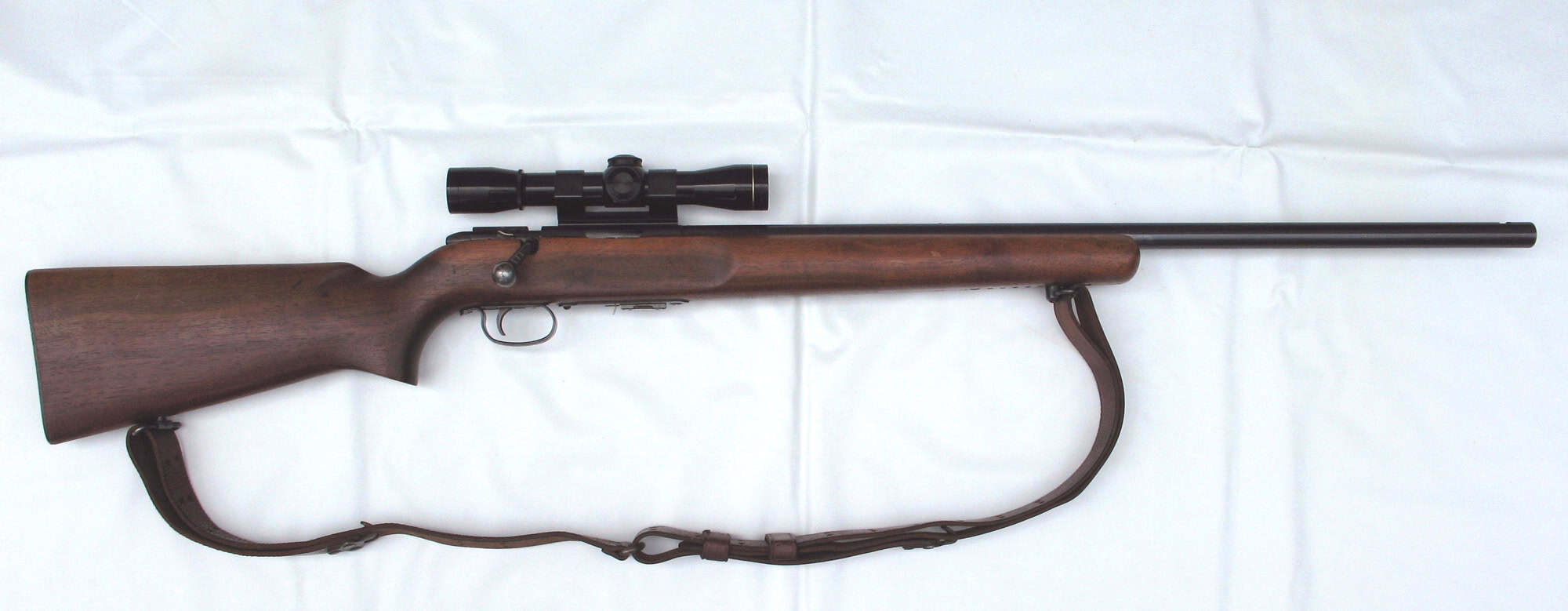
Remington Model 513T
- Manufacturer: Remington
- Type: Training rifle
- Cartridge: .22 Long Rifle
- Action: Bolt-action
- Year Introduced: 1940
- Primary WWII Role: Military training and target shooting
- Why Troops Valued It: Accurate and easy to maintain
- Postwar Legacy: Widely used in postwar marksmanship programs
The Remington Model 513T became one of the most important American military training rifles of the World War II era because it allowed recruits to practice precision shooting and marksmanship fundamentals in a cost-effective environment. Chambered in .22 Long Rifle, the rifle was widely used by military training programs and later became common in civilian marksmanship competitions after the war. Soldiers appreciated the rifle’s accuracy and straightforward design, which made it ideal for teaching basic shooting techniques. The Model 513T helped reinforce the importance of disciplined marksmanship training within the broader American military tradition.
Winchester Model 54
- Manufacturer: Winchester
- Type: Bolt-action rifle
- Cartridge: .30-06 Springfield and others
- Action: Bolt-action
- Year Introduced: 1925
- Primary WWII Role: Sniper and sporting applications
- Why Troops Valued It: Strong accuracy potential
- Postwar Legacy: Predecessor to the famous Model 70
The Winchester Model 54 served as an important predecessor to the legendary Model 70 and demonstrated the growing sophistication of American bolt-action rifle design during the early twentieth century. Although primarily marketed as a sporting rifle, some examples and derivatives were associated with military marksmanship and precision shooting roles during the World War II period. The rifle was respected for its strong action, dependable accuracy, and smooth handling characteristics. The Model 54’s influence extended beyond the war itself, helping establish Winchester’s reputation for producing high-quality precision rifles favored by hunters, competitive shooters, and future sniper programs.
M1903 Mark I
- Manufacturer: Springfield Armory
- Type: Bolt-action rifle
- Cartridge: .30-06 Springfield
- Action: Bolt-action
- Year Introduced: 1918
- Primary WWII Role: Infantry rifle with Pedersen Device capability
- Why Troops Valued It: Innovative conversion capability
- Postwar Legacy: Represented early experimentation in infantry firepower
The M1903 Mark I represented one of the earliest American attempts to increase infantry firepower through innovative rifle conversion systems. The rifle was specifically modified to accommodate the Pedersen Device, an experimental attachment that allowed soldiers to fire pistol-caliber ammunition in semi-automatic mode from a modified Springfield rifle. Although the concept never saw widespread combat use, it reflected the military’s growing interest in increasing infantry volume of fire during the early twentieth century. The Mark I remains historically important because it showcased early experimentation that foreshadowed later developments in semi-automatic and automatic infantry weapons.
Pedersen rifle
- Manufacturer: Pedersen Device project
- Type: Experimental semi-automatic rifle
- Cartridge: .276 Pedersen
- Action: Semi-automatic
- Year Introduced: 1930
- Primary WWII Role: Experimental infantry testing
- Why Troops Valued It: Light recoil and advanced design
- Postwar Legacy: Influenced later U.S. rifle development
The Pedersen rifle became one of the most influential American experimental firearms between the world wars despite never entering full military service. Chambered in the innovative .276 Pedersen cartridge, the rifle featured semi-automatic operation and lighter recoil than many contemporary battle rifles. Military trials considered it a serious competitor to the M1 Garand during the development of America’s future service rifle. Although the Army ultimately standardized on the Garand and retained the .30-06 cartridge, the Pedersen rifle helped influence American thinking regarding semi-automatic infantry firepower and lightweight ammunition concepts that would reappear decades later.
Reising Model 60
- Manufacturer: Harrington & Richardson
- Type: Semi-automatic rifle
- Cartridge: .45 ACP
- Action: Semi-automatic
- Year Introduced: 1941
- Primary WWII Role: Marine and security forces use
- Why Troops Valued It: Compact and controllable
- Postwar Legacy: Known for mixed combat reputation in the Pacific
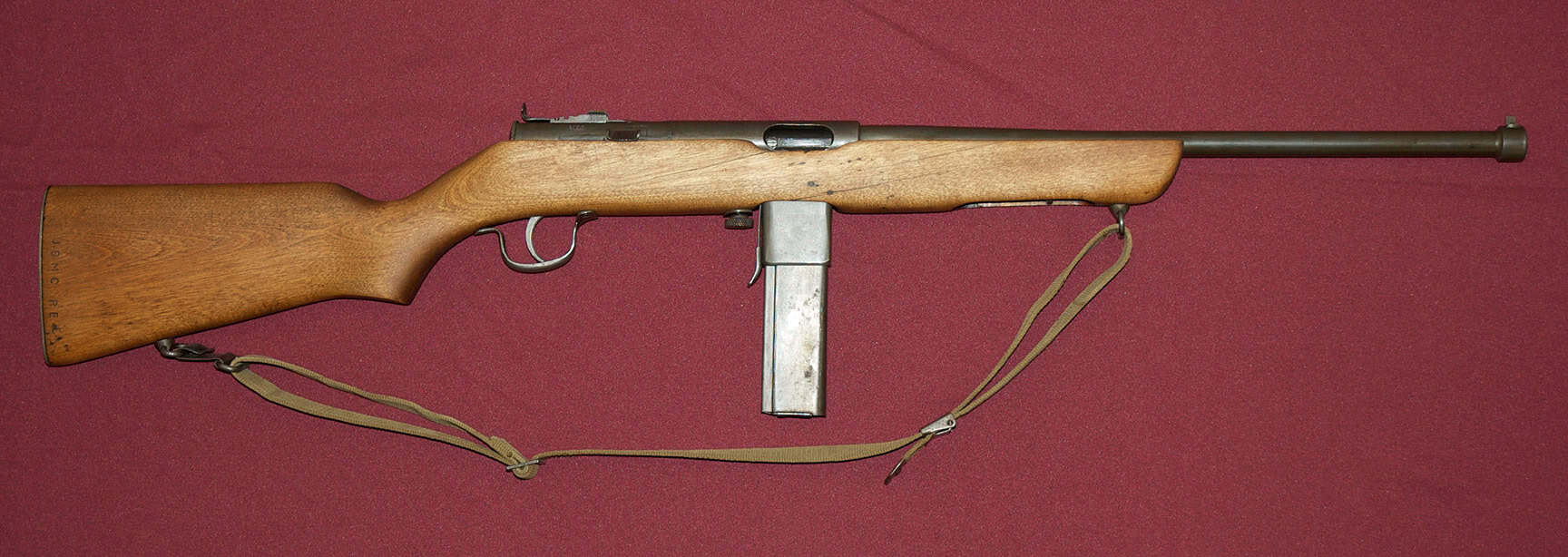
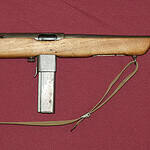
The Reising Model 60 occupied an unusual place among American firearms of World War II because it attempted to combine the handling characteristics of a compact rifle with the firepower associated with pistol-caliber weapons. Used primarily by Marine and security units early in the war, the weapon performed adequately under controlled conditions but gained a mixed reputation in harsh Pacific environments where mud, sand, and humidity affected reliability. Despite its limitations, the Reising reflected the rapid wartime search for specialized infantry weapons capable of supporting troops in diverse combat situations during America’s rapid military expansion.
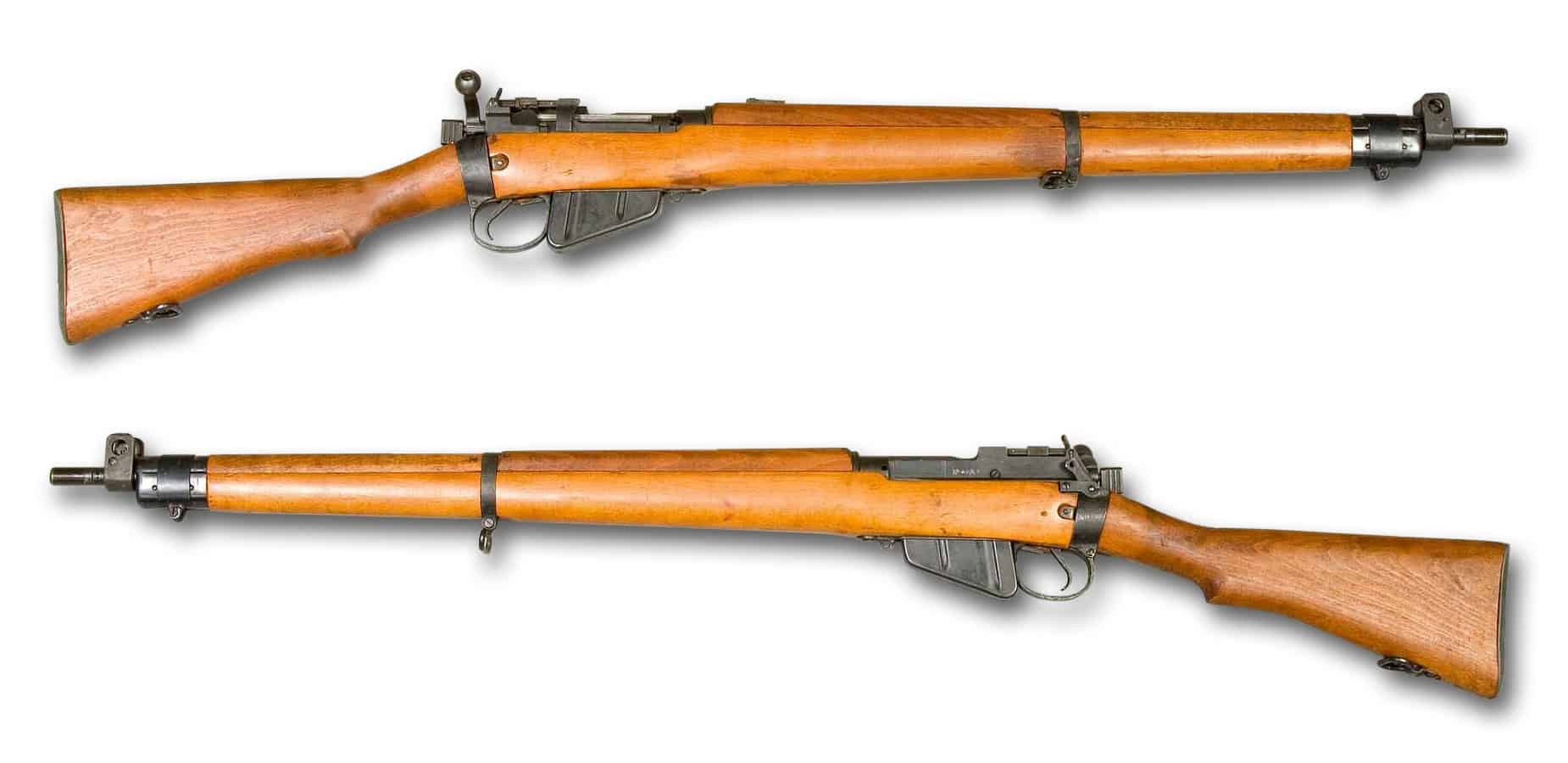
Lee–Enfield No. 4
- Manufacturer: Royal Ordnance / Savage
- Type: Bolt-action rifle
- Cartridge: .303 British
- Action: Bolt-action
- Year Introduced: 1941
- Primary WWII Role: Allied and limited American-associated use
- Why Troops Valued It: Fast cycling action and reliability
- Postwar Legacy: One of the most respected Allied rifles of WWII
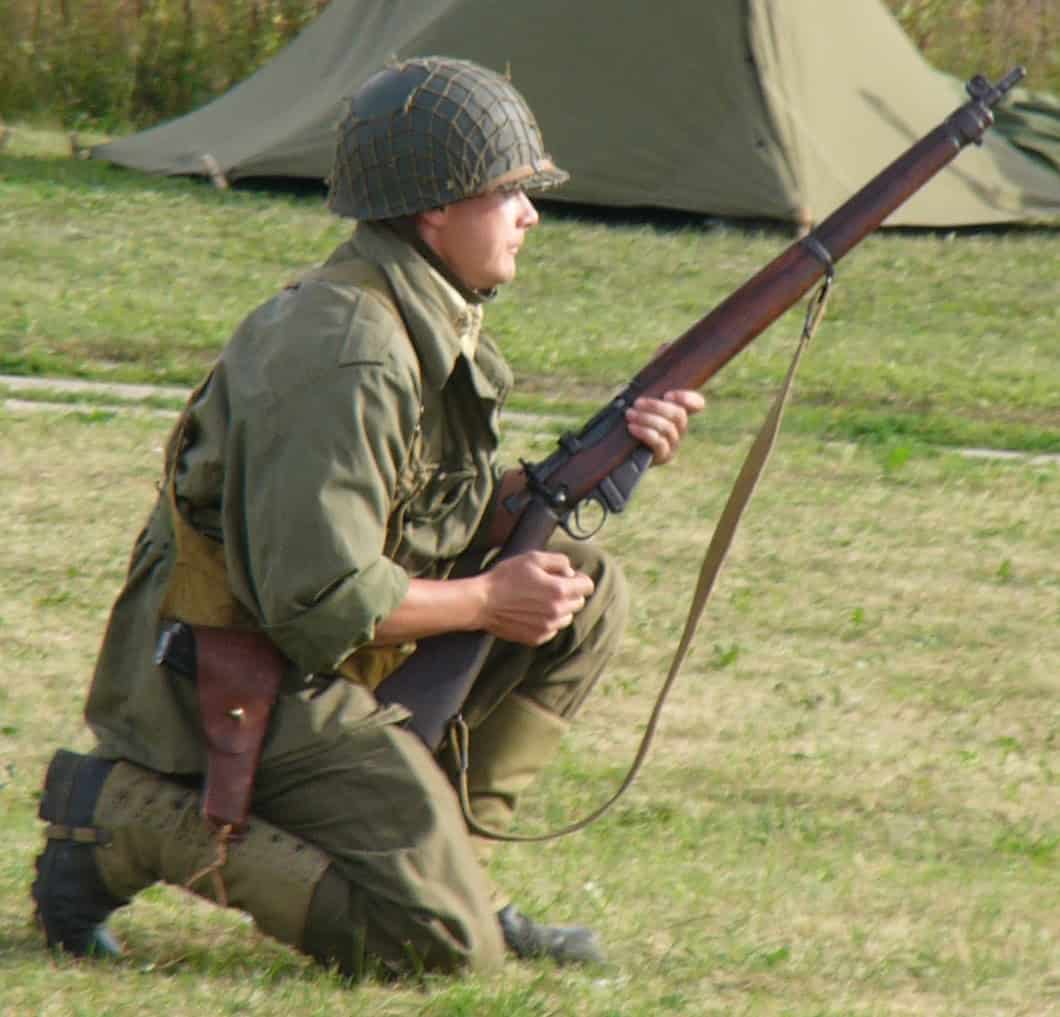
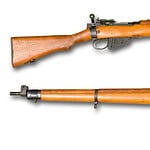
The Lee–Enfield No. 4 became one of the most respected Allied rifles of World War II and occasionally appeared in American-associated contexts through Allied cooperation and training environments. British and Commonwealth troops valued the rifle for its smooth bolt operation, rugged reliability, and fast cycling speed that allowed trained riflemen to deliver impressive rates of accurate fire. Although it was not a standard American weapon, the Lee–Enfield represented the broader coalition warfare environment that defined the Allied war effort. Its legendary reputation among Allied soldiers helped make it one of the most recognizable rifles of the twentieth century.
The image featured at the top of this post is ©Public Domain via Wikimedia Commons