

General Patton’s Battlefield Victories That Helped Turn the Tide in World War II
Few American military commanders remain as recognizable today as George S. Patton. Known for his aggressive battlefield style, rapid armored advances, and larger-than-life personality, Patton became one of the defining operational leaders of World War II. While many Americans remember him for his famous speeches and controversial reputation, his greatest victories helped drive some of the most important Allied advances of the European war. Whether racing across France after Normandy, relieving surrounded troops at Bastogne, or pushing deep into Germany during the final months of the conflict, Patton consistently emphasized speed and relentless offensive pressure. These victories reveal how his command style shaped both the battlefield and his enduring military legacy. Here, History Computer is taking a closer look at Patton’s greatest victories.
To determine the greatest victories of General Patton, History Computer reviewed various historical and military sources. We included some supplemental information as well as an account of each victory by the general.
Here is a look at General Patton’s greatest victories:
Why Are We Covering This?
Understanding the battlefield victories of George S. Patton means understanding how speed, momentum, and aggressive maneuver warfare helped shape the Allied advance across Europe during World War II. Patton remains one of the most recognizable and debated American commanders in military history, but many discussions focus more on his personality than the operational methods that made his campaigns so effective. His greatest victories reveal how rapidly moving armored forces, relentless offensive pressure, and battlefield improvisation repeatedly disrupted German defenses and accelerated Allied momentum after major turning points like Normandy and the Battle of the Bulge. Exploring these operations also highlights the risks of Patton’s command style, the logistical strain created by constant movement, and the leadership philosophy that made him both admired and controversial among Allied commanders throughout the war.
Patton Became the Face of American Offensive Warfare
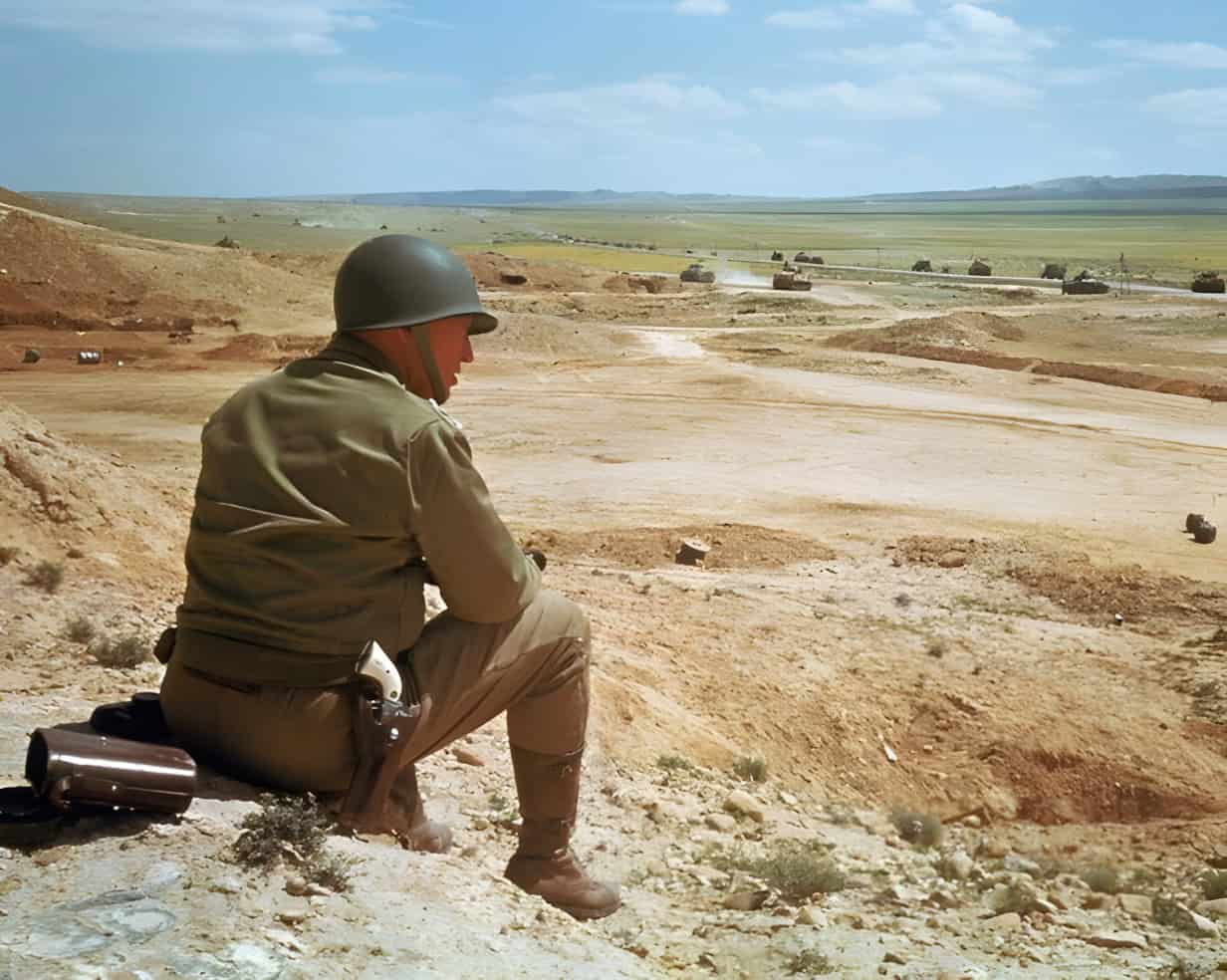
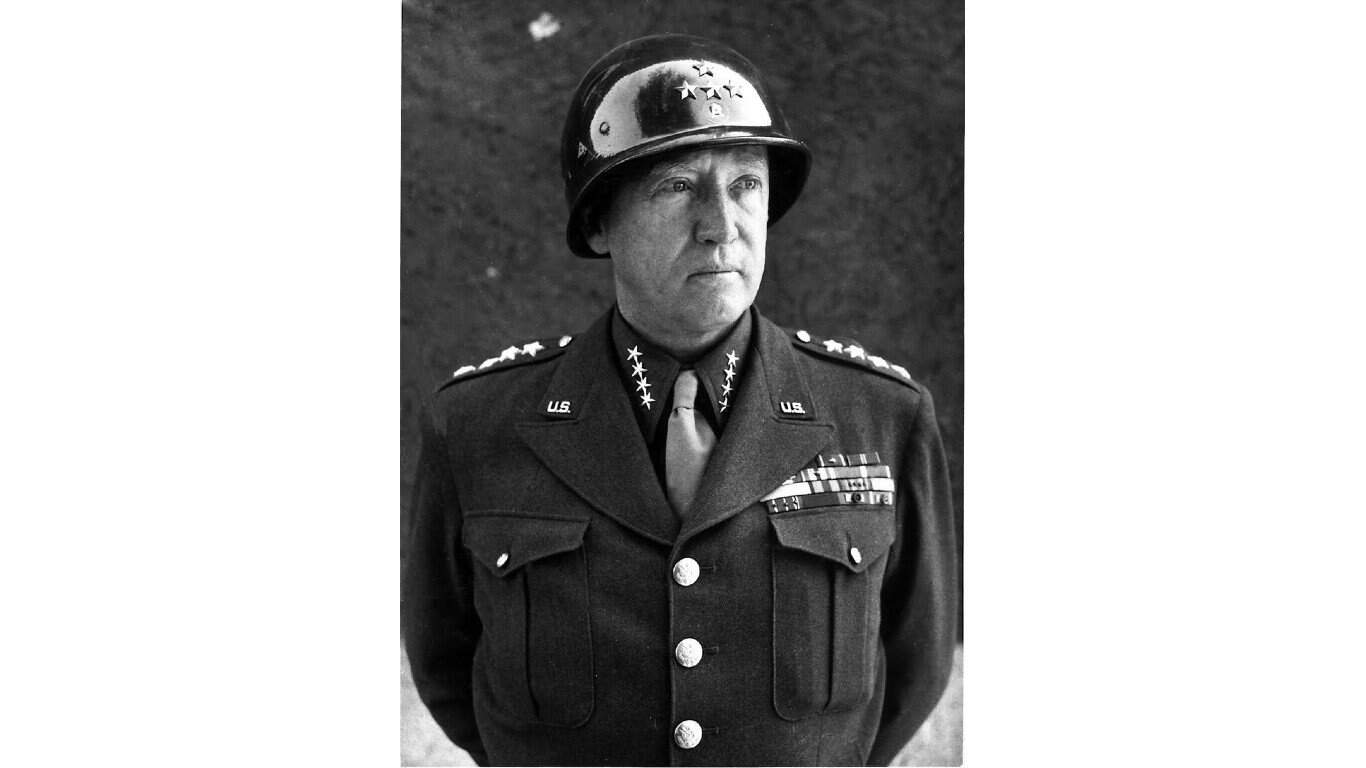
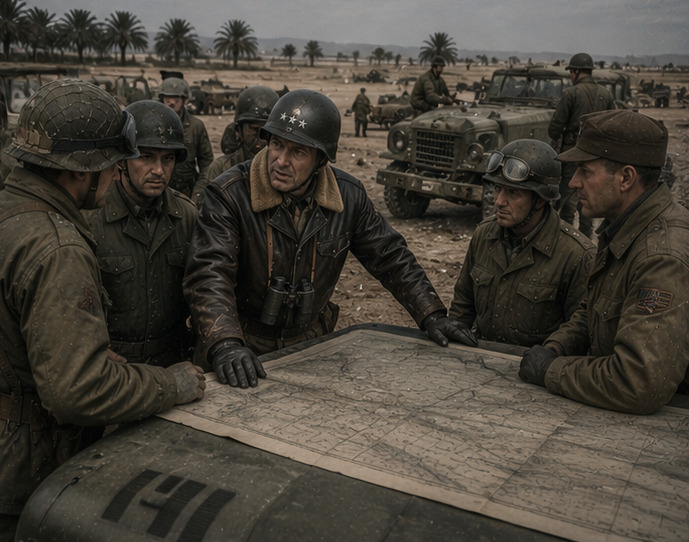
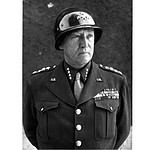
Few American commanders became as closely associated with aggressive battlefield momentum as George S. Patton. From North Africa to the heart of Germany, Patton built a reputation around speed, relentless attacks, and an almost obsessive refusal to let enemy forces recover once they began retreating. His battlefield image — polished helmet, ivory-handled pistols, and fiery speeches — turned him into one of the most recognizable Allied commanders of World War II. But behind the larger-than-life personality was a commander whose operational instincts repeatedly helped accelerate Allied victories across Europe.
Speed Was Patton’s Greatest Weapon
Patton believed hesitation could be just as dangerous as enemy fire. Throughout the war, he pushed his armies to move faster than German commanders believed possible, often launching attacks before opposing forces could reorganize effective defenses. Whether racing across Sicily, breaking through Normandy, or driving deep into France with Third Army, Patton viewed momentum itself as a strategic advantage. His campaigns often depended on overwhelming enemy formations through rapid maneuver, constant pressure, and operational tempo that stretched both Allied logistics and German defensive planning to their limits.
Third Army Turned Movement Into Warfare
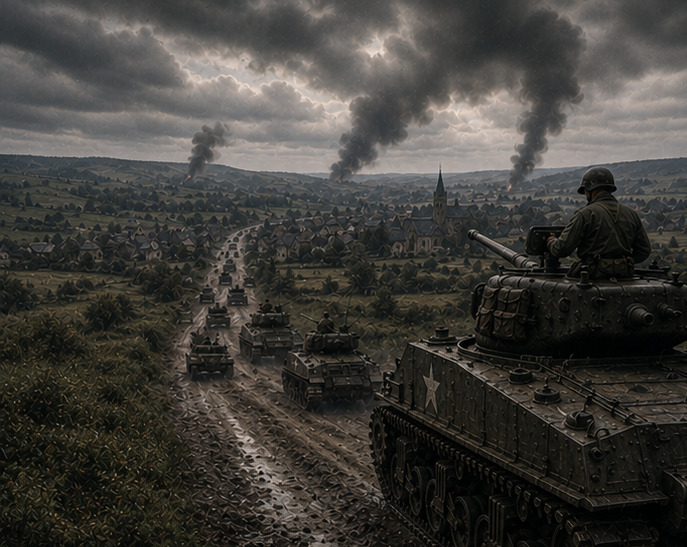
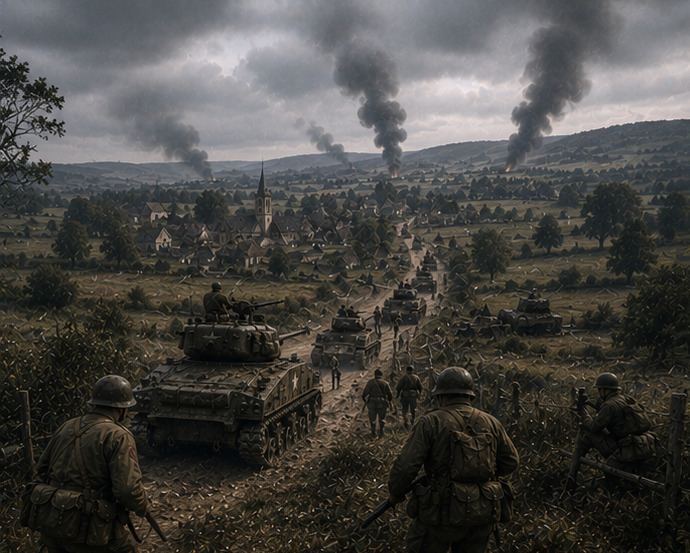
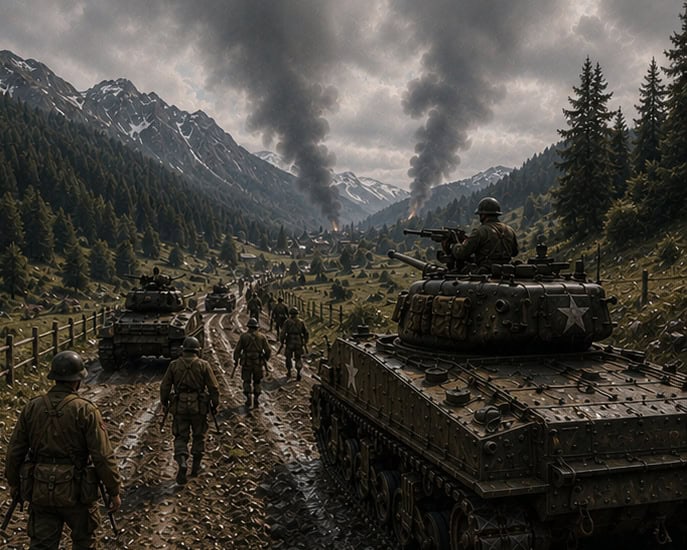
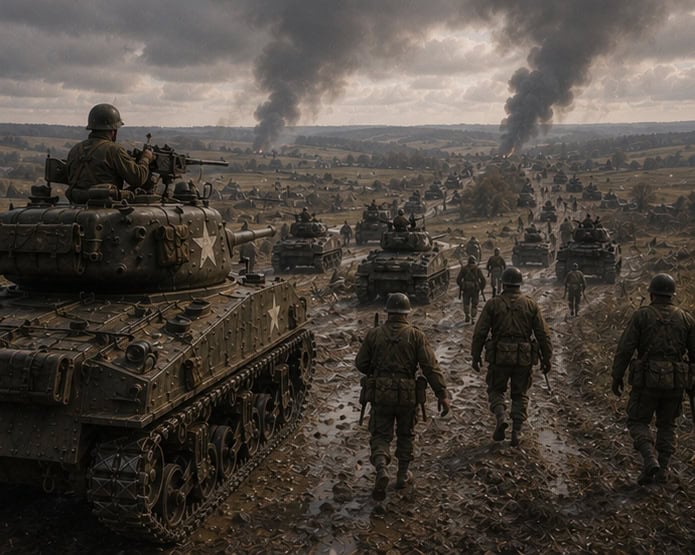
After the breakout from Normandy in 1944, Patton’s Third Army became one of the most aggressive formations on the Western Front. Tanks, infantry, artillery, and supply convoys surged across France in a campaign defined by speed and relentless forward movement. Entire German formations struggled to escape encirclement as Patton exploited collapsing enemy lines with extraordinary aggression. His forces liberated towns and cities at a pace that astonished even Allied planners. Yet the advance also exposed the enormous logistical demands created by Patton’s style of warfare, where fuel shortages sometimes became as dangerous as German resistance.
Patton’s Victories Were Often Controversial
Patton’s battlefield success rarely came without controversy. His aggressive personality created friction with fellow Allied commanders, and his willingness to push troops under difficult conditions often drew criticism from superiors. Campaigns like Sicily exposed rivalries inside the Allied command structure, while operations in Lorraine fueled debates about whether Patton advanced too aggressively despite limited supplies. Even so, many soldiers and historians viewed his willingness to maintain pressure on German forces as one of the reasons Allied momentum continued accelerating across Western Europe during the final years of the war.
Patton Helped Shape the Final Collapse of Nazi Germany
By the final months of the war, Patton’s armies were driving rapidly into the heart of collapsing German territory. His operations helped shatter remaining defensive lines, secure major cities, and accelerate the destruction of organized Nazi resistance across Central Europe. From the relief of Bastogne during the Battle of the Bulge to the crossing of the Rhine and the advance into Bavaria, Patton became one of the defining operational commanders of the European war. His victories were not simply tactical successes — they reflected a broader philosophy of warfare built around speed, pressure, and refusing to surrender initiative to the enemy.
Relief of Bastogne
- Theater / Opponent: German forces during the Battle of the Bulge
- What Made It a Patton Victory: Patton rapidly redirected Third Army north in one of the war’s boldest operational pivots
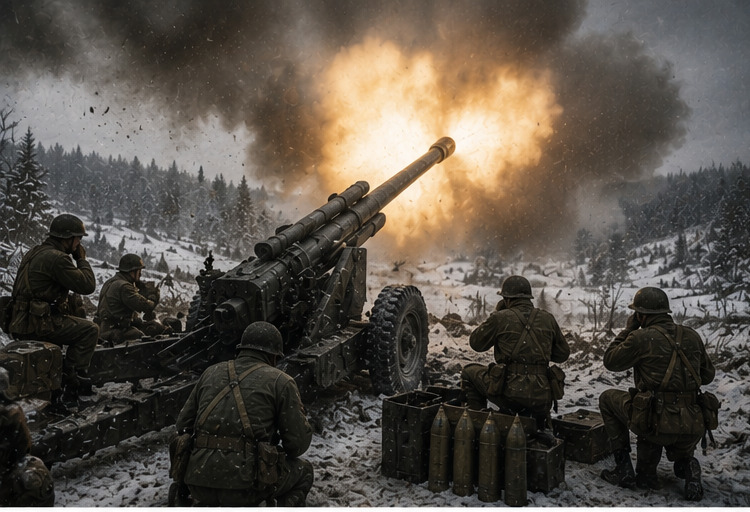
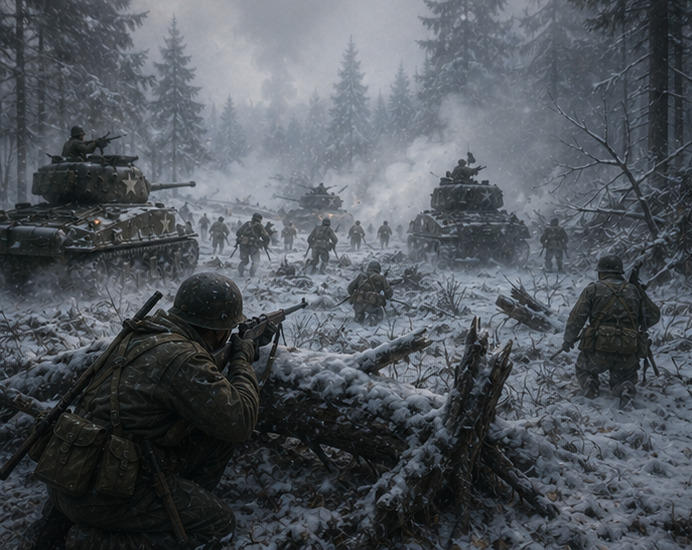
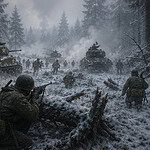
During the freezing chaos of the Battle of the Bulge, German forces surrounded the Belgian town of Bastogne and trapped thousands of American troops inside. The situation appeared increasingly desperate as snowstorms, fuel shortages, and relentless German attacks tightened around the town. Then George S. Patton executed one of the most famous operational pivots of the war. Third Army abruptly turned north under brutal winter conditions and launched a rapid relief effort many German commanders believed impossible. Patton’s ability to redirect massive armored formations on short notice demonstrated the speed and flexibility that defined his command style. The relief of Bastogne became one of the clearest examples of Patton’s obsession with momentum and aggressive battlefield initiative.
Operation Cobra Breakout
- Theater / Opponent: German forces in Normandy
- What Made It a Patton Victory: Patton exploited the breakout with rapid armored maneuver and relentless offensive momentum
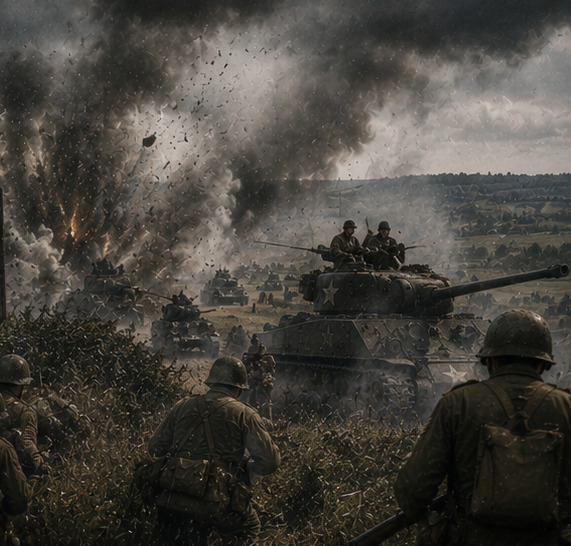
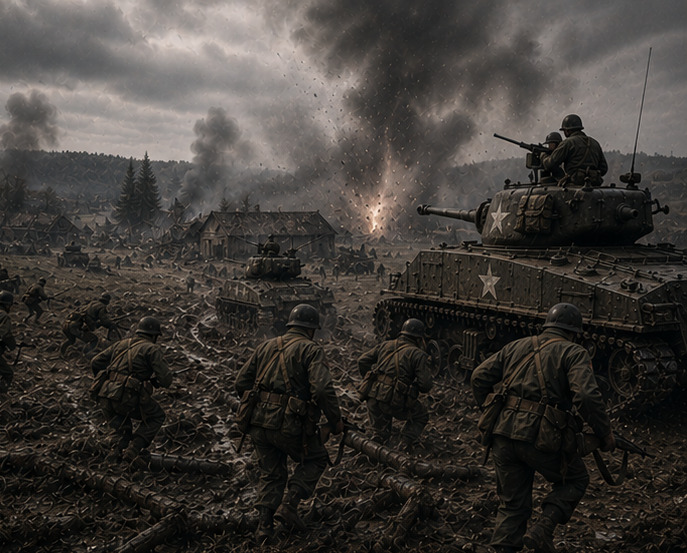
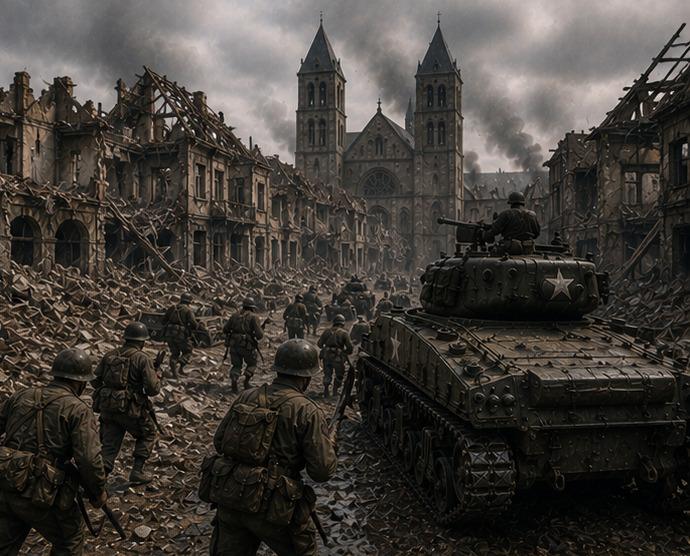
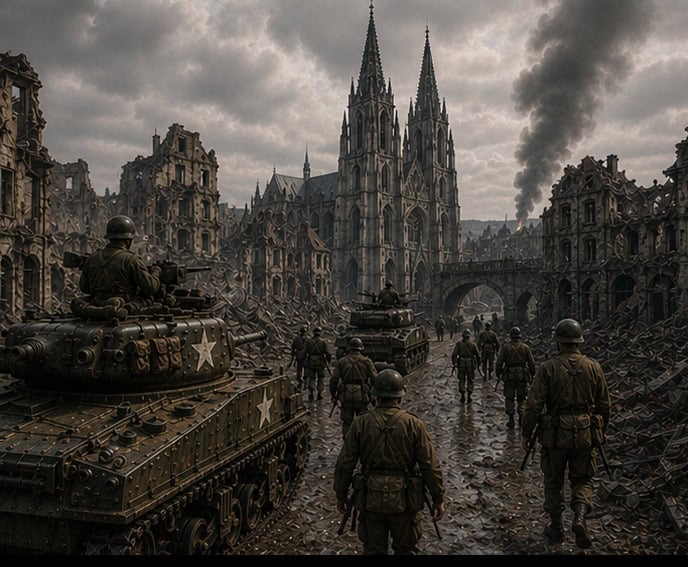
Following weeks of brutal attritional fighting in Normandy after D-Day, Allied forces remained trapped in difficult hedgerow terrain that favored German defenders. Operation Cobra changed the entire pace of the campaign. Once the initial breakthrough began, Patton’s forces surged through weakened German lines with extraordinary speed, transforming the battle from static warfare into a fast-moving armored exploitation campaign. Rather than allowing German forces time to reorganize, Patton pushed relentlessly across France, using mobility and pressure as weapons in themselves. Entire German formations suddenly found themselves retreating under constant threat of encirclement. Cobra became one of the defining demonstrations of Patton’s operational philosophy: once an enemy line cracked, overwhelming momentum had to follow immediately.
Advance to Palermo
- Theater / Opponent: Axis forces in Sicily
- What Made It a Patton Victory: Patton demonstrated speed and operational aggression during the Sicily campaign
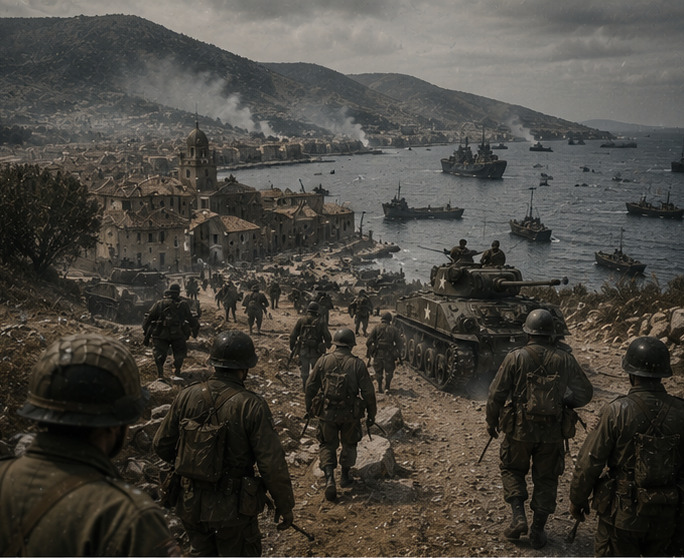
During the Allied invasion of Sicily in 1943, Patton initially operated in a supporting role while British forces under Bernard Montgomery advanced toward the island’s key objectives. Patton, however, quickly shifted toward a far more aggressive interpretation of the campaign. His drive toward Palermo became a rapid and highly publicized advance that showcased his appetite for speed and maneuver warfare. American columns moved aggressively across difficult terrain while Patton continuously pressured commanders to maintain momentum. The capture of Palermo elevated both Patton’s reputation and the profile of the American Army during the Sicily campaign. It also revealed the competitive intensity that often shaped Allied command relationships throughout the war.
Capture of Messina
- Theater / Opponent: German and Italian forces in Sicily
- What Made It a Patton Victory: Patton pushed across Sicily faster than many Allied commanders expected
After racing across Sicily, Patton became determined to capture the city of Messina before British forces advancing from the southeast. The campaign evolved into an unofficial competition between Allied commanders, with Patton pushing his troops at extraordinary pace across mountainous terrain and heavily contested roads. American forces repeatedly executed amphibious flanking maneuvers to bypass German defenses and maintain pressure on retreating Axis troops. When Patton entered Messina ahead of British forces in August 1943, the achievement became both a military and symbolic victory. Although large numbers of German troops successfully evacuated across the Strait of Messina, Patton’s rapid advance reinforced his growing reputation as one of the Allies’ most aggressive battlefield commanders.
Tunisia Reorganization After Kasserine
- Theater / Opponent: German Afrika Korps
- What Made It a Patton Victory: Patton restored discipline and offensive confidence after early American setbacks
The American defeat at Kasserine Pass exposed serious weaknesses within inexperienced U.S. forces fighting seasoned German troops in North Africa. Morale suffered, discipline weakened, and confidence in American battlefield performance declined sharply. Patton arrived in this atmosphere determined to restore order immediately. Uniform standards tightened, training intensified, and commanders faced relentless pressure to improve operational performance. Patton’s harsh methods were controversial, but they injected urgency and confidence into formations recovering from defeat. More importantly, he aggressively prepared American troops for offensive action rather than defensive hesitation. Tunisia became an early proving ground for Patton’s leadership style — demanding, uncompromising, and entirely focused on regaining battlefield initiative against experienced German opposition.
Third Army Dash Across France
- Theater / Opponent: Retreating German forces in France
- What Made It a Patton Victory: Patton drove one of the fastest armored advances of the European war
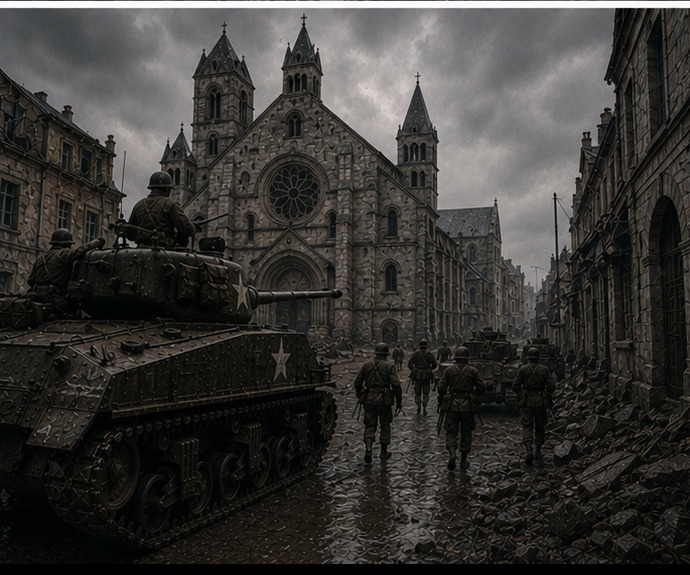
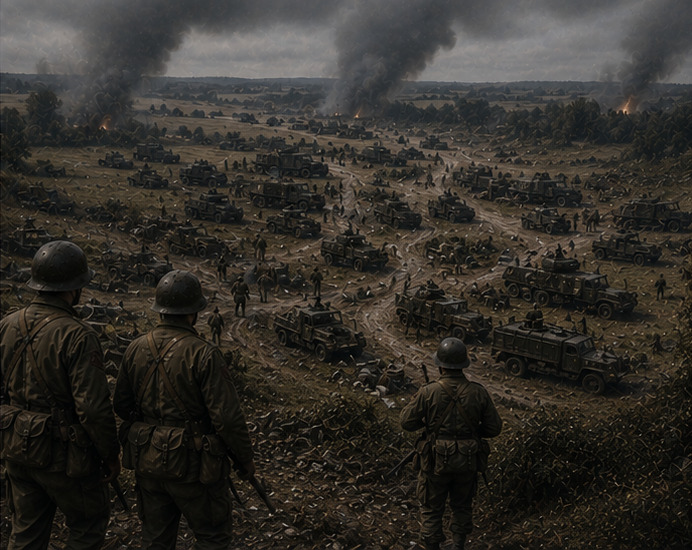
After the breakout from Normandy, Patton’s Third Army unleashed one of the fastest armored advances of the European war. Columns of tanks, trucks, infantry, and artillery surged across France at remarkable speed as German forces struggled to stabilize collapsing lines. Patton believed constant pressure prevented enemy recovery, and his forces rarely paused long enough for Germany to regroup effectively. Entire French towns were liberated within days as Third Army advanced deeper into occupied territory. The pace of the advance astonished even Allied planners. Yet the rapid movement also strained fuel supplies and logistics to dangerous levels. The campaign became perhaps the purest expression of Patton’s battlefield philosophy: speed itself could become a decisive strategic weapon.
Battle of Arracourt
- Theater / Opponent: German armored formations in Lorraine
- What Made It a Patton Victory: American maneuver and coordination defeated powerful German tank forces
The Battle of Arracourt in Lorraine demonstrated that Patton’s forces could defeat technically powerful German armored units through maneuver, coordination, and battlefield adaptability rather than sheer tank superiority. German Panther tanks possessed stronger armor and firepower than many American vehicles, yet fog, terrain, aggressive reconnaissance, and flexible command decisions helped U.S. forces repeatedly outmaneuver attacking German formations. American artillery and air support also played critical roles once weather conditions improved. The battle became a striking example of how operational coordination and battlefield awareness could overcome raw equipment advantages. Arracourt reinforced Patton’s emphasis on mobility, initiative, and keeping enemy forces constantly off balance during fast-moving engagements.
Liberation of Metz
- Theater / Opponent: German fortified defenses in France
- What Made It a Patton Victory: Patton captured one of the strongest fortified positions on the Western Front
The fortress city of Metz presented one of the most difficult obstacles Patton faced during the European campaign. German defenders transformed the area into a heavily fortified defensive zone supported by strong artillery positions and difficult terrain. Weather conditions worsened while supply shortages slowed offensive momentum across the region. Despite these challenges, Patton continued pressing operations against the city rather than allowing German forces time to stabilize further. The battle became slower and more grinding than Patton preferred, but the eventual capture of Metz represented an important strategic success. It also revealed that Patton could adapt to difficult siege-style conditions even though his reputation centered primarily on rapid maneuver warfare.
Saar Offensive
- Theater / Opponent: German defensive lines near the Saar
- What Made It a Patton Victory: Patton maintained offensive pressure despite difficult terrain and logistics
By late 1944, Patton’s forces faced worsening weather, stretched supply lines, and increasingly difficult German defensive positions near the Saar region. Many commanders might have slowed operations under such conditions, but Patton remained obsessed with maintaining offensive pressure whenever possible. He believed continuous attacks prevented Germany from rebuilding stable defensive momentum. The Saar operations lacked the dramatic speed of earlier campaigns across France, yet they reflected Patton’s refusal to allow the enemy breathing room. Even under miserable battlefield conditions, he pushed commanders to sustain initiative and exploit opportunities aggressively. The offensive became another example of Patton’s belief that hesitation itself could become strategically dangerous.
Lorraine Campaign
- Theater / Opponent: German Army Group G
- What Made It a Patton Victory: Patton kept advancing under brutal weather and supply conditions
The Lorraine Campaign exposed some of the greatest logistical and environmental challenges Patton encountered during the war. Rain, mud, supply shortages, swollen rivers, and determined German resistance slowed Third Army operations across difficult terrain. Critics later argued Patton advanced too aggressively despite limited resources, while supporters viewed the campaign as proof of his determination to keep pressure on German forces regardless of conditions. Although the offensive lacked the dramatic breakthroughs seen elsewhere, Patton’s forces steadily wore down German defenses through persistent attacks and operational pressure. Lorraine illustrated both the strengths and risks of Patton’s command philosophy: relentless aggression could create opportunities, but it also carried enormous logistical demands.
Capture of Trier
- Theater / Opponent: German defenders in western Germany
- What Made It a Patton Victory: Patton seized the city through aggressive operational momentum
The capture of Trier became one of the clearest examples of Patton’s willingness to exploit opportunities before higher command fully processed battlefield developments. When discussions emerged about bypassing the city, Patton aggressively pushed forward and seized Trier before some Allied leaders expected the operation to occur. The city’s capture disrupted German defensive organization and secured an important position near the Rhine frontier. Patton’s rapid execution reflected his belief that battlefield momentum should rarely be sacrificed for excessive caution or bureaucratic delay. The operation reinforced his reputation for acting decisively once enemy weakness became visible, even when doing so frustrated more methodical commanders above him.
Rhine Crossing at Oppenheim
- Theater / Opponent: German defenders east of the Rhine
- What Made It a Patton Victory: Patton used speed and surprise to secure a rapid Rhine crossing
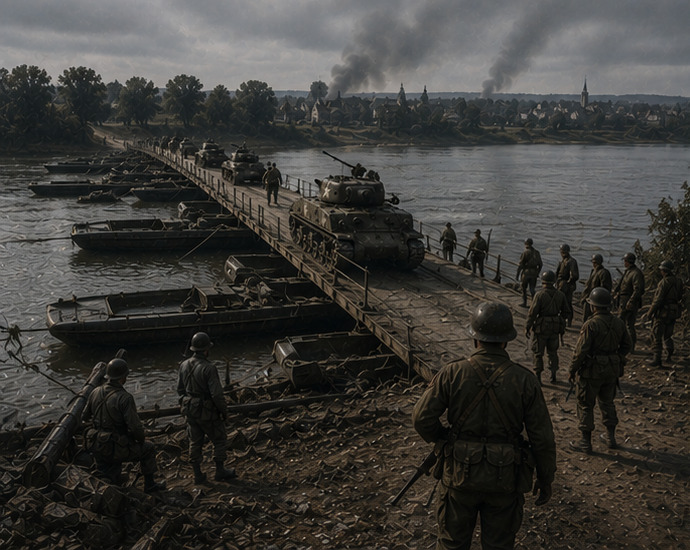
Crossing the Rhine represented one of the most symbolic moments of the Allied invasion of Germany. Patton, unwilling to surrender initiative or publicity to other Allied commanders, rapidly organized a crossing near Oppenheim with remarkable speed and secrecy. Under darkness, Third Army units crossed the river and established bridgeheads before German defenders fully reacted. The operation demonstrated Patton’s preference for surprise, tempo, and offensive aggression even during highly dangerous operations. Once across the Rhine, Allied forces could accelerate deeper into Germany itself. Patton reportedly celebrated the crossing with characteristic theatrical flair, but beneath the bravado lay another carefully executed demonstration of operational momentum.
Falaise Encirclement Operations
- Theater / Opponent: German Seventh Army
- What Made It a Patton Victory: Patton’s maneuver warfare helped trap retreating German formations
As German forces retreated from Normandy after Operation Cobra, Allied commanders sought to trap large enemy formations before they could escape eastward. Patton’s rapid armored maneuvers became central to the developing encirclement around the Falaise region. American advances threatened German withdrawal routes and intensified pressure on collapsing enemy formations attempting to flee the battlefield. Although debates continue over whether the pocket should have been sealed more quickly, the operation still inflicted devastating losses on German forces in France. The campaign highlighted Patton’s strength in exploitation warfare, where rapid movement and continuous pressure turned retreat into chaos for enemy armies.
Liberation of Luxembourg
- Theater / Opponent: German occupation forces
- What Made It a Patton Victory: Third Army rapidly secured strategically important territory
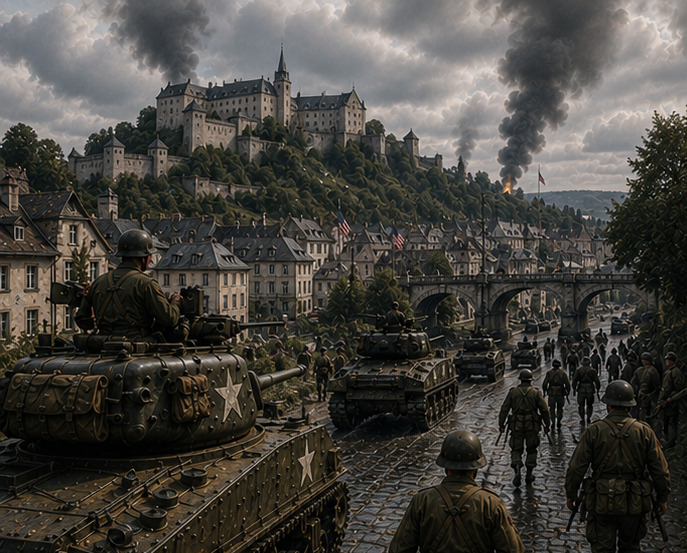
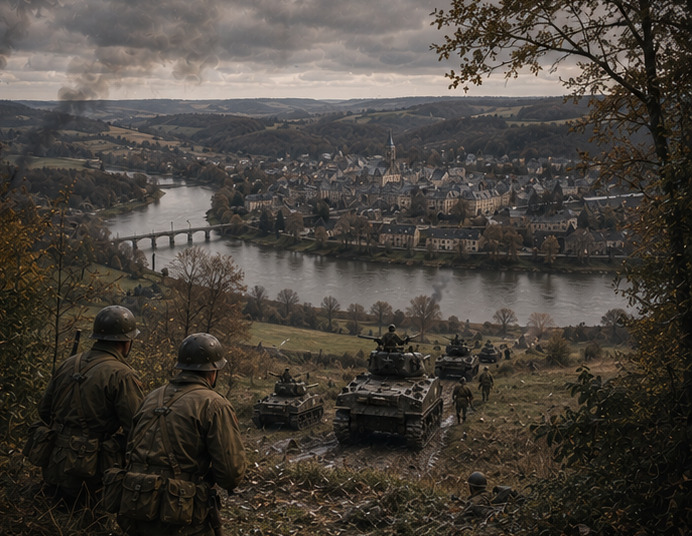
Third Army’s advance through Luxembourg demonstrated how rapidly Patton could move once enemy defensive cohesion began weakening. German occupation forces struggled to slow the American advance as armored and infantry units pushed across the region with aggressive tempo. Luxembourg’s liberation also carried symbolic importance because the country had endured years under Nazi occupation. For Patton, however, the operation remained part of a broader drive to maintain relentless forward momentum across Western Europe. The campaign illustrated how Patton viewed operational pauses as opportunities for the enemy rather than moments for caution. Speed remained central to everything his army attempted.
Drive Into Bavaria
- Theater / Opponent: Remaining German forces in southern Germany
- What Made It a Patton Victory: Patton pushed aggressively into collapsing Nazi territory
As the Third Reich collapsed during the final months of the war, Patton’s forces surged into Bavaria against increasingly fragmented German resistance. Although organized opposition weakened compared to earlier campaigns, isolated German units still fought fiercely across portions of southern Germany. Patton pushed his forces aggressively through the region while competing strategic priorities shaped the final Allied advance. Bavaria also carried enormous political and symbolic importance because of its deep association with Nazi leadership and ideology. The campaign reflected the final stage of Patton’s operational style — relentless offensive movement designed to deny the enemy any opportunity to regroup or stabilize collapsing fronts.
Capture of Regensburg
- Theater / Opponent: German defenders in Bavaria
- What Made It a Patton Victory: Patton secured a major transportation and industrial center
Regensburg stood as an important transportation and industrial center in Bavaria during the final Allied advance into Germany. Patton’s forces moved rapidly toward the city as German resistance fragmented across southern Germany during the final weeks of the war. The capture secured key infrastructure while further accelerating the collapse of organized German military control in the region. By this stage of the war, Patton’s reputation alone often contributed psychological pressure on retreating enemy forces aware of Third Army’s relentless pace. Operations like Regensburg demonstrated how Patton continued emphasizing aggressive maneuver and rapid exploitation all the way to the closing phase of the European war.
Liberation of Czechoslovak Territory
- Theater / Opponent: German remnants in Central Europe
- What Made It a Patton Victory: Patton advanced farther east than many expected before the war ended
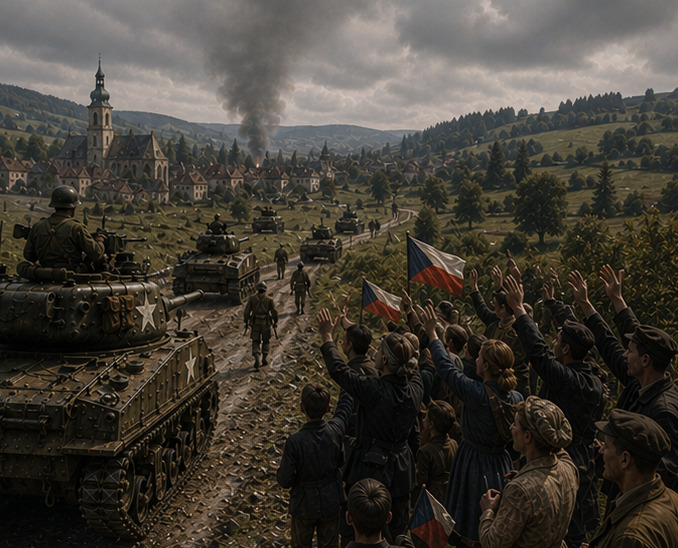
During the final weeks of the war in Europe, Patton pushed American forces into portions of Czechoslovakia faster and farther than many observers anticipated. He believed continued offensive pressure could liberate more territory before Soviet forces fully occupied the region from the east. Political agreements between the Allies ultimately limited how far American troops advanced, frustrating Patton’s desire to continue pushing deeper into Central Europe. Even so, the operation reflected his constant preference for initiative and momentum. The advance also carried geopolitical significance because the final positioning of Allied armies would shape the postwar political landscape across Europe for decades to come.
Advance to the Moselle River
- Theater / Opponent: German defensive formations
- What Made It a Patton Victory: Patton emphasized relentless forward movement and tempo
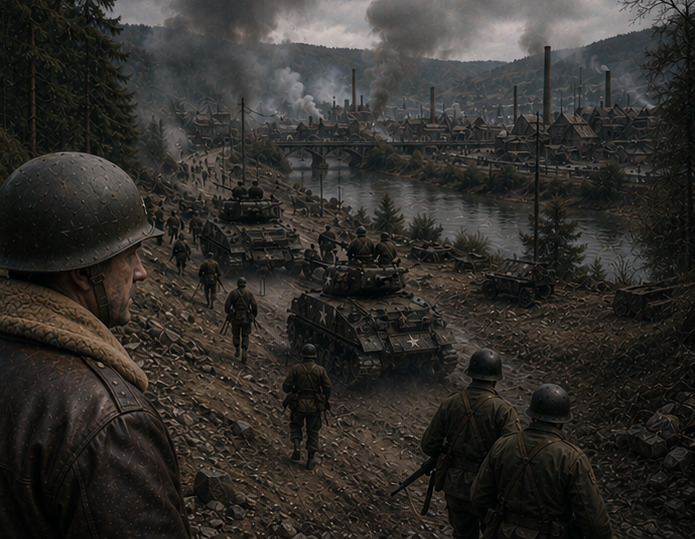
The advance toward the Moselle River reflected Patton’s constant drive to keep German forces retreating and destabilized after the breakout from Normandy. River crossings always presented major operational challenges because defenders could concentrate artillery and defensive fire against exposed attackers. Yet Patton repeatedly emphasized rapid exploitation before German forces could establish stronger defensive lines. His commanders operated under relentless pressure to maintain movement and seize crossings quickly whenever opportunities appeared. The Moselle operations demonstrated how Patton viewed warfare as a contest of tempo as much as firepower. Faster decision-making and movement often mattered just as much as battlefield strength itself.
Third Army Winter Counteroffensives
- Theater / Opponent: German forces during winter 1944–45
- What Made It a Patton Victory: Patton sustained aggressive operations under brutal winter conditions
Winter warfare across Europe created enormous operational difficulties for every army involved in the conflict. Snow, ice, freezing temperatures, and deteriorating roads slowed movement while placing severe strain on soldiers and equipment alike. Patton nevertheless continued pushing offensive operations whenever opportunities emerged. His belief in maintaining battlefield pressure rarely softened even during brutal winter conditions. Third Army repeatedly launched counterattacks, repositioned units rapidly, and sustained offensive action while many troops endured extreme physical exhaustion. These winter campaigns reinforced Patton’s reputation for aggressive persistence and his refusal to allow environmental hardship to dictate operational tempo entirely.
Central European Campaign Breakthroughs
- Theater / Opponent: Remaining German Army units
- What Made It a Patton Victory: Patton accelerated the collapse of organized German resistance
During the final collapse of Nazi Germany, Patton’s forces became one of the most aggressive Allied formations advancing through Central Europe. Third Army shattered weakening German defensive positions, seized critical cities, and accelerated deep penetrations into enemy territory as organized resistance deteriorated. Even near the end of the war, Patton pushed commanders to maintain offensive urgency rather than settle into complacency. The rapid breakthroughs contributed directly to the destruction of Germany’s remaining military cohesion. For Patton, victory always depended on preserving momentum until the enemy completely lost the ability to recover. The final campaigns across Central Europe became the ultimate expression of the aggressive operational doctrine that defined his wartime legacy.
The image featured at the top of this post is ©"File:US generals Theodore Roosevelt Jr., Terry Allen and George Patton.jpg" by Robert Capa is licensed under CC0 1.0. – License / Original