



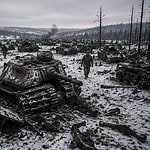
20 Battle of the Bulge Facts That Still Surprise Historians Today
The Battle of the Bulge remains one of the most recognizable battles of World War II, but many Americans only know a small portion of what actually happened during Germany’s massive winter offensive in late 1944.
While the defense of Bastogne and Hitler’s last gamble in the West dominate most historical discussions, the battle was also defined by freezing weather, catastrophic fuel shortages, battlefield deception, traffic jams stretching for miles, and soldiers fighting in some of the harshest conditions seen during the European war. At its peak, the offensive threatened to fracture Allied momentum and create chaos across the Western Front. These lesser-known facts reveal how close the battle came to becoming even more dangerous than history remembers. History Computer reviewed the Battle of the Bulge through various historical and military sources to explore some of the lesser known facts about the battle.
Here is a closer look at the Battle of the Bulge:
Why Are We Covering This?
Understanding the Battle of the Bulge means understanding how quickly the course of a war can change when surprise, weather, logistics, and human endurance collide under extreme pressure. Although the battle is widely recognized as one of the most important campaigns of World War II, many people only know the simplified version centered on Bastogne or Hitler’s final offensive. The reality was far more chaotic, dangerous, and uncertain. Entire armies struggled through freezing forests while fuel shortages, traffic jams, intelligence failures, and brutal close-range combat shaped the outcome as much as tanks or artillery. Exploring the lesser-known stories behind the battle helps reveal how fragile the Allied position briefly became, how ordinary soldiers endured some of the harshest combat conditions of the war, and how Germany’s final gamble in the West ultimately accelerated the collapse of the Third Reich.
Hitler’s Last Great Gamble
By December 1944, many Allied leaders believed Nazi Germany was collapsing too quickly to launch another major offensive in Western Europe. That assumption shattered when German forces suddenly exploded through the snow-covered forests of the Ardennes in one of the war’s greatest surprise attacks. The Battle of the Bulge became Adolf Hitler’s final attempt to split the Allied coalition, seize the initiative, and force a political crisis among the Western powers before Germany was fully defeated.
The Weather That Nearly Changed the War
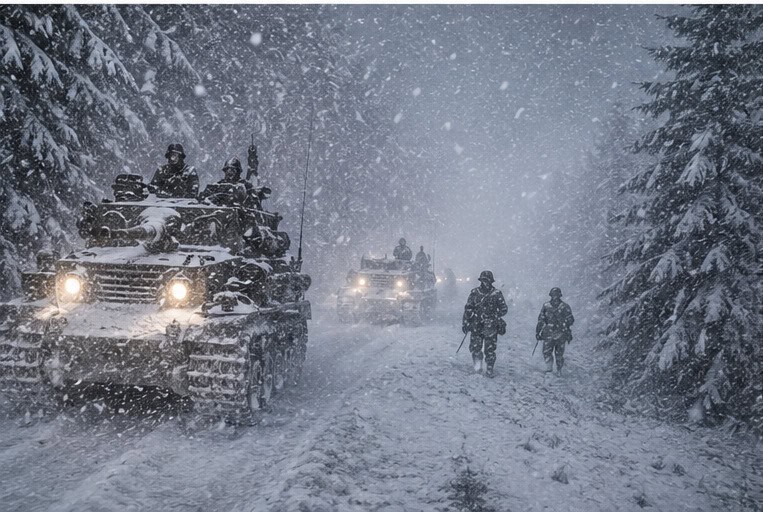
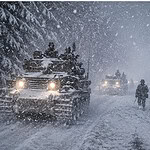
One of Germany’s greatest advantages during the opening days of the offensive was not a tank or a weapon system — it was the weather. Thick fog, snowstorms, and cloud cover grounded Allied aircraft that had previously dominated the skies over Europe. For several critical days, German armor moved forward without facing the devastating air attacks that normally crippled large troop movements. The storm gave Germany a temporary window to advance deeper into Allied territory than many thought possible.
Chaos Inside the Ardennes
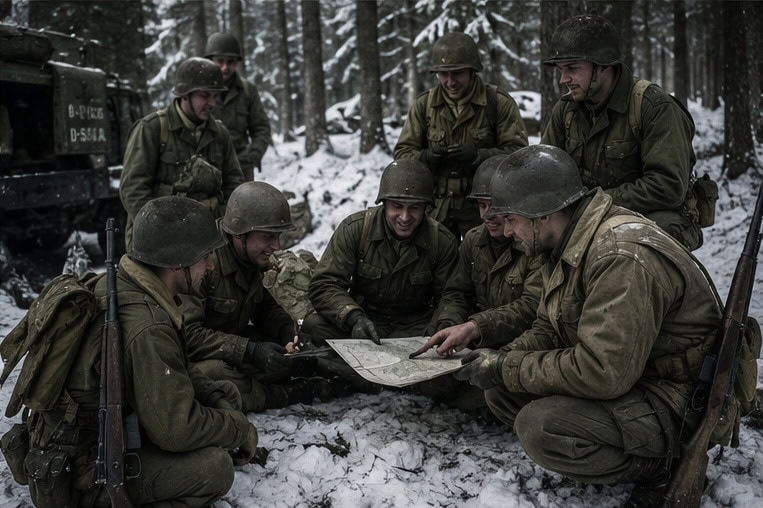
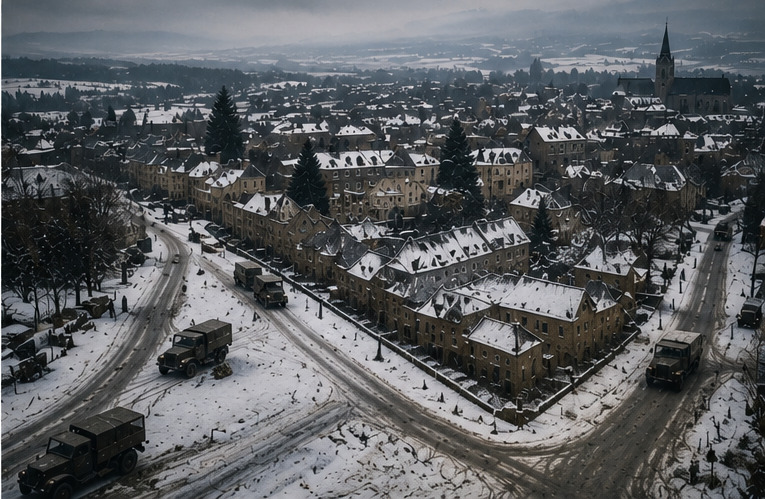
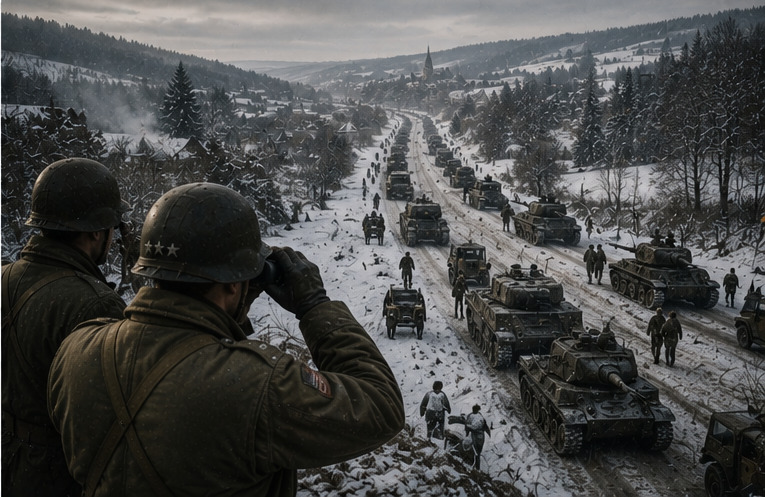
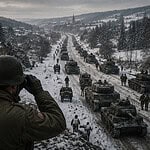
The Battle of the Bulge quickly became a nightmare of traffic jams, frozen roads, collapsing communications, and brutal forest fighting. American reinforcements poured into narrow road networks already packed with tanks, ambulances, artillery, and retreating troops. German infiltrators disguised in American uniforms added even more confusion behind Allied lines. Across the Ardennes, entire units became lost, isolated, or trapped while exhausted soldiers fought through snow, freezing temperatures, and constant uncertainty.
Bastogne Became the Symbol of Resistance
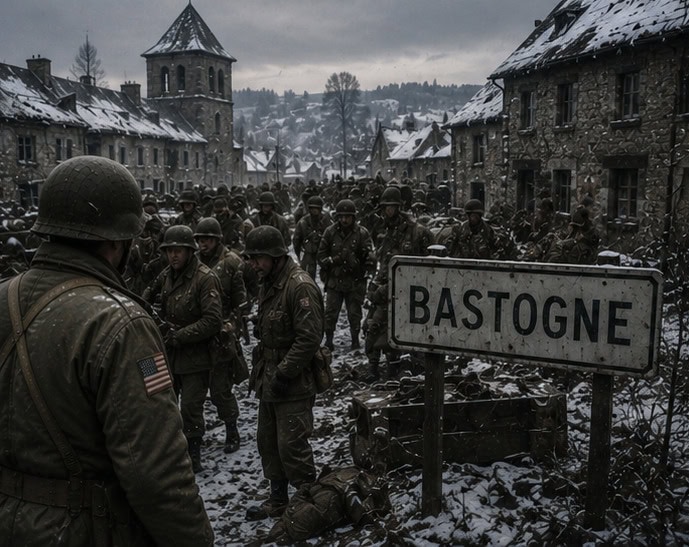
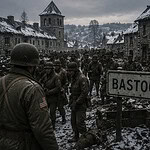
Although the battle stretched across a massive front, the Belgian town of Bastogne emerged as the defining symbol of Allied resistance during the campaign. Surrounded by German forces and cut off in brutal winter conditions, American defenders refused repeated demands to surrender. The town’s critical road network made it strategically essential for the German advance, and its defense slowed momentum at one of the offensive’s most important moments. Bastogne transformed from a small crossroads town into one of the most famous battle sites of World War II.
The Offensive That Broke Germany’s Remaining Strength
The Battle of the Bulge temporarily shocked the Allies, but it ultimately exhausted some of Germany’s last remaining reserves of experienced troops, tanks, fuel, and equipment. Once the weather cleared, Allied airpower returned with devastating effect, hammering German columns trapped on frozen roads across the Ardennes. By the time the offensive collapsed, Germany had lost resources it could never replace. The battle became Hitler’s final major gamble in the West, and ultimately the one that accelerated the downfall of Nazi Germany itself.
Germany Launched the Offensive Hoping to Split the Allies
- Key People / Units: Adolf Hitler; German High Command
- Hidden Reality or Surprise: Hitler believed a massive defeat in the Ardennes could fracture the Anglo-American alliance and force negotiations
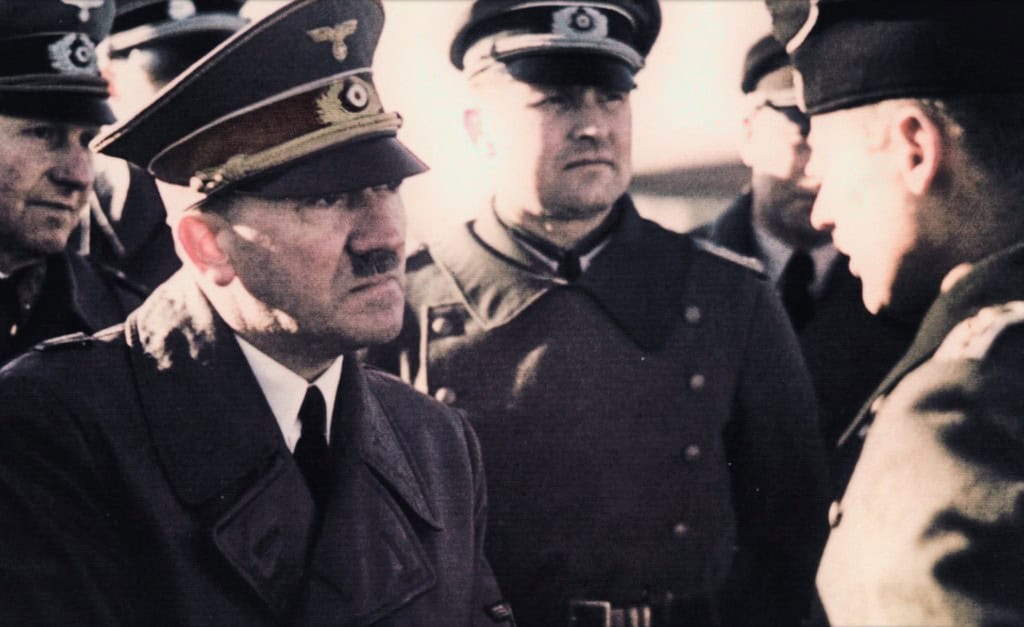
By late 1944, Germany’s military position was collapsing on nearly every front, yet Adolf Hitler still believed one dramatic victory in the West could change the course of the war. His plan centered on driving through the Ardennes, splitting British and American forces, and eventually capturing the port of Antwerp. Hitler hoped a massive battlefield shock would fracture Allied political unity and force negotiations before Soviet forces overwhelmed Germany from the east. Many German commanders privately believed the operation was unrealistic, but Hitler viewed it as Germany’s final opportunity to regain strategic initiative. The gamble created one of the largest and bloodiest battles the United States would ever fight.
Germany Counted on Capturing Allied Fuel Instead of Bringing Enough
- Key People / Units: German Panzer Armies
- Hidden Reality or Surprise: The offensive depended heavily on seizing Allied gasoline depots because Germany lacked sufficient fuel reserves
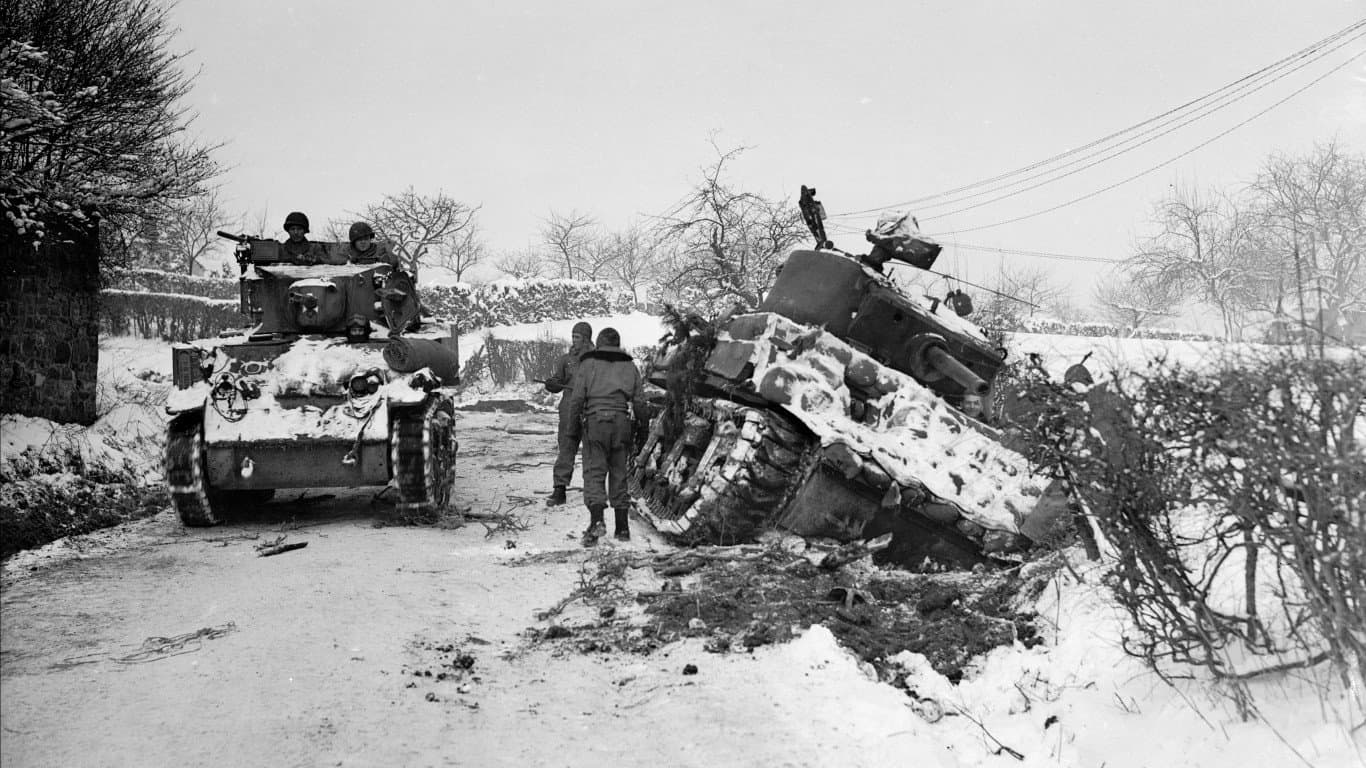
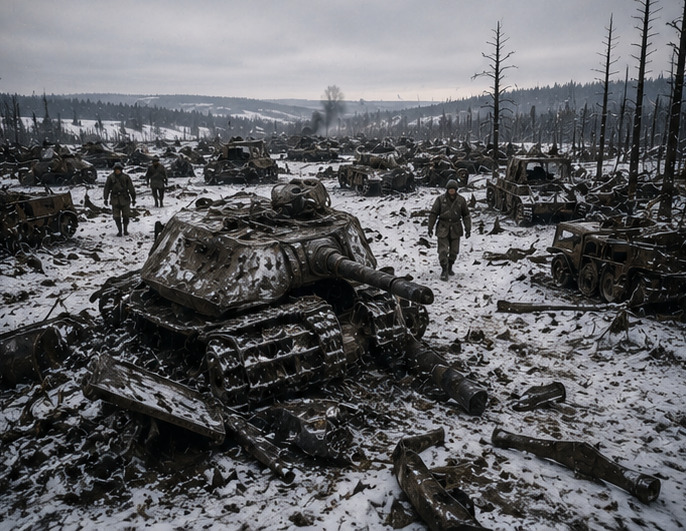
One of the most dangerous weaknesses in the German offensive was hidden behind the advance itself: Germany barely had enough fuel to sustain the operation. German planners understood that their panzer columns could not realistically reach all of their objectives on existing reserves alone. Instead, they expected advancing forces to seize massive Allied gasoline stockpiles as they moved westward. That assumption became increasingly disastrous once American resistance stiffened and German timetables collapsed. Tanks and armored vehicles began stalling along frozen roads while supply convoys struggled to catch up through the congested Ardennes terrain. In many ways, fuel shortages strangled the offensive before Allied firepower fully destroyed it.
Bad Weather Was One of Germany’s Greatest Weapons
- Key People / Units: German planners; Allied air forces
- Hidden Reality or Surprise: Heavy snow and cloud cover grounded Allied aircraft during the opening phase of the offensive
The opening success of the German assault owed as much to weather as it did to surprise. Thick cloud cover, snowstorms, and fog grounded much of the Allied air force during the critical first days of the battle. Before the offensive, Allied aircraft had dominated Western Europe, constantly attacking German movement, supply lines, and reinforcements. The stormy skies over the Ardennes temporarily removed that advantage and allowed German armor to move with far greater freedom than it otherwise could have. German planners had intentionally waited for poor weather conditions before launching the attack. For a brief window, nature itself became one of Germany’s most effective battlefield allies.
Many American Troops Thought the Attack Was Only a Local Raid
- Key People / Units: U.S. frontline infantry divisions
- Hidden Reality or Surprise: Initial confusion delayed recognition of the scale and coordination of the German offensive
The Ardennes sector had developed a reputation as a relatively quiet portion of the front by December 1944. Many American units stationed there were exhausted divisions recovering from earlier combat or inexperienced troops receiving frontline exposure for the first time. When German artillery and infantry attacks began erupting across the front before dawn on December 16, some U.S. soldiers initially assumed they were dealing with isolated probing actions rather than a massive offensive. Communication breakdowns, confusion, and poor visibility only deepened the uncertainty. By the time the scale of the assault became clear, German armored spearheads were already pushing through parts of the Allied line.
The Ardennes Forest Helped Hide One of the War’s Largest Surprise Attacks
- Key People / Units: German Army Group B
- Hidden Reality or Surprise: Dense forests and rough terrain concealed troop movements before the offensive began
The thick forests and rugged hills of the Ardennes created ideal concealment for German preparations before the offensive began. Despite the enormous number of troops, tanks, artillery pieces, and supply vehicles involved, Germany managed to move large forces into position with surprising secrecy. Radio silence, nighttime movement, and strict operational security reduced the chances of Allied detection. Ironically, the same region had played a similar role during Germany’s invasion of France in 1940, when German armored forces shocked Allied planners by advancing through terrain many believed unsuitable for a major offensive. In 1944, the forests once again became a staging ground for one of the war’s greatest surprises.
German Commandos Wore American Uniforms Behind Allied Lines
- Key People / Units: Otto Skorzeny; Operation Greif
- Hidden Reality or Surprise: German infiltrators created panic, confusion, and widespread fear of sabotage
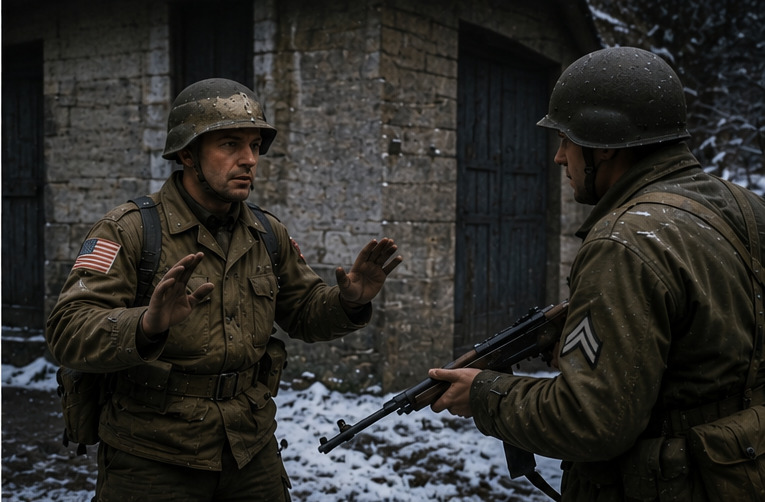
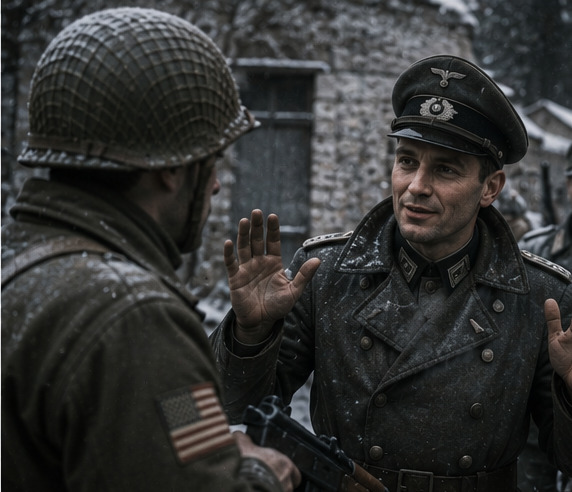
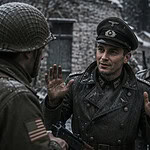
Under the command of Otto Skorzeny, German infiltration teams attempted one of the most unusual operations of the European war. During Operation Greif, German commandos wearing captured American uniforms moved behind Allied lines to spread confusion, sabotage communications, and redirect traffic. While the operation achieved only limited tactical success, its psychological impact became enormous. Rumors of infiltrators spread rapidly across Allied positions, leading to widespread paranoia and aggressive security checkpoints. Soldiers began quizzing one another on American sports, geography, and pop culture to identify possible imposters. For days, fear and uncertainty traveled almost as quickly as the German advance itself.
American Military Police Became Critical to the Entire Battle
- Key People / Units: U.S. Military Police Corps
- Hidden Reality or Surprise: Traffic control on frozen Ardennes roads became strategically essential for Allied reinforcements
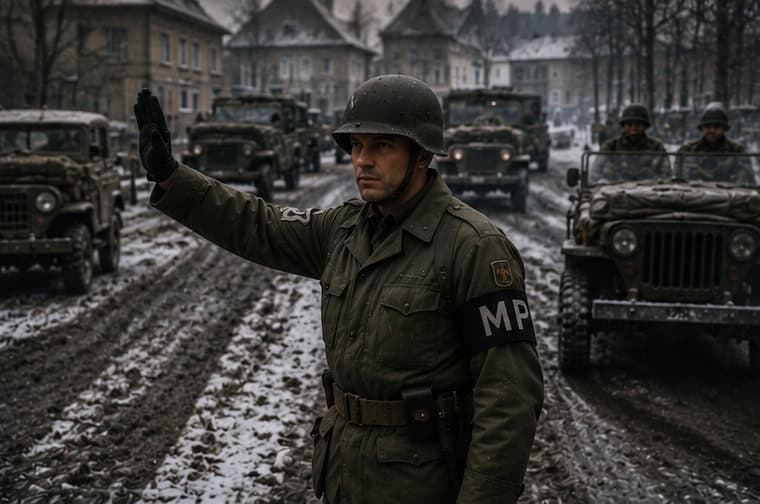
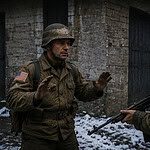
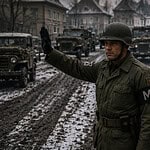
As Allied reinforcements rushed toward the Ardennes, narrow roads clogged with tanks, trucks, artillery, ambulances, and retreating troops created enormous traffic jams across the region. In this chaos, American military police became unexpectedly critical figures in the battle. Standing at frozen intersections under blackout conditions and often within range of enemy attack, MPs directed massive flows of reinforcements toward the front. A single blocked road or wrong turn could delay entire armored columns during some of the battle’s most critical moments. Their work rarely receives the same attention as frontline combat units, yet the Allied response depended heavily on keeping the road network functioning under extreme pressure.
Bastogne Was Important Because of Its Roads, Not Just Its Symbolism
- Key People / Units: 101st Airborne Division
- Hidden Reality or Surprise: The town sat at a critical transportation crossroads in the Ardennes
The Belgian town of Bastogne became legendary during the battle, but its importance came less from the town itself and more from geography. Bastogne sat at the center of several critical roads that German armored forces needed in order to maintain momentum toward the Meuse River and ultimately Antwerp. Control of those road networks became strategically essential for both sides. When American forces, including elements of the 101st Airborne Division, held the town despite encirclement, they disrupted German movement at a critical stage of the offensive. Bastogne eventually became one of the defining symbols of Allied resistance during the campaign.
Many U.S. Soldiers Fought Without Proper Winter Clothing
- Key People / Units: American infantry units
- Hidden Reality or Surprise: Frostbite and exposure became major problems during the campaign
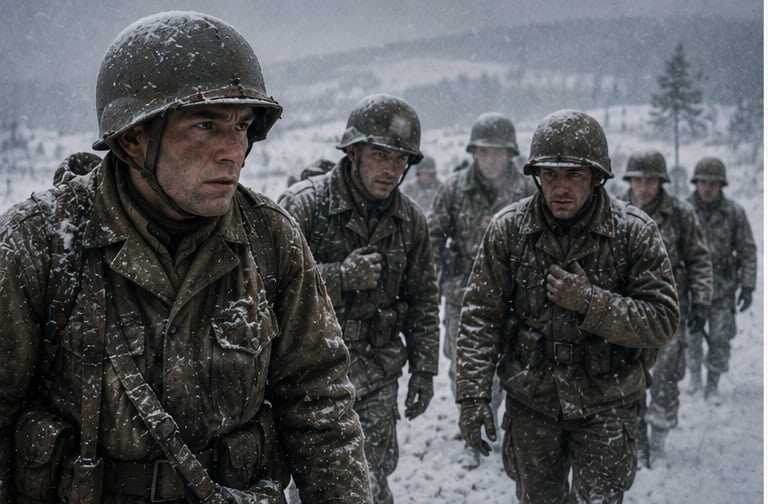
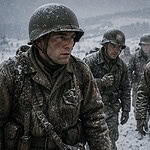
The brutal winter conditions of the Ardennes created a second enemy beyond German gunfire. Many American troops arrived in the sector without adequate cold-weather clothing because Allied planners had not expected a major winter offensive in the region. Soldiers fought through freezing temperatures, snow, ice, and constant dampness while often lacking proper boots, gloves, or insulated gear. Frostbite cases mounted rapidly as temperatures dropped. Some troops spent days in foxholes surrounded by snow while artillery shells exploded through frozen forests overhead. The harsh environment placed enormous physical and psychological strain on both armies and became one of the defining features of the campaign.
Some German Infiltrators Spoke Perfect English
- Key People / Units: German commando teams
- Hidden Reality or Surprise: Fluent infiltrators heightened Allied paranoia and security checks
Several members of the German infiltration teams selected for Operation Greif had spent time in the United States or possessed remarkably strong English-language skills. Their ability to imitate American speech patterns made Allied troops increasingly suspicious of strangers moving through rear areas. Checkpoints multiplied across the front as soldiers began asking unusual verification questions about baseball players, state capitals, or American slang. Even high-ranking officers occasionally found themselves temporarily detained under suspicion of being German infiltrators. While the actual operational damage caused by these commandos remained relatively limited, the fear they generated disrupted movement, communications, and confidence throughout parts of the Allied rear.
The Germans Nearly Captured Vital Bridges Before They Were Destroyed
- Key People / Units: German armored spearheads; Allied engineers
- Hidden Reality or Surprise: Intact river crossings could have accelerated the German advance dramatically
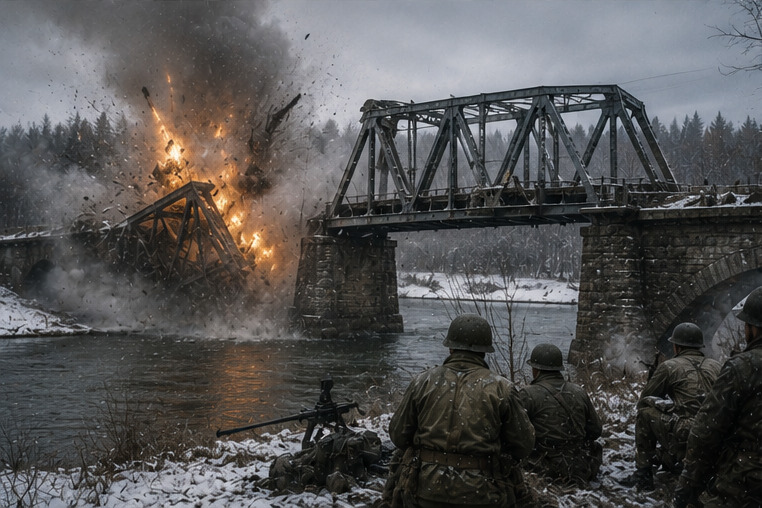
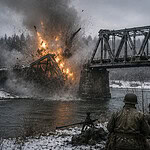
German planners understood that bridges across rivers and canals would be essential to maintaining the pace of the offensive. Speed was everything. Yet Allied engineers and demolition teams managed to destroy several important crossings before German armored spearheads could seize them intact. Every destroyed bridge created delays that rippled across the offensive timetable. Tanks, supply trucks, and artillery became trapped behind bottlenecks while engineers scrambled to construct replacements under dangerous conditions. In a campaign built around rapid movement, even relatively small delays became strategically significant. The battle repeatedly demonstrated how engineering and logistics could influence outcomes just as much as direct combat.
German Traffic Jams Became a Disaster for Their Own Offensive
- Key People / Units: German mechanized columns
- Hidden Reality or Surprise: Narrow forest roads created bottlenecks that slowed armor and supply movement
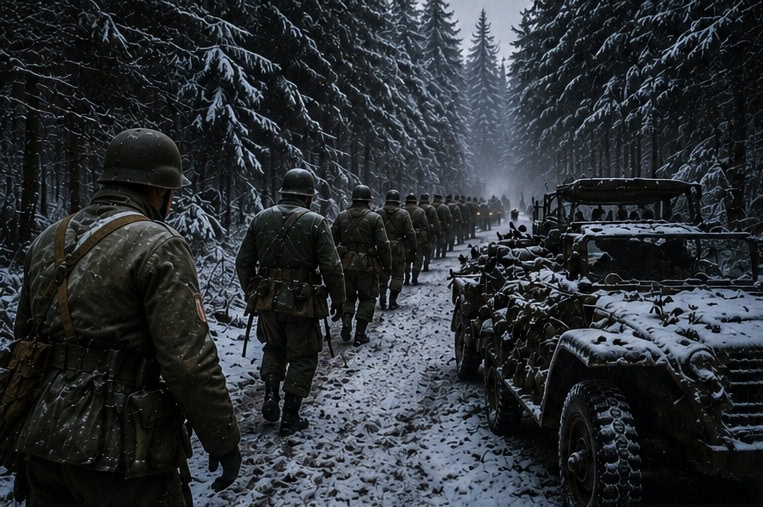
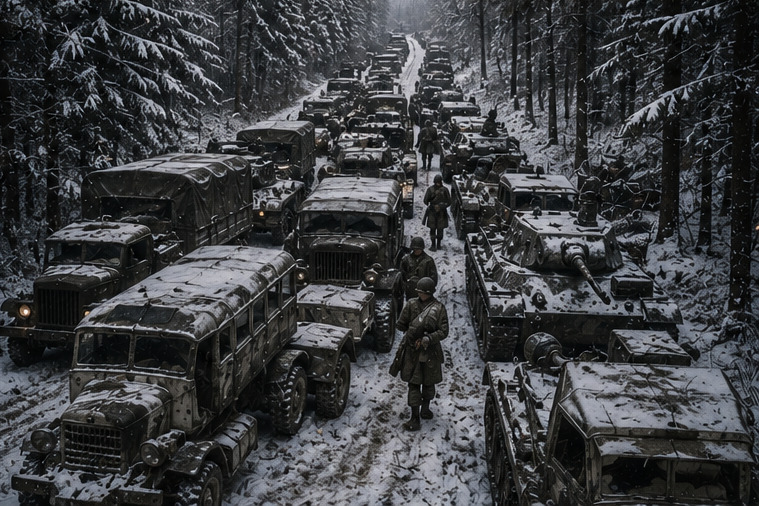
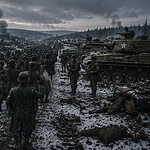
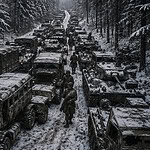
The Ardennes road network was poorly suited for the enormous concentration of German mechanized forces pushing westward. Narrow forest roads quickly became choked with tanks, trucks, horse-drawn wagons, artillery, and fuel convoys all competing for movement through snow and ice. Once the timetable began slipping, the congestion worsened dramatically. Broken vehicles, destroyed bridges, Allied artillery strikes, and stalled armor created massive backups that delayed entire formations for hours or even days. Some German columns became so tightly packed that Allied aircraft later found ideal targets once the weather improved. The offensive increasingly struggled against its own logistical weight.
Allied Artillery Became One of the Most Decisive Weapons of the Battle
- Key People / Units: U.S. artillery formations
- Hidden Reality or Surprise: Massed artillery fire repeatedly broke up German assaults and armored attacks
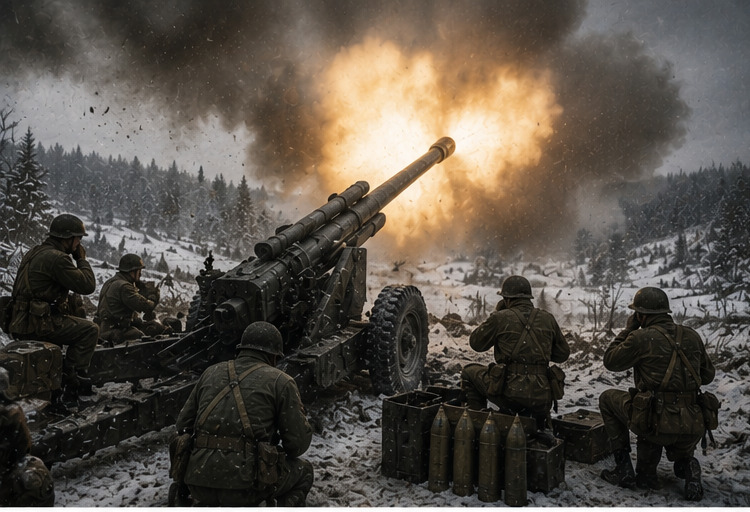
While tanks and infantry dominate many popular depictions of the battle, American artillery played one of the decisive roles in stopping the German advance. By late 1944, U.S. artillery coordination had become highly sophisticated, allowing commanders to rapidly mass fire from multiple batteries onto advancing German formations. Artillery shells repeatedly shattered infantry assaults, disrupted armored attacks, and slowed breakthroughs at critical moments. In several sectors, artillery units continued firing even while enemy troops approached dangerously close to their own positions. During freezing nights across the Ardennes, American artillery became one of the most reliable defensive tools available to exhausted Allied troops struggling to hold collapsing lines.
The Famous ‘Nuts!’ Reply Was Almost Casual
- Key People / Units: Anthony McAuliffe; 101st Airborne Division
- Hidden Reality or Surprise: The response to Germany’s surrender demand became one of the war’s iconic moments
During the encirclement of Bastogne, German commanders delivered a surrender demand to American forces inside the town. Acting commander Anthony McAuliffe reportedly reacted with a single frustrated word: “Nuts!” What began almost as an offhand expression of disbelief quickly transformed into one of the most iconic moments of the European war. The reply was eventually delivered back to the Germans as the official American response. For Allied troops enduring freezing conditions and relentless attacks, the phrase became a symbol of stubborn resistance and morale during one of the campaign’s darkest periods.
Some American Units Were Overrun Before They Understood What Was Happening
- Key People / Units: Frontline U.S. divisions
- Hidden Reality or Surprise: Surprise and confusion gave Germany major early gains in several sectors
Several American frontline units were caught in extremely vulnerable positions during the opening phase of the offensive. Heavy artillery barrages, dense fog, disrupted communications, and the sheer speed of the German assault created confusion across portions of the front. Some isolated units were overwhelmed before they fully understood how massive the attack had become. Others became separated, encircled, or forced into desperate delaying actions against superior armored forces. The first days of the battle revealed how dangerous surprise could still be even late in the war, when many Allied soldiers believed Germany was already nearing collapse.
German Planners Underestimated Allied Recovery Speed
- Key People / Units: German High Command; Dwight D. Eisenhower
- Hidden Reality or Surprise: The Allies reorganized faster than German commanders expected
German planners hoped the initial shock of the offensive would create prolonged paralysis within Allied command structures. Instead, the Allies reorganized with remarkable speed once the scale of the threat became clear. Reinforcements moved rapidly into critical sectors, defensive lines stabilized, and commanders adapted to changing battlefield conditions faster than Germany anticipated. Dwight D. Eisenhower redirected reserves while American units across the theater shifted toward the Ardennes front. Germany’s timetable depended on maintaining momentum before Allied strength could fully concentrate. Once that momentum slowed, the offensive steadily lost its ability to achieve its most ambitious objectives.
The Ardennes Featured Brutal Close-Range Forest Combat
- Key People / Units: American and German infantry formations
- Hidden Reality or Surprise: Dense woods reduced visibility and created chaotic small-unit fighting
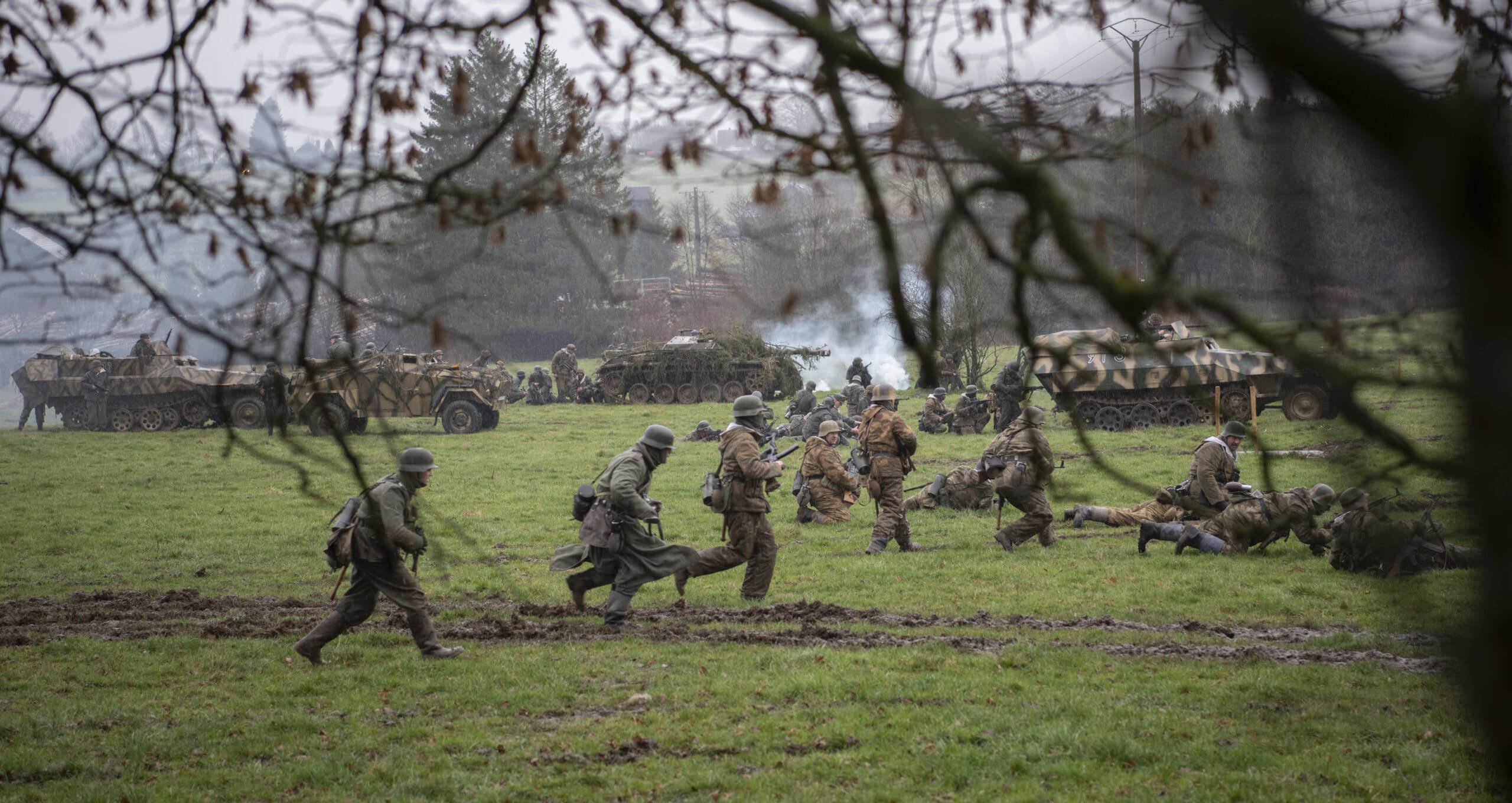
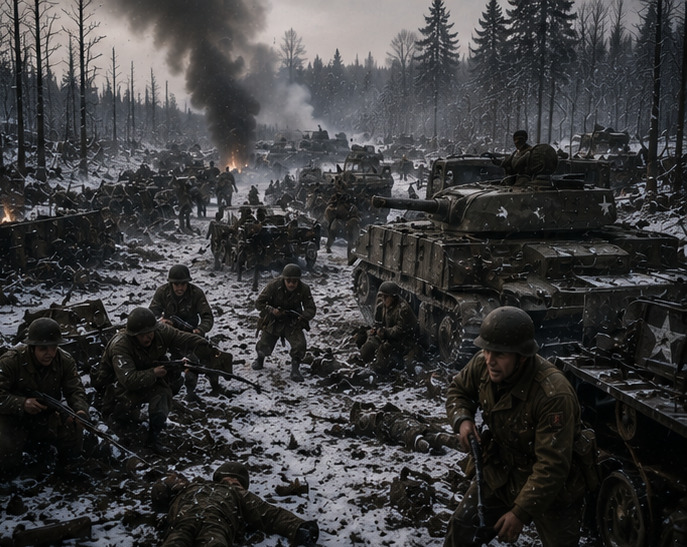
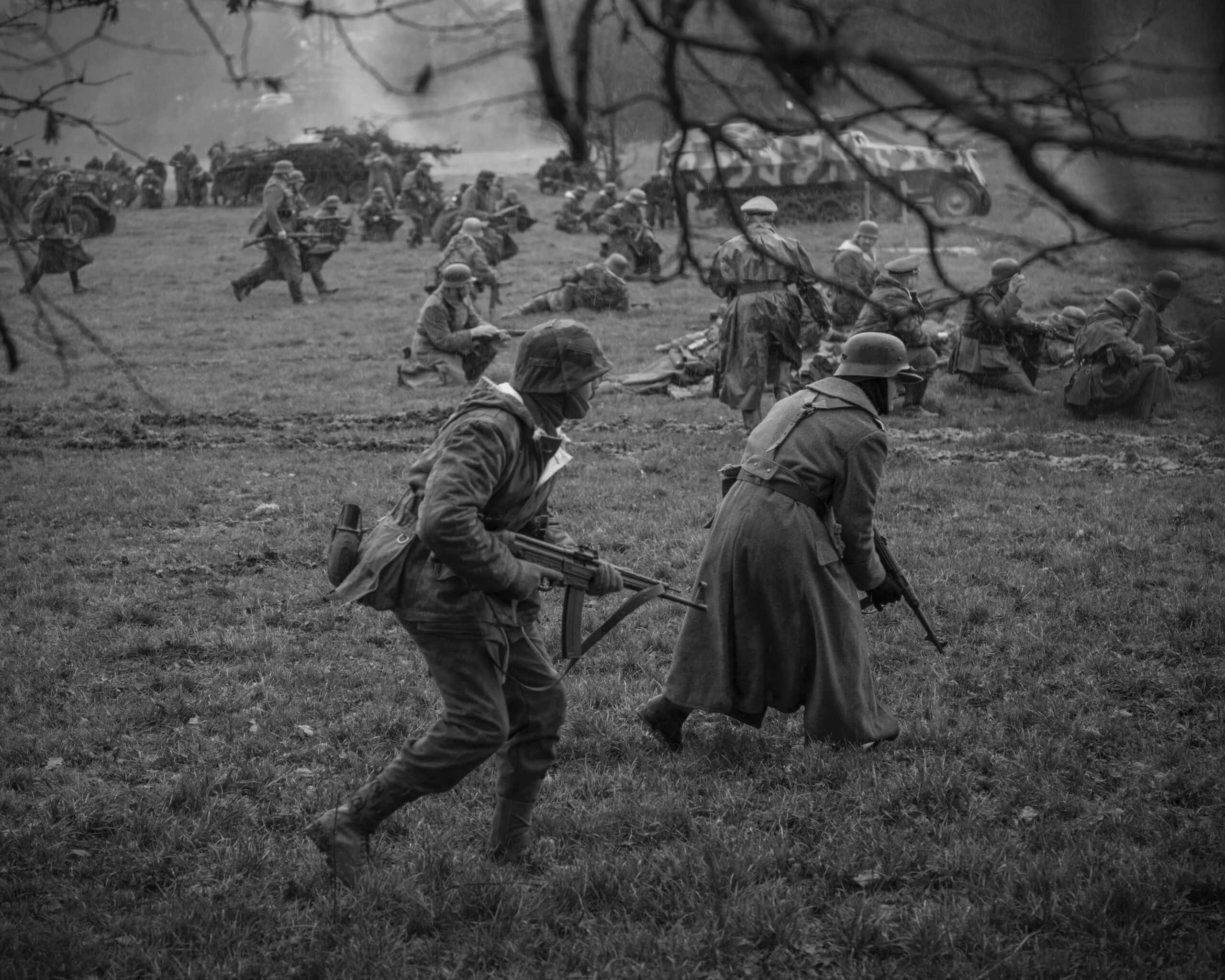
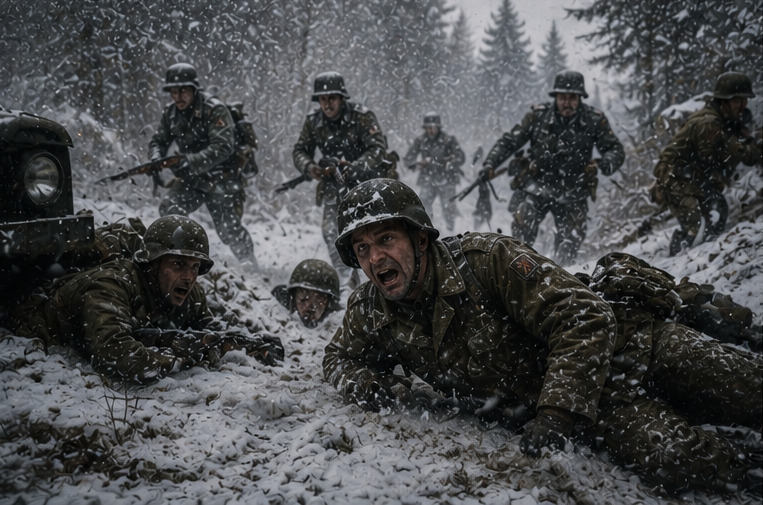
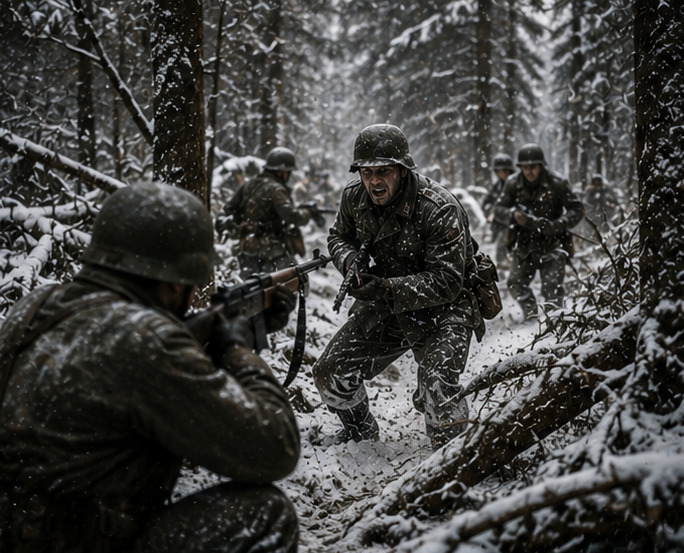
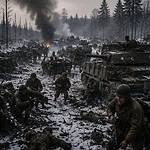
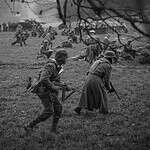
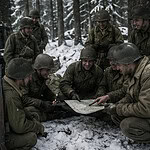
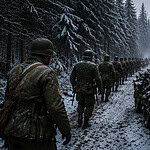
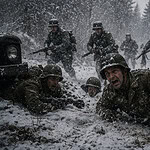
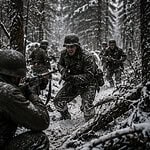
The forests of the Ardennes created terrifying combat conditions for infantry on both sides. Snow-covered trees reduced visibility while fog and smoke further obscured movement. Soldiers often encountered enemy troops at extremely close range with little warning. Artillery bursts shattered trees into deadly splinters that ripped through the woods alongside shell fragments. Patrols became disoriented, units lost contact, and firefights erupted suddenly in dense terrain where command and control became extremely difficult. The battle lacked the open visibility many people associate with armored warfare. Instead, much of the campaign devolved into chaotic and exhausting combat fought through frozen forests under brutal winter conditions.
Civilians Were Trapped in the Middle of the Winter Battlefield
- Key People / Units: Belgian and Luxembourg civilians
- Hidden Reality or Surprise: Entire towns were devastated by artillery, occupation, and displacement
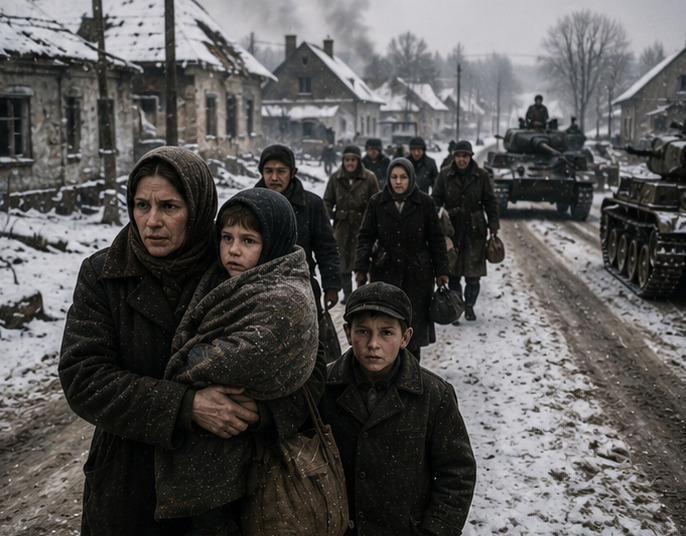
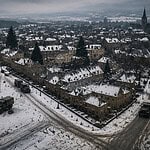
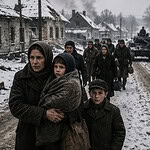
The Battle of the Bulge devastated civilian communities across Belgium and Luxembourg as armies surged through towns and villages during the winter offensive. Families suddenly found themselves trapped between advancing German forces and Allied counterattacks while artillery shells destroyed homes, roads, and infrastructure. Civilians sought shelter in basements, churches, and improvised hiding places while food and medical supplies became increasingly scarce. Some towns changed hands multiple times during the fighting. Although military history often focuses on armored columns and battlefield maneuvers, the campaign also brought enormous suffering to local populations caught directly in the path of one of the war’s final major offensives in Western Europe.
Once the Weather Cleared, Allied Aircraft Changed the Entire Battle
- Key People / Units: Allied tactical air forces
- Hidden Reality or Surprise: Air power devastated German supply lines and exposed armored movements
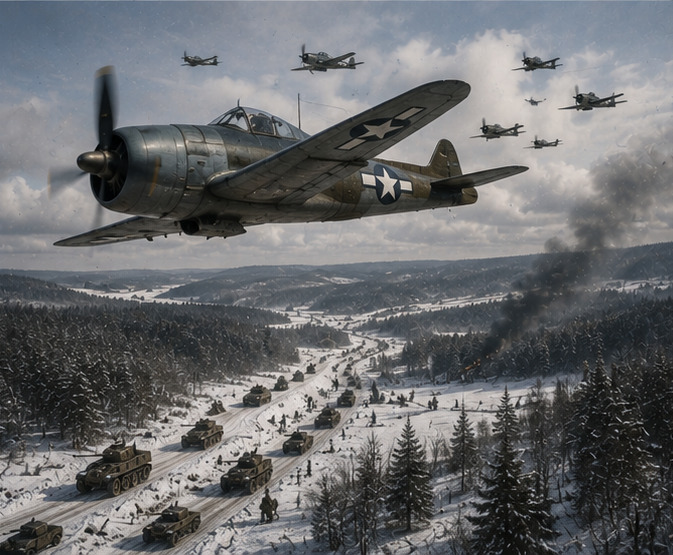
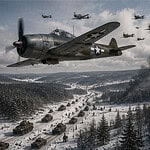
The return of clear weather marked one of the major turning points of the battle. Once clouds lifted and visibility improved, Allied aircraft rapidly returned to the skies over the Ardennes. Fighter-bombers attacked German armor, supply columns, bridges, and troop concentrations across increasingly congested roads. German units that had briefly advanced under storm cover suddenly found themselves exposed to overwhelming Allied airpower. Fuel trucks, reinforcements, and retreating formations became especially vulnerable from above. The reopening of the skies restored one of the Allies’ greatest battlefield advantages and helped accelerate the gradual collapse of the German offensive.
The Battle Crippled Germany’s Remaining Offensive Strength
- Key People / Units: Remaining German reserves
- Hidden Reality or Surprise: The failed offensive consumed elite troops, fuel, tanks, and irreplaceable experience
Although the offensive temporarily shocked Allied forces, Germany ultimately paid an enormous price for the operation. Elite armored units, experienced officers, fuel reserves, tanks, and transport vehicles were lost in quantities Germany could no longer replace by late 1944. Many of the troops committed to the Ardennes represented some of the last reserves available to defend the collapsing Reich. When the offensive failed, Germany emerged strategically weaker than before while the Allies retained far greater industrial and manpower capacity. The Battle of the Bulge became Germany’s final major gamble in the West — and one that accelerated the destruction of its remaining military strength.
The image featured at the top of this post is ©History Computer