
We often view history as a series of grand events guided by an omniscient, unseen force. Ideological movements, devastating wars, and unstoppable natural disasters are all just part and parcel of this sort of historical thinking. Naturally, we assume that some of the largest historical disasters in history were born from equally catastrophic causes.
However, when you dig a little deeper into history, beyond the narratives made for easy consumption, it is a lot messier. Economic collapses, ecological disasters, engineering failures, and even wars have shockingly mundane causes at their core. It could’ve been a skipped line on a checklist, a misplaced zero in calculations, or some utterly banal reason or mistake.
When human error combines with high-stakes environments, it’s like a match to a powder keg. Simple errors can alter the destiny of entire nations. Today, we’re looking at some of the largest historical disasters that were caused by the smallest mistakes you can imagine.
RMS Titanic
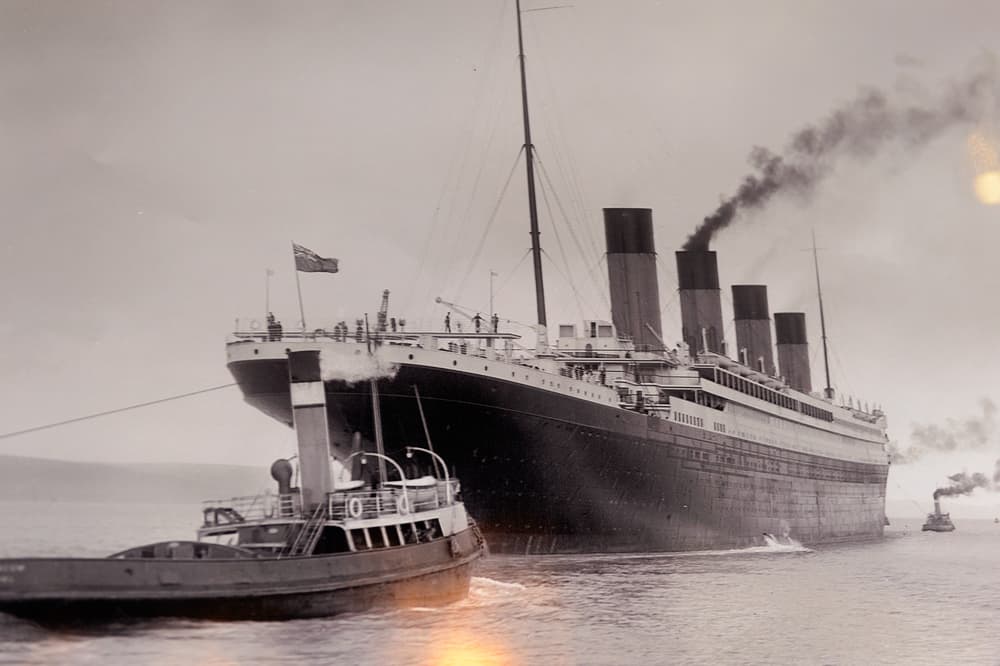
©Robert John Welch (1859-1936), official photographer for Harland & Wolff / public domain – Original / License
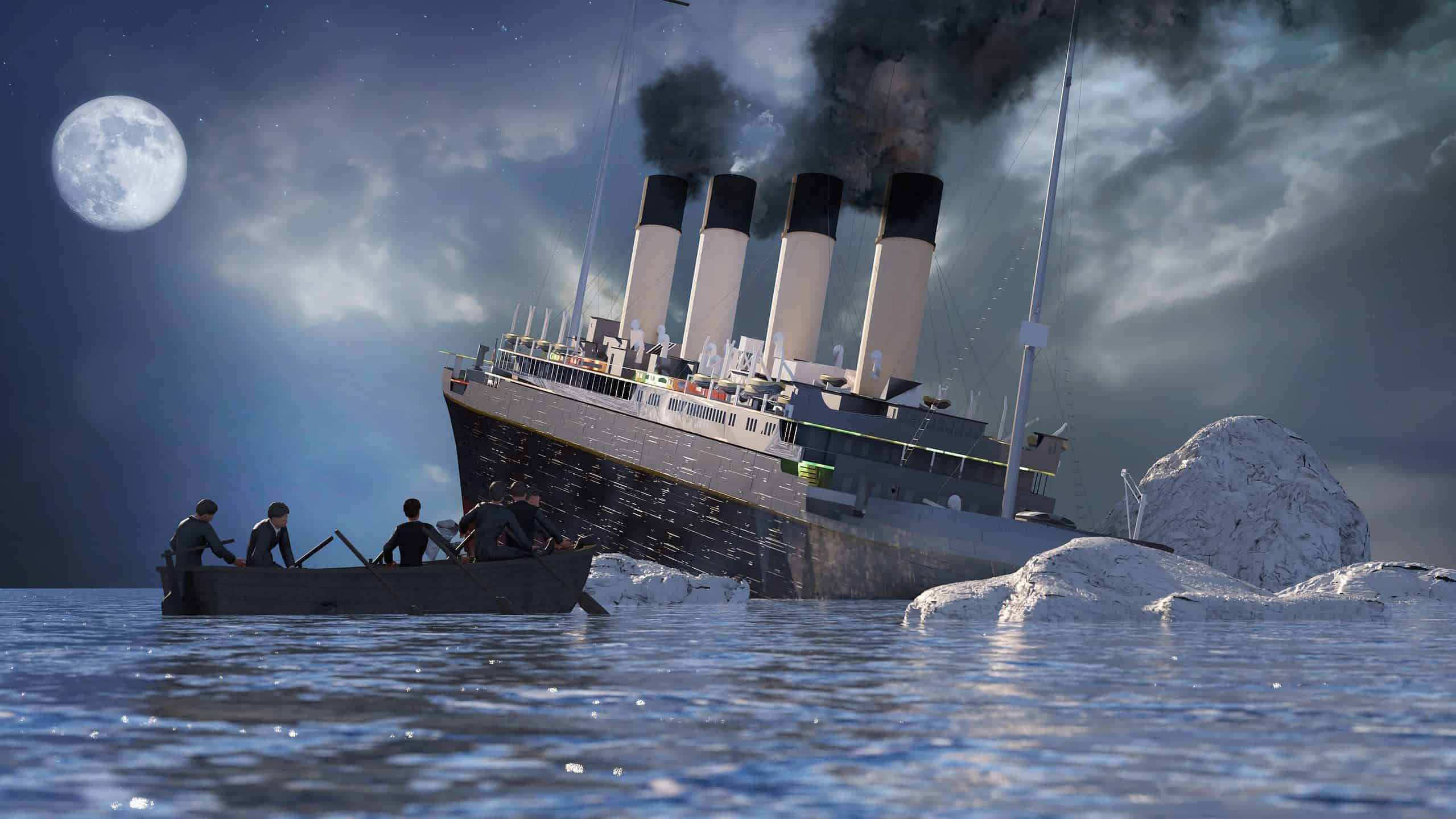
The most famous maritime disaster in human history is the sinking of the RMS Titanic in 1912. Volumes upon volumes have been written about the ship’s speed, the unusual concentration of icebergs in the North Atlantic, and the tragic lack of lifeboats aboard the vessel itself. However, one of the most crucial aspects of this disaster that gets ignored is a misplaced brass lock key.
Just moments before the Titanic set sail on its maiden voyage from Southampton, the White Star Line made some last-minute leadership changes. Second Officer David Blair was removed from the crew roster to make room for more experienced senior officers. In his rush to pack his belongings, Blair accidentally took the key meant for the locker containing the lookout crew’s binoculars.
Without easy access to this key, the lookouts in the crow’s nest, Fred Fleet and Reginald Lee, were forced to rely on their naked eyes to look across the pitch-black ocean during the dead of night. During an official inquiry into the disaster, Fleet testified that if they had access to the binoculars, they would have spotted the iceberg much sooner. The bridge would have had enough time to steer the ship out of the iceberg’s path. A simple pocketed key led to one of the biggest historical disasters of the 20th century.
The Potsdam Conference
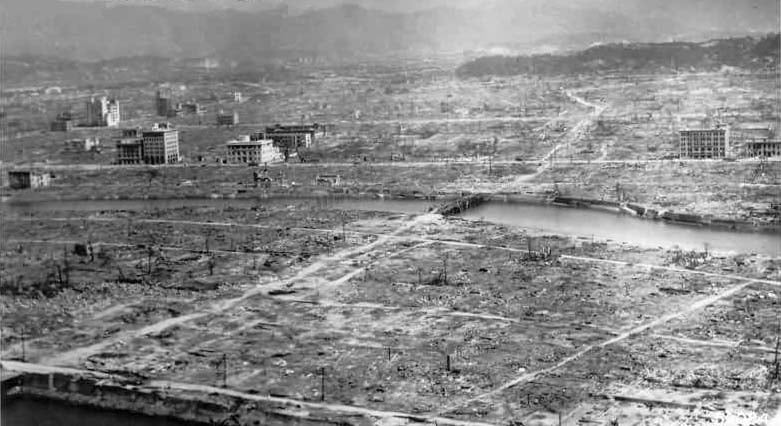
©U.S. Navy Public Affairs Resources Website / https://en.wikipedia.org/wiki/public_domain – Original / License
In July 1945, the only Axis power left in the Second World War was Imperial Japan. Allied leaders issued the Potsdam Declaration, demanding the unconditional surrender of all Imperial Japanese Armed Forces. The ultimatum stated that any alternative for Japan would mean prompt and utter destruction.
When Japanese Prime Minister Kantaro Suzuki was hounded by reporters for an official government response, he used the word “Mokusatsu” to describe the official state stance. The word is nuanced, like much of the Japanese language, and carries multiple interpretations depending on the context. In the statement given by Suzuki, it was intended to convey that his cabinet was withholding comments while they deliberated on the terms. This was essentially a “no comment” or “waiting for further discussion.”
Foreign translators and news agencies rendered “Mokusatsu” using its harshest, most aggressive interpretation. Depending on context, it can mean “to treat with silent contempt” or “to reject out of hand.” International headlines immediately declared that Japan had rejected the Allied peace terms with disdain. American officials concluded that all diplomatic channels were exhausted, which in turn led to the decision to deploy history’s first atomic weapons. Days after the statement, the atomic bombs were dropped on Hiroshima and Nagasaki, a devastating outcome that was the result of a single, mistranslated phrase.
Chornobyl

©Milan Sommer/Shutterstock.com
If any historical disaster is an example of death by a thousand cuts, it has to be the 1986 nuclear explosion at the Chornobyl Power Plant in Ukraine. There was no shortage of administrative and engineering errors that resulted in the explosion. For starters, you have flawed reactor design and lackadaisical safety testing, which ultimately led to the disaster taking place. The biggest single factor we can point to is a basic lack of human communication and accountability.
During routine maintenance on Unit 4, operators were running a test to see if the turbine generator could supply power to the coolant pumps during a power outage. To prepare for the test, technicians made numerous errors. They bypassed safety systems, pulled out nearly all of the control rods, and overlooked numerous feedback warnings.
The final nail in the coffin was one technician failing to adjust the water flow control valve correctly, which allowed a dangerous amount of steam pressure to build rapidly. When the technicians discovered what was happening, they attempted an emergency shutdown by hitting the infamous AZ-5 button. Because of the composition of control rods, namely the graphite tips, and how they increase reactivity for a split second upon insertion, the system exploded. The ultimate cause was not faulty Soviet engineering, but human operators ignoring basic safety procedures out of haste and overconfidence.
Constantinople
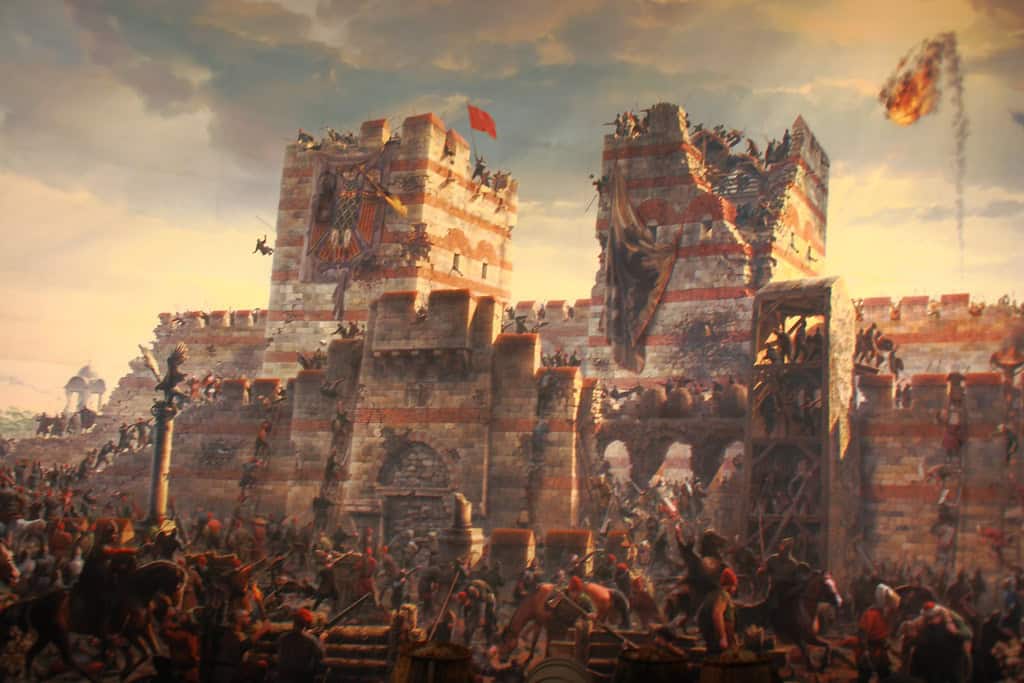
©"Fall of Constantinople 1453" by dmytrok is licensed under BY-ND 2.0. – Original / License
For over a thousand years, the famed Theodosian Walls protected the capital of Byzantium, Constantinople, from foreign invaders. Byzantium was the sole and true successor to the Roman Empire, and endured for over 1,000 years since the final sack of Rome. That all changed in 1453, when the Ottoman Empire and Sultan Mehmed II laid siege to the city with massive cannons and thousands of soldiers. The defenders were vastly outnumbered, but held the line for weeks with the Theodosian Walls as their bulwark.
The breach of the city and its ultimate conquest came down to what can be ascribed to careless human error. A small, secondary postern gate at the base of the outer wall, known as the Kerkoporta, had been used by the defenders to launch quick night skirmishes against the besieging forces. After one of these counter-attacks, someone simply forgot to lock the heavy iron door behind them.
It didn’t take long for the Janissaries to notice the unlocked gate. The door sat slightly ajar. A small group of Ottoman forces slipped through the unlocked door, ascended the interior stairs, and raised their standard atop the inner wall. Seeing the enemy banner so close to their defenses led to mass panic sweeping through the Byzantine ranks. Many of the defenders thought the city was already lost. The defensive line collapsed in short order. Constantinople fell, and the last bastion of Rome went with it.
Conclusion
If there is anything to take away from these historical disasters, it is the simple fact that history is rarely so tidy and clean. Rather than being a massive sweeping event, everything we’ve described today is the result of compounding, small human errors. Despite all that mankind has achieved, from circumnavigating the globe to creating massive gleaming cities, there is still the propensity for mistakes.
Human imperfection is a beautiful thing, but it can lead to profound consequences when they happen in high-stakes environments. History is rarely a straight line, and is even more rarely guided by some calculating mastermind. As we’ve seen in recent years, it is often the result of ordinary people making small, quiet mistakes that can lead to the most profound changes. In some cases, a simple error can change the entire trajectory of a nation’s history.
The image featured at the top of this post is ©Denis---S/Shutterstock.com