
The modern world isn’t an accident, at least when it comes to overall geography. Often, the borders we see on any map were drawn by the edge of a sword or at the end of a rifle. Thousands of battles have been fought throughout human history, changing faces on currency and shifting borders by mere miles, at least usually. There are a few, rare, and decisive battles where the outcome didn’t just see an army defeated, but whole civilizations shattered and new empires rising in the aftermath.
To understand why the world looks the way it does, and why some languages are spoken in areas of the world, we need to look at the turning points where history hung on the fate of a single battle.
Battle of Gaugamela
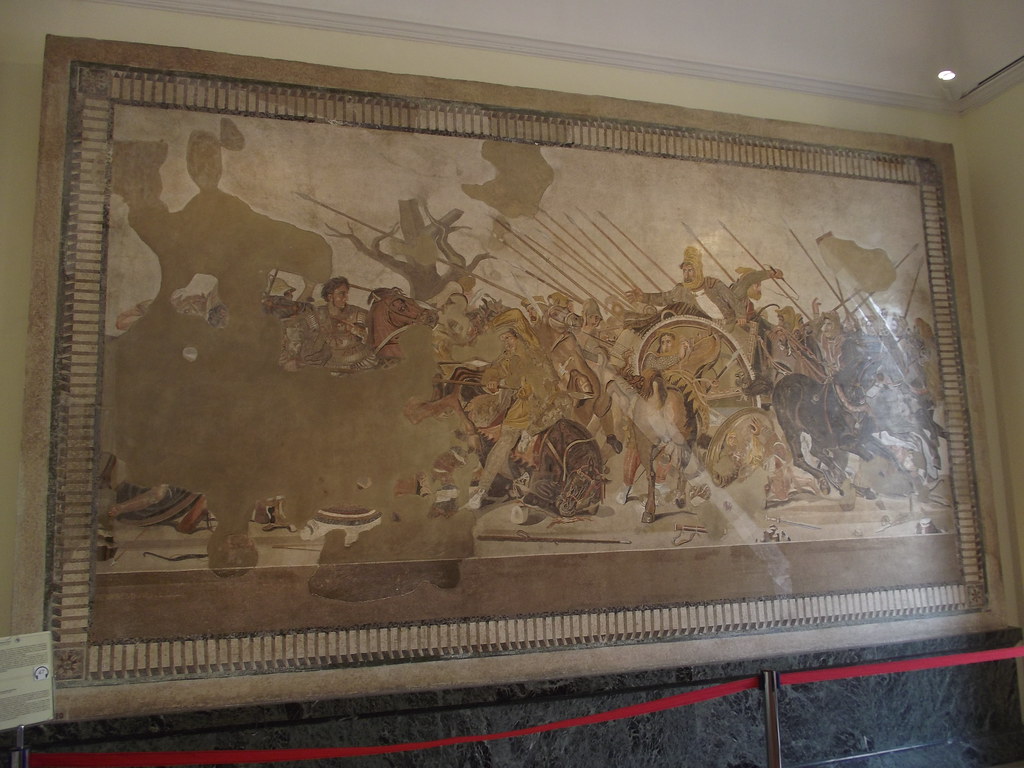
©"National Archaeological Museum of Naples – Mosaics from Pompeii – Battle between Alexander and Darius" by ell brown is licensed under BY 2.0. – Original / License
In the autumn of 331 BC, on a dust-choked plain in what is now modern-day Iraq, the world’s most powerful empires collided. King Darius III of Persia had assembled a massive, multi-ethnic empire that had never been seen, and a sizable army meant to stand against the overt moves of his rival to the west. This imperial army would prove to pale before the nimble, smaller army fielded by the famed Macedonian king, Alexander the Great. Alexander was outmanned, facing down hundreds of scythed chariots and scores of cavalrymen meant to suffocate his forces before they could make an impact.
Alexander responded in his usual audacious manner. Instead of opting for a head-on clash, he marched to the right, drawing Persian cavalry away from the center to mirror his movements. When enough troops were pulled from the center, his forces surged through a critical gap that opened along the Persian lines. Alexander’s forces raged through this opening, aiming directly for Darius III and his retinue. Darius would flee the battlefield, and the Persian empire would collapse in the aftermath.
The Battle of Gaugamela wasn’t just the end of the Achaemenid Persian Empire, but saw the Hellenization of Asia. Greek culture, language, and practices permeated deep into Asia, laying the foundations for the later Silk Road and influencing art as far as India. Greek was the lingua franca of the ancient world for nearly a thousand years, a direct result of the Macedonians’ victory at Gaugamela. A less audacious commander wouldn’t have permanently altered the cultural landscape for thousands of years.
Battle of Yarmouk

©"Khalid ibn Al-Walid Mosque" by Beshr Abdulhadi is licensed under BY 2.0. – Original / License
By the dawn of the 7th century AD, the Byzantines and Sasanians were embroiled in an exhausting war of attrition. Both empires sat exhausted, their coffers depleted and their populations tired of the constant fighting. A new force from the Arabian Peninsula would shatter the status quo, united under the banner of Islam. In the fall of 636 AD, along the Yarmouk River, the Byzantines would meet the Arabs, hoping to sweep them out of the Levant for good.
The Arabs were outnumbered 2 to 1 and were set to receive a massive counter-offensive spearheaded by the Byzantine emperor, Heraclius. The Muslim forces were led by Khalid ibn al-Walid, better known as the Sword of God, and one of history’s most renowned commanders. Six days of brutal fighting in searing heat and blinding dust storms saw Khalid effectively use his cavalry to harass and keep the Byzantines on their toes.
The final day of the battle saw Khalid trap the Byzantines near the cliffs leading to the Yarmouk ravines. Thousands died in the hasty Byzantine retreat, and the imperial army was killed to nearly the last man, or so the story goes. The aftermath of the battle saw Byzantium lose its holdings in the Levant, namely Syria, Palestine, and Egypt. The successor state to Rome was reduced to a regional power, no longer remaining one of the premier powers of the time. In a century, the spread of Islam would go as far as Spain and India, effectively creating the modern cultures of the Middle East and Northern Africa.
Battle of Hastings
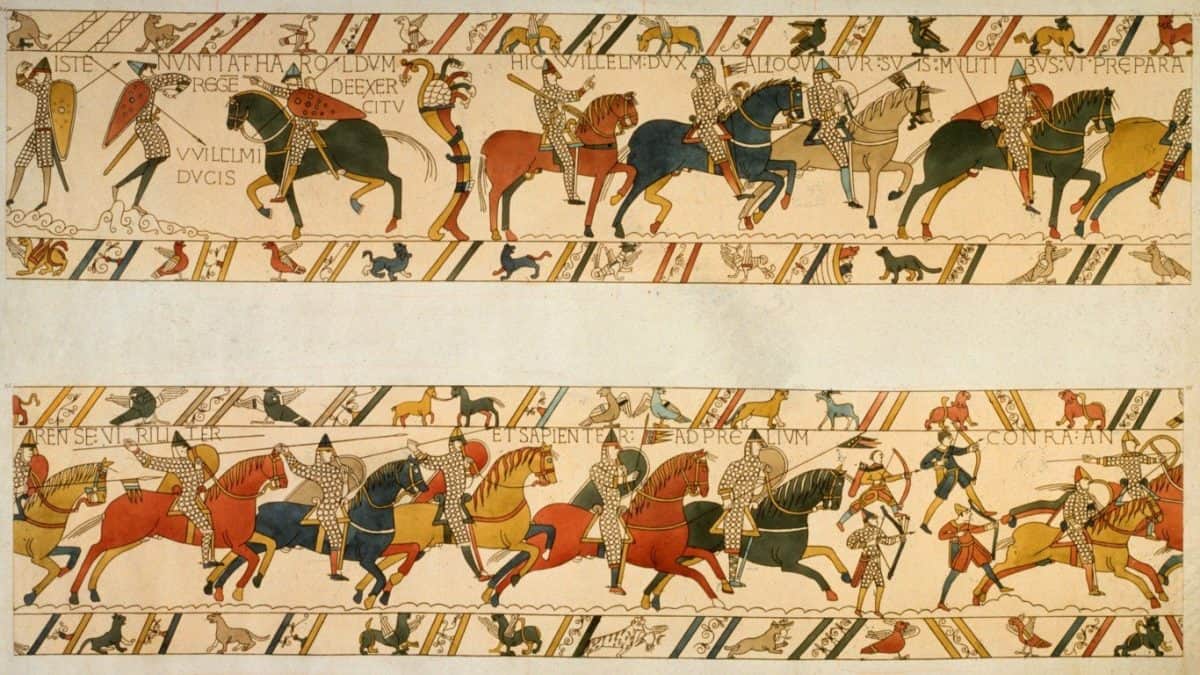
©Hulton Archive / Hulton Archive via Getty Images/ via Getty Images
In the late 11th century, England was facing a succession crisis. On October 14th of the same year, on a ridge just outside of Hastings, King Harold Godwinson’s shield wall stood in defiance against the Normans led by William the Conqueror. Norman cavalry and archers spent hours breaking like waves against the implacable shield wall.
A turning point at the battle occurred when a rumor spread that William had fallen in battle. Portions of the Norman line broke into a retreat, with the whole force threatening to rout. English soldiers gave pursuit, hoping to make short work of the skittish Normans. William was alive and well the whole time and quickly rallied his troops to pursue the English forces. They were slaughtered with ease, as the shield wall no longer offered the same sort of protection. The Norman cavalry was ordered into a series of feigned retreats, with the English shield wall whittled down until it eventually collapsed.
Harold would die in battle, and England would never again be ruled by a Scandinavian. William effectively replaced the entire English aristocracy with French-speaking Normans. This merger of cultures effectively paved the way for the modern English language. Further, the complicated system of land claims and ownership established by the Norman elite would set off countless European conflicts for centuries to come.
Battle of Diu
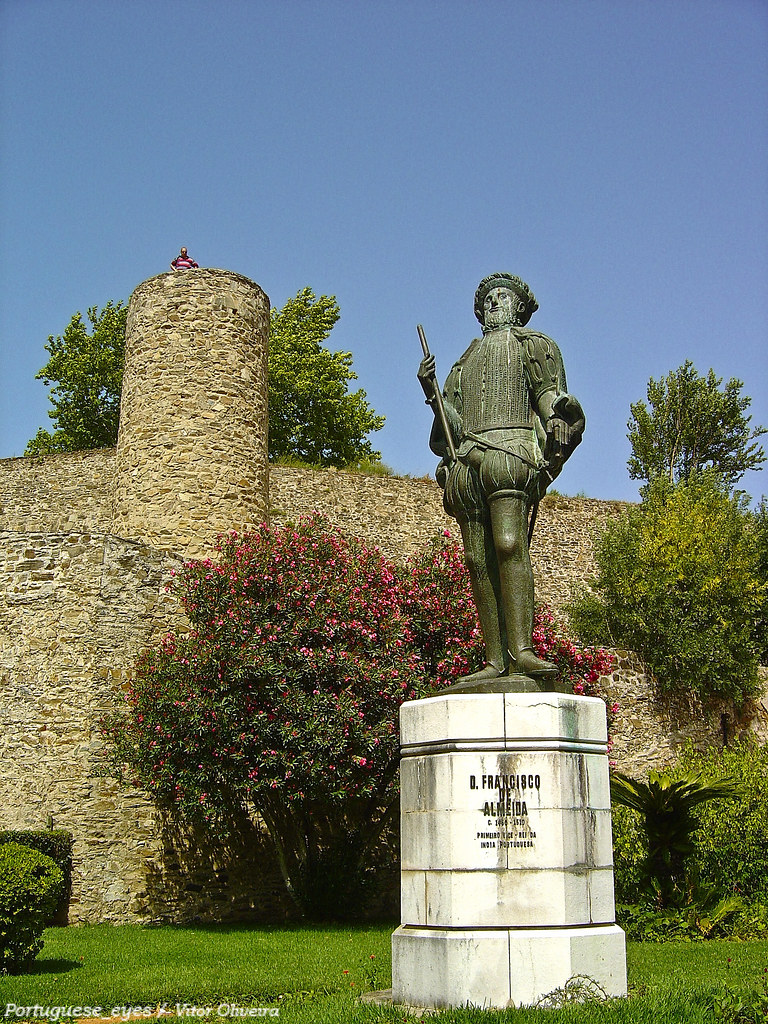
©"Estátua de Dom Francisco de Almeida – Abrantes – Portugal" by Portuguese_eyes is licensed under BY-SA 2.0. – Original / License
At the start of the 16th century, global wealth largely flowed over land along the Silk Road or across the Indian Ocean. These trade networks were dictated by Arab, Venetian, and Ottoman interests, often leading to monopolies that left Europe at a disadvantage. Attempting to bypass the monopoly, like Portugal’s navigation around the southern end of Africa, led to a massive fleet endorsed by the Sultan of Gujarat, the Mamluk Sultanate, and Zamorin of Calicut, which threatened to quash the Portuguese if they dared to try this again.
On February 3, 1509, the two fleets met in the open waters off the coast of Diu, India. The eastern fleet relied on traditional boarding tactics, hoping to capitalize on sheer numbers to overwhelm the Portuguese. Francisco de Almeida, the Portuguese commander, countered by solely relying on his naval artillery to bombard the eastern ships. Portuguese carracks were armed to the teeth, carrying some of the best cannons of the era aboard each ship. The allied fleet had no chance to close the distance and board, often ending up shattered by gunfire.
The direct aftermath of this battle led to 450 years, or well until the Cold War was in swing, where European naval supremacy dictated global geopolitics. Portugal seized control of the Indian Ocean trade routes, devastating the economies of the Ottomans and Venetians alike. A small European nation took on massive empires and came out victorious, setting the tempo for the Imperial Age.
Battle of Yorktown
©Grant Wylie/ via Getty Images
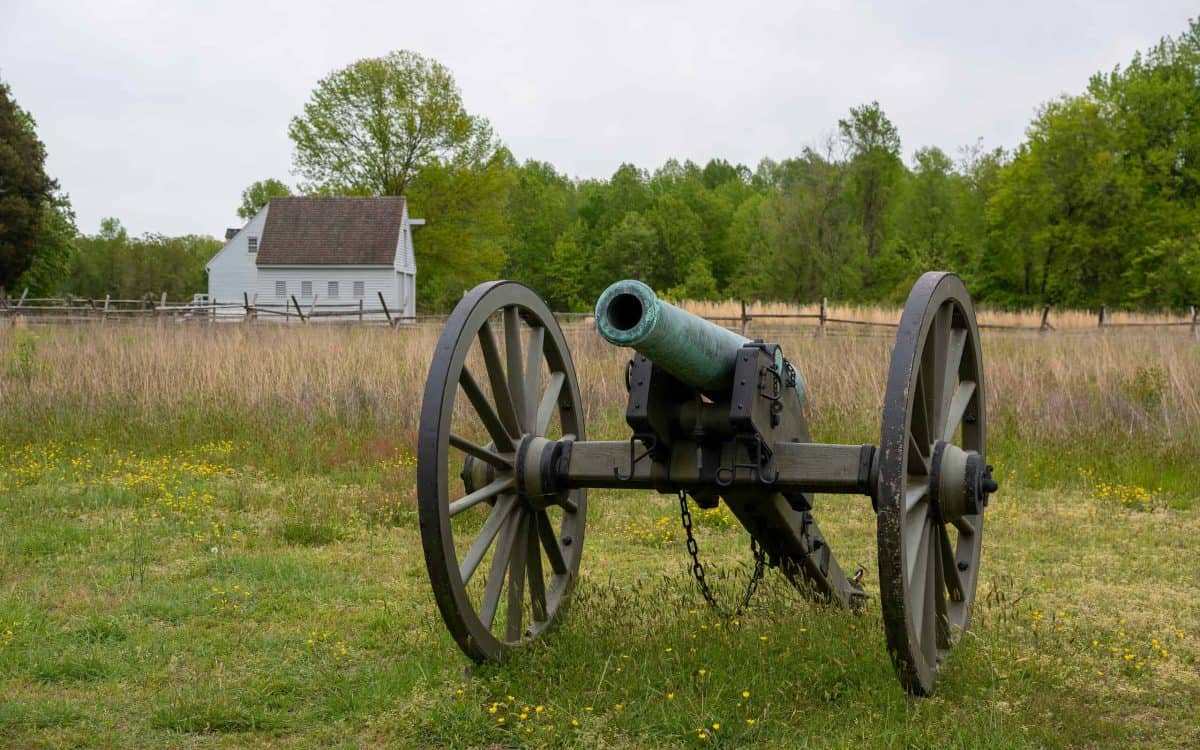
By 1781, the American Revolution had turned into a brutal war of attrition. Neither American nor British forces could gain a definitive edge. General Cornwallis moved his army to the deep-water port of Yorktown, Virginia, fully expecting either evacuation or resupply by the Royal Navy. This would become one of the worst mistakes in Cornwallis’ entire career.
A combined French and American force led by the Comte de Rochambeau and General George Washington rapidly advanced by land to trap Cornwallis’ forces, while a French fleet under Admiral de Grasse’s victory at the Battle of Chesapeake meant no escape or rescue was coming for the British.
The British were subjected to relentless bombardment and a classical siege. Cornwallis would surrender on October 19, 1781, and this defeat would be the straw that broke that camel’s back when it came to the political will of the British parliament. The immediate aftermath of this battle saw a massive shift in the powers that ruled the Western hemisphere. The British no longer had a stranglehold on North America, giving way to what would become the dominant power of the 20th century. Further, the financial strain of supporting the United States would directly lead to the French Revolution in 1789. The last of the old feudal structures of Europe would fall by the wayside with the birth of the American Republic.
Conclusion
If any of these battles changed just a few elements, the modern map would be unrecognizable. We live in a world where the borders were drawn, cultures solidified, and empires were broken over the course of these individual battles.
The image featured at the top of this post is ©Albert Garrido/Shutterstock.com