






Can You Answer These 20 Cold War Questions Most People Miss?
The Cold War lasted for more than four decades. That's enough time for the widely accepted narrative to get detached from reality. Some of this detachment is due to simplification and because of Hollywood. An astonishing number of these distortions also came about due to propaganda efforts by either side, which were never corrected even after the archives were opened to researchers.
In this article, we’re going over twenty questions built around this gap between what most people assume and what the record shows. Can you answer these questions? Most people can’t.
When did the Cold War end?
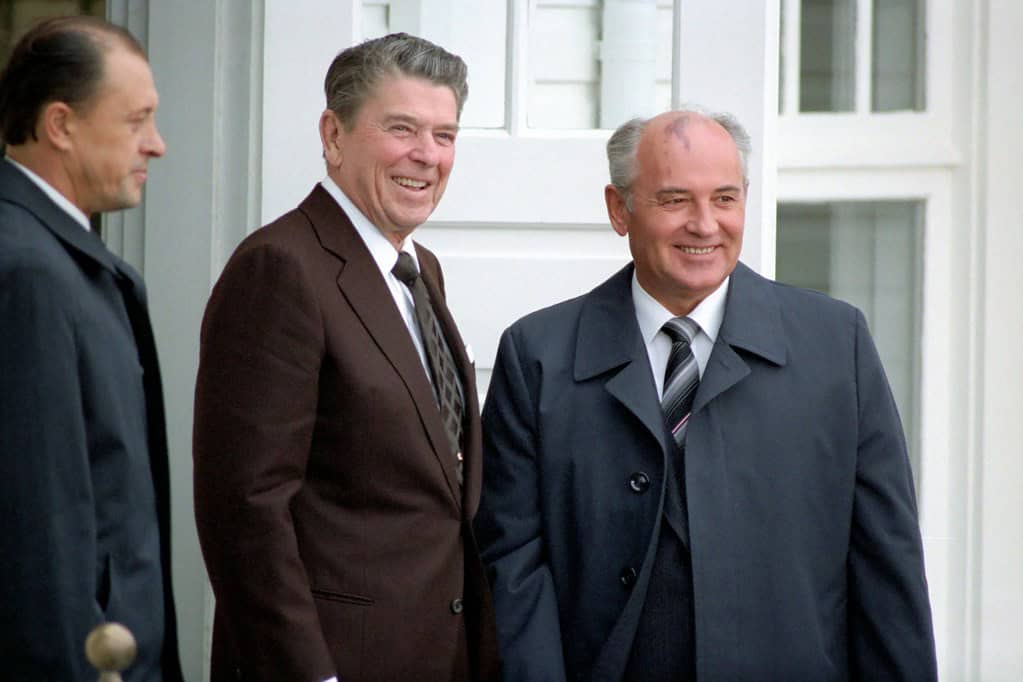
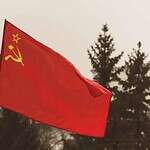
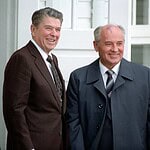
Most people would probably choose 1991, the year that the Soviet Union's red flag was lowered from over the Kremlin for the last time. Historians who experienced the diplomacy dispute this point, because by 1988 and 1989 the US and the USSR had already moved from confrontation to cooperation, which is what they count as the literal end. Reagan himself announced around that time that he did not see the USSR as an "evil empire" anymore. The official dissolution of the Soviet Union happened two years after the war that supposedly defined it was over.
Who won the Cold War?
“The United States” is usually the answer coming out of most people’s mouths. People believe that the U.S. used both military and economic persuasion to win the war. Serious analyses reveal that it was more a matter of a bargain being struck, where the reforms Gorbachev made and a shared willingness to stop bleeding money were more important than any demonstration of power from either side. Gorbachev himself said it was a case of everyone winning, a win-win situation.
Did the United States and the Soviet Union ever fight each other directly?
Never. Despite 40 years of nuclear showdowns and a designation that connotes perpetual readiness to fight, neither American nor Soviet forces ever fought in a real battle against each other. Everything that looked like war, Korea, Vietnam, Afghanistan, Angola, happened through proxies. The two nations capable of destroying civilization never exchanged a single shot.
What was the closest the world came to nuclear war?
Everyone mentions the Cuban Missile Crisis, and rightly so, and most people think the danger ended in October 1962, once Kennedy and Khrushchev stepped back from confrontation. Twenty-one years later, a NATO training exercise called Able Archer 83 was so credible that Soviet leadership briefly saw it as cover for a first strike and started to prepare accordingly. This wasn't common knowledge to Westerners until much later.
Was the Berlin Airlift a purely American operation?
The Airlift is seen as an American rescue of West Berlin. The pictures show that most of the aircraft used were American and the pilots too were Americans. However, the operation involved collaboration between America, Britain and France and lasted for almost eleven months in the air before the Soviet blockade was lifted. Leave out two of the three Allied air forces and you're telling a third of the story.
Did Kennedy call himself a jelly donut in his famous Berlin speech?
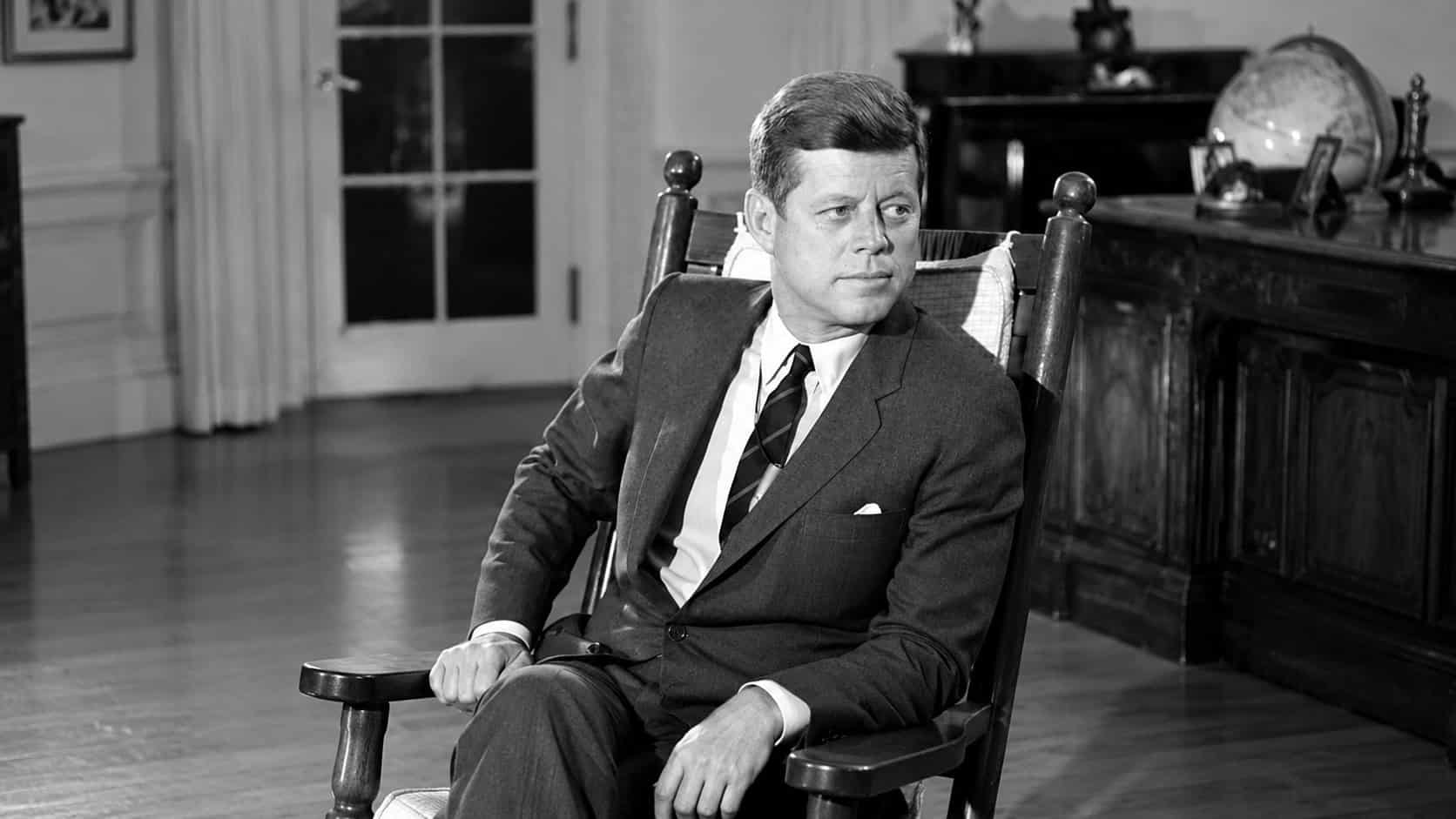
This one will simply not go away. The claim is that Kennedy made an embarrassing grammatical error when he said, "Ich bin ein Berliner," supposedly calling himself a jelly donut instead of declaring solidarity with the city, since "Berliner" is also the German name for the pastry. German linguists have refuted this idea over and over again. The phrasing was correct for the context, and the audience of hundreds of thousands understood exactly what he meant.
Where did the term "Iron Curtain" come from?
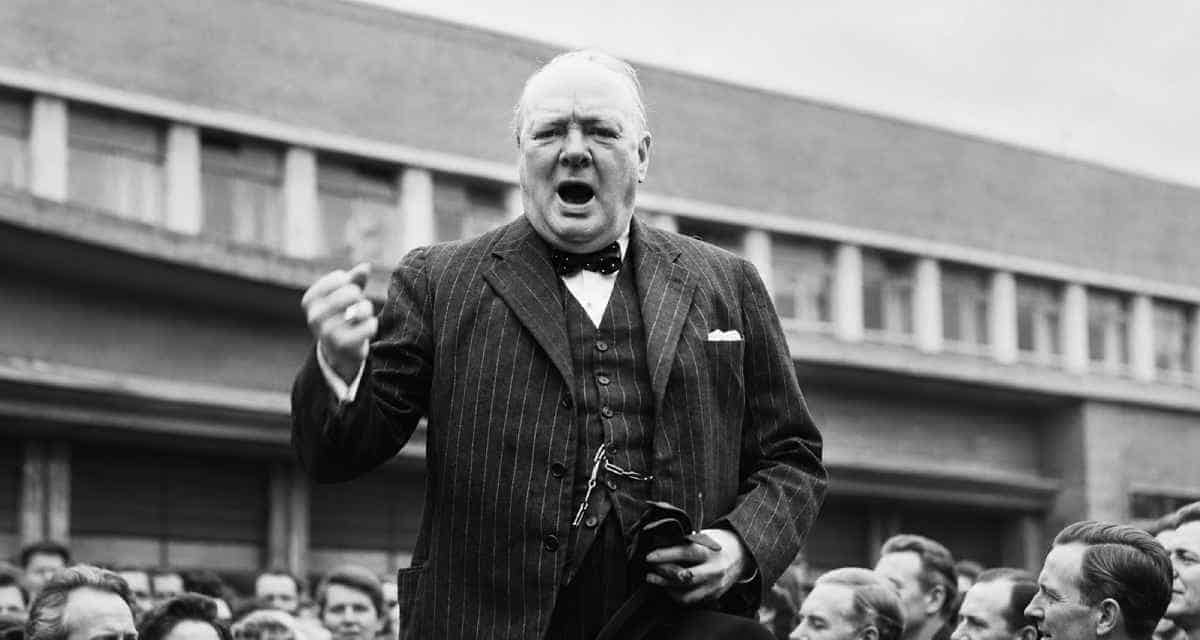
The terminology is pure Cold War language, and no wonder, since it is so frequently employed in describing the whole period. This expression was coined by Churchill in a speech delivered in Missouri in March 1946, almost a year before any timeline of the Cold War begins. The phrase predates the conflict it's now used to summarize.
Did Cold War spies operate entirely in secret, with no formal arrangements between the two sides?
According to popular culture, the Cold War spy is depicted as someone who operates entirely off the record and escapes detection solely through trickery. In contrast to this notion, there was an agreement in which intelligence agents from the US, UK, France, and the Soviet Union worked under the Military Liaison Missions in Germany, allowing a certain number of each side's intelligence agents to operate within the territory of the other. Some Cold War spying was arranged in writing.
Was the US the sole superpower after the Cold War ended?
This was considered a foregone conclusion very quickly in the early 1990s, and it shaped two decades of foreign policy. Jack Matlock, the US ambassador to the Soviet Union until its dissolution, argued that such an assertion never made sense. Not only did Russia possess enough nuclear weapons to end the world several times over, but "superpower" as meaning having the ability to bend other countries to one's will never was as much the case for either Cold War foe as was thought by Washington. Losing a rival isn't the same thing as becoming unstoppable.
Was Russia defeated in the Cold War?
Most people would say Russia lost the Cold War, but Russia itself didn't even exist separately as a participant in that conflict. It was merely a republic within the Soviet Union, and its leadership at the time in 1990-1991 wanted to strengthen ties with the West, not compete with it. The "Russia" people mean when they say it lost the Cold War didn't exist as an independent country until the war was already over.
Was the Cold War one continuous, unbroken standoff from start to finish?
Though viewed by many as one prolonged crisis, there was indeed a thaw in the midst of it. Détente brought about a period wherein the Cold War saw its share of peace, including arm control negotiations and lessened tension from both sides of the spectrum, until the Soviet Union invaded Afghanistan in 1979 and Reagan brought a harder line in the early 1980s. The Cold War had a middle act that gets skipped in most retellings.
Who kept the Cuban Missile Crisis from going nuclear?
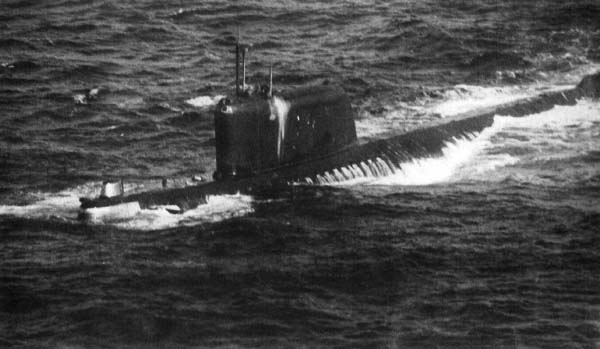
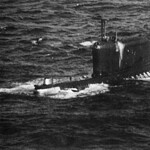
The official story revolves around the give-and-take between Kennedy and Khrushchev until they both conceded. This is just half of the picture. The other half includes a Soviet submarine named B-59, which was cut off from Moscow, running out of oxygen, and was sure war had already started because of the depth charges hitting it. Its commander, Valentin Savitsky, wanted to launch a nuclear torpedo. But he needed the consent of three officers, and one officer, Vasili Arkhipov, said no. The disagreement lasted the better part of an hour before Savitsky backed down. Nobody in the West knew Arkhipov's name until 2002.
Did every Communist country act as one unified bloc against the West?
The Cold War is reduced to a conflict between two camps, capitalism versus communism, with all those in the communist camp presumed to act in unison. But the Chinese and Soviet communists almost waged war on each other in 1969, engaging in clashes along the Ussuri River, where both sides lost lives.
Communists clashed among themselves at various times during the Cold War, sometimes with more vigor than they ever showed against the Western powers.
Was "duck and cover" just useless propaganda?
There's no shortage of ridicule directed at the concept of surviving an atomic bomb strike by ducking under a school desk. When it comes to the megaton warheads of the sixties, the scorn is justified. But, 'duck and cover' worked because it assumed that a nuclear weapon had the power of the WWII vintage bombs possessed by the Soviet Union in the fifties, and offered real protection against falling debris and thermal flash that weren't hitting directly above them. The drill made sense for the threat it was built for. It just didn't age well.
Did Kennedy always see the space race as pure competition with the Soviets?
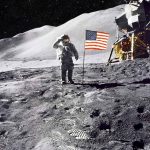
Most people see the Apollo program as an outright competition. But Kennedy had put forth a proposal for a joint US-Soviet lunar mission in his speech at the United Nations in September 1963. He wondered why America and the Soviets needed to duplicate research and costs when they could be working together. He didn't live to see whether the Soviets would have taken the offer seriously.
Did the Korean War start out of nowhere on June 25, 1950?
This is viewed as the sudden opening shot of a war nobody saw coming. Korean historians note that there had already been some level of violence in Korea even years before the attack. Some rebellions had been witnessed where tens of thousands of lives were lost. The North Koreans' move across the 38th parallel was not unexpected by those who had been experiencing it for quite a long time. It was closer to the moment when years of tension finally boiled over.
Was there really a dangerous missile gap between the US and the Soviet Union in 1960?
Kennedy campaigned hard on the claim that the Eisenhower administration had let the Soviets pull ahead in intercontinental ballistic missiles (ICBMs), and it became one of the defining issues of the presidential race of 1960. However, after satellites were able to give a clear image of the Soviet positions in ICBM production, it was found that only four ICBMs were operational with the Soviets, while there were more than a hundred operational ICBMs with the Americans. If there was a gap, it ran in the opposite direction from the one voters were told to worry about.
Was combat a constant, everyday reality for American soldiers in Vietnam?
Hollywood has created an image of near-continuous firefights in the jungle, and it's not an unreasonable image to have absorbed. However, out of the 2.5 million Americans serving in Vietnam, about 75 percent were serving in support and logistic positions far from any action, while those units that were fighting rarely had contact with the enemy more than a few times a month. Most people who served in Vietnam never saw combat at all.
Did the Berlin Wall close off East Berlin from the West?
When people picture the wall, they picture a barrier keeping East Berlin sealed away. The geography runs the other direction: the wall encircled West Berlin, turning it into an isolated Western enclave sitting inside East German territory. West Berliners could move freely within their own zone. It was East Germans on the outside of that ring who were locked in.
Was NASA created as a purely scientific, apolitical agency?
The National Aeronautics and Space Administration (NASA) is now known primarily for its role in advancing science in the present day. But its creation in 1958 was a direct, urgent response to the previous year's Soviet launch of Sputnik. The establishment of NASA by President Eisenhower had an explicitly strategic purpose in mind, specifically to keep the United States from falling further behind in a race with immediate Cold War stakes attached, and not a scientific one.
The image featured at the top of this post is ©Andy.LIU/Shutterstock.com