



10 Tiny Mistakes That Rewrote the Course of History
History books have an uncanny knack for turning random events into moments that feel like they were pushed by the hand of destiny. When we read about empires falling, wars breaking out, or continents being discovered, we somehow assume it was all inevitable because some powerful force brought these events into fruition. But if we dig deeper, we'll find that it was never the case.
In reality, many of the most pivotal events in history were the result of small mistakes. A bureaucrat who didn't read his briefing notes. A soldier who accidentally dropped his helmet. A computer program with a small rounding error. All of these could have been inconsequential. Under certain conditions, however, they turned out to be decisive.
Sometimes it was sheer incompetence or neglect. Other times, someone acted in good faith by following a routine procedure. Whatever the reason, these small mistakes changed the course of history. Life would have been very different if someone hadn’t screw up somewhere along the way.
Columbus Mixes Up His Miles (1492)
Christopher Columbus is remembered as a bold visionary who had just enough luck to change the world. What we don’t usually talk about is that he was also wrong about almost every number that mattered, and that is precisely why he made it across the Atlantic.
The calculation that made Columbus's voyage possible was a unit conversion error. Columbus calculated the circumference of the earth from the estimations of the 9th-century geographer Al-Farghani. In his estimations, Al-Farghani claimed that one degree of latitude consisted of 56.67 miles. Eratosthenes had already calculated the correct figure around 200 BCE. However, the figure used by Al-Farghani was attractive to Columbus as it brought Asia closer to Europe. This calculation included the use of the Arabic mile (about 7,091 feet) in measurements, while Columbus used the Roman mile (about 4,856 feet).
The result was a world roughly 25% smaller than the one we live in, and an Asia that appeared to sit conveniently off the coast of Northern Africa rather than 12,000 miles away. No Spanish monarch in his right mind would have financed a voyage across 12,000 miles of open ocean. Columbus got funding because his bad math made the journey look survivable.
He was wrong about the direction, about the distance, and even about what he actually found when he finally reached land. It turned out to be the most consequential voyage in recorded history. It’s one of those moments when you’re so wrong that you’re actually right.
A Dropped Helmet Ends an Empire (547 BCE)
Cyrus the Great, founder of the Persian Empire, had been laying siege to Sardis, the fortified capital of Croesus, King of Lydia, for roughly two weeks with nothing to show for it. The walls of the city were steep, and the natural landscape was too difficult to attack. Then, according to ancient accounts, a member of Croesus's own military showed Cyrus the way in.
A Lydian guard dropped his helmet off the city wall and, rather than abandon it, climbed down the cliff face to retrieve it. A Persian soldier watching from a distance saw the route. During the night a small Persian unit scaled that very path, and found that part of the wall undefended. Croesus had thought it was impossible for the attackers to climb the wall so he didn’t place any guards there. Cyrus’ troops unlocked the gate of Sardis and conquered the city.
Croesus, one of the wealthiest rulers of his time, became a captive, and his kingdom became part of the Achaemenid Empire. A kingdom that had withstood the assault of Cyrus's full might was taken because one man went back for his helmet. Maybe he thought that it would come out of his paycheck.
The Vasa Sinks One Mile Into Its Maiden Voyage (1628)
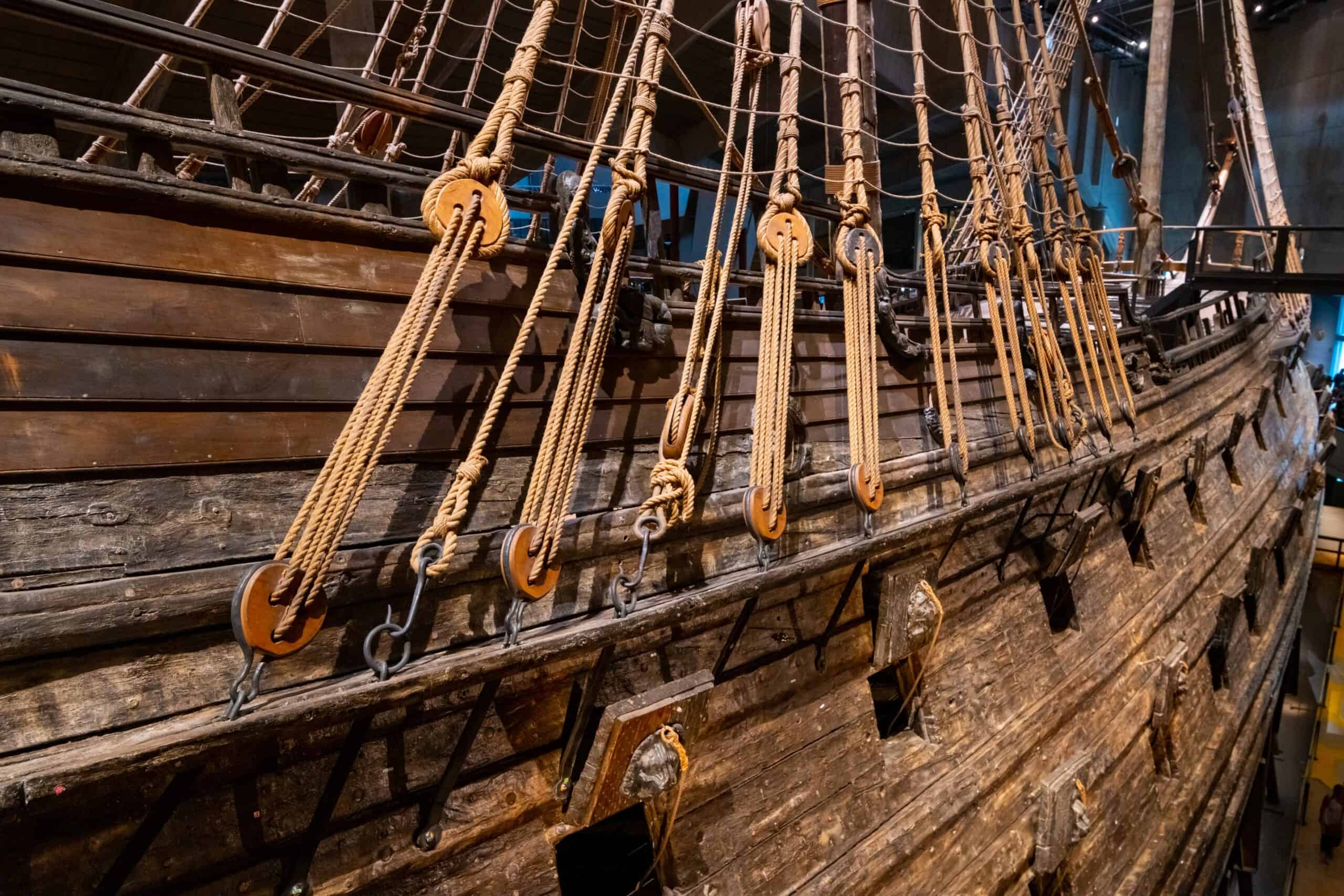
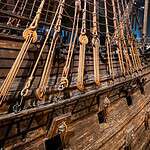
The Vasa warship of Sweden was one of the greatest military ships in the Baltic Sea, equipped with sixty-four bronze cannons. It was a sight to behold, complete with elaborate royal carvings. Built under direct orders from King Gustav II Adolf, it was meant to project Swedish power during the Thirty Years' War. The warship was launched into Stockholm harbor on August 10, 1628. It sank twenty minutes later, less than a mile out, while the whole city watched.
The disaster stemmed from an error in measurements in the hull. The Swedish and Dutch carpenters had used different ruler standards when building different parts of the ship, making it unbalanced. In fact, there was a stability test that revealed just how fragile the ship was. It had to be stopped when thirty people running on the deck caused the ship to list dangerously.
They all knew something terrible was about to happen. Nobody told the king. When a gust of wind caught the Vasa, the lower gun ports dipped below the waterline, and water came pouring in. The most powerful warship in the Baltic sank like a rock in less than half an hour.
Captain Nolan's Wave Sends 670 Men Into a Valley of Guns (1854)
At the Battle of Balaclava, Lord Raglan's hilltop position allowed him to see that Russian forces were hauling away captured British artillery. He ordered his cavalry to advance and recover the guns. The problem was the word "guns." Lord Lucan, commanding that same cavalry from the valley below, could not see the Causeway Heights where that artillery was. From his position, the only guns visible were a heavily fortified Russian battery at the far end of the North Valley. When Raglan said "the guns," and when Lucan heard it, they both had completely different targets in mind.
Lucan even called upon Captain Louis Nolan to explain which guns Lord Raglan wanted. Nolan, impatient and openly contemptuous of Lucan, responded with a broad sweep of his arm towards the end of the valley. No one will ever know why he did so because he died within minutes. Lucan assumed that he had seen something at the end of the valley and ordered a charge against the Russian battery. Of the roughly 670 horsemen in the charge, more than 260 were either killed or wounded, and the charge itself achieved nothing. The charge became one of the most infamous military blunders in British history.
Fleming Gets Penicillin (1928)
Alexander Fleming was on a two-week vacation in August 1928 when he left his bacteriology lab at St. Mary's Hospital in London. He forgot to clean his petri dishes and when he came back, he noticed that the dirty petri dish had some sort of mold growth. All the bacteria around the dish were dead. The mold was identified as Penicillium notatum.
He wrote up his results in 1929, but it took Howard Florey and Ernst Boris Chain at Oxford another decade to convert penicillin from a promising result into a drug that worked, and by the end of World War II, penicillin was produced in massive quantities. Millions upon millions of lives have been saved because of this discovery, and all because a lab bench wasn't cleaned before the summer break. Turns out that Fleming did more for humanity while on vacation than most of us could ever hope to accomplish in a lifetime of work.
Franz Ferdinand's Driver Takes a Wrong Turn (1914)
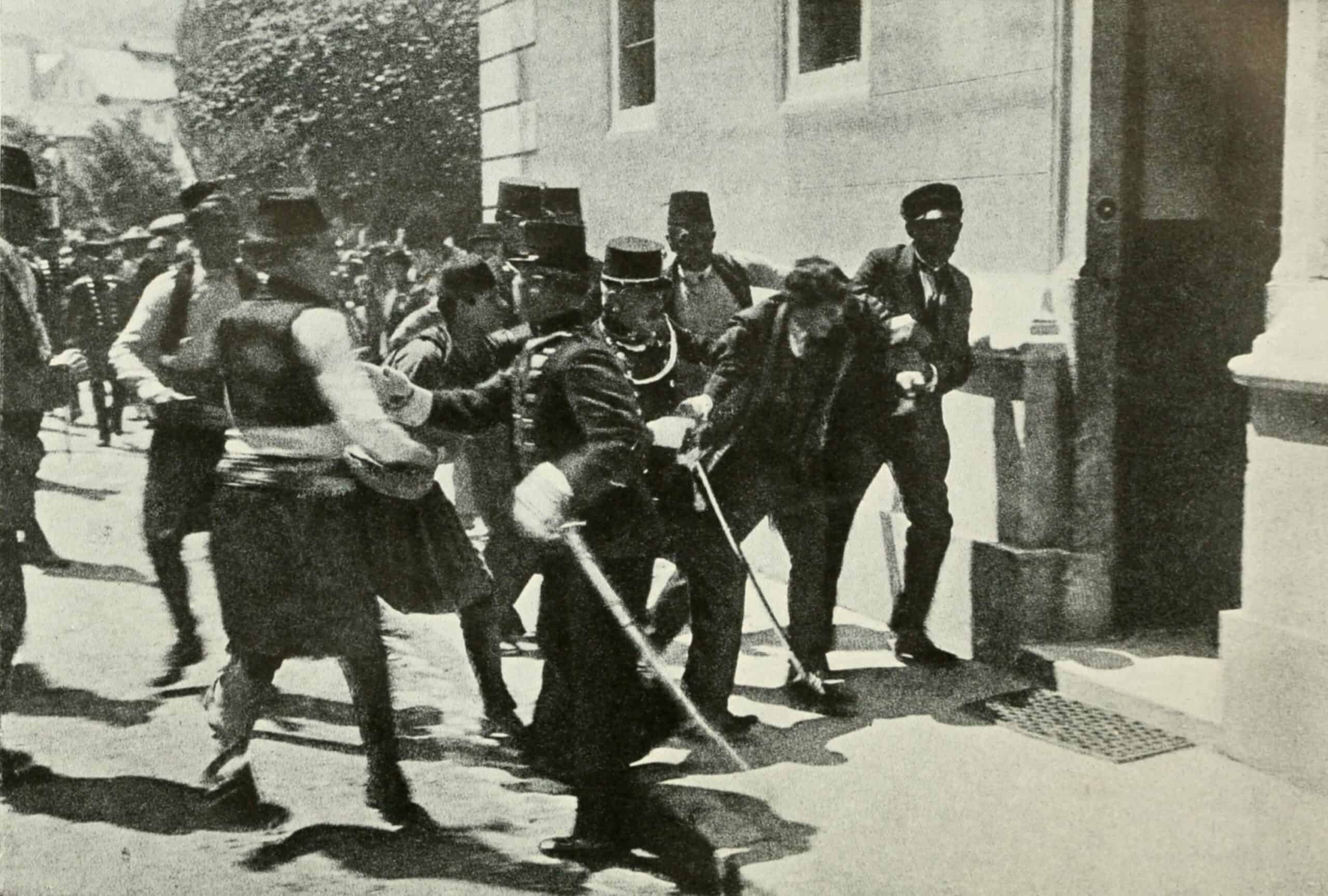
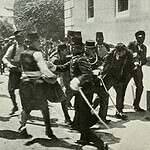
On June 28, 1914, Archduke Franz Ferdinand, who was set to take the throne of Austria-Hungary, survived the first attempt on his life. A bomb was thrown at his motorcade, bounced off the car, and exploded under another vehicle. The initial plot was unsuccessful, but one of the conspirators, Gavrilo Princip, had positioned himself outside Schiller's Delicatessen on the original planned route and waited.
The motorcade proceeded to the town hall for a scheduled visit. Afterward, the Archduke decided to visit the victims who were injured in the first attempt on his life. The chauffeur, Leopold Lojka, was not informed about the detour. He made a right turn onto Franz Josef Street, which was part of the planned route, and was corrected mid-turn. The chauffeur stopped and reversed. The car stalled right in front of the Schiller Delicatessen, where Gavrilo Princip was waiting less than five feet away.
Princip shot twice and the Archduke and his wife Sophie were dead within an hour after the shots. The assassination triggered the alliance system that pulled most of Europe into the First World War. To be fair, nobody told the chauffeur about the detour. Princip got lucky, Europe not so much.
Stalin's Refusal to Read His Intelligence Reports (1941)
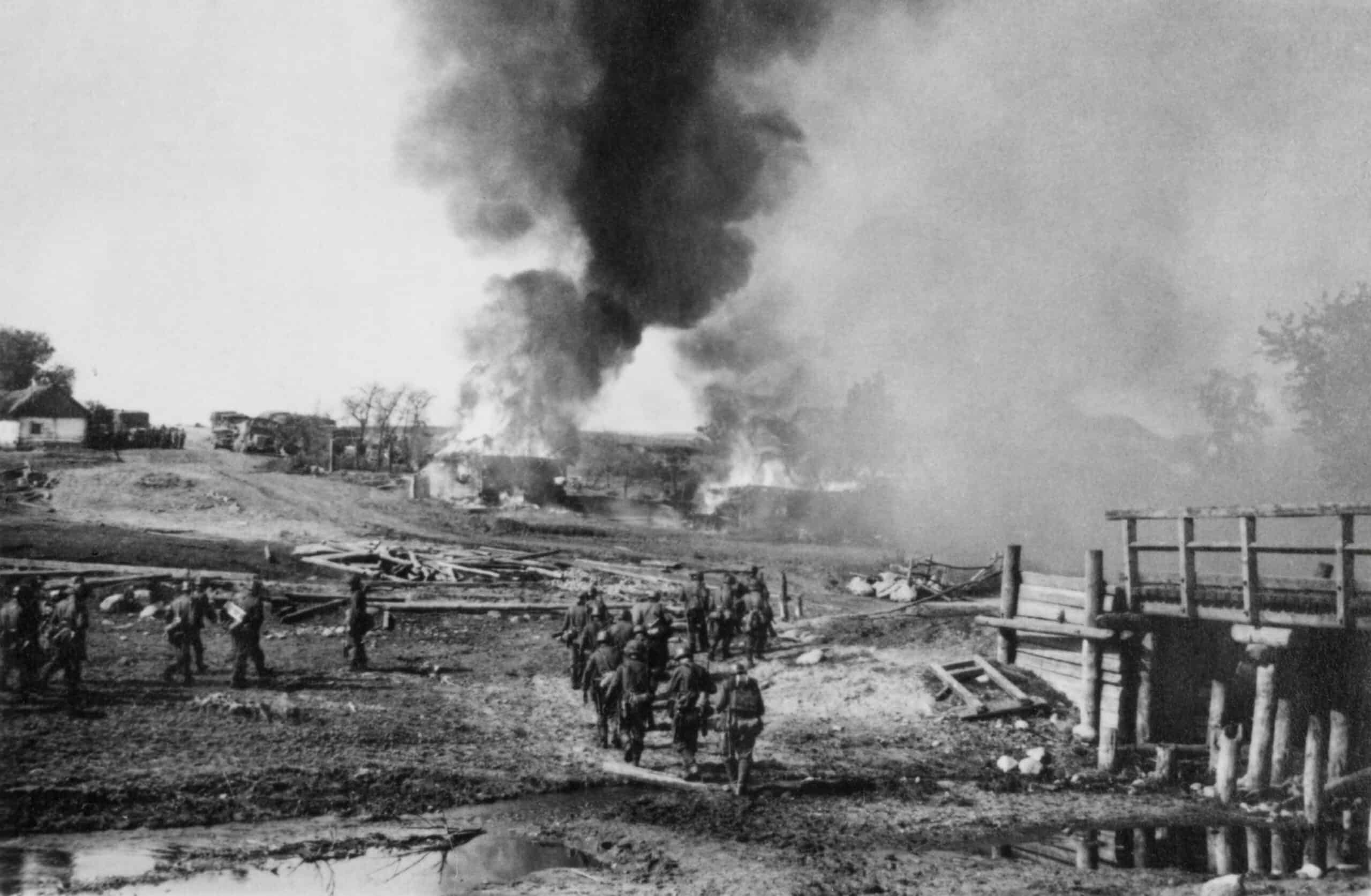
Operation Barbarossa was not a surprise to anyone except Stalin. British intelligence warned him. His own network warned him. Richard Sorge, one of the most effective spies of the 20th century, told Moscow the exact date of the invasion months before it happened. But Stalin ignored all warnings. He believed the rumors were a way to manipulate him and the Soviets into taking part in the war waged against Germany. Stalin even warned that agents spreading these claims would be investigated.
On June 22, 1941, when German troops crossed the border, Soviet soldiers were not ready for combat. The intelligence worked as it was supposed to, but Stalin decided not to listen to it. That decision had devastating consequences for the USSR at the start of the war. Consequences that could have been largely prevented if the soldiers had been instructed to prepare for the invasion. The data existed. Stalin had it. He threw it in the bin.
A Rounding Error Kills 28 American Soldiers (1991)
On February 25, 1991, the Patriot missile battery at Dhahran, Saudi Arabia, failed to intercept an incoming Iraqi Scud. The Scud hit a US Army barracks, killing 28 soldiers. The Patriot was sophisticated, a purpose-built missile defense system. But it failed because of an arithmetic problem a first-year programmer would easily recognize.
The system's internal clock tracked time in tenths of a second, but the conversion from integer to decimal introduced a small rounding error. Small errors compound, and after more than 100 hours of continuous operation, the accumulated drift was large enough that the system was searching for the incoming missile in the wrong part of the sky. The missile was incoming, but the system classified it as a false alarm and stood down. In spite of all efforts, the updated software reached Dhahran only one day later. A fractional arithmetic error, repeated often enough, became a blind spot wide enough for a ballistic missile to pass through.
Günter Schabowski Brings Down the Berlin Wall (1989)
During the late hours of November 9th, 1989, East German Politburo spokesperson Günter Schabowski attended a press conference and pulled out a document he had been handed just before entering the room. He had not read it. The document outlined new travel regulations allowing East Germans to apply for exit visas, intended to take effect the next morning after border police had been briefed.
When an Italian journalist, Riccardo Ehrman, asked when the new regulations would apply, Schabowski looked down at the undated paper and improvised: "As far as I know, immediately, without delay." When another journalist asked about West Berlin, especially, Schabowski had nothing much to say.
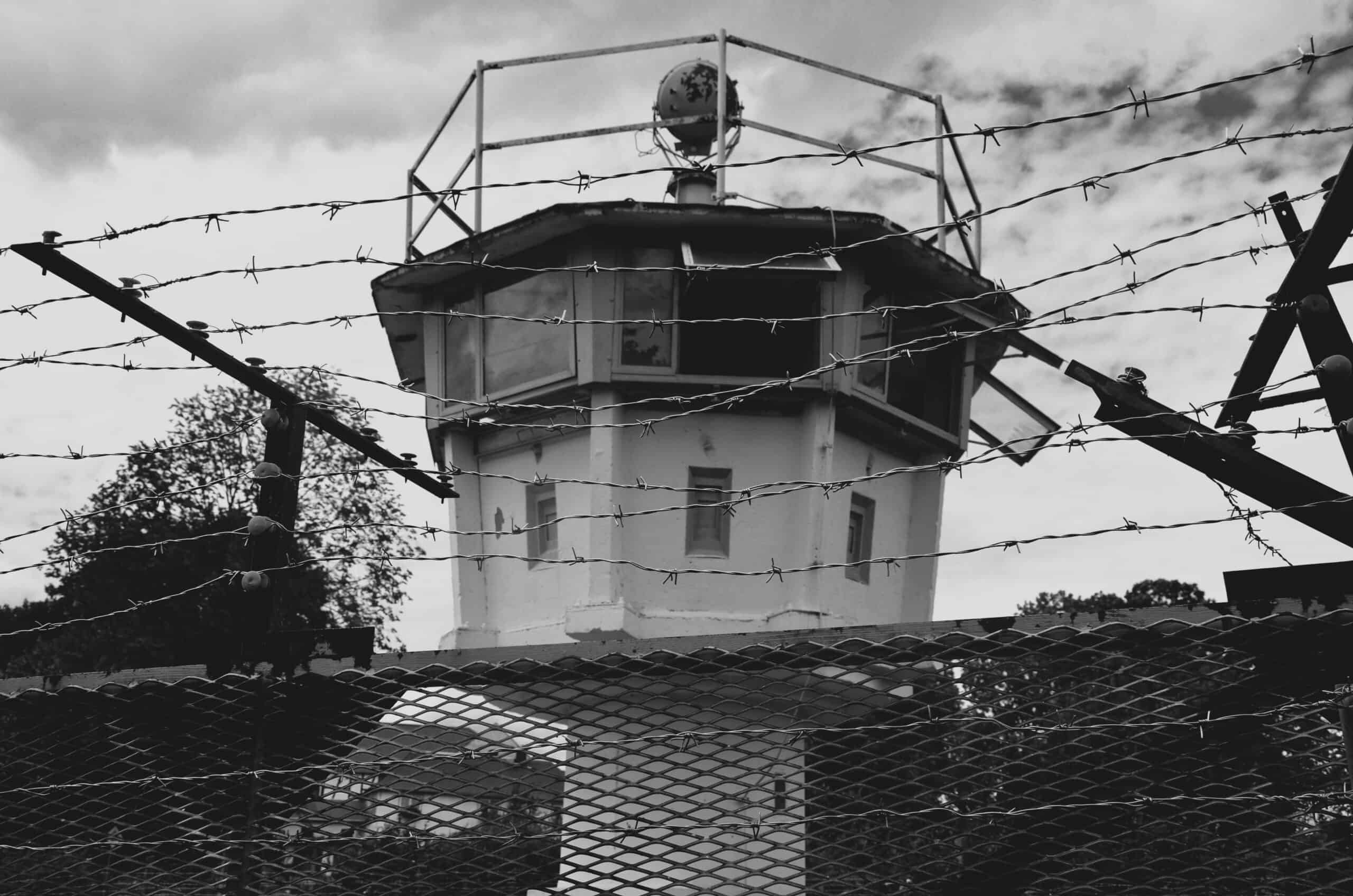
The press conference ended, and the footage aired on West German television within an hour. East Berliners flocked to the border crossings in thousands to pass over to West Germany. The border guards, who were unaware of what had just happened, stood down and let the crowds pass through. The wall that had divided the city for 28 years opened because a bureaucrat received a briefing document on his way to a press conference and decided it could wait.
Stanislav Petrov Doesn't Press the Button (1983)
Shortly after midnight on September 26, 1983, the early-warning satellite network of the Soviet Union detected five missiles being fired from America toward the USSR. This warning received the maximum confidence rating. According to protocol, Lieutenant Colonel Stanislav Petrov, then working as duty officer at the Serpukhov-15 command center outside Moscow, was supposed to communicate the launch to his superiors without delay, and a response attack would follow.
Petrov ignored his instructions. The logic behind his actions was rather simple: a first strike by the US would mean hundreds of missiles, not just five. He waited. No missiles came. The system had misread sunlight reflecting off high-altitude clouds. Petrov received no praise for ignoring the protocol and was actually reprimanded for incomplete paperwork. The Soviet military kept the incident classified for years. He died in 2017, largely unknown, after single-handedly saving the world from a nuclear war.
The image featured at the top of this post is ©Boonyakiat Chaloemchavalid/iStock via Getty Images