
We all know when it happened and who was there. We’ve all heard Neil Armstrong’s famous line about “one small step for man.” Those parts of the story are settled, repeated in classrooms, documentaries, and history books. What doesn’t get talked about nearly as often are the strange little details. The awkward moments, close calls, unexpected problems, and bits of the mission that tend to get flattened out to make the moon landing easier to explain and more digestible for television.
Today, we’re getting into the nitty-gritty. Apollo 11 was one of the greatest achievements in human history, but it was also far messier, riskier, and more unusual than the familiar version suggests. Here are 10 things about the moon landing you may have never learned, along with a few details many people were taught incorrectly in the first place.
Australians saw the moonwalk before the rest of the world

Flag pin on the map pointing out Australia.
©iStock.com/AlexKosev
When you picture the moonwalk broadcast, you picture it coming out of Mission Control in Texas. But the images were received somewhere else entirely. There were three dishes picking up the signal from the Lunar Module simultaneously. One was Goldstone, California, while two more were in Australia, the antenna at Honeysuckle Creek near Canberra and the big radio telescope at Parkes.
Houston switched to the feed from Honeysuckle Creek for Armstrong’s first step. About nine minutes later, once the Moon was sufficiently elevated for the Parkes dish to lock on cleanly, NASA switched to Parkes and stayed there for the rest of the walk.
Since the Australian networks were taking a direct split of the feed before it made the long trip from Sydney up to a satellite over the Pacific and back down to Texas, the local audience got there first. The delay added about 0.3 seconds. Not enough to notice if you weren’t looking for it, but Australians saw Neil Armstrong step onto the Moon before America and the rest of the world did.
The Most Famous Men on Earth Came Home to an Airstream Trailer
When the Apollo 11 crew splashed down in the Pacific on July 24, 1969, they were pulled from the water and immediately placed into quarantine, since there was simply no way of knowing for sure whether they had any lunar pathogens with them. NASA hadn’t disproved this hypothesis, and so the protocol dictated that the astronauts be treated as potential carriers.
For three weeks after, they remained isolated in a special aluminum trailer called the Mobile Quarantine Facility, which was then flown to Houston. President Richard Nixon personally came to visit them and addressed them through the window. It wasn’t exactly the heroic reception most people had in mind.
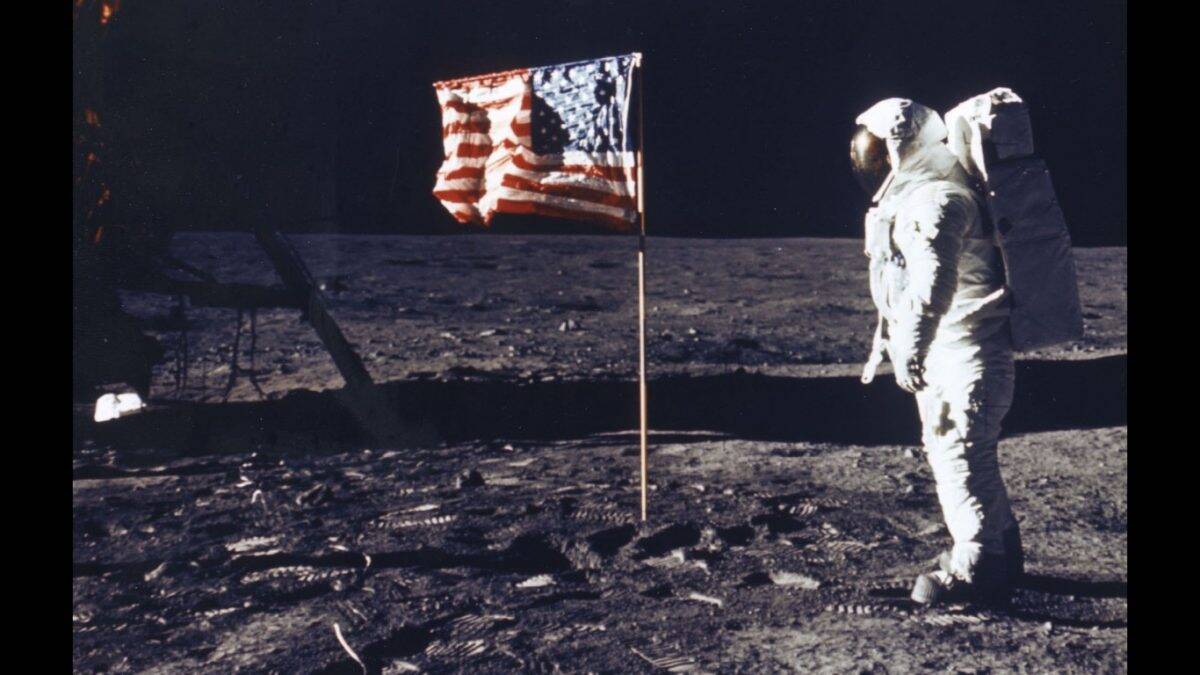
The Apollo 11 flag is the only one that fell, and we’ve known for years
©NASA / Getty Images
The image of the flag on the Moon is iconic. That makes the reality a little deflating. It proved to be quite challenging to plant the flag into the airless, powdery soil, and it didn’t go in very deep at all. As the ascent stage lifted off, Aldrin watched as the exhaust blast knocked the flag flat. This isn’t speculation either. In 2012, the Lunar Reconnaissance Orbiter sent back images of the landing sites where the flags from five later Apollo missions were still standing tall. The lone exception was that of Apollo 11, whose flag has been lying on the surface for decades.
Of all the flags planted on the Moon, the first one is the only one that didn’t stay up.
We have photographs of the site, footprints, and all
People still repeat that there’s “no proof” anyone went. There is, and it’s been public since 2009. The very same orbiter has taken high-res pictures of the Apollo 11 landing area, showing the descent stage of the lander and the dark trails in the dust where Armstrong and Aldrin walked.
The traces are not obvious, yet they do exist exactly at the location recorded by the mission. The paths of the astronauts’ movement from the lander to the equipment are visible. It’s hard to fake footprints on the Moon from orbit forty years after the fact, which is part of why the hoax claim keeps running into the evidence.
An Apollo rocket stage came back and got mistaken for an asteroid
Apart from the passengers, the rocket also had a third stage called the S-IVB that did the work of flinging the spacecraft toward the Moon before being discarded. The discarded stages from the middle missions of the Apollo program went into orbit around the Sun and, everyone assumed, were forgotten.
In September 2002, amateur astronomer Bill Yeung discovered an object that appeared to be a small asteroid in orbit around the Earth. It wasn’t a rock. Spectrographic analysis showed that it was covered in titanium dioxide paint, the same white coating used to protect the Apollo hardware. The object turned out to be a leftover S-IVB stage that had drifted back into Earth’s neighborhood decades later. The best match is the stage from the Apollo 12 mission rather than the 11 mission, since Apollo 11’s third stage is confirmed to be in solar orbit. Either way, a piece of a moon rocket wandered home thirty-plus years later and briefly fooled astronomers into thinking they’d found a new asteroid.
Half of the lander is still sitting there
©NASA, Public domain, via Wikimedia Commons – Original / License
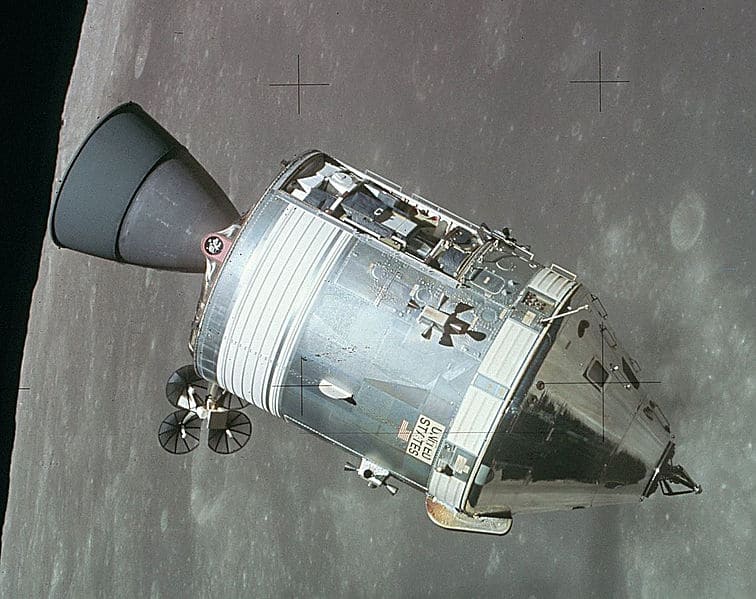
The lunar module came in two pieces, and only the top half ever left. The ascent stage blasted off using its engine to bring Armstrong and Aldrin back to Michael Collins, orbiting overhead. The lower part, the one with the four legs and ladder, was never meant to move again, and there’s a plaque signed by Nixon bolted onto it too.
It’s still at Tranquility Base right now, more than 55 years later. It is the largest object humans have ever left on the Moon’s surface, exactly where the Eagle set down.
The other half might still be circling the Moon
The ascent stage had a stranger fate, and it’s one even space buffs get wrong sometimes. Once Armstrong and Aldrin returned to the command module, the top portion of the Eagle was jettisoned into lunar orbit. NASA long assumed that the orbit was unstable and that the module crashed into the Moon sometime after.
A 2021 analysis pushed back on that. The researcher argued the abandoned ascent stage could have entered a stable orbit and might possibly be in orbit around the moon right now. It’s one study rather than a confirmed sighting, so treat it as an open question and not a done deal. No wreckage has been found, and it’s possible that there isn’t any.
The rocket exhaust was invisible, which fuels a bad argument
Hoax believers love to reference pictures taken during the ascent and talk about the absence of the fire coming from the engine. The answer is that there wasn’t any fire to see. The lunar module’s ascent engine burned Aerozine 50, a propellant that produces a nearly colorless flame.
Even a vivid flame could hardly be noticed against the harsh, sunlit surface. So the “missing” plume that supposedly proves the whole thing was staged is just fuel behaving normally. An engine burning Aerozine 50 was always going to lift off without a fiery trail behind it.
The black, starless sky is exactly what you’d expect
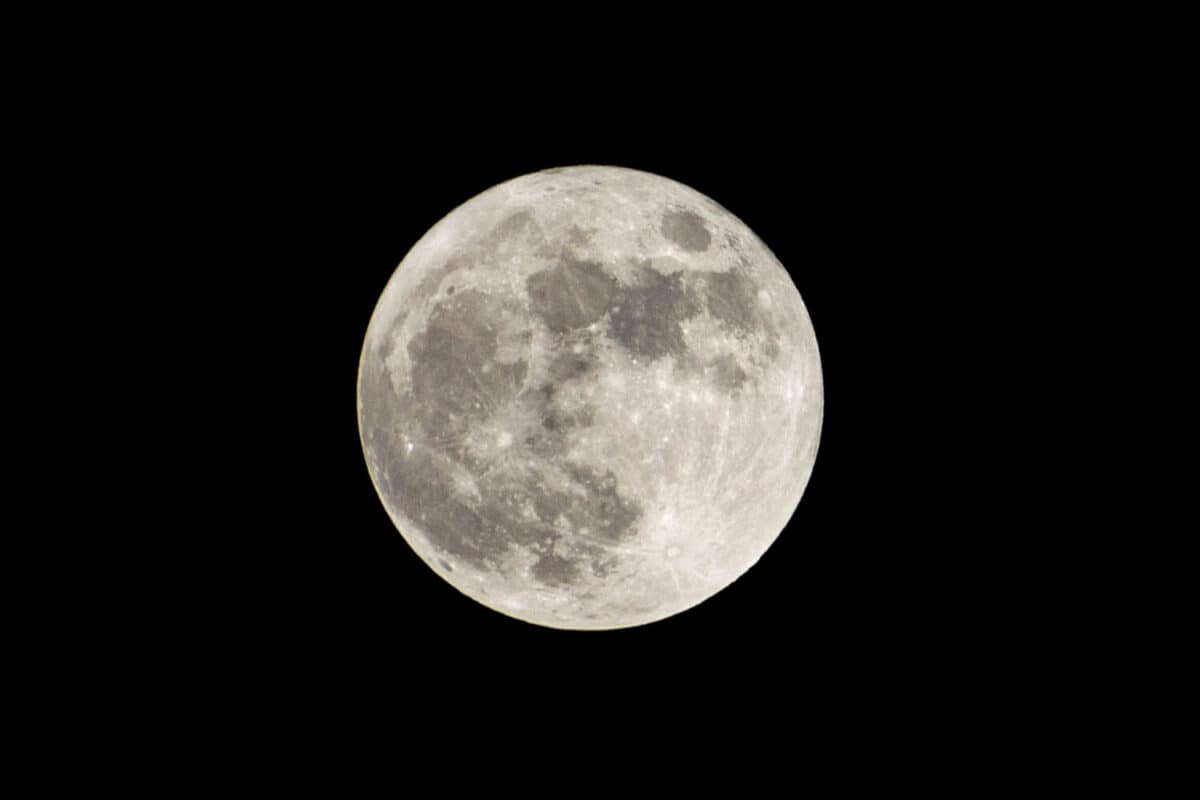
The HEXEUM doesn’t have the best optics, but it is more than enough to view a stunning super moon in the night sky.
©Fernando Astasio Avila/Shutterstock.com
Then there’s the one about the stars. If they were really in space, people ask, where are they? Why aren’t they in the pictures? When the Apollo missions landed, the surface of the Moon was blindingly bright, lit by direct sunlight and by light bouncing off the ground itself. To capture that without washing everything out, the cameras used very short exposures.
Those fast exposures don’t leave the shutter open long enough for faint background stars to be recorded. Any photographer who has tried to shoot a bright subject against a night sky knows the trade-off. The empty black sky comes down to basic camera physics, and it would look wrong if the stars were visible.
The crew filled out a customs form on the way home
This one is probably the only relatable aspect of the whole affair. Once the Apollo 11 crew landed, when the crew returned to the US, they had to fill out a standard customs declaration in Honolulu, just like anyone else returning to the country from overseas. The form stated that the departure point was the Moon. Under cargo, it recorded moon rock and moon dust samples.
The farthest trip any human has ever taken got logged on the same paperwork you’d use coming back from a beach holiday. That’s an odd piece of bureaucracy.
The image featured at the top of this post is ©NASA / Getty Images