




























20 Secret Cold War Projects That Still Sound Unbelievable Today
The Cold War was unlike any rivalry in modern history. The United States and Soviet Union faced each other across political, military, technological, and ideological battlefields while possessing enough nuclear weapons to destroy civilization. In that environment, government leaders often believed they could not afford to dismiss even the most unlikely ideas. Programs that would seem absurd today were funded because officials feared that an enemy breakthrough could alter the balance of power. As a result, the Cold War became a breeding ground for some of the strangest projects ever undertaken by modern governments. Here, History Computer is exploring some of these unbelievable programs.
Here is a look at the Cold War Programs that sound unbelievable today:
Project MKUltra
- Country / Agency: CIA
- Years Active: 1953–1973
- Cold War Fear Behind It: Fear of communist brainwashing and psychological manipulation
- The Unbelievable Plan: Use drugs and behavioral experiments to explore mind control
- Outcome: Program exposed and shut down after investigations
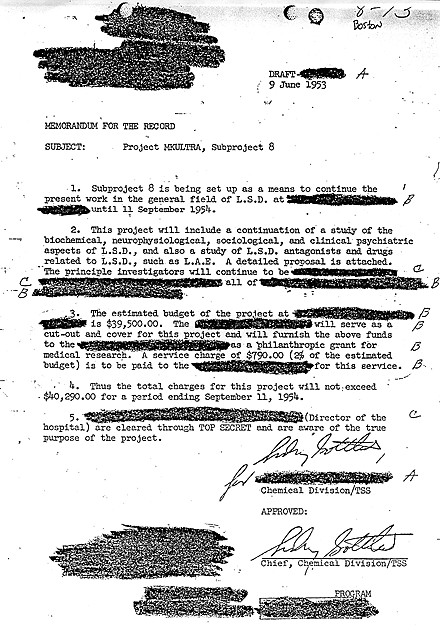
Few Cold War programs have become as infamous as Project MKUltra, the CIA's attempt to understand and potentially control human behavior. Launched in 1953 amid fears that communist governments had developed advanced brainwashing techniques, the program funded hundreds of experiments involving hypnosis, sensory deprivation, psychological conditioning, and drugs such as LSD. In many cases, subjects were unaware they were participating. CIA officials hoped the research might produce methods for extracting information, resisting interrogation, or influencing behavior. Instead, the program became a symbol of Cold War excess and government overreach. Congressional investigations during the 1970s exposed many of its activities, leading to public outrage and sweeping reforms. MKUltra remains one of the clearest examples of how Cold War fears sometimes pushed intelligence agencies far beyond ethical boundaries.
Operation Acoustic Kitty
- Country / Agency: CIA
- Years Active: 1960s
- Cold War Fear Behind It: Need for covert surveillance in sensitive locations
- The Unbelievable Plan: Turn cats into mobile listening devices
- Outcome: Abandoned after proving impractical
Operation Acoustic Kitty sounds like a joke, but it was a genuine CIA effort to turn cats into mobile surveillance platforms. During the 1960s, intelligence officials explored whether surgically implanted microphones and transmitters could allow cats to eavesdrop on conversations near foreign targets. Engineers spent years developing specialized equipment small enough to fit inside an animal while remaining functional in real-world environments. Unfortunately, the program encountered a problem that should perhaps have been obvious from the start: cats are notoriously difficult to control. Reports suggest one of the first field tests ended almost immediately when the animal wandered away from its intended target. After millions of dollars in spending, the project was abandoned. Today, Acoustic Kitty remains one of the most bizarre examples of Cold War espionage ingenuity colliding with biological reality.
Project Iceworm
- Country / Agency: U.S. Army
- Years Active: 1958–1966
- Cold War Fear Behind It: Fear that fixed missile sites were vulnerable
- The Unbelievable Plan: Build a vast missile network beneath Greenland's ice
- Outcome: Cancelled when ice movement made it unworkable
Project Iceworm was a remarkably ambitious proposal to hide hundreds of nuclear missiles beneath Greenland's ice sheet. Developed by the U.S. Army during the late 1950s, the plan envisioned a vast underground network of tunnels stretching for thousands of miles. Officials believed the frozen landscape could provide protection from a Soviet first strike while allowing missiles to be repositioned secretly. To test the concept, the military constructed Camp Century, a nuclear-powered research facility buried beneath the ice. What seemed promising on paper soon encountered a major obstacle: glaciers move. The shifting ice constantly distorted tunnels and structures, making long-term maintenance nearly impossible. Although the missile network was never built, Project Iceworm demonstrated the extraordinary lengths Cold War planners were willing to consider in their search for strategic advantage.
Project A119
- Country / Agency: U.S. Air Force
- Years Active: 1958
- Cold War Fear Behind It: Fear of losing the Space Race
- The Unbelievable Plan: Detonate a nuclear weapon on the Moon
- Outcome: Never carried out
In 1958, American military planners seriously studied detonating a nuclear weapon on the Moon. Known as Project A119, the proposal emerged during a period of intense anxiety following Soviet successes in the early Space Race. Some officials believed a highly visible demonstration of American technological power could restore confidence and showcase U.S. capabilities to the world. Scientists were tasked with determining whether a nuclear explosion on the lunar surface would be visible from Earth and what scientific information might be gained from the event. Ultimately, the risks outweighed the potential benefits, and the project was abandoned before reaching implementation. Even so, the fact that respected researchers and military officials seriously considered nuclear detonations beyond Earth illustrates just how intensely Cold War competition influenced strategic thinking during the dawn of the space age.
Project Pluto
- Country / Agency: U.S. Air Force
- Years Active: 1957–1964
- Cold War Fear Behind It: Need for an unstoppable nuclear delivery system
- The Unbelievable Plan: Create a nuclear-powered supersonic cruise missile
- Outcome: Cancelled despite successful engine tests
Project Pluto may be the closest the Cold War came to building a doomsday weapon from science fiction. The project sought to create a nuclear-powered cruise missile capable of flying at supersonic speeds for enormous distances while carrying multiple nuclear warheads. Unlike conventional missiles, Pluto's reactor-powered engine would allow it to remain airborne for extended periods, potentially circling the globe before attacking. As if that were not enough, the missile itself would spread radioactive contamination along its flight path. Engineers successfully tested the reactor system, proving the concept was technically feasible. Yet the weapon's extreme cost, environmental risks, and the emergence of more practical ballistic missile technologies ultimately doomed the project. Pluto remains one of the most frightening examples of how Cold War weapons development sometimes prioritized capability over almost every other consideration.
Project Sundial
- Country / Agency: Atomic Energy Commission
- Years Active: 1954
- Cold War Fear Behind It: Concern that larger weapons would deter war
- The Unbelievable Plan: Study a hydrogen bomb thousands of times stronger than Hiroshima
- Outcome: Remained theoretical
Project Sundial represents one of the most extreme nuclear concepts ever seriously studied. During the early 1950s, some American scientists explored the possibility of constructing thermonuclear weapons vastly more powerful than anything previously imagined. Among these ideas was a theoretical device thousands of times stronger than the bombs dropped on Hiroshima and Nagasaki. Researchers were not necessarily planning to build such a weapon immediately, but they wanted to understand the limits of thermonuclear technology and its strategic implications. The calculations revealed destructive potential on a scale almost beyond comprehension. Even within the context of the Cold War arms race, many experts viewed the concept as impractical and dangerously excessive. Project Sundial serves as a stark reminder that the nuclear competition frequently pushed scientific inquiry into territory where theoretical possibility outpaced political wisdom.
Operation Starfish Prime
- Country / Agency: United States
- Years Active: 1962
- Cold War Fear Behind It: Understanding nuclear warfare in space
- The Unbelievable Plan: Detonate a nuclear weapon high above Earth
- Outcome: Created unexpected electromagnetic effects
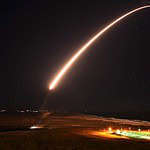
Operation Starfish Prime produced one of the strangest nuclear tests ever conducted. In 1962, the United States detonated a powerful nuclear device approximately 250 miles above the Pacific Ocean. Scientists hoped to better understand the effects of nuclear warfare in space, but the results exceeded expectations. The explosion generated an enormous electromagnetic pulse that disrupted electrical systems hundreds of miles away in Hawaii. It also created artificial radiation belts around Earth, damaging satellites and affecting future space operations. The brilliant flash was visible across vast distances, producing dramatic visual effects unlike any previous nuclear test. Starfish Prime revealed that nuclear weapons could have major consequences far beyond their immediate blast zones, fundamentally altering military thinking about space, communications, and strategic warfare during the Cold War.
Project Azorian
- Country / Agency: CIA
- Years Active: 1970–1974
- Cold War Fear Behind It: Need to recover Soviet military secrets
- The Unbelievable Plan: Raise a sunken Soviet submarine from the ocean floor
- Outcome: Partially successful recovery mission
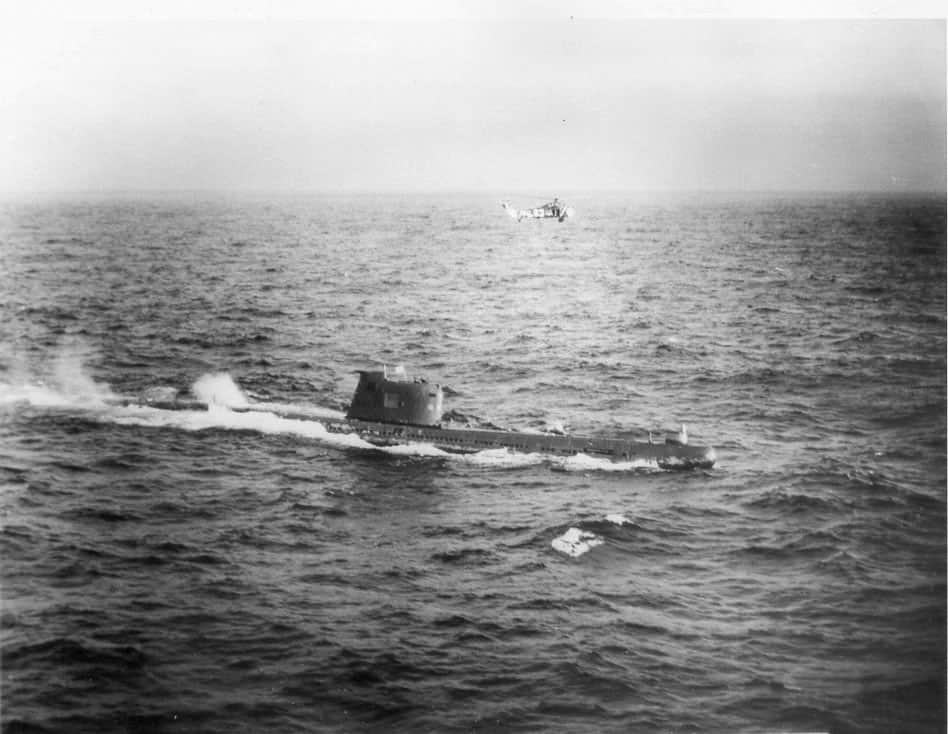
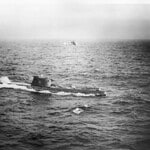
Project Azorian was one of the most audacious intelligence operations ever attempted. After a Soviet ballistic missile submarine sank in the Pacific Ocean in 1968, the CIA devised a plan to recover it from nearly three miles below the surface. The challenge was unprecedented. Engineers secretly constructed a massive specialized vessel, the Hughes Glomar Explorer, under the cover story of deep-sea mining operations. Using advanced lifting equipment, the ship attempted to raise part of the submarine and its contents from the ocean floor. While the recovery was only partially successful, the operation demonstrated extraordinary engineering ingenuity and provided valuable intelligence. For years, the mission remained one of the Cold War's best-kept secrets. Even today, Project Azorian stands as a remarkable example of how intelligence agencies combined technology, deception, and determination to pursue strategic advantages.
Project Stargate
- Country / Agency: CIA / DIA
- Years Active: 1970s–1995
- Cold War Fear Behind It: Fear Soviet psychic programs had military value
- The Unbelievable Plan: Investigate remote viewing and psychic intelligence
- Outcome: Produced controversial and inconclusive results
Project Stargate emerged from concerns that the Soviet Union might be investing heavily in psychic research with military applications. Beginning in the 1970s, U.S. intelligence agencies funded studies into "remote viewing," a claimed ability to perceive distant locations or events through extrasensory means. Participants attempted to describe military facilities, hidden objects, and foreign activities without direct observation. While some sessions produced results that believers considered intriguing, scientific validation remained elusive. Nevertheless, the program continued for years because officials feared that ignoring potential breakthroughs could place the United States at a disadvantage. Eventually, reviews concluded that the evidence did not support operational use, and the project was terminated. Stargate remains one of the most unusual examples of Cold War competition pushing intelligence agencies into areas normally associated with science fiction and paranormal speculation.
Project West Ford
- Country / Agency: U.S. Military
- Years Active: 1961–1963
- Cold War Fear Behind It: Fear communications could be disrupted during war
- The Unbelievable Plan: Place millions of copper needles in orbit
- Outcome: Completed but eventually abandoned
Project West Ford involved launching millions of tiny copper needles into orbit around Earth. The rationale was surprisingly practical. During the early Cold War, military planners worried that long-distance communications could be disrupted during conflict. To address this vulnerability, researchers proposed creating an artificial ring around the planet that could reflect radio signals. Beginning in the early 1960s, thousands of millions of microscopic copper dipoles were released into space to test the concept. Although the project demonstrated that communications could be enhanced in this way, advances in satellite technology soon made the idea largely obsolete. Critics also expressed concerns about space debris and the long-term impact of placing artificial materials in orbit. West Ford remains one of the most unusual attempts to solve a communications problem through large-scale engineering.
Operation Ivy Bells
- Country / Agency: U.S. Navy / NSA
- Years Active: 1970s–1980s
- Cold War Fear Behind It: Need insight into Soviet military communications
- The Unbelievable Plan: Tap Soviet undersea communication cables
- Outcome: Produced valuable intelligence for years
Operation Ivy Bells was one of the most successful espionage operations of the Cold War, yet it sounds almost impossible today. During the early 1970s, American intelligence agencies learned that the Soviet military relied heavily on undersea communication cables connecting key naval facilities. Rather than attempting to break encrypted radio traffic, the U.S. Navy and National Security Agency devised a plan to physically tap the cables on the floor of the Sea of Okhotsk. Specially equipped submarines carried divers into hostile waters, where they attached sophisticated listening devices that recorded Soviet communications. For years, the operation provided a steady stream of valuable intelligence about naval deployments, strategic planning, and military readiness. The mission remained highly classified until a spy compromised it in the 1980s. Ivy Bells demonstrated the extraordinary creativity and technical skill that characterized Cold War intelligence gathering.
Greenbrier Congressional Bunker
- Country / Agency: U.S. Government
- Years Active: 1958–1992
- Cold War Fear Behind It: Fear nuclear war would destroy Washington
- The Unbelievable Plan: Hide Congress in a secret underground bunker
- Outcome: Remained secret for decades
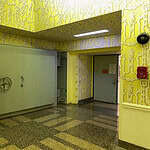
For more than three decades, a luxury resort in West Virginia concealed one of the United States government's most remarkable Cold War secrets. Hidden beneath the Greenbrier Resort was a massive underground bunker designed to house the entire U.S. Congress in the event of nuclear war. Built during the late 1950s, the facility contained dormitories, meeting chambers, communications equipment, medical facilities, and enough supplies to sustain lawmakers during a national emergency. Employees posing as television technicians secretly maintained the site for years. The bunker reflected a grim assumption shared by many Cold War planners: a nuclear attack on Washington was not merely possible but likely enough to justify preparing a backup legislature. The existence of the facility remained unknown to most Americans until it was publicly exposed in 1992, ending one of the Cold War's longest-running secrets.
Project Horizon
- Country / Agency: U.S. Army
- Years Active: 1959
- Cold War Fear Behind It: Fear Soviets would militarize the Moon first
- The Unbelievable Plan: Establish a permanent military Moon base
- Outcome: Never approved
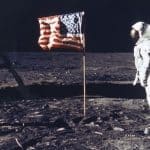
Project Horizon was the U.S. Army's proposal to establish a permanent military base on the Moon. Developed in 1959, the plan emerged from fears that the Soviet Union might gain a strategic advantage by controlling lunar territory. Army planners envisioned transporting personnel, equipment, and construction materials to the Moon, where a small outpost would eventually evolve into a fortified military installation. The base would serve scientific purposes while also demonstrating American dominance in space. Detailed reports outlined everything from transportation systems and habitat construction to defense considerations. Although the project was never approved, it illustrates how rapidly military thinking expanded beyond Earth's atmosphere during the early Space Race. What sounds like the premise of a science fiction novel today was treated as a serious strategic proposal by military officials operating in an era of intense geopolitical competition.
Dead Hand (Perimeter)
- Country / Agency: Soviet Union
- Years Active: 1980s
- Cold War Fear Behind It: Fear of a surprise nuclear decapitation strike
- The Unbelievable Plan: Automate nuclear retaliation if leadership was destroyed
- Outcome: Reportedly deployed in some form
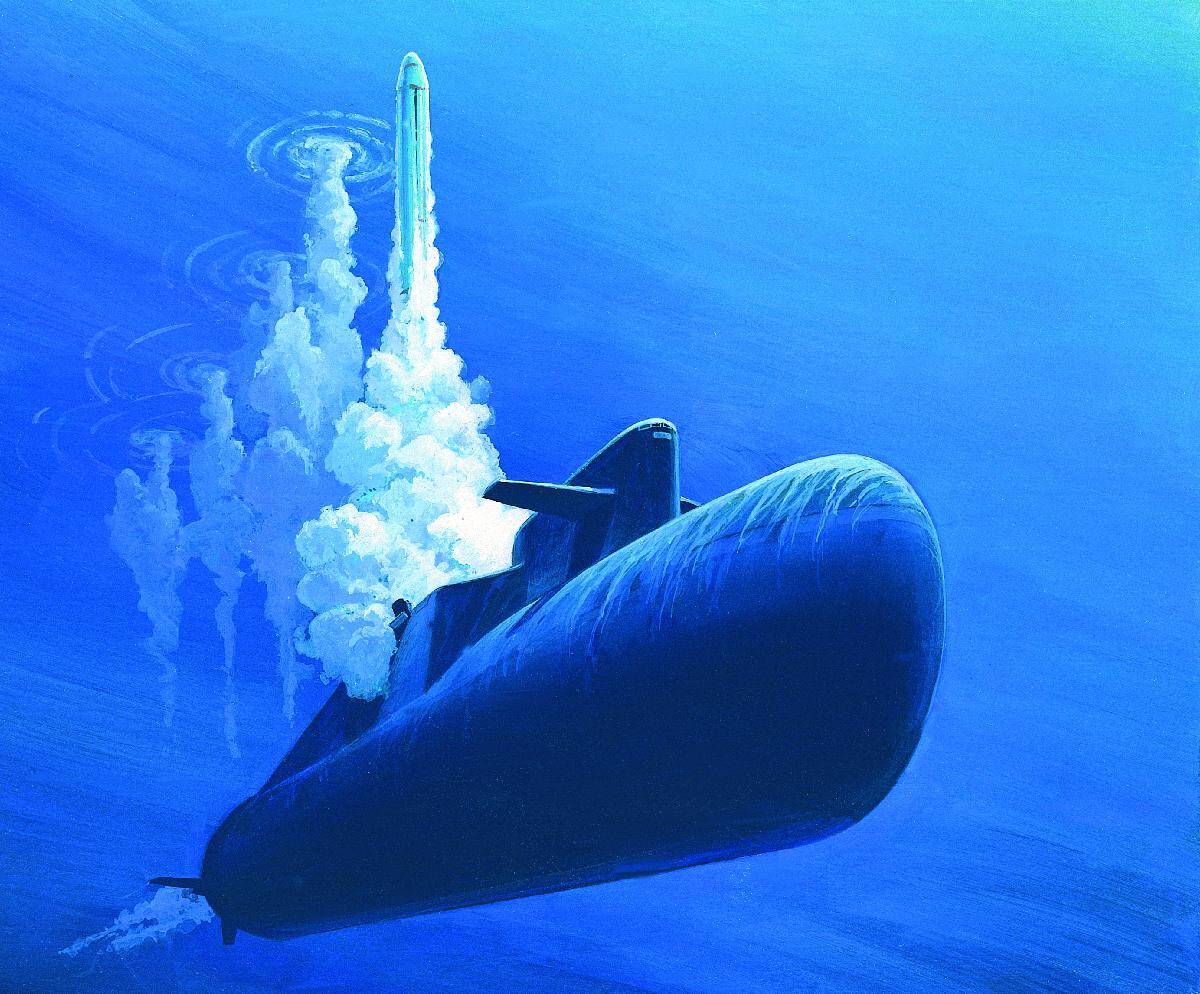
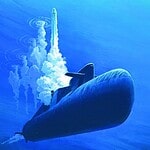
The Soviet Union's Dead Hand system, known internally as Perimeter, may be one of the most unsettling military programs ever created. Developed during the 1980s, the system was designed to guarantee nuclear retaliation even if Soviet leadership and command structures were destroyed in a surprise attack. If sensors detected evidence of a large-scale nuclear strike and communications with military leadership were lost, the system could theoretically authorize the launch of retaliatory missiles automatically. The goal was deterrence. Soviet planners believed that making retaliation unavoidable would discourage any adversary from attempting a decapitation strike. Whether every aspect of the system functioned exactly as reported remains debated, but substantial evidence suggests some version existed. Dead Hand reflected the terrifying logic of mutually assured destruction, where preventing war required convincing opponents that war would inevitably destroy everyone involved.
Biopreparat
- Country / Agency: Soviet Union
- Years Active: 1973–1991
- Cold War Fear Behind It: Desire for strategic biological warfare capabilities
- The Unbelievable Plan: Expand secret biological weapons research
- Outcome: Revealed after the Cold War
While publicly supporting international agreements restricting biological weapons, the Soviet Union secretly operated one of the largest biological warfare programs in history. Known as Biopreparat, the organization employed thousands of scientists across numerous research facilities dedicated to developing weaponized pathogens. Researchers explored diseases including anthrax, plague, smallpox, and other dangerous agents while seeking methods to increase their effectiveness and survivability. The scale of the operation remained hidden from much of the world until the Soviet Union collapsed and former participants began revealing details. The program shocked Western governments because it demonstrated that biological weapons development had continued despite formal treaty commitments. Biopreparat illustrates the profound mistrust that defined the Cold War, where even international agreements were often viewed through the lens of strategic competition and worst-case planning.
Soviet Nuclear-Powered Aircraft Program
- Country / Agency: Soviet Union
- Years Active: 1950s–1960s
- Cold War Fear Behind It: Need bombers with near-unlimited range
- The Unbelievable Plan: Install a nuclear reactor aboard aircraft
- Outcome: Cancelled due to technical challenges
During the 1950s, both superpowers explored the possibility of aircraft powered by onboard nuclear reactors. Soviet researchers believed that a nuclear-powered bomber could remain airborne for extraordinary lengths of time, potentially giving the nation a major strategic advantage. Engineers studied designs that would use reactor-generated energy instead of conventional fuel, eliminating many range limitations associated with long-distance missions. Test aircraft were even modified to evaluate radiation shielding and operational concepts. However, the technical challenges proved overwhelming. Protecting crews from radiation required heavy shielding, while safety concerns raised serious questions about the consequences of accidents. As intercontinental ballistic missiles became more practical and effective, interest in nuclear-powered aircraft declined. The project remains a fascinating example of Cold War engineers attempting to solve military problems through technologies that seemed limitless in theory but impractical in reality.
Operation Argus
- Country / Agency: United States
- Years Active: 1958
- Cold War Fear Behind It: Need to understand high-altitude nuclear effects
- The Unbelievable Plan: Detonate nuclear weapons in space
- Outcome: Provided important scientific data
Operation Argus was a series of secret nuclear tests conducted in space during 1958. At the time, scientists knew relatively little about how nuclear explosions would behave outside Earth's atmosphere. Military planners worried that future conflicts might extend into space and wanted to understand the implications. Several nuclear devices were launched aboard rockets and detonated at extremely high altitudes over the South Atlantic Ocean. Researchers observed the resulting radiation effects and interactions with Earth's magnetic field. The tests provided important scientific data and contributed to a growing understanding of space physics. They also highlighted how quickly Cold War competition had expanded beyond traditional battlefields. Operation Argus was one of the earliest demonstrations that strategic planning now extended into an entirely new domain, setting the stage for decades of military and scientific activity in space.
Project Blue Book
- Country / Agency: U.S. Air Force
- Years Active: 1952–1969
- Cold War Fear Behind It: Concern UFO reports might conceal threats
- The Unbelievable Plan: Investigate thousands of UFO sightings
- Outcome: Found no evidence of extraterrestrial threats
Project Blue Book was the U.S. Air Force's long-running investigation into unidentified flying objects. Established in 1952, the program examined thousands of reports from military personnel, pilots, law enforcement officers, and civilians. While popular culture often associates Blue Book with extraterrestrial encounters, the Air Force's primary concern was national security. Officials needed to determine whether unusual sightings represented foreign aircraft, advanced technologies, or potential threats. Investigators reviewed photographs, witness statements, radar data, and flight records in an effort to explain reported incidents. Although a small percentage of cases remained unresolved, the project ultimately concluded that UFO reports did not present evidence of alien visitation or a significant security threat. Blue Book remains one of the most famous Cold War programs because it sat at the intersection of military intelligence, public curiosity, and enduring fascination with the unknown.
Project Excelsior
- Country / Agency: U.S. Air Force
- Years Active: 1959–1960
- Cold War Fear Behind It: Need emergency escape procedures for high-altitude pilots
- The Unbelievable Plan: Conduct record-breaking high-altitude parachute jumps
- Outcome: Advanced aerospace safety knowledge
Project Excelsior demonstrated the kind of courage and experimentation that characterized Cold War aerospace research. As aircraft and spacecraft began operating at increasingly extreme altitudes, engineers faced a critical question: could a pilot survive an emergency escape from near the edge of space? To find out, Air Force test pilot Joseph Kittinger volunteered for a series of high-altitude balloon ascents. In 1960, he jumped from more than 100,000 feet above Earth, setting records for altitude and freefall distance. The mission provided vital information about pressure suits, parachute systems, and human survival in extreme conditions. Although less secretive than many Cold War projects, Excelsior sounded almost unbelievable because it required a man to step into the stratosphere and trust experimental equipment with his life. The lessons learned directly influenced future aerospace and spaceflight safety programs.
Operation Paul Bunyan
- Country / Agency: United States / UN Command
- Years Active: 1976
- Cold War Fear Behind It: Need to demonstrate resolve after a deadly incident
- The Unbelievable Plan: Massive show of force to cut down a tree
- Outcome: Mission succeeded without escalation
Operation Paul Bunyan may be the most heavily armed tree-cutting mission in history. The operation was launched in 1976 after North Korean soldiers killed two U.S. Army officers during a confrontation in the Korean Demilitarized Zone. The dispute centered on a poplar tree that obstructed visibility between United Nations positions. Determined to remove the tree while demonstrating resolve, the United States organized an overwhelming show of force. Engineers carrying chainsaws were supported by infantry units, attack helicopters, fighter aircraft, strategic bombers, and naval forces placed on alert. The objective was simple: cut down a tree. Yet the scale of the operation reflected the delicate balance of Cold War deterrence, where even minor incidents carried the potential for escalation. The mission succeeded without further violence and remains one of the most extraordinary demonstrations of military signaling ever conducted.