

Streaming has largely replaced the radio hits we’ve experienced over the last 100 years or so. Modern radio play and streaming are a tightrope walk between creative expression and compliance with broadcasting regulations. For most of the 20th and part of the 21st centuries, the radio has been something of a monoculture for the globe. Music reaches millions every day, and every broadcaster has to abide by the regulations and requirements set by their local government. Program directors and federal agencies serve as something akin to cultural gatekeepers, letting things that conformed to those needs reach the airwaves, and those that ran afoul being sent back for revisions.
This wasn’t all down to things like obscenity or adult themes, but touched on sensitive subjects like military service during contentious wars or social issues during a period of strife. The response from the establishment in many of these cases is swift and rather predictable. Banned radio hits were blacklisted. Curiously, these blacklisted tracks weren’t simply forgotten. In some cases, they experienced a whole new wave of popularity that traditional airplay might not have garnered.
Rumble
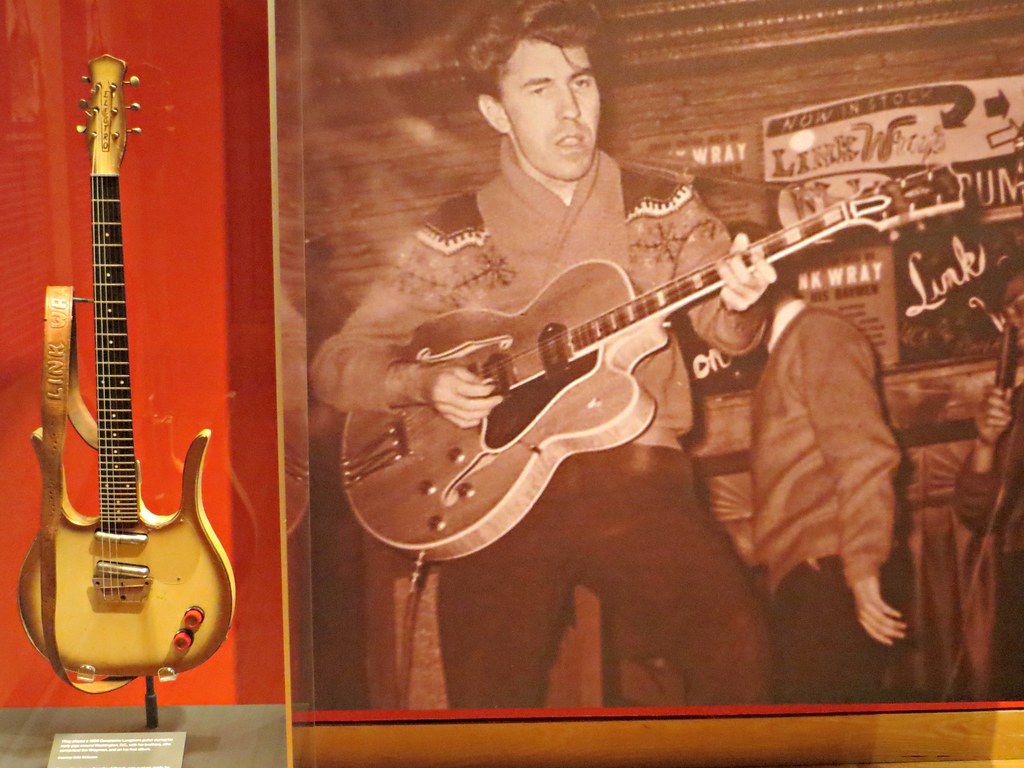
©"Exhibit at the National Museum of the American Indian in New York City honoring guitarist Link Wray (May 2, 1929 – November 5, 2005 (76)), best known for his 1958 instrumental hit 'Rumble.' Wray's parents were Shawnee." by John Wisniewski is licensed under BY-ND 2.0. – Original / License
1958 saw the release of Link Wray’s Rumble, one of the oddest, most controversial radio hits we’ll be covering. Unlike other radio hits by contemporaries like Chuck Berry or Elvis Presley, Rumble was unlike any other rock and roll song. The slow, brooding piece is a hallmark release in the history of pop music and rock by extension, but it has no lyrics. There isn’t a single political slogan, dissenting opinion, or provocative verse. You’re left with Wray’s brash guitar playing and a basic drumbeat.
Despite the seeming lack of any controversial content, Rumble was banned across multiple major American cities like Chicago and New York. The reason behind the band was entirely in the decidedly novel sonic texture of the song. The powers that be were concerned by the distorted guitar tones, which were intentionally created by Wray poking holes in his guitar speaker with a pencil.
The dirty, aggressive sound of Rumble was seen as threatening. It certainly didn’t help that the song borrowed its title from the slang for a street fight from the youth culture at the time. Station managers worried that the song would essentially spark off gang warfare in the streets. The taboo nature of the track backfired on station managers, and Rumble was a foundational hit in the history of rock music. You have to admit it is quite silly to get this bent out of shape over a song that has zero lyrics in the first place. Rock music was changed forever, and it’s wild to think there was a time before distorted guitars were the norm in radio-friendly hits.
Serge Gainsbourg and Jane Birkin
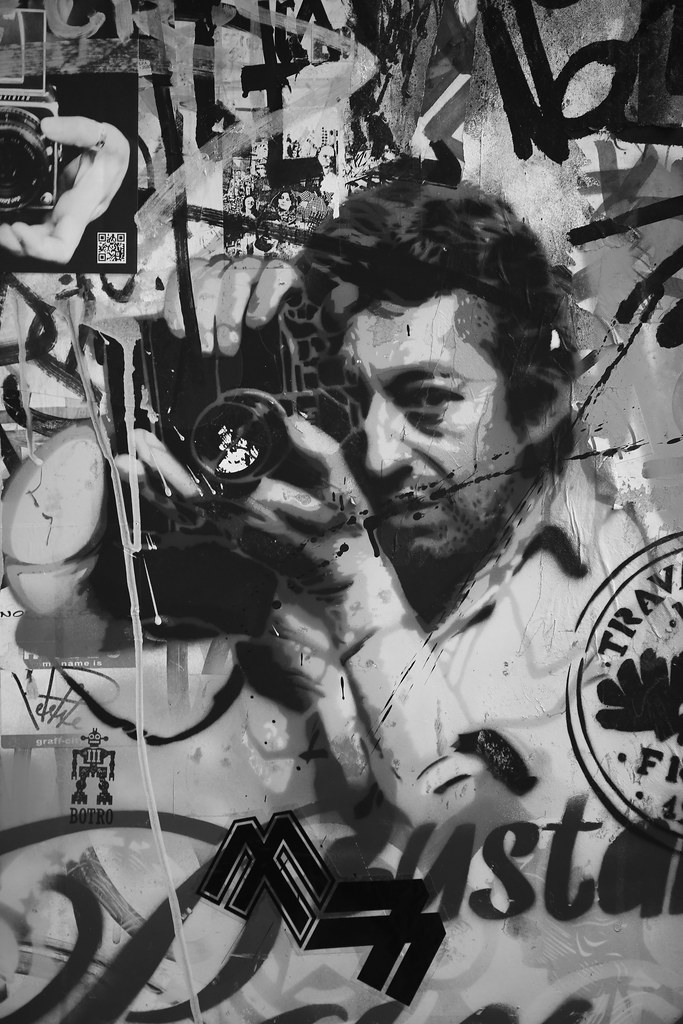
©"Serge Gainsbourg taking a picture" by Alexandre Dulaunoy is licensed under BY-SA 2.0. – Original / License
The 1960s had their share of social upheaval, with the likes of the Civil Rights Movement, Free Love, and other movements in the United States essentially dictating the tempo of the decade. Rather conservative powers were in charge of the radio stations of the time, and a song centered on sexual liberation from the French singer-songwriter Serge Gainsbourg. Gainsbourg’s duet with Jane Birkin in 1969, titled Je T’aime… Moi Non Plus was a slow-tempo ballad that isn’t out of place with many hits of the decade.
The controversy came about from the lyrical content. Gainsbourg’s French lyrics are beautiful, deeply poetic, and quite provocative. That wasn’t the source of what made this such a controversial radio hit, however. The vocal performance, centered around Birkin emulating the sounds of sexual intercourse with heavy breathing, sighs, and moans, left little to the imagination. Regardless of the lyrical content, the performance itself essentially set everything in motion for public censors.
The global reaction was swift and severe. The Vatican publicly condemned the song as obscene, and the Italian government banned it from public broadcast completely. British radio placed it on its blacklist, refusing airplay across any of its partner stations. As with Rumble, this song garnered quite a bit of interest from the public. Word of mouth and underground clubs saw it reach number 1 on the UK Singles Chart, the first foreign-language song in history to achieve this milestone.
The Sex Pistols
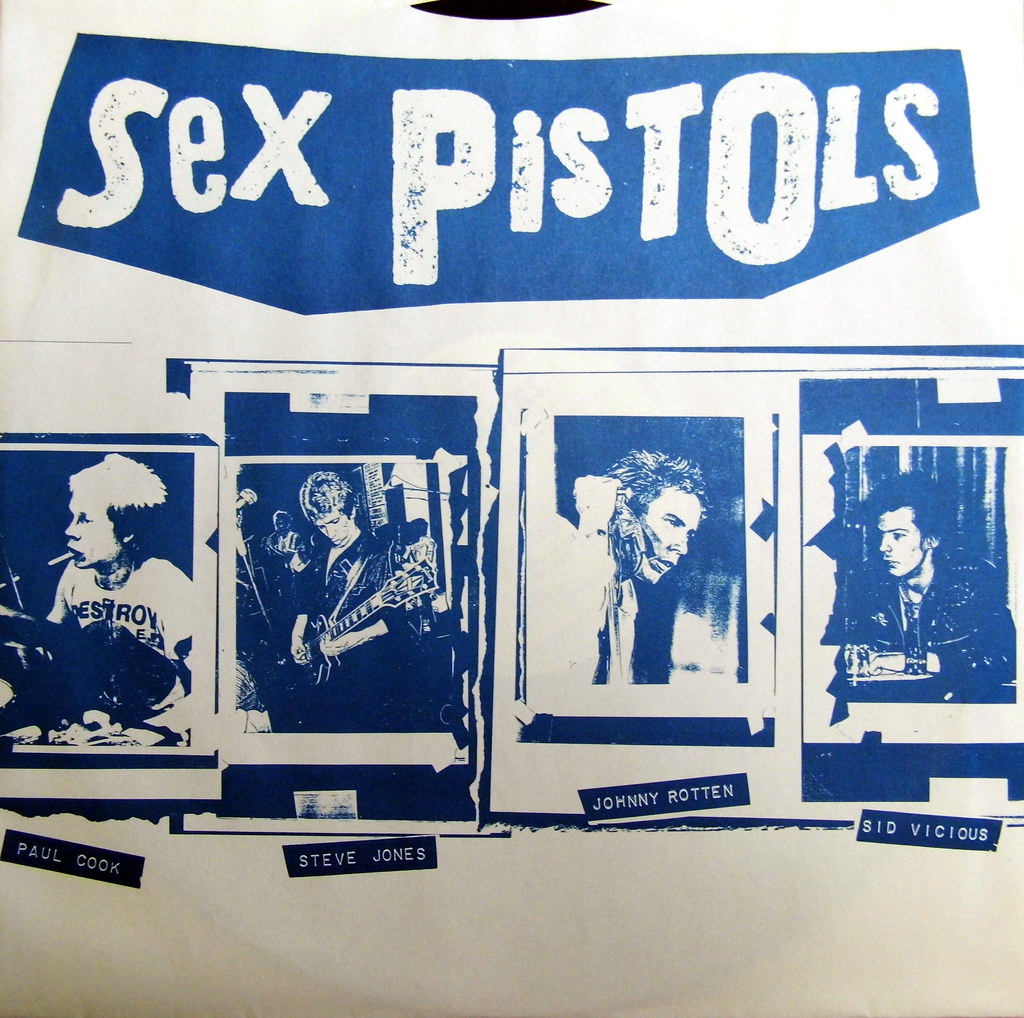
©"Vintage LP Record Collection: Record Sleeve For Never Mind The Bollocks, Here's The Sex Pistols, Warner Bros. Records Inc., BSK 3147, Punk Rock, Copyright 1977" by France1978 is licensed under BY-SA 2.0. – Original / License
The 1970s saw broadcast standards loosen up a little bit. Radio and TV broadcasts got a little edgier, tackling serious subjects. By the end of the decade, public broadcasting standards were less focused on obscenity and more focused on the political leanings of those who played. In 1977, the United Kingdom was preparing for the Silver Jubilee of Queen Elizabeth II, a momentous occasion for the monarchy. This was intended to foster unity, despite the severe economic depression and high unemployment.
The backdrop of this state-mandated celebration was the birthplace of the first true punk band, the Sex Pistols, and their track God Save the Queen exploded on the airwaves. A snarling assault on the British establishment, the song frequently compares the monarchy to an autocratic dictatorship and declares that the youth of the country had no future.
The British government saw this song as an act of treason, with the BBC banning it on radio and television broadcasts. Other outlets also banned it, along with major retail chains refusing to stock it. Factory workers even went on strike, refusing to cut the vinyl discs.
Despite a complete media blackout, God Save the Queen reached number 2 on the UK Singles chart, despite a complete media blackout. This came at the height of the Jubilee. Could you imagine what would have happened if it had reached number 1?
Frankie Goes to Hollywood
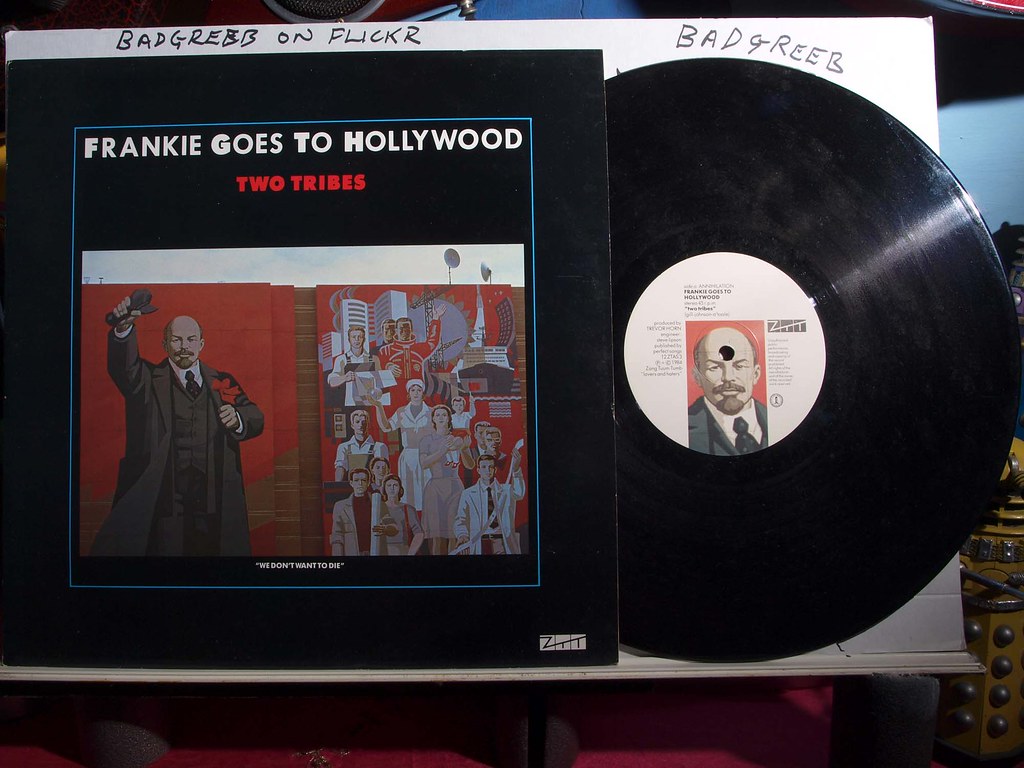
©"frankie goes to hollywood, two tribes, 12," by badgreeb RECORDS – art -photos is licensed under BY-SA 2.0. – Original / License
Everyone remembers Relax, the 1983 synth pop hit from Frankie Goes to Hollywood. What often gets forgotten in those synth pop playlists is that the song was effectively blacklisted from UK charts. The debut single from the band received mild airplay at first and was a popular feature at nightclubs of the era. The music video for the song courted controversy, but that was nothing in comparison to what happened next.
1984 saw BBC DJ Mike Read playing the track on his show while he read the lyrics as it played. The explicit, innuendo-laden lyrics sparked outrage, and Read refused to finish playing the song live, something the BBC backed. A sweeping blackout across the radio and television broadcasts alike took place, taking what would’ve been a modest radio hit and transforming it into something else. Relax became a symbol of the counterculture of the period, and was the subject of a wave of merchandise like t-shirts.
Censorship, like with the Sex Pistols, backfired entirely, leading to the song reaching number 1 on the charts for 5 consecutive weeks in 1984, despite zero radio airplay. While the central broadcaster largely made and dictated tastes for the public, that was starting to change.
Conclusion
If there’s anything we take away from today’s piece, it’s the simple fact that censorship achieved zilch for these songs. It might have been attempting to foment or sway public opinion one way, but songs like Rumble were simply destined for different things. As we’ve seen time and time again, saying you can’t have something rarely works out. After all, if it backfires on a toddler, how is the radio-listening public going to fare?
These songs might not have achieved widespread mainstream acceptance during their heyday, at least by public broadcasters. They were elevated thanks to their controversy. It was entirely possible that a song like Relax remained a modest hit, a deep cut played on off nights to pique the interests of dancers at the local club. Thankfully, that never came to pass.
The image featured at the top of this post is ©Andrei_Diachenko/Shutterstock.com