
12 Legendary Military Pistols That Earned Their Reputation on the Battlefield
A rifle fights wars. A pistol settles the question of who gets to leave a bad situation alive. That’s what makes handguns such an oddball part of military history. Soldiers carried them into the worst moments of combat, the Western Front trenches, the Pacific jungles, the Eastern Front winters, and a handful of designs became more famous than the wars they fought in.
Some pistols have become legendary simply because so many of them were made and issued. Others, because the right person happened to be holding one at the right moment. In most cases, however, the pistols on this list have achieved mythical status because of their design and efficiency. Below are twelve pistols that became legendary on the battlefield.
Colt M1911
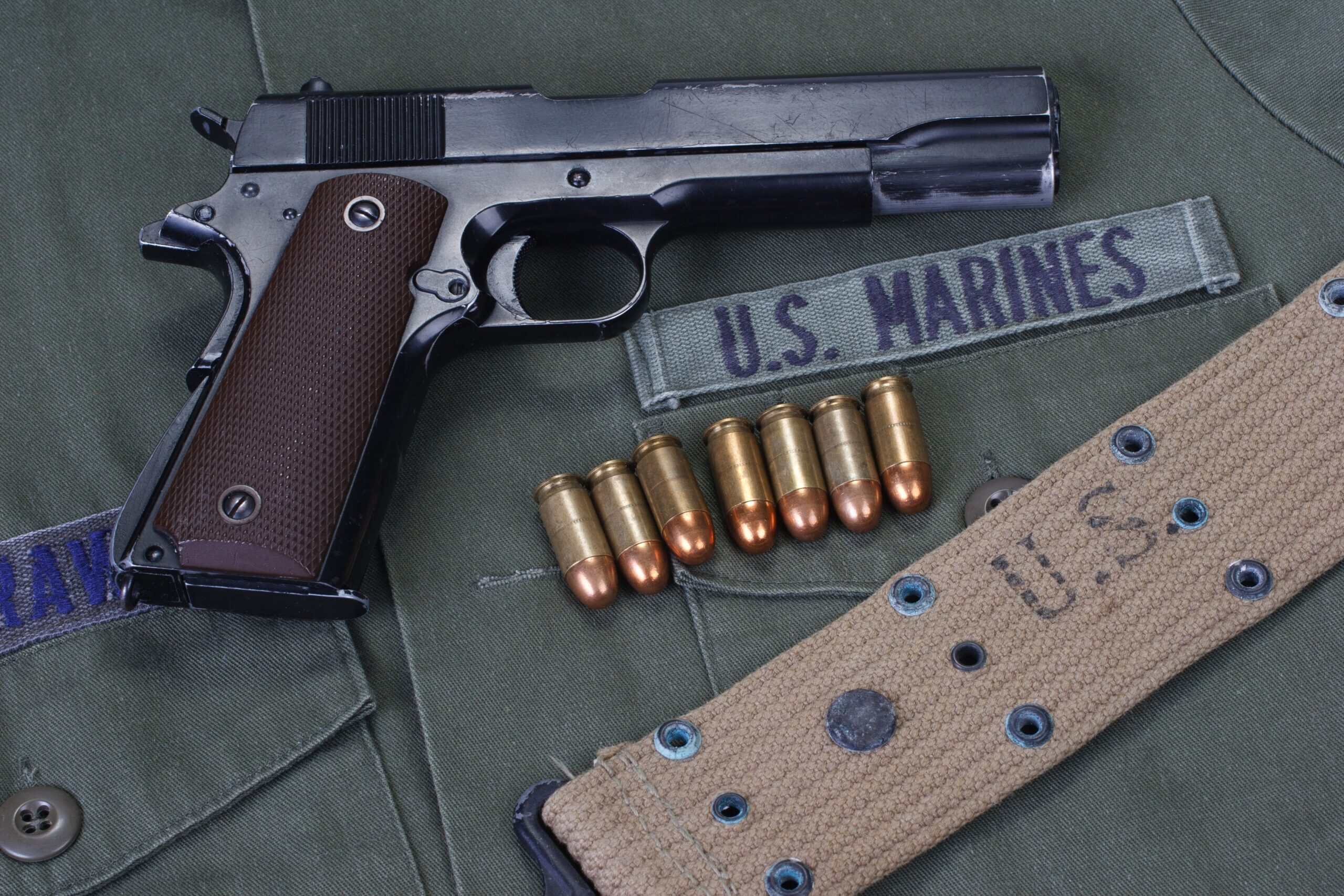
The Colt M1911 was created by John Browning because the military's revolvers couldn't stop determined assailants during the Philippine-American War. The Army demanded a more powerful round, and Browning answered with a .45 ACP semi-automatic, the M1911 itself, which passed a 6,000-round torture test without a single failure.
It was the official U.S. military sidearm from 1911 to 1985. That’s 74 years. Special forces still use this firearm to this day. Very few machines manage to last this long without a fundamental redesign.
Luger P08
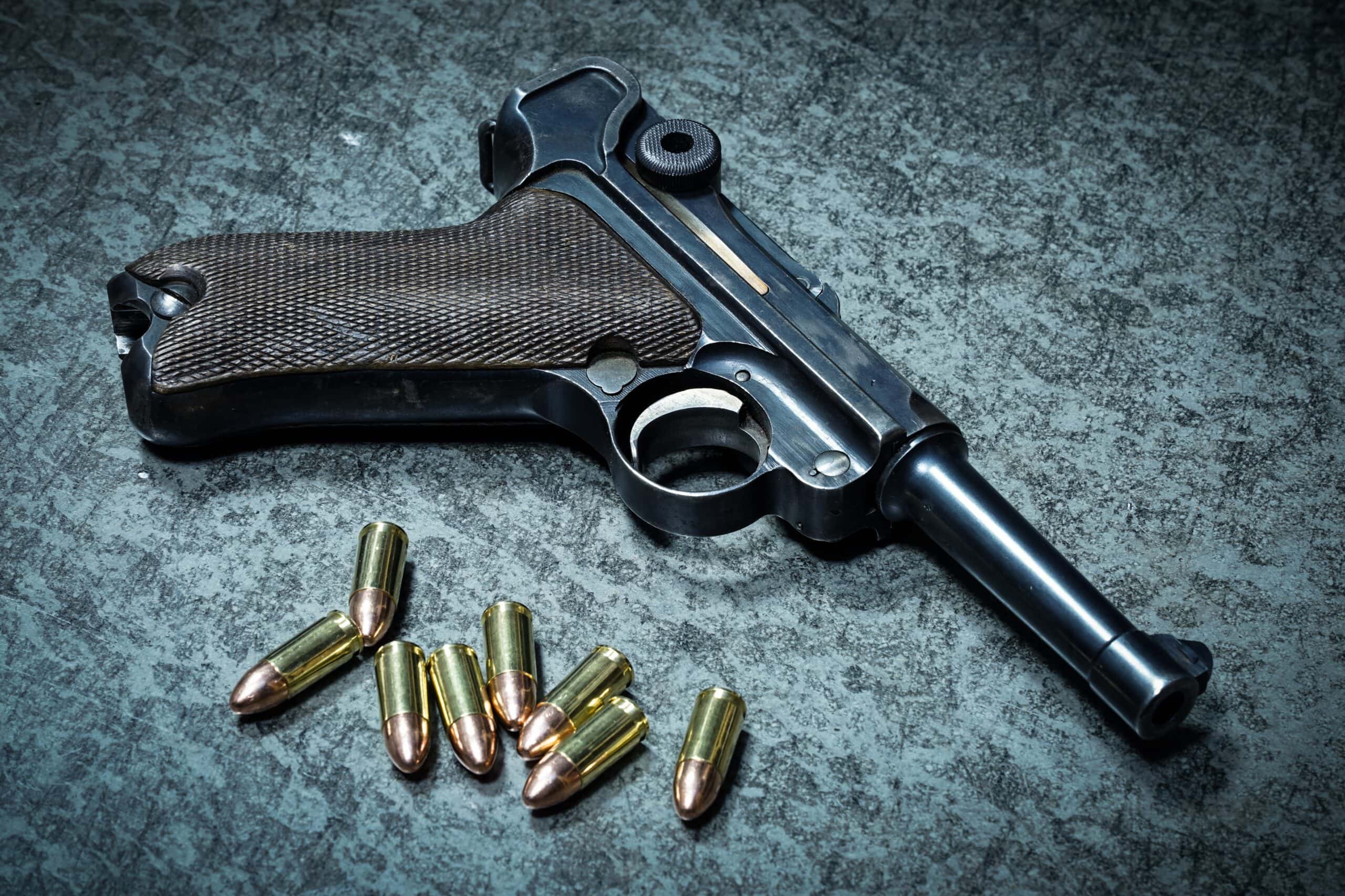
The Luger earned itself a reputation for its unique toggle-lock operation, which moved upward rather than moving back and forth like a standard slide. The pistol's cartridge, 9mm Parabellum, went on to become the world's most common pistol round.
The German army carried it through both World Wars, and Allied soldiers fought hard for the chance to take one home as a souvenir. Hollywood also took notice. The Luger became the German firearm of choice for typical movie villains for generations. But the reputation started on real ground, German infantry carried it through the trench fighting of the Western Front in the First War and the brutal urban combat of the Eastern Front in the Second.
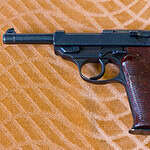
Walther P38
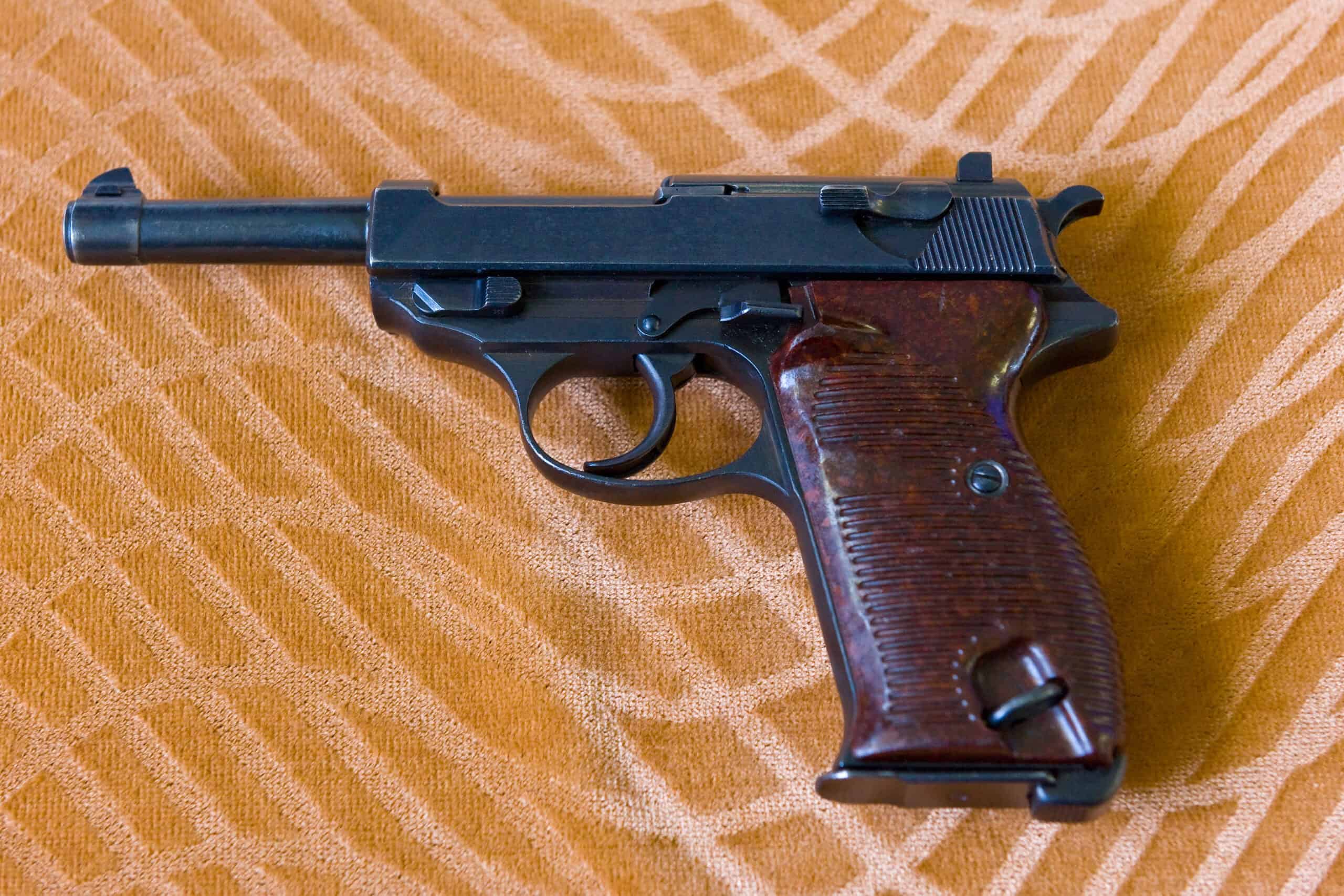
By the 1930s, the Wehrmacht needed pistols faster than German factories could turn them out, and the Luger's complex toggle mechanism was too slow and expensive to manufacture at that pace. Walther answered with the P38, featuring a double-action/single-action trigger, a simpler locked-breech mechanism, and a manufacturing process built to be faster and cheaper.
The design did so well that American soldiers would consider its capture worthy of being held onto well after World War II. A lot of countries continued to produce their own models following the P38's template, and the P38 itself stayed in military service in some countries decades later.
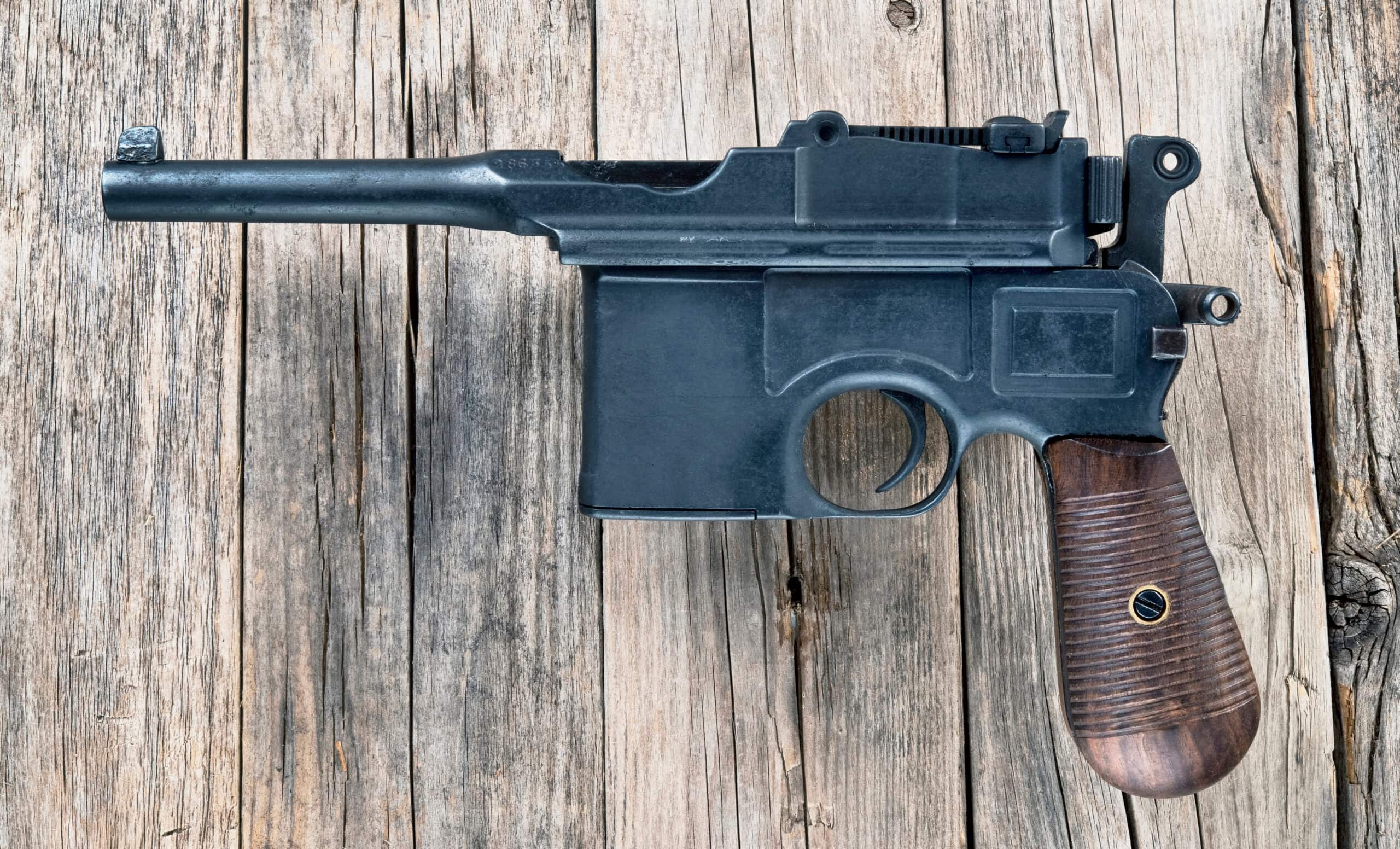
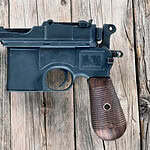
Mauser C96
While other pistol magazines usually sat hidden inside the pistol grip, Mauser designed the C96 to have its magazine mounted right in front of the trigger guard. It had a long barrel, a wooden holster box, and a nickname that stuck instantly: the Broomhandle. Its appearance was unlike anything else on a battlefield, and that strangeness is exactly why it ended up in the hands of fighters who wanted to stand out.
This included Winston Churchill, who carried one in the Battle of Omdurman in 1898 and mentioned how this weapon's rapid-firing capabilities helped him survive a cavalry charge that killed 21 fellow Lancers. The same weapon was carried by T.E. Lawrence during the Arab Revolt and used by Chinese warlords to arm entire regiments. While the C96 was never formally adopted into service as a sidearm by any country, it participated in numerous wars and revolutions, often in the hands of people history would remember for other reasons entirely.
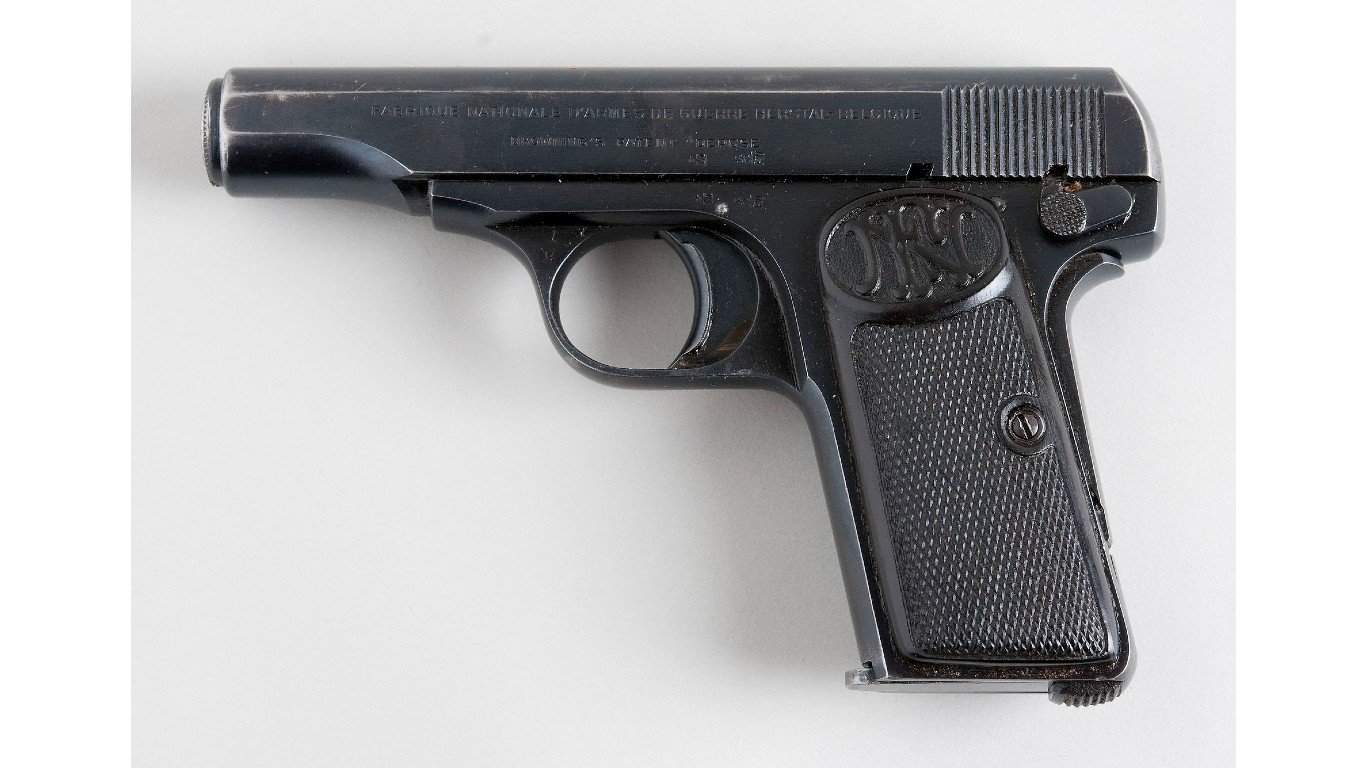
FN Model 1910
Most of the firearms listed here became legendary through the wars they were carried into. The FN Model 1910, on the other hand, made history by being the reason behind a major conflict. Gavrilo Princip used it to kill Archduke Franz Ferdinand in Sarajevo on June 28, 1914, a shooting that triggered the chain of alliances and ultimatums leading directly into World War I.
It was an easy-to-use pistol designed by John Browning with concealability rather than combat effectiveness in mind. That made it inappropriate for trench warfare but perfect for an assassin standing in a crowd. It never fired a shot in battle itself, but those two shots dragged millions of soldiers onto one.
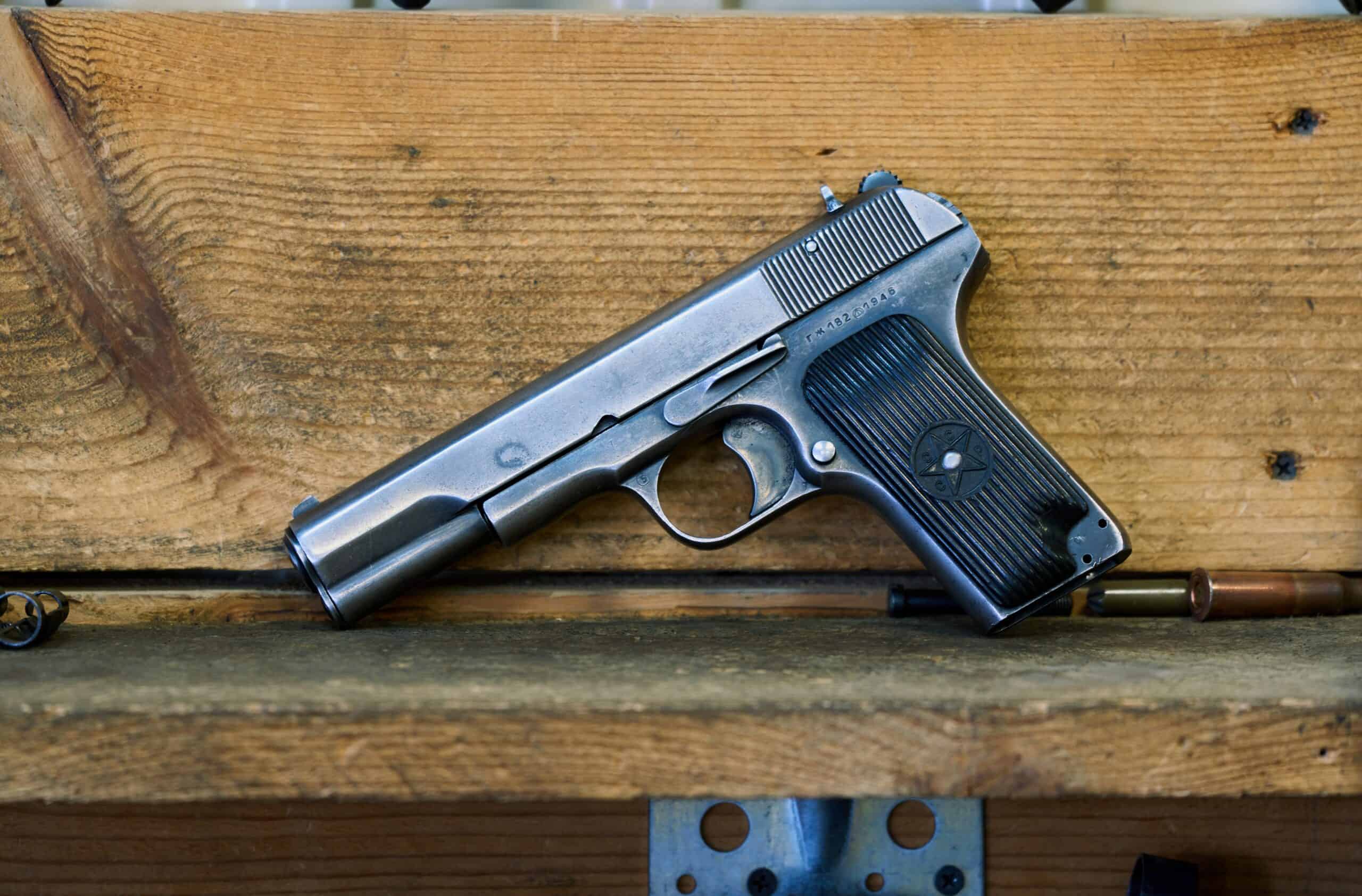
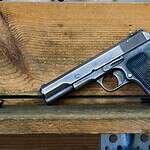
Tokarev TT-33
The Soviet military needed a pistol that could be built fast and fixed easily in the field, one that could survive the mud, the cold, and the brutal conditions of the Eastern Front without specialist tools or careful maintenance. Tokarev extensively copied Browning's previous design but simplified the mechanism greatly, machining the magazine lips in the gun body and making the hammer assembly removable as a single unit.
The TT-33 became the standard sidearm of the Red Army during World War II and was used in more than sixty countries throughout the world, from China to Hungary to Egypt. American soldiers faced the same TT-33 in Vietnam, held by Viet Cong fighters and North Vietnamese soldiers many years after it first entered Soviet service. Hardly any other pistol has managed to move around the world that much while still fighting the same enemy.
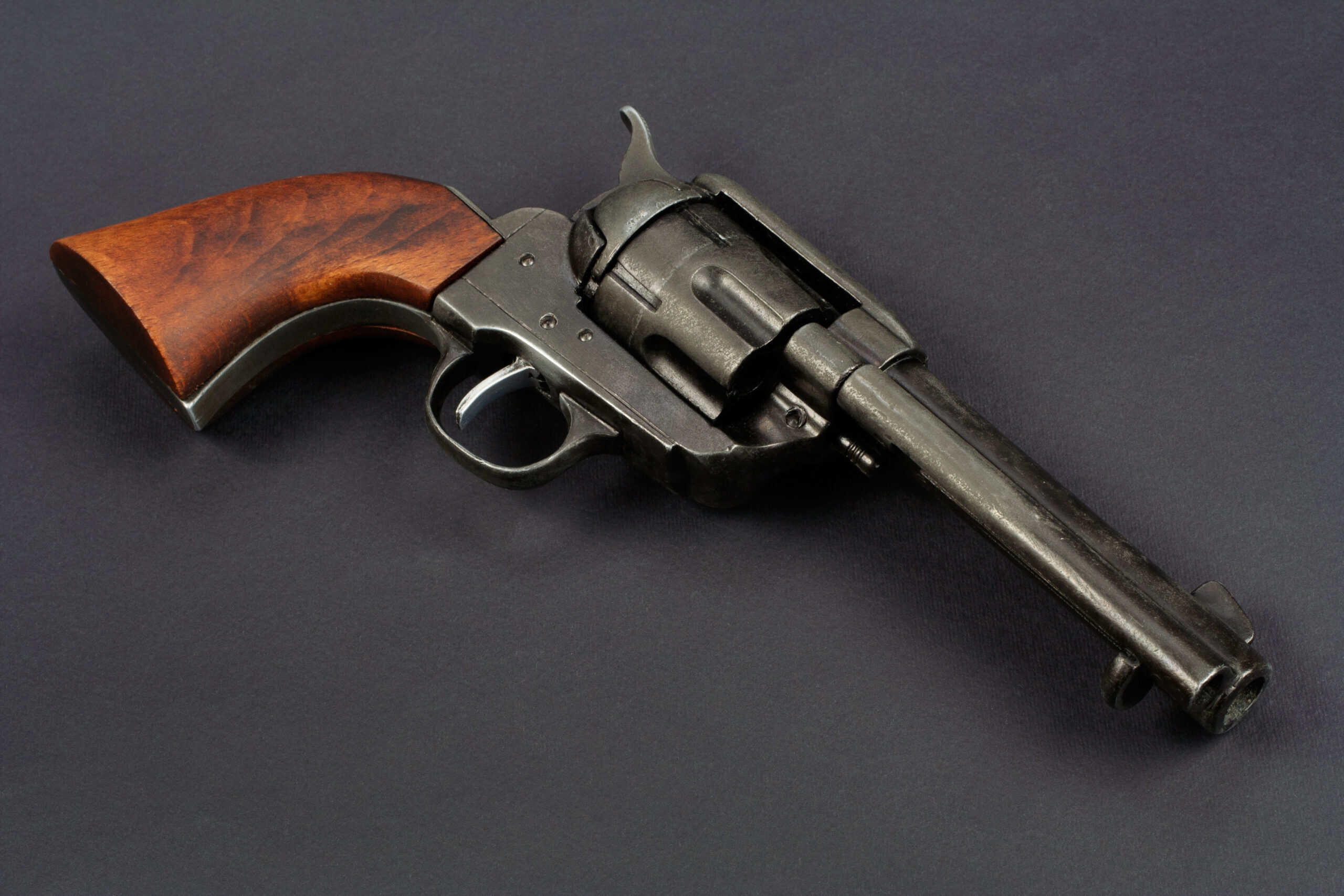
Colt Single Action Army
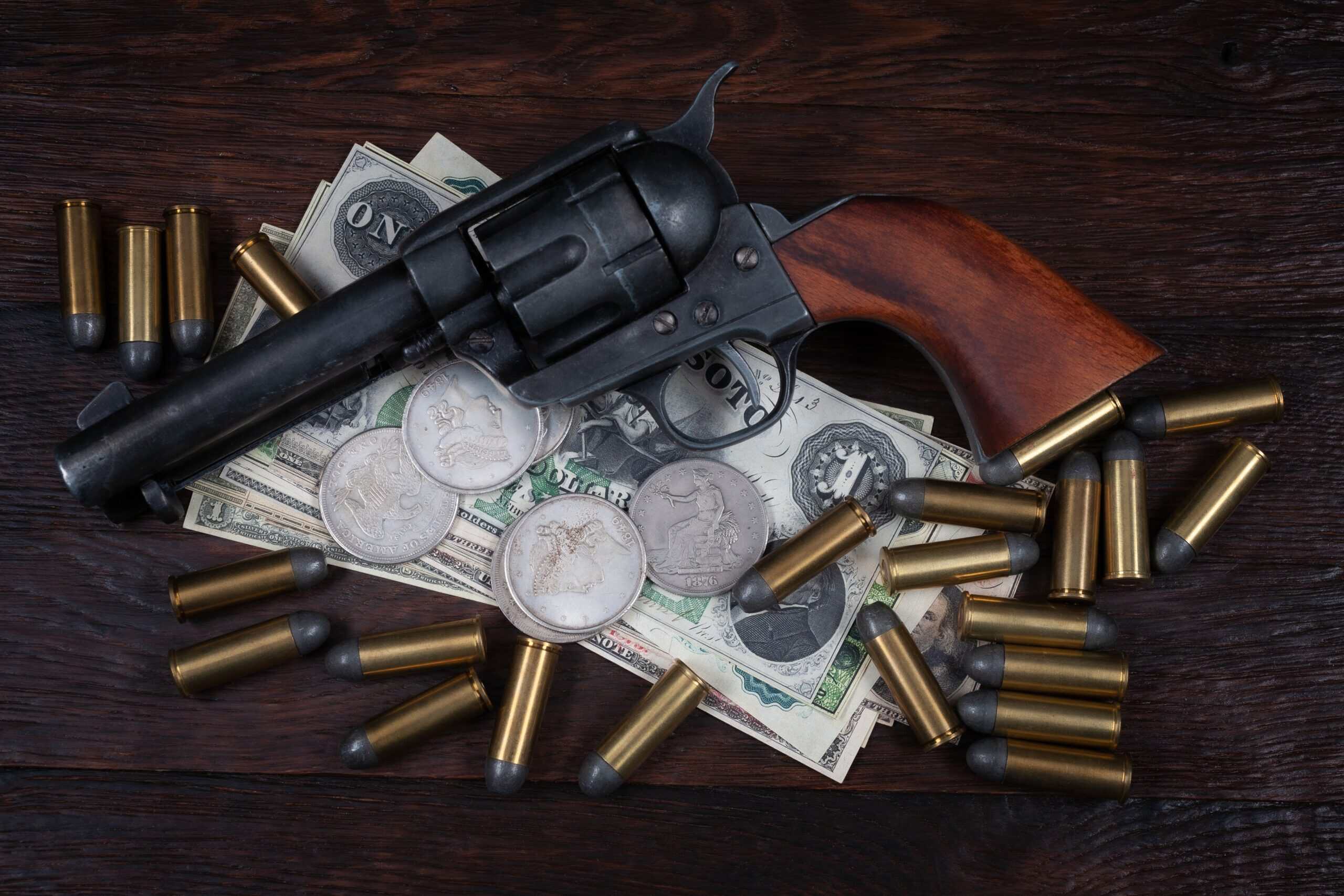
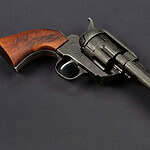
Also known as "the Peacemaker", the Colt Single Action Army became the sidearm issued to the United States military in 1873, when frontier service demanded a strong frame and a cartridge that hit hard. While its run in the U.S. Army was somewhat brief, its impact in the American cultural psyche outlived all the pistols presented here.
General George S. Patton carried a specially designed Single Action Army inlaid with ivory grips and engraved with his initials decades after it went out of Army issue. The General used the gun himself during the Punitive Expedition against the forces of Pancho Villa, near San Miguelito, Mexico, in 1916, killing two of the bandit's lieutenants in the process. The pistol remained in General Patton's possession until his death in 1945. That a general fighting tanks and airpower still trusted a 1873 revolver in his holster says something about how thoroughly this gun had already become shorthand for American frontier identity.
Webley Mk VI
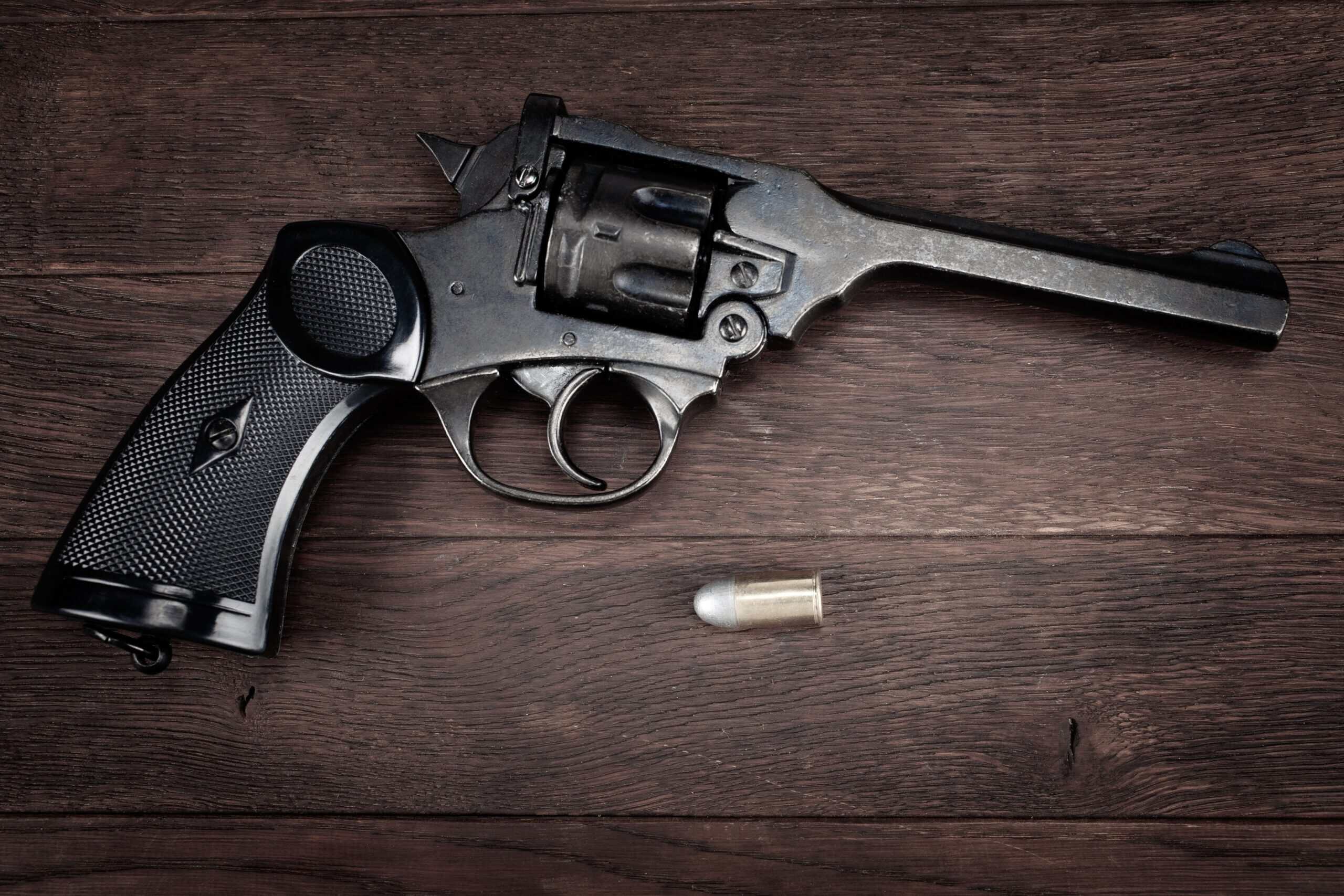
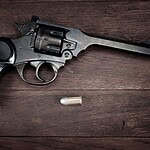
The Webley Mk VI served British and Commonwealth forces throughout the Boer War, World War I, and World War II, earning its legendary status through sheer reliability. The top-break action could stand up to the filth and brutality of trench warfare in ways that other pistols could not, and durability was more important than speed, as the stiffer breaking action of the Mk VI meant that reloading was no faster than with competitors.
The Mk VI used a heavy-bullet .455-caliber cartridge that packed a lot of punch at point-blank range, the distance where pistols actually mattered in the trench fighting of World War I. Though it may never have starred in an action movie like the revolvers of Germany and the USA, it served two generations of British officers in both world wars.
Nambu Type 14
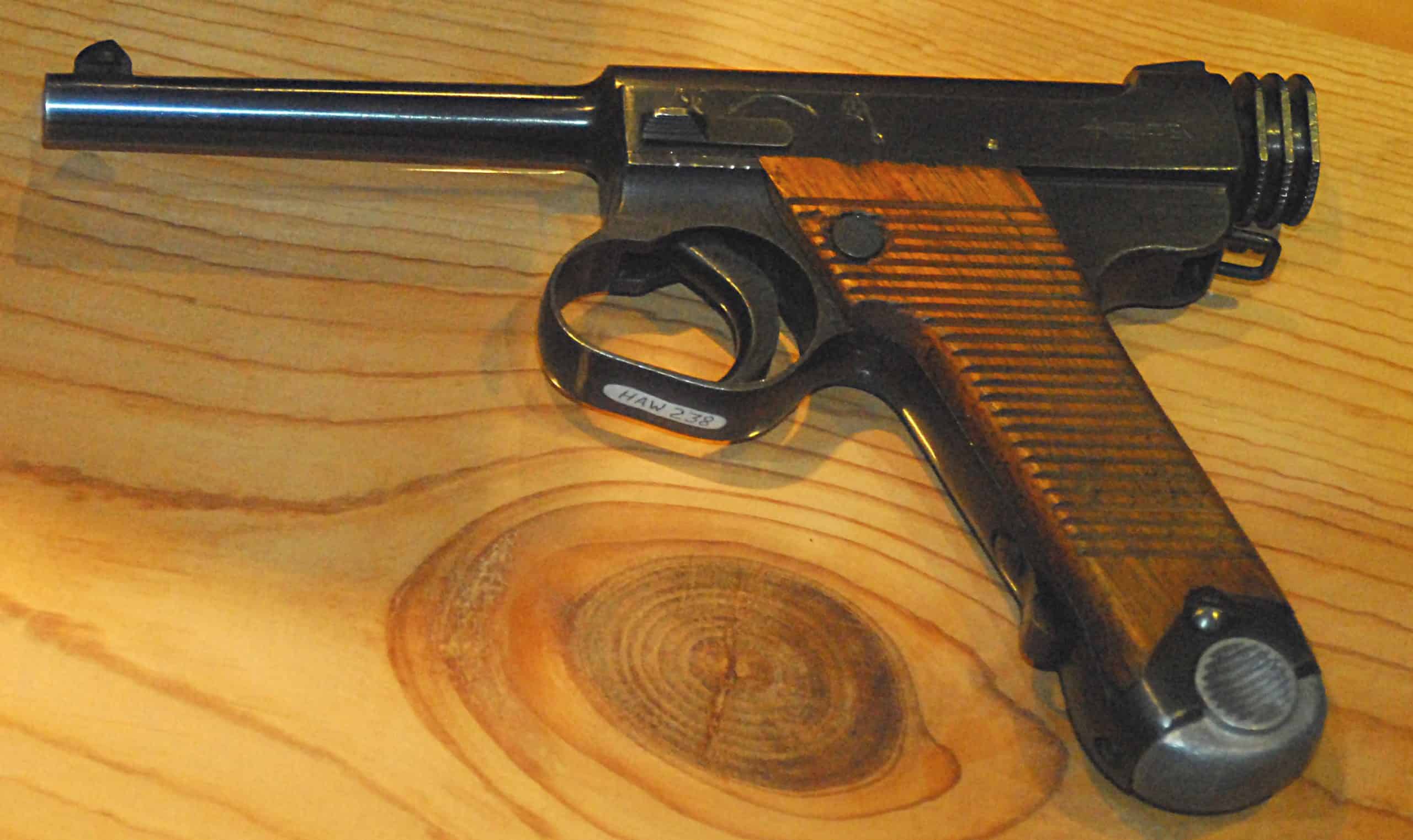
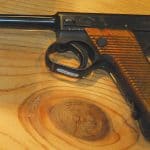
The Nambu Type 14 was the typical sidearm used by Japanese officers during World War II. At first glance, it seemed to share a design lineage with the P08 Luger, but this resemblance was not coincidental. Kijiro Nambu had analyzed European pistols and incorporated their basic design while producing a distinctive cartridge in 8mm caliber.
There were some real drawbacks associated with the design of the Type 14. The safety was hard to turn off while wearing gloves and one of its striker springs was prone to weakening over time. These flaws were so common and notorious that many Japanese officers preferred buying their own pistols rather than using the standard issue.
Nevertheless, the Type 14 remained the pistol that equipped the vast majority of Japanese officers in the Pacific Theater. The pistol gained its status less for its performance than for how widely it was carried into battle. Flawed or not, it rode into the jungles of Guadalcanal and the beaches of Iwo Jima on the hip of nearly every Japanese officer who fought there.
Beretta M1934
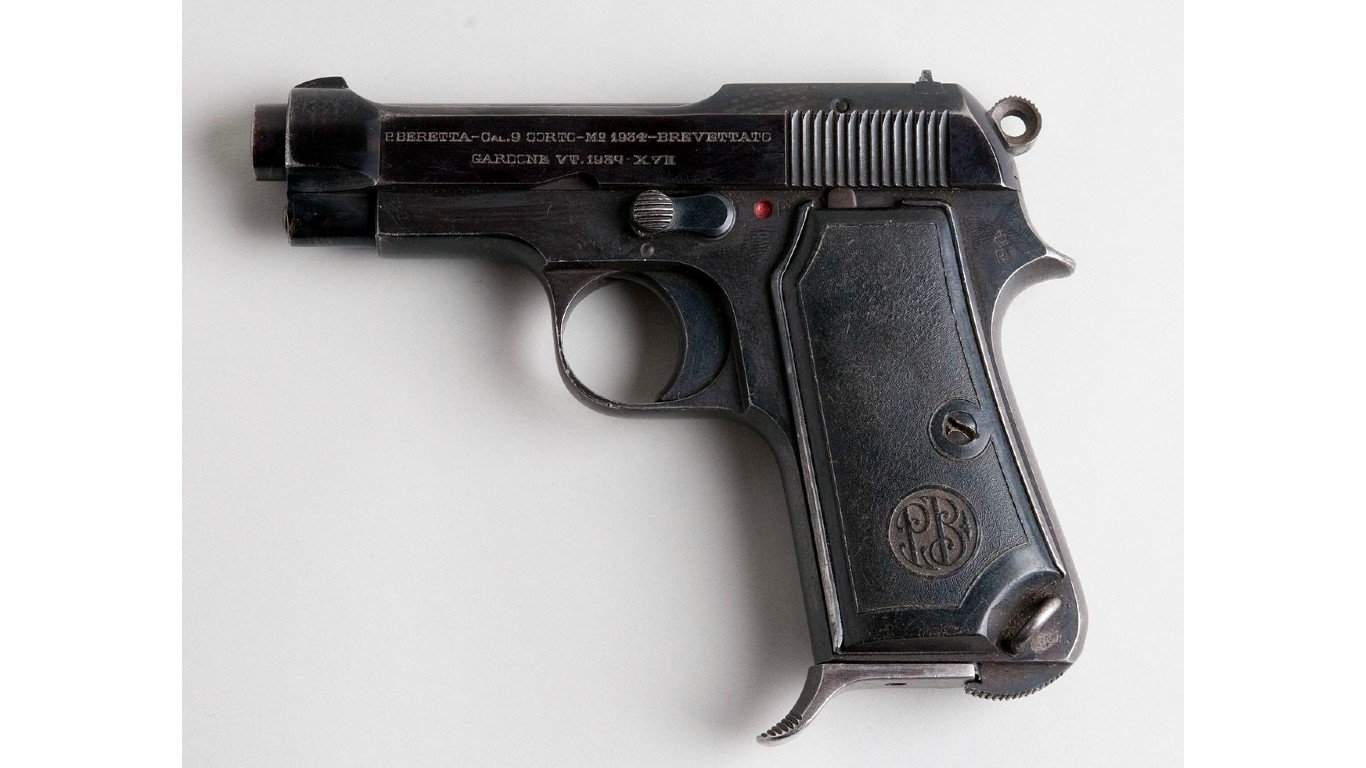
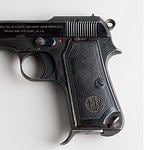
Italy's standard sidearm through World War II was a small pistol whose blowback mechanism made it both simple and compact. It was very easy to mass-produce and maintain in the field, without any special tools or equipment. The weapon was used by the Italian army and police forces throughout WWII, until Italy's surrender in 1943 split loyalties down the middle and gave the gun a second life it never asked for.
Occupying German units in Northern Italy started distributing the weapon to their own soldiers from captured stock and from factories which were still producing them, thus ending up arming the opponents with the exact same pistol within just a couple of years of each other. Few sidearms have ever changed allegiance that cleanly without a single modification to the design. Both sides carried it into the same brutal campaigns, from the Allied landings in Sicily to the grinding mountain fighting of the Gothic Line.
Browning Hi-Power
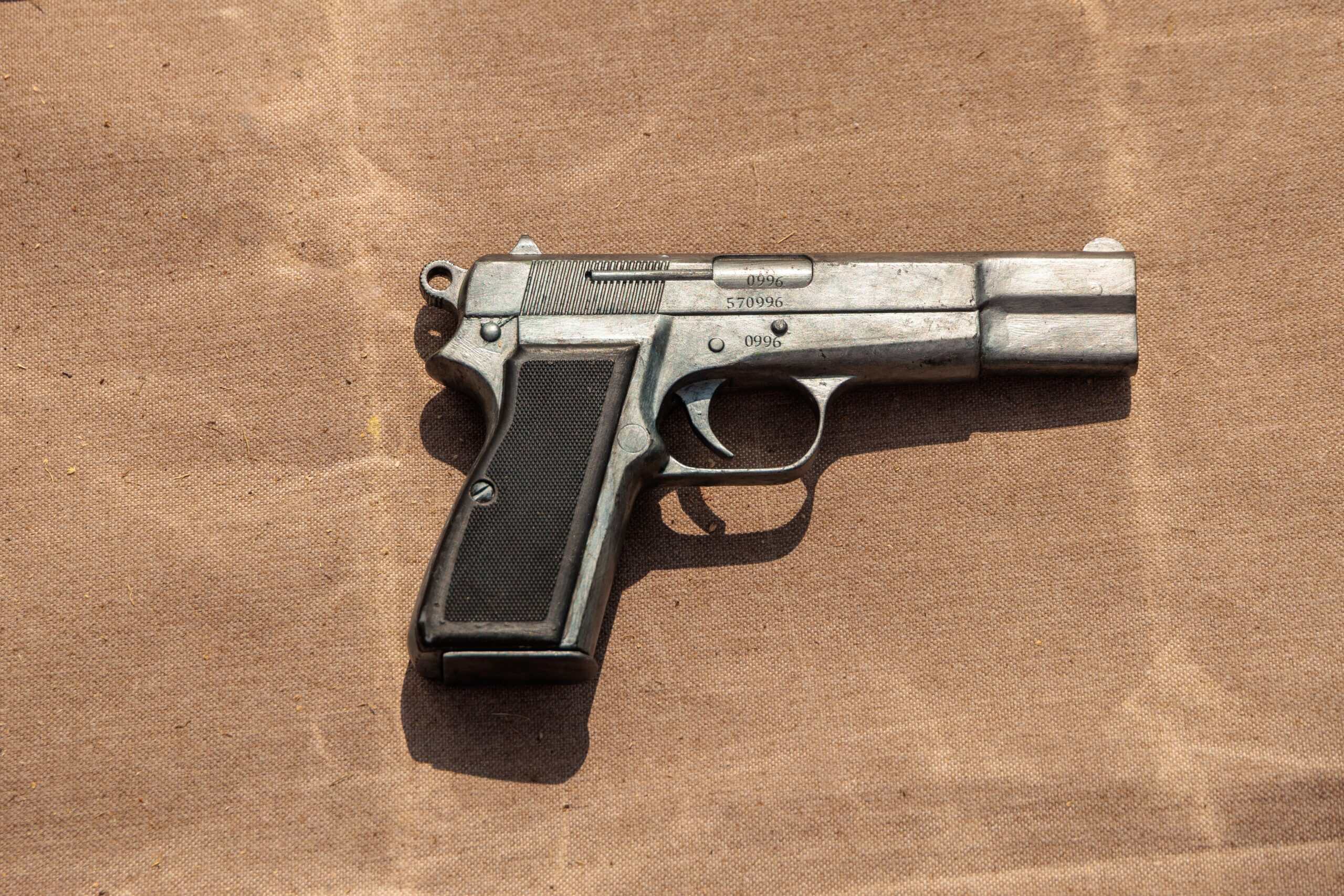
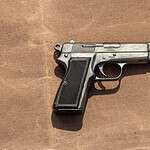
John Browning came up with the Hi-Power design before his death in 1928, but it was finalized by Dieudonné Saive at Fabrique Nationale. It became the first commercially successful handgun with a double-stack 13-shot magazine and a single-action trigger. These features nearly doubled its firepower compared to contemporary designs such as the 1911, from which it was loosely derived.
In 1940, when the Germans occupied Belgium, they started manufacturing Hi-Power pistols for their Wehrmacht. Meanwhile, the Canadian firm John Inglis and Company kept supplying Allied troops with the very same gun under license. During the Second World War, German and Allied soldiers were armed with essentially the same weapon, designed by the same deceased American engineer, one version built under occupation, the other in freedom. Both versions saw real combat too, the Wehrmacht's pistols in Western Europe, the Allied-built Inglis versions in the hands of British commandos and the Free French resistance.
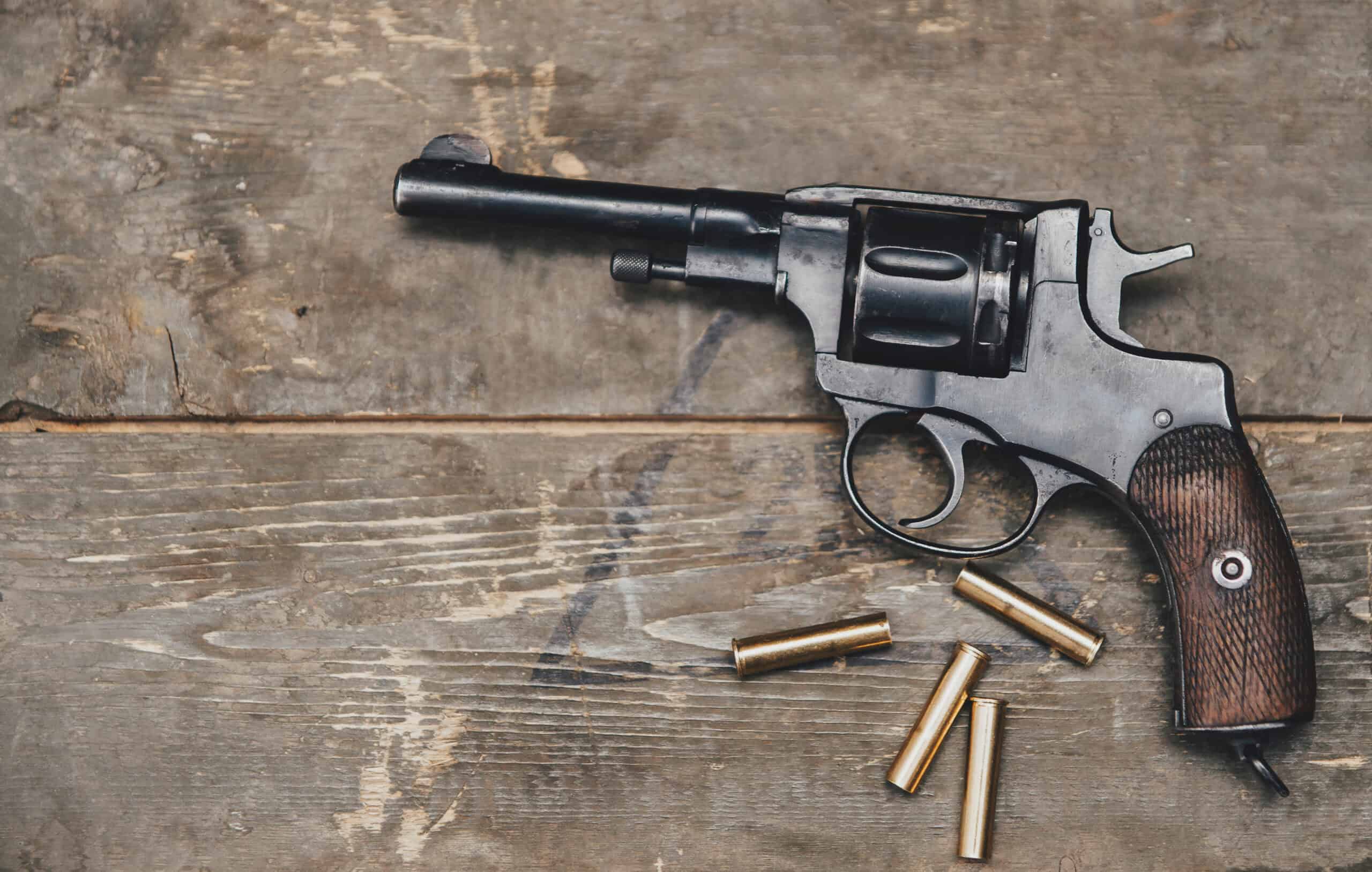
Nagant M1895 Revolver
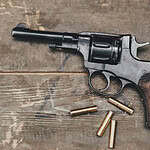
The Nagant M1895 was already an aging revolver by the 1930s, and the Soviet Union had developed a faster, more modern replacement in the Tokarev TT-33. Even so, the Nagant refused to disappear from Red Army service. Thanks to its gas-sealed cylinder that shifted forward on firing, the Nagant was surprisingly quiet when suppressed, a feature that kept it in demand for specialized use long after it should have been retired.
Cossack cavalry units kept carrying Nagants throughout World War II partly because the Tokarev had no external safety lever, a real risk on horseback where a jolted holster could mean an accidental discharge next to a horse's flank. A 19th-century gun that had outlived itself twice ended up spending the deadliest war in human history riding alongside the weapon meant to replace it.
The image featured at the top of this post is ©Militarist/Shutterstock.com