
















10 One-Hit Wonders People Love to Hate
Some songs refuse to die, no matter how many people insist they hate them. They dominated radio stations, invaded commercials, played at every party, and became nearly impossible to escape. You may have rolled your eyes whenever the opening notes hit, but decades later, the lyrics are still permanently lodged in your memory. One familiar chorus is all it takes before you are singing along to a song you supposedly never liked.
These ten one-hit wonders became famous, overplayed, mocked, and eventually labeled guilty pleasures. People love to complain about them, yet they still know every word. Whether it was an irresistible chorus, a bizarre gimmick, or relentless radio exposure, each song found a way to outlive the criticism—and the artists’ time on the charts.
"Who Let the Dogs Out" by Baha Men (2000)
Nobody ever likes this song in public, but there was a time in the early 2000s when there was simply no avoiding it. If you were at a sporting event or any type of outdoor function, you knew this tune was getting played. The Baha Men, a junkanoo band from the Bahamas, recorded it grudgingly at first after their manager pushed them toward a song they initially wanted nothing to do with. It didn't matter. The song earned a Grammy for Best Dance Record in 2001, and the barking chorus bit down on a generation's memory and never let go.
It topped out at 40 on the Billboard Hot 100, which doesn’t illustrate how unavoidable it really was. Radio play and sporting event adoption carried it far beyond what the chart position suggests. If you say you don't know it, you're lying to yourself and everyone in the room.
"Mambo No. 5" by Lou Bega (1999)
Lou Bega recorded a version of a 1949 Pérez Prado instrumental. He added lyrics that were essentially a list of women's names, and accidentally created one of the most deeply embedded earworms of the late nineties. All names used in this song, from Monica to Jessica, will forever be etched in your memory if you were around when this song was getting heavy rotation. You can't get rid of "a little bit of Monica in my life."
The song reached number three on the Billboard Hot 100 and topped the airplay charts for weeks. In Germany, it was the biggest hit of 1999. Stephen King loved the song so much he played it until his wife threatened to leave him. That’s either a testament to its catchiness or a reminder that even the man who wrote The Shining has guilty pleasures.
"Tubthumping" by Chumbawamba (1997)
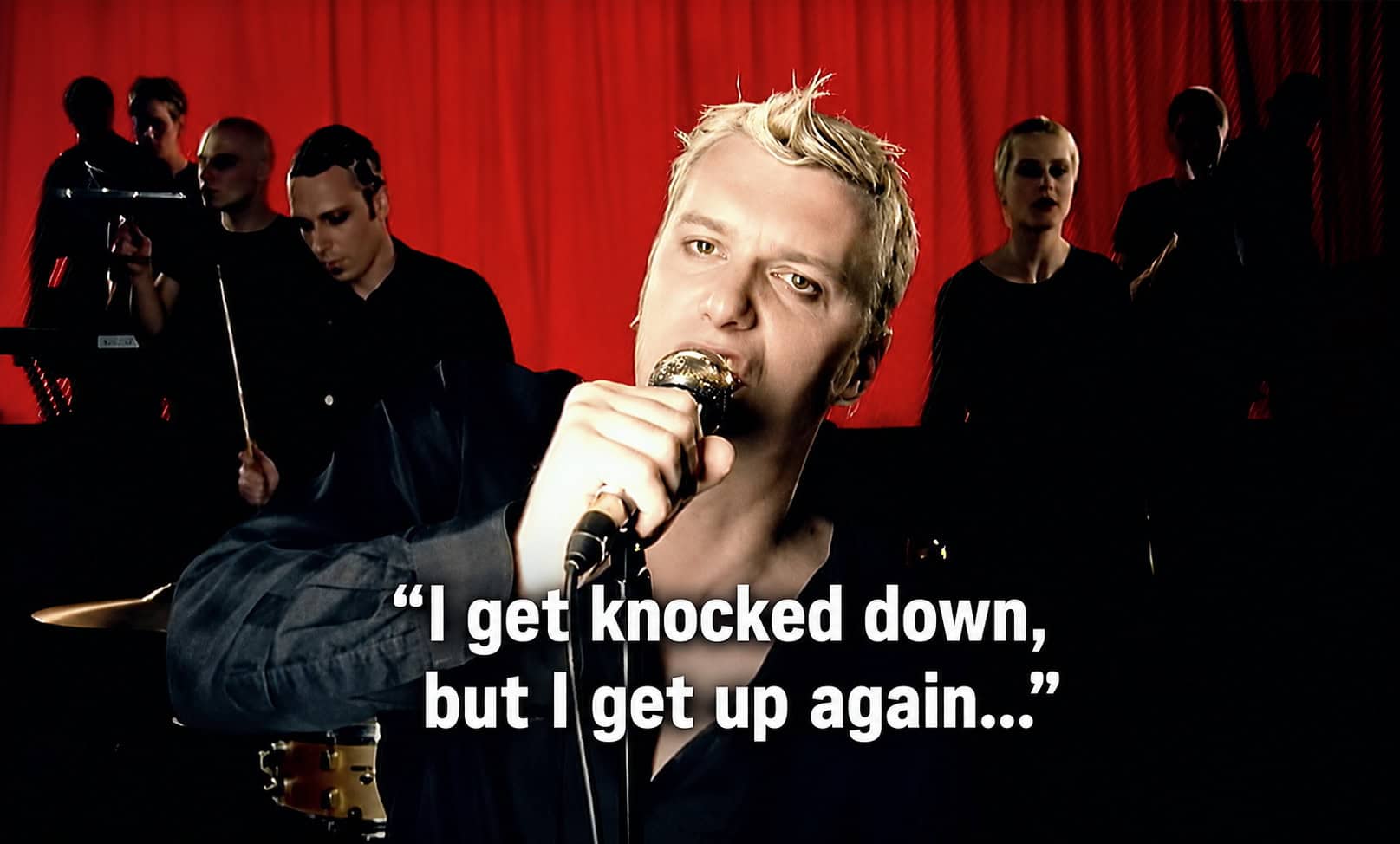
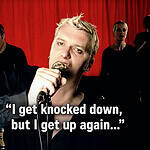
A British anarcho-punk band came up with an ode to resilience, a song about drinking and getting back up that ended up becoming one of the most iconic tunes of the nineties. "I get knocked down, but I get up again" is one of those lyrics that seem to live in your head whether you ever consciously decided to put them there or not. What makes it even more surreal is the fact that Chumbawamba, for most of their career, produced explicitly political music that didn’t come close to rousing sing-alongs like this one.
"Tubthumping" hit the sixth spot on the Billboard Hot 100 and stayed there for a couple of months. It's one of those songs that everyone says is really annoying until it starts playing. When it does, the chorus comes out of everyone’s mouths almost mechanically.
"I'm Too Sexy" by Right Said Fred (1992)
The Fairbrass brothers recorded it at their gym, and no major label would have anything to do with it. Every label passed. But when they got a little indie company in London to put it out, it was topping the charts in the U.S. and 31 other countries around the world within months. The idea of a model celebrating his own absurd handsomeness over a spare house groove was meant as a joke. It worked as a joke, and it turned out to be completely impossible to get out of your head.
Right Said Fred never charted in the top 40 in the U.S. again. "I'm Too Sexy" is their entire American legacy, and that's more than most bands ever get. In fact, it became so much a part of our culture that Taylor Swift interpolated it in a number one single from 2017, introducing it to a generation of people who weren't even born yet in 1992 and who also now know every word.
"Macarena" by Los Del Rio (1996)
Two fifty-something Spanish performers produced a hit record about a girl cheating on her boyfriend while he's being drafted into the army. It was sung in Spanish; most people who danced to it had no idea what it was about. What they did know was how to dance it. Even the 1996 Democratic National Convention wasn’t immune. C-SPAN showed delegates dancing to it on the floor during an afternoon session.
The "Macarena (Bayside Boys Mix)" held the number one position on the Billboard Hot 100 for 14 weeks, the longest time spent there of any song in the nineties, and was on the charts for 60 weeks altogether. Your body remembers the moves, and your brain remembers the lyrics. There’s no escaping this one no matter how much you try.
"What's Up?" by 4 Non Blondes (1993)
Technically, the song is called "What's Up?" but everyone calls it "What's Going On?" because that’s what Linda Perry sings at the top of her lungs during the chorus. It doesn't really matter when you are singing it with as much energy as she did. Or at least trying to. 4 Non Blondes made one album, and this song was on it. The band split up the next year after Linda Perry left. She went on to write hit songs for Christina Aguilera, Pink, Gwen Stefani, and other artists. This song later racked up more than two billion views on YouTube.
"What's Up?" reached the 14th spot on the Billboard Hot 100, modest by the standards of how huge it became. It has become a karaoke classic and a regular feature in movie soundtracks. People who swear they don't have it know the bridge.
"Breakfast at Tiffany's" by Deep Blue Something (1995)
A band from a Texas college penned a song about a couple whose only thing in common was their hazy recollection of a film, and it became one of the most bizarre slow burn hits of the 90s. "Breakfast at Tiffany's" reached number five on the Billboard Hot 100 and lingered for several weeks in the upper regions of the charts. It is a song about romantic desperation wrapped in pleasant pop rock and has such a perfectly crafted chorus that it sticks immediately, whether you want it to or not.
Deep Blue Something never had another top 40 hit. The song appeared in the movie Sliding Doors, featured on numerous mix tapes, and in an SNL skit where four people discuss the verses while singing the chorus involuntarily. It works well because everyone watching could relate.
"Steal My Sunshine" by Len (1999)
The Canadian pair created a song in a home recording studio off a sample from a disco record released in 1976. They used most of their money filming the music video in Florida, and ended up creating the defining song of the summer of 1999. "Steal My Sunshine" reached number nine on the Billboard Hot 100 and became one of those songs that played nonstop on the radio until people swore they hated it while still being able to recite every lyric. It found its way into Knocked Up, Parks and Recreation, That '70s Show, and a handful of other properties that kept reintroducing it to new audiences.
Len never appeared on the US charts again. "Steal My Sunshine" is a summer song that people add to their playlists ironically and play for real. The parts of the song where Len talks are the easiest part to make fun of but are also what people recite word for word.
"Afternoon Delight" by Starland Vocal Band (1976)
A band from Washington, DC, created a song about a romantic meeting in the afternoon. They gave it an innocent-sounding name and saw it become a No. 1 hit and win the Grammy Award for Best New Artist in 1977. "Afternoon Delight" is the type of song that looks harmless until you listen to its lyrics, and only then will you realize how funny it actually is. The Starland Vocal Band would not repeat their success with another top 40 hit.
The lyrics are too clear to ignore and the guitar riff opening the song is instantly recognizable to those who have listened to it even once.
"Kung Fu Fighting" by Carl Douglas (1974)
This record was recorded as a B-side in around ten minutes. His label thought it was throwaway filler. But since the martial arts craze was at its peak at the time, in just a few weeks it became a best-selling single worldwide, hitting No. 1 in the US and the UK, while selling over ten million copies globally.
This track has been featured in sports, in animated movies, in countless karaoke sessions, and also in countless trailers and TV shows. The introduction riff is one of the most recognizable in all of pop music history, and no one who has ever heard it will forget it.