

Our planet is a treasure trove of forgotten histories that occasionally see the light of day thanks to the efforts of historians and archaeologists. Now, we’ve got a fairly developed idea of the way things went, at least in terms of the development of civilization. However, some of the most bizarre archaeological finds in recorded history quickly turned those notions directly on their head.
Suffice it to say, history isn’t quite as neat and tidy as your high school textbook made it out to be. Things develop in parallel, across different nations, and sometimes defy all reasonable expectations. Some of the finds we’re covering today ended up leaving researchers speechless and have changed the way we view history as a whole.
The Antikythera Mechanism
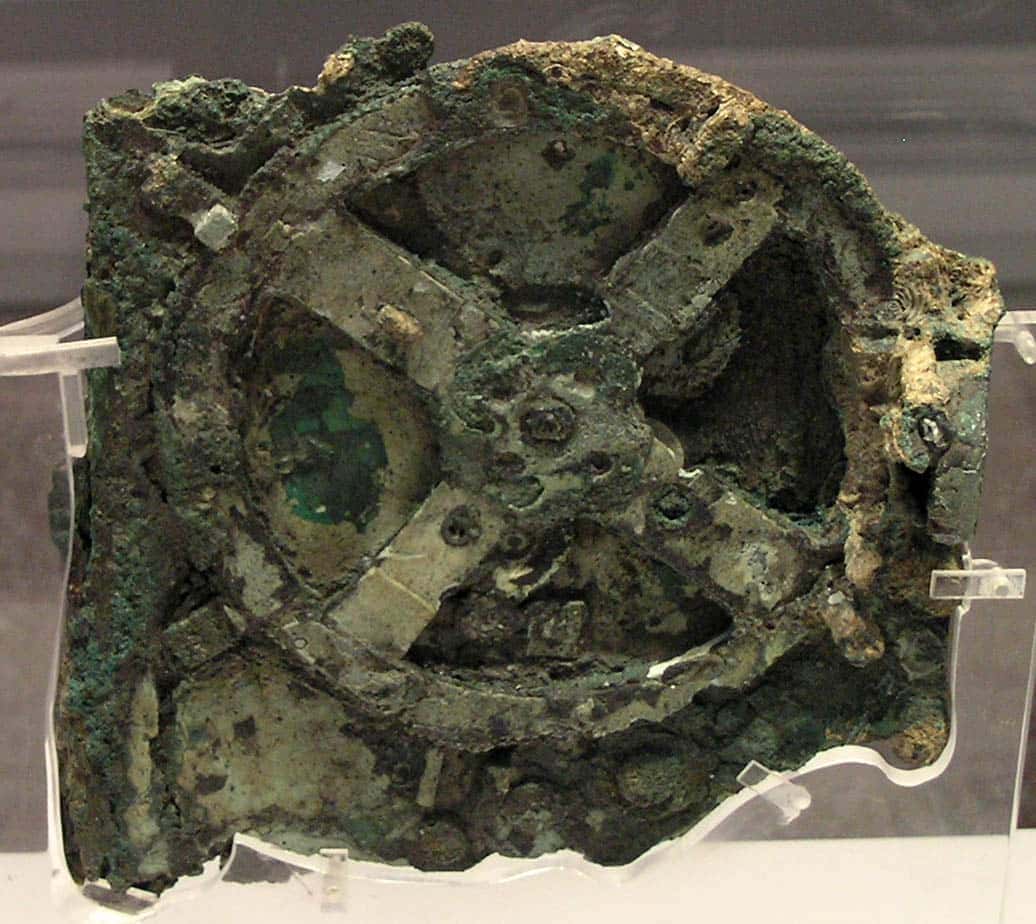
©No machine-readable author provided. Marsyas assumed (based on copyright claims) / CC BY-SA 3.0 – Original / License
In 1901, some divers were exploring a Roman shipwreck off the coast of the island of Antikythera when they recovered a corroded lump of bronze. It sat in a museum for decades after the discovery, hiding its true secrets behind the thick green patina it had amassed in the sea for centuries. An advanced X-ray and CT scan revealed that this lump was something far more complex than originally thought.
This device dates back to between 150 and 100 BC, and is effectively the oldest known analog computer to ever be discovered. By simply turning the hand crank on the side, the user could track the movements of the sun, phases of the moon, and positions of the 5 planets known to the ancient Greeks. It even had a countdown for the original Olympic Games.
Needless to say, this was a bizarre archaeological find. The inner mechanisms made use of differential gearing, something that wouldn’t show up in human history again until the 14th century. It begs the question of just why this knowledge was lost entirely for 1,500 years. This is the equivalent of finding something like a jet engine tucked away in the root cellar of a medieval castle.
Gobekli Tepe
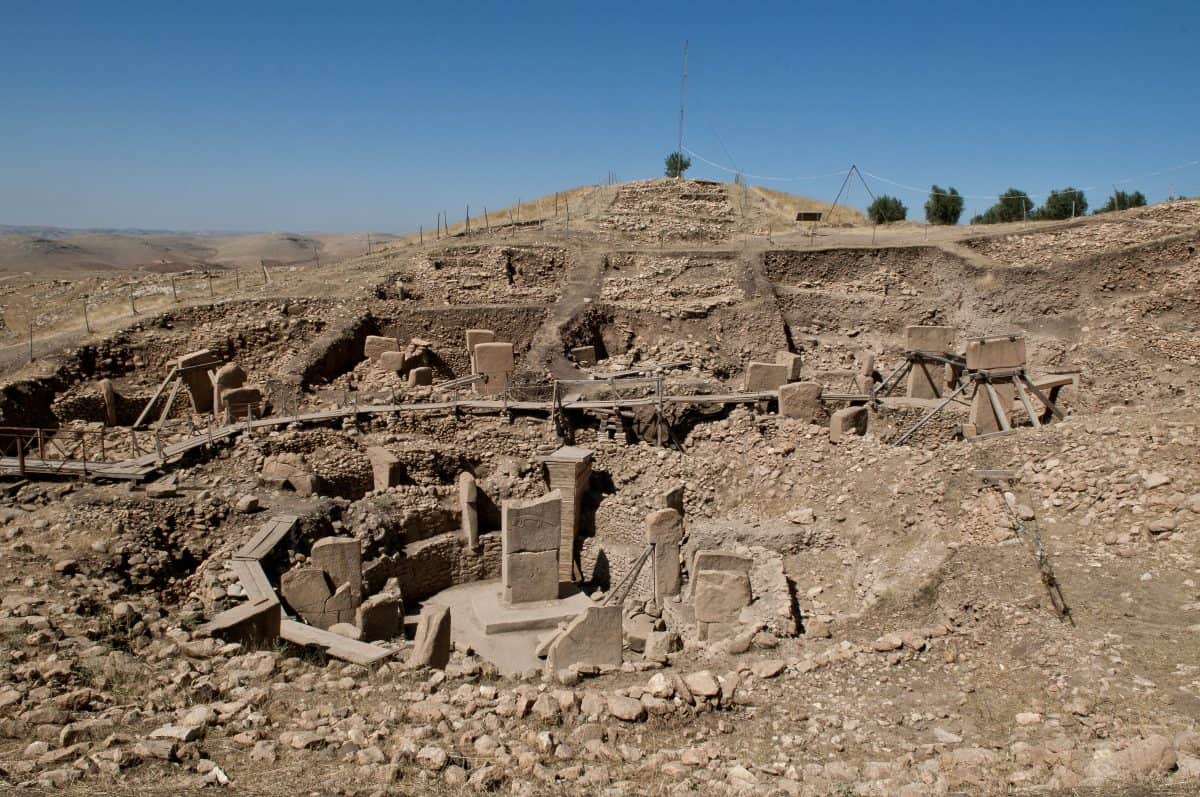
©"Göbekli Tepe, Urfa" by Teomancimit is licensed under BY-SA 3.0. – Original / License
Deep in Southeastern Turkey lies Gobekli Tepe, a massive complex of stone circles carved with intricate reliefs of animals. Carbon dating places the site between 9,500 and 9,000 BC. To put that in context, it’s 7,000 years older than Stonehenge and the Great Pyramid of Giza, with construction starting somewhere at the tail end of the last Ice Age.
While we assume that the hunter-gatherers who would have occupied Anatolia lacked the sort of specialized social structures, skilled labor, and engineering skills needed to mine, transport, and carve limestone pillars weighing up to 20 tons, this sort of puts that thought on its head. We generally think of civilization as coinciding with the development of agriculture, which doesn’t account for a structure like this.
If anything, this shows that mankind was embarking on massive projects dedicated to their faiths before they learned how to sow seeds or even lay down roots. It has completely flipped the script on our understanding of how human society started.
Sanxingdui Bronzes
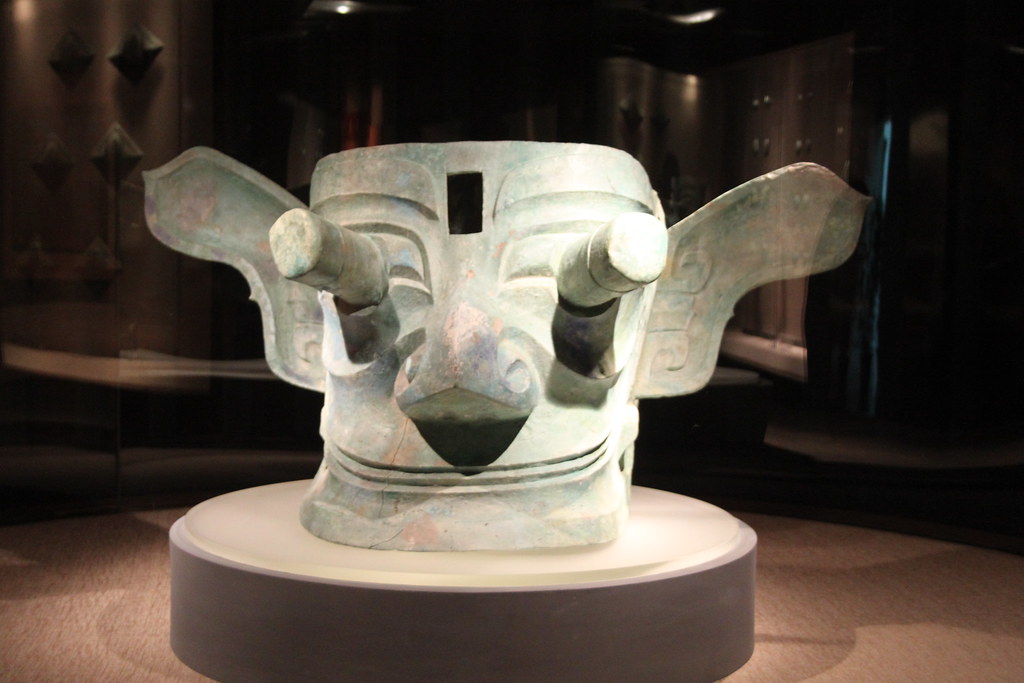
©"Sanxingdui Bronze Mask" by Gary Lee Todd, Ph.D. is licensed under CC0 1.0. – Original / License
In 1986, a group of brickyard workers in Sanxingdui, China, accidentally found themselves in a sacrificial pit while going about their work. The pit was filled with thousands of artifacts, made of bronze, jade, and gold. These workers had accidentally stumbled upon the remnants of a highly advanced civilization that existed some 3,000 years ago, during the Shang Dynasty.
Nothing about the artifacts found fits the convention of Chinese art and culture of the era. The pits contained large, surreal bronze masks with protruding, cylinder-like eyes. This was topped off with the discovery of a 13-foot-tall bronze tree populated by birds and dragons.
Whatever civilization crafted these artifacts was quite a way along, given just how sophisticated their bronze-casting techniques were to make such massive sculptures. The discovery led to more questions than answers, as there were no written records found at the sacrificial pit, let alone from the Shang Dynasty, that could account for a civilization capable of such a thing.
Voynich Manuscript

This is likely a familiar sight for many of you. The Voynich Manuscript is a 240-page book that has captivated popular history for decades at this point. Cracking it open will reveal vibrant, surreal illustrations, nonsensical writings, and all manner of bizarre and strange decorations. Carbon dating places the book in the early 15th century, but the contents of the book have stumped cryptographers for years at this point.
Every single human language has statistical patterns, and the Voynich Manuscript is no exception. The writing inside isn’t gibberish, as it conforms to the conventions and patterns that are expected for a language to possess. Curiously, there are no correction marks, cross-outs, or hesitations in the manuscript. This meant that every single stroke was done with the utmost confidence.
It has been the subject of centuries of study at this point. However, no one has made any headway into deciphering the text. At this point, it begs the question as to whether it is an elaborate Renaissance-era hoax or some lost tome recorded in a dead language.
Voytek Spheres

For decades now, miners in South Africa have been pulling out these strange, smooth metallic spheres from pyrophyllite deposits. Known as the Klerksdorp or Voytek spheres, these are roughly the size of a golf ball and feature fine lines etched around them.
These have been the subject of some intense speculation, especially when considering that the rock layer they’re found in is around 3 billion years old. Conspiracy-minded folks point to them as proof of ancient aliens or some ultra-ancient, pre-human civilization.
Mainstream geologists maintain that these spheres are a natural phenomenon, often made from hematite or pyrite. However, the uncannily precise grooves and balance of the spheres continue to draw questions. Further, no one has been able to replicate these while experimenting with natural erosion.
Sajama Lines
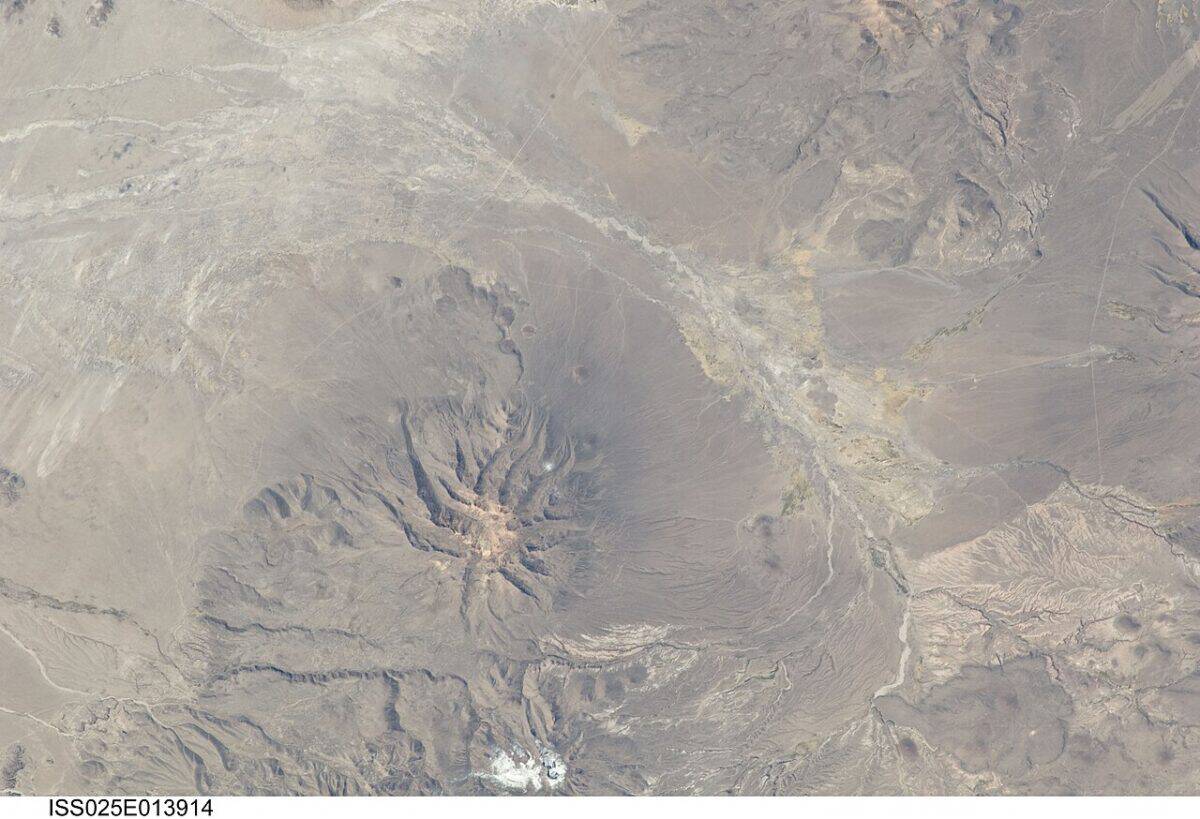
©Earth Science and Remote Sensing Unit, Lyndon B. Johnson Space Center / Public Domain – Original / License
Across western Bolivia, thousands of perfectly straight lines have been directly etched into the ground. These aren’t dissimilar to something like the Nazca Lines in Peru. However, they don’t depict any sort of animals or shapes. Instead, the Sajama Lines make for a massive, interconnected web of straight paths that have been directly gouged into the terrain.
The overall length comes in at 14,000 miles, which covers around 8,500 square miles. They’re unerringly precise as well, with only minor deviations when considering it spans some of the roughest mountain terrain in South America.
These were built by indigenous communities over thousands of years. The sheer scale cannot be understated, and it remains the largest artistic or structural monument in human history. How exactly did ancient people maintain such a level of precision and accuracy over mountains, rivers, and ravines without modern surveying or aerial oversight? The exact methods by which they were created remain a mystery.
Conclusion
The deeper we dig into the Earth, the more it becomes evident just how clever our ancestors were. While some of today’s discoveries have flipped the script on just how things were done throughout humanity’s earliest history, they aren’t out of the realm of possibility. If anything, they raise the question of just how much has been lost to the sands of time when it comes to understanding our forebears. While we can certainly celebrate the chronicled, recorded history we have access to, that hasn’t always been the case.
Whatever the discovery, there is still much to learn about humanity’s history. There are still mysteries lurking just out of sight, waiting for dedicated archaeologists, historians, and researchers to reveal their secrets to the rest of the world as we know it.
The image featured at the top of this post is ©Frame Stock Footage/Shutterstock.com