











10 Ancient Inventions So Advanced They Seemed Impossible
We tend to dismiss the ancient world way too quickly. History gets compressed and when we look back, we often see a blur of stone tools, togas, sandals, and people squinting at the stars. But an astronomical computer pulled from a Greek shipwreck, or the Roman formula for concrete that heals its own cracks are perfect examples of just how advanced ancient civilizations were.
Even when we think about the technological wonders of the past, we often look at them as clever approximations of modern-day ideas. More often than not, however, we’re dealing with documented inventions and artifacts that required the same level of engineering we usually associate with the last two hundred years.
Roman Self-Healing Concrete (c. 1st century BCE)
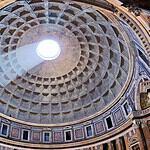
Roughly two thousand years ago, the Romans created a type of concrete that is far more advanced than the one we use today, which begins to crack within decades. The Pantheon's unreinforced concrete dome, measuring 43.3 meters in diameter, remains the largest dome of its type. The Roman aqueducts are still functional to this day. For years, engineers thought that the Roman architects had simply gotten lucky with their use of volcanic materials.
Turns out it wasn’t luck. It was engineering. A 2023 MIT-led study confirmed that Roman concrete used a "hot-mixing" technique in which they combined dry volcanic ash and quicklime before adding water, triggering a high-temperature reaction. The process also included the embedding of reactive lime chunks in the mix, so that when water seeps into a crack, it dissolves those calcium deposits and recrystallizes. This method makes the cracks fill in over time. Today, engineers are still trying to duplicate the process at scale.
Damascus Steel (Medieval period, c. 900–1750 CE)
Damascus steel was famous for being extremely hard and flexible. Medieval accounts describe the sword as being sharp enough to split a silk scarf in half cleanly, while being strong enough to cut through European blades without a single chip. Metallurgists spent centuries trying to replicate it, but the technique was completely lost around 1750 CE.
In 2006, a team from the University of Dresden analysed a 17th-century sabre made from Damascus steel using electron microscopy. They found carbon nanotubes inside the steel structure, which means the blacksmiths forging these blades had been accidentally manufacturing weapons that used nanotechnology.
The wootz steel imported from India contained trace impurities of vanadium, chromium, and other elements. During the thermal cycles of the forging process, those impurities separated into planes that catalyzed the carbon nanotube formations. Although carbon nanotubes were relatively unknown to scientists until 1991, blacksmiths from Damascus had been making them for about 800 years prior to their discovery.
Hero's Aeolipile (c. 50 CE)
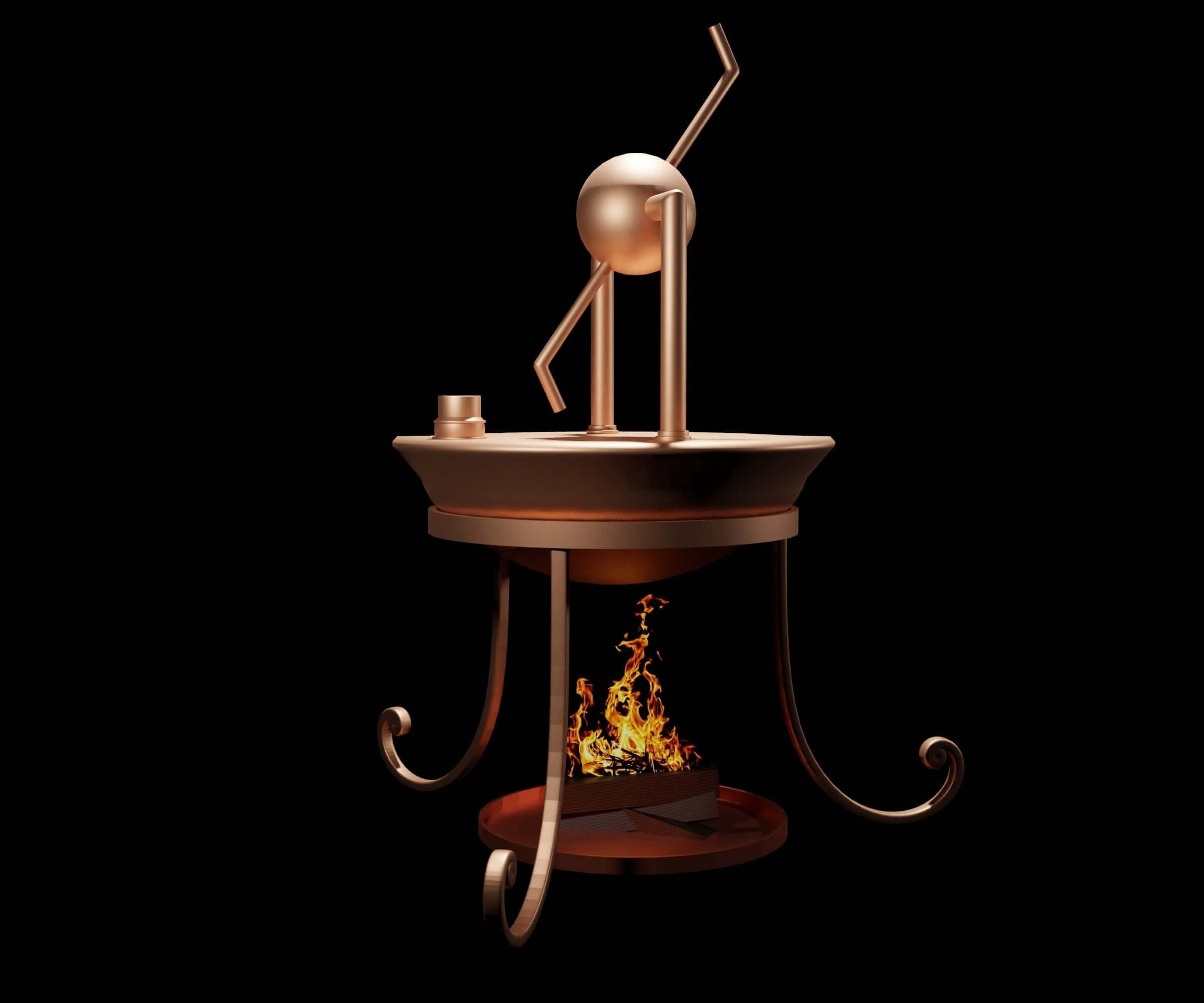
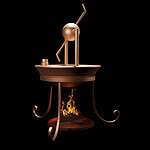
1,700 years before the Industrial Revolution saw the introduction of the first steam engine during the 18th century, Hero of Alexandria described a working steam-powered device, called the aeolipile. It was a hollow metal sphere mounted on pivots above a boiler that captured steam, which then escaped through two bent nozzles pointing in opposite directions. The reaction would make the sphere spin.
Hero documented his invention in his book “Pneumatica” around 50 CE, alongside 78 other mechanical devices. Historians note that the design was not suited for production at scale and that it was likely used as a novelty or temple demonstration. However, the principle is identical to a radial steam turbine. Hero understood how to capture the power of pressurized steam to produce a rotational motion nearly two millennia before the industrial era.
The Antikythera Mechanism (c. 100 BCE)
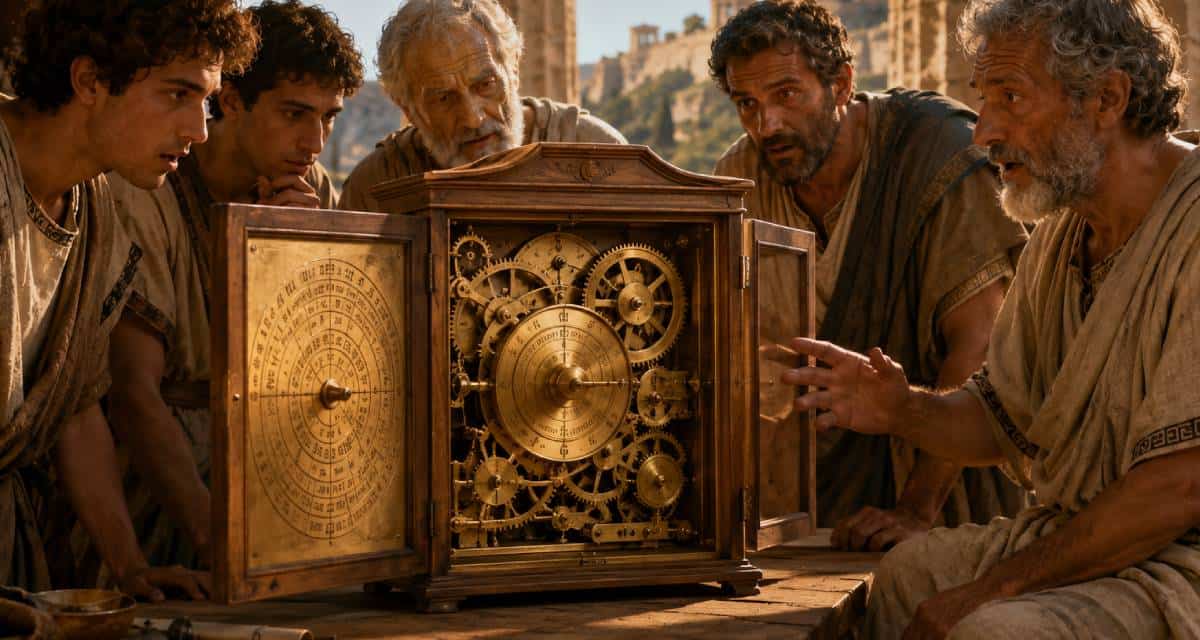
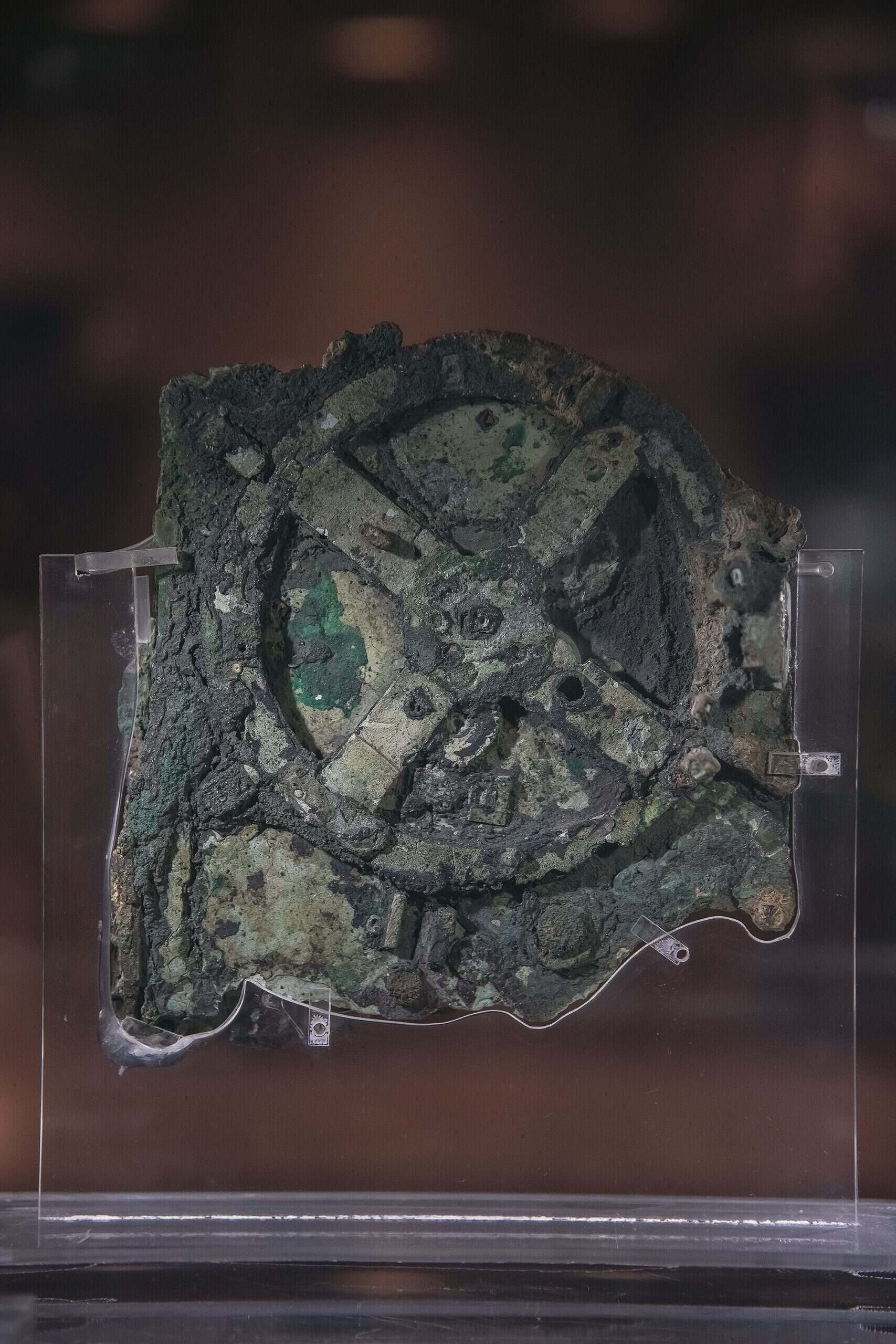
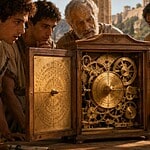
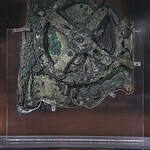
In 1901, a group of divers who were taking shelter from a storm off the Greek island of Antikythera found more than they were looking for. Among the bronze statues and classical pottery pulled from a nearby shipwreck, they found a corroded lump that could not be identified.
The lump wasn’t studied closely for decades, but once researchers used X-rays to look inside it in the 1950s and later CT scans in the 2000s, they found roughly 30 interlocking bronze gear wheels. These were inside a device that was about the size of a shoebox.
It was later understood that the now-called Antikythera Mechanism could calculate the positions of the sun, moon, and five planets known by the ancient Greeks. The device was able to predict eclipses and track lunar cycles, while also displaying the dates for ancient Olympic Games. The mechanism was so complex that nothing came close to it for over a thousand years, when medieval clockmakers began working with gears for astronomical purposes.
Greek Fire (c. 672 CE)
Greek fire was a Byzantine incendiary weapon in which flames that could burn on water were deployed through pressurized bronze siphon tubes mounted on warships. The tubes would project a continuous stream of flame that would continue to burn even when submerged.
The weapon allowed the Byzantines to dominate the eastern Mediterranean for roughly four centuries, and it played a crucial role in the Arab sieges of Constantinople in 674–678 and 717–718 CE.
The Byzantines kept the formula a secret, and we still don’t know exactly what it was made of. Even the delivery mechanism was advanced for its time, using pressurized tubes as continuous-stream flame projectors. This form of pneumatic system would only be revisited during the industrial era.
Zhang Heng's Seismoscope (132 CE)
The first earthquake detection system was built in 132 CE by Zhang Heng during the Han Dynasty in China. The court astronomer created a large bronze vessel that was roughly six feet in diameter and had eight sculpted dragon heads arranged around the exterior. Each of the heads faced a compass direction and held a bronze ball in its mouth. Whenever an earthquake occurred, the ball from the corresponding direction would drop from the dragon head into the open mouth of a bronze toad that sat below it.
While the original device didn’t survive, historical records state that it was capable of detecting earthquakes roughly 500 kilometers away, despite no trembling being felt in the location where the device was stored. Most researchers believe the device used a pendulum suspended inside the vessel, calibrated to respond to ground vibrations without being triggered by normal foot traffic or wind.
The Baghdad Battery (c. 250 BCE)
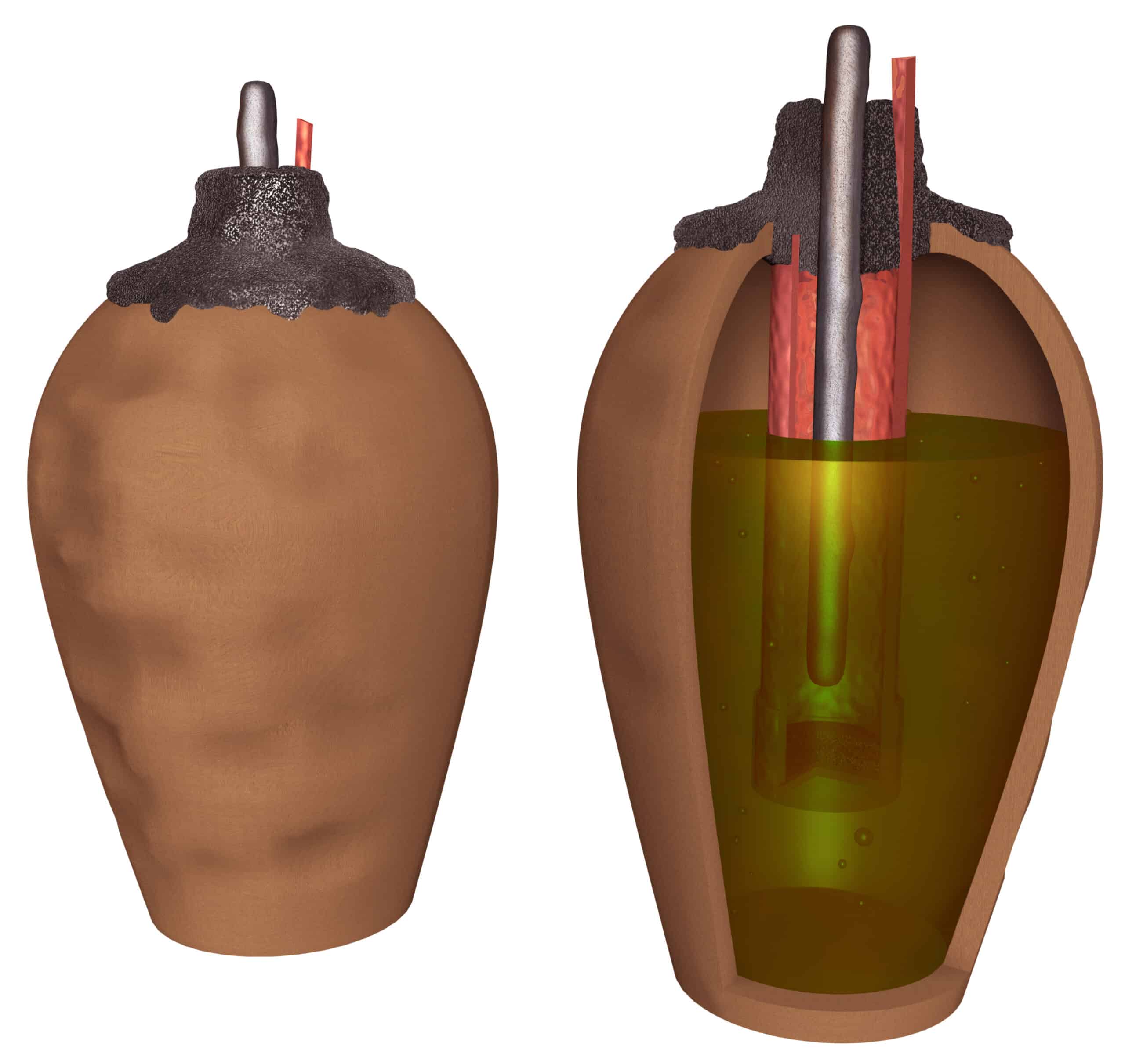
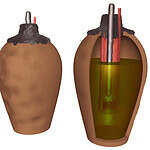
In 1938, Wilhelm König, director of the laboratory at the National Museum of Iraq, came across something unexpected. While examining some clay jars, dating back to the Parthian period, roughly 250 BCE to 224 CE, he found that inside each jar there was a copper cylinder surrounding an iron rod, sealed at the top with asphalt. When researchers built replicas and filled them with an acidic solution, the devices produced up to 2 volts of electricity.
While nobody is sure about what the jars were used for, the leading hypothesis suggests that they were used to coat metal objects with thin layers of gold and silver. This theory is supported by items discovered in the same region. These items included finely plated metalwork that is difficult to explain without the use of some form of electricity. However, there is no written record describing electrical use at that time, and the circuit design has practical problems. Some suggest that the jars were used to store sacred scrolls, but that still doesn’t explain the fact that when they’re filled with an acidic liquid, they generate electricity.
The Viking Sunstone (c. 900 CE)
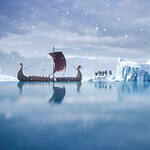
The Vikings sailed from Scandinavia to North America centuries before Christopher Columbus. However, it wasn’t known how they managed to do so without the use of magnetic compasses, given that the journey would have taken them across the open ocean at latitudes where stars are obscured for months.
The Viking sagas describe a navigational device called a sólarsteinn, a sunstone that could locate the position of the sun on completely overcast days. Researchers were unsure of how the device actually worked. It turned out that the sunstone was actually a calcite crystal. Called Iceland spar, these crystals are common in Scandinavia and have an optical property called birefringence. When rotated towards the position of the sun, they allowed the navigator to locate it within a few degrees of accuracy.
In 2011, a piece of Iceland spar was found aboard an Elizabethan-era British warship, the Alderney, which sank in 1592, confirming that the technique was known to advanced ocean navigators well beyond the Viking age.
Roman Aqueducts (c. 312 BCE)
The first Roman aqueduct, the Aqua Appia, was built in 312 BCE. By the time the empire was at its peak, Rome had eleven aqueducts delivering hundreds of thousands of cubic meters of fresh water into the city daily, a supply rate per capita that London did not match until the mid-19th century. The water traveled up to 90 kilometers through a system that maintained a precise, consistent gradient the entire distance, descending at a rate of roughly 1 meter per 3,000, with no pumps.
The Pont du Gard in southern France, built in the 1st century CE, carries an aqueduct channel 48 meters above a river valley on three tiers of arches. It was in service for roughly 500 years. Sections of several Roman aqueducts are still structurally sound today, and two of them still deliver water into Rome. The same self-healing concrete chemistry described earlier plays a major factor into the longevity of these structures.
Hero of Alexandria's Vending Machine (c. 50 CE)
While Hero of Alexandria is best known for inventing the aeolipile, one of his other inventions is something most of us have used throughout our lives, the vending machine. In his book, “Mechanics,” Hero of Alexandria describes the design for the first coin-operated vending machine. Its mechanism was similar to the one we have today.
People would drop a coin into a slot at the top, which would fall onto a pan attached to a lever. The lever opened a valve, and water would flow out. Once the coin’s weight tipped the pan far enough to slide off, a counterweight would snap the valve shut.
Hero’s vending machine was used to sell holy water at religious events, and its mechanism ensured that every worshipper got exactly the same amount of water per coin. While the inner workings of the machine itself are impressive, the idea of removing humans from the commercial process was in itself groundbreaking.