
The Cold War was an era marked by existential dread, brinksmanship, and an unyielding arms race. Public focus centered on the ever-present threat of nuclear war, as diplomatic relations going south meant the potential end of the world. The tactical reality of the potential Third World War would’ve been decided in the skies. We saw the first murmurs of this at MiG Alley during the Korean War, as well as the plethora of proxy wars that followed, like Vietnam and the Middle East. Jets were a nascent technology at the time, and quickly evolved to keep pace.
Engineering that might have taken decades during more peaceful times took mere years. Aviation went from subsonic jets to twin-engine interceptors that cruised at Mach 2 and could fire off a missile beyond visual range. As such, it begs the question of which of these jets were the deadliest of their respective eras.
Determining lethality isn’t just a matter of comparing specs and stats, but rather a review of their real-world performance in the many wars that happened during the Cold War. It isn’t just about speed, armament, and so forth, but rather how it could adapt to the shifting tactical doctrine as the situation demanded.
MiG-15
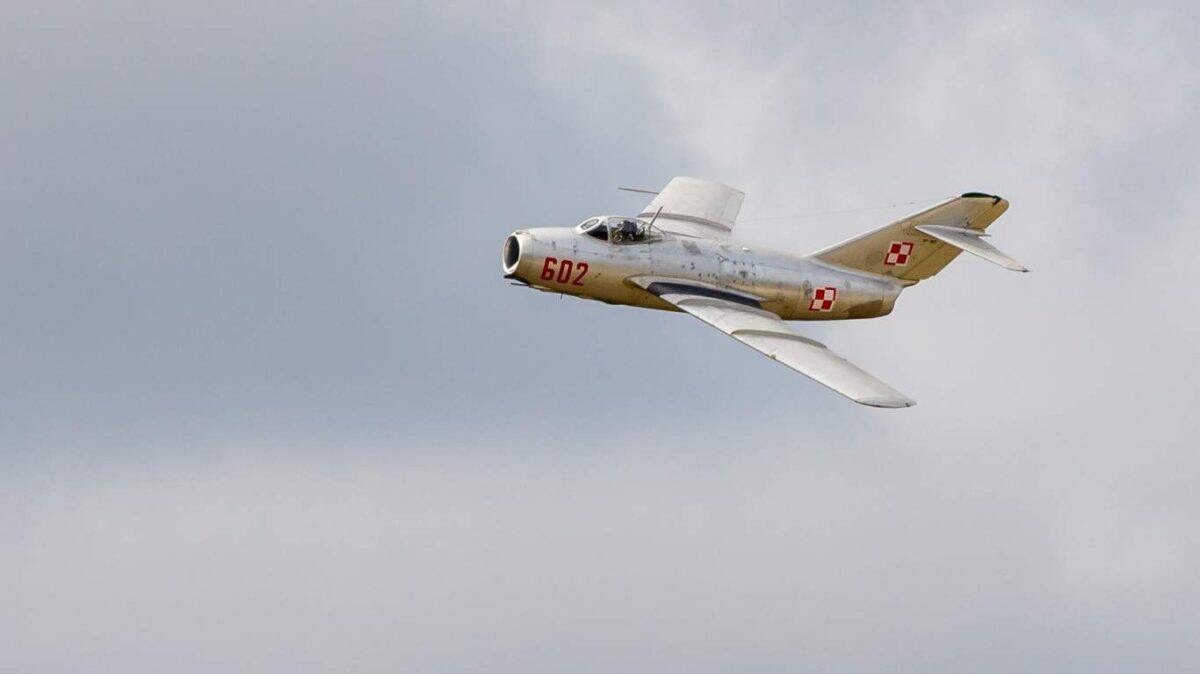
When the Korean War broke out in 1950, Western forces fully expected to dominate the skies with first-generation jets like the F-80 Shooting Star. That all changed when the Soviet-built MiG-15 crossed the Yalu River.
These early jets featured 35-degree swept wings, a powerful engine, a pair of 23mm cannons, and a single 37mm cannon. The MiG-15 changed the name of the game, and could out-climb, out-turn, and out-gun anything the West had in the theater of operations. United States aviators would quickly receive the F-86 Sabre, which helped to regain air superiority. More than anything, the MiG-15 was a shot across the bow for Western forces. Soviet airpower wasn’t second-rate. MiG Alley proved just how lethal and effective Soviet aircraft could be.
MiG-21
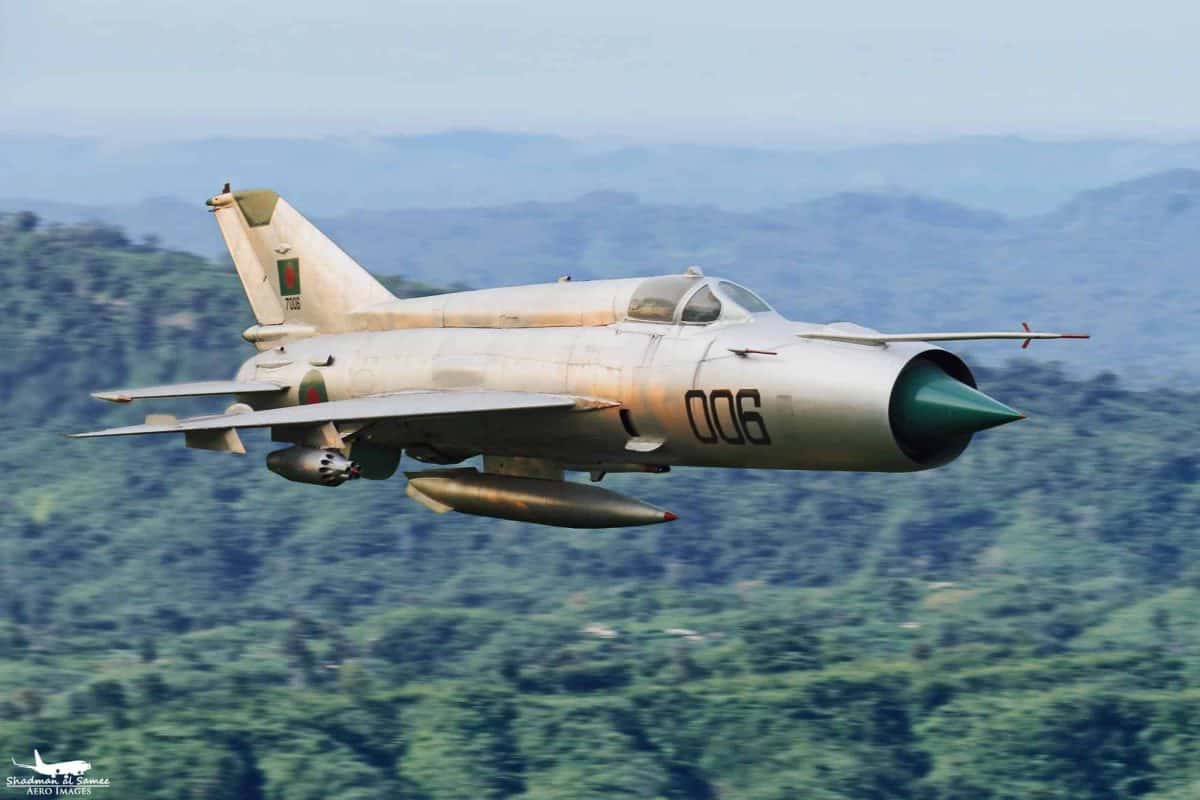
Otherwise known by its NATO callsign, Fishbed, the MiG-21 holds the distinction of being the most-produced supersonic jet in aviation history. It featured a delta-wing and was relatively light, meaning that its supersonic speeds were sustainable when moving into a combat zone. The MiG-21 strictly followed the Soviet ethos of building something cheap, fast, and easily maintained by ground crew to rip apart Western air bomber formations.
Given its prolific production run, the MiG-21 was a significant force equalizer in conflicts like the Vietnam War. North Vietnamese pilots could easily boom and zoom munitions-laden American fighters with impunity. The ubiquity of this Soviet design ended up forcing a change in American air doctrine once again. Almost 70 years after its introduction, the MiG-21 still screams across the sky. You don’t get much more long-lived than that for a fighter jet.
F-4 Phantom II
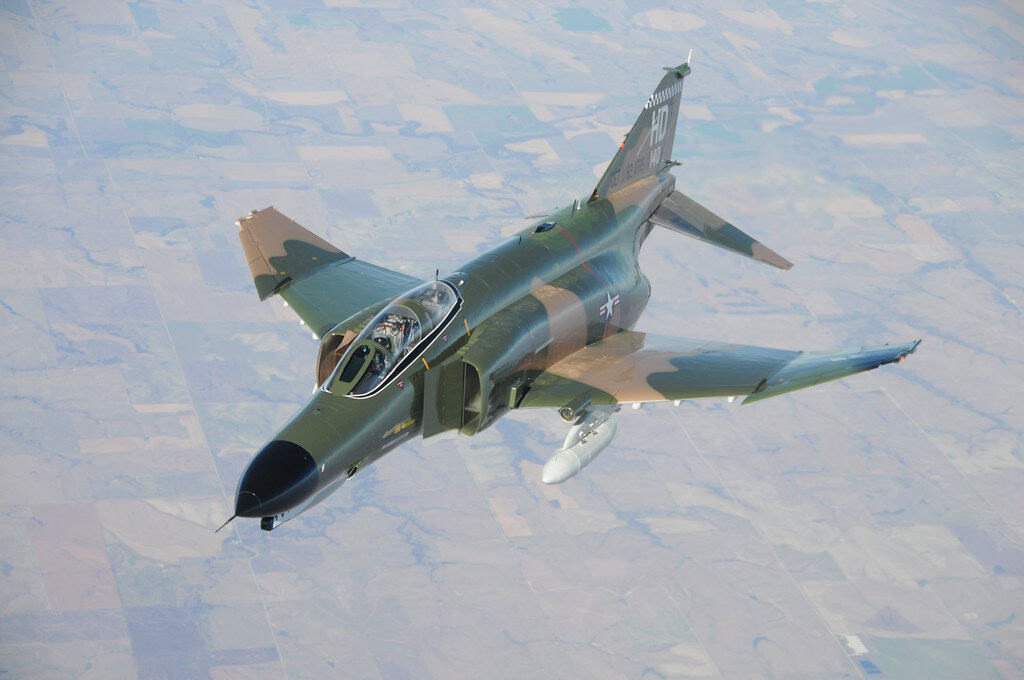
©"McDonnell Douglas F-4 'Phantom II'" by aeroman3 is licensed under PDM 1.0. – Original / License
America’s solution to the MiG-21 was a massive, powerful jet that defied conventional thinking when it came to military aviation. The McDonnell Douglas F-4 Phantom II was a huge multi-role fighter, being larger and heavier than comparable aircraft in other military inventories. Pilots often joked that it was proof that you could even fly a brick, provided you coupled it with a pair of General Electric J79 engines.
The F-4 carried an astonishing 18,000 pounds of ordnance, more than the B-17 that struck targets throughout World War 2. It also came armed with the AIM-7 Sparrow, which was radar-guided, and the heat-seeking AIM-9 Sidewinders. It was a universal aircraft as well, serving the Marine Corps, the United States Navy, and the Air Force. The Phantom would end up anchoring Western air defense for over 3 decades, and would end up being the spearhead of American air strategy during the remainder of the Vietnam War.
MiG-25
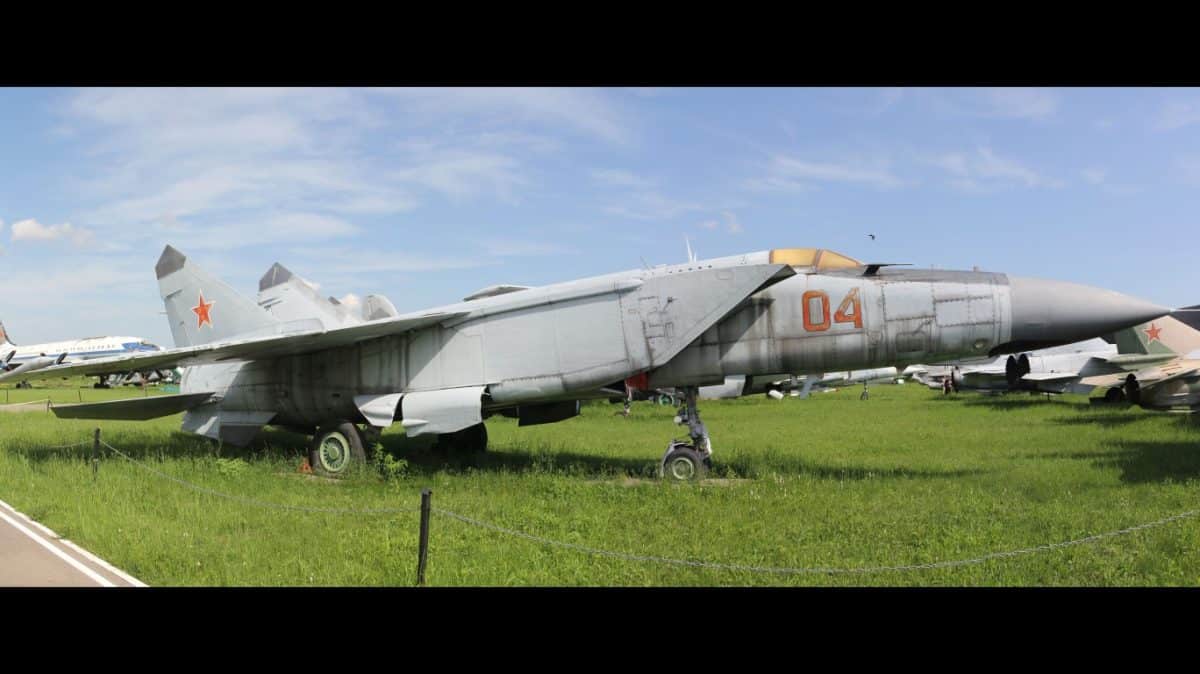
Panic gripped NATO planners during the late 1960s as the Soviets revealed a powerful new interceptor. This fighter came with massive wings, colossal engines, and the potential to outmaneuver everything the West had to offer. The MiG-25 would spur American planners to drive development of our next entry, the F-15 Eagle, as a direct response.
That all changed overnight when Viktor Belenko, a Soviet pilot, defected along with his MiG-25 in 1976. Western engineers were quick to tear it to pieces, learning everything they could about the machine. Those original fears were largely discovered to be unfounded, as the MiG-25 was a poor dogfighter. It was a specialized craft built for intercepting bombers at supersonic speeds and even lobbing missiles at the SR-71 Blackbird.
The MiG-25 could cruise at Mach 3.2, making it nearly impossible to catch when it got going. Its lethality was a direct result of that impressive speed, which worked right alongside its high operational ceiling. The Soviets fully intended to fire off R-40 missiles at the edge of space.
F-15 Eagle
©ranchorunner/Shutterstock.com
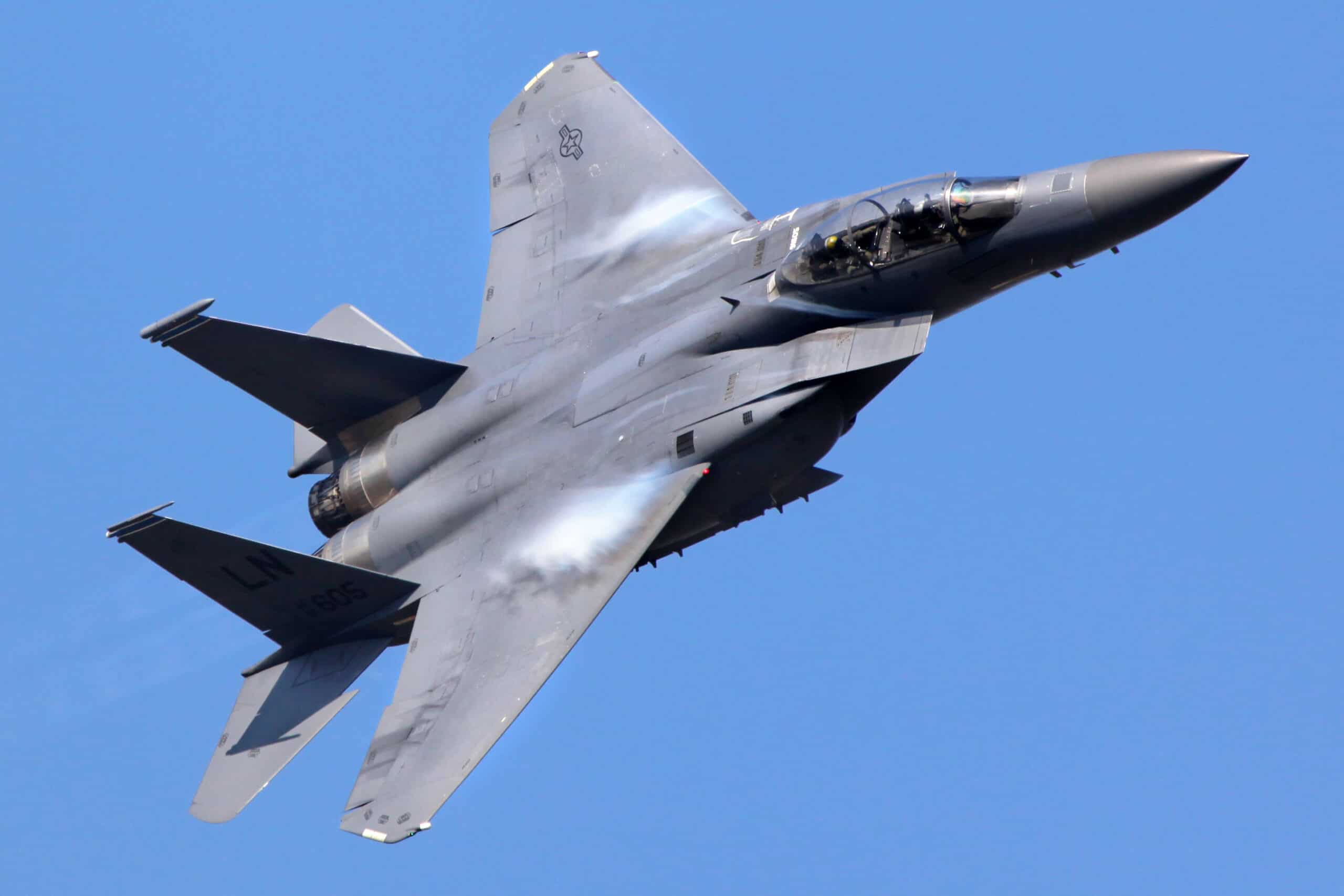
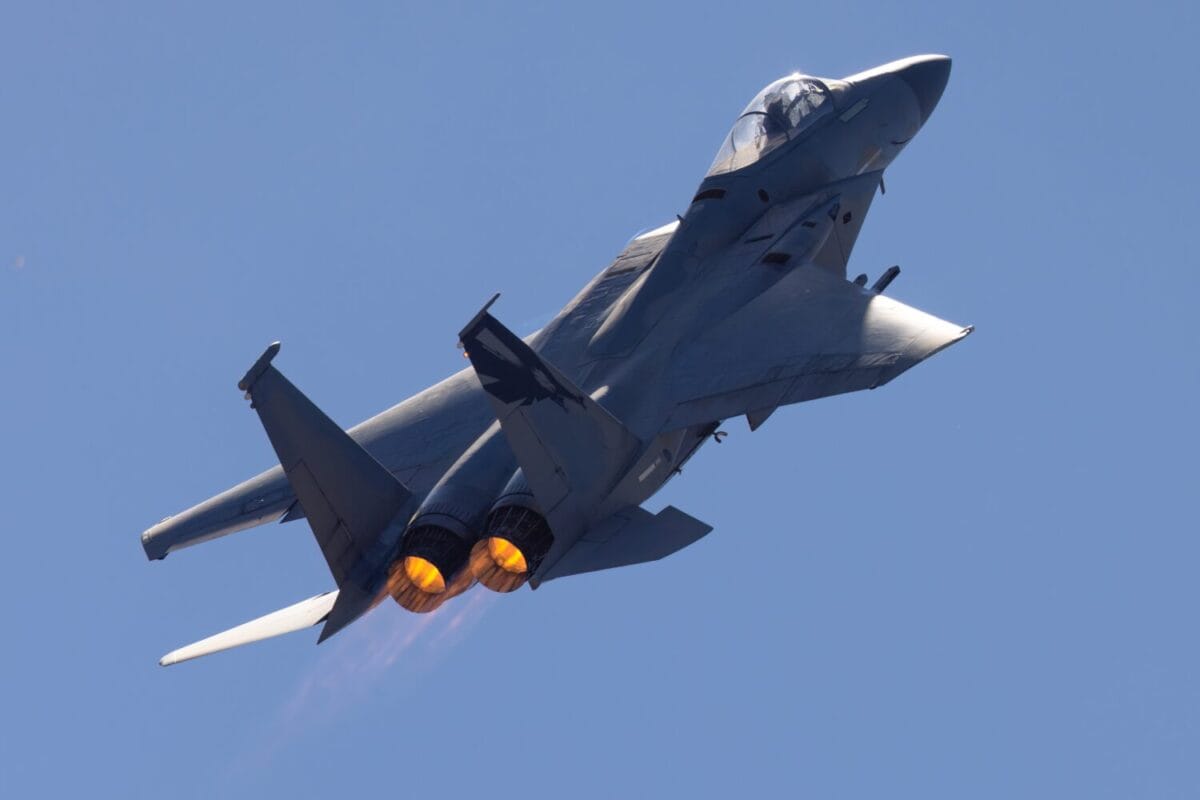
The F-15 Eagle first took flight in 1976 and was developed based on the difficult lessons learned over the skies of Vietnam. The US Air Force demanded a pure fighter, an aircraft that wouldn’t compromise its performance as a multi-role strikecraft. If done correctly, the Eagle would be the undisputed king of air superiority.
This came about from its low-wing loading, a pulse-Doppler radar system, and an incredible climbing rate. The F-15 was a masterstroke of engineering prowess, and it changed the world of aerial warfare as we know it. If you tried to match it turn for turn, you’d eventually get burned by a skilled pilot in the F-15. That doesn’t even get into the fact that you’d have to close range to engage in a dogfight. The F-15 was built for beyond visual range engagement, and it more than excelled at it.
Of the many aircraft we’ve covered so far, the F-15 Eagle is the only one with a flawless air record, suffering 0 losses to enemy aircraft. It still serves the American Air Force, but has shifted roles to be more than just a pure fighter.
Shifting Priorities
How exactly did we end up in an arms race that encouraged fighters that fought beyond visual range, zooming around at supersonic speeds? Well, there was a shift of sorts that happened during the Cold War. Early on in the Vietnam War, American planners saw the dogfight as dead. The original run of jets like the F-4 Phantom didn’t come with an internal cannon, relying on unreliable air-to-air missiles to strike targets. Those early missiles had a high failure rate, something that certainly wasn’t helped by the humid conditions of Vietnam. American pilots also had to contend with the nimble MiG-21.
Missiles have a minimum arming range, and American pilots often found themselves too close to risk firing a missile. The F-4 and American air doctrine would have to adapt. External gunpods were developed for the first generation of F-4s, and the M61 Vulcan was added to the E-model.
These were brutal, bloody lessons that shaped the next generation of fighters. Soviet designers doubled down on agility and mass production. The United States began building technological marvels like the F-15, which were fully intended to make short work of anything the Soviets could build. It paid off, as the Eagle is still undefeated in air-to-air combat.
Conclusion
If there is a lesson we can take away from all of these planes, it is that they are a direct result of the fear of being outperformed by your enemy. The multiple MiGs and their American counterparts were responses, which led to an iterative arms race that saw both nations going from subsonic jets aiming guns at one another like it was still World War 2 to firing missiles that went past the speed of sound at distances the human eye can’t perceive. It’s nothing short of remarkable.
The image featured at the top of this post is ©Fasttailwind/Shutterstock.com