
The first automobiles promised to transform everyday life, but they arrived before paved roads, traffic laws, safety barriers, seat belts, or any shared understanding of how dangerous a motorized vehicle could be. Early steam carriages carried pressurized boilers beside their passengers, while primitive gasoline cars relied on fragile wooden wheels, exposed controls, and brakes that struggled with even modest speeds. Racing pushed those experimental machines far beyond their limits, often on public roads lined with unprotected spectators. These 10 deadly accidents exposed the horrifying risks of early motoring and helped force inventors, governments, and track owners to rethink how cars were built, driven, and tested.
The 1834 Steam Carriage Boiler Explosion
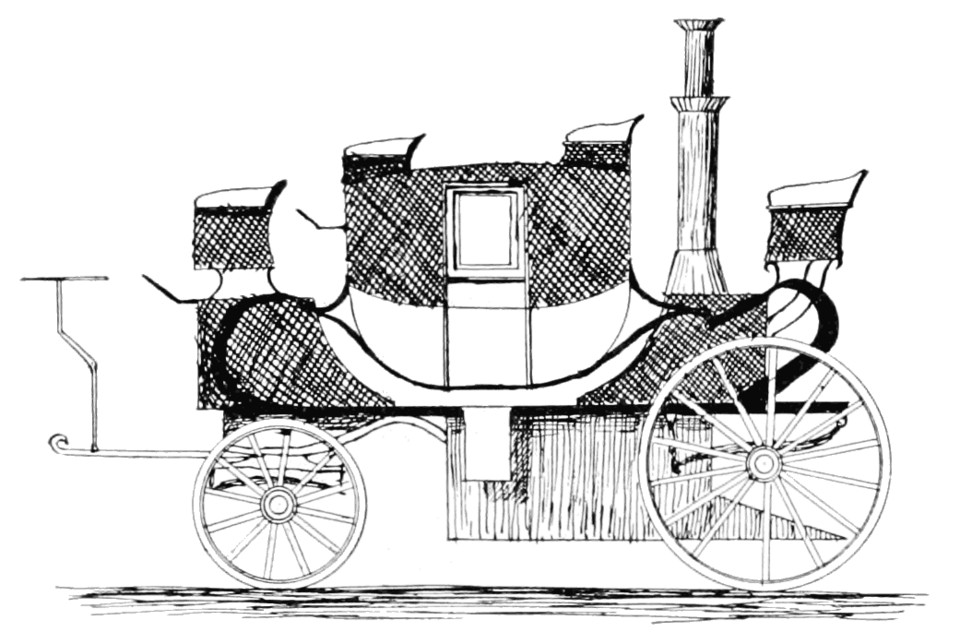
One of the earliest motorized road disasters occurred on July 29, 1834, during a steam-carriage service between Glasgow and Paisley, Scotland. Engineer John Scott Russell had designed large vehicles capable of carrying dozens of passengers at speeds approaching 20 mph, an extraordinary pace for the period. During one trip, a wheel failed while the carriage traveled over a rough section of road. The vehicle overturned, its boiler ruptured, and the resulting explosion killed at least four passengers. The catastrophe demonstrated a danger unique to steam-powered transportation: a crash could turn the vehicle’s power source into a bomb. Public confidence collapsed, and the promising passenger service ended almost as quickly as it had begun.
Mary Ward Becomes the First Person Killed by a Car
Irish scientist and artist Mary Ward was riding in an experimental steam-powered car near Parsonstown, now Birr, on August 31, 1869. The homemade vehicle had been built by members of her extended family, including future steam-turbine pioneer Charles Algernon Parsons. As the car rounded a bend, Ward was thrown from her seat and fell beneath one of its heavy iron wheels. She suffered a broken neck and died almost immediately. The earlier Scottish steam-carriage explosion complicates claims about the first motor-vehicle deaths, but Ward is widely recognized as the first person killed by a vehicle resembling a self-contained automobile. Her death revealed how even a slow machine traveling roughly four mph could become lethal without restraints or passenger protection.
Bridget Driscoll and Britain’s First Pedestrian Death
On August 17, 1896, Bridget Driscoll was crossing a roadway at London’s Crystal Palace when a demonstration car operated by the Anglo-French Motor Carriage Company struck her. Witnesses disagreed about the vehicle’s speed, with the driver claiming he was moving at only four mph and another observer describing the pace as reckless. Driscoll suffered a fatal head injury and became Britain’s first recorded pedestrian killed by a motor car. The accident occurred when automobiles were still novelties, so pedestrians had little reason to expect a fast, quiet machine to enter their path. At the inquest, the coroner reportedly expressed hope that such a tragedy would never happen again. Instead, it foreshadowed a conflict between motorists and pedestrians that cities still struggle to solve.
Indianapolis Motor Speedway’s Deadly Opening
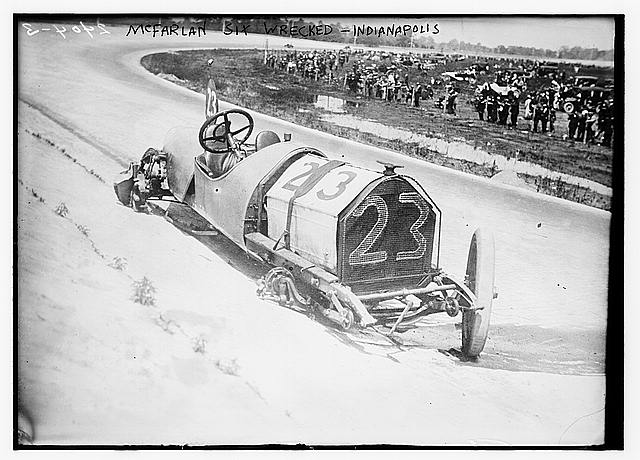
Indianapolis Motor Speedway opened for automobile racing in August 1909 with a surface made from stone and tar. The track quickly broke apart beneath the cars, creating deep ruts, loose rocks, blinding dust, and dangerous holes. During a 250-mile race, driver William Bourque looked back after his riding mechanic, Harry Holcomb, warned him that another car was approaching. Their Knox hit a rut, swerved, and overturned. Both men suffered fatal injuries. Another crash killed two spectators and riding mechanic Claude Kellum. The deadly opening convinced owner Carl Fisher that the surface was unacceptable. Workers replaced it with more than three million paving bricks, creating the safer track that earned Indianapolis its “Brickyard” nickname.
Émile Levassor’s Fatal Attempt to Avoid a Dog
Émile Levassor helped establish the basic automobile layout that placed the engine in front and drove the rear wheels, but racing the new technology ultimately cost him his life. During the grueling Paris-Marseille-Paris race in September 1896, Levassor reportedly swerved to avoid a dog in the road. His Panhard overturned, throwing him from the vehicle and leaving him seriously injured. He survived the crash and attempted to return to work, but his health never fully recovered. Levassor died in April 1897, with his death widely linked to the injuries he suffered during the race. The accident showed the terrifying weakness of early open-road competition, where drivers traveled at unprecedented speeds while sharing an uncontrolled route with animals, pedestrians, and ordinary traffic.
Britain’s First Driver and Passenger Killed in One Crash
A sales demonstration turned fatal at Harrow-on-the-Hill near London on February 25, 1899. Engineer Edwin Root Sewell was driving a six-horsepower Daimler wagonette with prospective customer Major James Stanley Richer beside him. As the car descended Grove Hill at an estimated 16 or 17 mph, a rear wheel collapsed. The vehicle struck a brick wall and violently threw both men onto the road. Sewell died at the scene, becoming Britain’s first recorded driver of a gasoline automobile killed in a crash. Richer never regained consciousness and died several days later, making him the country’s first recorded automobile passenger fatality. The wreck exposed how wooden wheels and carriage-era construction could fail catastrophically under the unfamiliar stresses created by motor power.
Henry Bliss and America’s First Recorded Auto Death
New York real estate dealer Henry Hale Bliss stepped down from a streetcar at West 74th Street and Central Park West on the evening of September 13, 1899. An electric taxicab struck him as it passed the stopped trolley, knocking him unconscious and crushing his head and chest. Bliss died the following morning and became the first recorded person killed by a motor vehicle in the United States. Police arrested taxi driver Arthur Smith on a manslaughter charge, but authorities later concluded that the death was accidental and released him. The collision revealed a problem that would intensify as cars multiplied: city streets had been designed around pedestrians, horses, bicycles, and streetcars, leaving everyone to improvise when a faster vehicle suddenly entered the same crowded space.
Count Zborowski’s Stuck Throttle at La Turbie
Count Elliott Zborowski entered the Nice-to-La Turbie hill climb on April 1, 1903, driving a powerful Mercedes-Simplex 60 hp on a twisting mountain road. Shortly after the start, his car surged out of control and struck a rock or retaining wall at speed. Zborowski was killed, while his riding mechanic was thrown clear and survived. Mercedes-Benz’s historical archive reports that a shirt cufflink may have caught on the hand-throttle control near the steering wheel, leaving the engine at full power as the car approached the bend. Whether every detail can be proven or not, the crash illustrated the peril of exposed controls and minimal driver protection. A tiny piece of clothing could interfere with the machinery, and the open car offered almost no chance of survival once it left the road.
The 1903 Paris-Madrid “Race of Death”
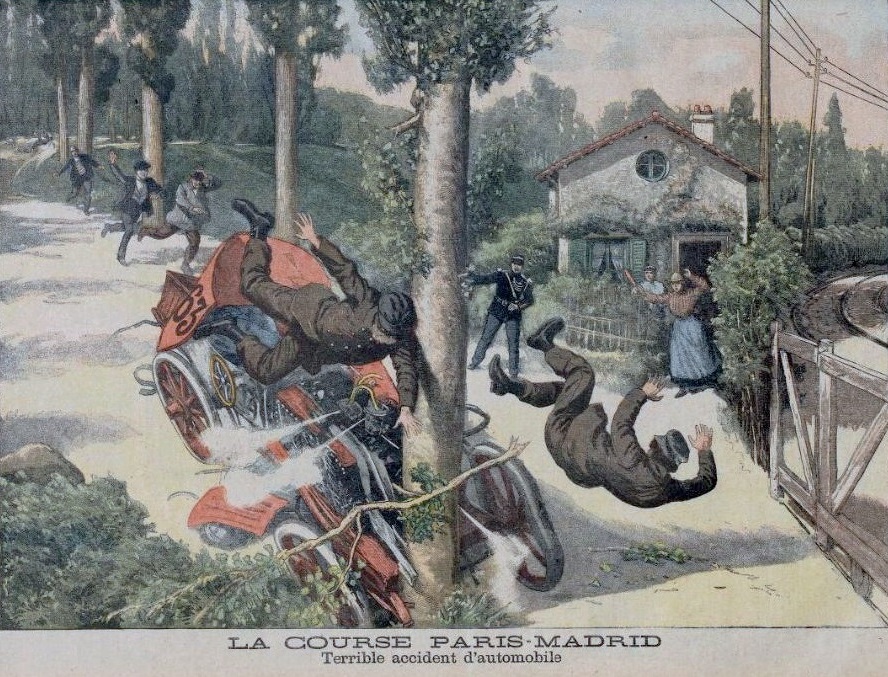
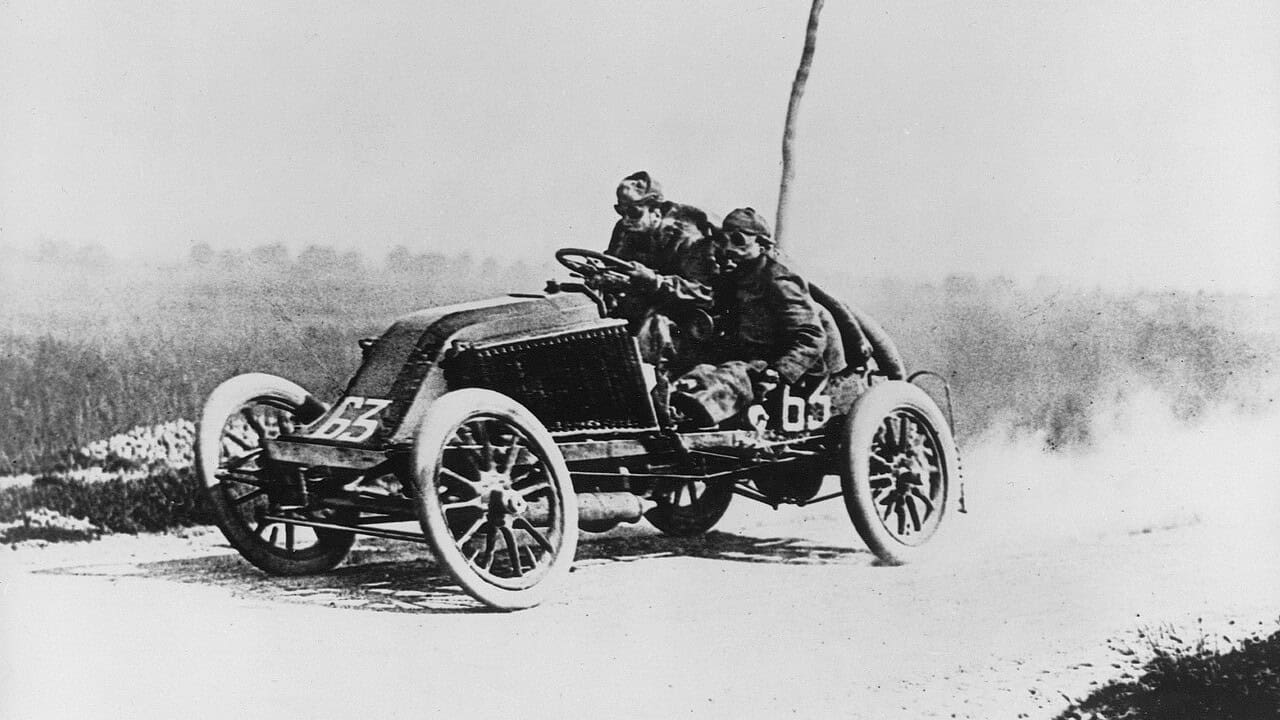
The Paris-Madrid race began on May 24, 1903, with more than 200 machines charging along public roads crowded with spectators. Dust clouds reduced visibility, drivers overtook one another at high speeds, and residents crossed a route that remained open to everyday life. Cars struck trees, barriers, and bystanders, while several caught fire or overturned. Renault co-founder Marcel Renault was among those fatally injured after his car crashed near Poitiers. Reports vary, but the death toll reached at least six and possibly eight people, including racers, mechanics, and spectators. Officials stopped the event at Bordeaux before it ever reached Spain. The disaster effectively ended the era of major city-to-city races on open French roads and accelerated the move toward controlled circuits.
The First Indianapolis 500 Claims a Life
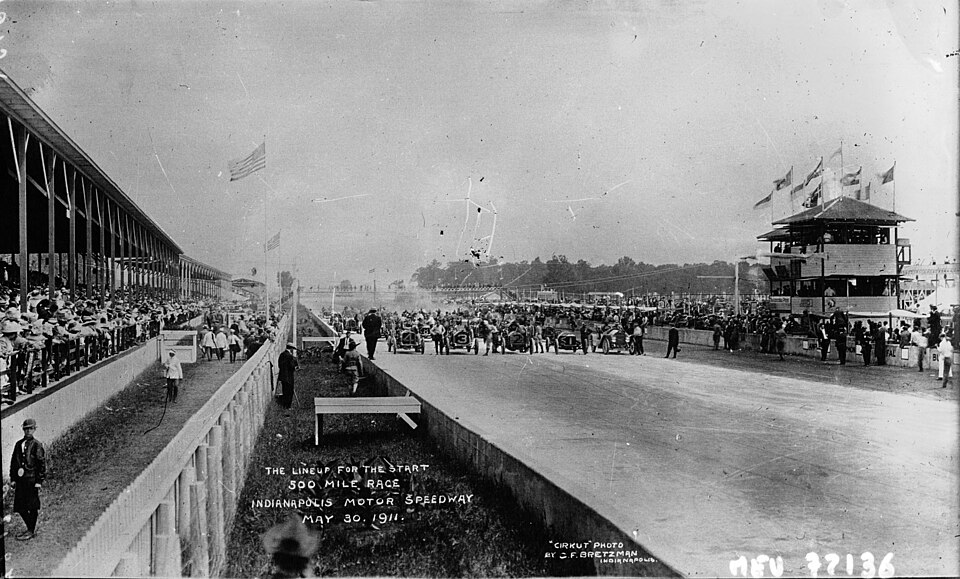
The inaugural Indianapolis 500 on May 30, 1911, featured 40 cars racing for nearly seven hours on the new brick surface. Most entries carried a riding mechanic who watched traffic, checked gauges, and warned the driver about approaching competitors. On lap 12, a front wheel separated from Arthur Greiner’s American Simplex. The car spun violently and threw both occupants as it crashed near the backstretch fence. Greiner survived with serious injuries, but his mechanic, 24-year-old Sam Dickson, was thrown into the fence and killed. He became the first fatality in Indianapolis 500 history. Ray Harroun eventually won the race, but Dickson’s death underscored the brutal risks faced by early racing crews in open cars with detachable wheels and virtually no protection.
The image featured at the top of this post is ©Public domain, via Wikimedia Commons – License / Original