
When the first airplane took flight, the thought of vertical flight was still a dream for engineers and visionaries alike. By the time the 20th century came to a close, the helicopter had become a vital part of the modern military. Unlike fixed-wing aircraft, which need runways and forward momentum, helicopters don’t have such limitations. Inaccessible terrain could become a landing zone, and the golden hour of medical trauma went from theory to fact. The evolution of 20th-century close air support isn’t just about faster, more powerful machines, but also about how rotor-wing aircraft doctrine and introduced new dimensions of tactical flexibility.
Early Examples
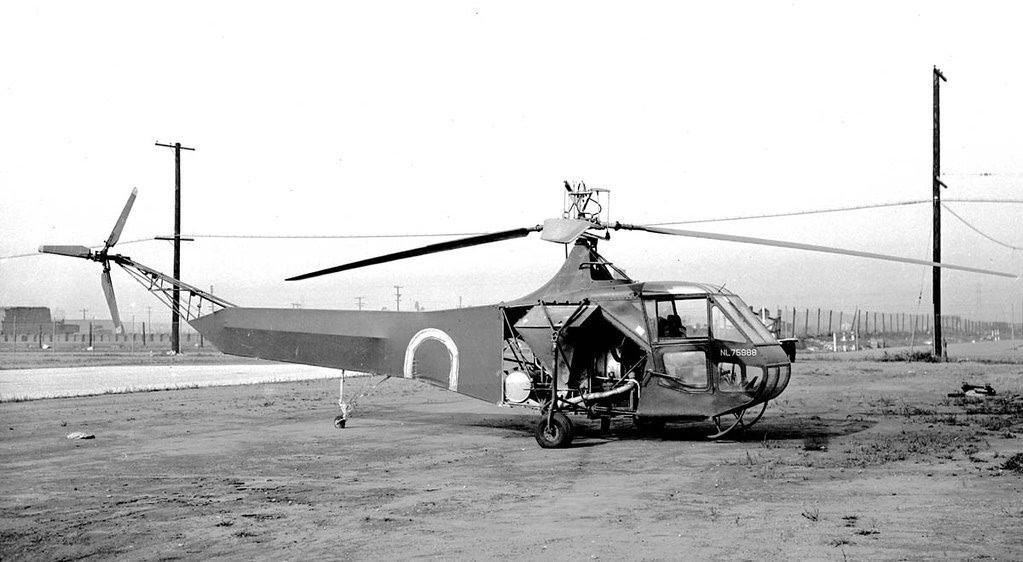
©"Sikorsky R-4B Seeder NL-75988" by Bill Larkins is licensed under BY-SA 2.0. – Original / License
We often associate the first true use of helicopters in war with the Korean War, and there is some merit to that. However, the earliest experiments with rotor-wing aircraft were done throughout the 1930s by Sikorsky and Focke-Wulf. Theoretically, these early examples showed that a helicopter was a viable flight platform. It wasn’t until 1942, with the introduction of the Sikorsky R-4, that it became a reality. The first air rescue was conducted in January of 1944, after the sinking of the USS Turner. United States Coast Guard Commander Frank Erickson delivered life-saving plasma to the casualties and saved lives.
Combat rescues would be conducted throughout 1944 and 1945, showing just how effective helicopters could be. The helicopter’s role in the military was further solidified in the aftermath of World War 2, as the Bell 47 became a linchpin for American forces. The mountainous terrain of Korea made traditional evacuation of the wounded a nightmare. The Bell 47 didn’t have to contend with roads or runways, and often whisked away critically wounded soldiers to surgical tables in mere moments.
This is the birth of modern MedEvac practices. Without having to deal with broken roads or enemy ambushes, thousands of soldiers were given a second chance at life and further developed the relationship between the grunts on the frontline and the pilots up above. It was only a helicopter ride away, at least when it came down to a grievous wound and survival.
UH-1 Iroquois
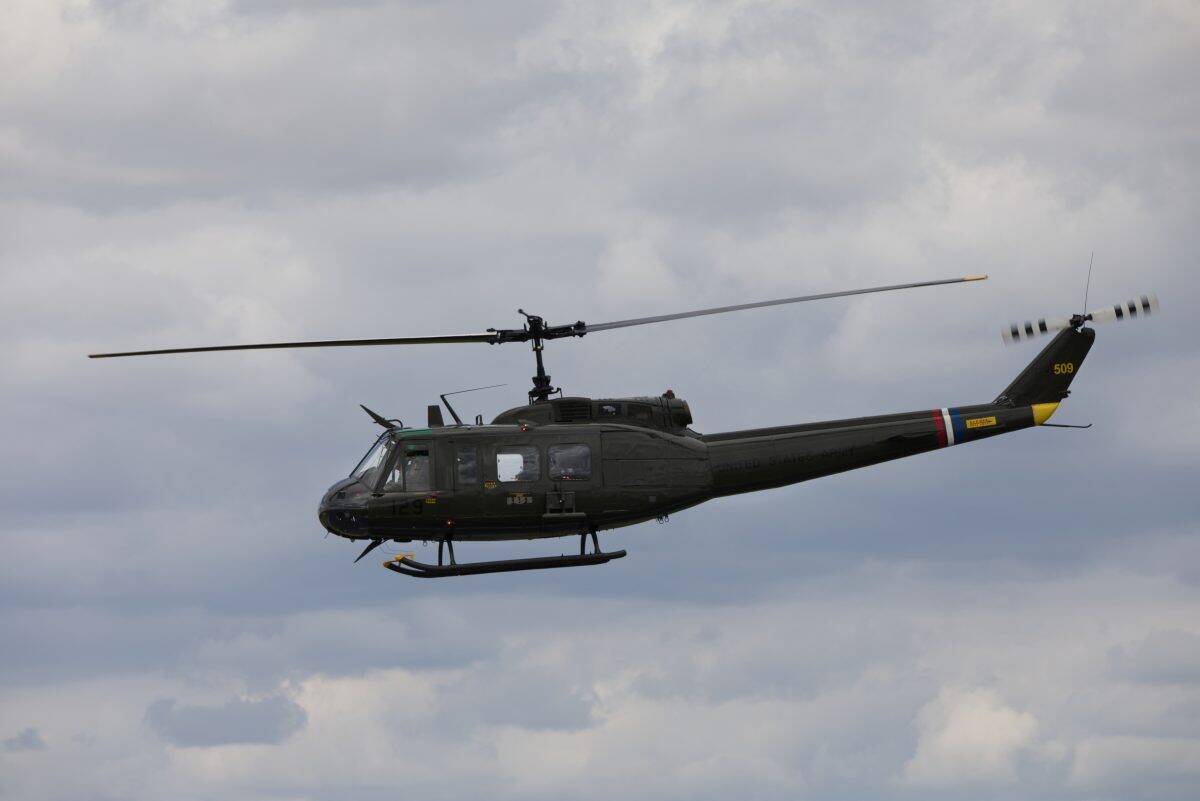
©"Bell UH-1 Iroquois Huey 5D4 3606 (48706920071)" by Ronnie Macdonald from Chelmsford, United Kingdom is licensed under BY 2.0. – Original / License
If there is one helicopter that defines the 20th-century air support above all others, it would be the Bell UH-1 Iroquois, affectionately known as the Huey. Throughout the Vietnam War, the Huey was the face of American airpower. It became the center for Airmobility, or the central doctrine of the time. Rather than relying on slow, grinding advances through hostile terrain, troops would be rapidly inserted by helicopter. The UH-1 let commanders bypass dense jungles and swamps, landing troops where needed and extracting them when the mission was done.
Its distinctive sound, a knocking thump, signaled the arrival of reinforcement, supplies, or fire support. The UH-1 was a highly versatile platform, adapting to many different mission profiles. It could serve as a troop transport, medical evacuation platform, or a dedicated fire support vehicle. Its ubiquity across the battlefields of the Vietnam War also highlighted its shortcomings, as the UH-1 was slow and rather vulnerable to small arms fire.
It would eventually lead to the development of the AH-1 Cobra, or the first purpose-built attack helicopter. The Cobra made use of the guts of the Huey, but transplanted them into a thin, tandem-seat fuselage. In the later stages of the American involvement in Vietnam, the UH-1 and AH-1 worked together in Hunter-Killer teams, a tactical doctrine that would influence every major conflict for the remainder of the 20th century.
CH-47 Chinook and CH-53 Sea Stallion
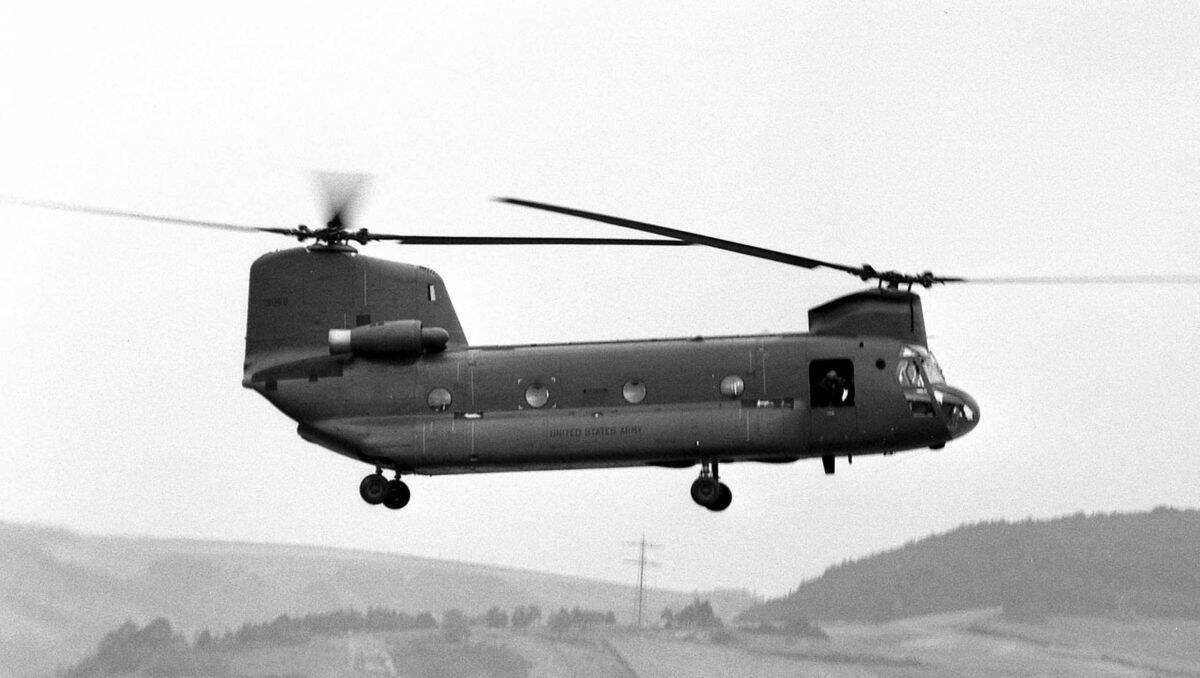
©US Army CH-47C 'Chinook', Lauda (Ger.) 1973 by W-R-Hesse-Fotos / BY-SA 4.0 (https://creativecommons.org/licenses/by-sa/4.0/) – Original / License
The UH-1 was the bread and butter of the Vietnam War’s troop movements, but it didn’t account for the logistical needs of an army. You need to move vast amounts of men, artillery pieces, and other supplies to rapidly established firebases in hostile territory. The CH-47 and CH-53 were the heavy workhorses of the era. The Chinook is recognized for its unique tandem-rotor design, which provides immense lifting power and stability even in the most hostile of territories. It was capable of carrying a 105mm howitzer while the crew and ammunition rested inside the cabin. Artillery went from a static defense and transformed into a flexible, offensive tool.
The CH-53 handled these workloads for the Marines and the United States Navy. Marines no longer stormed beachheads by boat, but could fly past shoreline defenses and engage the enemy from the rear. These massive helicopters showed that air support wasn’t just about firepower or troop movement, but bringing the whole of a military’s industrial capacity to bear. The sky was a thoroughfare just like the roads carved out by military engineers, and front-line units could remain supplied and supported by artillery no matter where they ended up.
AH-64 Apache
©The National Guard / Wikimedia Commons – Original / License
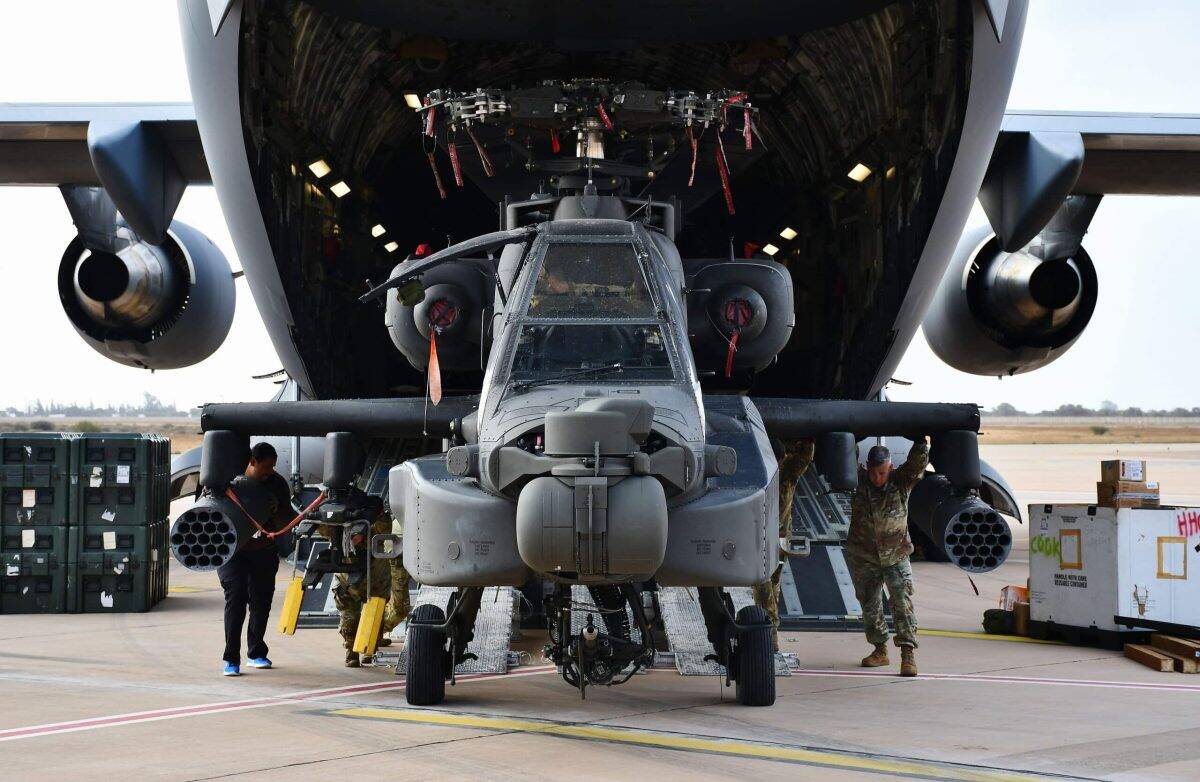
As the Cold War drew to a close, the focus on air support shifted toward Central Europe and the massed Soviet armor columns. The United States’ answer was the AH-64 Apache, an attack helicopter built for killing tanks. Compared to the AH-1 Cobra, the AH-64 was a leap forward technologically. It used integrated thermal imaging, laser-guided missiles, and a 30mm chain gun that followed the movements of the pilot’s head. This was a sophisticated fusion of sensors and raw lethality that could strike in complete darkness or through the thick clouds of smoke on the battlefield.
The AH-64 proved itself during Operation Desert Storm. A guided strike from an Apache took out the early warning systems in Iraq, which opened the door for the ongoing air campaign that crippled Iraqi resistance. As the conflict wore on, Apaches were hunting armor with zero resistance. The helicopter wasn’t just a vulnerable support craft anymore, but an offensive weapons platform. By integrating long-range sensors and potent munitions, air support could be delivered from stand-off distances and would reshape the battlefield as we know it.
UH-60 Black Hawk
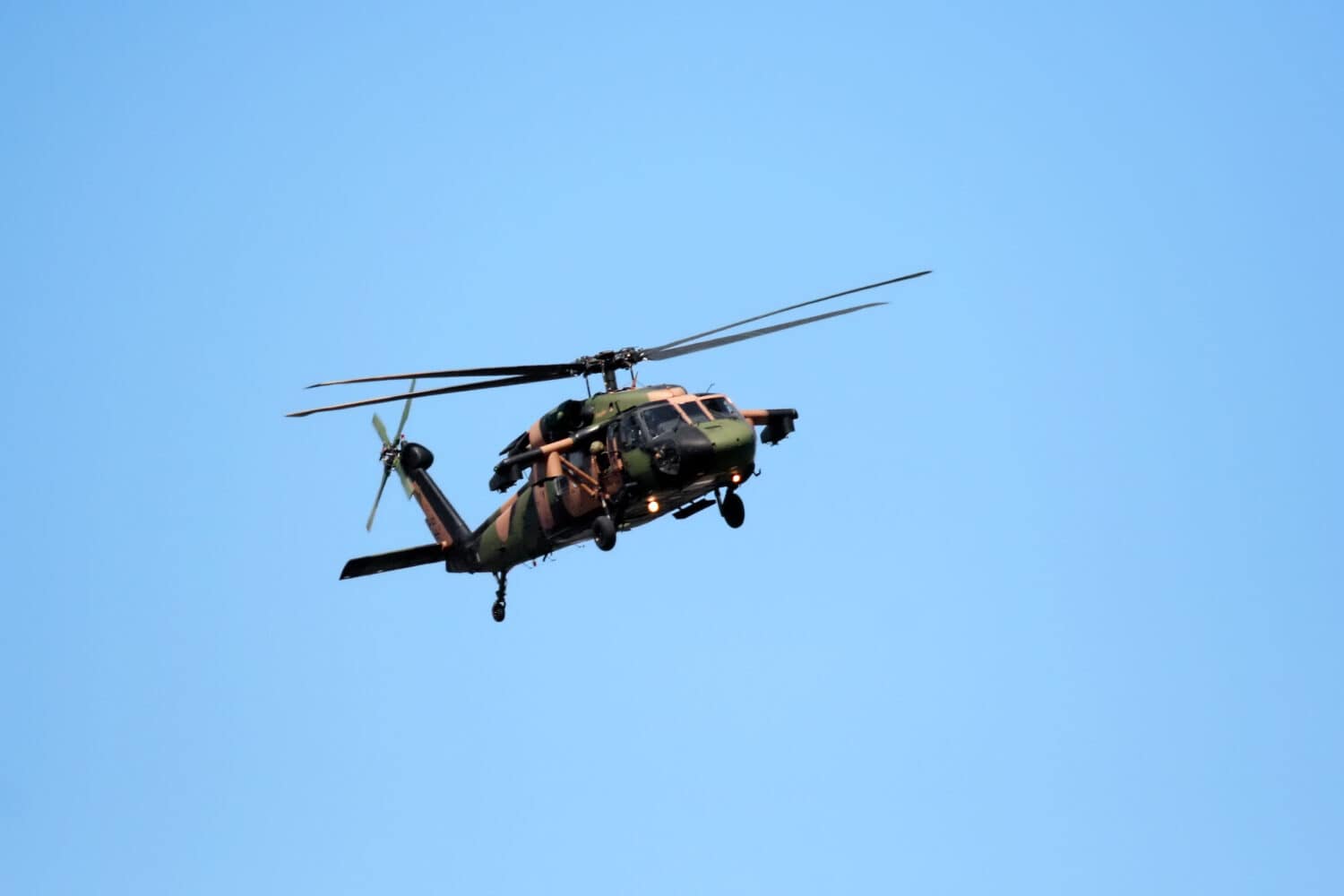
The final years of the 20th century moved past the grand scale of conflict, especially in the years shortly after the end of the Cold War. Instead, low-intensity fighting and special operations needed a machine that was fast, capable, and more resilient than the aging UH-1. The answer came in the form of the UH-60 Black Hawk. This was a helicopter built with a focus on redundancy and surviving crashes, with the UH-60 becoming the standard helicopter for American forces for the modern era, a distinction it still holds in 2026.
The UH-60’s lower profile allowed it to be transported by planes for rapid deployment across the globe. Its powerful engines let it operate in all sorts of environments, like dense jungles, dry deserts, and much more. The Black Hawk is the primary platform for the 160th Special Operations Aviation Regiment, and it has proven to be just as adaptable and flexible as its predecessor. Modified versions, like the Pave Hawk and Velociraptor, come equipped with refueling probes, advanced radar systems, and sophisticated electronic warfare suites.
Specialized platforms like the Pave Hawk allowed for clandestine operations in hostile territory, like the high-stakes rescue that came about during Operation Gothic Serpent. The Black Hawk has more than proven itself as a utility helicopter, conducting raids deep in enemy territory even today. It is capable of operating in combat theaters where the UH-1 would falter.
Conclusion
The 20th century saw the helicopter go from a theoretical concept to the backbone of the modern military. It bridges the gap between traditional fixed-wing aircraft and the boots on the ground of your average soldiers. By the end of the 20th century, air support wasn’t defined by how many tons of munitions you could sling at a target, but by how precisely a pilot could pluck a wounded soldier from a rooftop while enduring withering fire.
The image featured at the top of this post is ©Robyn Mackenzie/Shutterstock.com