
History has a fascinating way of moving past innovations, at least when the technology isn’t a good fit. This is painfully clear when looking at military history, as you can see no shortage of well-intentioned plans falling by the wayside. In times of conflict, there’s an immediate need for effective, simple designs that might not be as innovative. Some of the most remarkable military designs ever imagined never saw meaningful combat. With that in mind, let’s look at some of the most advanced military designs that were ahead of their time.
Torpedo Boats
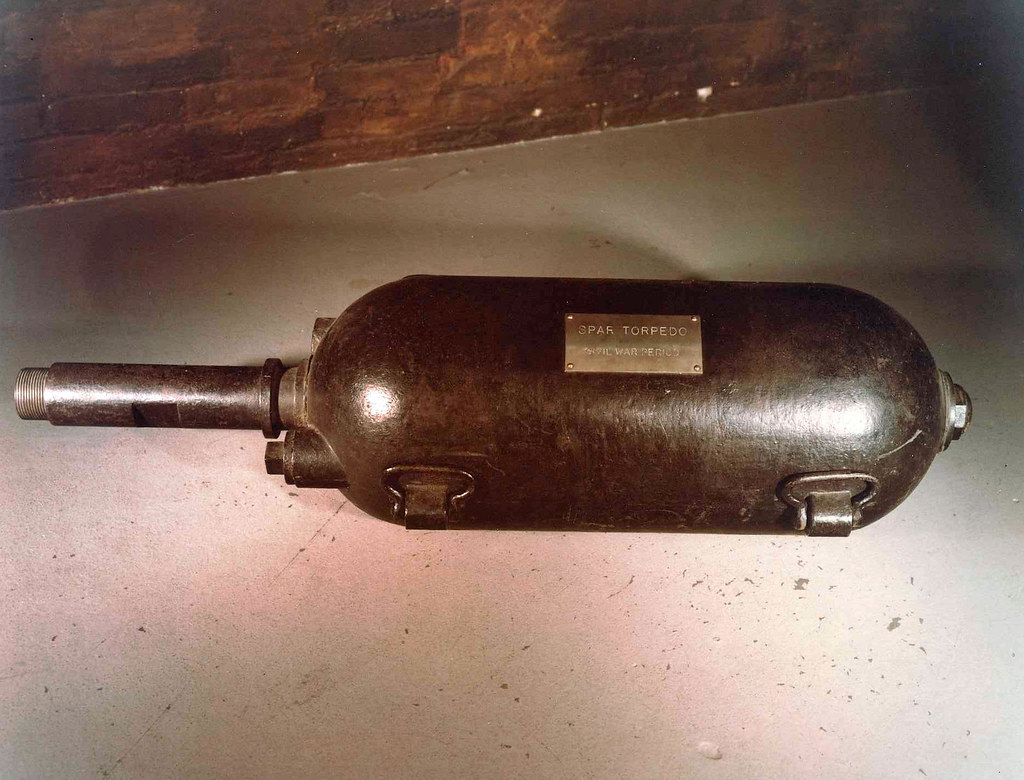
©"NMUSN-1162" by Photograph Curator is licensed under PDM 1.0. – Original / License
Before things like anti-ship missiles or naval aviation, sea power rested in the hands of heavily armed battleships. This changed during the American Civil War, as engineers for the Confederacy saw the potential for an asymmetrical, expendable craft intended to destroy a ship in a single blow. Torpedo boats, like the CSS David, were prescient of the trends that would dictate naval warfare in the coming century. The tiny vessel was armed with a spar torpedo, which was more than enough to take out an ironclad.
The USS New Ironsides fell victim to a torpedo launch in 1863, causing serious injuries and raising the alarm for Union commanders. Where the torpedo boat fell short, at least for the time being , was a lack of industrial capacity in the Confederacy. Most of the industry in the United States rested in the North, with the South being more tuned for agricultural and textiles.
The concept was proven and highly effective, but there simply weren’t the means that produce torpedo boats at any sense of scale. Lighter, faster craft saw extensive use throughout the Second World War, and evolutions of the same tactics are seen with the likes of missile boats in the modern era. If things had gone differently, the CSS David likely could’ve changed the whole of the Union’s naval plans during the Civil War.
Landships
The battle tank made its debut in 1916, as the First World War raged without end. The British Mark I was the first viable battle tank, but was released before the kinks were ironed out. Engineering around the vehicle was largely unfinished. The crews were untrained, and there was no underlying doctrine on how to effectively use them in concert with other forces. The earliest use of tanks on the battlefield saw more fall to mechanical errors than to German artillery pieces.
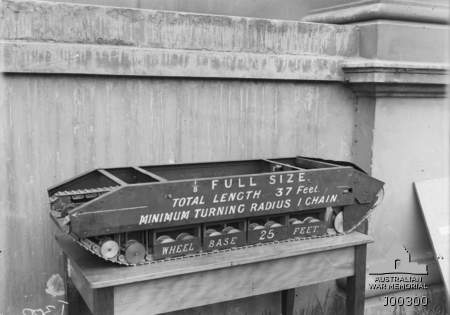
Before the Mark I rolled off the assembly line, Australian engineer Lancelot de Mole submitted designs for a tracked, armored vehicle. His design was rejected outright by the British War Office, despite bearing many of the same hallmarks of the Mark I as an armored, tracked vehicle. de Mole’s landship never saw production, but he was acknowledged later on for anticipating the tank. It was simply a matter of his design work reaching the wrong desk.
de Mole anticipated the need for armored vehicles in the age of industrial warfare, having submitted plans in 1912, 1914, and 1916. That said, the British War Office gave no serious consideration to his designs in the aftermath of the First World War, as the Mark I was a more sound design.
Heinkel He 178
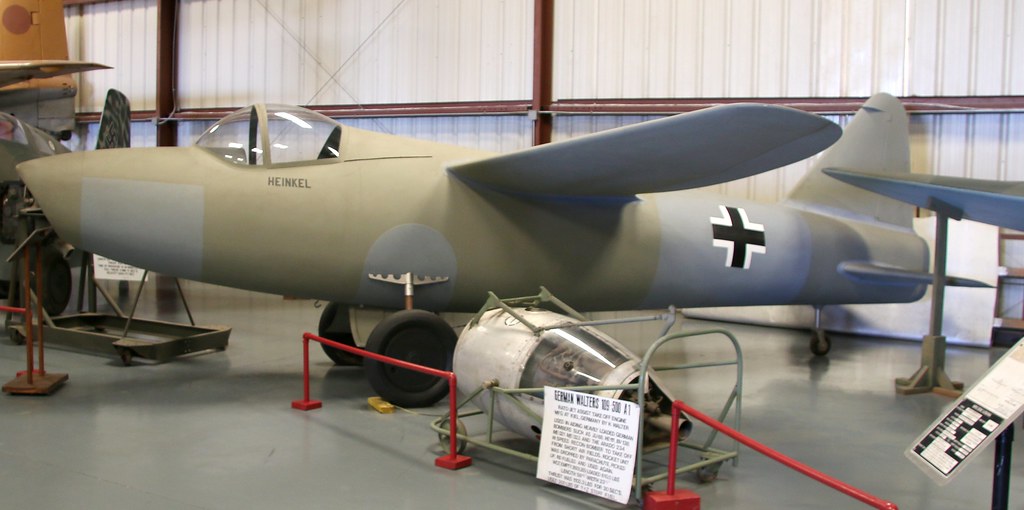
©"Heinkel He 178 replica" by kitmasterbloke is licensed under BY 2.0. – Original / License
We often think of the first true jet-powered aircraft arriving at the tail end of the Second World War with the Messerschmitt Me 262. The invention of the turbine jet predates it by a solid six years or so, with prototypes of the engine manufactured in 1936. The Heinkel He 178 took its maiden flight in 1939, well before the Me 262 was even conceptualized.
The He 178 fell victim to the German war machine, as its maiden flight took place on August 27, 1939, days before the invasion of Poland and the start of World War 2. Its designer, Ernst Heinkel, thought he was delivering a trump card to the Luftwaffe which would see the war a sealed deal. However, the planners and upper brass of the Luftwaffe remained indifferent. The He 178 wasn’t combat-ready, serving as little more than a proof-of-concept for what would come to be.
Performance limitations, namely the low maximum speed of 372 miles per hour, likely wouldn’t have impressed any Nazi officials. It wasn’t all for nothing, as the He 178’s test data proved invaluable for the development of later jet aircraft. The remaining prototype met its untimely end in 1943 and was destroyed during an Allied bombing raid.
Ekranoplan
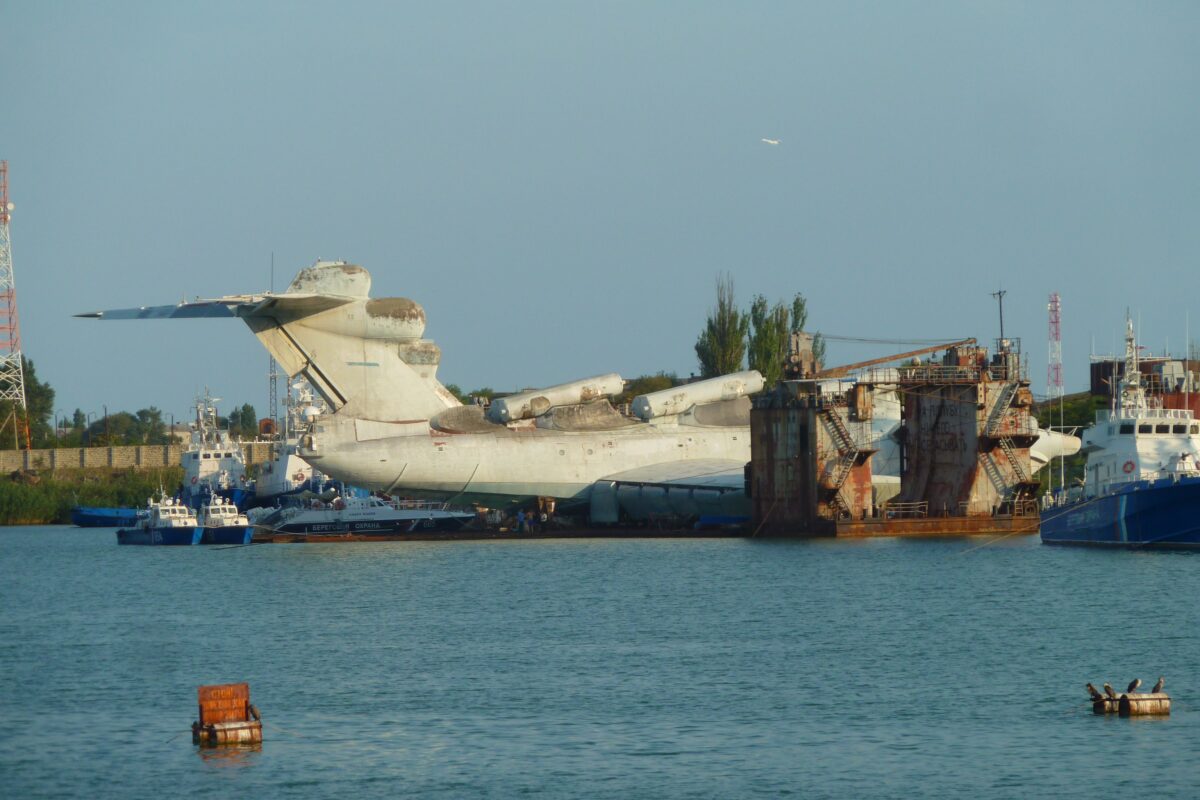
©"File:Lun-class ekranoplan 1.jpg" by Fred Schaerli is licensed under BY-SA 3.0. – Original / License
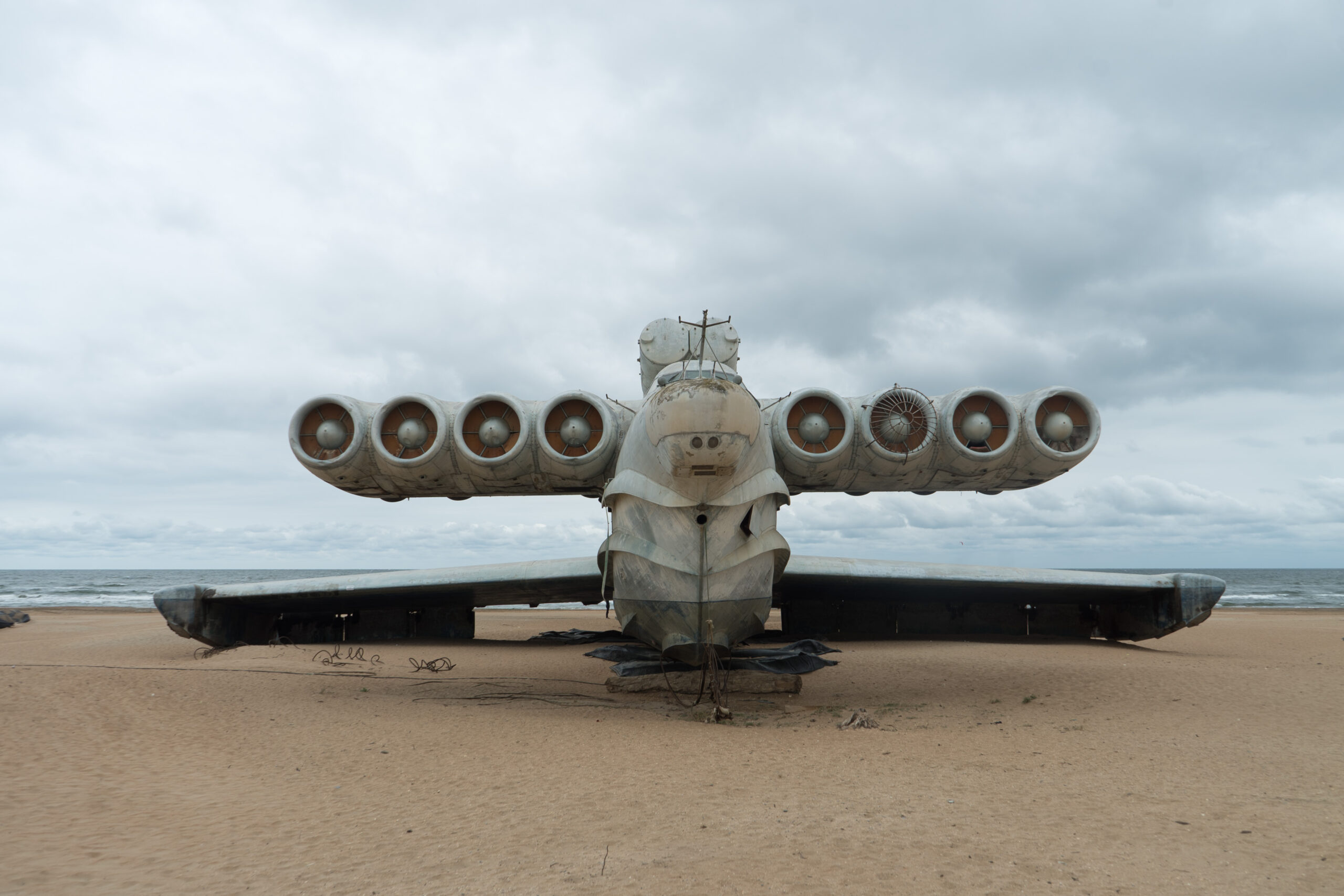
1987 saw the Soviet Union developing one of the most unusual and bold military designs of the late Cold War era. The Lun-class ekranoplan resembles your typical aircraft, but its method of operation differed completely from any large plane. Further, the overall size of the thing was massive, with nearly 286 tons of weight when unloaded. The ekranoplan would fly at low altitudes, just barely skimming the ground to reduce drag and avoid the formation of wingtip vortices.
Conceptually, the ekranoplan was sound. It flew faster than submarines could track, low enough that radar couldn’t follow, and could deploy troops or munitions at high speed across open water. Problems arose with everything else surrounding them. Skilled pilots were needed, as the aircraft proved extremely difficult to pilot. Maintenance was also a major concern, especially when considering just how large and complex the vehicle was.
Further, it fell prey to the same sort of inter-service rivalry you’d expect from the Second World War. There were years of institutional conflict between the Soviet Air Force and Navy as to who should manage the vehicles. The project itself was quietly discontinued in the late 1990s, serving as one of the more costly projects and artifacts of the Cold War. The institutional framework and infrastructure needed to fully support these vehicles simply never materialized.
Horten Ho 229
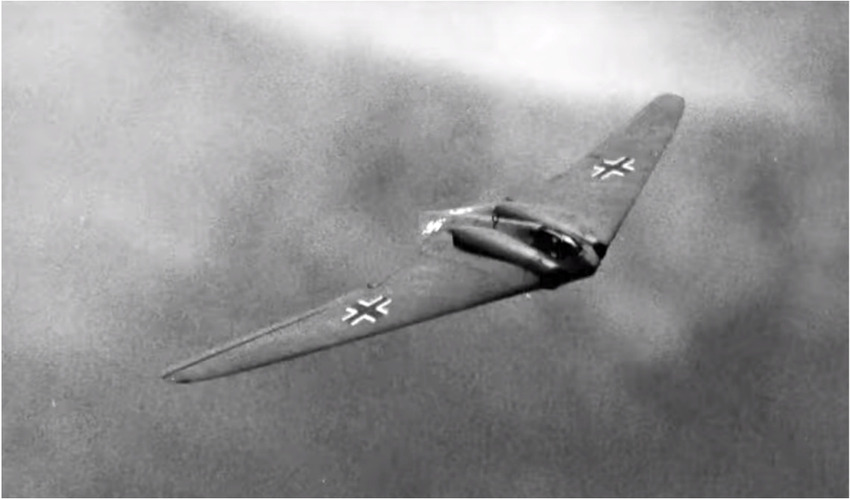
©"Horten Ho 229 V2" by H. Griffiths is licensed under BY 4.0. – Original / License
By the time the Horten Ho 229 was fully matured, the Second World War was over, and the project fell by the wayside. Developed as a response to a 1943 call from Hermann Goring capable of delivering 1,000kg of bombs over 1,000 km at 1,000 km/h, or the 3×1,000 requirement, a tall order given Germany’s own manufacturing woes. The Ho 229 was a flying wing design, chosen because of its superior aerodynamic profile and overall fuel efficiency. Earlier designs, like the Horten H.IV, a glider, showed just how effective the design could be.
Of all the military designs submitted, the Ho 229 was the only that came close to meeting Goring’s requirements, and 3 prototypes were commissioned. There was a lack of suitable production facilities, which were contracted out, and of the three test flights, only one was completed successfully. By the time the bugs were ironed out of the design, the war was over.
The Ho 229 has some claims toward being the first true stealth aircraft, but this was disproven. Simply put, the Ho 229 had a chance at being one of the biggest game changers of the war in terms of power projection. The technology simply wasn’t there, and the flying wing design would be revisited later on with designs like the B-2 Stealth Bomber.
Brilliant Pebbles
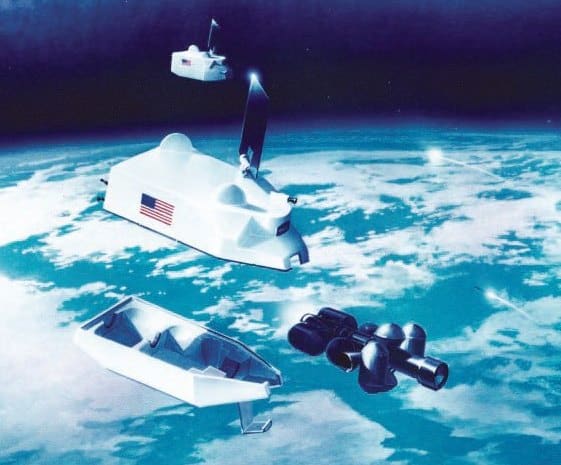
©Strategic Defense Initiative Office /Missile Defense Agency / Public domain – Original / License
Rounding out our list is a design that came about from the much-derided “Star Wars” program of the 1980s, or the Strategic Defensive Initiative from 1983. Many of the concepts that came about from Reagan’s want for a space-based defense against ICBMs were pure fantasy. That said, there were plenty that were viable designs, just decades ahead of their time. Take, for example, Brilliant Pebbles, a ballistic missile defense devised by Lowell Wood and Edward Teller.
The system itself comprised thousands of tiny satellites, each armed with a heat-seeking missile like your typical fighter jet. If the Soviets were to go ahead with the strategic deployment of their nuclear arsenal, the defense system would read the heat signature of the missiles and fire off its own to destroy the incoming salvo.
Conceptually, this is a sound design with proven engineering behind it. However, at the time, there simply wasn’t the computing power or miniaturization of components needed to make it a reality. Autonomous orbital interceptors were workable, but they were well ahead of their time. If anything, they’d succeed if produced today.
Conclusion
The sad reality of any conflict is that a design needs to be feasible, applicable, and usable now. While there is plenty of space for innovation, as we’ve seen with things like stealth fighters, anti-ship missiles, and other recent technologies, when you’re facing down an existential threat, it’s better to focus on what works.
The image featured at the top of this post is ©"Lun-class ekranoplan 2021-09-24-4" by Alexey Komarov is licensed under BY-SA 4.0. – License / Original