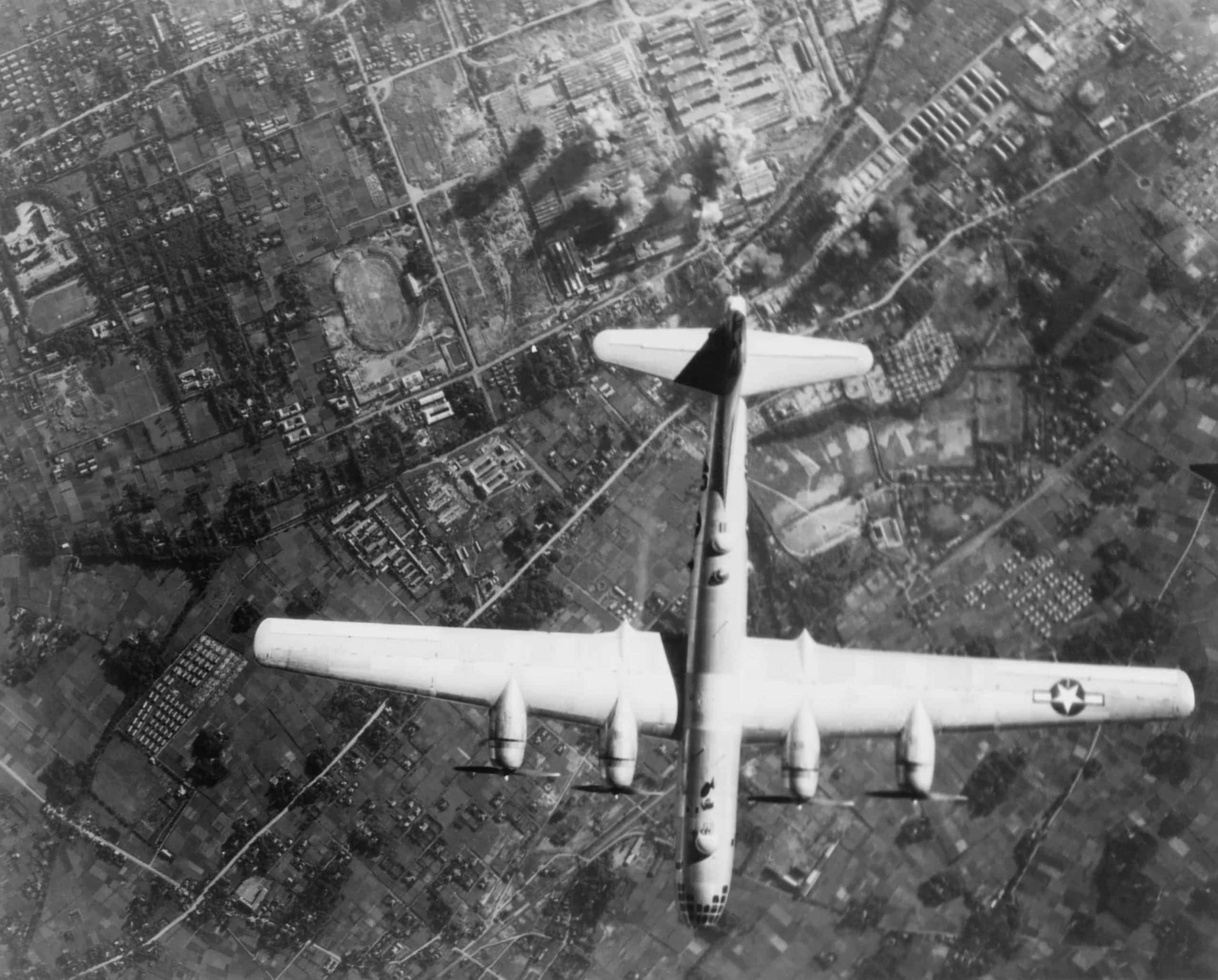

As anyone well-versed in military history will tell you, combat is rarely a tidy affair. The chaos of armies clashing doesn’t always have clear victors. One of the sad, inevitable facts of warfare is that some soldiers go missing thanks to the fog of war. History has no shortage of military disappearances, with whole flights, ships, and even military units vanishing without a trace. Today, we’re looking at some of military history’s greatest mysteries.
Norfolk Regiment

One of the strangest military disappearances in history happened in 1915 during the Gallipoli campaign of the First World War. A good bit of this story is mythologized, thanks in part to just how difficult it was to keep track of troops during the doomed campaign. Eyewitness accounts for the time make some claims that the British 1/5th Battalion of the Norfolk Regiment disappeared into a cloud of dense smoke. Now, more fantastical thinking has led some to think the battalion was abducted by aliens. That isn’t likely, however.
One account by Sir Ian Hamilton recounted, “But the Colonel, with 16 officers and 250 men, still kept pushing on, driving the enemy before them…Nothing more was ever seen or heard of any of them.” Reporting during the Gallipoli campaign was rather spotty, along with any sort of record-keeping that you might expect. In the aftermath of the campaign, the Turkish government denied capturing any of the men prisoner. The British government listed the battalion as missing in action.
The simple truth of the matter is that the 1/5th Battalion was likely among the scores of dead left in the carnage of the campaign. A good amount of the mystery around the disappearance points to the denial of the Turkish government. That’s easily handled, however, as we simply have to consider that a complete change in government didn’t lead to a smooth transition. Whatever the case, it remains a cornerstone of military mystery to this day.
Flight 19
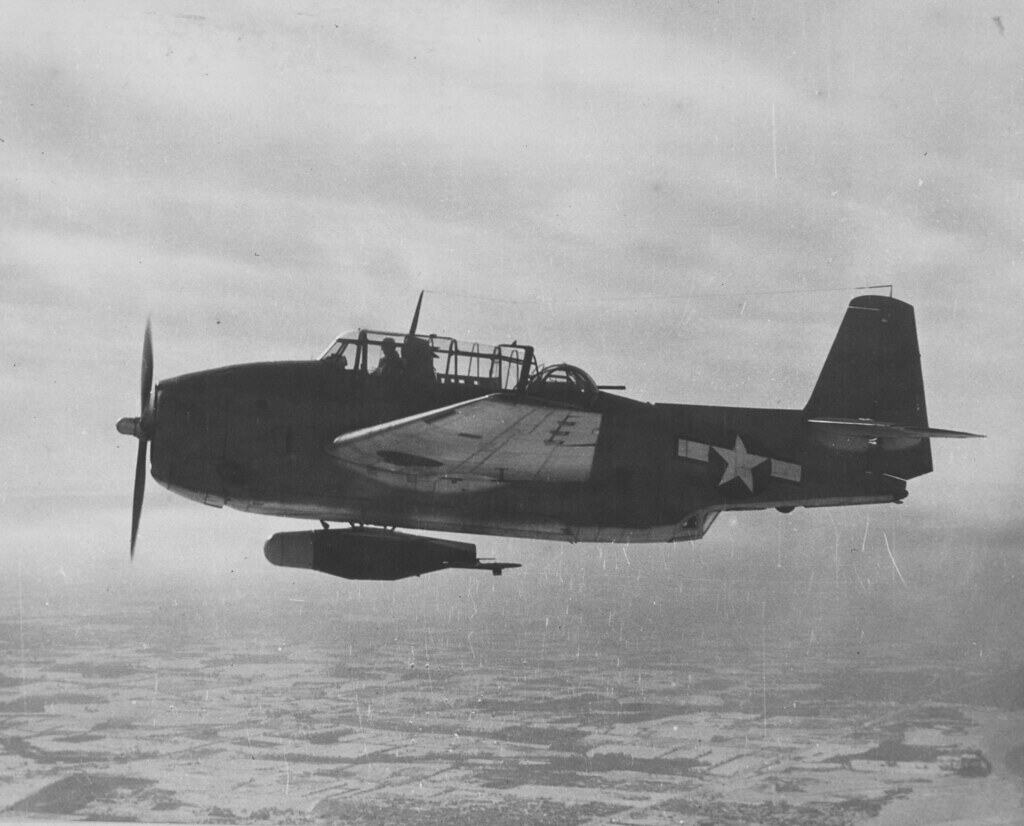
©"TBF Avenger carries Bat – USN 703162" by RyanCrierie is licensed under BY 2.0. – Original / License
On December 5, 1945, a flight of Grumman TBF Avengers disappeared during a routine training exercise. By all accounts, this should’ve been a rather simple maneuver for the aviators involved. Overwater navigation training is the sort of training you’d expect from American aviators in the immediate aftermath of World War 2. As Flight 19 ventured further from the Naval Air Station at Fort Lauderdale, Florida, things started to take a turn for the strange.
Hours into the flight, the lead officer, Lieutenant Charles Taylor, started reporting instrument failure of vital components like compasses. Further radio transmissions would show the flight ventured further and further from the Florida coast, drifting out into the open waters of the Atlantic. All 14 aviators assigned to the routine mission were lost, gone without a trace.
A Martin PBM Mariner was launched to search for the missing planes. Another 13 aviators, the crew of the Mariner, would go missing immediately after. The United States Navy would officially classify the disappearances as the result of unknown causes. It is claimed that it is reported as such to spare Taylor’s reputation from the blame of losing 5 aircraft and 14 men.
USS Cyclops
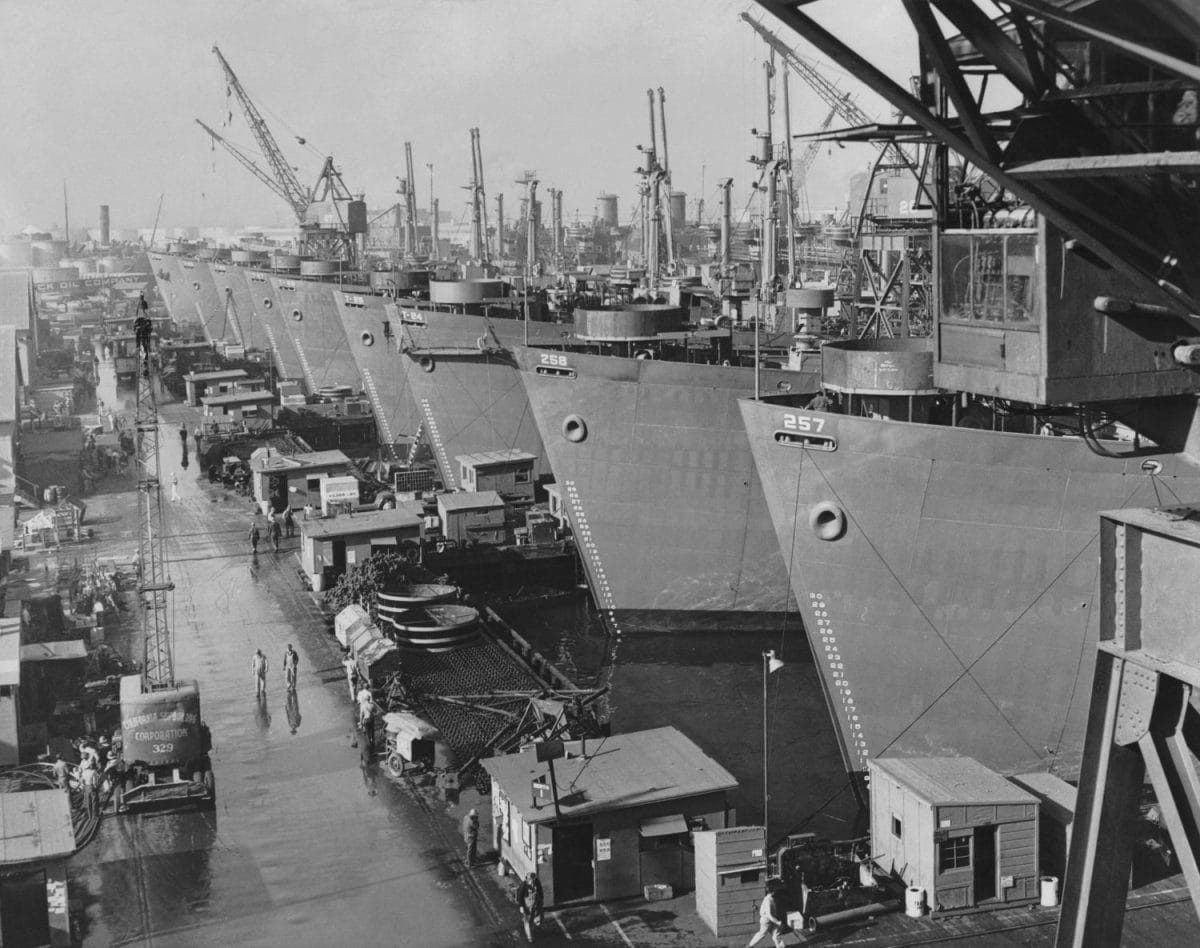
©Everett Collection/Shutterstock.com
Journeying across the Atlantic during the First World War was often a perilous thing. The German Empire actively practiced unrestricted submarine warfare, meaning that any ship was in danger of a sudden strike. While anti-submarine tactics were developed, like the convoy system, there were still losses and disappearances. One such disappearance happened in March of 1918, when a cargo ship for the United States Navy just disappeared.
The USS Cyclops had served quite admirably throughout America’s involvement in the First World War, having just completed a successful assignment to Saint-Nazaire, France, in June of 1917. Its next task was to haul manganese ore, but there were a few complications to consider. The Cyclops reported an engine failure, thanks to a cracked cylinder. Further, the shipment of manganese was thought to have overloaded the vessel, as they made an unscheduled trip to Barbados thanks to water levels exceeding the Plimsoll line.
Somewhere between Barbados and its intended destination in Baltimore, the Cyclops vanished. There was a claimed sighting from a molasses tanker off the coast of Virginia, but it proved to be an unsubstantiated rumor. A US Navy vessel vanished, with no distress signals or even a hint of wreckage.
C-124 Globemaster
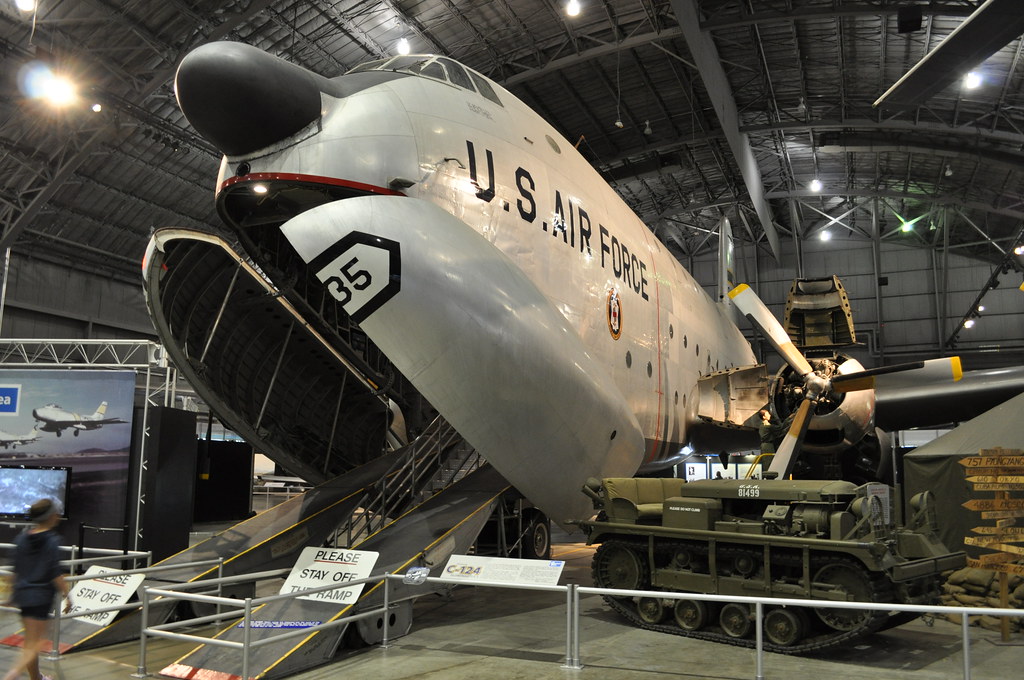
©"DOUGLAS C-124 GLOBEMASTER II USAF MUSEUM" by airlines470 is licensed under BY-SA 2.0. – Original / License
Unlike many of the disappearances we’ve covered so far, there was concrete evidence for the survival of the occupants of a Douglas C-124 Globemaster II. The flight was what you’d expect for military transport, with the transfer of personnel alongside some cargo. After taking flight, the aircraft radioed a distress signal. A fire had started in the cargo hold, and the crew was unable to extinguish it. The flight’s commander, Major Robert S. Bell, chose to ditch it while there was still daylight left.
Their last radio call gave their coordinates, and the occupants of the flight donned their life preservers and climbed into the survival rafts. A B-29 spotted the ditched aircraft from the air, observing flares and locating the survivors. It circled multiple times before having to return to base to refuel. The USS Casco, a Coast Guard ship, arrived at the coordinates a few hours later.
The survival rafts and personnel were nowhere to be seen. The wreckage of the aircraft had also disappeared. Search and rescue expanded from a single ship to dozens of naval vessels and aircraft. The 53 men spotted from the air, alive and well, were gone. The United States government hasn’t given a conclusive answer on what exactly happened, either.
Flying Tiger Line Flight 739
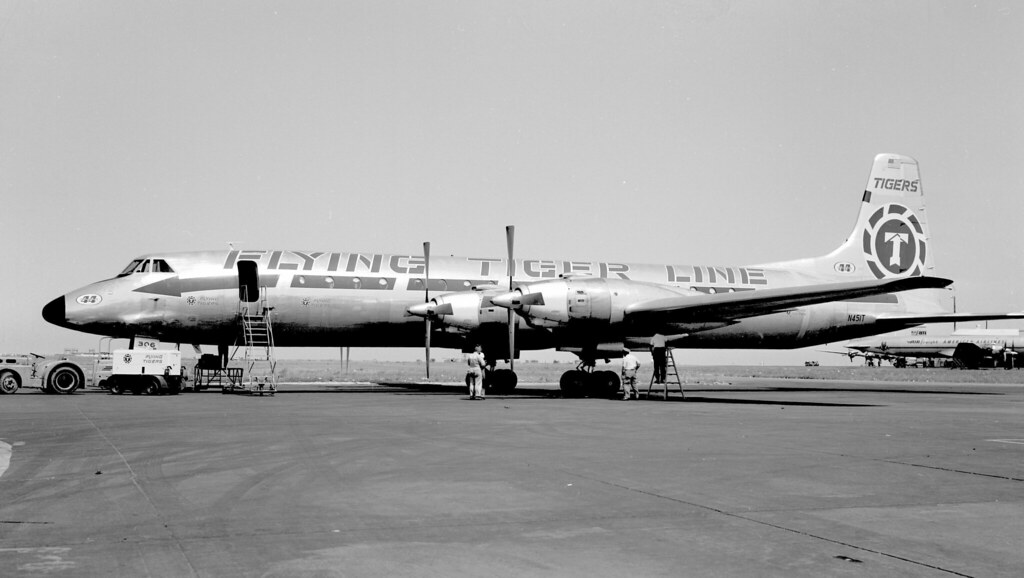
©"Canadair CL-44 N451T Flying Tiger Line" by Bill Larkins is licensed under BY-SA 2.0. – Original / License
In 1962, 107 military personnel disappeared between Guam and the Philippines. Flying Tiger Line Flight 739 was a L-1049 Super Constellation airliner chartered by the United States Army in March of 1962 for transporting personnel from South Vietnam. The weather was clear, no distress signals were issued, and to this day, the flight and its wreckage remain lost to time.
The United States military conducted one of the largest air and sea rescue searches in recorded history, spanning more than 144,000 square miles in the process. All of the men on board the flight were never recovered and were declared missing and presumed dead. There are some thoughts that the flight might have been sabotaged, as the Flying Tiger Line had another flight meet similar, strange circumstances.
Whatever the case may be, there is no evidence to support foul play or sabotage.
USS Scorpion
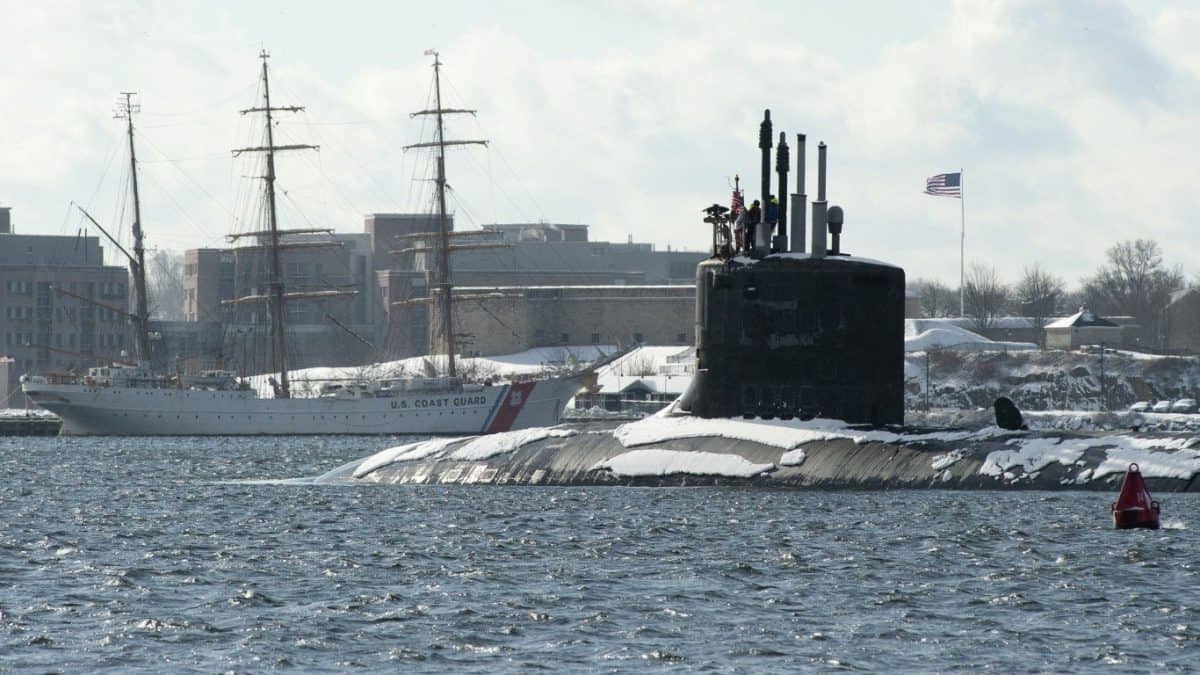
The United States Navy has lost two nuclear submarines, with the USS Thresher sinking with all hands in 1963, and the USS Scorpion vanishing in 1968. Right before the Scorpion disappeared, there was an odd bit of radio transmission, an unusually long bit of traffic, all things considered. After midnight on May 21, 1968, Scorpion went dark. It was expected at Norfolk, VA, on May 27th.
A prompt search from the United States Navy led to the vessel being declared lost on June 6 of the same year. It was stricken from the record shortly after. In October of 1968, the wreckage of the Scorpion was discovered, some 400 miles southwest of the Azores. What caused the Scorpion’s disappearance remains a mystery, but all hands were lost as the hull imploded, or at least the official records show.
There are a few different theories as to why the vessel sank. One of the more popular theories is the accidental detonation of a torpedo, resulting in catastrophic damage. More conspiracy-minded pundits of the time period thought it was likely that the Scorpion engaged with a Soviet submarine and lost. It remains a fiercely debated mystery to this day.
Conclusion
As I stated at the beginning of today’s piece, combat is rarely a tidy affair. What might seem like your typical mission or transport can turn into the last time a vessel might be seen. We’ve seen whole military units, aircraft, and naval vessels vanish from thin air, even in an age where satellite photography and networked communications were firmly established.
The image featured at the top of this post is ©Everett Collection/Shutterstock.com