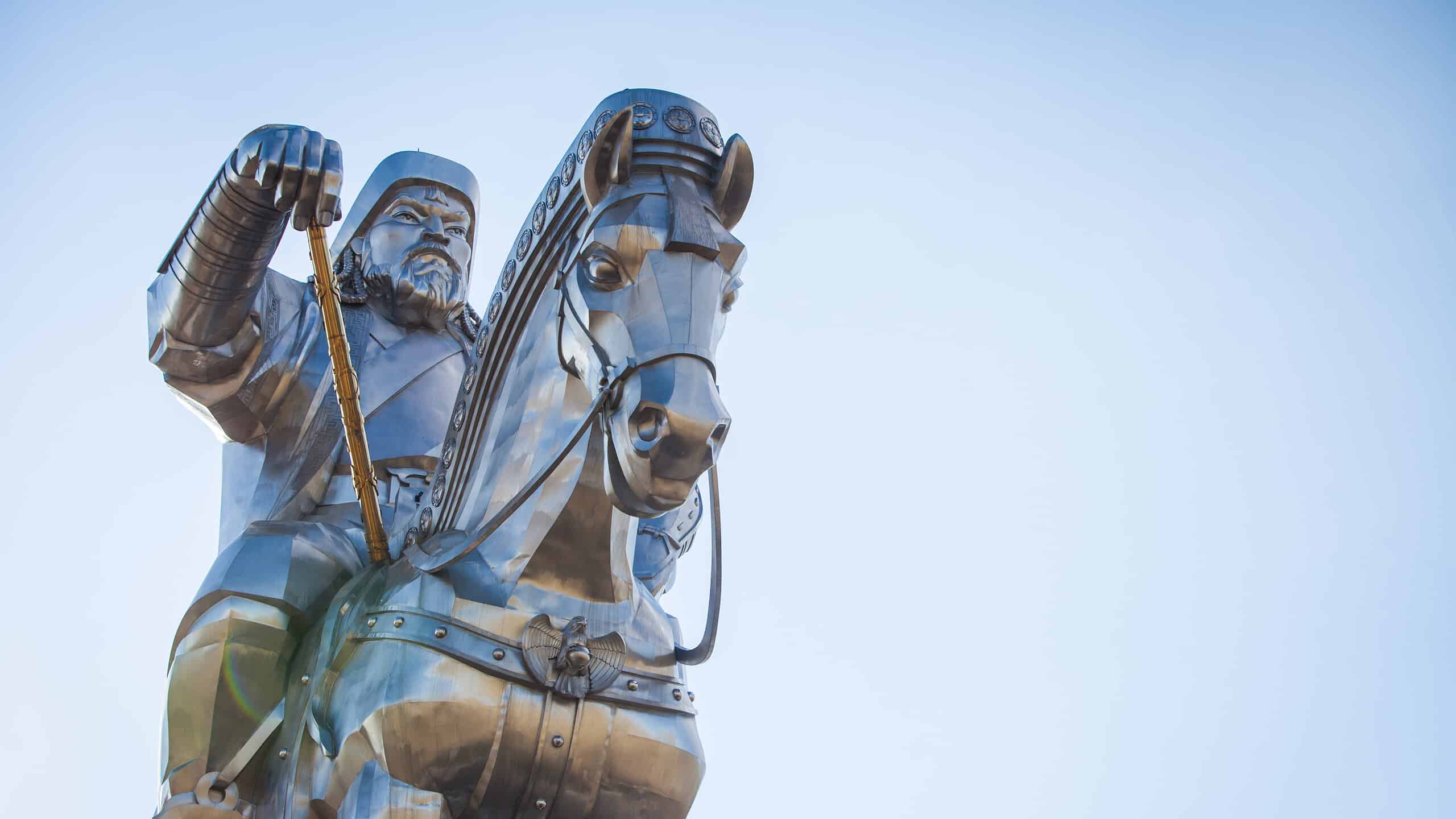

Often when we talk about military commanders, it is through the cold mathematics that run the battlefield. It’s quite common to think of commanders as calculating geniuses, plotting away on a great chessboard. That isn’t always the case, with some commanders leading from the front even as the enemy grows closer. For some fearless commanders, it is a matter of integrating their tactical skill alongside the bravery they carry with them.
True fearlessness for any commander isn’t a disregard for personal safety, but it does act as a psychological weapon. When a commander stands where the heaviest fighting is taking place, morale can carry a flagging army into an unstoppable force. With that in mind, let’s look at some leaders who redefined bravery on the battlefield.
Khalid ibn al-Walid
©Unknown author / https://en.wikipedia.org/wiki/public_domain – Original / License
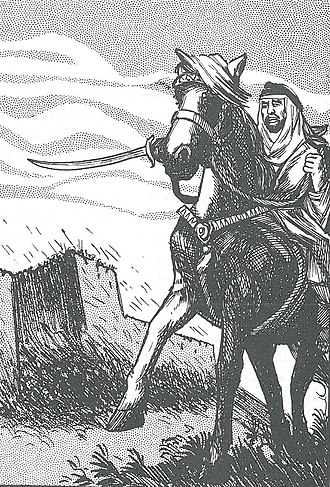
Very few fearless commanders can claim an unbeaten record over 100s of battles, but they aren’t Khalid ibn al-Walid. Known as the “Sword of God”, Khalid had the sort of fearlessness that bordered on recklessness. He led from the front, actively seeking out the enemy on the battlefield. This is best seen at the Battle of Mu’ta. al-Walid and his forces were greatly outnumbered by the Byzantines. The Muslim forces were in disarray following the deaths of three battlefield commanders in quick succession.
Legend has it that Khalid took control in a moment of utter chaos, facing off against the enemy in hand-to-hand combat as he issued commands. This sort of leading from the front was a rarity, and Khalid used it for strategic advantage when the opportunity presented itself. During the same battle, he launched a nighttime maneuver that fooled the Byzantines into thinking a relief force had arrived, allowing the exhausted Muslims to beat a retreat.
Khalid later led a small elite guard across the Syrian desert in what could charitably be called a suicide march during the conquest of the Levant. The feat itself was thought impossible by contemporary military planners, but Khalid arrived and did the impossible. For Khalid falling in battle was just part of doing his duty, and his presence was enough for the enemy to flee at the sight of his standard.
Jan Zizka
©"The Statue of Jan Zizka of Trocnov on Horseback" by sottolestelle is licensed under BY-SA 2.0. – Original / License
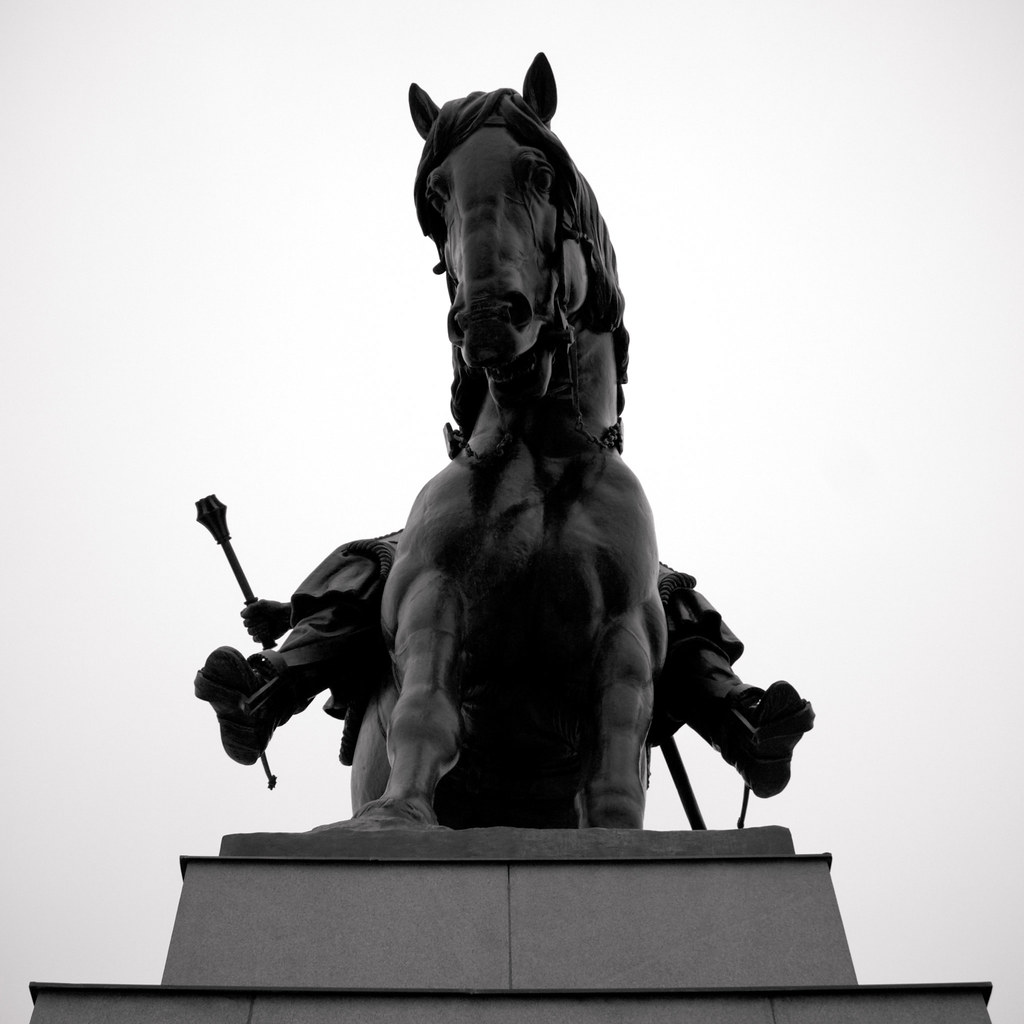
If a fearless commander is judged by their ability to adapt to all possible conditions, then Jan Zizka is certainly worth a mention. A Czech general and Hussite leader, Zizka spent the later half of his career fighting and winning battles while completely blind. Zizka was a master of asymmetrical warfare, leading levied armies of peasants against the heavily armored knights of the Holy Roman Empire.
His ingenuity on the battlefield saw the invention of the wagon fort, or Wagenburg, an armored construct that called to mind vehicles like the battle tanks centuries before they’d arrive on the battlefield. His ingenuity only came second to his resolve and determination. Early in the Hussite Wars, Zizka lost an eye to an enemy arrow. He kept fighting on, losing the second eye to a splinter during a siege.
Most leaders would’ve retired to a quieter sort of living. Zizka relied on his lieutenants to detail the terrain and positions, and continued to lead from the front. His fearlessness is best showed at the Battle of Kutna Hora, where he was surrounded, outmanned, yet still staged a breakout that smashed through enemy lines. Zizka inspired a fervent following, which isn’t hard to believe considering a blinded man was wading into gunfire, pikes, and cannonade with only willpower to keep him going.
Subutai
©"Toda Mongke His Mongol Horde" by lacma is licensed under CC0 1.0. – Original / License
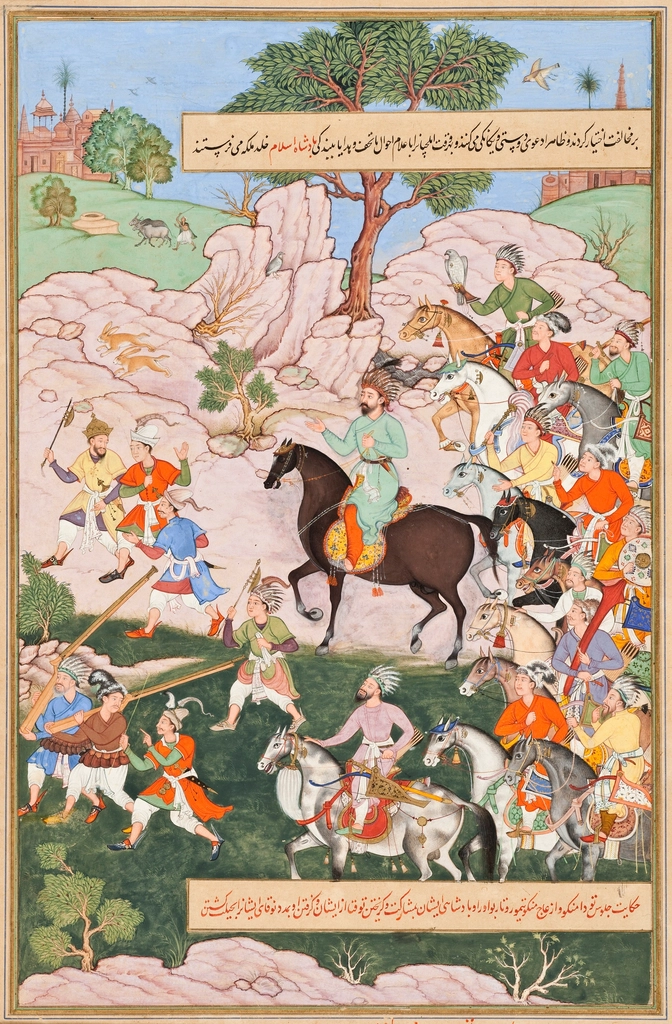
If Genghis Khan is the face of the Mongol Empire, Subutai is the machinery that kept the empire running. Subutai is perhaps the most prolific and fearless commander in human history, directing over 20 campaigns and taking more territory than any other military leader in history. Subutai’s fearlessness wasn’t just in waging war on the front lines, but even in taking existential threats like a lack of supplies into mind.
He constantly operated with long-range strikes, a Mongol battle tactic that saw detached forces operating hundreds of miles from the main war band. At just 22 years old, Subutai volunteered to ride alone into a Merkit camp to gather intelligence. If he had been caught, he would’ve suffered a slow, agonizing death.
As Subutai aged, he became so obese he couldn’t ride on horseback like his comrades. Instead, he took to a specialized iron carriage. Despite his physical condition, he still led from the front, like during the Battle of Mohi, which saw him directing artillery to suppress Hungarian crossbowmen. If there were a front line, Subutai would find his way there.
Charles XII
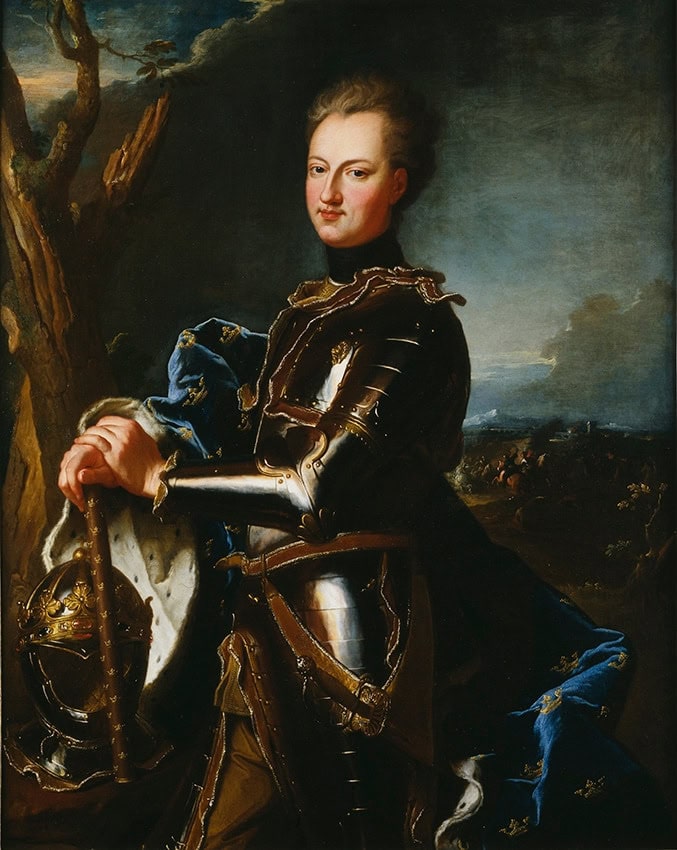
©Workshop of Hyacinthe Rigaud / Public domain – Original / License
For many monarchs, taking the throne as a teenager while some of the most prominent military powers of the time came for you would be an insurmountable challenge. Charles XII of Sweden rose to the occasion, and waged the sort of wars that kept Europe on its toes for nearly 20 years.
Charles was different from other monarchs who led from the front. He eschewed the livery and royal uniforms that previous kings might wear, opting for a simple blue-and-yellow standard like the rest of his men. He slept on the ground just like the common rank-and-file soldier and forbade the consumption of alcohol during any campaign. His tactical philosophy is best summarized as pushing forward no matter the odds, taking ground and meeting the enemy with shot or bayonet where you’ll find them.
At just 18, during the Battle of Narva, Charles XII led 8,000 Swedes against a Russian force of around 40,000. A blinding snowstorm masked the Swedish advance, and by the time the Russians knew what was happening, the Swedes were already firing upon them. While his generals ordered caution, Charles ordered a blinding offensive that drove the Russians into the Narva River in droves, with thousands drowning as they fled the battlefield.
Joanna of Flanders
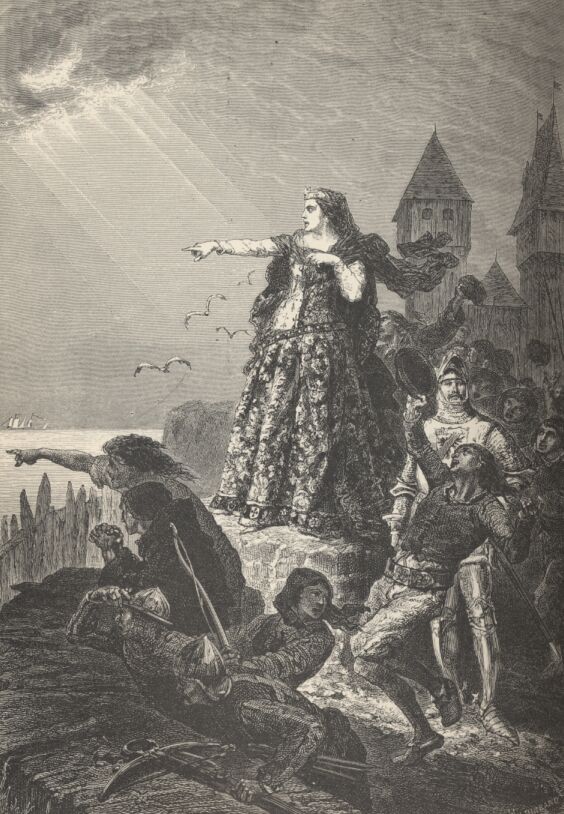
We often overlook the the fearless female commanders that stood on the battlefield right alongside their male counterparts. Aside from the likes of Joan of Arc, few of these women get mentioned. We’d be kicking ourselves if we didn’t touch on Joanna of Flanders, who embodies the sort of fearlessness you’d expect of any of the other commanders we’ve touched upon today. Joanna came to prominence during the War of the Breton Succession, which saw her husband captured. While any other reasonable person would’ve called it a day, Joanna took up arms and championed her husband’s cause.
She exploited a weakened enemy camp at the Siege of Hennebont, with her leading 300 cavalry out of a side gate and setting the whole of the camp to the torch. The main force was too busy with the city walls to counterattack, leading to the entire camp, with tents, food, and other supplies, reduced to ashes before they could respond.
Joanna found herself cut off from her main force following the raid, but kept a cool head. She rode to a nearby town, gathered a relief force, and fought back to Hennebont 5 days later. She was noted as having the “courage of a man and the heart of a lion.” Joanna’s ambition and drive saw her house survive the war and rescued her people from oblivion.
Conclusion
In the modern era, with our constant deluge of information, the thought of a commander standing in the trenches seems almost quaint. The psychological impact of a fearless commander can’t be understated, and these sorts of leaders are a direct reflection of the soldiers they lead. If the leader falters, the army breaks, if they stand, they endure. As such, fearlessness is something of a force multiplier, allowing armies to remain resilient in the face of mounting odds.
The image featured at the top of this post is ©Alexandru Nika/Shutterstock.com