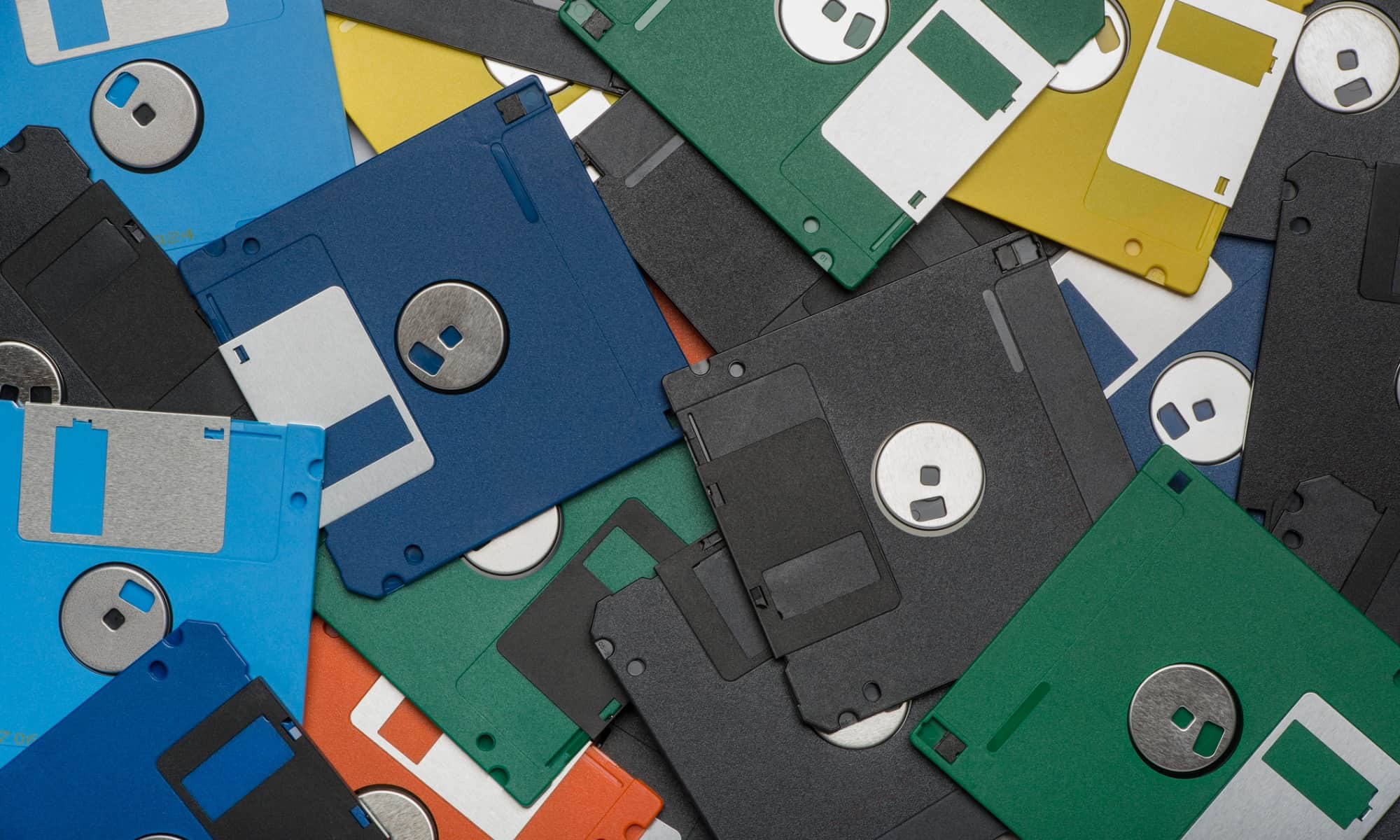

For over 20 years, the basic 3.5-inch floppy disk was the center of all personal computing. If you needed to save data, this small plastic disk that every computer user was familiar with could be found in just about every single space you can think of. By the mid-1990s, there was a need for a change, however. Software programs were growing larger and larger in size, often taking multiple floppy disks just for installation. The early days of file-sharing with things like digital photography and digital audio files often required more storage than a simple floppy disk could manage.
The tech industry was well aware of the floppy disk’s looming obsolescence. Replacing it would prove to be highly difficult, however, given just how entrenched the tech was in all facets of life. Hardware manufacturers tried their hands multiple times at making high-capacity magnetic media, with each seeking to be the next standard drive that came with any pre-built computer.
Some of these managed a brief time in the sun, but others quickly collapsed under the weight of expensive new hardware, reliability issues, and the arrival of recordable optical media. Today, we’re looking at those would-be floppy killers and their final stories.
Iomega Zip Drive
©Young Swee Ming/Shutterstock.com
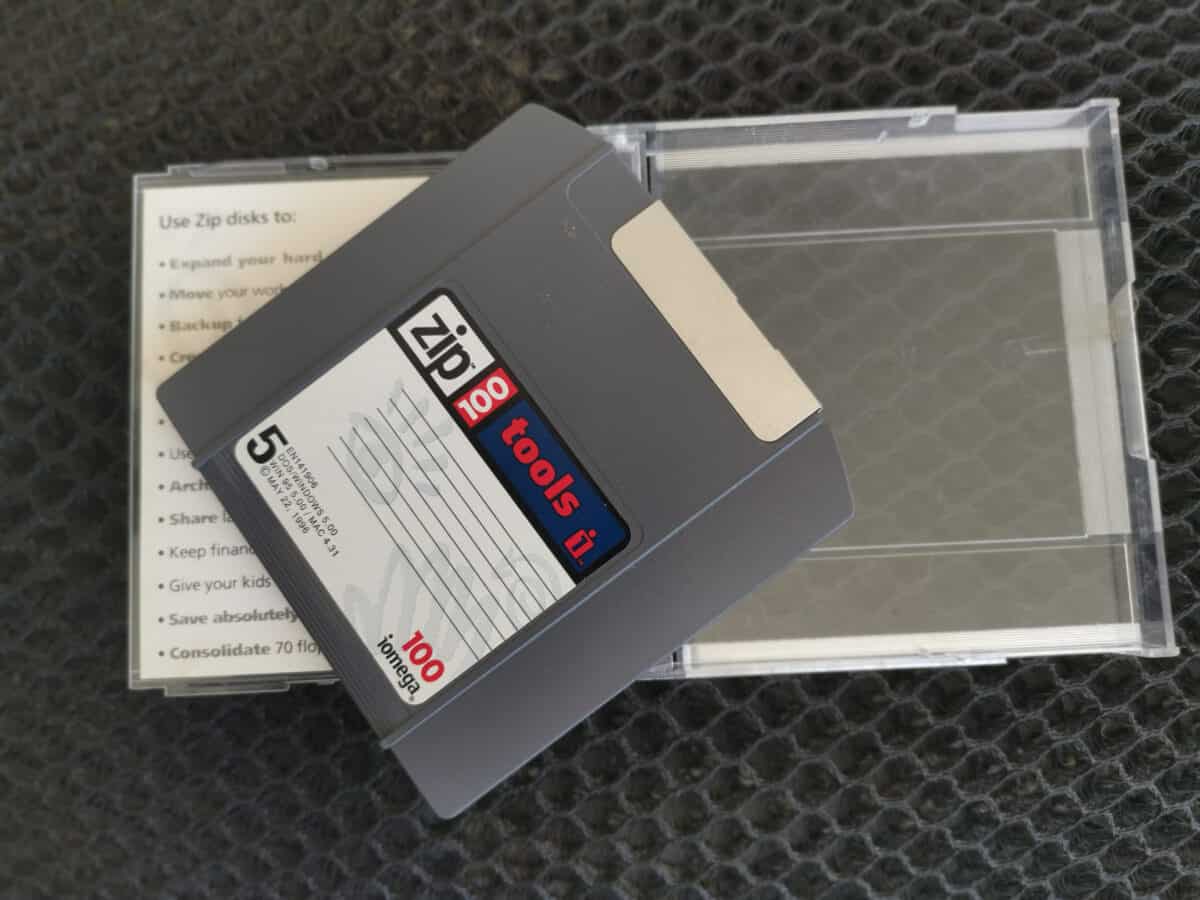
Our first entry is also the one that came the closest to acting as a solid replacement for floppy disks. The Iomega Zip Drive debuted in 1994 and was quickly a smash hit. It offered up a massive 100 megabytes of storage on a thick, durable disk that looked like a thicker, larger floppy. Graphic designers, college students, and other media professionals were able to transport large files between home and work, and the Zip Drive found its niche.
For a few years, the Zip Drive enjoyed a fair amount of success. OEM computer manufacturers began including the drives as a pre-installed option for desktop towers, and the external translucent-blue drives were ubiquitous in office environments. Eventually, Iomega would expand the line to encompass 250-megabyte and 750-megabyte capacities, hoping to stay ahead of the growing demand for storage.
What served as the Zip Disk’s death knell, despite a meteoric rise, was a notorious manufacturing flaw known as the Click of Death. A misalignment in the read-write heads of the drive would physically damage the magnetic coatings of the inserted disk. It went both ways, as well. If you inserted a damaged disk into a fresh drive, it would inevitably harm it. Class-action lawsuits, high disk prices, and the rise of cheap CD-R drives spelled the end for the Zip Drive format.
Imation SuperDisk
©"Magnetic media" by cnewtoncom is licensed under BY 2.0. – Original / License
One of the biggest drawbacks for the Zip Drive was that it lacked any sort of backwards compatibility with the older 3.5-inch floppy disks on the market. If you bought a Zip Drive, you still needed to have a floppy drive on hand to read older files.
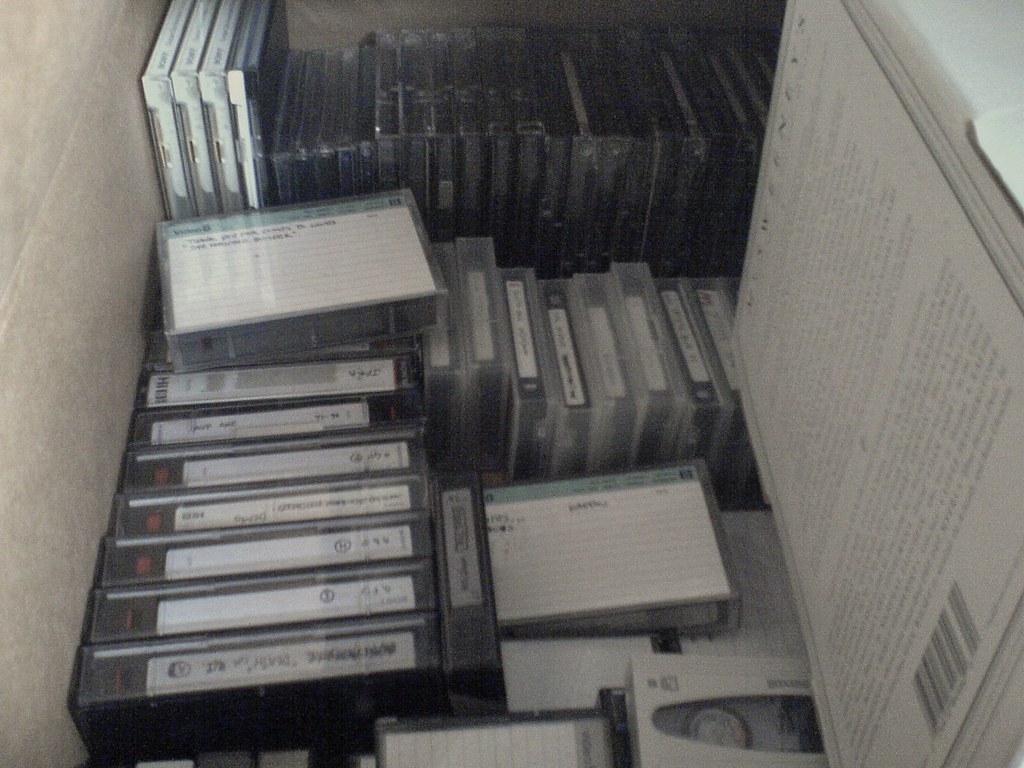
A consortium led by Imation, Compaq, and Matsushita recognized this drawback and introduced the SuperDisk (LS-120) in 1996. The final product was an engineering masterclass for its era. It came standard with dual optical and magnetic head tracking, and could store up to 120 megabytes on a SuperDisk cartridge while still maintaining backwards compatibility with traditional 3.5-inch floppy drives.
On paper, the SuperDisk is the clear winner out of all the formats we’re covering. It maintained support for legacy media, operated faster than a standard floppy drive, and eliminated the need for separate devices. Unfortunately, by the time the SuperDisk hit the market, it was too late. It was far too expensive compared to the Zip Drive, and computer manufacturers were hesitant to adopt it for their pre-builts. By the time the storage was upped, CD-R drives were coming as standard equipment for computers.
SyQuest EZ135
©"Syquest 44 MBs" by portmanteaus is licensed under BY 2.0. – Original / License
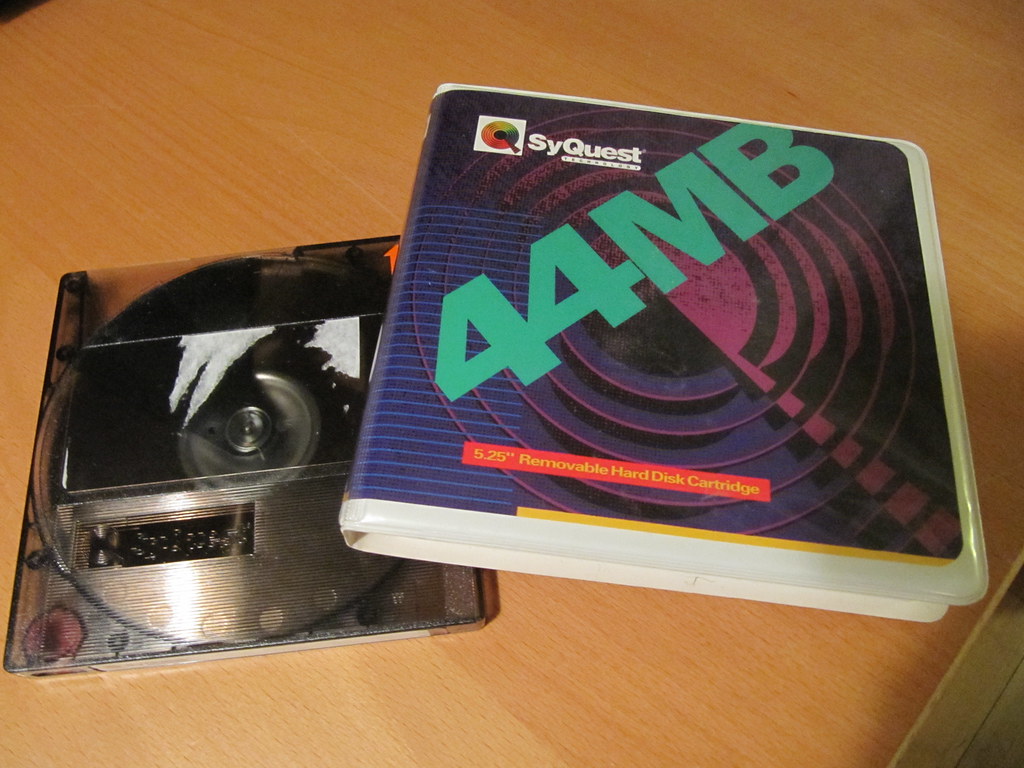
Long before the Zip Drive was a glimmer in Iomega’s eye, SyQuest was the undisputed king of high-end removable storage for professionals. These large, cartridge-based hard drives were a common sight at publishing houses and recording studios around the world for a brief period of time. SyQuest largely ignored the consumer market, right up until the Zip Drive started eating into market share in the business sector.
SyQuest made a desperate bid to stay relevant, and launched the EZ135 in 1995. Unlike the more popular Zip Drive, which was a magnetic disk inside a plastic shell, the EZ135 contained a rigid hard drive platter inside its cartridge. The final product was capable of storing 135 megabytes of storage at speeds that were vastly faster than anything Zip Drive could offer, all at a competitive price point.
Despite these impressive specs, the EZ135 failed to capture consumer attention. SyQuest relied on overly technical marketing, which ultimately failed to connect with everyday PC users who were just looking for an effective storage medium. Furthermore, the drives suffered from supply issues and compatibility headaches in the era before plug-and-play was the norm. SyQuest tried again with a few more follow-ups, but inevitably went bankrupt before the end of the 1990s.
What Killed the Floppy Killers?
©matteo.friz/Shutterstock.com
We’ve covered 3 rather large would-be successors for the humble floppy drive, and their subsequent failures. While we’ve touched on why exactly these products weren’t quite as prolific as their forebears, it is important to have a degree of historical context as to why. For starters, these companies were using analog technology in a world that was growing progressively more and more digital. Magnetic platters and disks are inherently fragile. That’s just the nature of the medium.
Further, the introduction of inexpensive CD-R drives in the late 1990s saw the price of recordable media for these devices plummet. A single CD could hold up to 650 megabytes of data, cost less than a dollar, and could be read by any home computer or stereo on the planet. Magnetic cartridges running at 15 dollars a pop simply couldn’t compete with the bargain-bin prices of CDs.
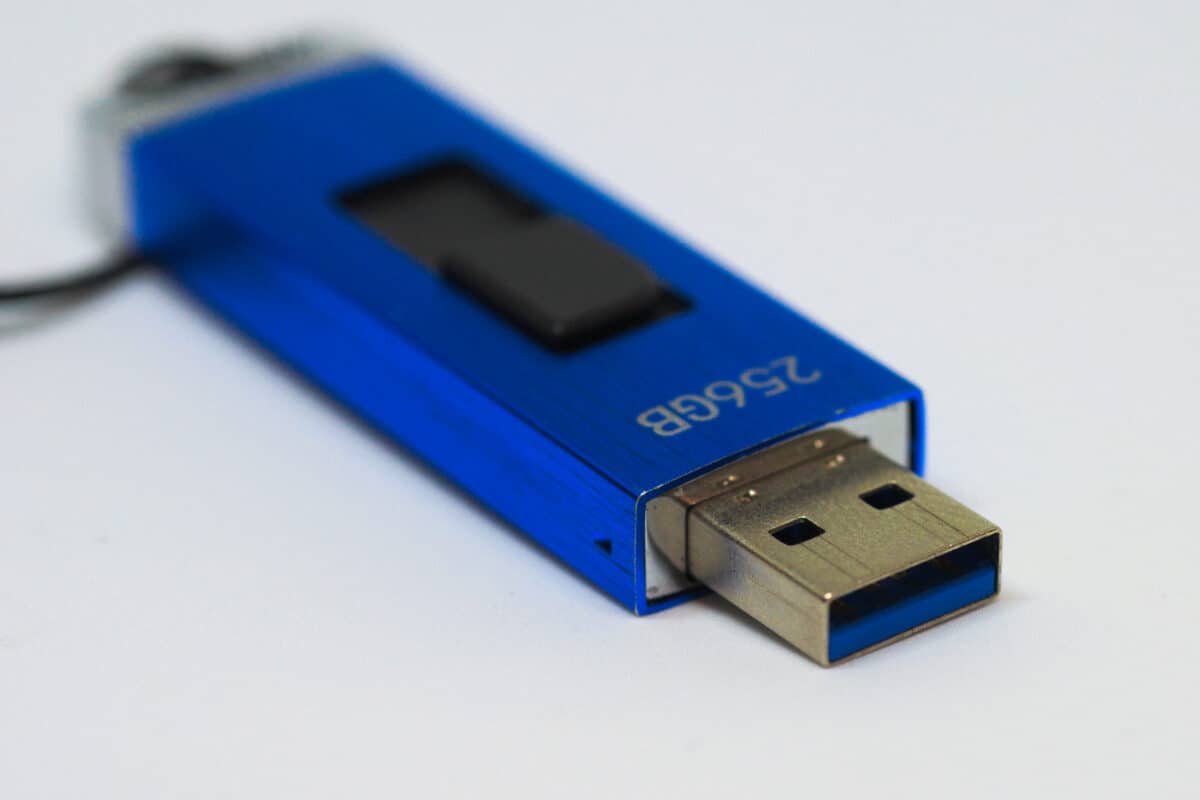
By the start of the new millennium, the introduction of Universal Serial Bus, or USB, changed everything in computing. The introduction of flash drives in the early 2000s made a massive splash. There was no need for complicated driver installations. You simply plugged it in and dragged your files to their desired location. They were compatible with Windows, Mac, and Linux, and had zero moving parts to experience mechanical failure.
Conclusion
If there is a lesson to be learned from these old storage media, it simply shows that transitional periods in tech are often chaotic, and the most reliable, inexpensive formats ultimately succeed. While companies like Iomega, Imation, and SyQuest pushed the boundaries of what mechanical, magnetic media could achieve.
These formats ultimately failed to become a permanent fixture in any tech setup and are mostly consigned to the annals of computing history these days. That said, they bridged the gap just as computers were becoming more powerful and capable. These were expensive, risky failures to attempt back in the day. No one truly knows what direction tech is going to take, but these floppy disk competitors enjoyed their day in the sun, however brief it might have been.
Replacing a nearly universal standard like the floppy disk was always going to be a tall order. Much like home videos and music, it was a simple matter of replacing the magnetic with the digital. Still, it serves as a fascinating window into a highly experimental time in computing, just as they were becoming common fixtures in households around the world.
The image featured at the top of this post is ©CAESARstock/Shutterstock.com