
History has a habit of getting its villains wrong in one direction or the other. Sometimes, it makes them seem larger, deadlier, and more terrifying than they really were. Other times, it cleans up their crimes, softens the rough edges, and turns them into romantic antiheroes. Both things happened to the outlaws of the Old West, often to the same person at different points in history, depending on which dime novelist, newspaper editor, or Hollywood director told the story first.
The era commonly called the Wild West lasted only a few decades, but Americans have been reimagining it for roughly 150 years. During that time, real criminals became folk heroes, minor gunfighters became legendary killers, and complicated lives were reduced to simple stories about good men and bad men. In many cases, the popular version became far more famous than the truth.
After generations of exaggeration, mythmaking, and romanticization, many of the real stories have nearly disappeared. These are 12 Wild West outlaws whose lives were taught, remembered, or portrayed all wrong.
Billy the Kid Didn’t Kill 21 Men
©Everett Collection/Shutterstock.com
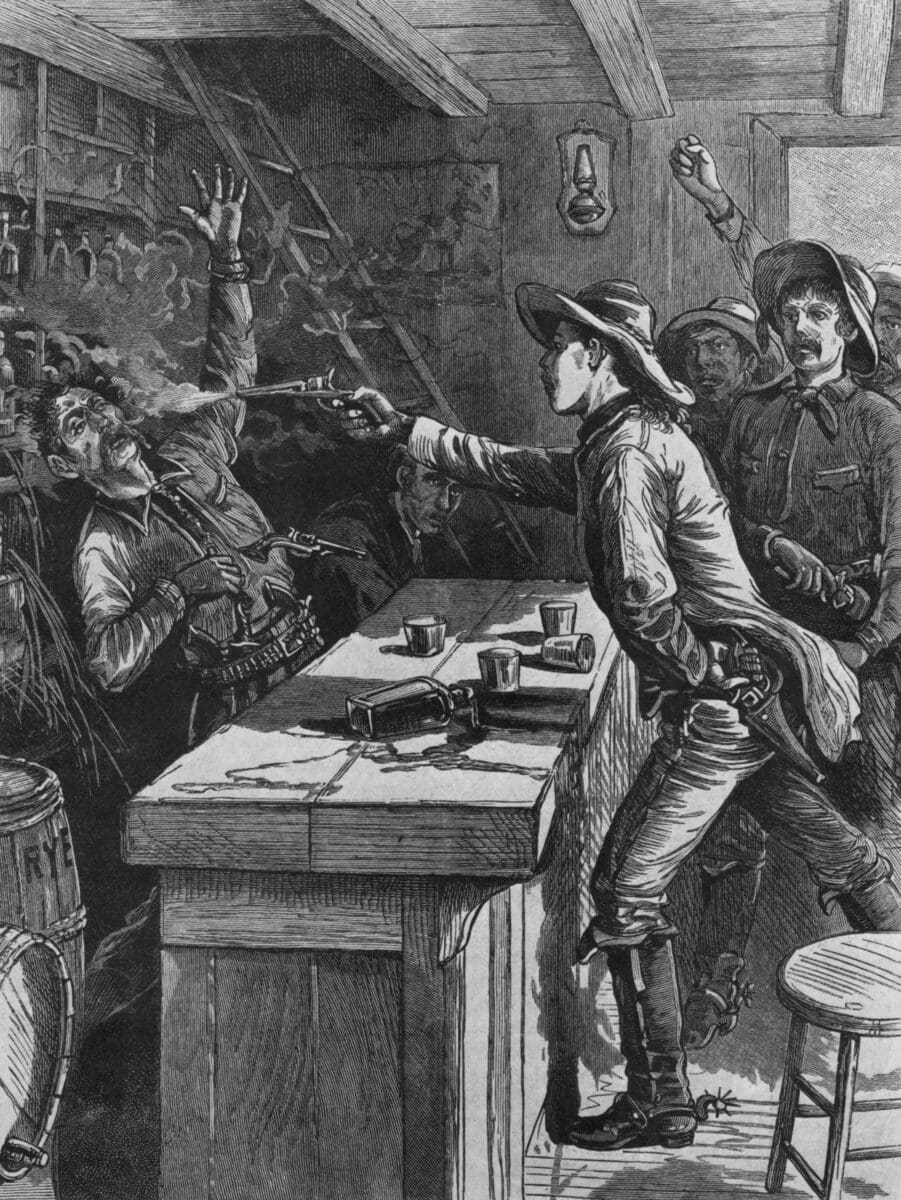
Billy the Kid’s legend says he killed 21 men, one death for each year of his life. However, that number is about four or five times off. That number came from the 1882 biography written by Pat Garrett, which was mostly ghostwritten by someone who also invented Billy the Kid’s birthday.
Based on what has been proven through court documents and contemporary newspaper accounts, rather than Garrett’s biased account, the verified number of killings is four. Moreover, Billy the Kid, whose real name was Henry McCarty, is the only person to be found guilty of committing murder during the Lincoln County War because everybody else on either side received a pardon. The 21 wasn’t built to describe him. It was built to make the man who shot him more famous.
Butch Cassidy May Never Have Killed Anyone, and He May Not Have Died in Bolivia
Billy the Kid’s legend claims he killed 21 men—one for every year of his short life. The historical record tells a far less dramatic story. Most modern accounts link him to roughly nine deaths, and he was believed to have acted alone in only four of them. The larger number was repeated and strengthened by sensational newspaper stories and Pat Garrett’s 1882 biography, The Authentic Life of Billy, the Kid. Although published under Garrett’s name, much of the book was ghostwritten by journalist Ash Upson and mixed real events with exaggeration and invented details. Even Billy’s commonly cited November 23, 1859 birthday remains unproven—and happens to match Upson’s own birthday.
Belle Starr’s “Bandit Queen” Persona Was Invented After She Died
Belle Starr was known as a criminal mastermind who led her own gang of thieves across Texas and the Indian Territory. She got her moniker from a paperback that was printed just a few months after her murder in 1889, commissioned by a dime novel publisher who had never met her before and who filled it with fantasy.
As Myra Maybelle Shirley Starr, she had connections with outlaws, such as the James-Younger Gang, and did nine months in jail for horse theft in 1883. Three additional indictments followed, but no other convictions. And all that gang activity and robberies were all made up for one quick paperback.
Doc Holliday Killed One to Three Men, Not Dozens
Doc Holliday’s title as the “Deadly Dentist” rests on a body count that varies between 16 to more than 30, according to some sources. But historians who researched court records place the body count between one and three. In an 1886 interview, Bat Masterson, who tended to exaggerate everything, including himself, claimed Holliday had killed Mike Gordon and another unnamed person, a detail no record from the time backs up.
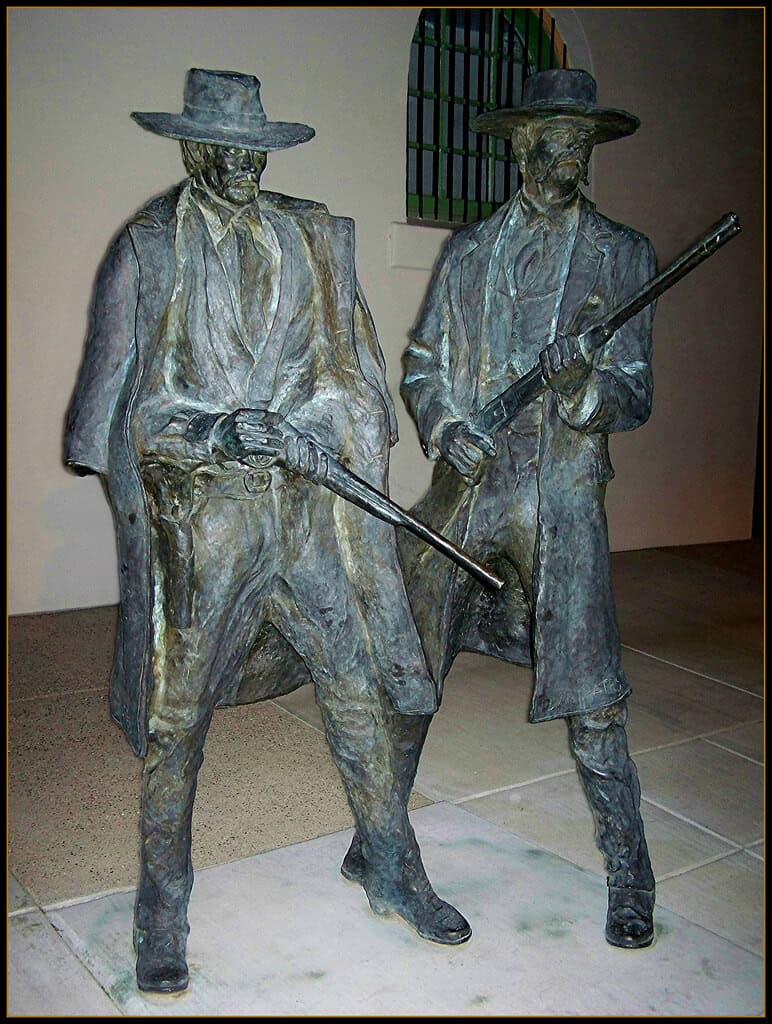
©"Wyatt Earp & Doc Holliday @ Tucson AZ Station" by Loco Steve is licensed under BY-SA 2.0. – Original / License
Virgil Earp, who had fought alongside Holliday during the gunfight at O.K. Corral, stated that the murder stories were always around Holliday, but they could never be proven. The only murders proved are those of Tom McLaury during the fight at the O.K. Corral and Mike Gordon in 1879. Holliday abandoned dentistry for gambling, not gunslinging.
Black Bart Robbed 28 Stagecoaches and Never Fired a Loaded Gun
Charles Boles, also known as Black Bart, was a robber of Wells Fargo stagecoaches for eight years and earned himself a great deal of money and a name for being a courteous and eloquent bandit. The fact that most accounts tend not to include is just how eccentric his approach was.
Boles robbed all 28 of his stagecoaches on foot because he was terrified of horses. He never used his shotgun in any robbery because he never loaded it and was not planning on shooting anyone. He wore a duster coat and a flour sack on his head to conceal his identity. At two of the robberies, he left behind poems signed “Black Bart, the P o 8.” Historians read the poems as part of the same gentleman-bandit act. A gesture by a robber who wanted to be seen as clever, not just armed.
He was found after leaving behind a laundry-marked handkerchief and served four years of a six-year sentence for good behavior, telling the press on his release that he was done with crime.
Harvey “Kid Curry” Logan’s Kill Count Was Inflated by the People Hunting Him
Harvey Logan, also called Kid Curry, rode with Butch Cassidy’s Wild Bunch and was notorious for being the most violent member of the group. Historians who’ve gone back through his case files found that the Pinkerton Detective Agency had padded his kill list, which reached nine police officers, with deaths from incidents he wasn’t clearly connected to. They did this to justify the money and time they’d spent hunting him down. That doesn’t make Logan harmless. He killed several lawmen and was also dangerous when drunk. But people who knew him said that he was an eloquent and soft-spoken man and an expert horseman.
Jesse James Was Never a Robin Hood
©Everett Collection/Shutterstock.com
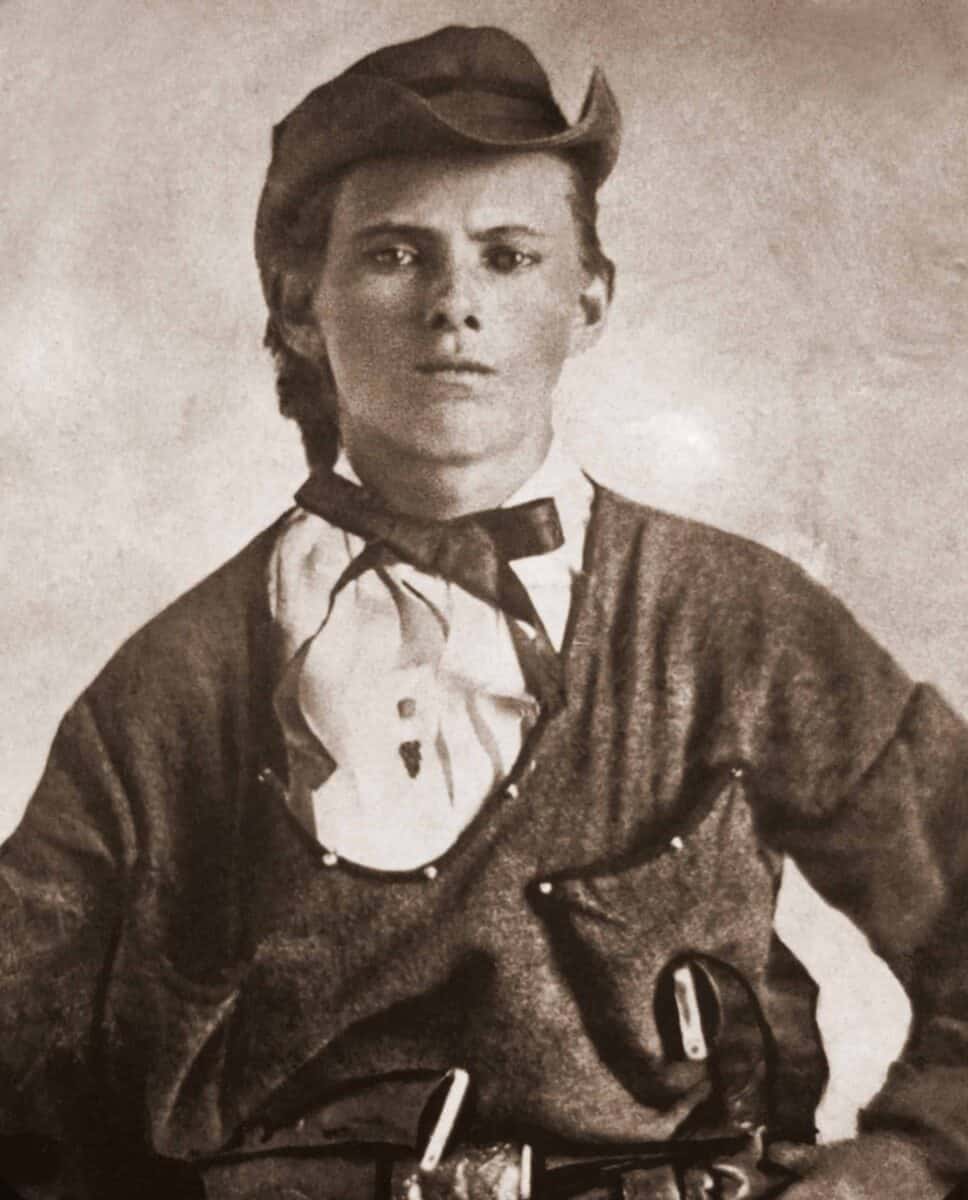
The most enduring myth about Old West outlaws is that Jesse James robbed the rich and gave the money to the poor. This myth originates from John Newman Edwards, a Confederate Missouri newspaper editor who, over many years, helped make Jesse James an icon of Southern defiance, portraying him as generous and religious when he was not robbing trains.
“We are not thieves,” Jesse James wrote in one of his letters, “we are bold robbers.” Not a single historian has managed to find proof of any redistribution. James and his gang would keep all that they robbed for themselves, using the money to buy nice clothes and nice horses. Jesse James was eventually shot dead by a fellow gang member in 1882, who did it for the reward.
John Wesley Hardin Inflated His Own Body Count, Then Got Caught Contradicting Himself
Most Old West reputation inflation happened after outlaws died. Not Hardin. He claimed 42 killings by the time of his arrest in 1877. Contemporary newspapers stated that he had killed 27 men. Historians who’ve cross-checked the numbers put the confirmed figure in the low 20s.
That discrepancy is best illustrated by one of the cases. It was widely accepted that he shot a man for snoring loudly from the other side of a hotel wall, and the story grew over the years into a claim that he’d killed several men for the offense. However, Hardin contradicted the statement himself, stating that the real number was just one. Furthermore, his autobiography of 1896 doesn’t mention the incident at all and gives quite a different account of other murders.
The Dalton Gang’s Legend Was Built on Its Most Spectacular Failure
Legendary bands of outlaws are mostly known due to a successful series of robberies. The Dalton Gang is remembered almost entirely for the day it tried to outdo Jesse James and nearly got wiped out doing it.
The fateful incident happened on October 5, 1892. Brothers Bob, Grat and Emmett Dalton rode to Coffeyville in Kansas, tried to rob two banks in broad daylight right in their own hometown. People of the town spotted them and started shooting. Within approximately fifteen minutes, four out of five members of the gang were killed, and four people from Coffeyville lost their lives. Only Emmett lived through the robbery, but was seriously injured and spent fourteen years in prison.
The robbery that made the Dalton name famous was a catastrophic miscalculation, and the myth of the gang as fearsome professionals was built on the wreckage of their worst afternoon.
Pearl Hart Wasn’t the Last Person to Rob a Stagecoach, or the Only Woman to Do It
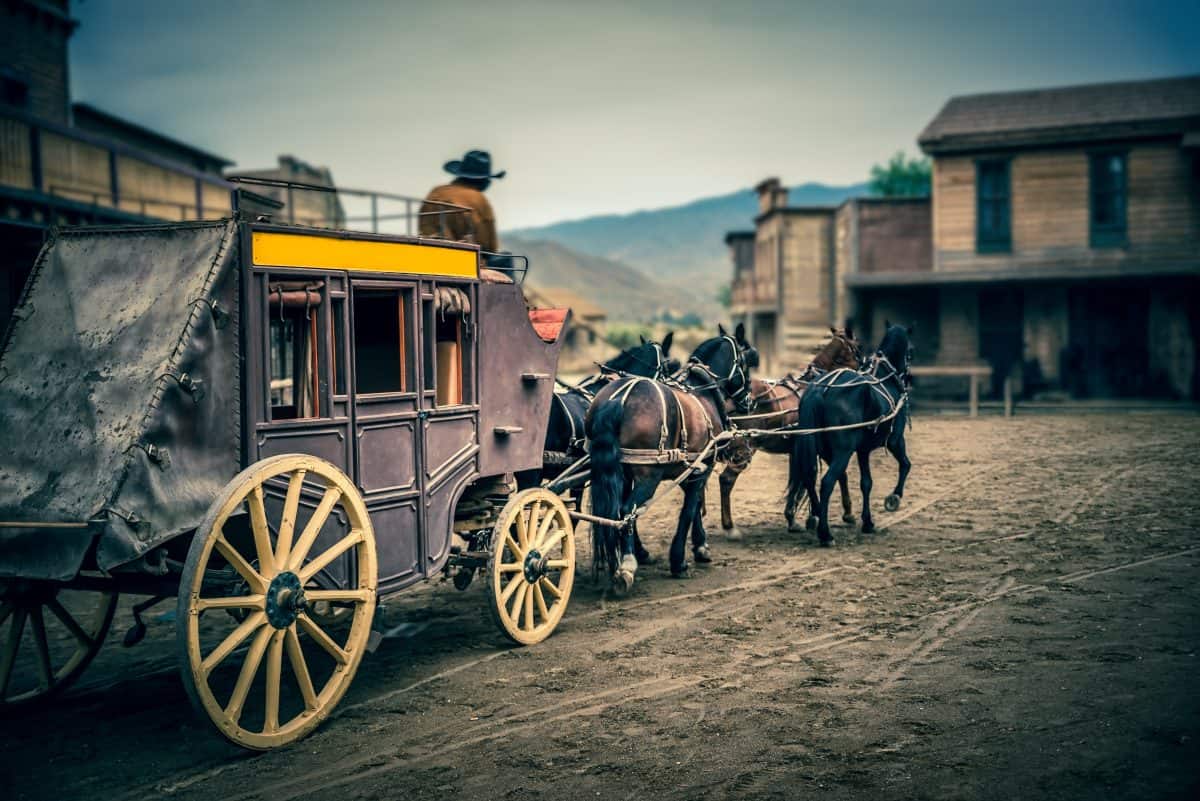
Stagecoach enters town square in American old wild West
©Eusebio Torres/Shutterstock.com
Pearl Hart is often credited for executing the last stagecoach robbery to take place in America, and the only stagecoach robbery that was done by a woman. Neither of these claims stands up to scrutiny. Pearl Hart’s robbery of 1899 did take place, and it was truly one of the last to happen, but not the very last. This honor goes to a robbery that took place in 1916 in Jarbidge, Nevada, seventeen years later.
As for whether she was the only woman to have robbed a stagecoach, another woman by the name of Jane Kirkham attempted this feat in Colorado in 1879, several years before Pearl Hart was born. The sheer novelty of seeing a woman perform such an act dressed like a man made Hart stand out.
Frank James Shot a Man in Cold Blood at Northfield, Then Lived to Be 72
Jesse James is the name everyone remembers from the James-Younger Gang. His older brother Frank rode along on just about every robbery and on the notorious raid on the Northfield bank in Minnesota that put an end to the gang in 1876. Historians investigating that particular robbery have found out that it was Frank, and not Jesse, who shot cashier Joseph Lee Heywood in cold blood when the latter failed to comply with their demands to open the bank’s safe.
When Jesse went back to robbing and was killed by Robert Ford three years later, Frank surrendered to the governor of Missouri in 1882 and was acquitted after trial. He lived a long life as a shoe salesman, theater doorman, and race starter at county fairs and even traveling in a Wild West show that dramatized the very crimes he’d walked away from clean.
He died on the family farm in 1915 at 72, one of the only major figures of the era to escape prison or an untimely death entirely.
Tom Horn’s Guilt Was Never as Certain as His Hanging Made It Look
Tom Horn was hanged in 1903 for murdering fourteen-year-old Willie Nickell, a case that many historians see as the end of the era of the Old West outlaws. Horn’s conviction rested almost entirely on the confession he made in a state of drunkenness to a stenographer concealed behind the wall. Horn thought he was being interviewed for a job.
Horn’s career included killing, likely as many as seventeen people, while working as a Pinkerton agent and a range detective. But the specific murder for which Horn was hanged is a different story. There was no physical evidence linking Horn to the crime scene, and his confession was later disputed as coerced. A local schoolteacher boarding close to the place where the murder took place presented a completely different suspect. A mock trial in 1993 in Wyoming showed that this case would not stand by today’s legal standards.
The image featured at the top of this post is ©Tanison Pachtanom/Shutterstock.com