
The standard evolution of things like rifles is often seen as something of a straight line. There are gradual, predictable leaps forward. Military historians often point to the first truly modern rifle as the smoothbore muskets, which gave way to the rifled muskets of the American Civil War and then the bolt-action and semi-automatic rifles of the World Wars.
However, technology rarely moves in a straight line, often taking side steps and lateral moves on the way to the final product. You’ll have the dominant icons of the battlefield, like the Gewehr 88, the Lee-Enfield, or the AK-47 derivatives, but there is a layer to their history before those designs bore fruit.
Often, there are transitional firearms, or weapons that are plagued by political resistance, a failure of infrastructure, or technological limitations, despite showing some promise. They might have broken the traditional mold of infantry doctrine for the time, but they ultimately failed.
Long before the first assault rifle transformed fire teams, these forgotten rifles transformed infantry tactics and shaped the flow of modern battle as we know it.
Dreyse Needle Gun
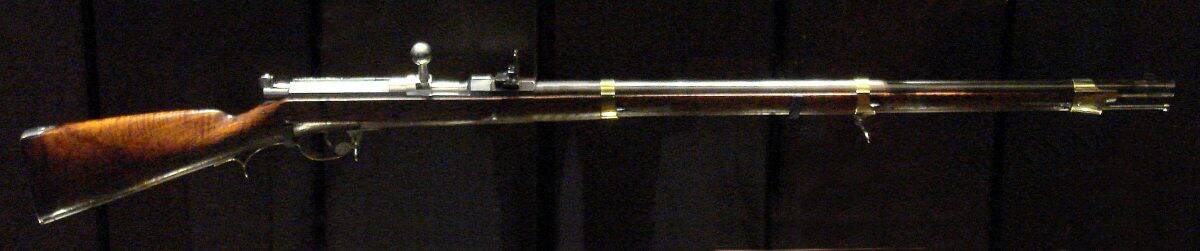
©"Dreyse needle gun" by PHGCOM is licensed under BY-SA 3.0. – Original / License
At the start of the 19th century, infantry tactics largely remained static for nearly 200 years. Armies marched in dense, linear formations to make the most of the limited firearm technology of the time. Smoothbore, muzzle-loading muskets might not be much alone, but en masse, they presented a certain amount of potency. Soldiers had to stay upright to reload, a laborious process that took numerous physical movements.
That went by the wayside upon the introduction of Nikolaus von Dreyse’s Needle Gun, which was adopted by the Prussian Army in 1841. The Dreyse was the first true breech-loading, bolt-action rifle to see widespread military service. This was in the era before metal cartridges, so each Dreyse was loaded with a self-contained paper cartridge containing the powder, cap, and bullet. When the trigger was pulled, a long needle-like firing pin pierced the rear of the cartridge and ignited the cap at the base of the paper cartridge.
The overall tactical impact of the Dreyse cannot be understated. Traditional infantry formations were rendered obsolete overnight. Those dense linear formations no longer had to stay upright to fire, with soldiers being able to go prone to fire and reload, making use of the natural cover and concealment afforded to them. The Dreyse was capable of firing 10 to 12 rounds per minute, a massive improvement over the roughly 2 rounds a minute a muzzleloader could manage.
This was most effectively seen during the Austro-Prussian War, where the disparity in firepower proved catastrophic for the Austrians. They took to the battlefield like any other battle of the early 19th century, and were mown down in droves by the Prussians. The Dreyse forced the militaries of Europe to reconsider their infantry formations, with a new arms race igniting in the process.
Spencer Repeating Rifle
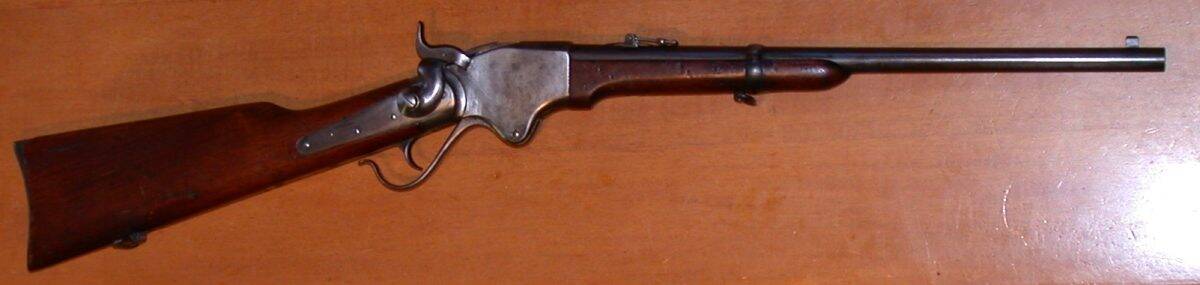
©Hmaag / https://en.wikipedia.org/wiki/en:public_domain – Original / License
The American Civil War was one of the first conflicts to make use of rifled barrels, at least in widespread adoption, but the 1857 and 1861 Springfield rifles used were still basic muzzle-loaders. Infantry doctrine of the United States Army still relied on massed volleys fired in linear ranks. The introduction of the repeating rifle ended up challenging this paradigm by focusing an overwhelming volume of fire.
Christoper Spencer’s 1860 repeating rifle made use of a 7-round tubular magazine housed inside the buttstock. Each pull of the trigger needed the operator to actuate the lever, which would extract a metallic cartridge and chamber a fresh one in one smooth motion. A practiced soldier was capable of firing off the full 7 rounds in a matter of seconds.
This was oddly met with some resistance by the Union’s military leadership, as officers like James Wolfe Ripley thought it promoted wasting ammunition, leading to a massive logistical strain. This is a prevailing thought throughout history, as the conservatism surrounding the way things work runs afoul of the promise of a new design.
Spencers did reach the front line, often purchased privately by some units. When properly utilized, this made for a highly effective, mobile fighting force, as seen during the 1863 Battle of Hoover’s Gap. Colonel John T. Wilder’s Lightning Brigade made quick work of the Confederates, shattering their formation through a sheer concentration of firepower. The Confederacy might have had superior numbers, but the volume of fire more than made up for any shortcomings Wilder’s brigade would come across.
Fedorov Avtomat
The trenches of the First World War highlighted a lot of the outmoded thinking that prevailed through the turn of the century. Soldiers were often saddled with heavy, long-range bolt-action rifles that were capable of engaging targets at 800 meters or more. These were unsuited for the close-quarters fighting that trench raiders would come across, often leading to entire armies relying on the machine guns that made up the defensive hornet’s nests across No Man’s Land.
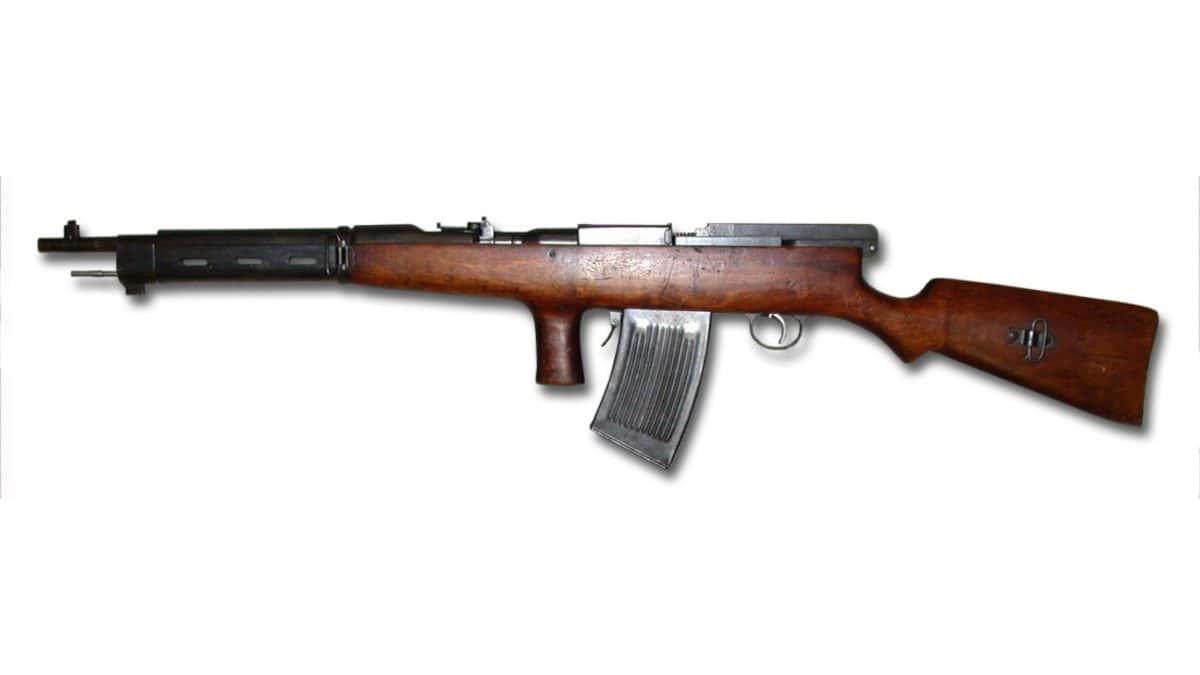
Russian designer Vladimir Fedorov recognized there was a vacuum left by the conventions of the time. In 1916, his select-fire automatic rifle predicted the ultimate evolution of the rifle throughout the 20th century. Fedorov’s initial design made use of a proprietary 6.5mm round, paving the path for later assault rifles to use lower-powered intermediate cartridges. The Fedorov Avtomat would end up chambered in 6.5mm Arisaka, a reflection of the logistical issues of the era. The reduced power allowed Fedorov to remain controllable even when using automatic fire.
Making use of a 25-round magazine and weighing in just under 10 pounds, the Avtomat let a single soldier carry a light machine gun into the trenches. It did see some combat use with the Imperial Russian Army, namely in specialized units like the 189th Izmail Regiment, which made use of crude body armor and close-range assault tactics to devastating effect. Only 3,000 rifles were produced by the time Imperial Russia collapsed, but the die was cast in terms of where rifles would evolve over the next 50 years.
Winchester Model 1907
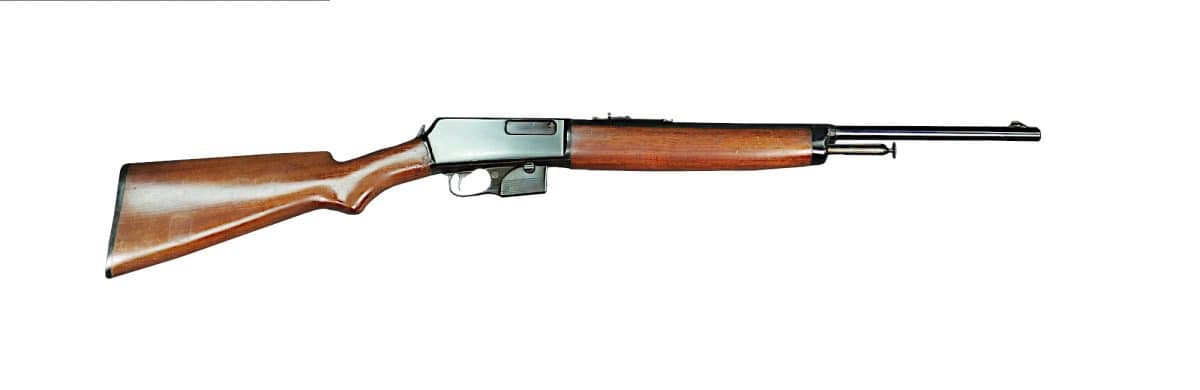
©The Smithsonian Institute / Public domain – Original / License
We often think of the Second World War as the first war to see semi-automatic rifles used in any sort of capacity. The Winchester Model 1907 was a commercially developed semi-automatic rifle originally intended for hunting, with the .351 Winchester cartridge being roughly equivalent to .30-30 at the muzzle. The opening years of the First World War saw the use of the Model 1907 by French and British forces.
These weren’t purchased in substantial numbers, roughly accounting for 5,000 rifles for the French and a few hundred units for the British. However, these were modified for field use, converted to automatic fire, and often fitted with kit-bashed extended magazines. In an era before the widespread adoption of portable automatic weapons like a submachine gun, the Model 1907 filled a particular niche.
Ultimately, the Model 1907 wasn’t built for a World War, let alone one at the same scale and sheer destruction of the First World War. There was a need for a volume of fire for close-quarters work, especially when raiding a trench, and the Model 1907 more than filled the role for the time. At the start of the Second World War, these rifles were largely retired to use for police duty, with more dedicated submachine guns like the Sten and Thompson filling the same sort of role.
RSC Model 1917
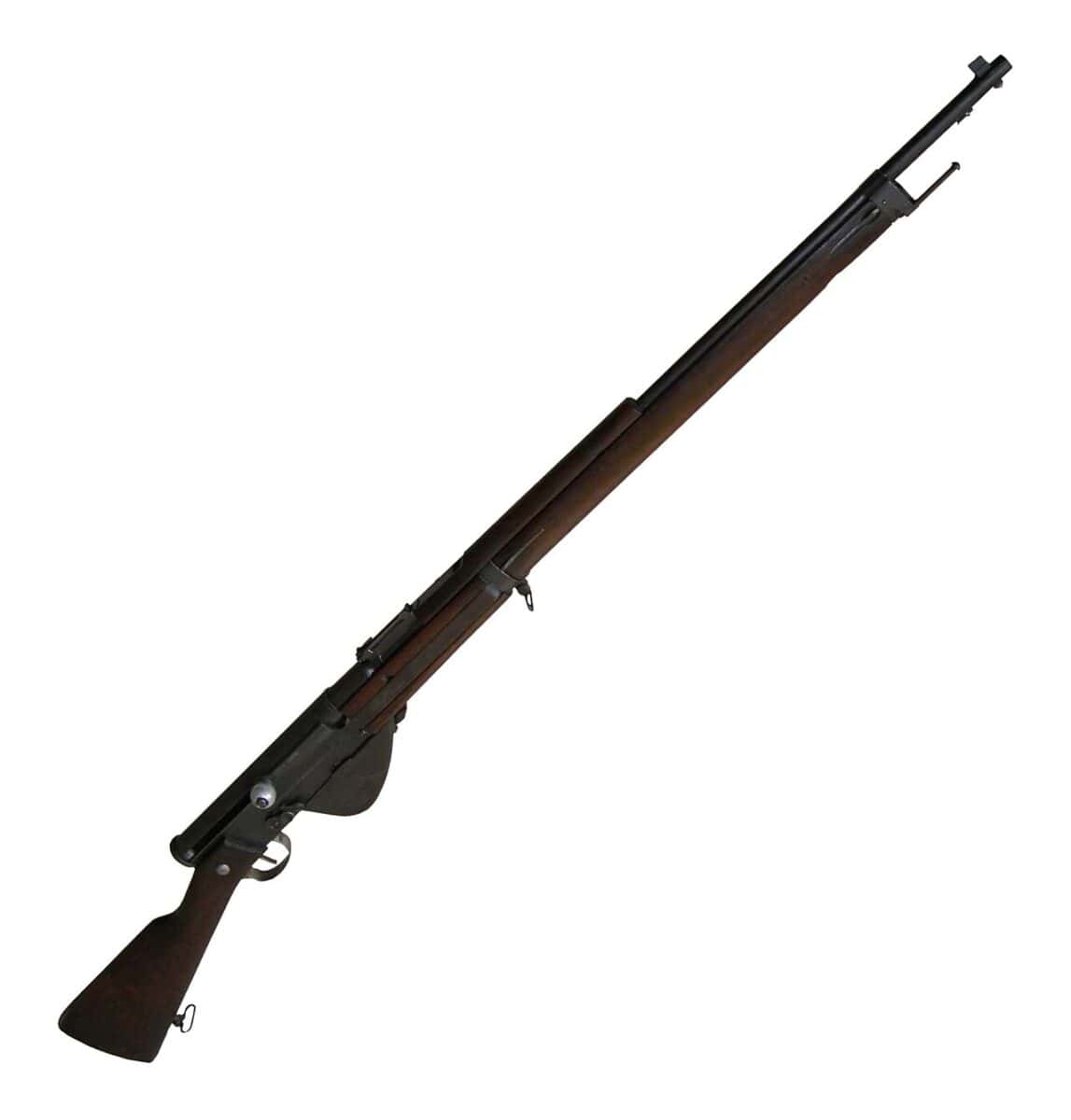
The United States would ultimately be the first country to adopt a true semi-automatic rifle for its armed forces. The M1 Garand in 1936 was something of a watershed moment for infantry tactics, as even the common infantryman was capable of lobbing mass amounts of lead at a target when working with the rest of their unit. That wasn’t the first experiment, as we’ve discussed. The Fusil Automatique Modele 1917, or the RSC Model 1917, was an experiment by the French during the last years of the First World War.
Chambered in the standard 8mm Lebel, this fed from an internal 5-round magazine that was fed with en-bloc clips, similar to the later M1 Garand. The ultimate philosophy behind the weapon was to allow French infantry to effectively engage a target without having to actuate a bolt, keeping their sight on the target. Around 85,000 units were produced, with production lasting well until November 1918, when the Armistice went into effect. Despite the greater numbers produced, the RSC quickly proved to be unsuited for the rigors of infantry combat.
Its mechanisms were fragile, something the mud and grime of the Western Front exposed quickly. Its overall length made it unwieldy for close-quarters combat, still demonstrating some of those ideas that refused to be discarded toward the end of the war. That said, the RSC proved that a mass-produced semi-automatic infantry rifle was a viable concept. It came too late in the war to make a substantial shift, but things were changing.
Conclusion
We often think about the change in infantry tactics starting in World War 2, but as we’ve seen today, it started nearly 100 years ahead of time. Designs that have largely fallen by the wayside ended up having a profound effect on how armies fought. They might be forgotten in popular discourse, but their impact is still felt over a century later.
The image featured at the top of this post is ©Zamrznuti tonovi/Shutterstock.com