
Television was built to bring events into people’s living rooms as they happened. This usually meant parades and sports games. But once something is broadcast, there’s no way of taking it back. Directors have just a few seconds to react, and even less in some cases.
The cases below aired at the moment they happened. Shootings, hostage situations, an armed fugitive on the run, and a bank robbery that turned into a running gun battle. Some of these cases created the very debates about broadcast responsibility that are relevant to this day.
Jack Ruby Shoots Lee Harvey Oswald (1963)
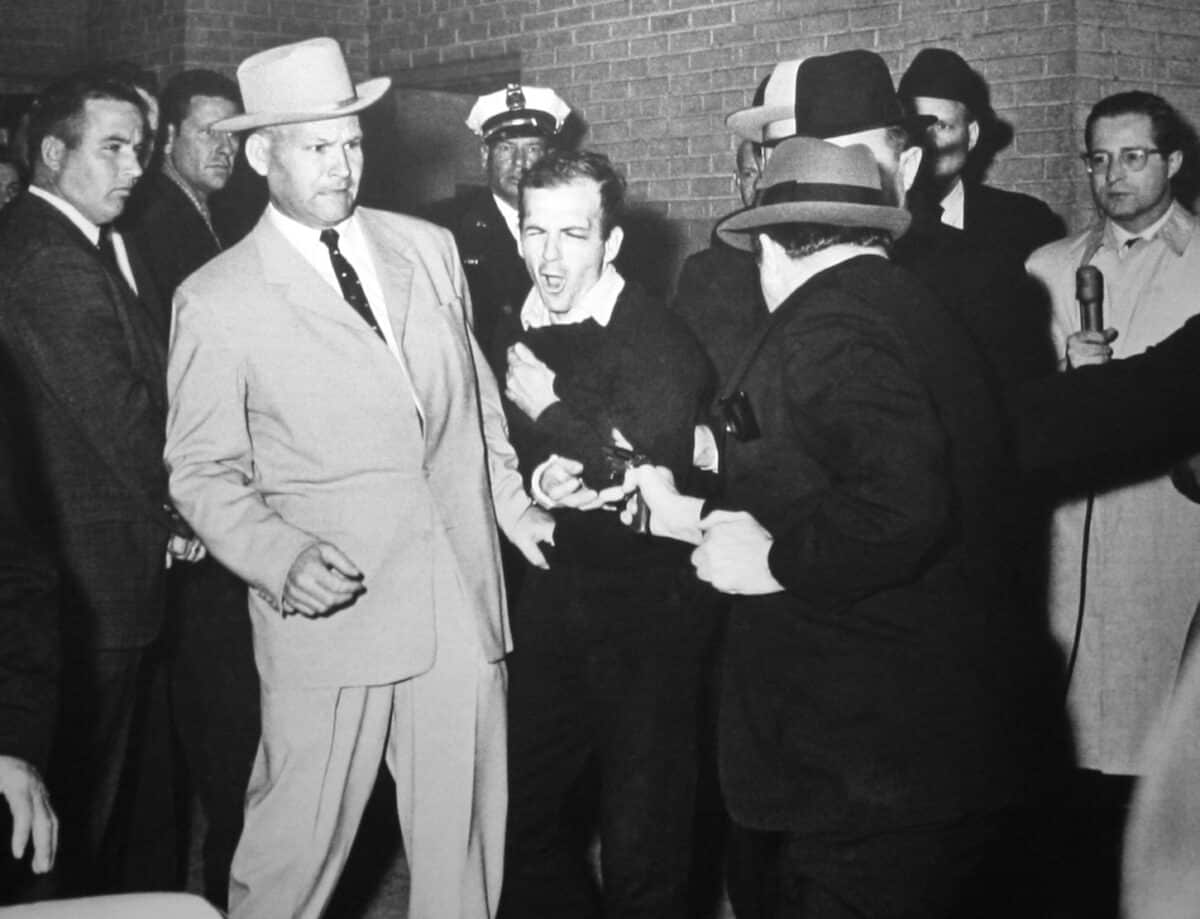
Within two days of the assassination of President Kennedy, the Dallas Police Department was set to take Oswald from the city jail to the county facility. The move was planned and organized, with the press assembled and NBC carrying it live. While it happened, Tom Pettit was reporting live from the basement of police headquarters, and suddenly nightclub owner Jack Ruby emerged from the crowd of reporters and detectives.
Ruby fired a single shot into Oswald’s stomach at close range, with police officers standing feet away and millions watching on live TV. The shooting is widely regarded as the first killing of a human being broadcast live on American television.
The incident raised issues that nobody had ever come across before. When Ruby was tried for murder, the lawyers had to take into account the fact that a huge portion of the jury pool had witnessed the crime as it happened, as somebody who saw the killing on television may not have acted as an impartial juror.
A Gunman Takes David Horowitz Hostage on Live News (1987)
One of the most trusted figures in Los Angeles television, David Horowitz was a consumer reporter whose “Fight Back!” segment informed viewers about fraud and faulty products. On August 19, 1987, during the 4 p.m. edition of KNBC’s Channel 4 News, a man named Gary Stollman walked onto the set holding what appeared to be a revolver and pointed it at Horowitz’s back.
The man who was experiencing a severe mental health crisis made Horowitz recite a rambling statement on air claiming the CIA and aliens had replaced his father with a clone. Horowitz kept his composure and read it. What the gunman didn’t know was that the control room had already switched off the live transmission and replaced it with a technical difficulties notice. The message the gunman risked everything to get across was never broadcast. Once he finished, Stollman placed his “weapon” on the news desk and anchor John Beard grabbed it. It turned out to be an unloaded BB pistol.
Horowitz came out unscathed, and the situation made him into an activist who went on to successfully campaign for the enactment of laws requiring realistic toy guns to be properly marked.
The Beating of Reginald Denny (1992)
Following the acquittal of the four officers charged in the Rodney King beating, the situation in Los Angeles exploded on April 29, 1992. In that hour, Bob Tur, a pioneer of news helicopter reporting, was flying above the intersection of Florence and Normandie with his camera running and his feed going out live to stations across America.
Reginald Denny, who worked as a truck driver, entered that intersection at 6:46 p.m. not realizing what was happening down below. He was dragged out of the truck by the rioters and beaten almost to death in front of the camera. One of the perpetrators hurled a chunk of concrete at his head, fracturing his skull in dozens of places. The reporter narrating from the helicopter called it an attempted murder. Viewers watched a man bleed on the pavement. Nobody came to help him.
The cameras even filmed the rescue attempt. Four strangers who witnessed the attack on television and recognized the street corner, got Denny into his truck, and brought him to a hospital. He was lucky to survive, and years later he publicly forgave the people who tried to kill him.
The O.J. Simpson Bronco Chase (1994)
©Getty Images / Getty Images News via Getty Images
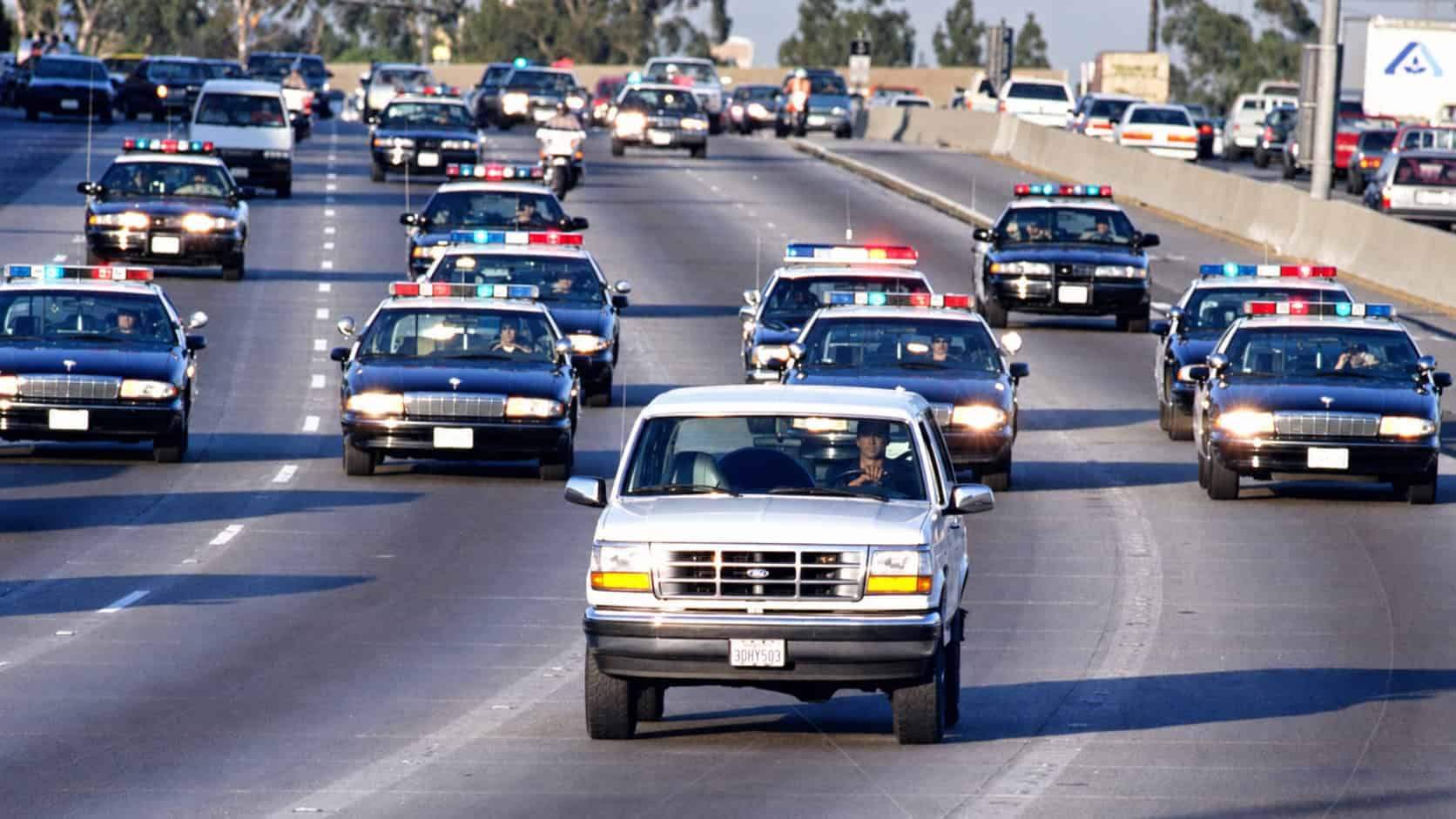
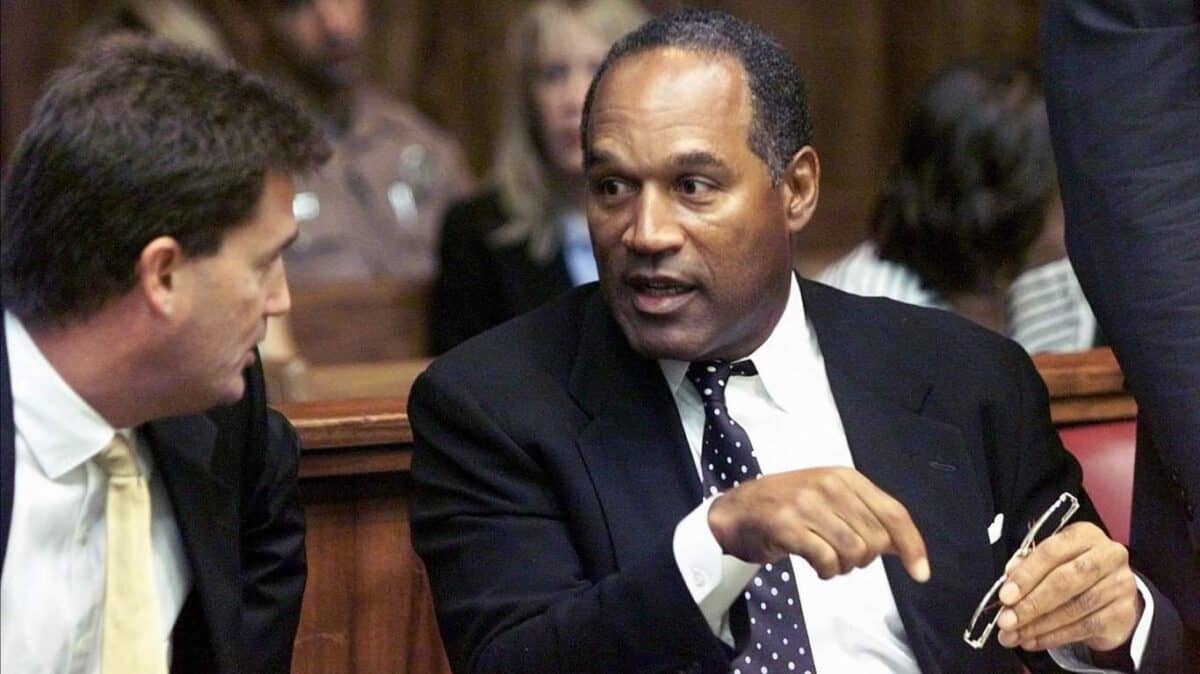
Five days after the murders of Nicole Brown Simpson and Ron Goldman, O.J. Simpson was charged and told to surrender. He didn’t. Instead, on June 17, 1994, he climbed into the back of a white Ford Bronco driven by his friend Al Cowlings. With a loaded gun in his hand, he became a wanted person in the freeways of Southern California.
The Bronco was found by news helicopters on Interstate 405, and they stayed with it for about 90 minutes while it was moving slowly with a convoy of police cars following. Every major network broke into programming to carry it. NBC showed both the chase and Game 5 of the NBA Finals split-screen. Approximately 95 million people in America were watching as the whole surreal event played out live from above.
The chase ended in O.J. Simpson’s own driveway in Brentwood, where he was arrested on double murder charges. Failure to surrender to a warrant is itself a crime, and the pursuit that followed is one of the most watched live events in the history of American television.
Alison Parker and Adam Ward Are Killed on Air (2015)
©"#WhateverItTakes Rally For Gun Safety" by U.S. Senator Tim Kaine is licensed under PDM 1.0. – Original / License
On the morning of August 26, 2015, WDBJ reporter Alison Parker was conducting a routine live interview at a shopping plaza in Moneta, Virginia. Cameraman Adam Ward was behind the camera, with a local chamber of commerce official as the guest. It was a light early-morning segment.
At 6:45 a.m., a former station employee named Vester Flanagan approached the crew and opened fire on them.
Shots were heard live on television, and Parker could be heard screaming. Ward’s camera briefly caught a glimpse of the gunman before it fell. Anchors in the studio were left visibly stunned, trying to make sense of what had just gone out over the air. Parker, 24 years old, and Ward, 27 years old, were killed. The chamber official who appeared in the interview was also shot, but survived.
Vester Flanagan had planned for the killings to be seen. He filmed the whole thing and put the video on the Internet before killing himself during a police pursuit several hours later.
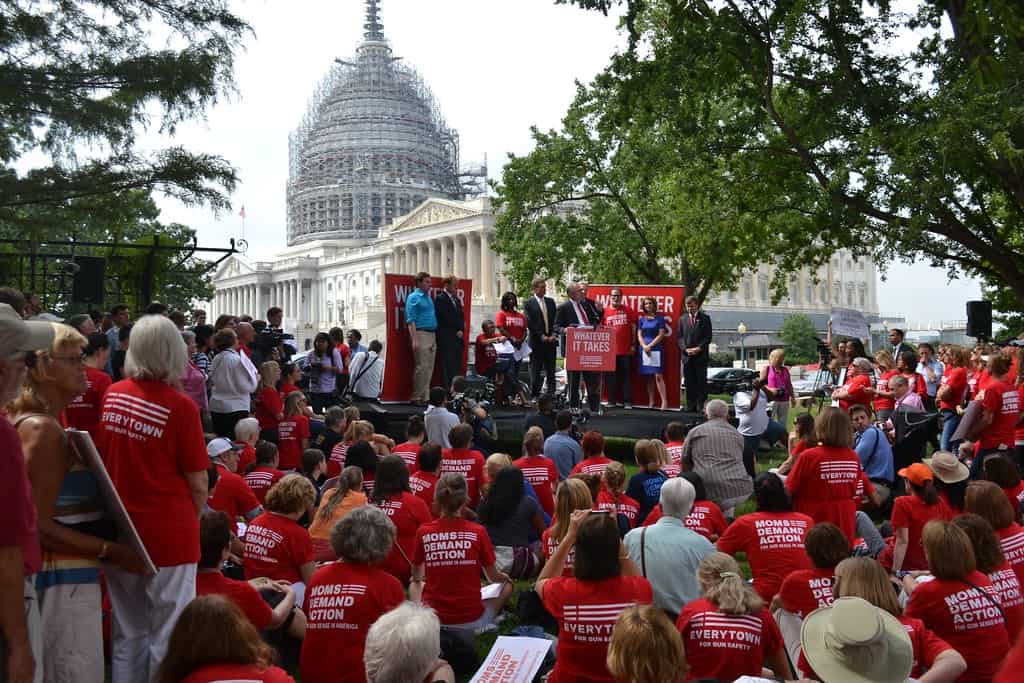
Alison’s father, Andy Parker, went on to found the Whatever It Takes movement, dedicating himself to gun safety reform and holding social media platforms accountable for hosting violent content.
Robbery Suspect Slips on Snow During a Live Standoff (2011)
At around 9:30 a.m. on January 28, 2011, a news helicopter was filming a robbery taking place at the Capital One Bank in Takoma Park, Maryland. Police were already surrounding the bank. The suspect came out through the front door using a female teller as a shield, with what looked like a gun aimed at her head, moving slowly towards the officers.
As the robber was moving backward with the hostage, the dye pack hidden in the money bag exploded into a red cloud. Moments later the robber slipped on the snowy pavement, allowing the teller to break free and run. The police opened fire, killing the armed robber. The teller escaped unharmed, but a customer inside the bank had earlier been pistol-whipped after trying to grab the gun, which allowed another employee to slip out and call for help.
Everything happened on live TV as a reminder that sometimes fate can be decided by something as trivial as a snowy patch in a parking lot.
The North Hollywood Shootout (1997)
On February 28, 1997, two men wearing full-body armor and ski masks entered a Bank of America branch in North Hollywood, California. They stole more than 300,000 dollars and left the bank shooting from the front entrance. Larry Phillips Jr. and Emil Matasareanu were carrying illegally modified automatic rifles loaded with armor-piercing rounds, and they opened fire on the responding police officers.
News helicopters reached the scene almost as fast as the police did, and for the next 44 minutes the national television audiences saw the gunfight unfold live from above. Over the course of those 44 minutes, the two gunmen unleashed approximately 1,100 shots into the community, hitting police cars, storefronts, houses and even the helicopters overhead. Police officers who only had pistols and shotguns were significantly outgunned, with 12 of them and several bystanders wounded during the shootout.
Phillips died on the street after being shot and turning a gun on himself. Matasareanu died further down the road, bleeding to death before medical help arrived.
It was just like something out of a movie, and viewers had to remind themselves that it was real and that it was all happening right then and there. The footage of two heavily armed men walking down a residential road under a hail of gunfire remains one of the most shocking pieces of live crime reporting ever aired. It also changed American police work, and resulted in police forces throughout America arming their patrolmen with rifles so they would never again be so outgunned on their own streets.
The image featured at the top of this post is ©KLATV - Las Vegas