
Military engineering is often seen as a linear progression of incremental improvements. That isn’t usually the case, as technological leaps forward are often a blend of parallel developments and iterative building on those concepts. Occasionally, you’ll see military designs that are just leaps ahead of any sort of contemporaries of their era. Often, these designs are the result of desperate planning, driven by the need to gain an edge. As you’ll see with their failures, it isn’t a lack of ambition, but rather a lack of the proper technological infrastructure needed to support them. Let’s dive in.
Steam-Powered Submarines
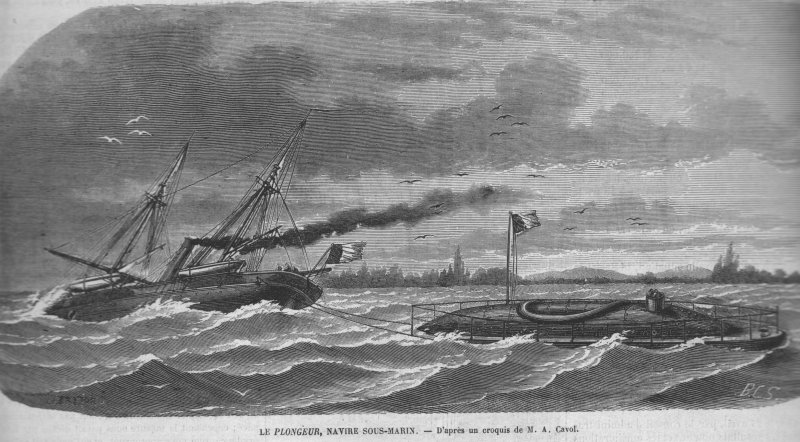
Submarines have been a dalliance of military designs since the 18th century. Engineer Charles Brun and the French naval officer Simeon Bourgeois came up with the Plongeur. This was in an era before the internal combustion engine, nuclear reactors, or high-capacity batteries. What marked it from its predecessors was the use of mechanical power for propulsion instead of the crew. The Plongeur was a radical departure, as just across the Atlantic, the Hunley was a hand-cranked design seeing some limited uses during the American Civil War.
The Plongeur itself was a substantial undertaking. With around 140 feet in length and a displacement of over 400 tons, this was a feat of then-modern engineering. A sophisticated system of air tanks helped provide propulsion alongside breathable air for the crew. That said, the overly complex means of propulsion proved to be its undoing. Compressed air was unreliable under the best of conditions, providing an inefficient means of driving the craft.
Further, metallurgy simply wasn’t there to support the craft. You need more modern material engineering to provide the sort of pressure hulls to effectively dive. The more pressure exerted on the hull, the more likely the compressed air tanks were to rupture. If anything, the Plongeur was a 20th-century design that arrived around 50 years too early for effective use. It did serve as a water tanker, but the ambition behind the Plongeur outstripped the realities of the era.
XB-70 Valkyrie
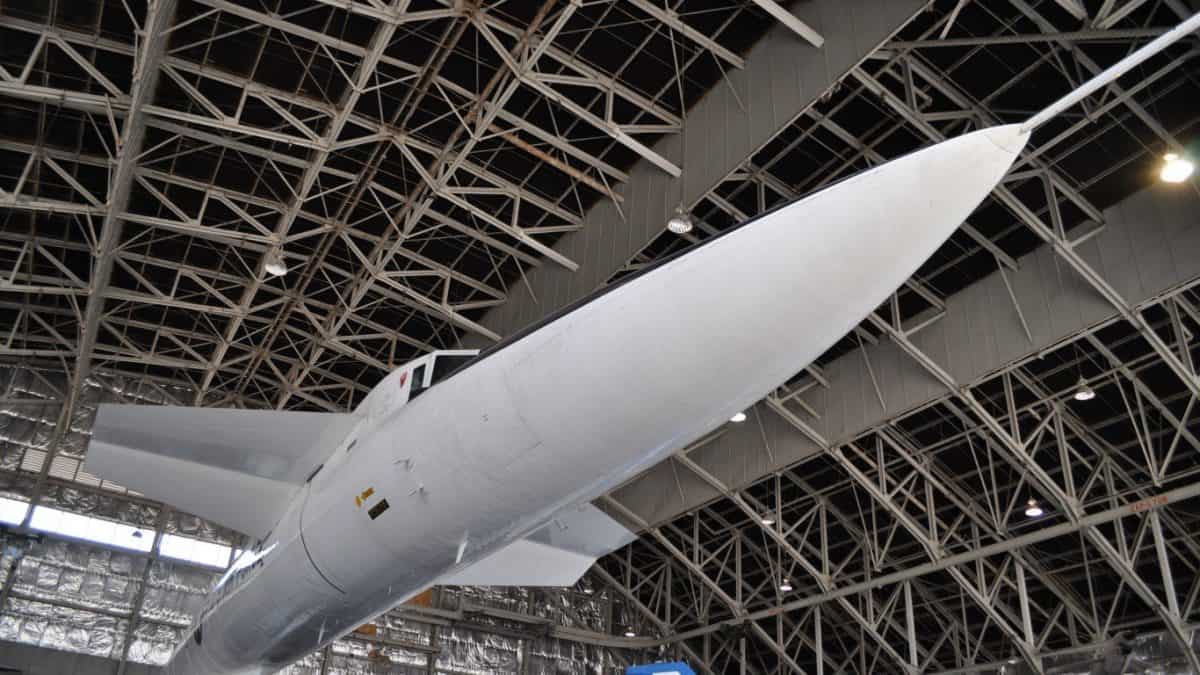
As the Cold War reached a fever pitch, the United States was after a bomber that could fly faster than surface-to-air missiles and higher than any interceptor could reach. The most promising design of the era was the XB-70 Valkyrie. Capable of cruising at 70,000 feet at Mach 3, the Valkyrie was a high-powered design making use of a phenomenon known as compression lift. Essentially, it rode its own shockwave, something the downward-facing wingtips helped to facilitate.
The XB-70 was one of the most advanced military designs of its era, needing the invention of entirely new material manufacturing processes. Engineers developed honeycomb-sandwich stainless steel skins to manage the intense heat generated from the friction. The XB-70 successfully cruised at Mach 3, achieving its aims. However, it fell victim to the era’s circumstances. The advent of high-speed, high-altitude surface-to-air missiles like the Soviet SA-2 rendered it obsolete.
Its main advantage was soon eclipsed by the Intercontinental Ballistic Missiles, which were cheaper and, during the era, impossible to intercept, for delivering nuclear payloads. The Valkyrie was a masterclass in design work, but it simply arrived too late to make a difference.
Horten Ho 229
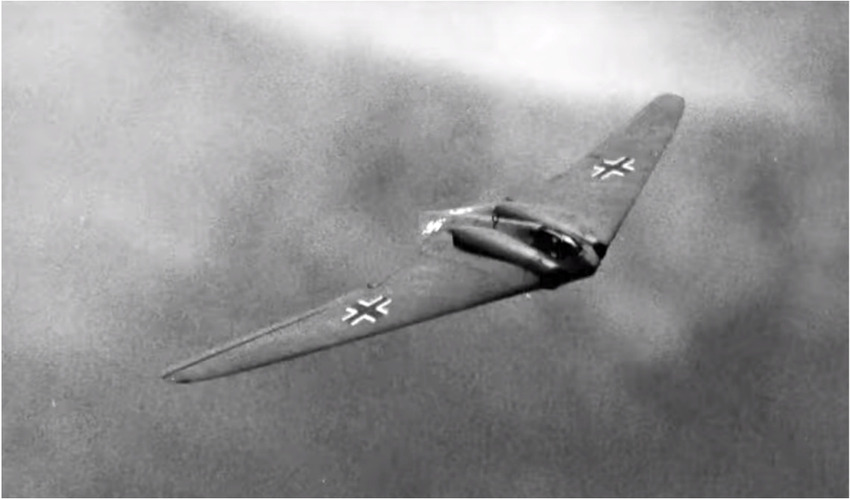
©"Horten Ho 229 V2" by H. Griffiths is licensed under BY 4.0. – Original / License
The closing years of World War 2 saw the Germans desperate for a wonder weapon of their own. Allied fighters and bombers alike swarmed the skies, and the Third Reich faced an existential crisis. The Horten brothers, Reimar and Walter, developed a military design that walked straight out of the pages of sci-fi pulp magazines. The Ho 229 is a flying wing, or an aircraft without a fuselage or tail fin. By removing what are more traditional elements of the design, the Ho 229 was able to reduce drag and increase fuel efficiency.
The Ho 229 accidentally predicted stealth technology. Its blended shape presented a reduced radar cross-section, at least compared to fighters of the era. Modern reconstructions of the Ho 229 have demonstrated that it was more than capable of appearing nearly invisible to radars.
The flaw in the military design came about from the jet engines of the 1940s. They were notoriously unreliable and severely underpowered. Further, there was no means of stabilizing the craft like a flight control computer, making it extremely unstable. It would take 40 years, the invention of fly-by-wire computers, and more advanced metallurgy to see the Ho 229’s advantages take hold in the form of the advanced B-2 Spirit bomber.
Char 2C
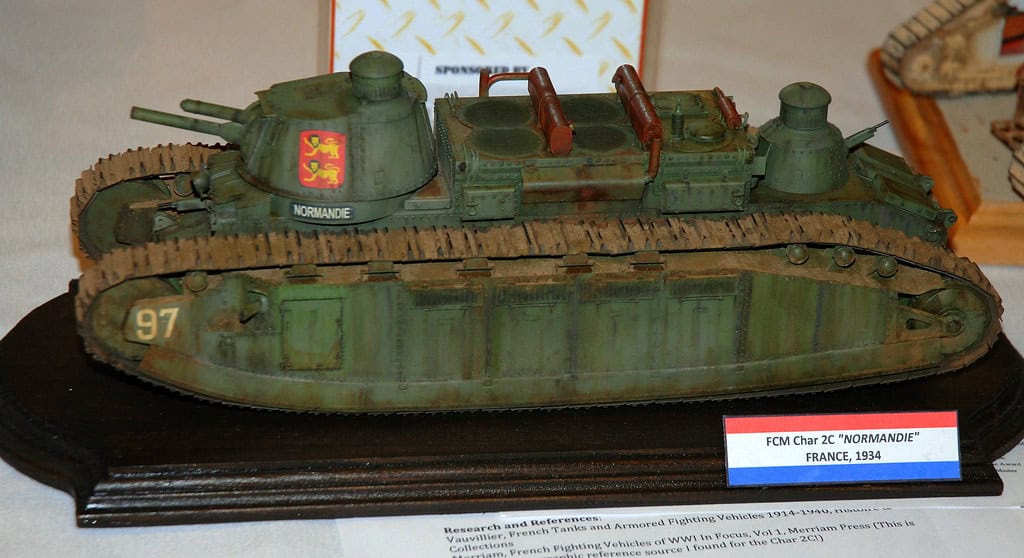
©"Char 2C, AMPS 2017, Danbury, Connecticut." by Roly-sisaphus is licensed under BY-SA 2.0. – Original / License
The earliest tanks of the First World War were smaller, often having cramped crew compartments like the Renault FT-17 or Mark I. As the war drew to a close, the French came up with one of the most unusual military designs to take to the battlefield. The Char 2C remains the largest armored vehicle to ever reach operational status. Weighing in at 69 tons and requiring a crew of 12, the Char 2C was a fortress that could move. This was further augmented by its armament, which included a 75mm main cannon and four machine guns.
Surprisingly, it had a highly advanced transmission for its time, making use of a hybrid petrol-electric design, which guaranteed smooth power delivery for the vehicle. That said, it was such a massive vehicle that it couldn’t readily be transported across bridges or carried by rail thanks to its sheer size. By the time the Second World War rolled around, the Char 2C was obsolete. Its slow top speed of 7 miles per hour made it a sitting duck.
However, when taken in the wider circumstances of the war, the Char 2C was perfect for the static attritional warfare of the Great War. Maneuver-based combined arms weren’t a reality when the planners started drawing up their design.
Blue Steel
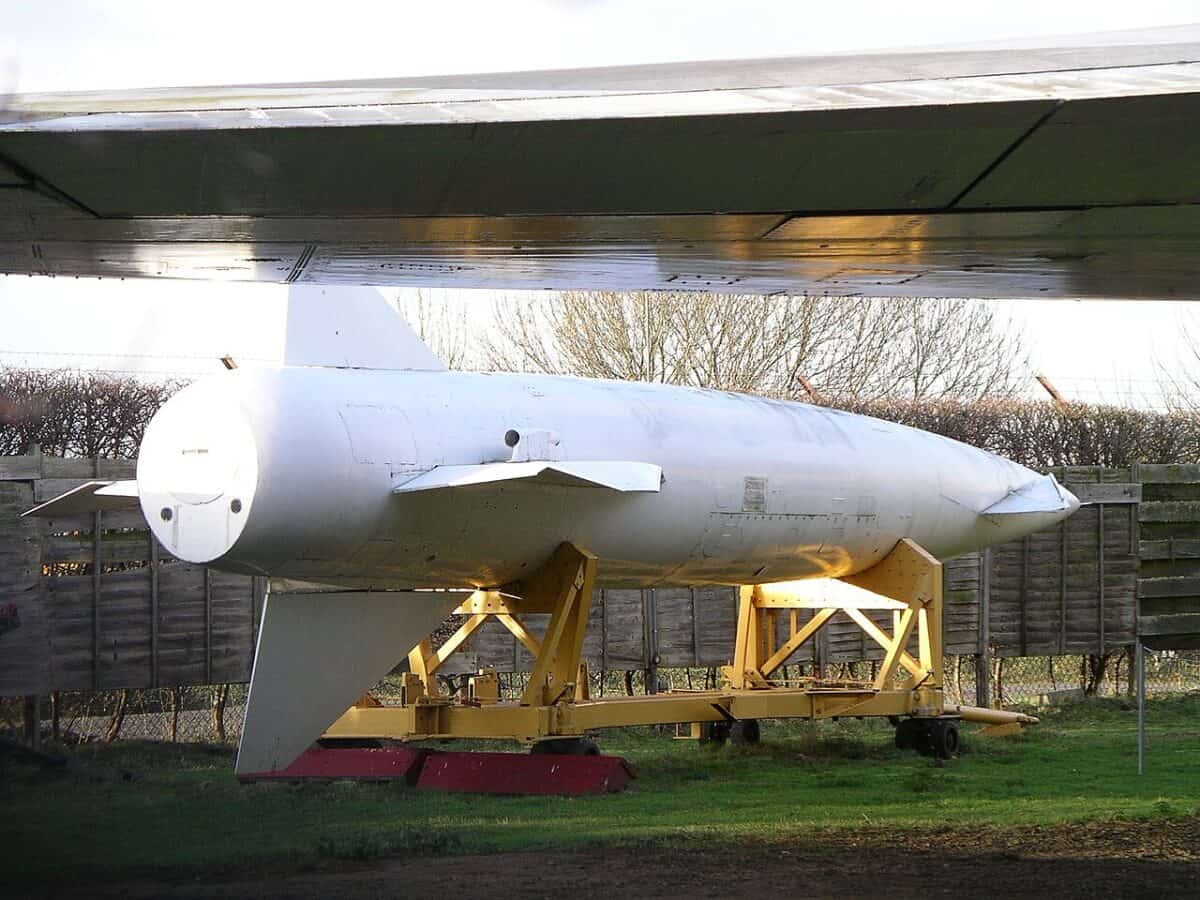
During the 1950s, the United Kingdom developed Blue Steel. This was a stand-off missile, or a way to deliver a payload from outside the range of Soviet air defenses. The basic idea is that a bomber would launch the missile, which would engage its rocket thrusters to accelerate the missile past any would-be interceptors. It made use of a sophisticated navigation system, using inertia and gyroscopes to calculate its position. This made it immune to jamming, resulting in a deadly weapon.
It was powered by a liquid-fuel rocket engine using High Test Peroxide and kerosene. Performance from the mixture gave the desired results, but the chemical instability of the fuel made it a nightmare to maintain at any active airbase. Ground crews had to wear full protective gear, and fueling was so dangerous that it hindered scrambling if World War 3 kicked off.
Further, its navigation system required a lengthy alignment process. Computers of the 1950s weren’t nearly as sophisticated as those seen just 20 years later. Blue Steel was ultimately a stepping stone to cruise missiles. The concept behind the military design was certainly there, but the volatile fuel and crude digital control systems made it more of a liability than an asset.
Panzer VIII Maus
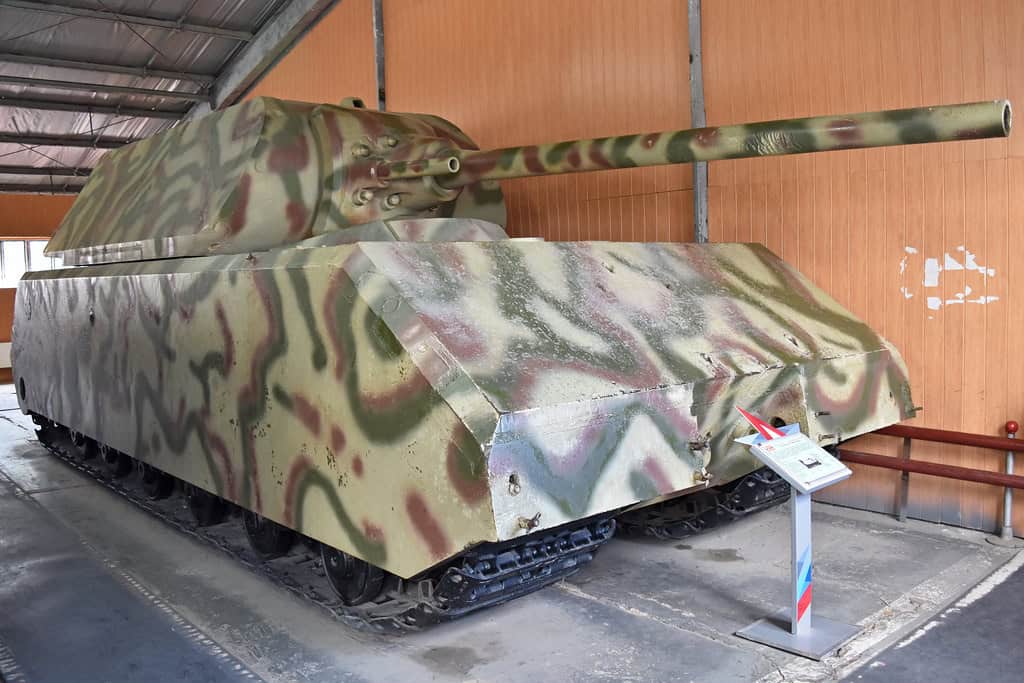
©"Panzer VIII ‘Maus’" by Support your local Air Museum! (HawkeyeUK) is licensed under BY-SA 2.0. – Original / License
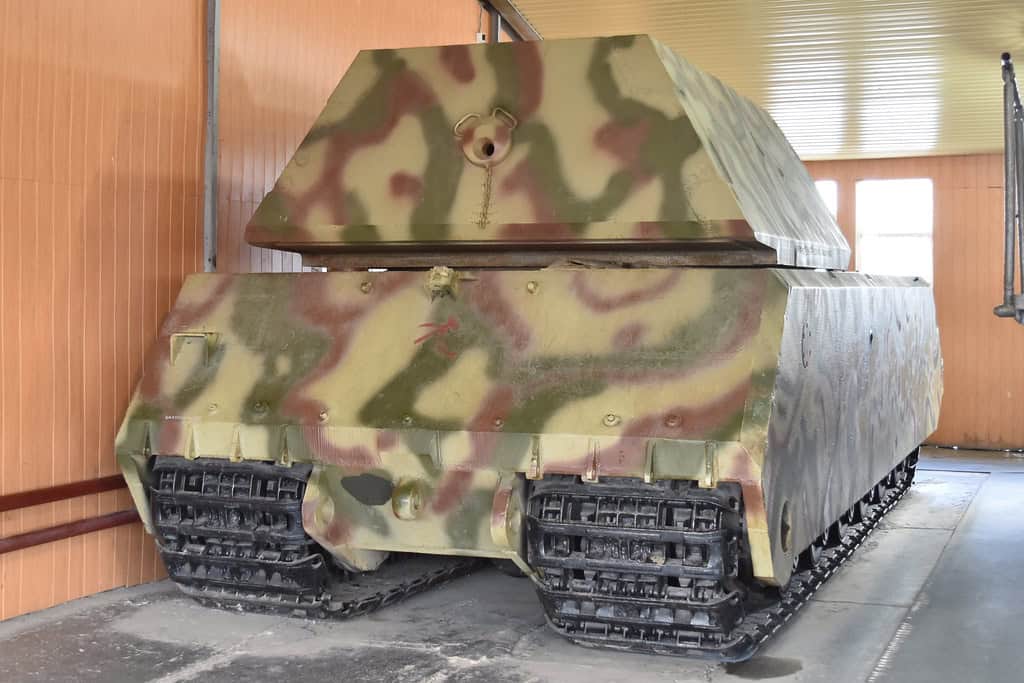
The German Third Reich loved its wonder weapons, I think we all can agree on that. In the waning years of the war, famed engineer Ferdinand Porsche, under direct orders from Adolf Hitler, devised the Panzer VIII Maus. Weighing in at 188 tons and carrying a 128mm main gun, the Maus could conceivably destroy any armored vehicle fielded by the Allies.
To move the vehicle, Porsche made use of an electric drive system similar to the Tiger P. An internal combustion engine acted as a generator, which then powered electric motors alongside each track. This was a cutting-edge design for the 1940s, providing ample amounts of torque and simple controls. The sheer weight of the Maus meant it couldn’t drive on any usable road across the whole of Europe.
Further, the Maus was designed for a defensive war, one largely working alongside static fronts. By the time the first prototypes were completed, the war was in its final stages. The Nazi regime would topple shortly after, leaving this as a military design that remains hypothetical rather than practical.
Conclusion
For most military designs, we often look at the successes on the battlefield. These are your P-51 Mustangs, Mark I tanks, and things like the Maxim gun. However, for each one of these successes, you have those ambitious designs that reach for the stars and fall well short of those aims. Ultimately, it isn’t about how advanced the design is, but rather what does the best for the time being.
The image featured at the top of this post is ©"Panzer VIII ‘Maus’" by Support your local Air Museum! (HawkeyeUK) is licensed under BY-SA 2.0. – License / Original