

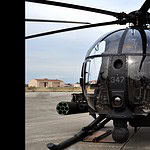
These Military Aircraft Delivered Devastating Firepower in Combat
Few roles in military aviation are as demanding or impactful as close air support. Operating at low altitudes and in coordination with ground forces, close air support aircraft must deliver powerful strikes with a high degree of precision in complex and often dangerous environments. Over time, these aircraft have evolved from relatively simple platforms into highly advanced systems capable of providing real-time support on the battlefield.
From World War II to modern conflicts, close air support has played a critical role in shaping combat outcomes. These aircraft serve as a vital link between air power and ground forces, often providing immediate firepower in rapidly changing situations. Advances in technology, targeting systems, and survivability have significantly improved their effectiveness.
To identify the aircraft that have shaped close air support, History Computer reviewed a range of historical and military sources. Each aircraft includes details such as country of origin, manufacturer, classification, primary weapon systems, and its impact on the evolution of close air support.
Why Are We Covering This?
Understanding how close air support has evolved is essential to understanding how modern ground warfare is fought. From World War II to today, CAS has been a critical link between air power and troops on the ground, often determining the outcome of engagements in real time. The aircraft that shaped this mission were built to deliver precise, immediate firepower under intense conditions. Examining these platforms shows how advancements in technology, survivability, and coordination have transformed CAS into one of the most effective and responsive tools on the battlefield.
Close Air Support Brings Firepower Directly to the Battlefield
Close air support is one of the most immediate and decisive forms of air power, delivering firepower directly in support of troops on the ground. Unlike strategic bombing, CAS requires precision, coordination, and the ability to operate in close proximity to friendly forces. The aircraft designed for this mission must balance firepower with accuracy in some of the most dangerous conditions in combat.
Built to Fly Low, Slow, and Survive
The aircraft that define close air support are often designed to operate at low altitude and relatively slow speeds, where they can identify and engage targets with greater accuracy. This environment exposes them to intense ground fire, making survivability a critical factor. Armor, redundancy, and rugged design have become defining features of successful CAS platforms.
From Guns and Rockets to Precision Strike
Early CAS aircraft relied heavily on guns, rockets, and unguided bombs to support ground forces. Over time, advancements in technology introduced precision-guided munitions and advanced targeting systems, dramatically increasing effectiveness. This evolution has transformed CAS from area suppression to highly accurate, targeted strikes.
Persistence and Coordination Are Key
Effective close air support depends not only on firepower, but also on the ability to remain over the battlefield and respond quickly to changing conditions. Aircraft with long loiter times and strong communication with ground forces have proven especially valuable. This coordination ensures that firepower is delivered exactly where and when it is needed.
The Aircraft That Changed Close Air Support
The aircraft on this list represent key moments in the evolution of close air support, each contributing new capabilities that reshaped how air power supports ground operations. From early armored attack planes to modern precision strike platforms, these aircraft highlight the continuous effort to bring more effective and responsive firepower to the battlefield.
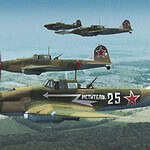
Il-2 Sturmovik
- Country of origin: USSR
- Manufacturer: Ilyushin
- Year introduced to service: 1941
- Aircraft type: Attack aircraft
- Primary weapons: Cannons, rockets, bombs
- Key close air support capability: Armored survivability
- Notable conflict usage: WWII Eastern Front
- How it changed close air support: Proved dedicated CAS survivability
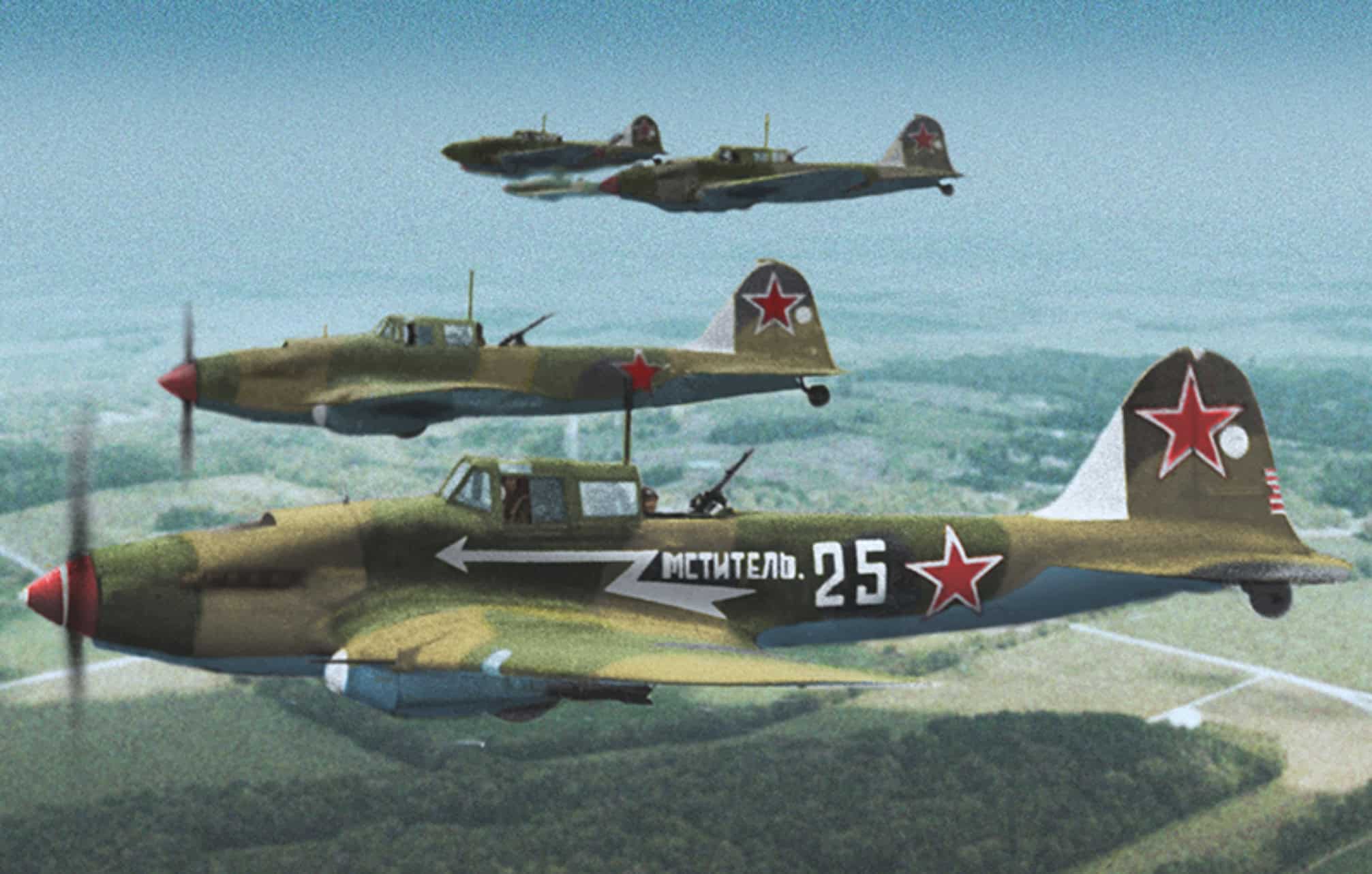
The Il-2 Sturmovik was one of the first aircraft purpose-built for close air support, combining heavy armor with powerful cannons and rockets. Its ability to survive intense ground fire while delivering direct attacks on enemy positions made it a cornerstone of Soviet operations. It proved that dedicated CAS platforms could significantly influence ground combat outcomes.
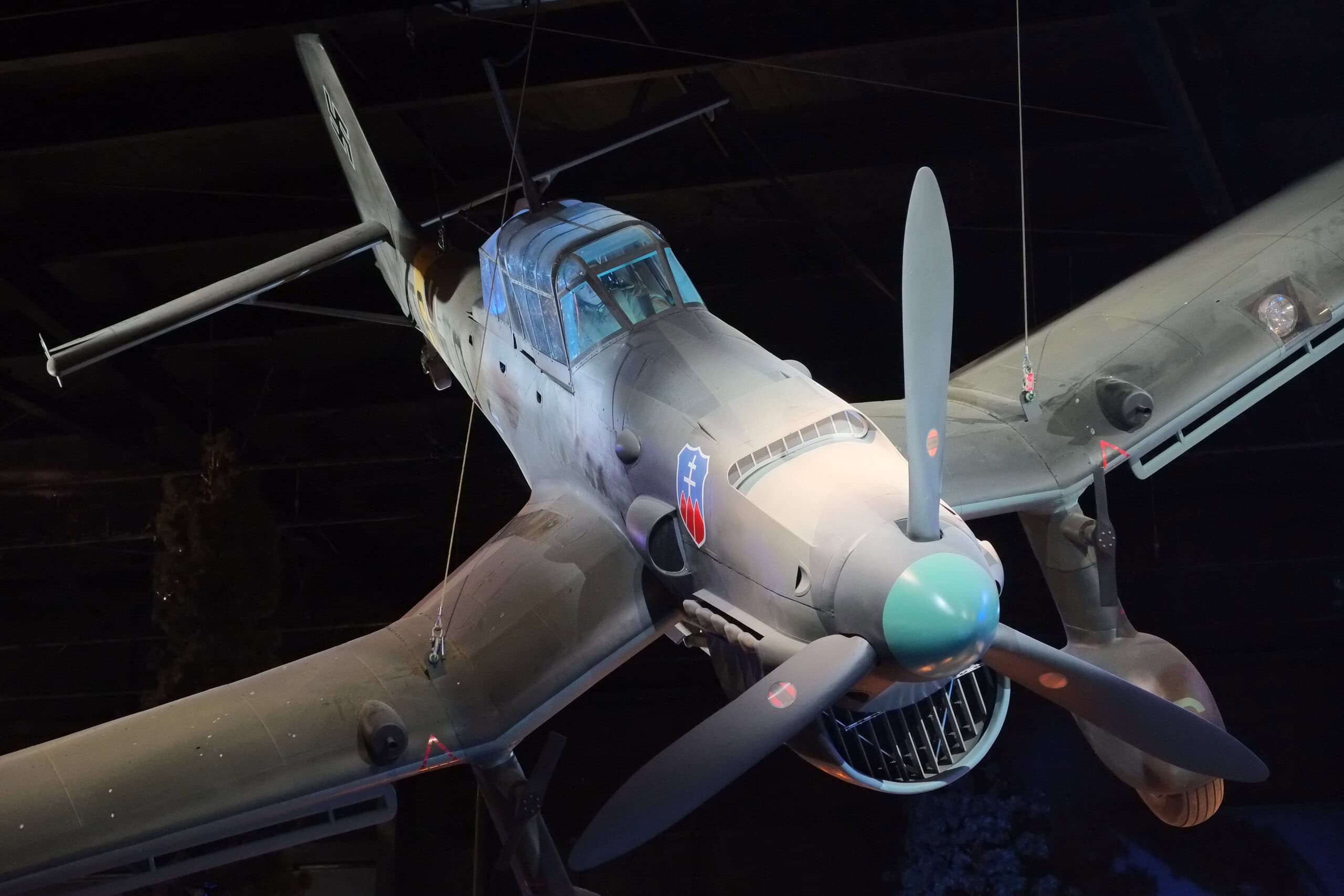
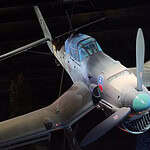
Ju 87 Stuka
- Country of origin: Germany
- Manufacturer: Junkers
- Year introduced to service: 1936
- Aircraft type: Dive bomber
- Primary weapons: Bombs
- Key close air support capability: Dive bombing precision
- Notable conflict usage: WWII Europe
- How it changed close air support: Introduced precision dive bombing
The Ju 87 Stuka introduced precision dive bombing, allowing pilots to deliver highly accurate strikes against battlefield targets. Its effectiveness early in WWII demonstrated the value of precision in CAS, even as its vulnerability later became apparent. It helped establish accuracy as a key component of close air support doctrine.
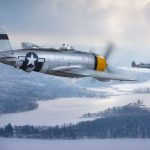
P-47 Thunderbolt
- Country of origin: USA
- Manufacturer: Republic
- Year introduced to service: 1943
- Aircraft type: Fighter-bomber
- Primary weapons: Rockets, bombs, guns
- Key close air support capability: Heavy firepower + durability
- Notable conflict usage: WWII Europe
- How it changed close air support: Set standard for fighter-bomber CAS
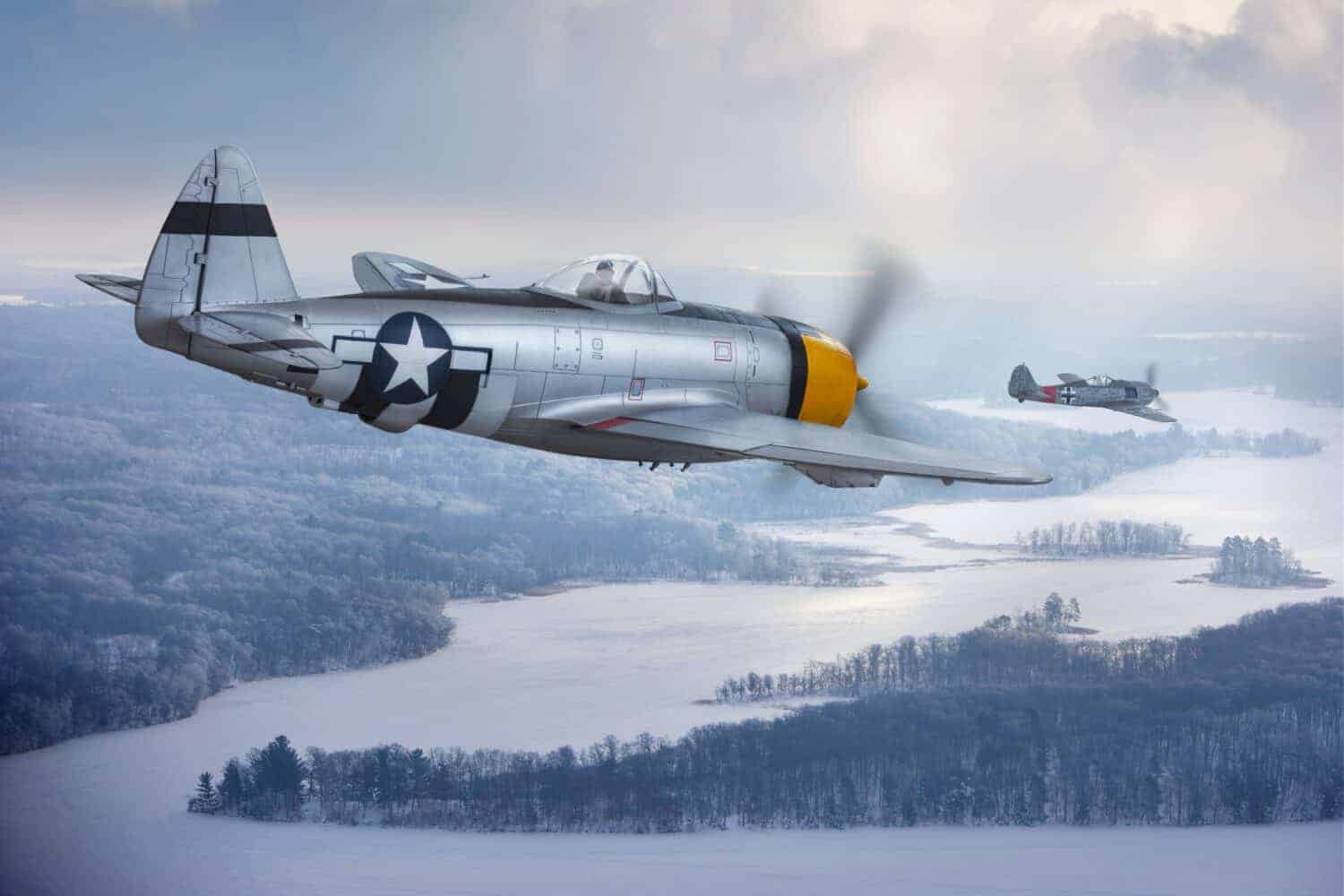
The P-47 Thunderbolt combined durability with heavy firepower, making it highly effective in ground attack roles. Its ability to absorb damage and deliver rockets and bombs made it a reliable CAS platform. It set the standard for fighter-bombers supporting ground troops in large-scale operations.
Hawker Typhoon
- Country of origin: UK
- Manufacturer: Hawker
- Year introduced to service: 1941
- Aircraft type: Fighter-bomber
- Primary weapons: Rockets, bombs
- Key close air support capability: Low-altitude strike
- Notable conflict usage: WWII Europe
- How it changed close air support: Expanded rocket CAS use
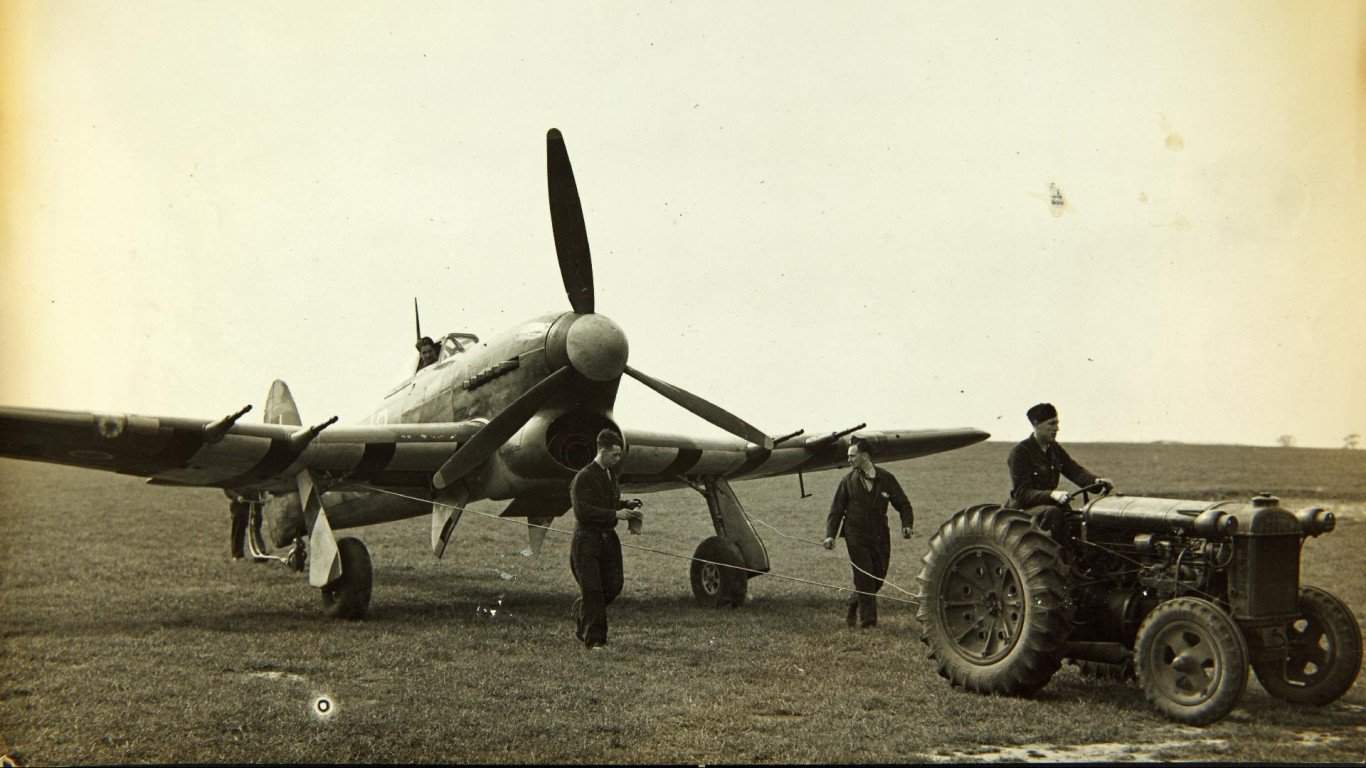
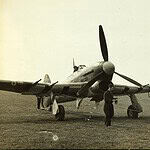
The Hawker Typhoon excelled at low-altitude attack missions, particularly with rockets against armored targets. Its performance during WWII highlighted the effectiveness of dedicated ground-attack roles within fighter aircraft. It helped expand the use of rockets as a primary CAS weapon.
A-20 Havoc
- Country of origin: USA
- Manufacturer: Douglas
- Year introduced to service: 1941
- Aircraft type: Light bomber
- Primary weapons: Bombs, guns
- Key close air support capability: Low-level attack
- Notable conflict usage: WWII
- How it changed close air support: Enabled low-level CAS strikes
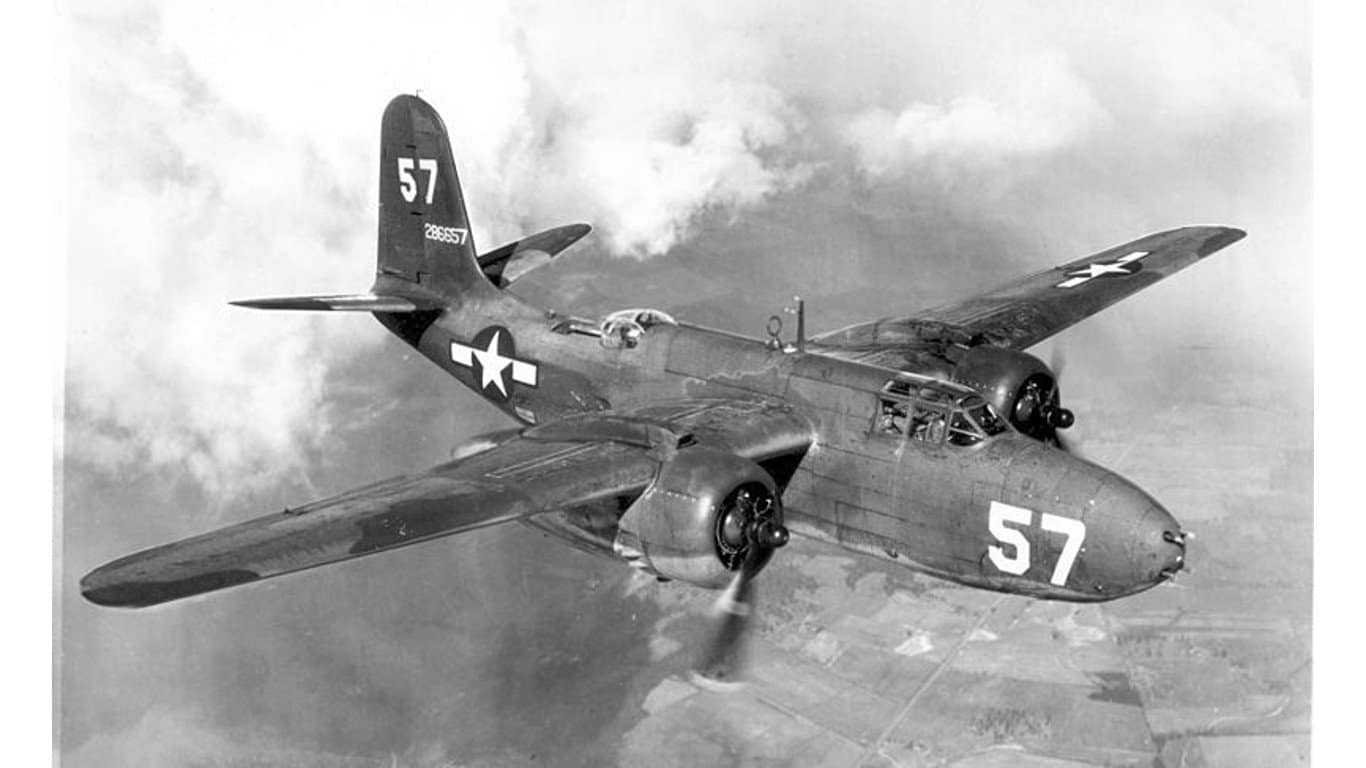
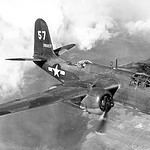
The A-20 Havoc demonstrated the effectiveness of low-level attack missions, delivering bombs and strafing runs against enemy positions. Its versatility allowed it to operate in various roles, contributing to early CAS development. It showed how speed and precision could be combined in ground support operations.
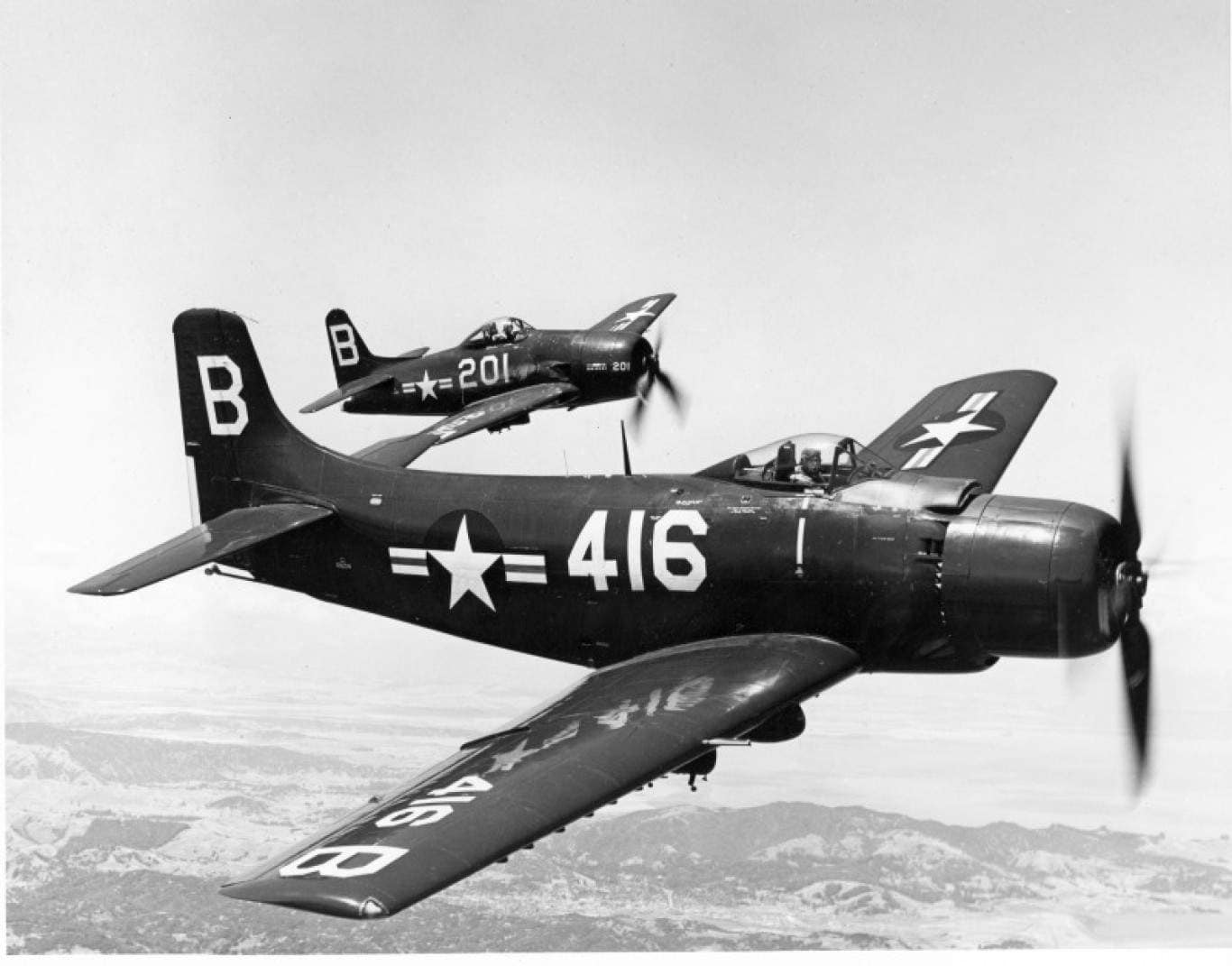
A-1 Skyraider
- Country of origin: USA
- Manufacturer: Douglas
- Year introduced to service: 1946
- Aircraft type: Attack aircraft
- Primary weapons: Bombs, rockets, guns
- Key close air support capability: Long loiter time
- Notable conflict usage: Vietnam
- How it changed close air support: Redefined persistence in CAS
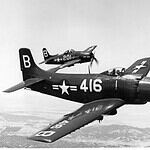
The A-1 Skyraider became a symbol of persistence in CAS, capable of loitering over battlefields for extended periods. Its heavy payload and long endurance made it ideal for supporting troops under fire. It redefined CAS by emphasizing sustained presence and immediate response.
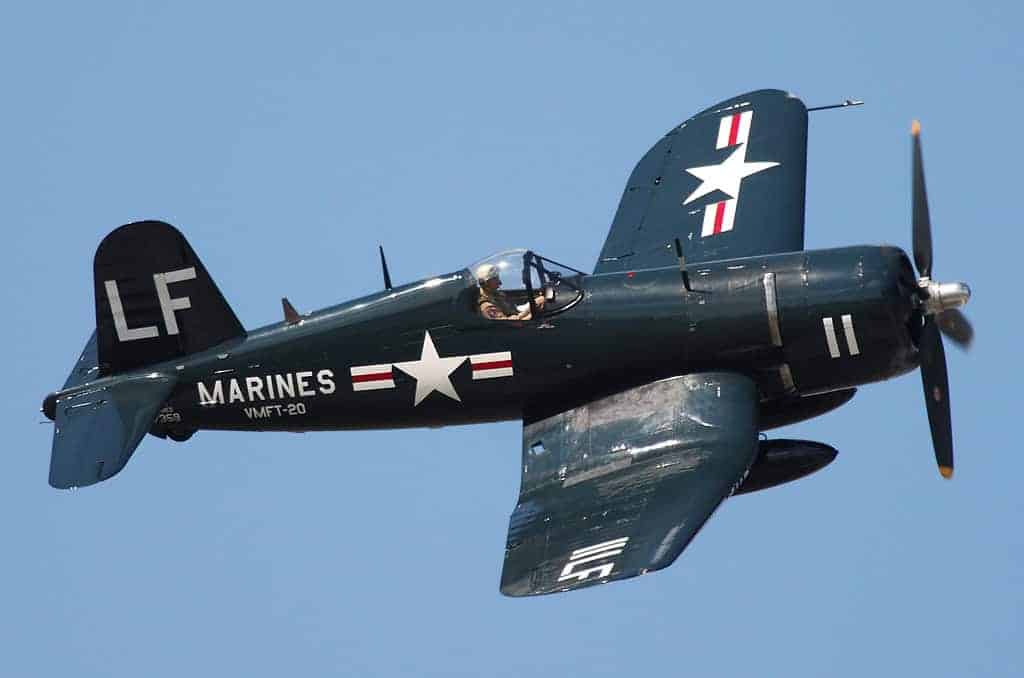
F4U Corsair
- Country of origin: USA
- Manufacturer: Vought
- Year introduced to service: 1942
- Aircraft type: Fighter-bomber
- Primary weapons: Rockets, bombs
- Key close air support capability: Carrier CAS
- Notable conflict usage: Korea
- How it changed close air support: Expanded naval CAS role
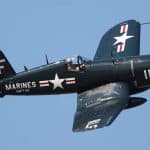
The F4U Corsair proved that carrier-based aircraft could effectively perform CAS missions, particularly in Korea. Its combination of speed, payload, and ruggedness made it a versatile platform. It expanded the role of naval aviation in close air support.
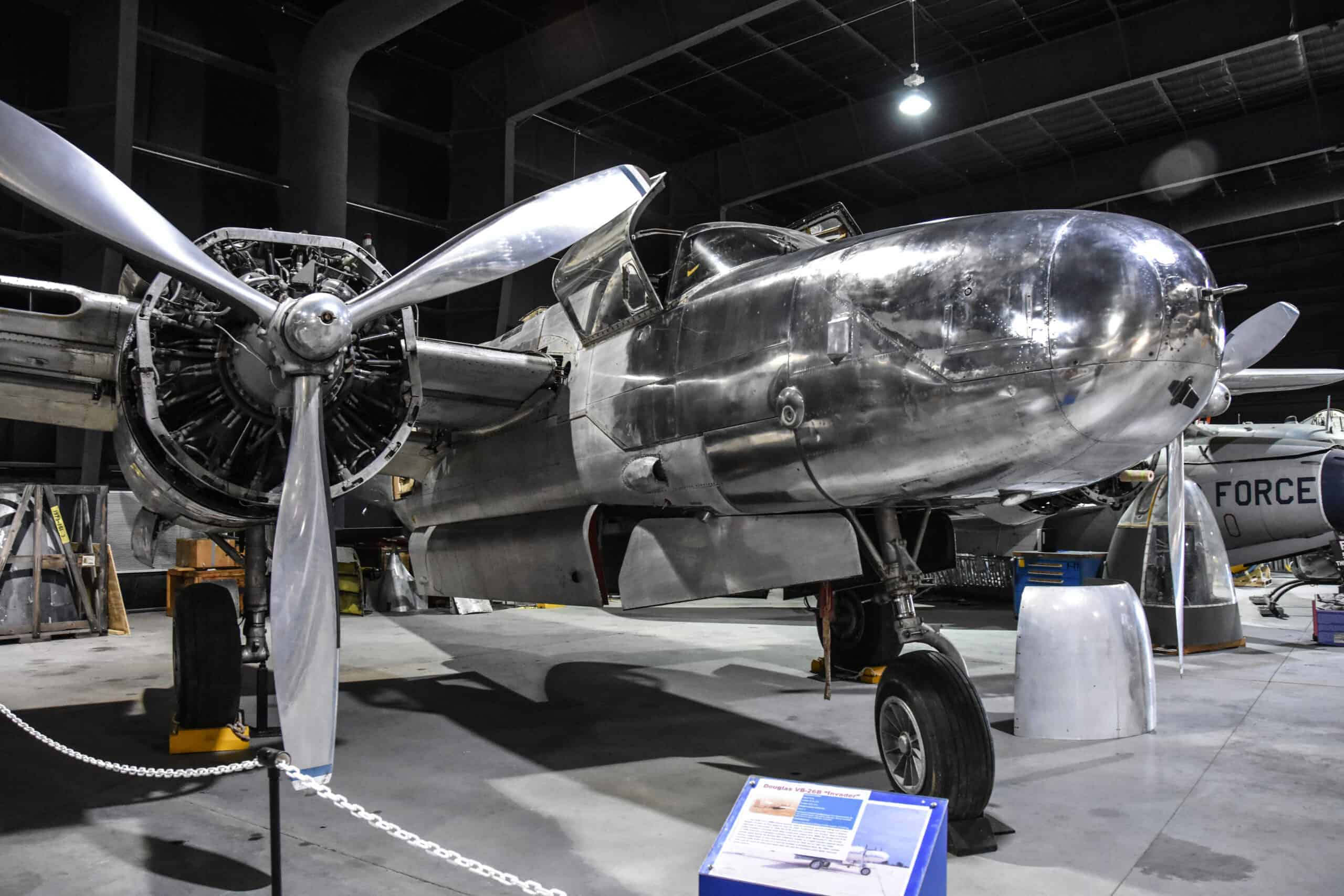
B-26 Invader
- Country of origin: USA
- Manufacturer: Douglas
- Year introduced to service: 1944
- Aircraft type: Light bomber
- Primary weapons: Bombs, guns
- Key close air support capability: Night attack capability
- Notable conflict usage: Korea/Vietnam
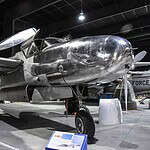
- How it changed close air support: Improved night CAS operations
The B-26 Invader brought night attack capability to CAS, allowing operations beyond daylight hours. Its ability to strike targets under cover of darkness increased operational flexibility. It demonstrated how CAS could evolve to meet changing battlefield conditions.
A-37 Dragonfly
- Country of origin: USA
- Manufacturer: Cessna
- Year introduced to service: 1967
- Aircraft type: Light attack
- Primary weapons: Bombs, rockets
- Key close air support capability: Low-speed precision
- Notable conflict usage: Vietnam
- How it changed close air support: Enhanced light attack CAS
The A-37 Dragonfly provided precise, low-speed attack capabilities, making it effective in Vietnam's complex terrain. Its agility and accuracy allowed it to support ground forces in close proximity. It highlighted the importance of controllability and precision in CAS missions.
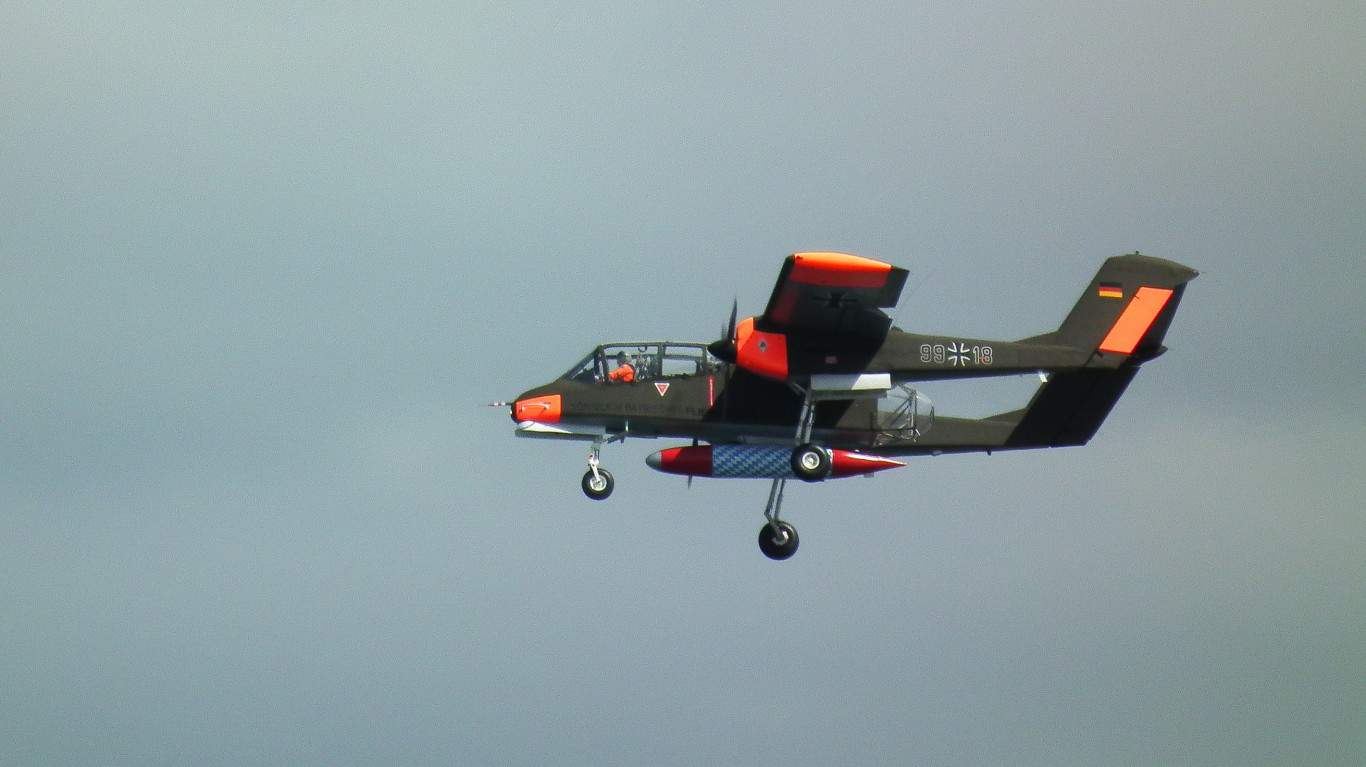
OV-10 Bronco
- Country of origin: USA
- Manufacturer: North American
- Year introduced to service: 1968
- Aircraft type: FAC/light attack
- Primary weapons: Rockets, guns
- Key close air support capability: Forward air control
- Notable conflict usage: Vietnam
- How it changed close air support: Integrated FAC with CAS
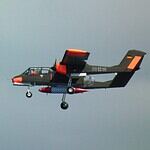
The OV-10 Bronco integrated forward air control with attack capability, allowing it to direct and conduct strikes. Its role improved coordination between air and ground forces. It showed how communication and targeting could enhance CAS effectiveness.
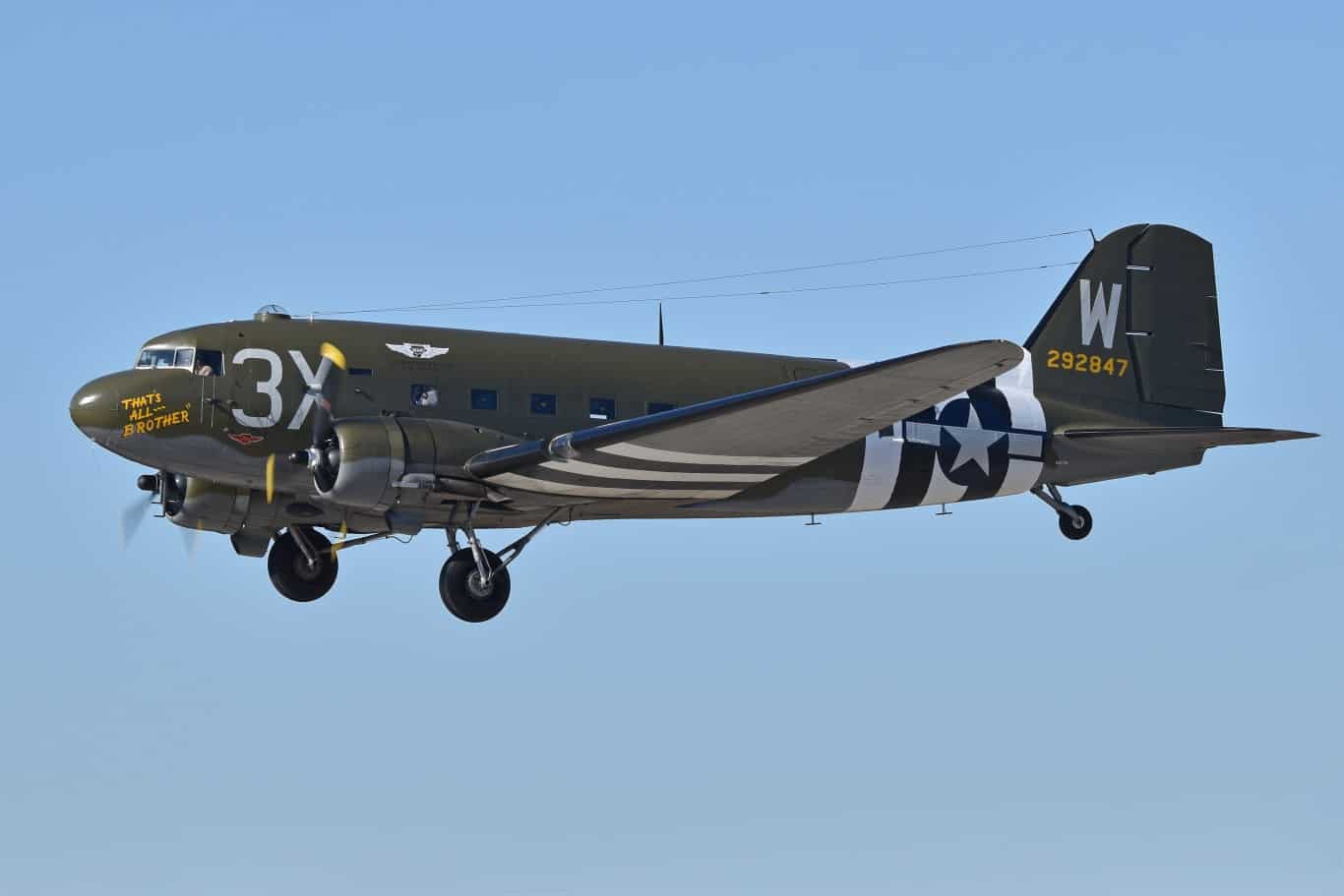
AC-47 Spooky
- Country of origin: USA
- Manufacturer: Douglas
- Year introduced to service: 1965
- Aircraft type: Gunship
- Primary weapons: Miniguns
- Key close air support capability: Persistent overwatch
- Notable conflict usage: Vietnam
- How it changed close air support: Introduced gunship CAS
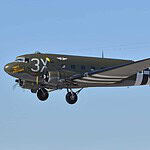
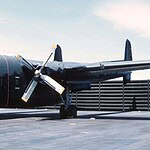
The AC-47 Spooky introduced the concept of the gunship, delivering continuous fire support from the air. Its ability to loiter and provide sustained fire changed how CAS could be delivered. It marked the beginning of persistent aerial firepower.
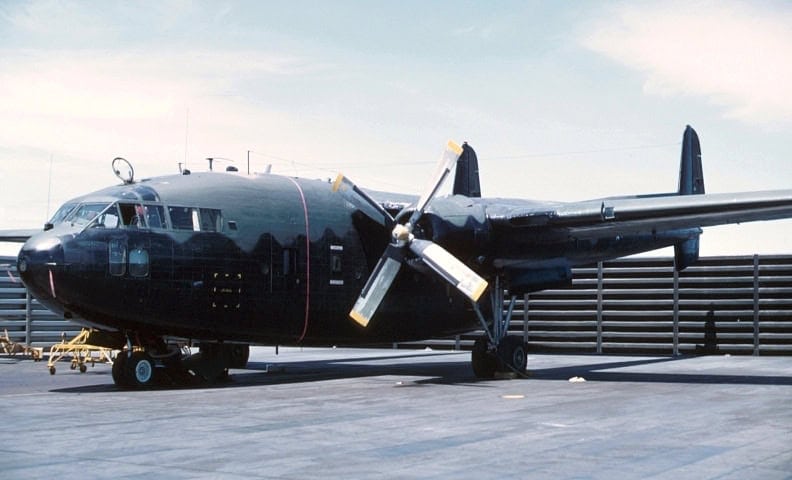
AC-119 Shadow
- Country of origin: USA
- Manufacturer: Fairchild
- Year introduced to service: 1968
- Aircraft type: Gunship
- Primary weapons: Miniguns, cannons
- Key close air support capability: Night CAS
- Notable conflict usage: Vietnam
- How it changed close air support: Expanded gunship role
The AC-119 expanded on the gunship concept with improved firepower and night capability. It provided more effective support in low-visibility conditions. It demonstrated the growing importance of specialized CAS platforms.
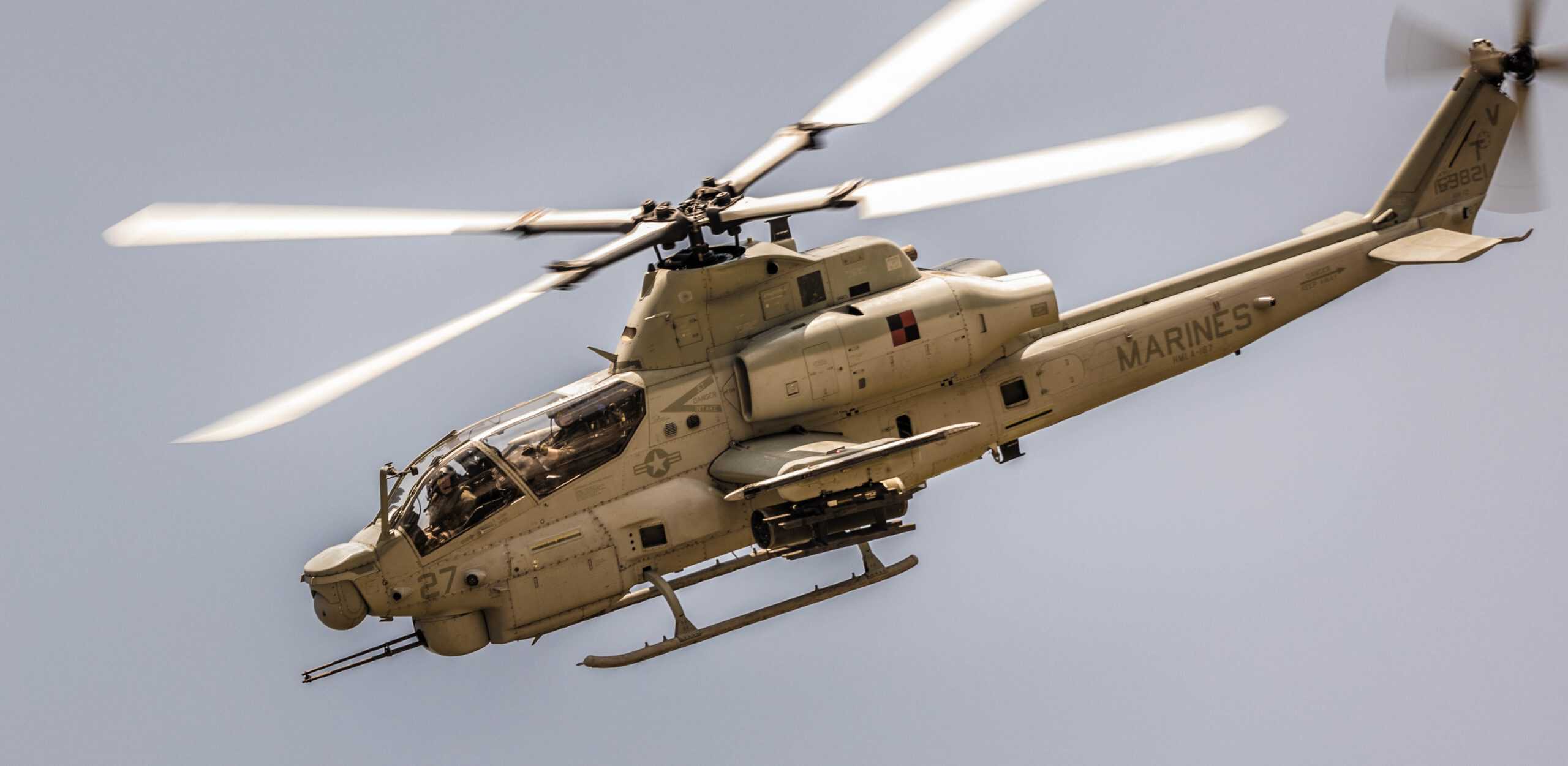
AH-1 Cobra
- Country of origin: USA
- Manufacturer: Bell
- Year introduced to service: 1967
- Aircraft type: Attack helicopter
- Primary weapons: Rockets, guns
- Key close air support capability: Close-range support
- Notable conflict usage: Vietnam
- How it changed close air support: Introduced helicopter CAS
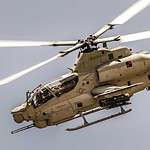
The AH-1 Cobra introduced dedicated attack helicopters into CAS, offering close-range precision and flexibility. Its ability to operate near ground forces made it highly effective in Vietnam. It marked the beginning of helicopter-based CAS evolution.
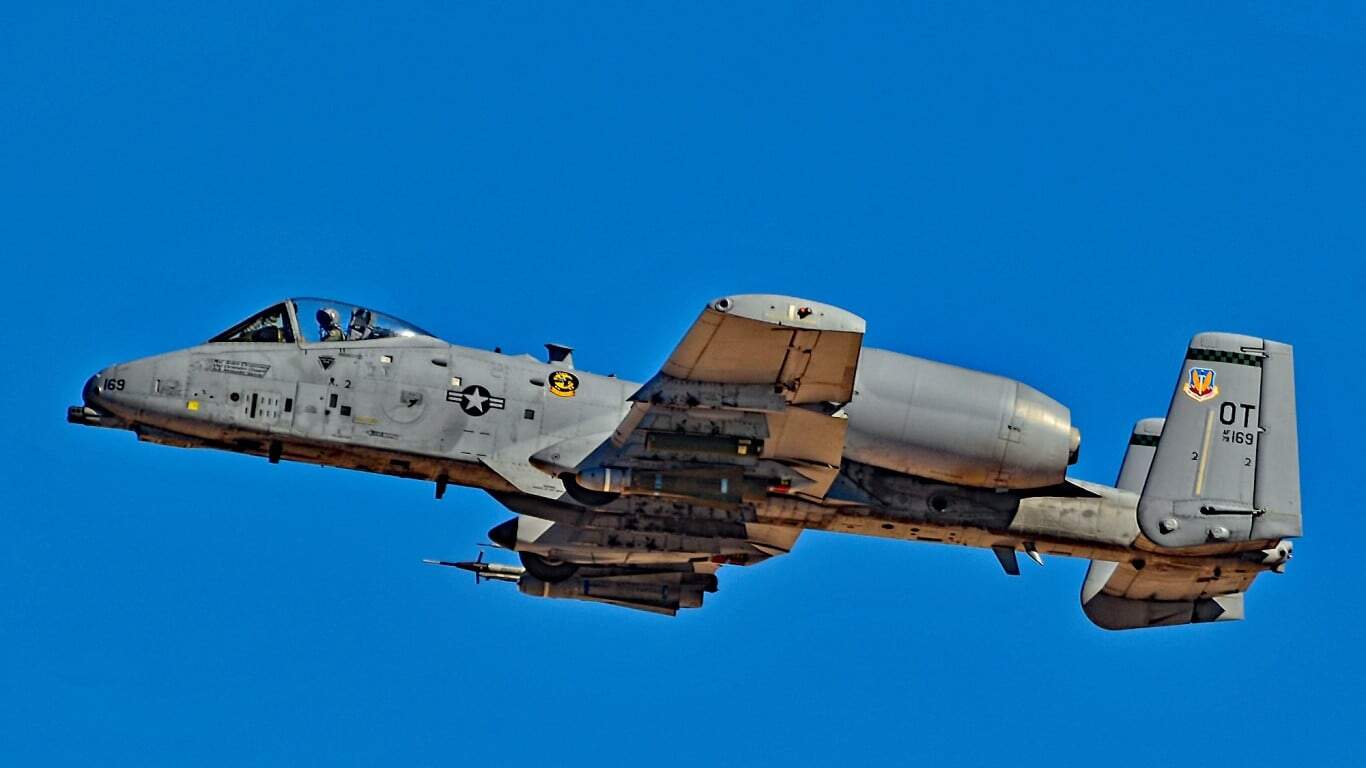
A-10 Thunderbolt II
- Country of origin: USA
- Manufacturer: Fairchild Republic
- Year introduced to service: 1977
- Aircraft type: Attack aircraft
- Primary weapons: GAU-8 cannon, missiles
- Key close air support capability: Heavy gun CAS
- Notable conflict usage: Iraq/Afghanistan
- How it changed close air support: Defined modern CAS aircraft
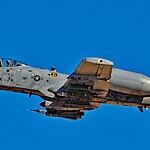
The A-10 Thunderbolt II is the definitive modern CAS aircraft, built around its powerful GAU-8 cannon and survivability. Its ability to operate at low altitude under heavy fire while delivering precise strikes makes it unmatched in its role. It set the benchmark for dedicated CAS platforms.
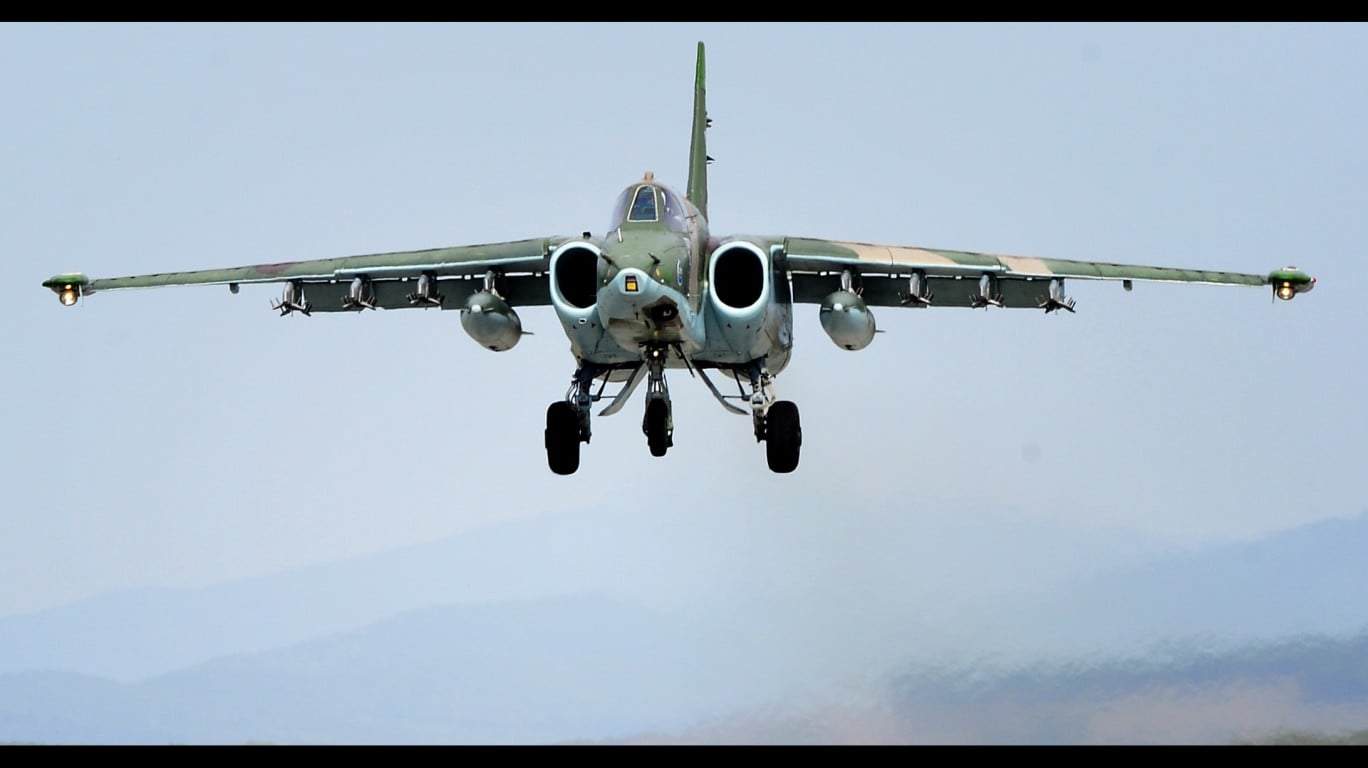
Su-25 Frogfoot
- Country of origin: USSR
- Manufacturer: Sukhoi
- Year introduced to service: 1981
- Aircraft type: Attack aircraft
- Primary weapons: Cannons, rockets
- Key close air support capability: Armored CAS platform
- Notable conflict usage: Afghanistan
- How it changed close air support: Soviet CAS equivalent to A-10
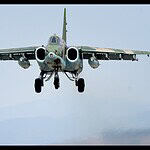
The Su-25 Frogfoot mirrors the A-10 in its focus on survivability and ground attack capability. Its rugged design allows it to operate in harsh conditions while delivering heavy firepower. It represents the Soviet approach to dedicated CAS aircraft.
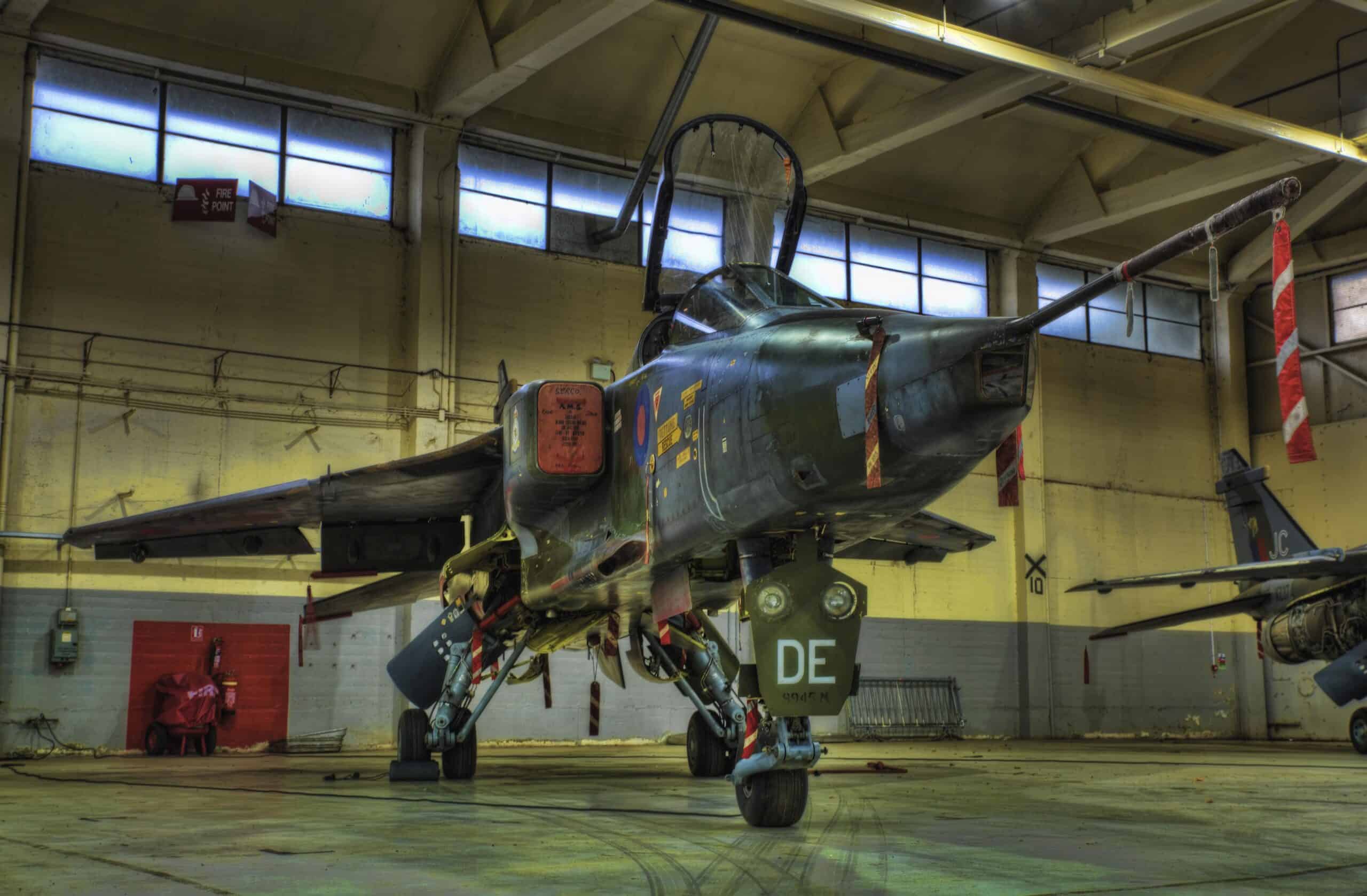
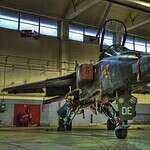
SEPECAT Jaguar
- Country of origin: UK/France
- Manufacturer: SEPECAT
- Year introduced to service: 1973
- Aircraft type: Strike aircraft
- Primary weapons: Bombs, rockets
- Key close air support capability: Low-level strike
- Notable conflict usage: Cold War
- How it changed close air support: Advanced strike CAS integration
The SEPECAT Jaguar combined speed with low-level strike capability, making it effective in CAS roles. Its design allowed it to deliver precise attacks while avoiding defenses. It helped integrate modern strike capabilities into CAS missions.
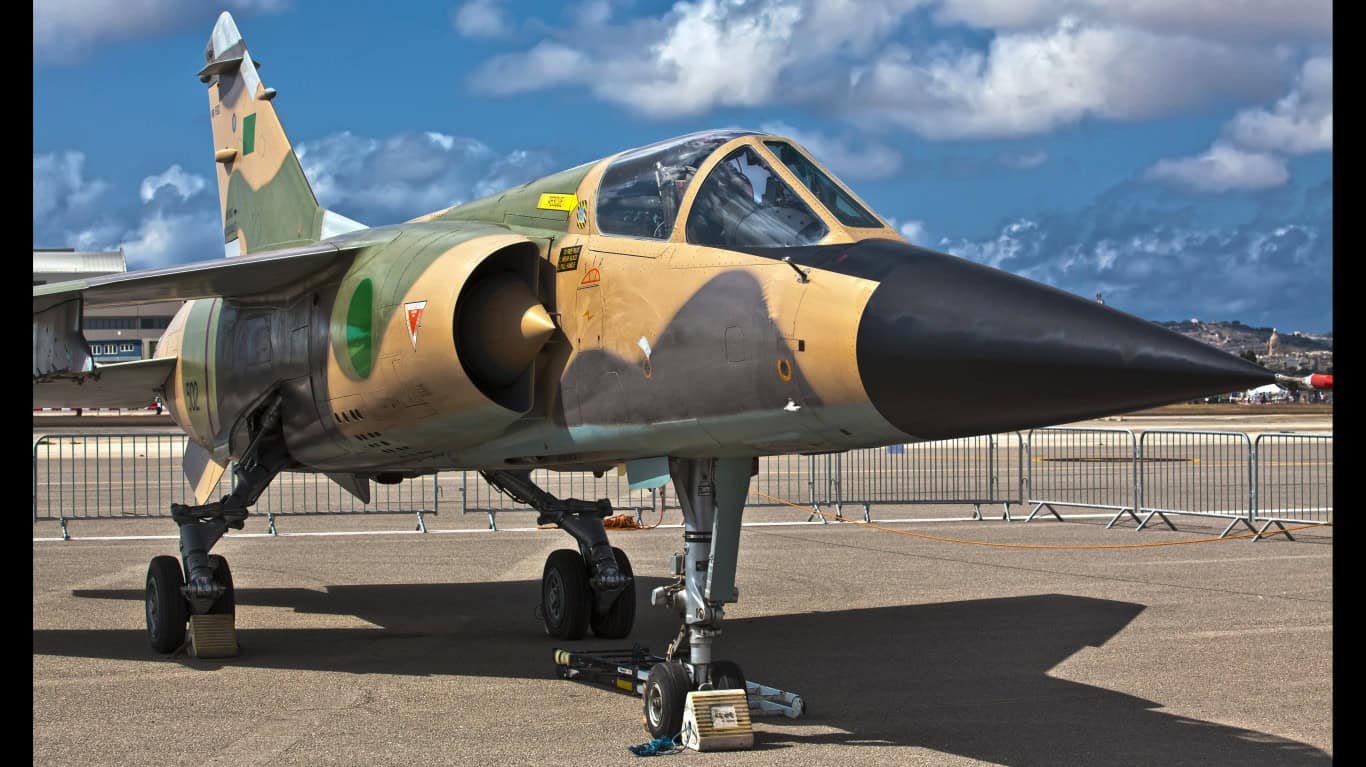
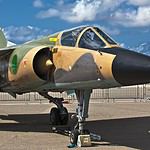
Mirage F1
- Country of origin: France
- Manufacturer: Dassault
- Year introduced to service: 1973
- Aircraft type: Fighter
- Primary weapons: Bombs, missiles
- Key close air support capability: Multi-role CAS
- Notable conflict usage: Africa/Middle East
- How it changed close air support: Expanded fighter CAS role
The Mirage F1 demonstrated how multi-role fighters could effectively perform CAS missions. Its adaptability allowed it to support ground forces in various conflicts. It contributed to the expansion of CAS roles within fighter aircraft.
F-16 Fighting Falcon
- Country of origin: USA
- Manufacturer: General Dynamics
- Year introduced to service: 1978
- Aircraft type: Fighter
- Primary weapons: Precision bombs, missiles
- Key close air support capability: Precision CAS
- Notable conflict usage: Iraq/Afghanistan
- How it changed close air support: Shifted CAS to precision
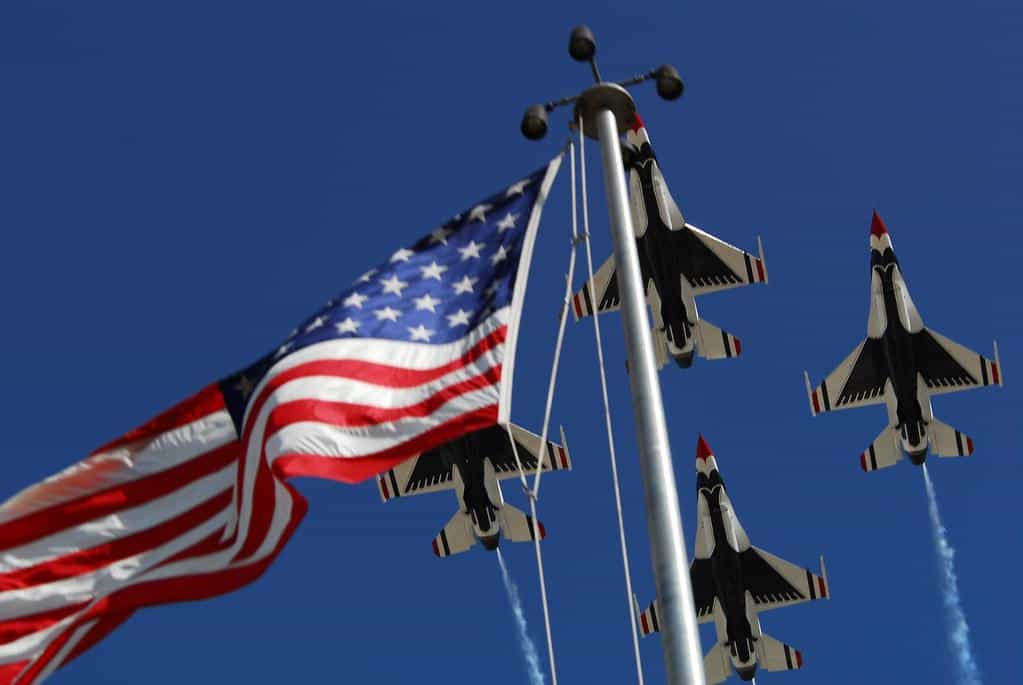
The F-16 Fighting Falcon transformed CAS with its integration of precision-guided munitions and advanced targeting systems. Its speed and versatility allow it to deliver accurate strikes in complex environments. It marked a shift toward precision-based CAS.
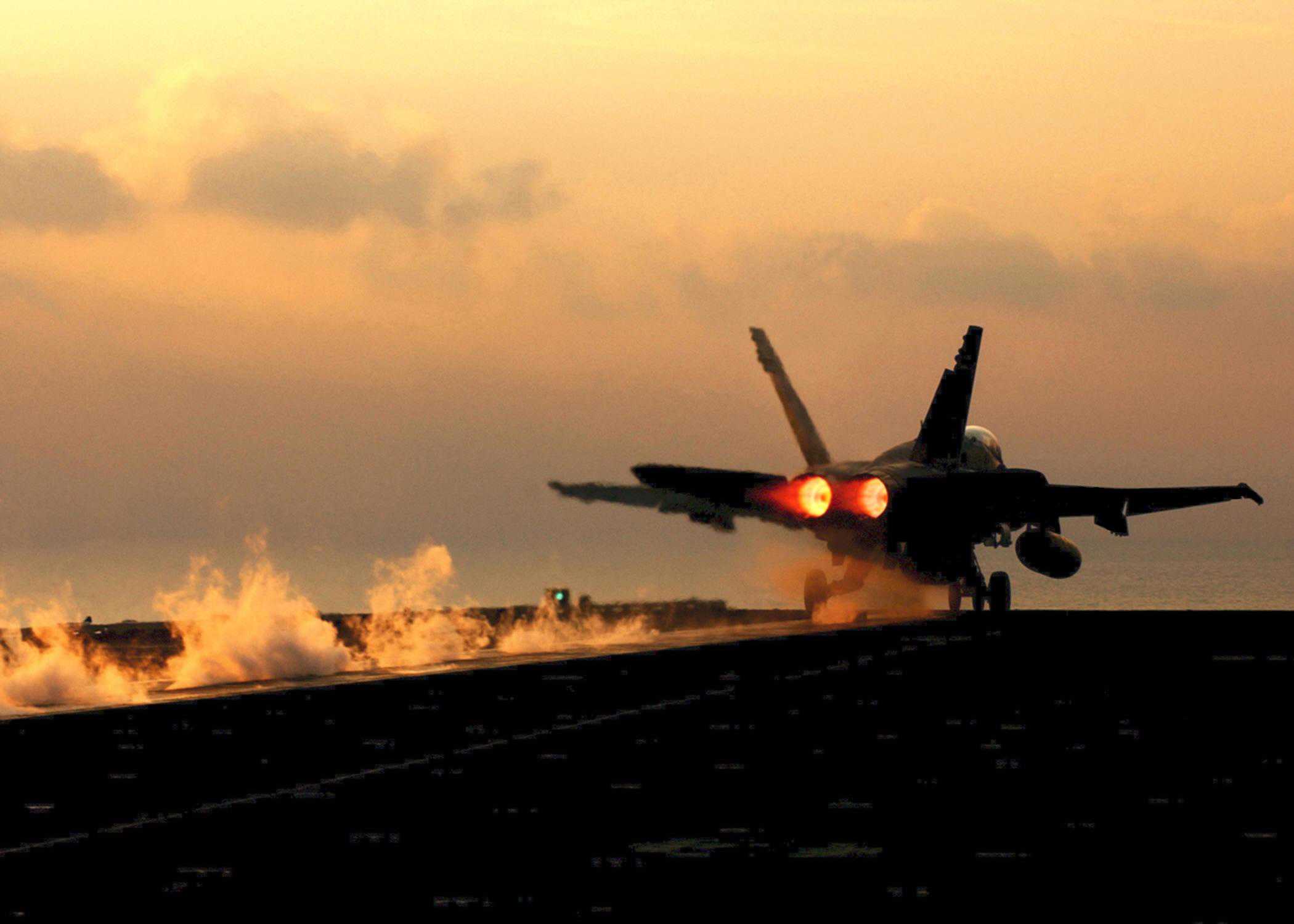
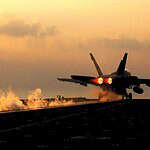
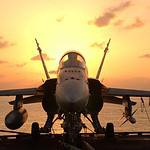
F/A-18 Hornet
- Country of origin: USA
- Manufacturer: McDonnell Douglas
- Year introduced to service: 1983
- Aircraft type: Fighter
- Primary weapons: Bombs, missiles
- Key close air support capability: Carrier precision CAS
- Notable conflict usage: Iraq
- How it changed close air support: Expanded naval precision CAS
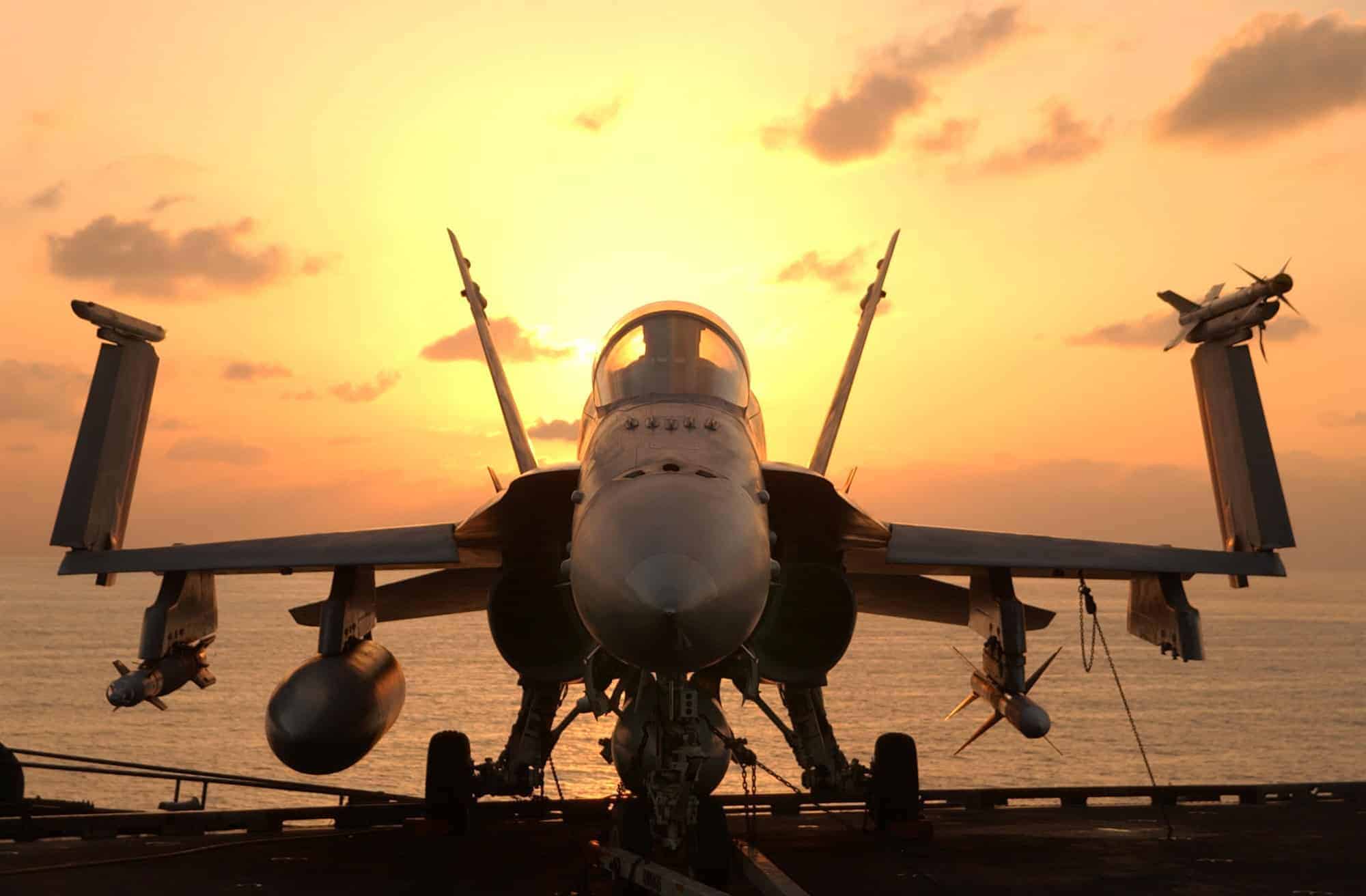
The F/A-18 Hornet brought carrier-based precision strike capability to CAS, supporting ground forces from sea-based operations. Its advanced avionics and weapon systems allow it to operate effectively in contested environments. It expanded the reach of naval CAS.
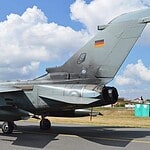
Panavia Tornado
- Country of origin: Europe
- Manufacturer: Panavia
- Year introduced to service: 1979
- Aircraft type: Strike aircraft
- Primary weapons: Bombs, missiles
- Key close air support capability: Low-level penetration
- Notable conflict usage: Iraq
- How it changed close air support: Precision low-level CAS
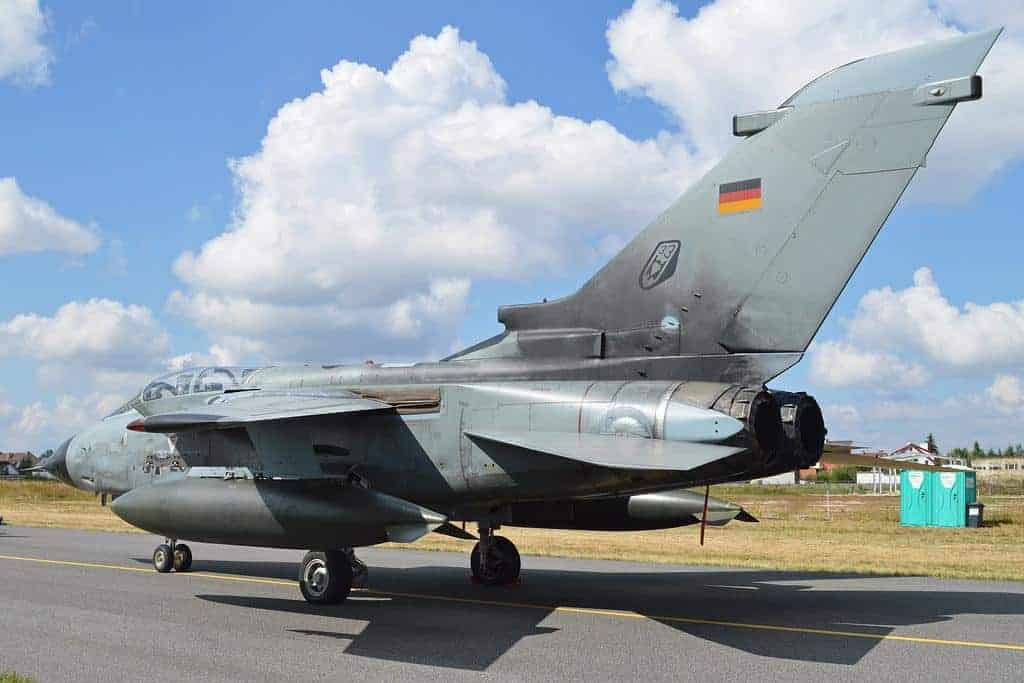
The Panavia Tornado specialized in low-level penetration and precision strike missions, making it effective in CAS roles. Its ability to operate at high speed and low altitude enhanced survivability. It demonstrated the value of advanced strike aircraft in CAS.
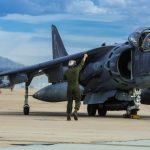
Harrier (AV-8B)
- Country of origin: USA/UK
- Manufacturer: McDonnell Douglas
- Year introduced to service: 1985
- Aircraft type: VTOL attack
- Primary weapons: Bombs, rockets
- Key close air support capability: Vertical CAS support
- Notable conflict usage: Afghanistan
- How it changed close air support: Enabled austere-base CAS
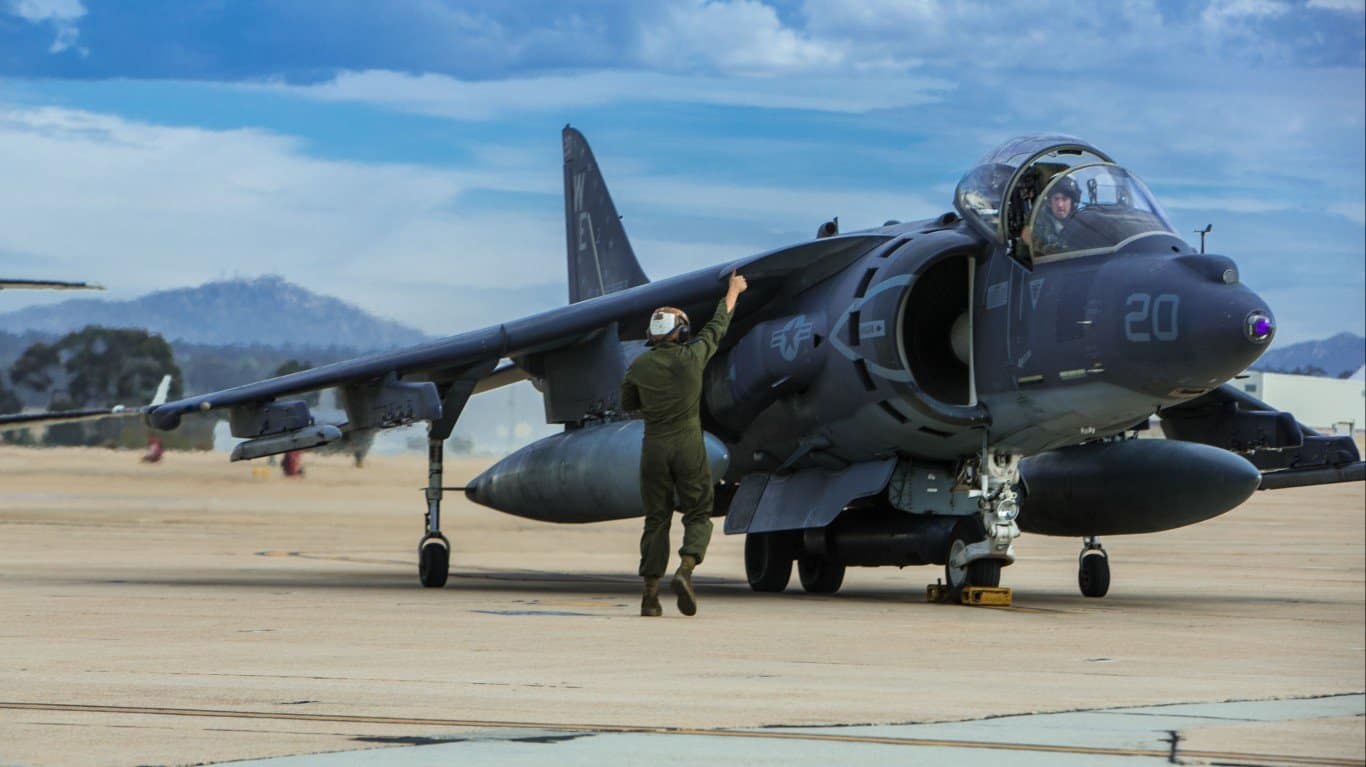
The Harrier introduced vertical takeoff capability, allowing it to operate from austere locations close to the battlefield. This flexibility made it highly effective in providing immediate CAS. It changed how and where CAS aircraft could be deployed.
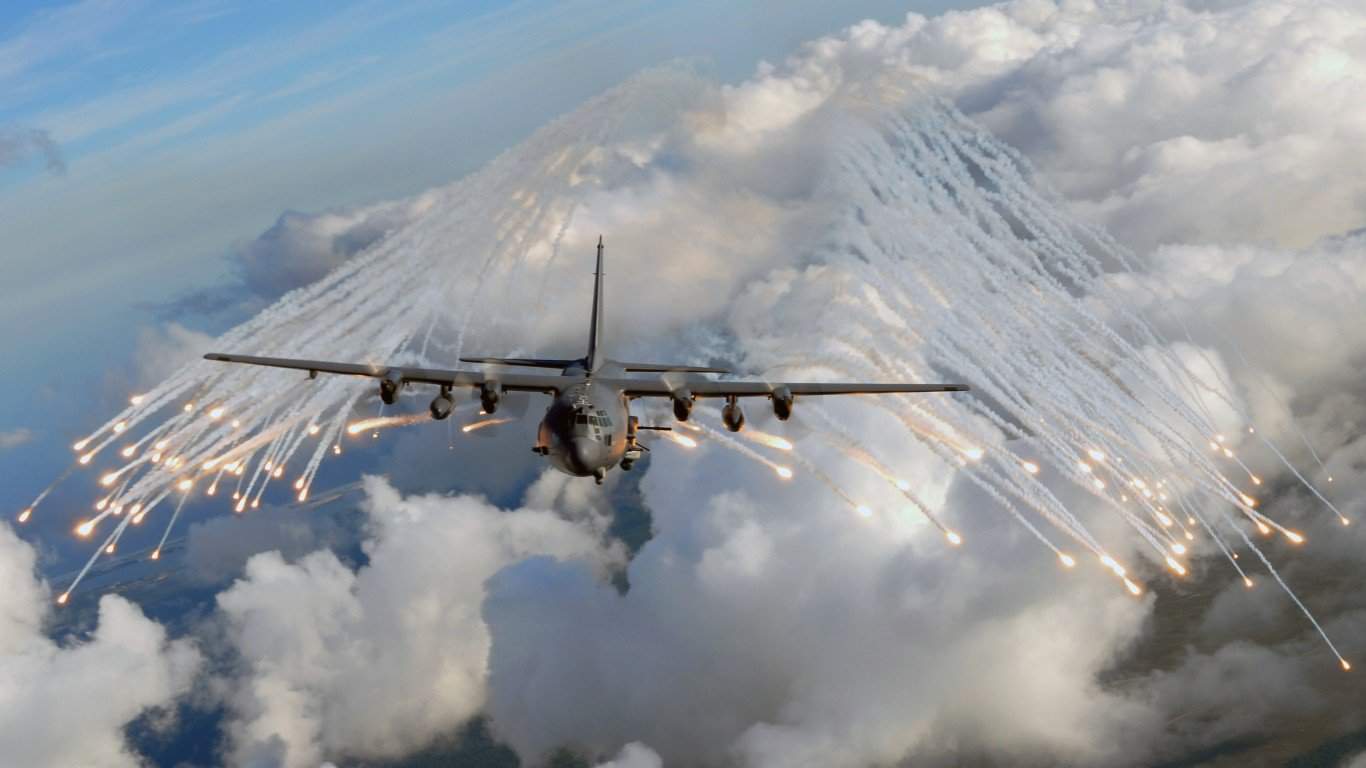
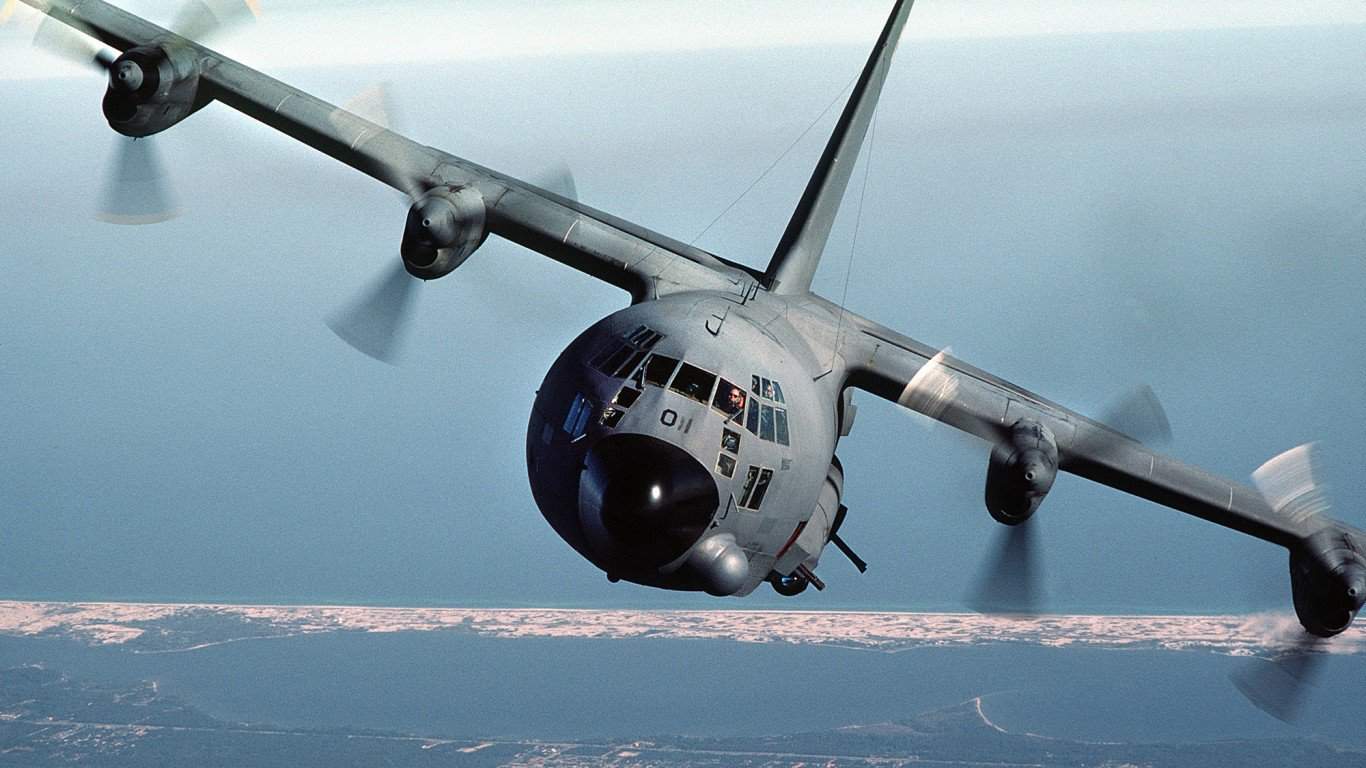
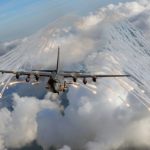
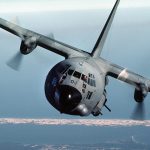
AC-130 Gunship
- Country of origin: USA
- Manufacturer: Lockheed
- Year introduced to service: 1970s
- Aircraft type: Gunship
- Primary weapons: Cannons, howitzers
- Key close air support capability: Persistent fire support
- Notable conflict usage: Iraq/Afghanistan
- How it changed close air support: Perfected gunship CAS
The AC-130 Gunship perfected the concept of persistent aerial fire support, combining heavy weapons with long loiter times. Its ability to deliver precise, sustained fire makes it invaluable in modern conflicts. It represents the peak of gunship CAS capability.
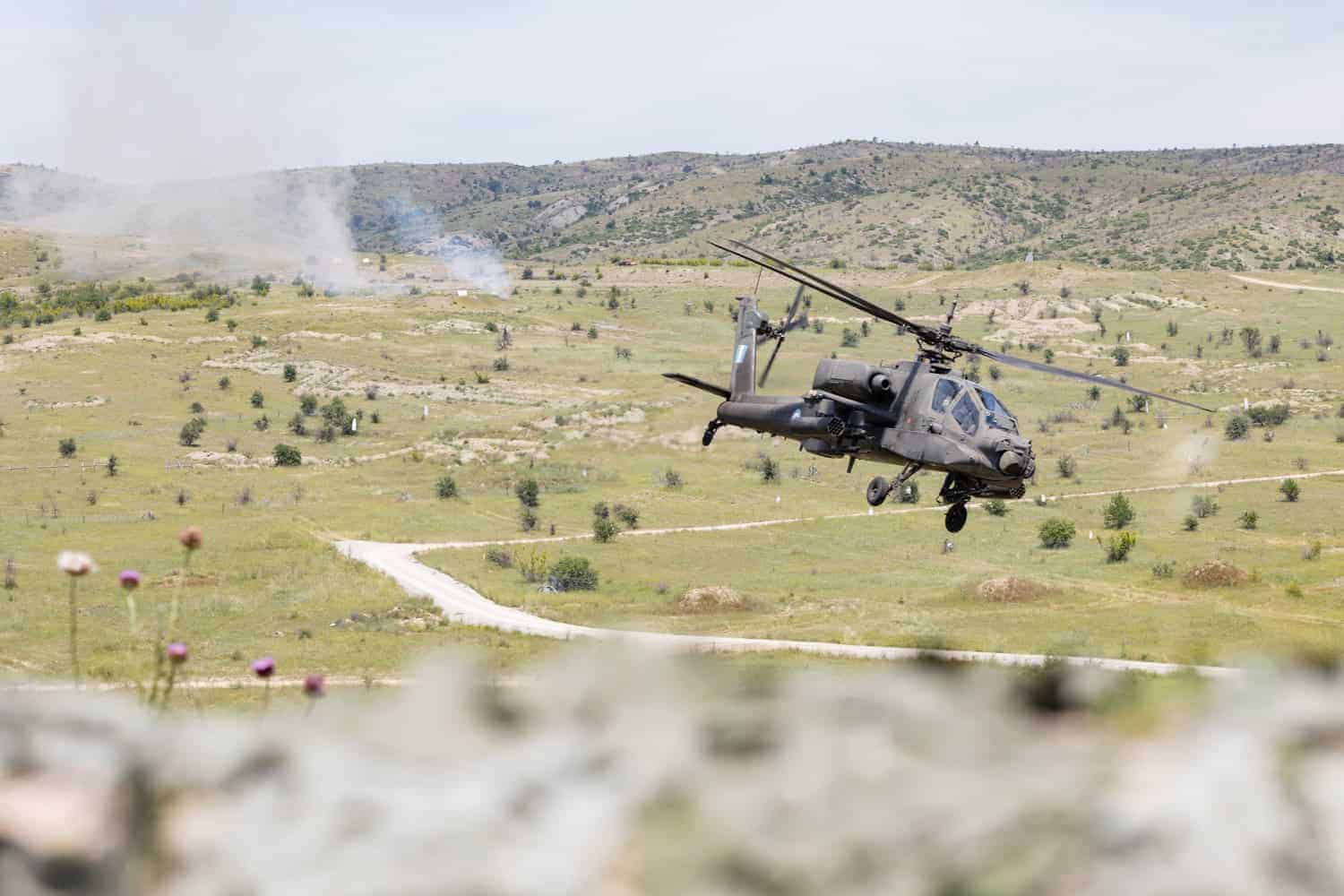
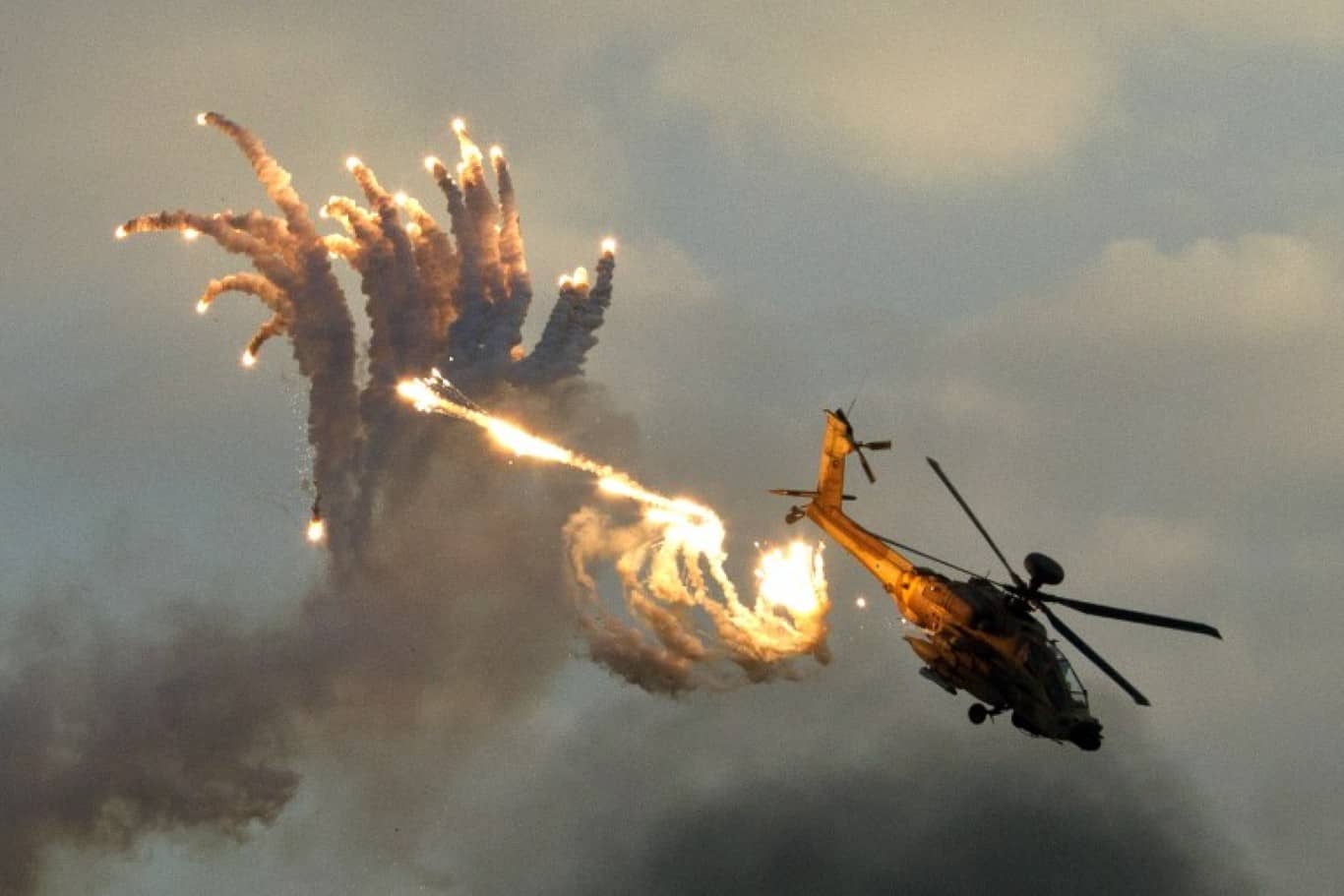
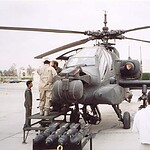
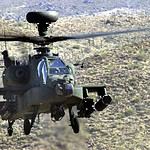
AH-64 Apache
- Country of origin: USA
- Manufacturer: Boeing
- Year introduced to service: 1986
- Aircraft type: Attack helicopter
- Primary weapons: Hellfire missiles, rockets
- Key close air support capability: Precision anti-armor
- Notable conflict usage: Iraq
- How it changed close air support: Modernized helicopter CAS
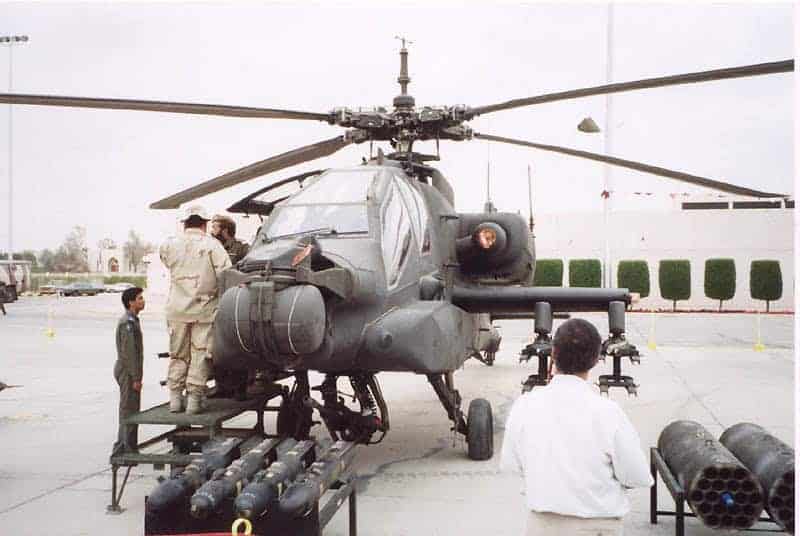
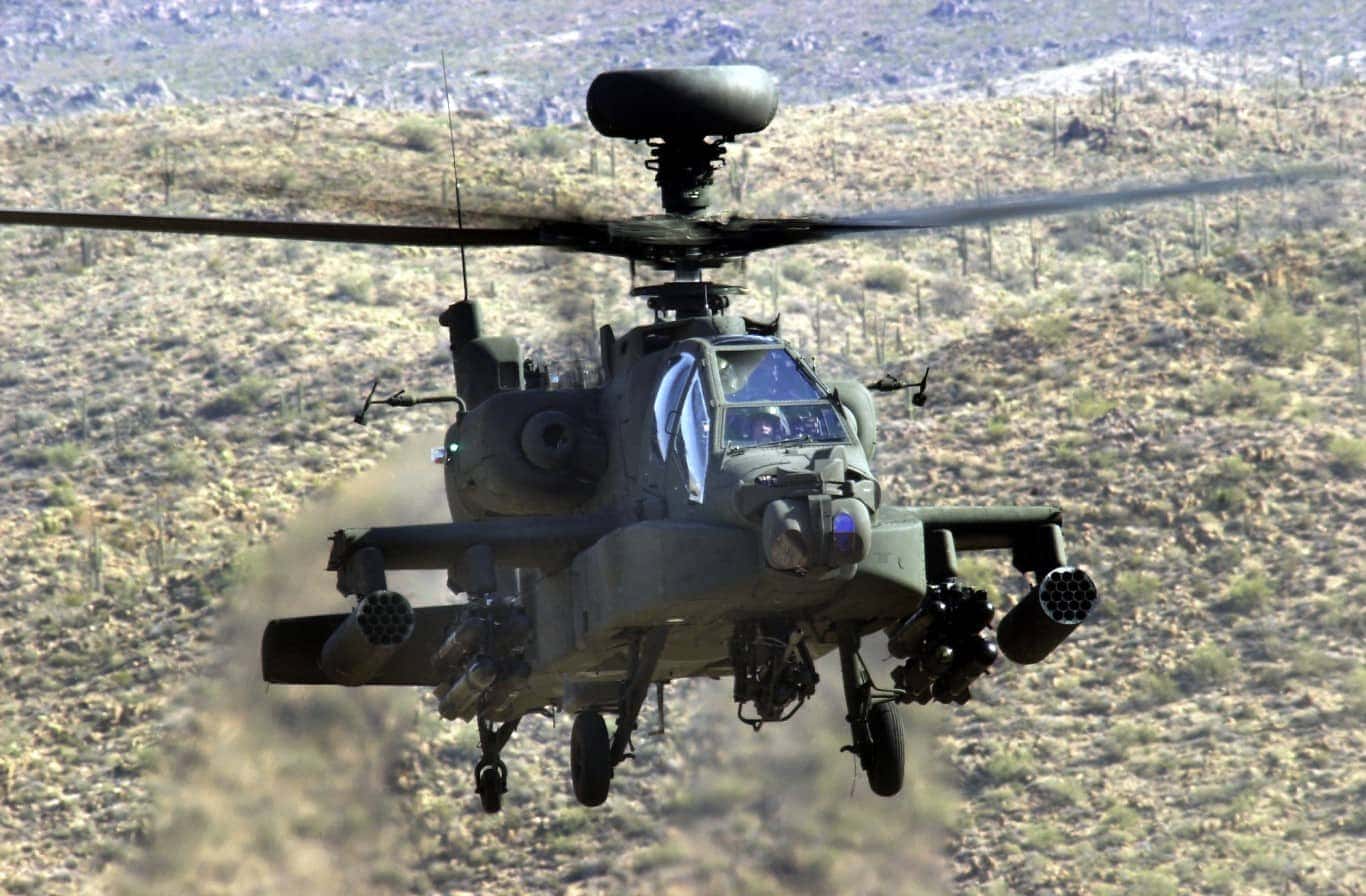
The AH-64 Apache brought advanced targeting systems and precision weapons to helicopter CAS. Its ability to engage armored targets with Hellfire missiles made it highly effective. It modernized helicopter-based CAS with advanced technology.
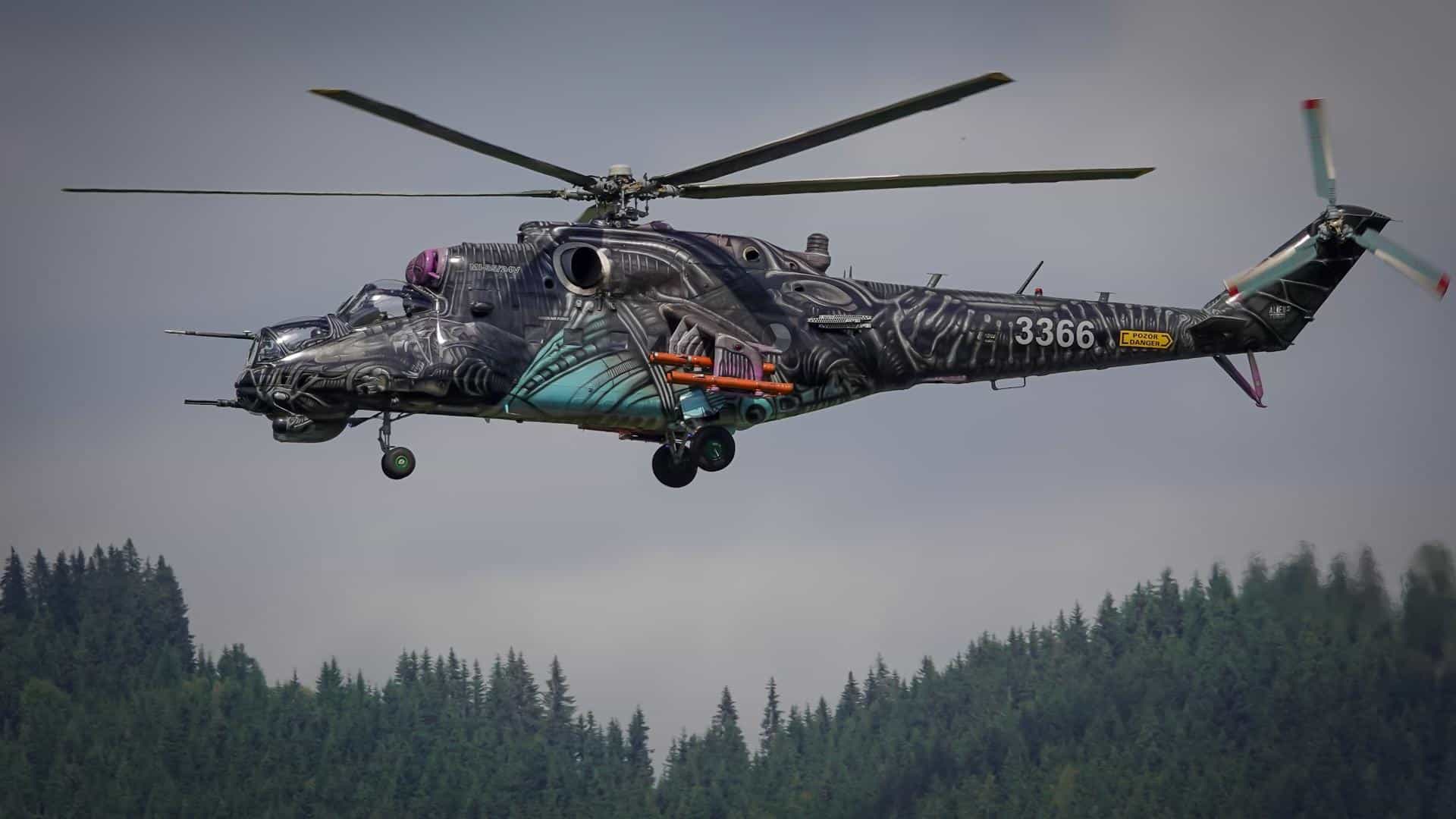
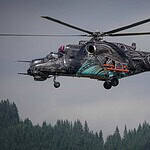
Mi-24 Hind
- Country of origin: USSR
- Manufacturer: Mil
- Year introduced to service: 1972
- Aircraft type: Attack helicopter
- Primary weapons: Rockets, guns
- Key close air support capability: Heavy helicopter firepower
- Notable conflict usage: Afghanistan
- How it changed close air support: Combined transport + CAS
The Mi-24 Hind combined transport and attack capabilities, allowing it to deliver troops and provide fire support. Its versatility made it a unique CAS platform. It demonstrated how helicopters could integrate multiple roles in combat.
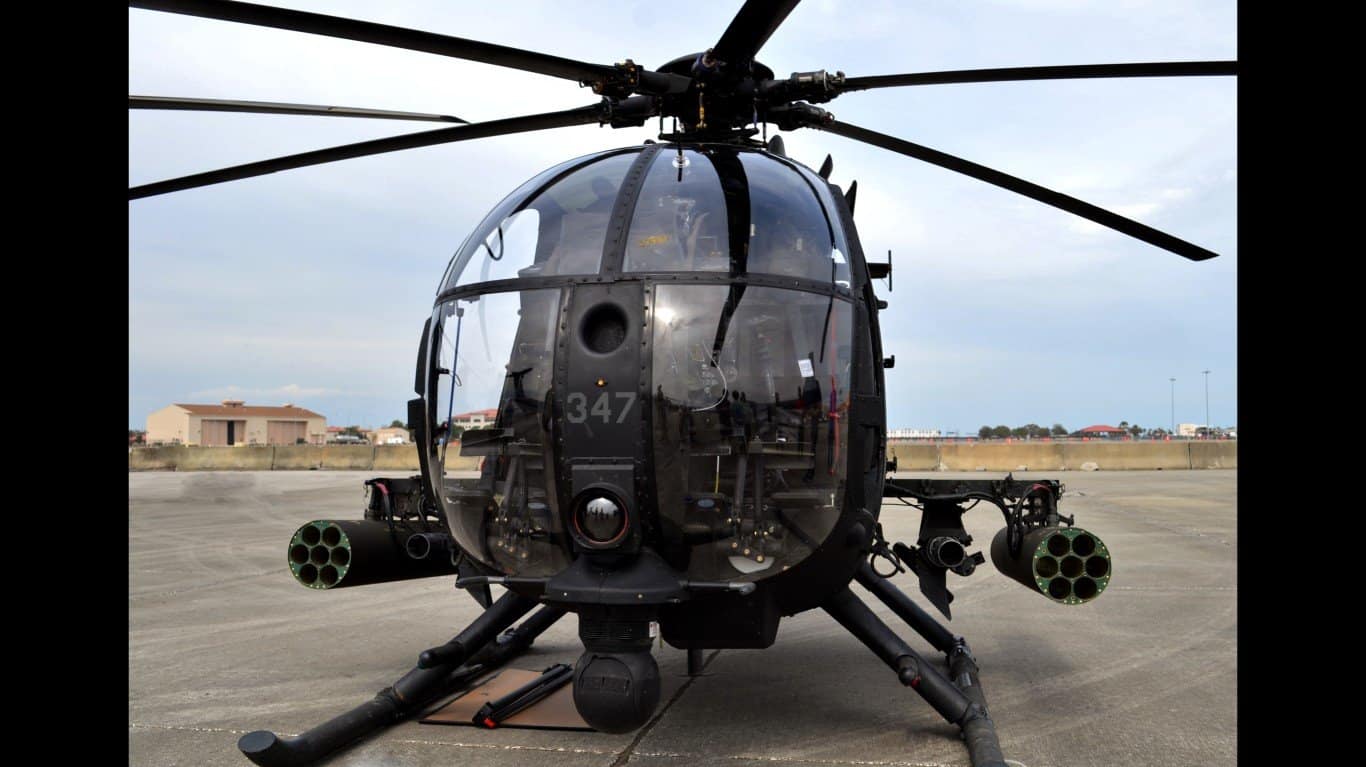
AH-6 Little Bird
- Country of origin: USA
- Manufacturer: MD Helicopters
- Year introduced to service: 1980s
- Aircraft type: Light helicopter
- Primary weapons: Guns, rockets
- Key close air support capability: Urban CAS precision
- Notable conflict usage: Iraq/Afghanistan
- How it changed close air support: Special ops CAS evolution
The AH-6 Little Bird excels in urban and special operations CAS, providing precise fire support in confined environments. Its agility and responsiveness make it ideal for supporting ground forces in complex terrain. It reflects the evolution of CAS into specialized mission sets.
The image featured at the top of this post is ©Public Domain / Wikimedia Commons / Original