


20 Fascinating Facts About the Weapons That Armed America in WWII
World War II accelerated weapons innovation at an unprecedented pace. As global conflict intensified, the United States rapidly expanded and refined its arsenal, adapting existing designs while introducing new technologies that would shape military strategy for decades.
Many of the weapons deployed during WWII evolved from earlier models, including the Colt .45 and the M1 Bazooka. Others, like the KA-BAR knife, became enduring standards due to their durability and practicality. To explore their origins, advancements, and battlefield impact, History Computer reviewed historical military records and expert sources to highlight the stories behind these iconic weapons.
Here are 20 fascinating facts about the weapons that armed America during World War II.
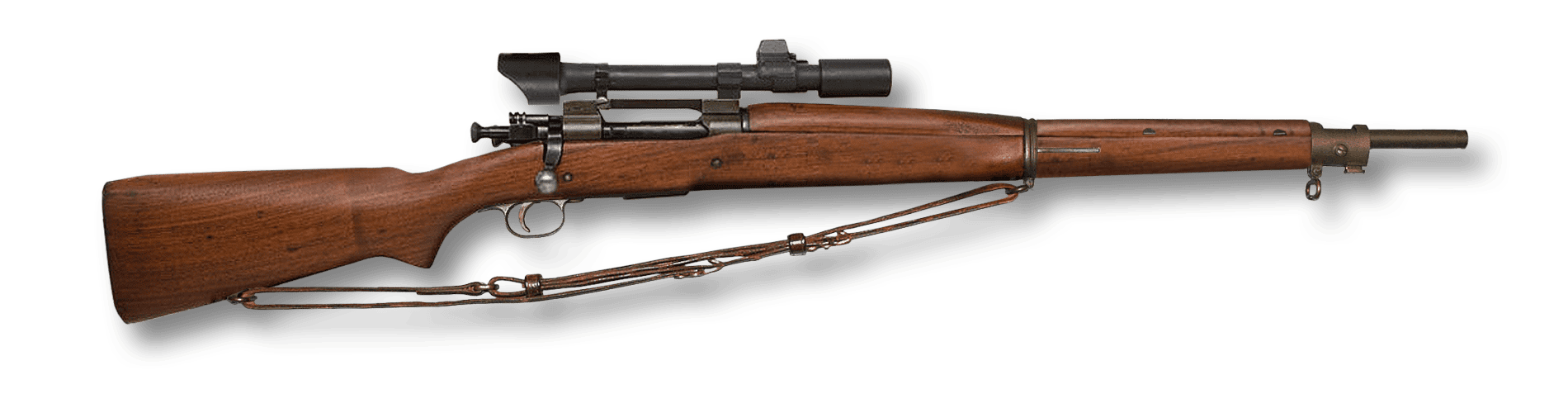
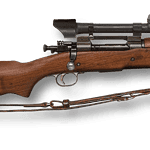
Springfield M1903
The Springfield M1903 first appeared during the early 20th century. However, it required a series of refinements and modifications before it appeared on the world stage. M1 Garand's were the rifle of choice, but the early war days saw a lack of supply, so the Springfield M1903 stepped in. Over time, it became the preferred sniper rifle thanks to its bolt action and added scope. This refined version called the M1903A4 remains sought after by collectors.
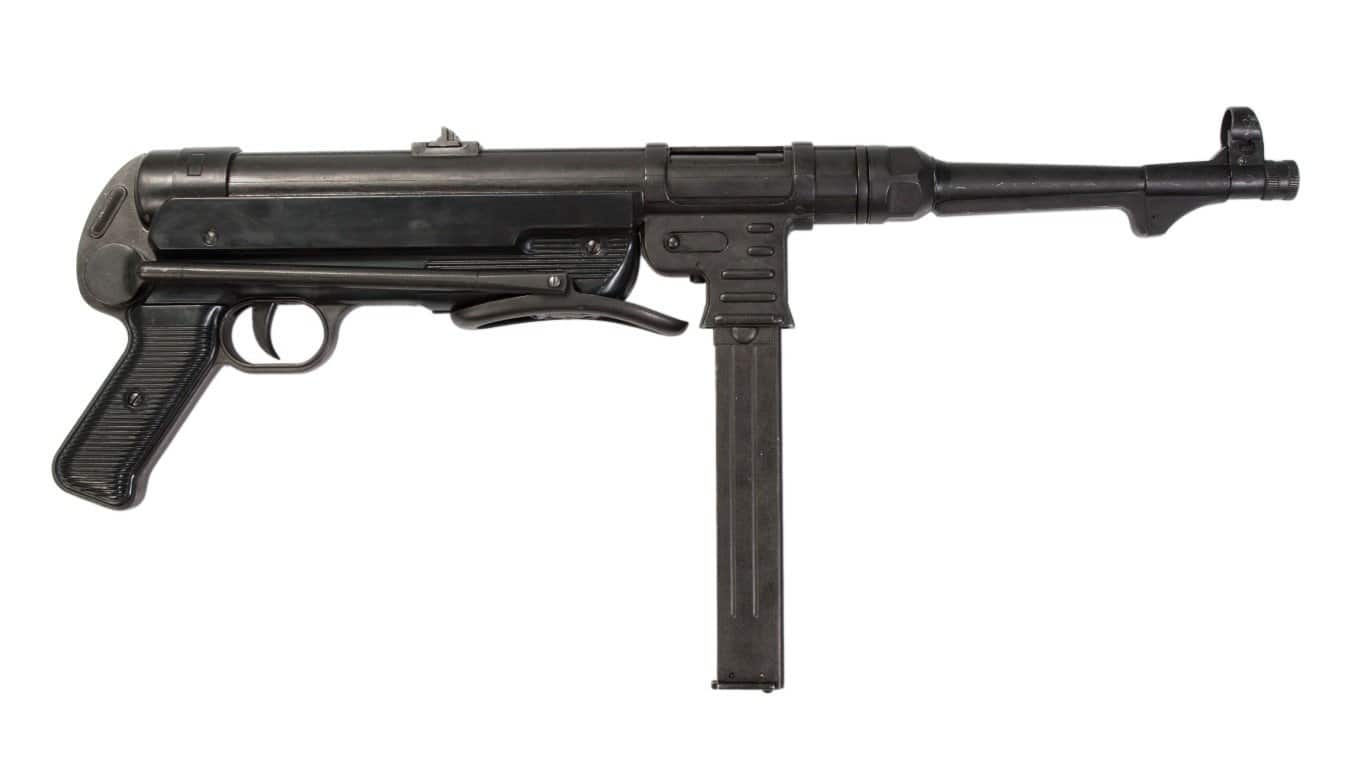
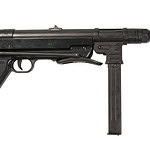
MP 40
The German MP40, or "Maschinenpistole .40" evolved out of the prone-to-misfire MP38. Once a small but notable innovation was made to the submachine gun's hammer, the MP40 came of age. Karabiner 98K rifles were issued to German soldiers until the Battle of Stalingrad, where they quickly became outgunned by Soviet troops in close-quarter urban combat. In response, the German army issued MP 40s to entire platoons. Much like the Luger, it became a prized weapon to be captured by American troops.
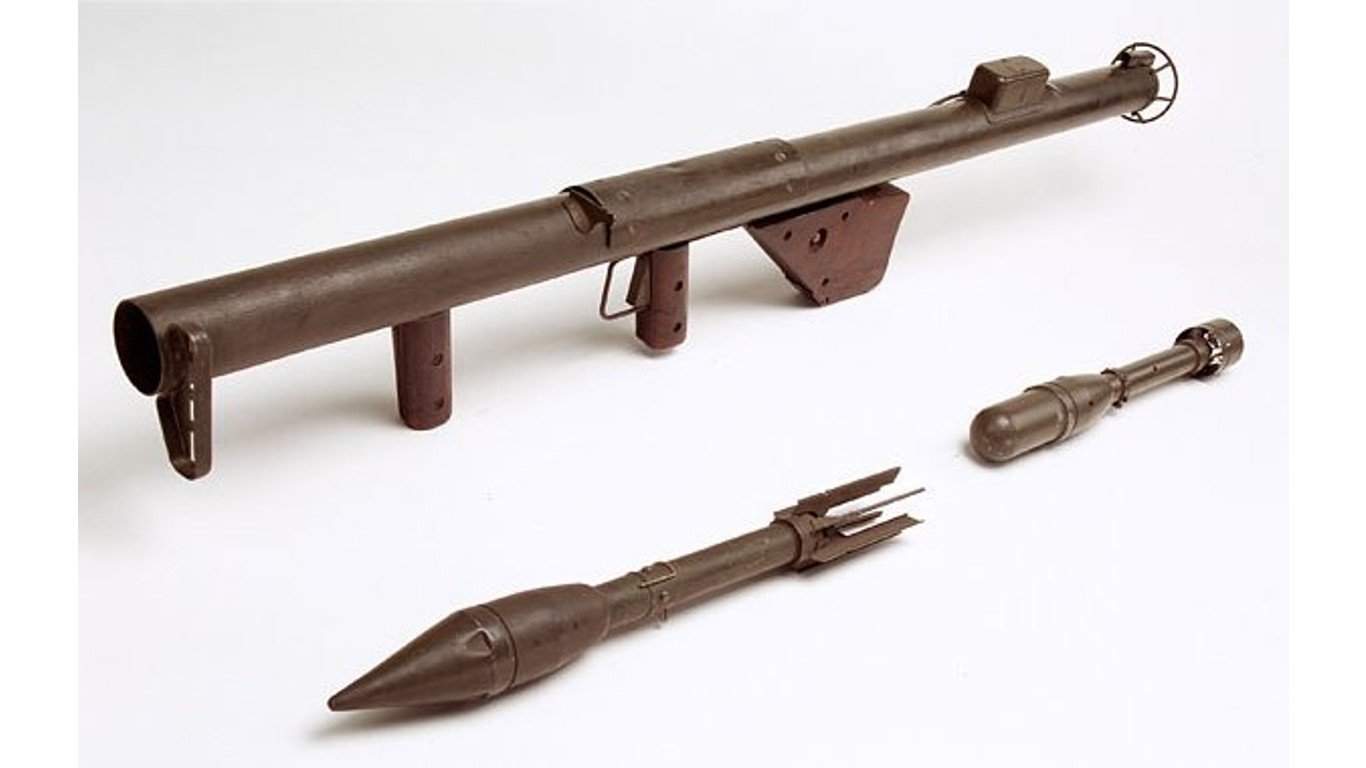
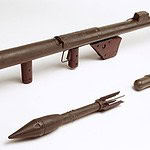
M1 Bazooka
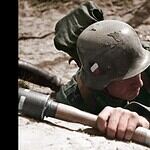
The M1 Bazooka was one of the first handheld anti-tank weapons. It first appeared during World War I, but practical use demanded modifications, especially to its error-prone M6 rocket. Throughout World War II, it made impressive showings, especially at the Battle of Arracourt. It took its name from a novelty instrument invented by comedian Bob Burns because of an uncanny resemblance.
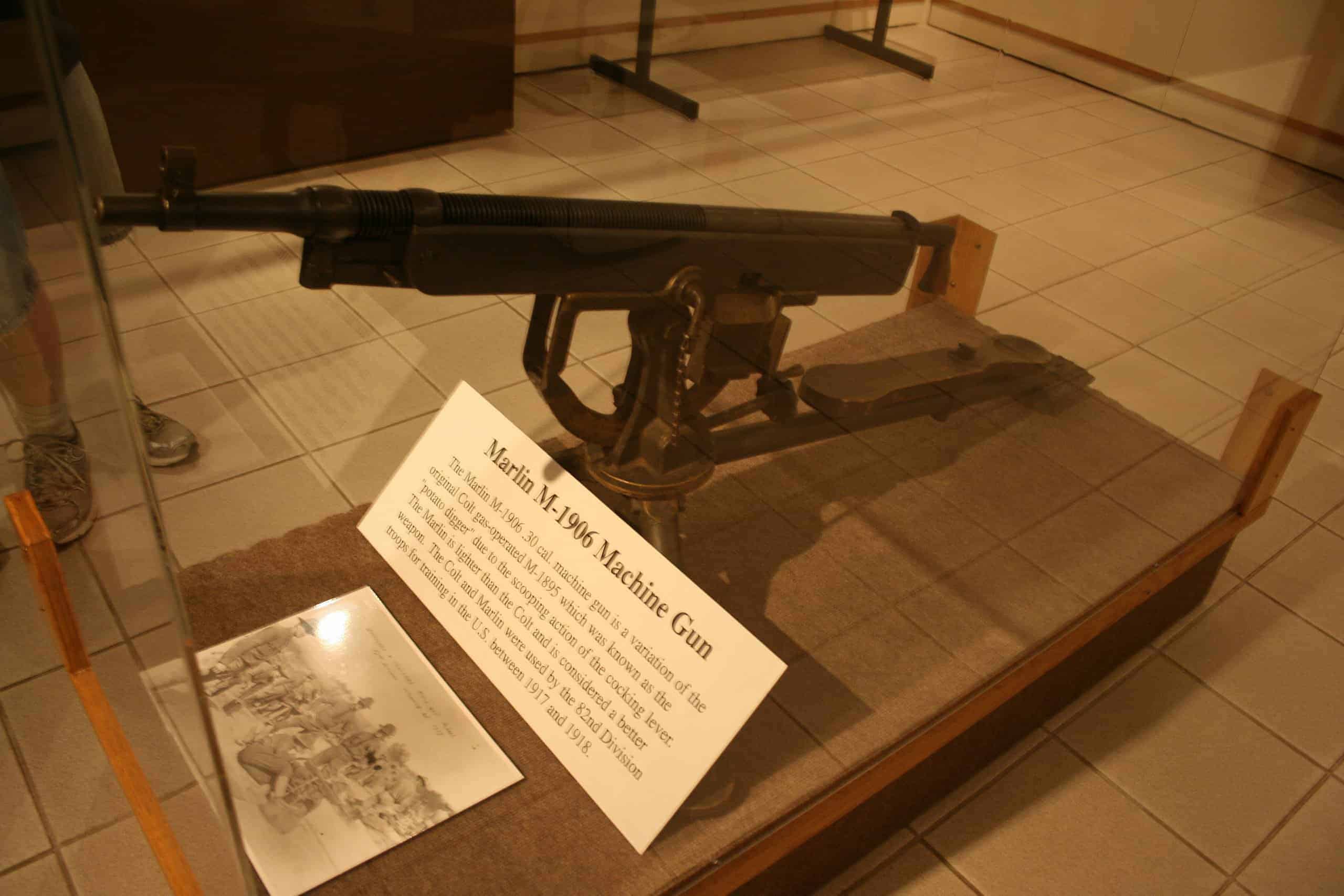
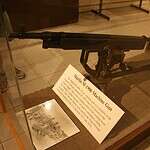
Marlin M-1906
The Marlin M-1906 machine gun was a holdover from World War I, and for good reason. Originally developed by gun impresario John M. Browning in 1895, the Marlin M-1906 could be attached to World War I airplanes. It even synchronized with propellers. During World War II, it was redesigned and used as a training weapon for Allied troops.
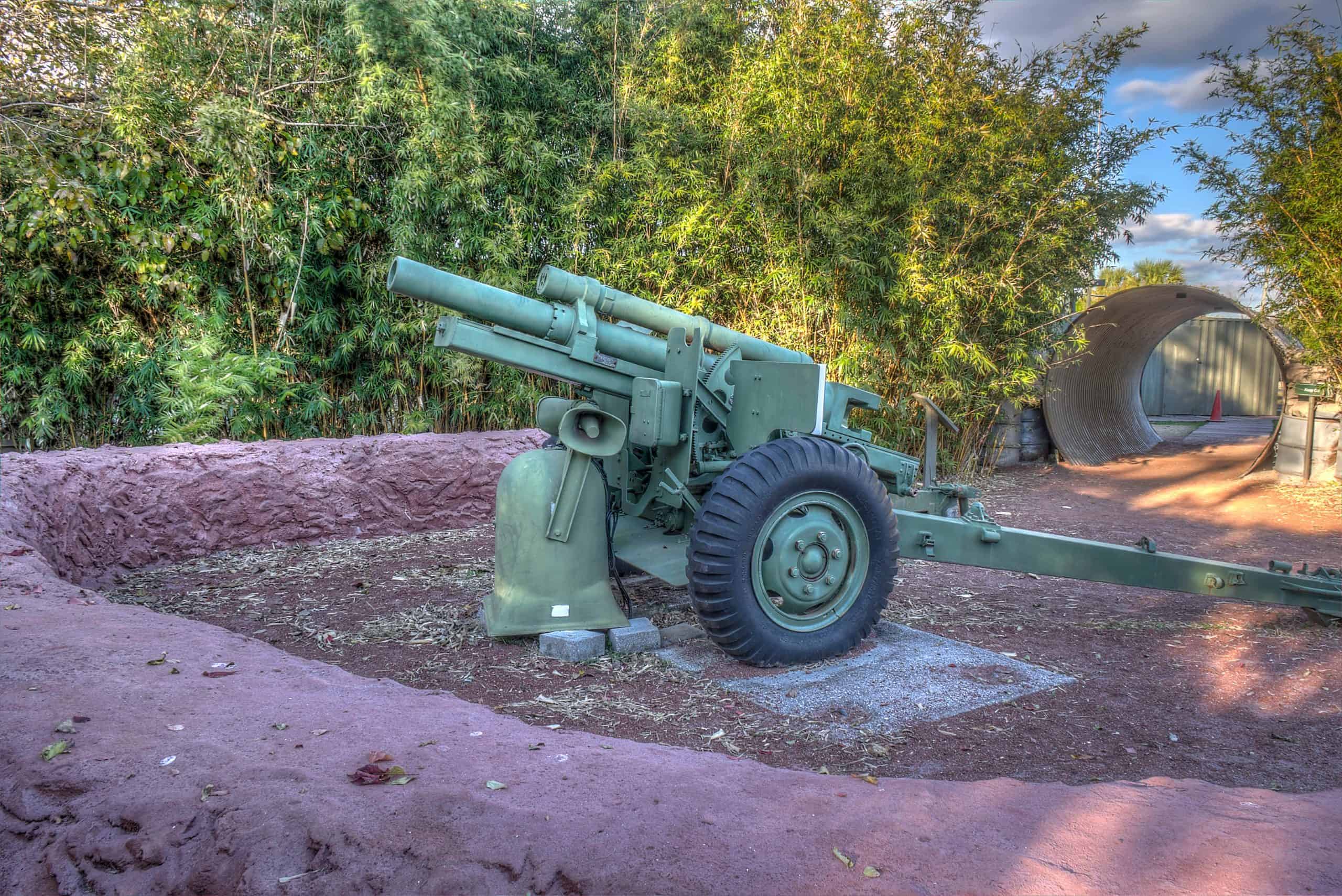
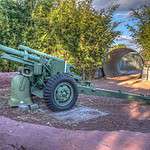
M1917 Howitzer
The Canon de 155 C modèle 1917 Schneider, also known as the M1917 Howitzer, packed a serious punch. Its widespread use during World War I continued into World War II, where both Axis and Allied powers used them considerably. With a maximum range of seven miles, it was a hot-ticket item for any country's arsenal. Eventually, the United States switched to the 155 mm Howitzer M114 due to its extended barrel.
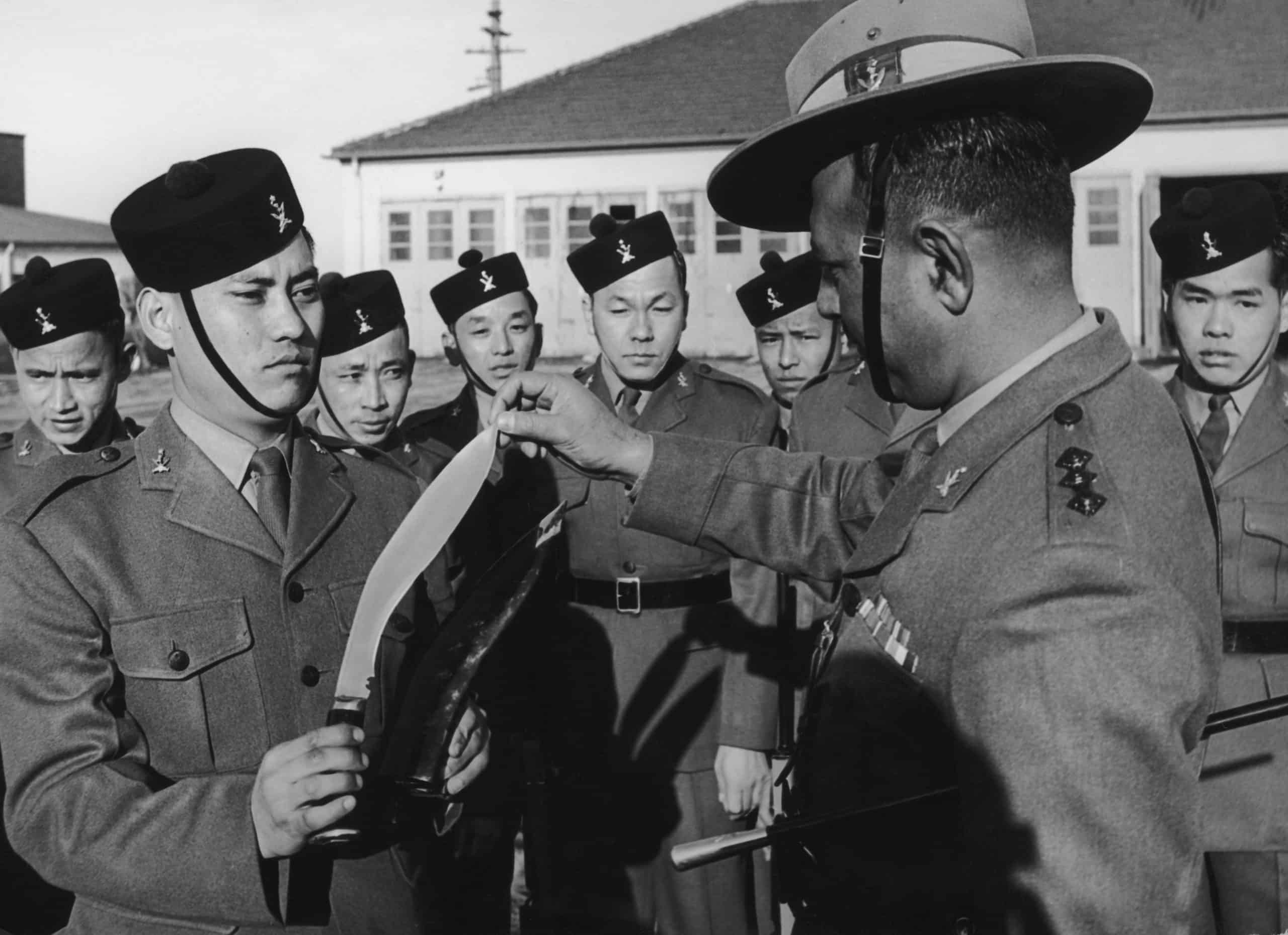
Kukri
No weapon has stood the test of time like the Nepalese Kukri knife. Alleged to have been first used in the 7th century, it became the de facto melee weapon for the British Indian Army in World War II. The Kukri's design lends itself to a variety of uses including farming and cooking, but during the War, became prized by American troops for its sleek, lethal design. It remains the national weapon of Nepal.
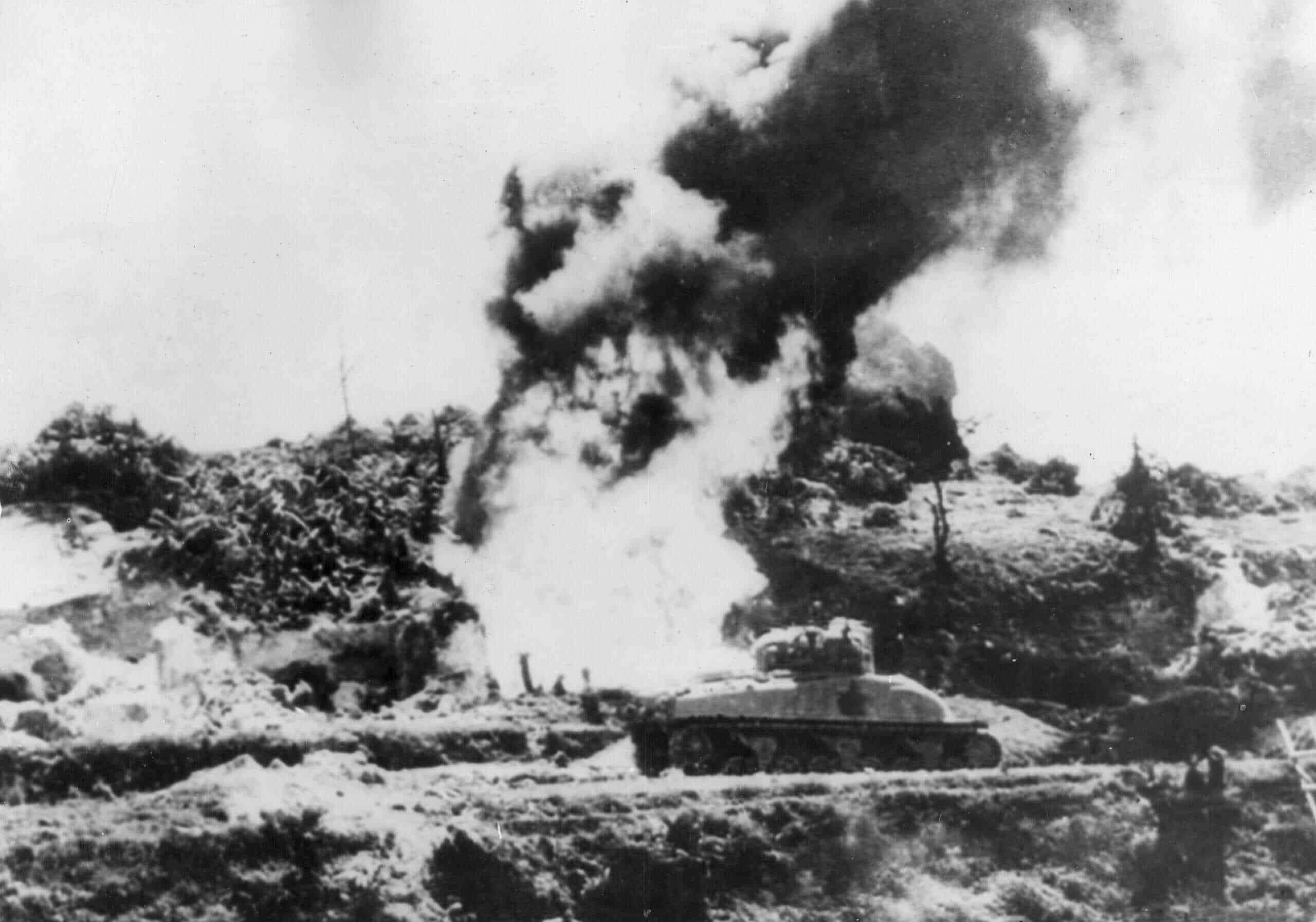
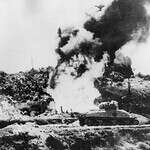
M1A1 flamethrower
No weapon symbolized the destructive nature of man quite like the flamethrower. The M1 Flamethrower and its M1A1 saw the most use in the Pacific Theatre of World War II to weaken enemy fortifications. It consisted of two fuel tanks, a propeller tank, and a battery that sparked a hydrogen igniter. The weapon exposed the user to enemy fire but its flames reached up to 43 meters away.
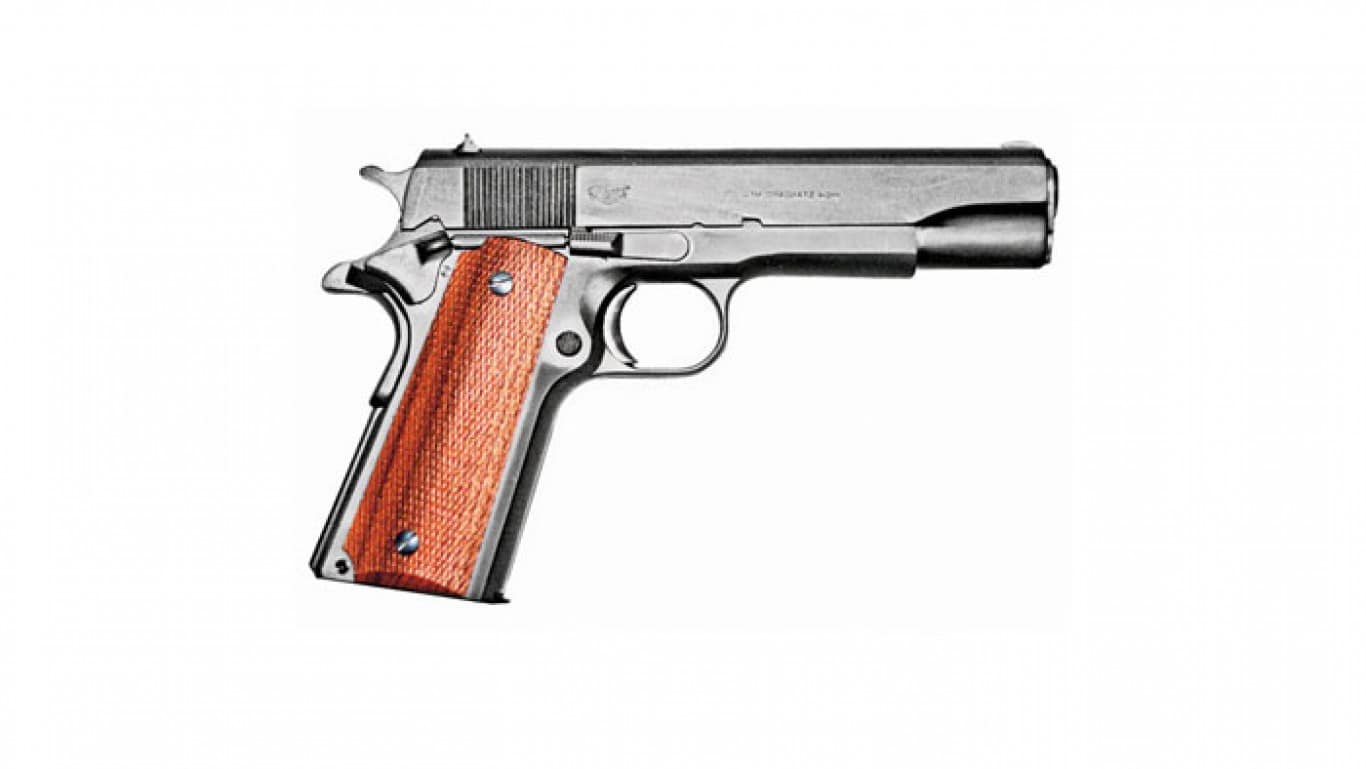
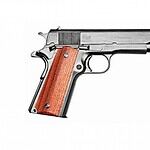
M1911
When John Browning created the original Colt .45, he hit upon an enduring concept. The pistol was used extensively in World War I and World War II. During the latter, it featured subtle modifications to make it easier to shoot. Around 1.9 million Colt 1911s were ordered by the United States government for World War II.
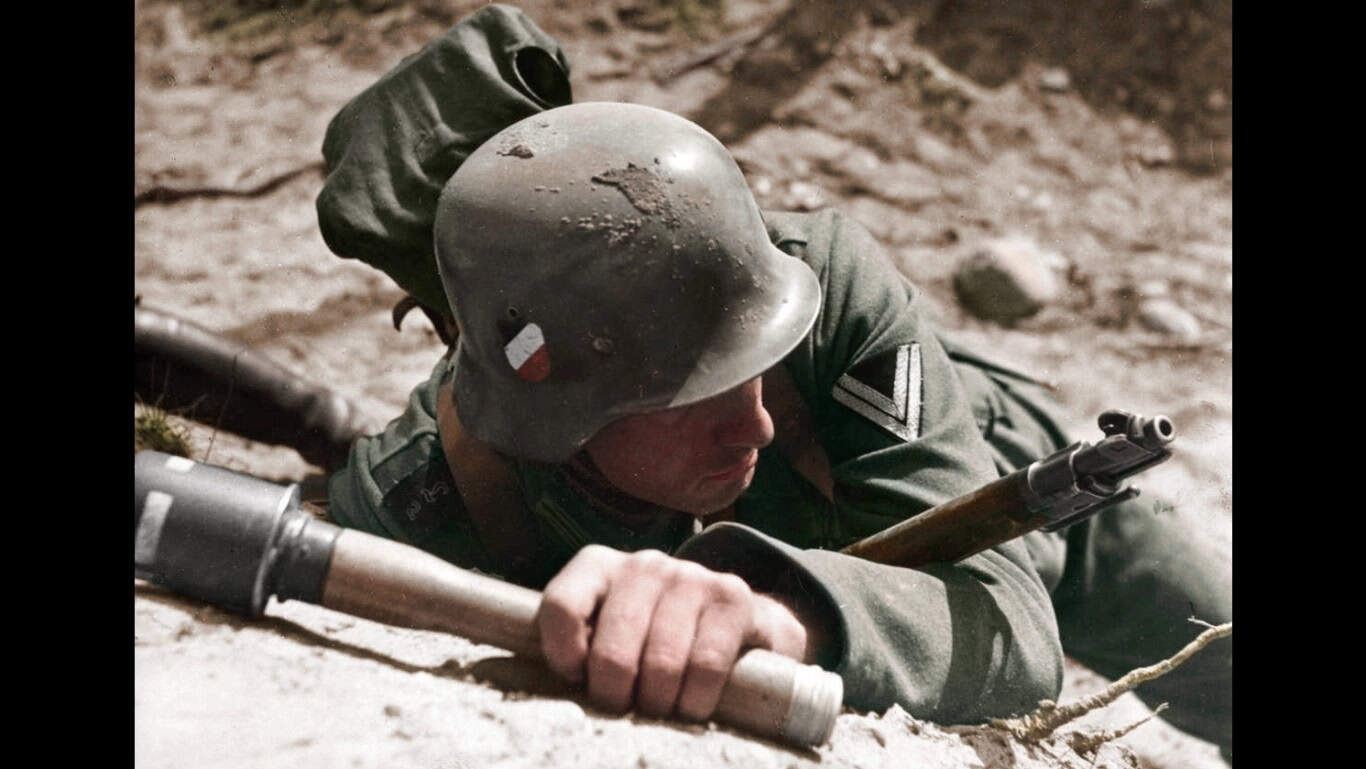
Stielhandgranate grenade
This German grenade meaning "stalk hand grenade" saw widespread use in both World War I and II. Unlike most grenades, it relied on a friction igniter system to make it go boom. Its hollow handle also allowed for greater throwing distance. Eventually, modifications were added to the Stielhandgranate, which allowed it to function in cold weather. When possible, American troops would grab them for Allied use.
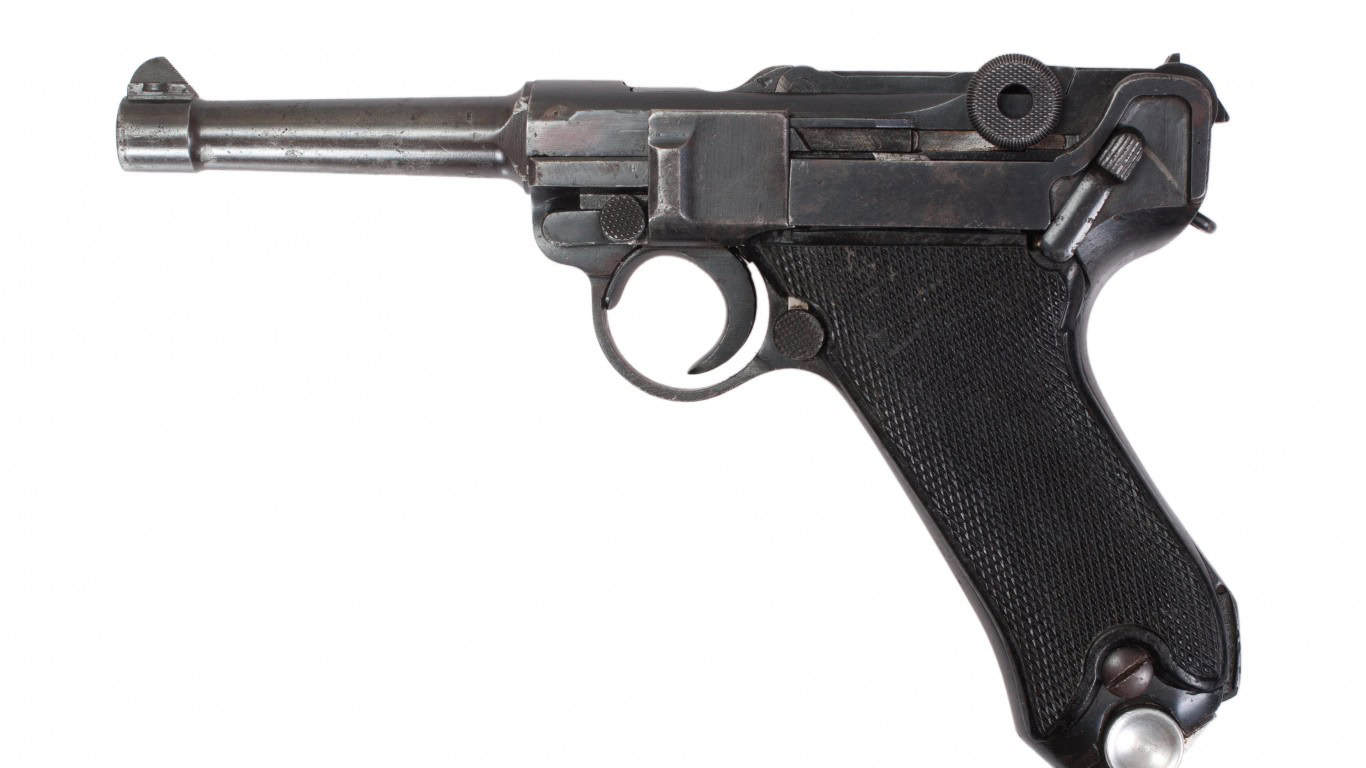
Luger (Pistole Parabellum)
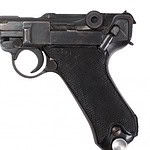
The Luger, or the Pistole Parabellum, remains one of the most iconic weapons from World War II. While it was used by German troops exclusively, it became something of a trophy for enterprising Allied soldiers due to its lightweight. It became such a trophy that German troops would use the Luger as bait for incoming Allied troops.
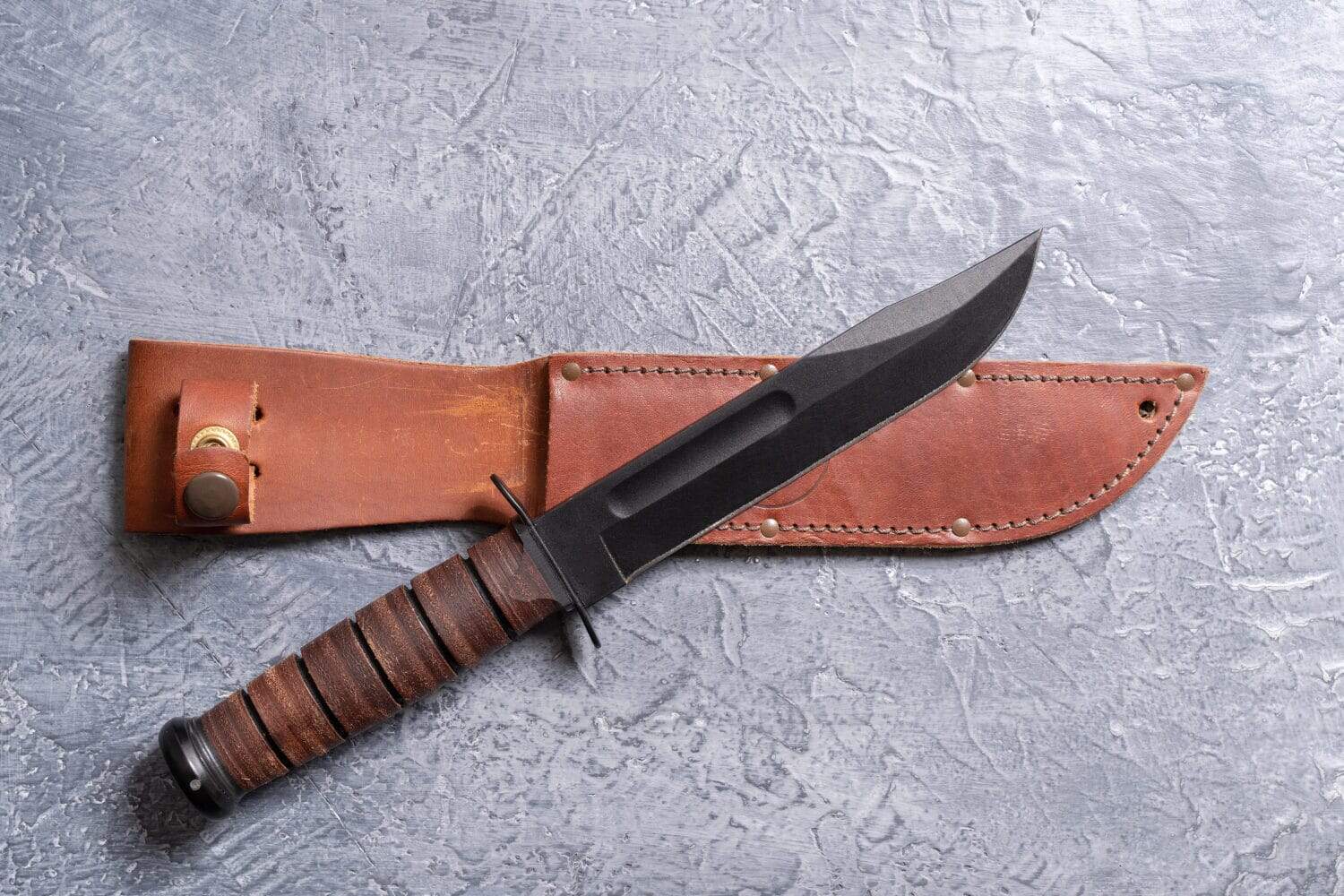
Ka-Bar Knife
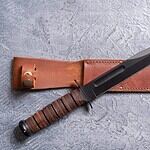
Even today, the Ka-Bar Knife remains a potent symbol of weapon technology in World War II. Earlier iterations had a brass finger guard, but soldiers complained of its limited movement. Once the Ka-Bar entered the arena, however, it became beloved for its multi-use capabilities. It remains the standard service knife for U.S. Forces well into the modern day.
Thompson Submachine Gun
Suffice it to say that the reputation of the Thompson submachine gun precedes itself. First popularized by Prohibition-era gangsters, the Thompson took on a new life during World War II. While it weighed just under 5 kilograms it could handle 50 or 100 round drum magazines. Over a million Thompsons were produced during World War II.
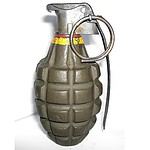
Mk 2 grenade
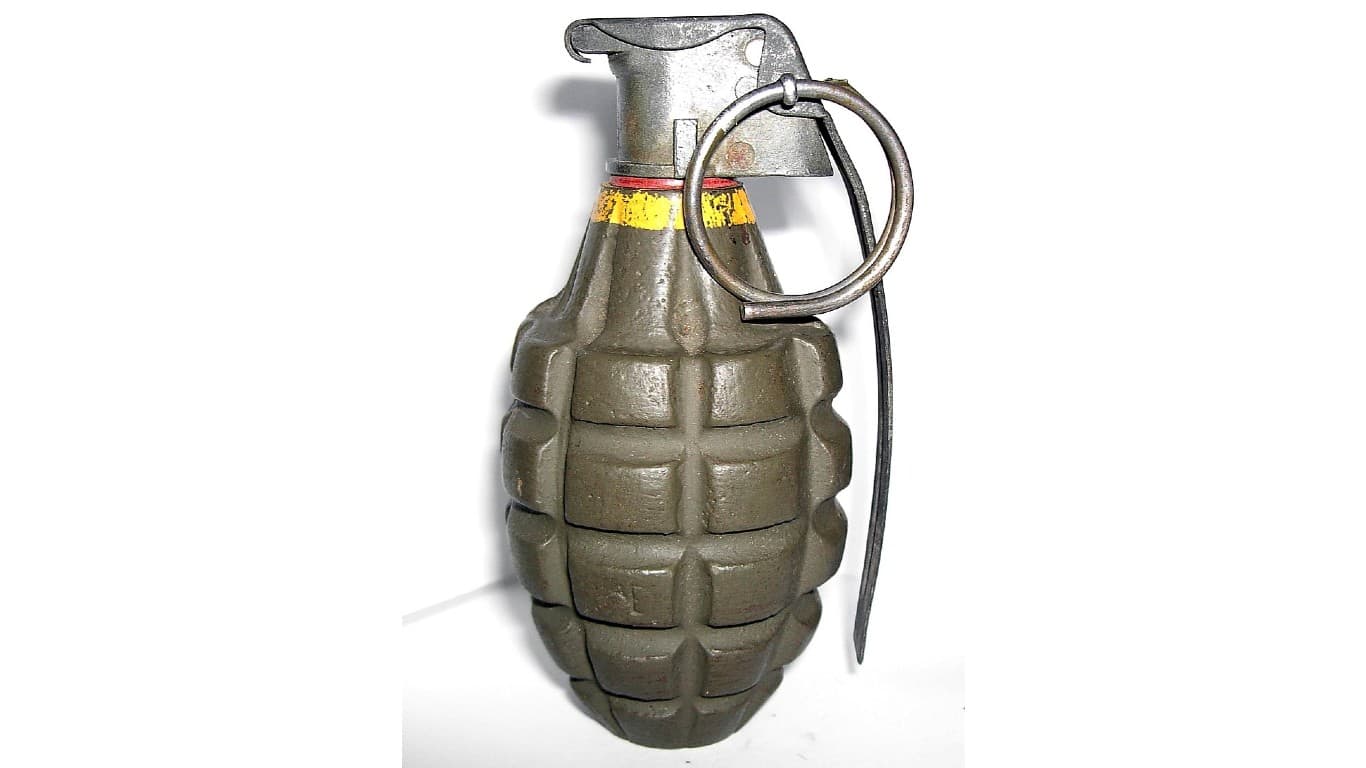
A trusty grenade with a unique shell design, the MK 2 Grenade has seen use in dozens of wars including World War II. It featured five second delayed fuse, a cast iron casing, and 40 knobs in a pattern on its shell. This led to the nickname of "pineapple grenade." Don't be fooled by the fruit name as it had serious combustive power.
M1 Garand
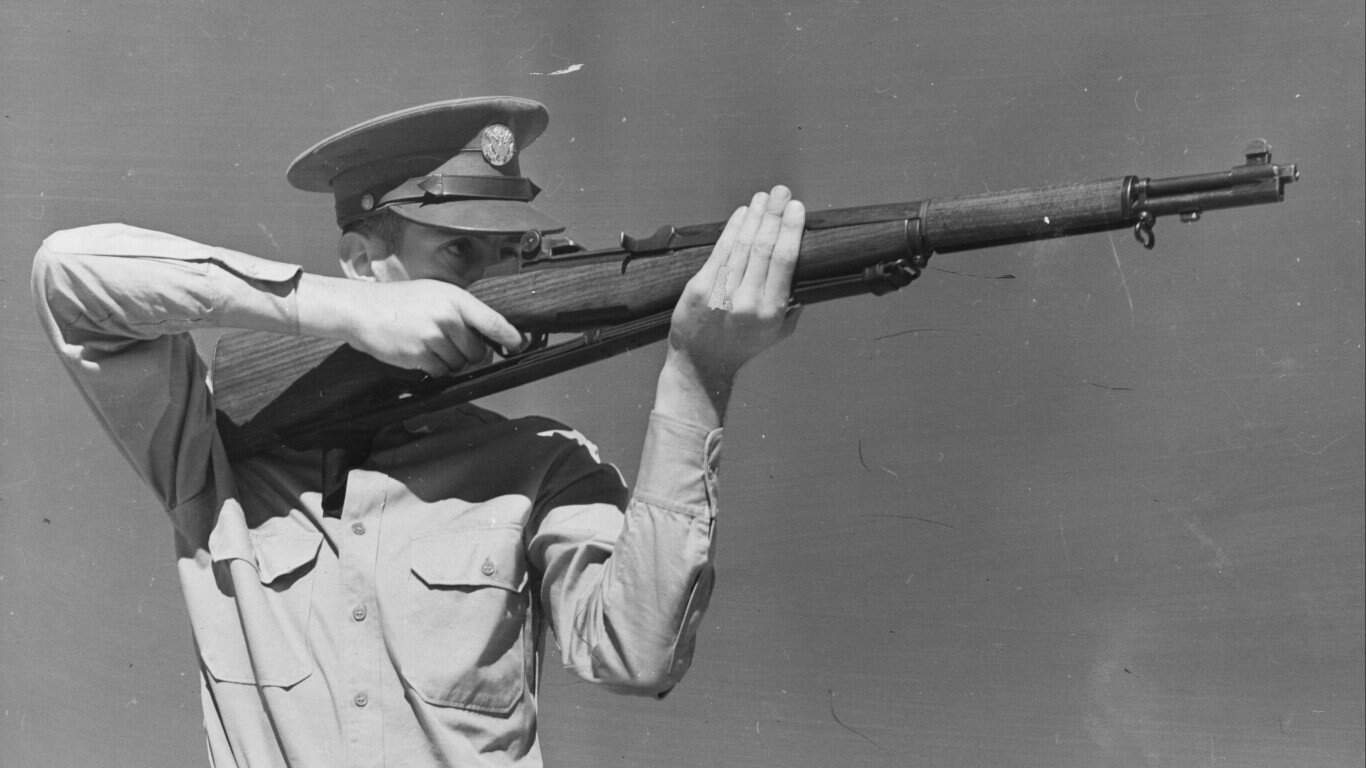
The M1 Garand Rifle was the standard service rifle for American troops during World War II. Designed by John Garand, the M1 rifle used expanding gasses to propel bullets like a steam engine. Once the United States entered the war, demand for the M1 grew exponentially. During peak production, the Springfield Armory was making 164 rifles an hour. General George Patton called it "the greatest battle implement ever devised."
Brandt Mortar
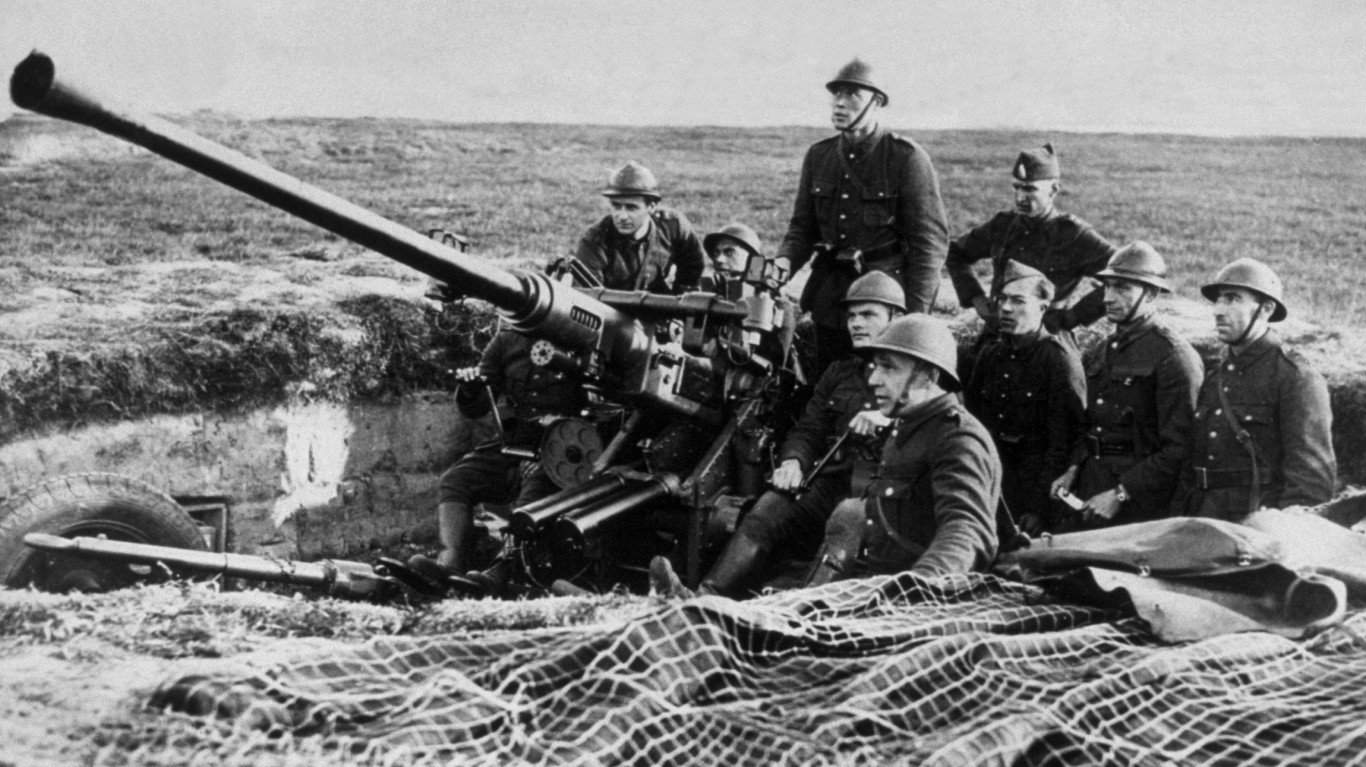
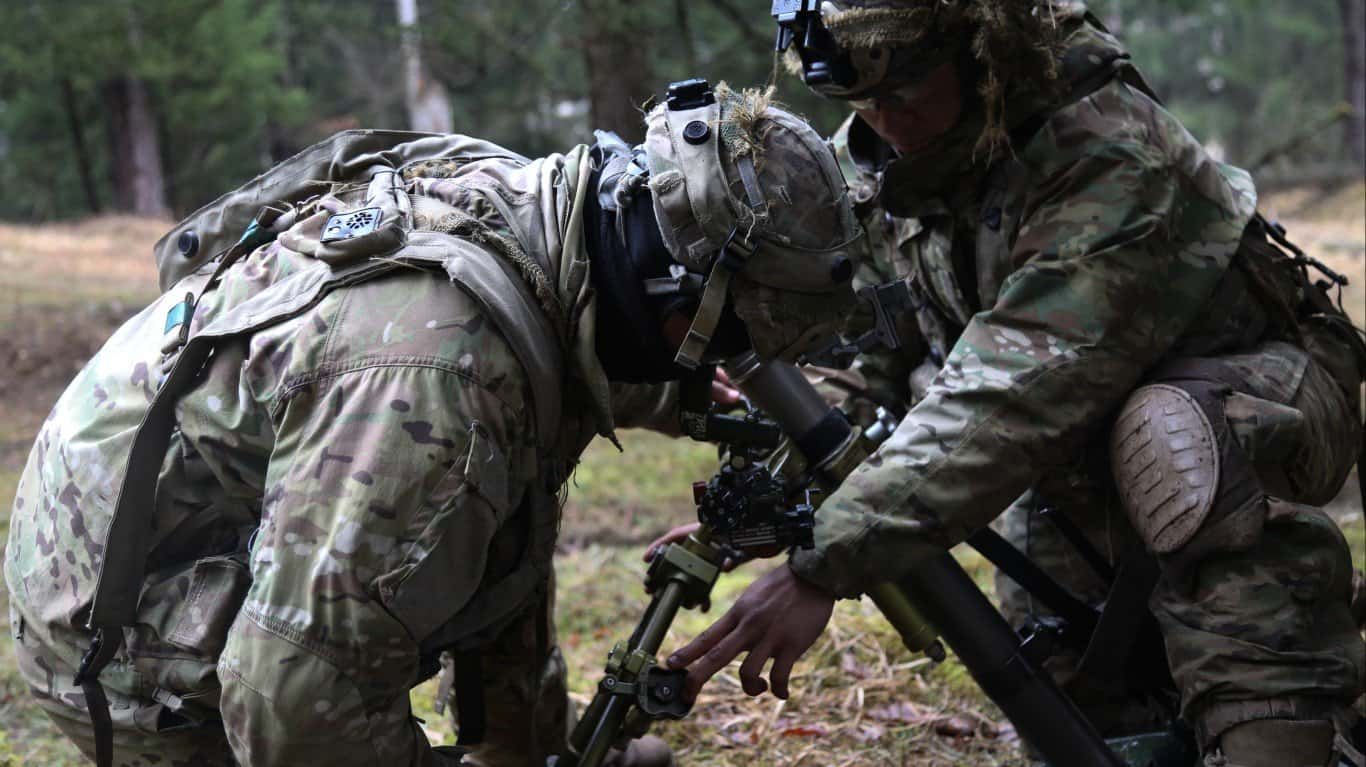
While the French suffered from strategic errors during the start of World War II, it made headway in the weapons department. French artist and metalworker Edgar Brandt created the Brandt mortar as inspired by the earlier Stokes mortar. With the ability to fire 7-pound shells up to 1.7 miles away, it quickly became the standard in mortar technology. Indeed, very little has been changed to the design, with modern mortars resembling Brandt's original innovation.
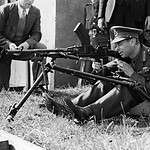
Bren Gun
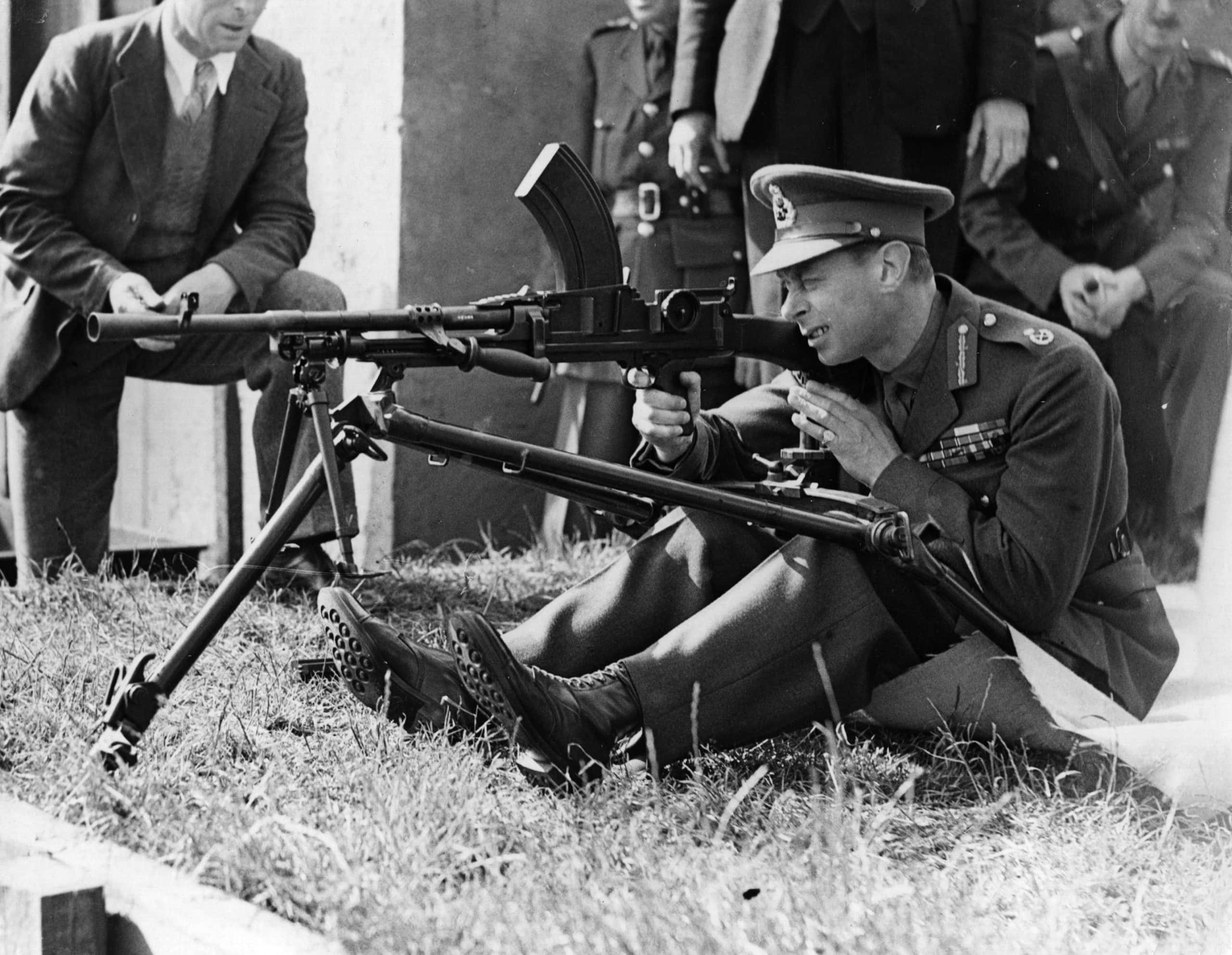
Not to be confused with the Sten gun, the Bren gun was another British-made machine gun. It was prized by British troops for its reliability and firepower. While other machine guns were belt-fed, the Bren featured a 30-round magazine. It saw a variety of uses during World War II including anti-aircraft and remains a potent symbol thanks to its unique top-side magazine. Even some American troops were known to use it. While the British produced the Sten, it was designed by Václav Holek and named after Brno, a Czech facility, and the location of the British Royal Small Arms Factoryin Enfield, United Kingdom.
Reising M50
The Thompson submachine gun grew to such popularity during World War II that the United States ran out. Enter the Reising M50, a submachine gun that featured a closed bolt and delayed-blowback operating system. They were made of higher quality parts than the Thompson, easier to build, and more accurate in semi-auto mode. Unfortunately, the design was easily corrupted by sand, dirt, and other battle ingredients.
Frangible Grenade M1
The Molotov cocktail embodies the notion of "if it ain't broke, don't fix it." Originally named by Finnish troops as an insult to Soviet Foreign Minister Vyacheslav Molotov, this makeshift incendiary device saw widespread use in World War II. When the United States entered the war, it was low on supplies. To bridge the munitions gap, it devised the Frangible M1 Grenade. M1 Grenade varieties were typically composed of chemicals like phosphorous and gasoline. It served as an affordable stopgap for keeping the enemy at bay.
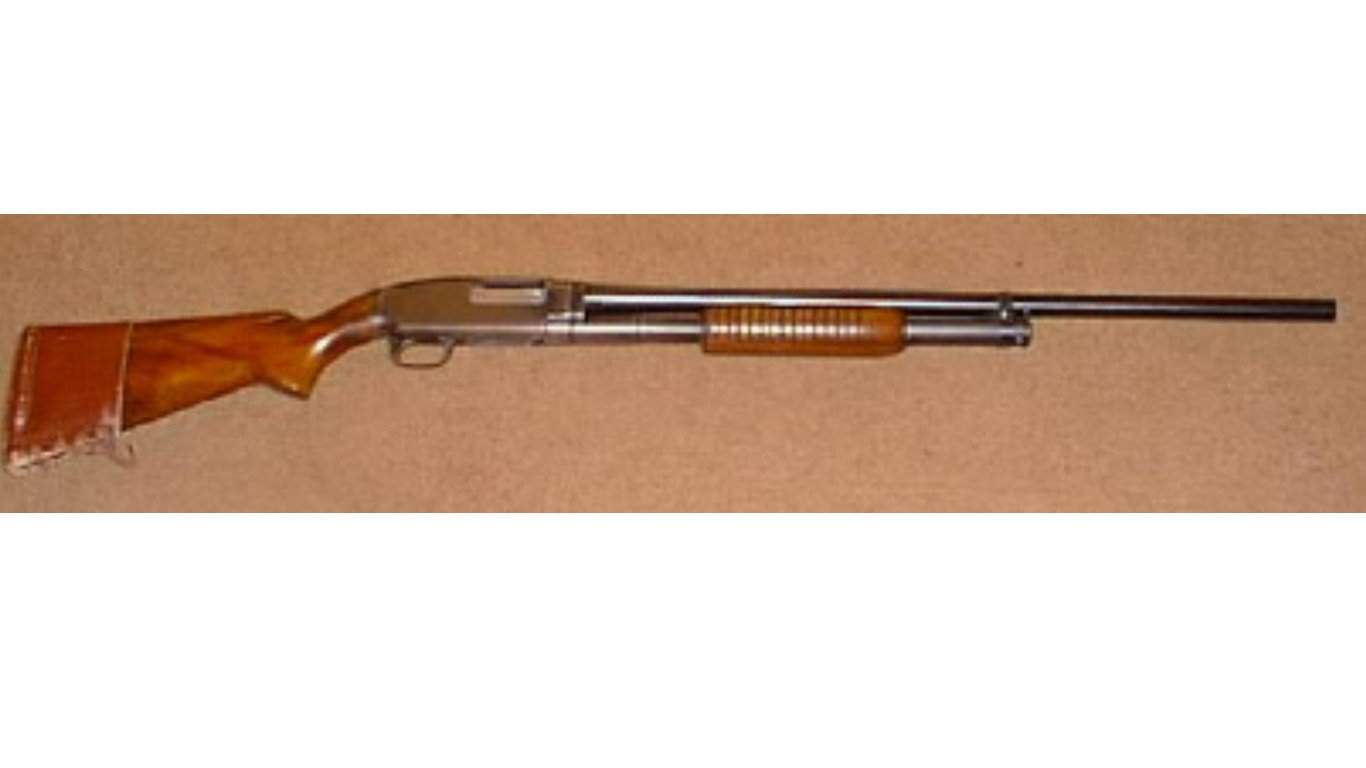
Winchester Model 1912
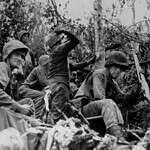
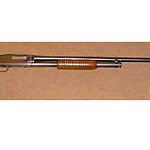
The Winchester Model 1912 became known as the perfect repeater because it set the standard for internal hammer, pump action shotguns. The United States used it extensively in World War II, ordering 80,000 Model 12 shotguns for its armed forces. It was used to the greatest effect, however, by the Marine Corps when taking Japanese-occupied islands in the South Pacific.
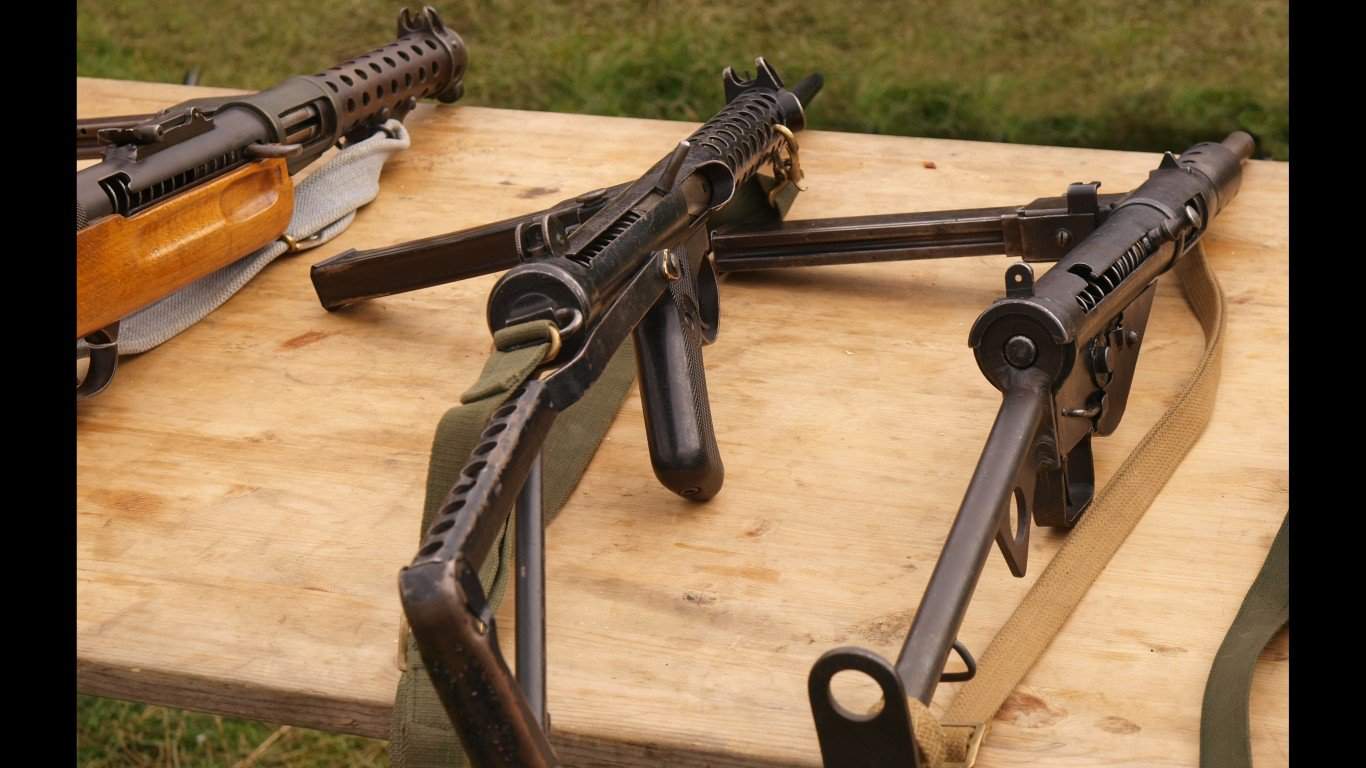
Sten Gun
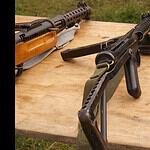
Sten guns were a family of British-made machine guns that saw widespread use in World War II. A blowback-operated submachine gun, Sten guns became incredibly popular thanks to their simple, cheaply-made design. At first, it was used by insurgency groups throughout Europe. By the end of the war, however, it became the second-most produced submachine gun used by Allied troops the world over.
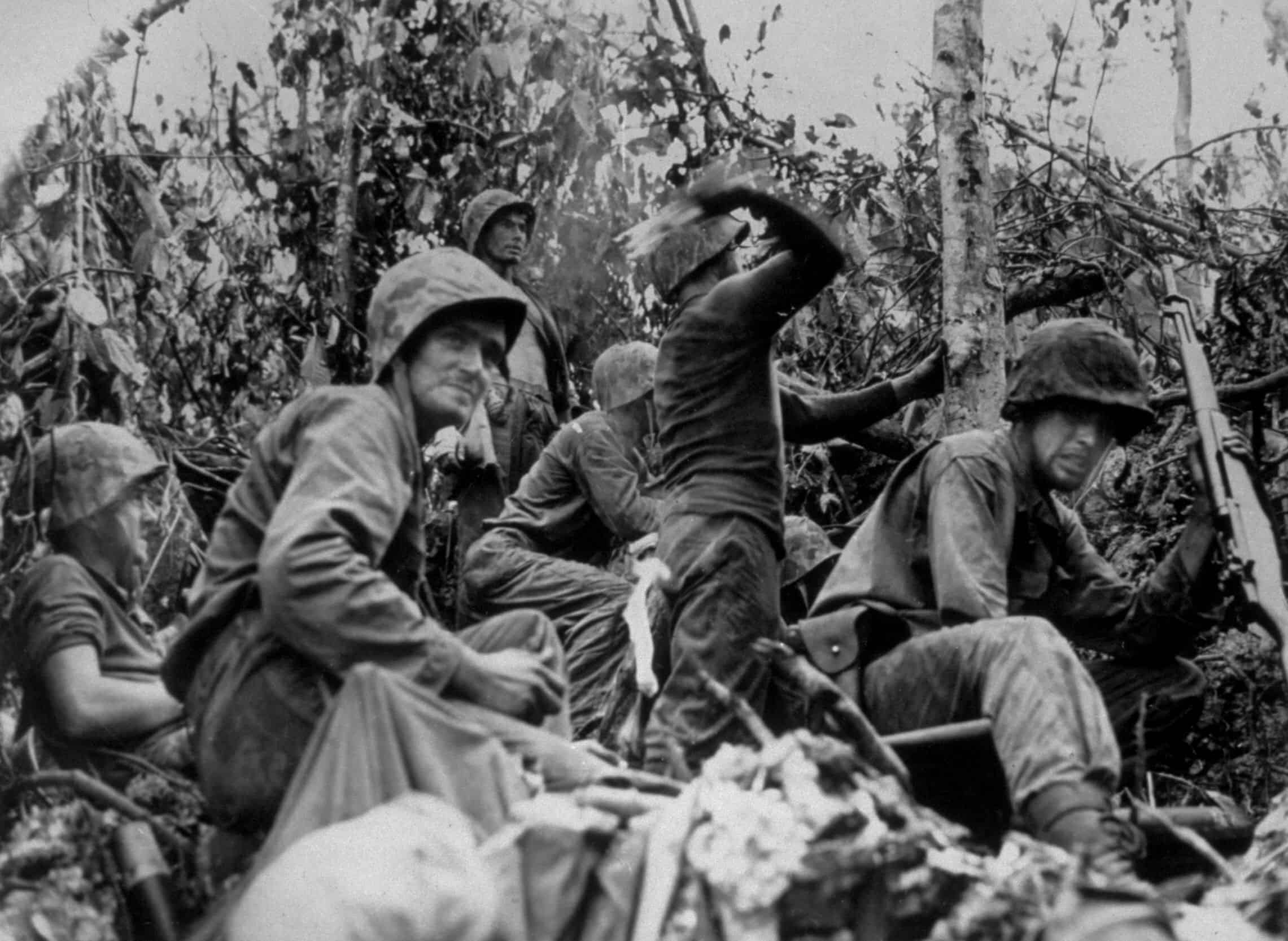
The image featured at the top of this post is ©Keystone / Hulton Archive via Getty Images