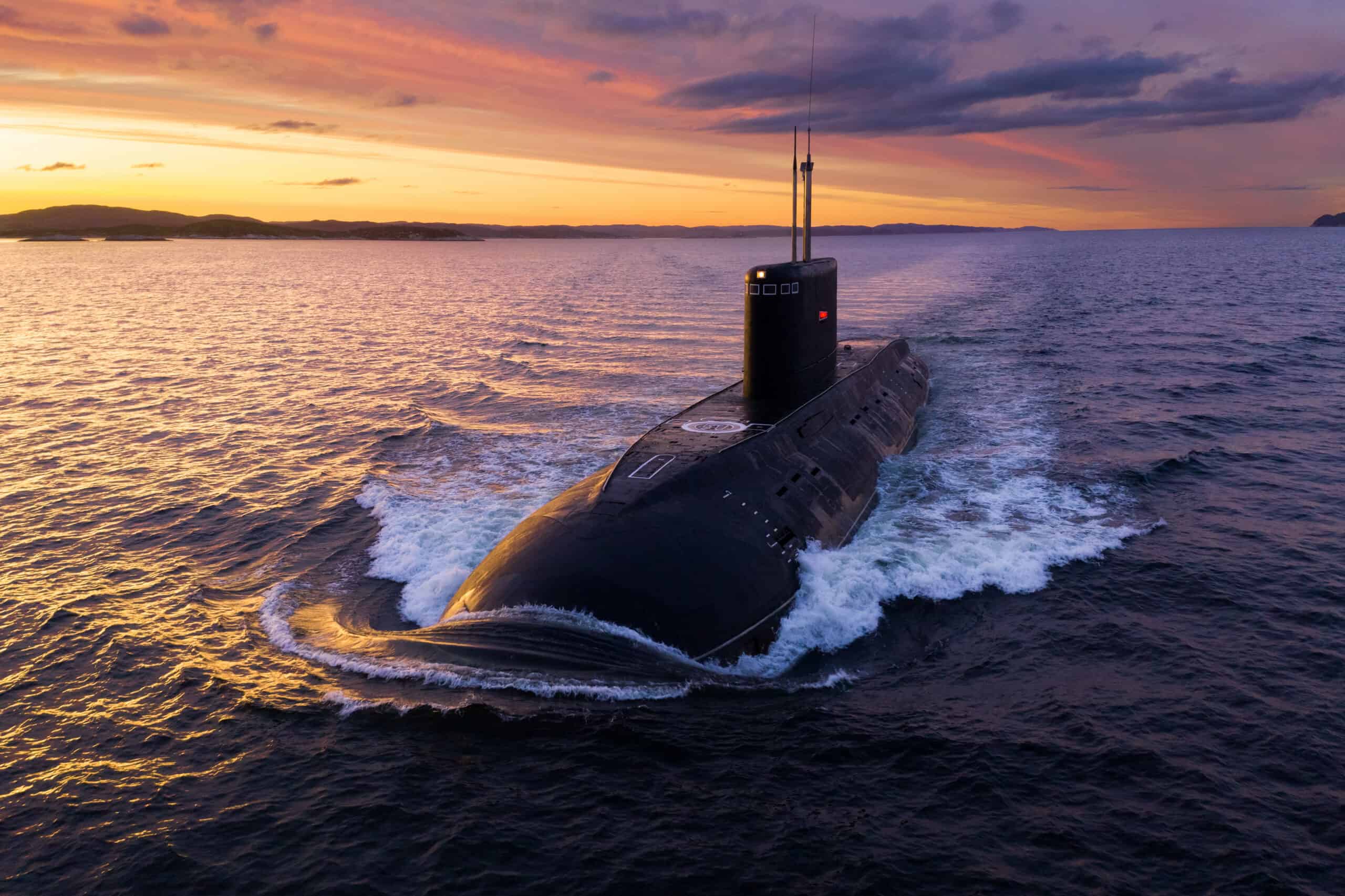

The introduction of the submarine to naval warfare reshaped planning and doctrine. While typical engagements relied on guns and precision, the submarine didn’t need to concern itself with being as well armed as a dreadnought or destroyer. It could strike unseen and disappear below the depths, leaving valuable supplies and expensive ships for the depths below. For the last century, we’ve seen the impact of submarines on naval warfare. The deadliest submarines aren’t simply those that caused mass casualties, but rather vessels that caused notable shifts in planning, combat doctrine, and more.
German U-Boats of the Second World War
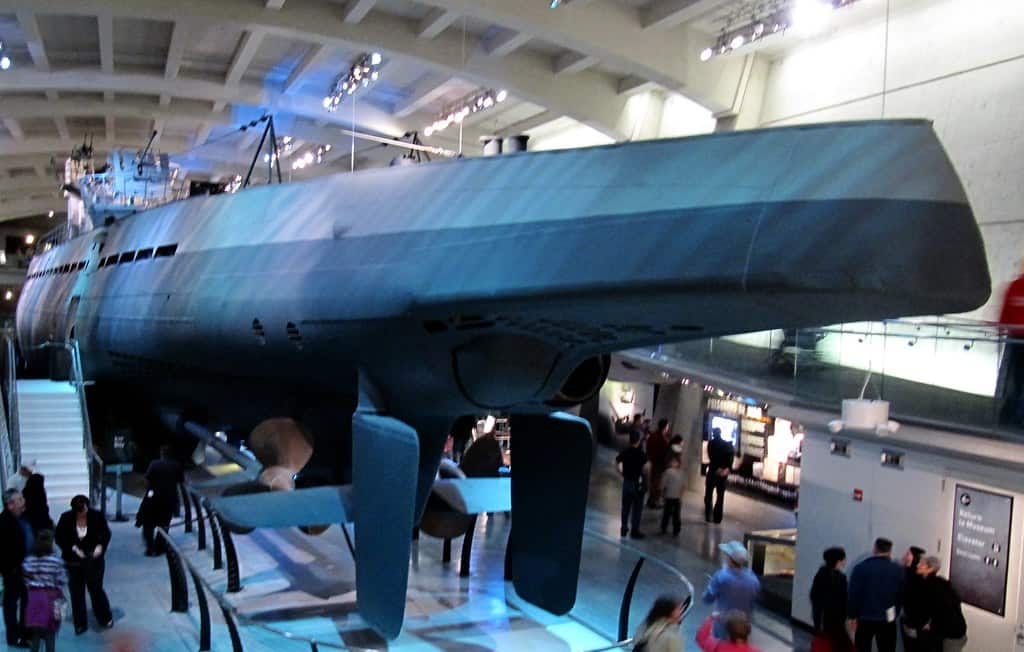
©"Type IXc U-Boat U-505" by kitmasterbloke is licensed under BY 2.0. – Original / License
You can’t start any discussion of submarines without a mention of the German U-boat fleet of the Kriegsmarine during the Second World War. Individual vessels had differing levels of success. However, the collective impact of the German U-boat fleet was a constant existential threat to the European Allies, especially as the Battle of the Atlantic raged on.
This is best seen with U-48, which was commanded by Herbert Schultze. From 1939 to 1941, it sank 51 ships, totaling over 300,000 gross register tons. A large part of U-48’s success came from the lessons learned in the Great War by German submariners. Aggressive tactics, experienced leadership, and a seeming lack of anti-submarine warfare planning by the Allies led to early repeated successes. U-48 never sank a major warship, as others we’ll cover did. It led to devastating losses of food, fuel, and other war materials to the British.
By 1942, the U-boat campaign in the Atlantic had reached its peak. The Kriegsmarine was sinking vessels faster than the Allies could replace them. This led to the reintroduction of the convoy system, with warships escorting merchant and cargo vessels to their intended destinations. The development of sonar, depth charges, and long-range carrier aircraft also began to hinder the Kriegsmarine’s planning. The German U-boats might not have been the most technologically advanced, but they forced a strategic crisis where the war could’ve been lost without a shift in tactics.
The USS Tang
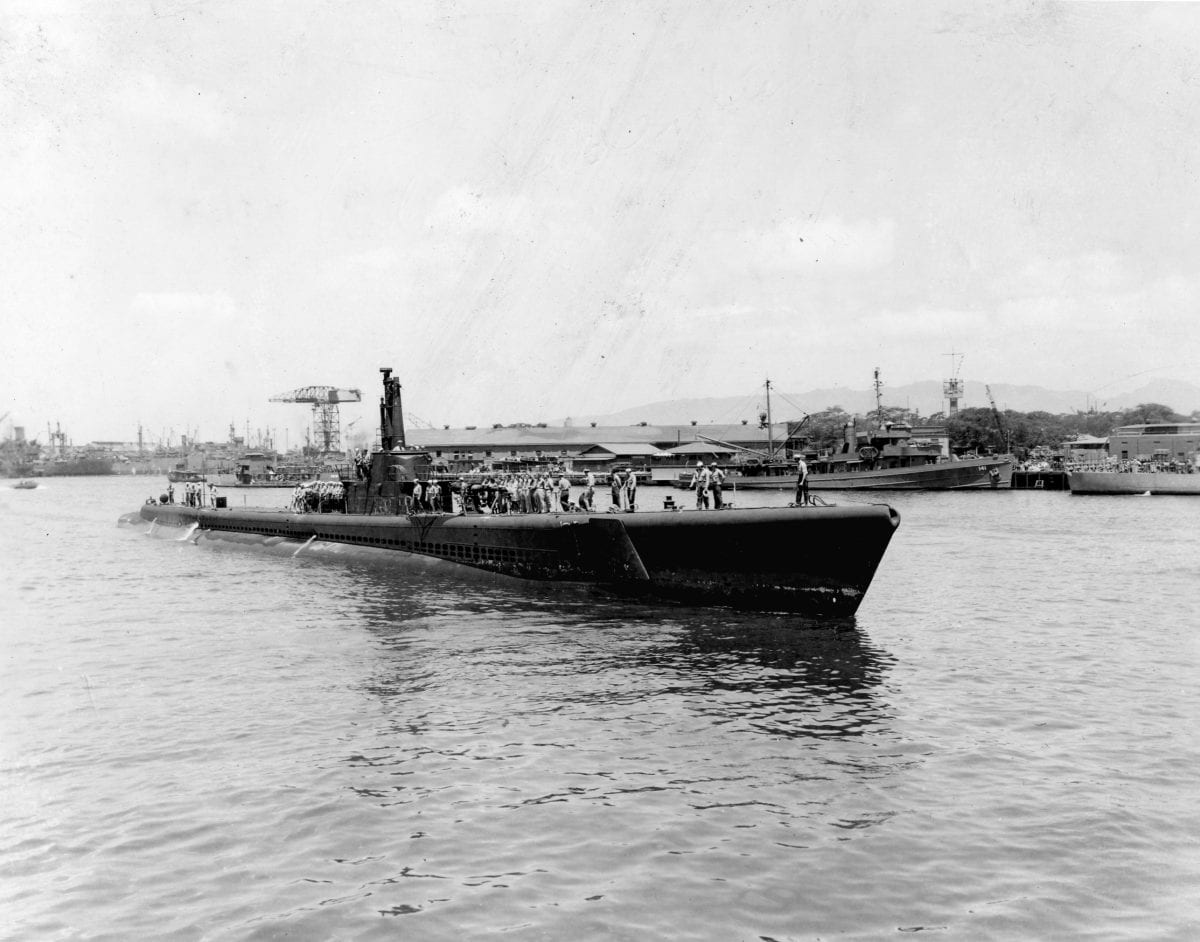
©U.S. Navy photo 80-G-231022 / Public Domain – Original / License
Three years after the United States entered the Second World War, the US Navy would commission its most effective submarine: the USS Tang. The USS Tang had a short career, lasting just five patrols before being lost. However, during those five patrols, it proved to be a menace to all Japanese ships, strangling the island nation of much-needed supplies as the war entered its final years.
Over 5 patrols, the USS Tang sank 33 ships, totaling around 116,000 tons. Like the U-48, the Tang relied on aggressive attacks, night raids and would often venture deep into enemy territory to strike. This was in stark contrast to the early years of America’s involvement in the war, where submarines were often ineffective and hindered by defective torpedoes and conservative tactics. If anything, the USS Tang represented a shift in American submarine tactics.
Sadly, the Tang would meet its end in October 1944. A circular run of one of the vessel’s torpedoes struck it, sending the vessel to the depths, with only 9 survivors escaping the USS Tang as it sank. They were captured by the Japanese frigate CD-34, remaining at a Japanese prison camp until the end of the war.
The Typhoon-Class
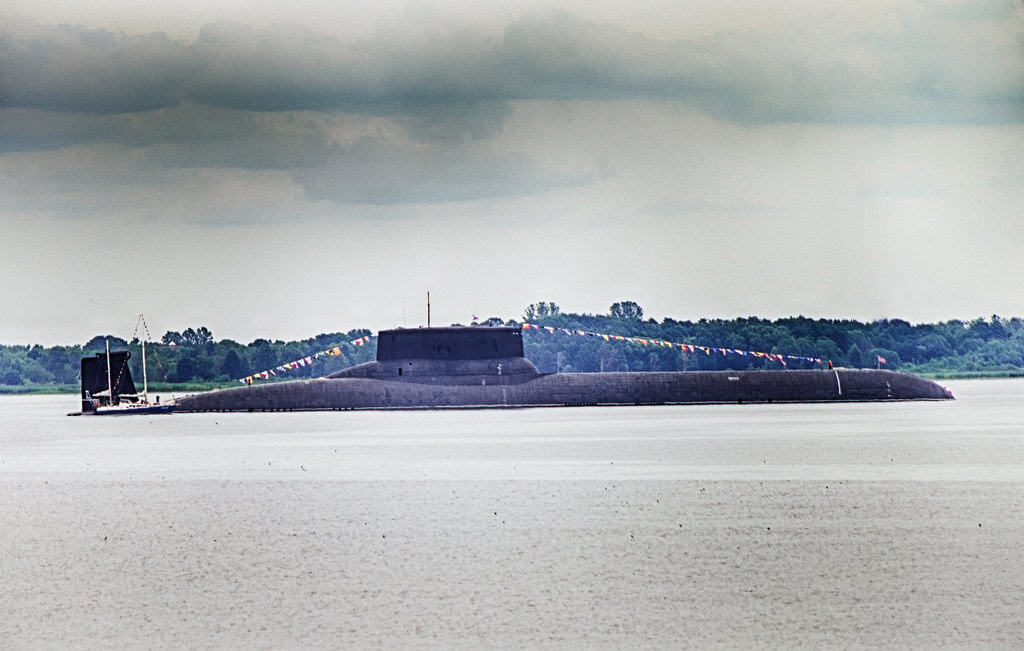
©"Russian submarine Dmitriy Donskoi (TK-208) in Kronshtadt. ПЛАРБ 'Дмитрий Донской' в Кронштадте." by Peer.Gynt is licensed under BY-SA 2.0. – Original / License
World War 2 ended, leaving many shattered nations with little recourse but to rebuild and persevere onward. Few nations bore the brunt of vicious fighting as the Soviet Union, which lost an estimated 27 million people, when looking at both the military and civilian populations. Oddly, they emerged from the war as a honed military force, raring to take the fight to the Japanese before the nation surrendered to the United States. As the Cold War started and the Iron Curtain was drawn across Eastern Europe, the Soviets got to work with the next generation of fear when it came to submarine warfare.
Project 941 Akula, better known in the West as the Typhoon-class, was among the largest submarines to ever take to sea. 7 of these vessels were planned, with only 6 being completed. 6 of these were enough to spell annihilation for the entire planet, however, as they could trigger a nuclear war all by themselves. Each Typhoon-class submarine could be outfitted with 20 RSM-52 nuclear missiles. Submarine-based nuclear missiles represented a far more potent existential fear compared to the dedicated missile silos across both the Soviet Union and the United States.
Based on armament alone, the Typhoon-class had more destructive power than every single naval vessel fielded during the Second World War. Submarine-based nuclear missiles were a potent means of enforcing mutually assured destruction. The Soviets might not get the first strike off in the event of a hypothetical Third World War. However, their second strike would guarantee that the Western Allies regretted ever letting nuclear arms fly.
USS Nautilus
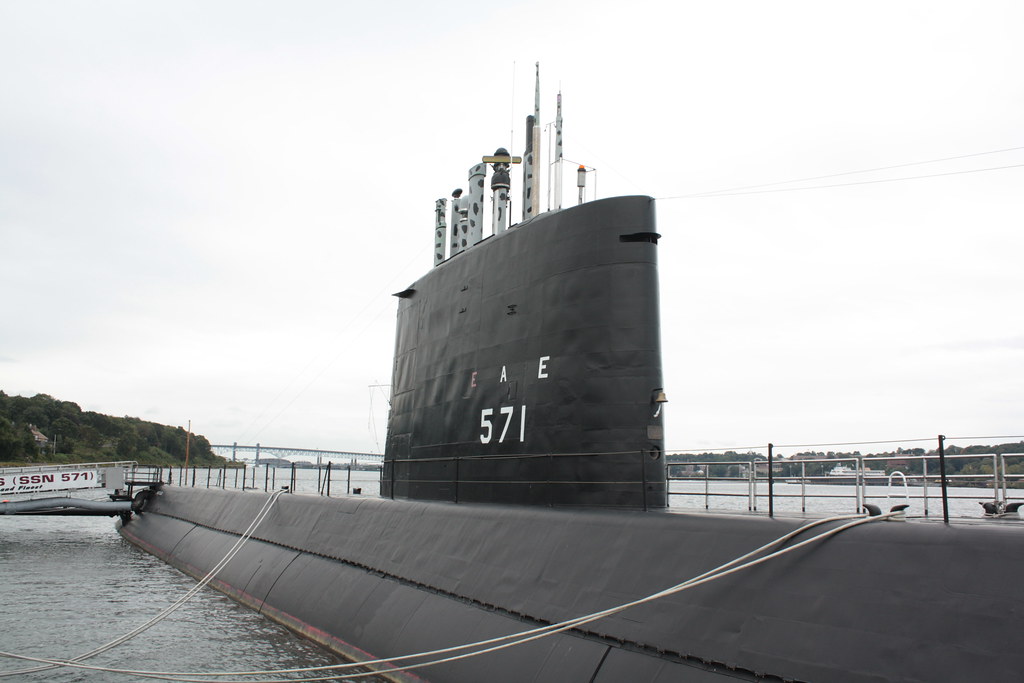
©"USS Nautilus (SSN 571)" by Andrew Kalat is licensed under BY-ND 2.0. – Original / License
Authorized in 1951 and completed in 1954, the USS Nautlius (SSN-571) represented a first step toward the fearsome submarines we see today. It was the first submersible to make use of a nuclear reactor, giving it unprecedented endurance and speed compared to the diesel engines that dominated the Second World War. The Nautlius could stay submerged for weeks on end, traveling beneath the waves undetected until ready to strike. While the Soviets were quick to develop their own nuclear-powered submarines, the Nautilus represents a marked shift in submarine warfare.
Instead of being a plague to shipping and coastal defenses, the submarine became an invaluable strategic asset. They were capable of operating globally, effectively functioning as an independent strike force that was freed of fuel needs. The Nautilus itself was rather modestly armed. It only came with six torpedo tubes, a paltry offering compared to later submarines developed by the United States.
That said, what the Nautlius represents is a noted shift in submarine doctrine. Just about every modern submarine can trace its lineage back to the USS Nautilus. It might not have been the deadliest submersible to take to the water, but what it represents was a noted shift in how nations developed these vessels. It serves as an important stepping stone to modern submersibles.
Imperial Japan
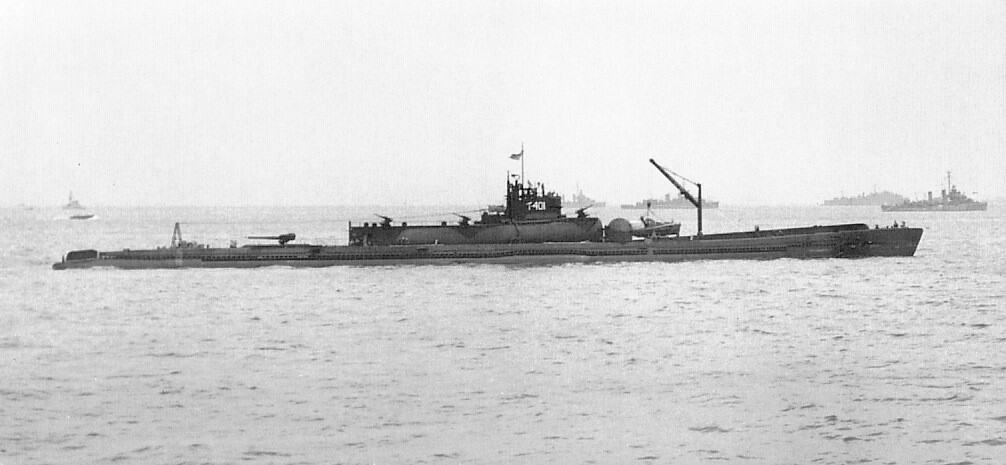
Japan entered the Second World War with one of the most technologically advanced naval forces in the world. Its submarines were potent, often faring better than their counterparts in the Kriegsmarine. Conditions were certainly better, as Western observers often noted the U-boats were fetid, squalid vessels that were miserable for the crews. Japan’s own naval doctrine would hinder the effectiveness of its submarine fleet.
The I-400-class was a final roll of the dice from the Imperial Japanese Navy, with 3 of these massive vessels being completed a month before the end of the war. While they never saw direct combat, they were festooned with armament and functioned as a small aircraft carrier. The plan for these vessels was to travel undetected beneath the water to the American West Coast, surface and launch their planes, and then submerge before they could be detected.
While no nation has developed a concept similar to the I-400-class in the years since the end of World War 2, it showed the flexibility of the submarine. They weren’t intended solely for disrupting enemy shipping or taking out war vessels. They could serve as a potent strike force that could directly attack the enemy mainland undetected. The I-400-class remains one of the war’s great hypothetical situations, as the planned 18 vessels could’ve been a major threat to the American war effort if completed.
HMS Conqueror
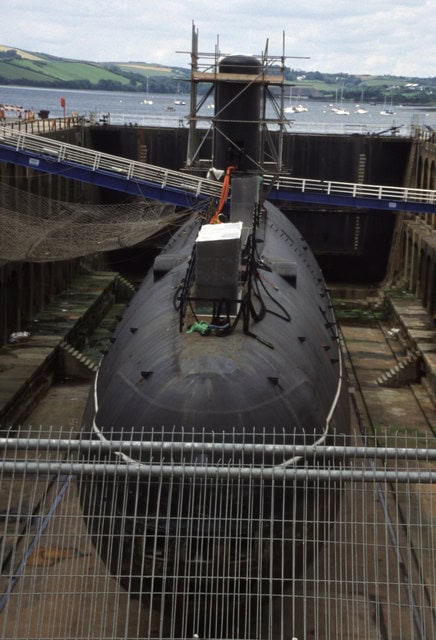
©"HMS Courageous – geograph.org.uk – 604832" by Chris Allen is licensed under BY-SA 2.0. – Original / License
Modern warfare hasn’t seen the full brunt of the submarine’s advances, given that peer conflicts between advanced nations are a relative rarity these days. That said, we do have at least one example of a successful attack from a nuclear submarine in the modern era. The 1982 Falklands War could’ve easily swung in Argentina’s favor.
The HMS Conqueror, a nuclear submarine completed in 1971, was able to successfully sink a warship, hindering the Argentine war effort and effectively crippling its surface fleet for the remainder of the war. The General Belgrano was formerly the USS Phoenix, and was one of the main vessels at the forefront of the Argentine war effort. Its sinking by use of conventional torpedoes was only the second occurrence of a modern submarine sinking a war vessel since the Second World War, with the other being the INS Khukri, which was sunk by the PNS Hangor during the 1971 India-Pakistan War.
No other Argentine vessel would openly commit to combat in the water after the Belgrano’s sinking. The threat represented by just a single submarine was enough to bring a navy to its knees. A single submarine effectively multiplied the threat of the British navy, allowing British vessels to more ably take to the Maritime Exclusion Zone established. The Belgrano would lose 323 men in the attack, 321 crew members, and 2 civilians who were on board the vessel at the time of the attack.
The Psychological Dimensions of Submarine Warfare
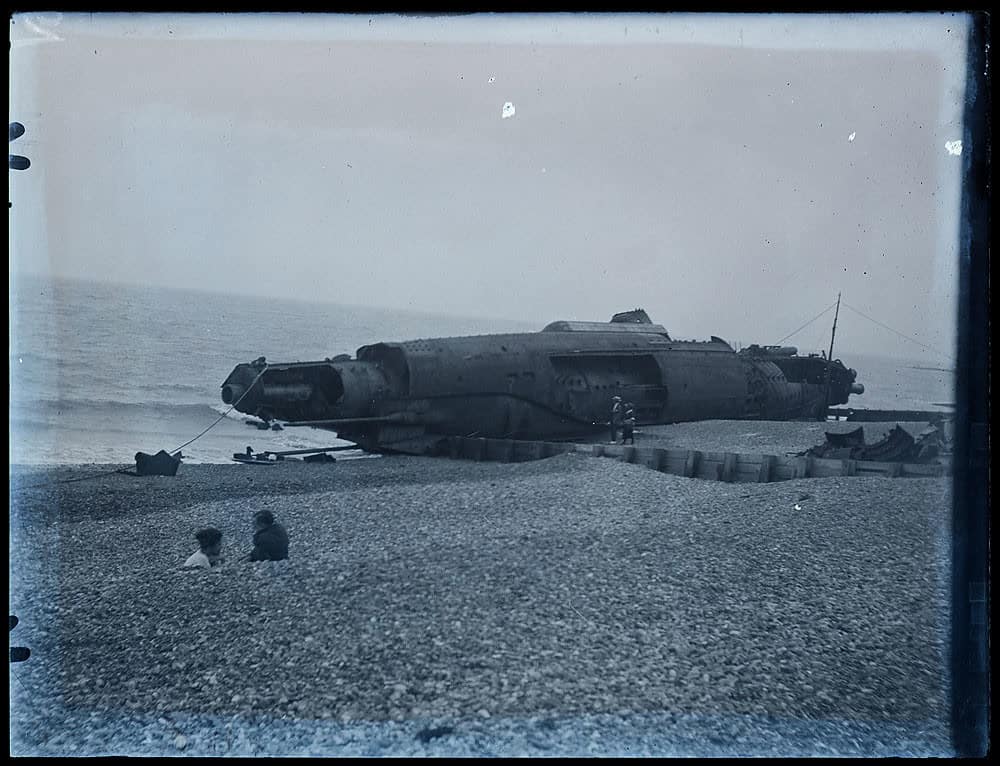
©"Beached submarine, possibly German U-Boat U131 at Hastings in 1918" by whatsthatpicture is licensed under PDM 1.0. – Original / License
As we’ve covered a bit in today’s post, the biggest impact of submarine warfare isn’t stealth, armament, or even speed. Instead, it’s psychological. During the First and Second World Wars, merchant ships lived in constant fear of a submarine strike. The simple act of taking a vessel out to sea to deliver supplies could result in the loss of entire crews and valuable supplies. The convoy system and sonar were steps in the right direction, but submarines could remain undetected until it was time to attack. The sheer stress of a submarine being noted in the water was enough to send any merchant vessel into a panic.
It wasn’t all roses for the submariners either. Confined spaces, long and grueling patrols, mechanical failures, and the development of anti-submarine weaponry like depth charges meant that survival was never guaranteed. We talked a bit about how dangerous the Kriegsmarine’s U-boats were. However, their casualty rate was among the highest of any German branch in the Second World War. Of the estimated 41,000 submariners serving in the Kriegsmarine, it’s thought that around 30,000 died and a further 5,000 were captured.
This gives a casualty rate of 75%, one of the most catastrophic for any service branch or front during the entire war. While modern submarines are more able, technologically advanced ships, that doesn’t account for just how physically and mentally demanding the tours of duty can be. Sure, you might get all the modern amenities you’d expect from a developed nation’s naval forces, but months away from home, where a mechanical failure can lead to complete loss of the vessel and crew always looms overhead.
Conclusion
The deadliest submarines in history aren’t merely defined by raw kill counts or tonnage sent to the bottom of the sea. We look at how they’ve reshaped the confines of modern warfare instead. German U-boats nearly starved the United Kingdom into surrender. The USS Tang was able to effectively cripple Japanese shipping just over the course of 5 patrols. That isn’t even getting into the existential threat posed by nuclear missile-armed submarines of the modern era. Their deadliness lies in what they represent and the enduring spectre they cast over any modern navy’s doctrine.
The image featured at the top of this post is ©Aleksandr Merkushev/Shutterstock.com