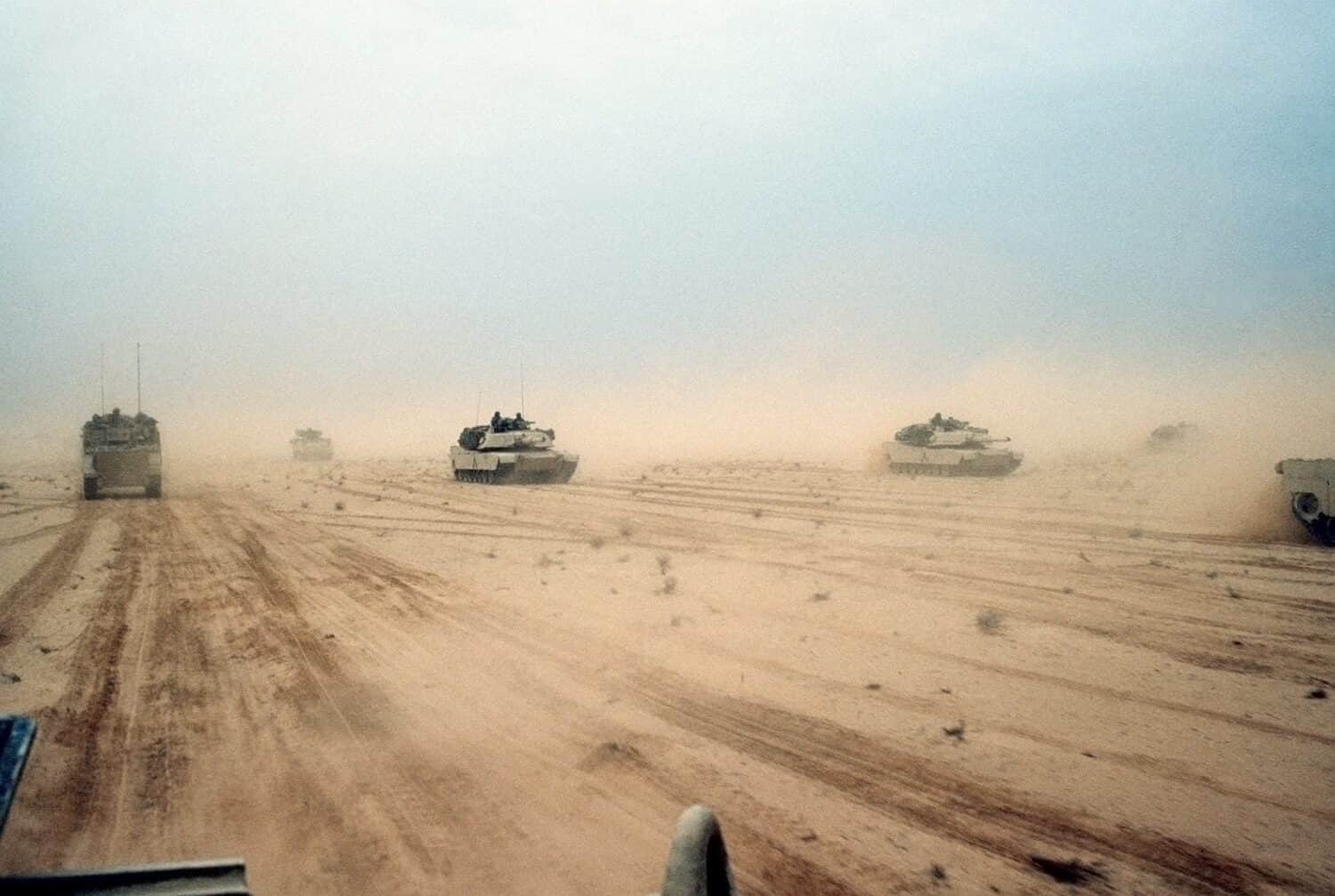

Armored vehicles are sort of the ultimate bulwark when it comes to any sort of military ground operations. The First World War brought industrialized warfare to the fore, resulting in the opening years having absolutely catastrophic casualties for all sides involved. By 1916, a change of sorts was needed, and the first battle tanks rolled onto the battlefield. Compared to something like an M1 Abrams, these were rather crude machines. That said, we’re going to take a closer look at some of the best of the best when it comes to armored vehicles, at least within a historical context.
World War 1
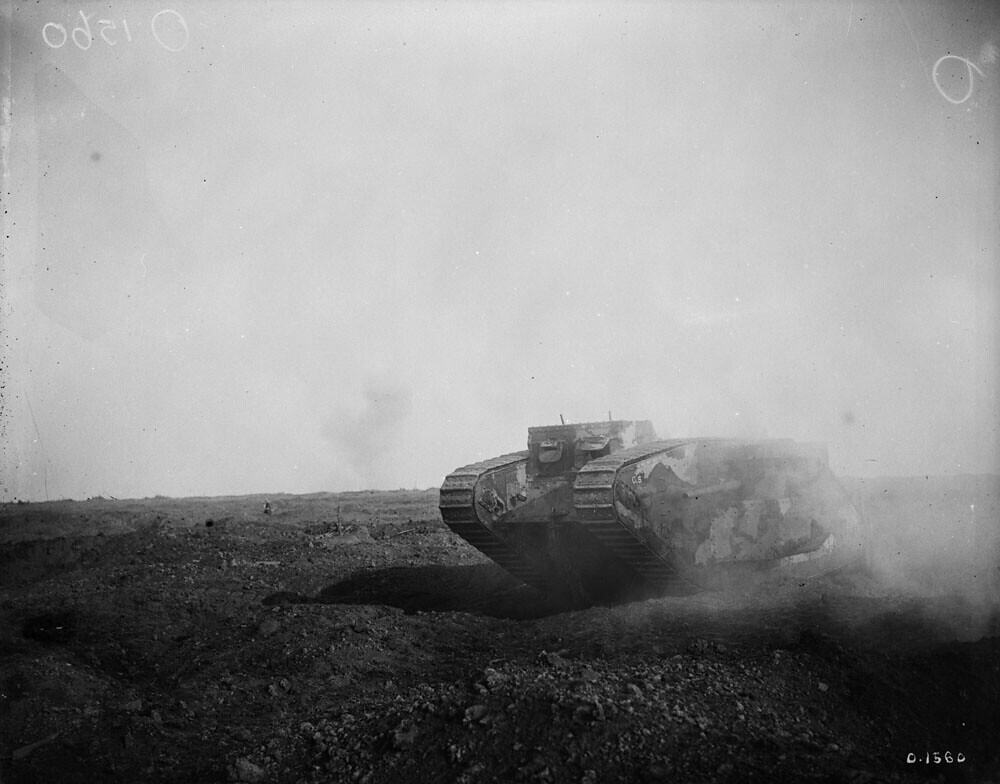
©"A Mark I tank in action, July 1917 / Un char Mark I en marche, en juillet 1917" by BiblioArchives / LibraryArchives is licensed under BY 2.0. – Original / License
Over a century has passed since the First World War drew to a close, and along with it, the first true instance of armored vehicles dictating the flow of battles. Fighting on the Western Front was static by 1914, during the first year of the war. Horrible casualties led to a need for a definite change in how trench warfare, defensive machine gun usage, and coordinated artillery strikes were navigated. It was to the point where gains of yards would have tens of thousands of men dead or wounded in the aftermath. In 1916, that changed with the British Mark 1 battle tank.
Truthfully, it looks more like a piece of farm equipment than a proper military vehicle. However, what it brought to the battlefield can’t be understated. Razor wire was trivial for the caterpillar treads of a tank to cross. Machine gun fire that raked the infantry to shreds simply spalled against the armored exterior of the Mark 1. It wasn’t without fault by any means, as it was a rather temperamental vehicle to keep running. It wasn’t fast or particularly reliable, for that matter, needing frequent maintenance and still breaking down.
That said, it changed the way wars were fought. Every nation would rush to develop its own battle tanks and other armored vehicles. It would show in spades by the time the next war started, and where armored doctrine began to be forged in earnest.
World War 2
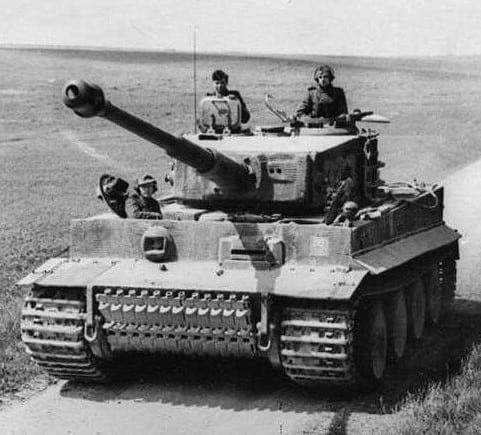
©"File:Bundesarchiv Bild 101I-299-1805-16, Nordfrankreich, Panzer VI (Tiger I).2.jpg" by Scheck is licensed under BY-SA 3.0. – Original / License
By 1939, Europe, and the rest of the world for that matter, was engaged in the next World War. World War 2 brought with it 20 years of engineering experience, advances in metallurgy, and differing approaches to how armored vehicles should be best utilized on the battlefield. To this end, we’re going to focus on three battle tanks of the era: the T-34, Tiger I, and M4 Sherman.
The T-34 has many of the hallmarks of what makes a modern battle tank such an effective force multiplier on the battlefield. It came equipped with thick sloped armor, which enabled it to take frontal shots without the fear of penetration. It featured wider tracks, which certainly helped in the muddy springs of Eastern Europe. The T-34 also came with a 76mm cannon, later upgraded to an 85mm. This sounds great on paper, but you also have to consider that the Soviet Union was able to churn out the T-34 at an astonishing rate, one which the Germans couldn’t hope to match.
Speaking of the Germans, we need to touch on the Tiger I, a tank so formidable that it became a nightmare for any seasoned tank crew to deal with. These came equipped with an 88mm cannon, which was powerful enough to lay waste to any enemy tank. Like many of the German engineering efforts of the war, it was a fine example of what a tank could be in a vacuum, but it didn’t account for the realities of Germany’s wartime economy. These were expensive, maintenance-hungry tanks. They might be spoken of in awed tones by pop historians, but the T-34 and M4 Sherman won the war, not the Tiger I.
Finally, the M4 Sherman had a lot going for it. It was cheap, reliable, and readily produced. It lacked the armor to stand up to the guns of the Tiger I, as even a frontal shot on a base model could penetrate and result in a crew kill. British engineers would later modify the Sherman to better fit the rigors of combat on the Western Front. The uparmored and upgunned M4A3E8, or Easy Eight as it is better known, came with a potent 76mm gun and improved armor. It might not have measured up to the likes of the German Tigers, but the Americans could pump out these tanks with ease.
The Cold War
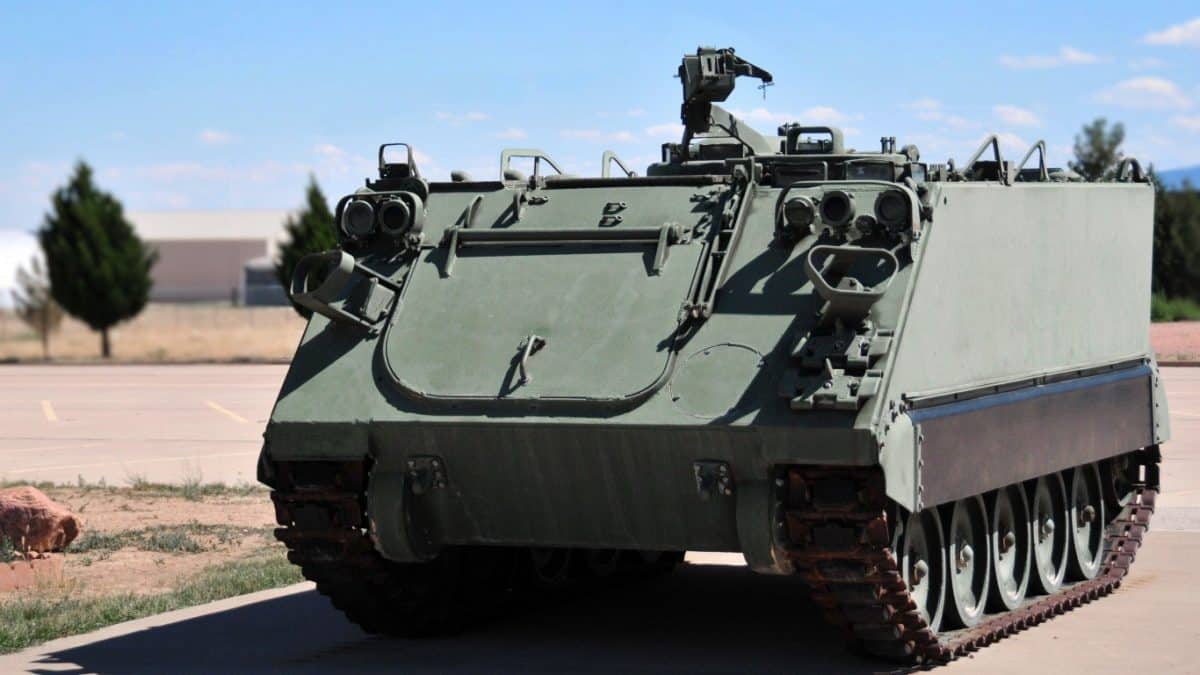
©mtcurado / iStock via Getty Images
The Cold War started essentially right as World War 2 came to a close, with the Western allies and the Soviet Union scrambling to claim parts of Europe to retain their respective spheres of influence. Of note is the shift in how armored vehicles were used. Tanks were still a primary focus, as a hypothetical war with the Soviet Union would rely heavily on armor and airpower before nuclear arms started flying. It also marked the development of more refined takes on armored cars, with armored personnel carriers being a common sight on the battlefield.
The M113 is probably the best example of these. It doesn’t particularly excel at being heavily armored, as a 7.62mm rifle can punch through the hull at close range. However, it didn’t need to be a heavy battle vehicle. Its purpose was to get a squad of troops from point A to point B with minimal casualties, something it accomplished with relative ease. They might not have been unstoppable in the sense of shrugging off enemy fire, but cheap, versatile armored vehicles certainly have a place in military planning.
This is contrasted with the Israeli Merkava, debuting in 1979 as a direct result of the lessons learned during the Six Day War and the Yom Kippur War. The Merkava is unique among modern battle tanks when it comes to overall design philosophy. The engine is placed at the front of the tank, rather than the rear, as conventional wisdom might lead you to believe. This was done to provide additional armor to the crews. The thought behind the Merkava’s design wasn’t to be a better, more capable battle tank than the Warsaw Pact vehicles fielded by Israel’s many enemies. Instead, it was to preserve the lives of the tank crew by any means necessary. A tank is easy to replace; a trained, veteran crew is invaluable.
The Modern Era
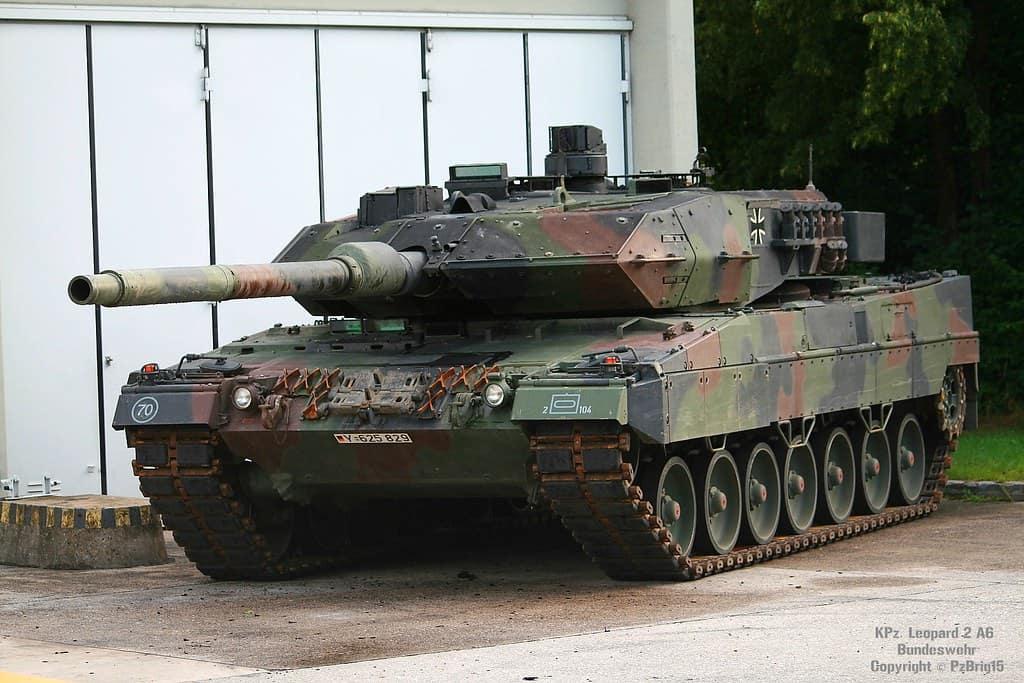
©"Kampfpanzer Leopard 2 A6 ( Bundeswehr)" by Combat-Camera-Europe is licensed under PDM 1.0. – Original / License
As you might imagine, the evolution of armored vehicles hasn’t stopped. The modern era has seen many leaps forward with protection, capabilities, and adaptation to differing missions. This is readily evident in something like the development of MRAPs. Throughout most of the modern era, we can look at light transports as being rather thin-skinned. They aren’t particularly adept at shielding occupants from small arms fire, let alone something like an IED. The MRAP was designed with crew survivability in mind.
They might not be great at deflecting small arms fire, but they’re designed to withstand the blast from mines and improvised explosives alike. The result is a vehicle that turns what might’ve been a total crew kill into a survivable incident. They aren’t fast, light, or inexpensive, but lives are far more costly to replace than mere machinery.
One tank that has sort of set the pace for the modern era is the German Leopard 2. It has a little bit of everything going for it. It’s nimble, reliable, and comes with all the modern amenities you’d expect of a modern German tank. This is a far cry from the wonder weapons of World War 2, as the Leopard 2 is a balanced, affordable take on a main battle tank. Given its popularity with nations all around the world, it isn’t a surprise to see it as one of the more influential branches of modern tank design.
Conclusion
Armor has gone from being little more than a metal-covered tractor meant to withstand machine gun fire to a vital part of any military’s planning. Some hard lessons have been learned on how to effectively utilize armor. Given recent developments in the Russo-Ukraine War, Syrian Civil War, and others, we’re likely to see even more changes as the era of drone warfare begins in earnest.
The image featured at the top of this post is ©Everett Collection/Shutterstock.com