
Creating a reliable combat weapon isn’t a matter of firepower, elegance in design, or embodying the latest and greatest trends in engineering. Instead, it hinges on the notion that when a soldier needs to use it, it will function as needed. Combat weapons are a different sort of breed compared to civilian firearms, which are often pampered and cared for. They face adverse conditions like extreme cold, mud, sand, and more, which often means that even doing a basic field strip is a luxury. A handful of weapons across military history have earned a legendary reputation. Let’s look at the best of the best for general reliability.
AK-47
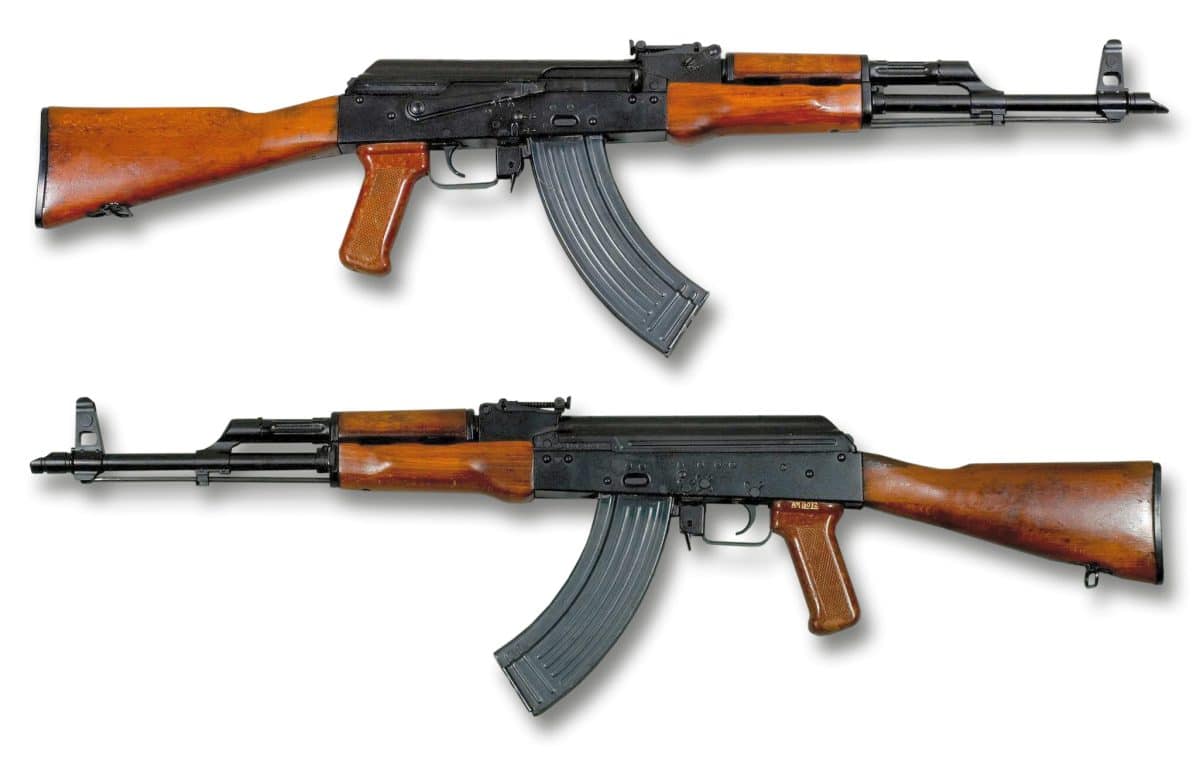
©"AKM automatkarbin Ryssland – 7,62x39mm – Armémuseum bothsides noBG" by Armémuseum (The Swedish Army Museum) is licensed under BY-SA 4.0. – Original / License
You can’t make a list of reliable combat weapons without bringing up the AK-47. It has earned a reputation for reliability the world over. Mikhail Kalashnikov designed it in 1947. The Soviet military quickly adopted it, and its successor states have used it in some capacity for nearly 80 years. It is the most widely produced firearm in history, with wider estimates suggesting over 100 million units manufactured across dozens of countries. The reason for its dominance is its loose tolerances.
Designers engineered Western firearms in the post-war era with precision, yet they built the AK-47 for basic conscripts. The gas-operated rotating bolt cycles reliably even when caked with mud, left in a river, or in extreme cold where lubricant might freeze and gum up. Soldiers in Cold War-era conflicts noticed its ability to keep firing where other weapons failed. Disassembly is equally simple, requiring no tools and minimal training to clear obstructions and malfunctions.
The AK platform has spawned generations of variants and derivatives like the AKM, AK-74, Chinese Type-56, and AK-103, among others. While modernized in some aspects, they all iterate on the same core principles. Armies, insurgencies, and militias across every inhabited continent rely on them daily to survive. If your life depends on a mechanical device, then having loose tolerances and a simple manual of arms seems like a stroke of genius.
Browning M2
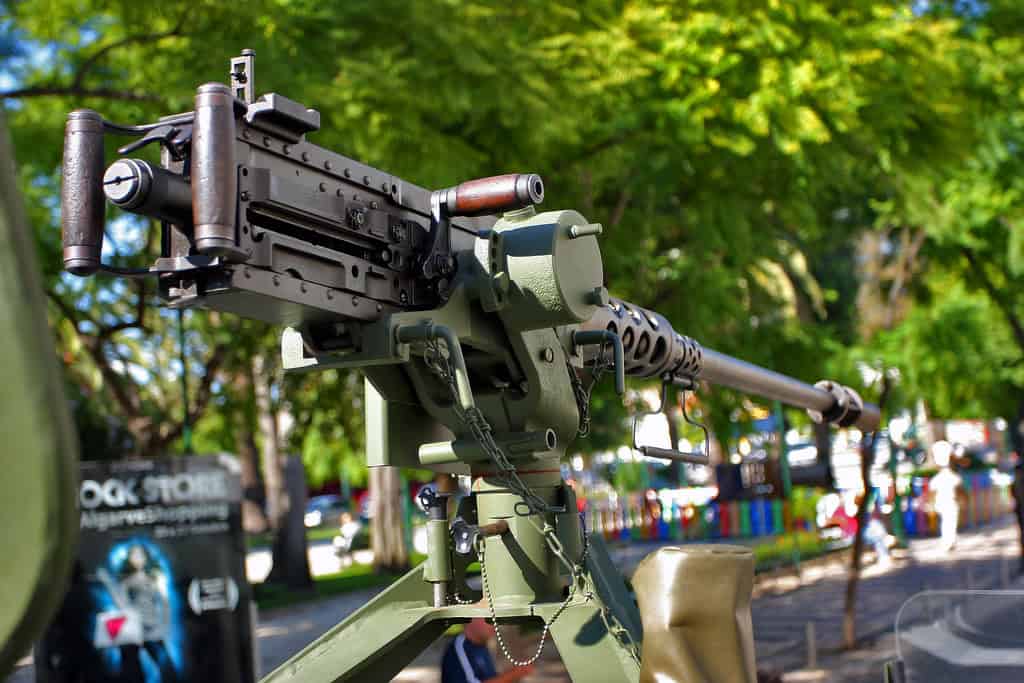
©"M2 Browning Machine Gun – Respect the Gun Fire" by maiacoimbra is licensed under BY 2.0. – Original / License
There aren’t many weapons with the same sort of longevity as the Browning M2. Developed in the post-war years between the First and Second World Wars, John Moses Browning’s design remains in active military service to this day. No other crew-served weapon devised in the last century can hope to have the same sort of service record.
Chambered in the potent .50 BMG, the M2 is a simple, robust design readily adapted to a wide range of roles. During the Second World War, it served as an anti-aircraft gun, a vehicle-mounted anti-personnel weapon, and was used for static defense emplacements. Its service history has seen conflicts like World War 2, the Korean War, the Vietnam War, Operation Desert Storm, and the Global War on Terror. Allies and adversaries of the United States alike have licensed, copied, or purchased versions for themselves.
In terms of combat weapons, it hasn’t hard to see why the M2 endures when compared to other designs. The M2 just works, provided you have a belt of ammunition and a trained operator to run it. Modern alternatives and replacements stall out, simply because nothing does it as well or as simply as the M2.
Glock 17
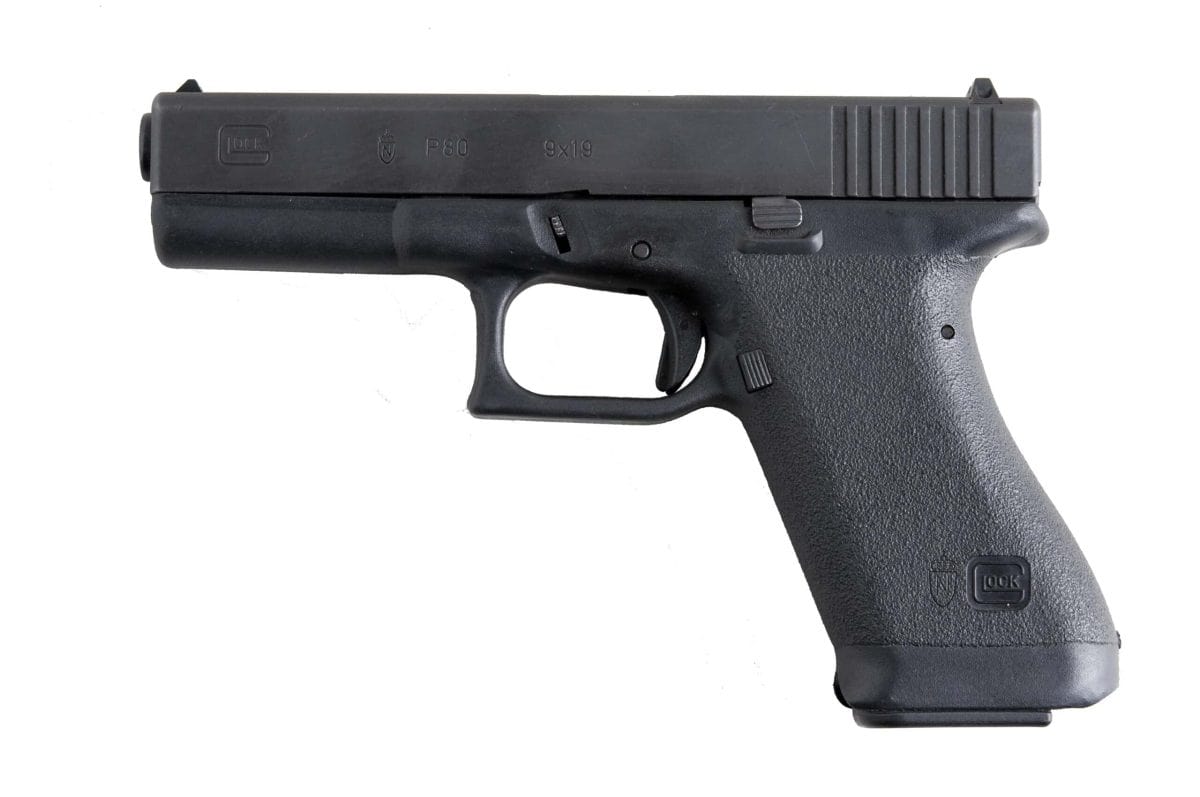
Gaston Glock’s 1980 handgun design was a revolution when compared to conventional pistols of the era. The Glock 17 was designed originally for the Austrian military trials to adopt a new service sidearm, with Glock having zero experience in designing a firearm of his own. This proved to be a remarkable advantage, however, as the Glock 17 was unburdened by conventional thinking, making use of far fewer parts. While contemporary designs had 50 or more internal parts, the Glock 17 had 37. The focus was on function, not on upholding tradition.
To say it was a resounding success is a massive understatement. During those trials, the Glock 17 fired 15,000 rounds without a single malfunction. Subsequent testing and service in law enforcement and militaries alike have just proven how reliable it is. It doesn’t matter if you’re looking at extreme heat, freezing cold, mud, sand, or simply a lack of cleaning, the Glock 17 and its derivatives will function.
Over 60 percent of American law enforcement agencies carry some sort of Glock pistol, not because of brand loyalty, but because it is a proven, reliable weapon that functions under high-stress conditions. The proof is in the pudding, and the Glock 17 has acquitted itself ably.
PKM

If the AK-47 is the gold standard for a service rifle, the PKM is its general-purpose machinegun equivalent. Designed in the early 1960s by Kalashnikov’s team, the PKM draws on many of the same design philosophies that made the AK-47 famous. They built it with the conscript in mind, featuring a simple manual of arms, loose tolerances, and sturdy construction.
The PKM is typically chambered in 7.62x54mmR and fed from a linked belt. Unloaded, you’re looking at around 15 pounds, which is significantly lighter than Western counterparts like M60. That said, it still keeps the same sort of raw mechanical reliability you’d expect of a Kalashnikov design, and has served in dozens of conflicts over the last 60 years.
It might be apocryphal, but there are stories from the Global War on Terror about American forces finding caches of PKM machine guns buried. They unearthed these weapons and fired them immediately, as they required no servicing. You don’t get much more reliable than that.
Lee-Enfield
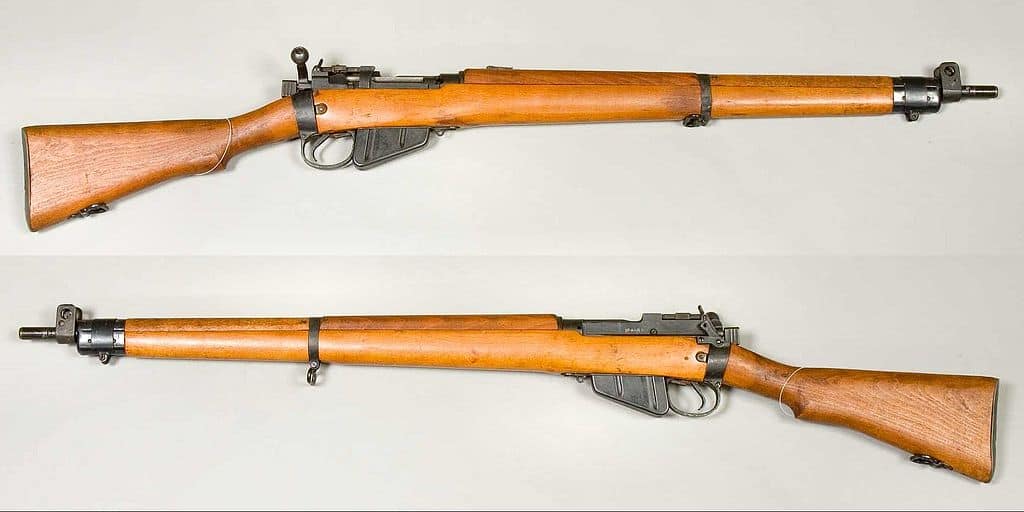
The Lee-Enfield family of rifles dates back to around the turn of the 20th century, and served the British Commonwealth to the Second World War and well into the 1960s sometimes. The most famous variant is the SMLE, or Short Magazine Lee-Enfield, Mk III, introduced in 1907.
A trained British soldier could fire off 15 rounds in a single minute. This was because of its bolt-action mechanism, making for one of the fastest-cycling rifles in Western Europe. German soldiers at the Battle of Mons assumed they were facing machine guns, but it was disciplined British troops laying down an effective base of fire.
The design itself can serve in abysmal conditions, seeing use in the jungles of the Pacific Theater, the snowy mountains of Korea, and the deserts of the North African theater during World War 2. Today, people still prize surplus examples as hunting weapons in places like Afghanistan, and they still cycle like the day they rolled off the assembly line.
M1 Garand
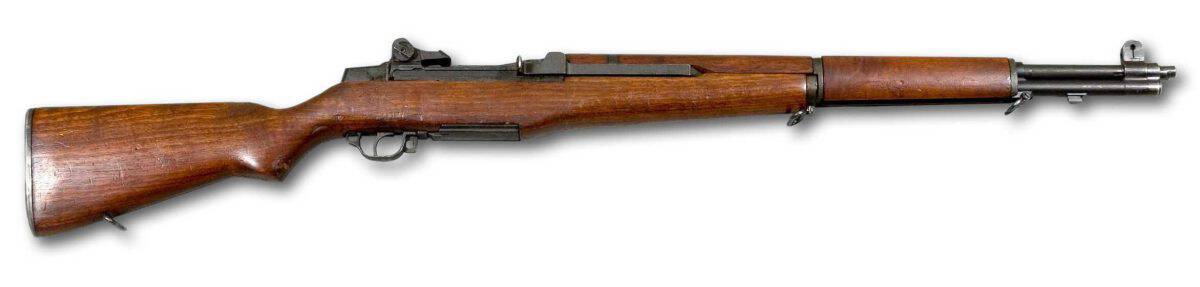
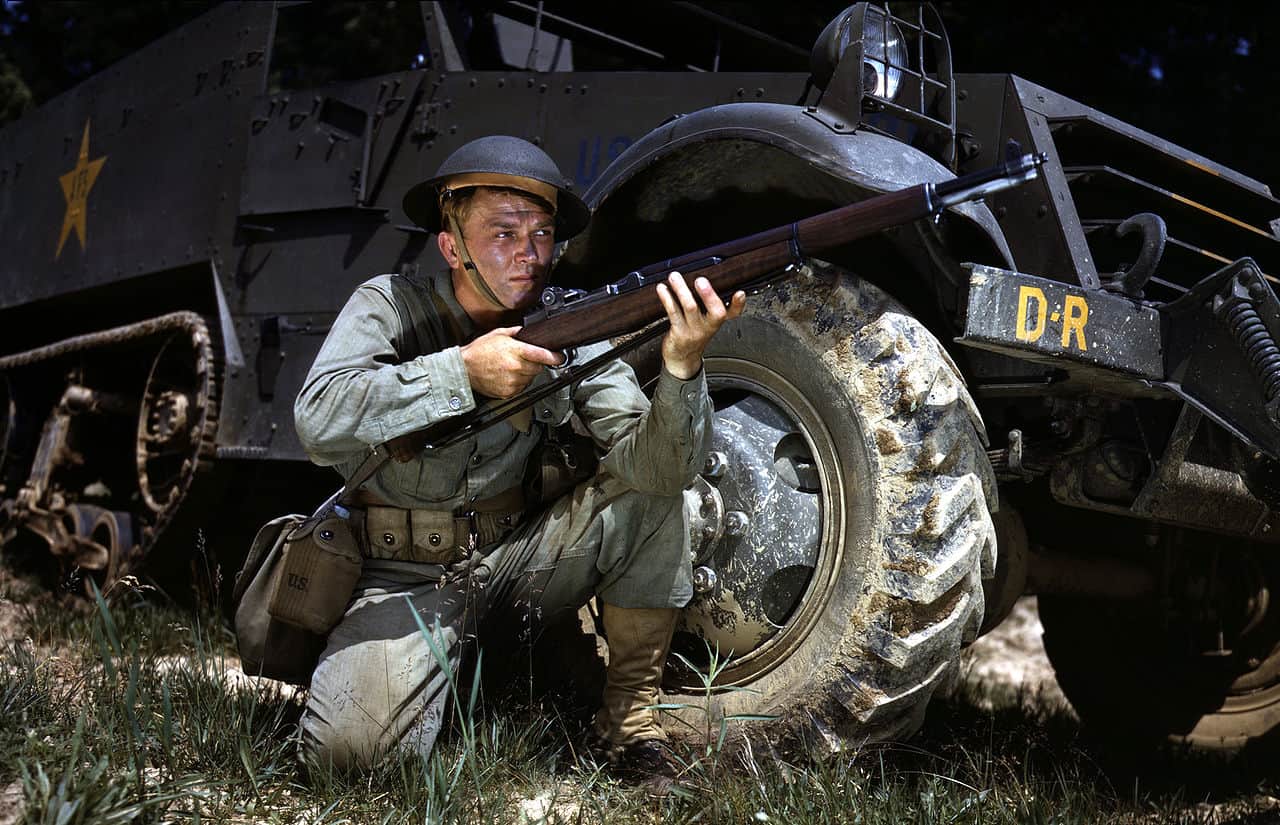
General George S. Patton once called the M1 Garand “the finest battle implement ever devised.” While somewhat lofty, there was some truth in his assessment. As one of the first true semi-automatic rifles to be adopted by a Western power, the M1 Garand needed to function in many conditions. Whether it was the jungles of Guadalcanal, the frozen forests of the Ardennes, or the salty brine of the beaches at Normandy, the M1 Garand continued to fire.
Its design was robust, making for a weapon that readily fired even when conditions got rough. Further, its mechanism allowed for a blistering rate of fire. Troops maintained volumes of fire that bolt-action rifles simply couldn’t reach. The combination of dependability and a solid rate of fire made for one of the most decisive small arms of the Second World War. It served in the Korean War, but was replaced by the M14 and M16 during the 1960s.
Conclusion
The weapons we’ve covered today weren’t chosen simply for political reasons. When looking at all of them, a pattern emerges. Simplicity, robust construction, and the ability to operate in high-stress scenarios meant these weapons functioned when others couldn’t. They were maintained in the field, needing few tools and little expertise.
If anything, combat weapons are Darwinian. Designs that fail in the field get shelved, while those that distinguish themselves serve for decades.
The image featured at the top of this post is ©Alfred T. Palmer / Public domain – License / Original