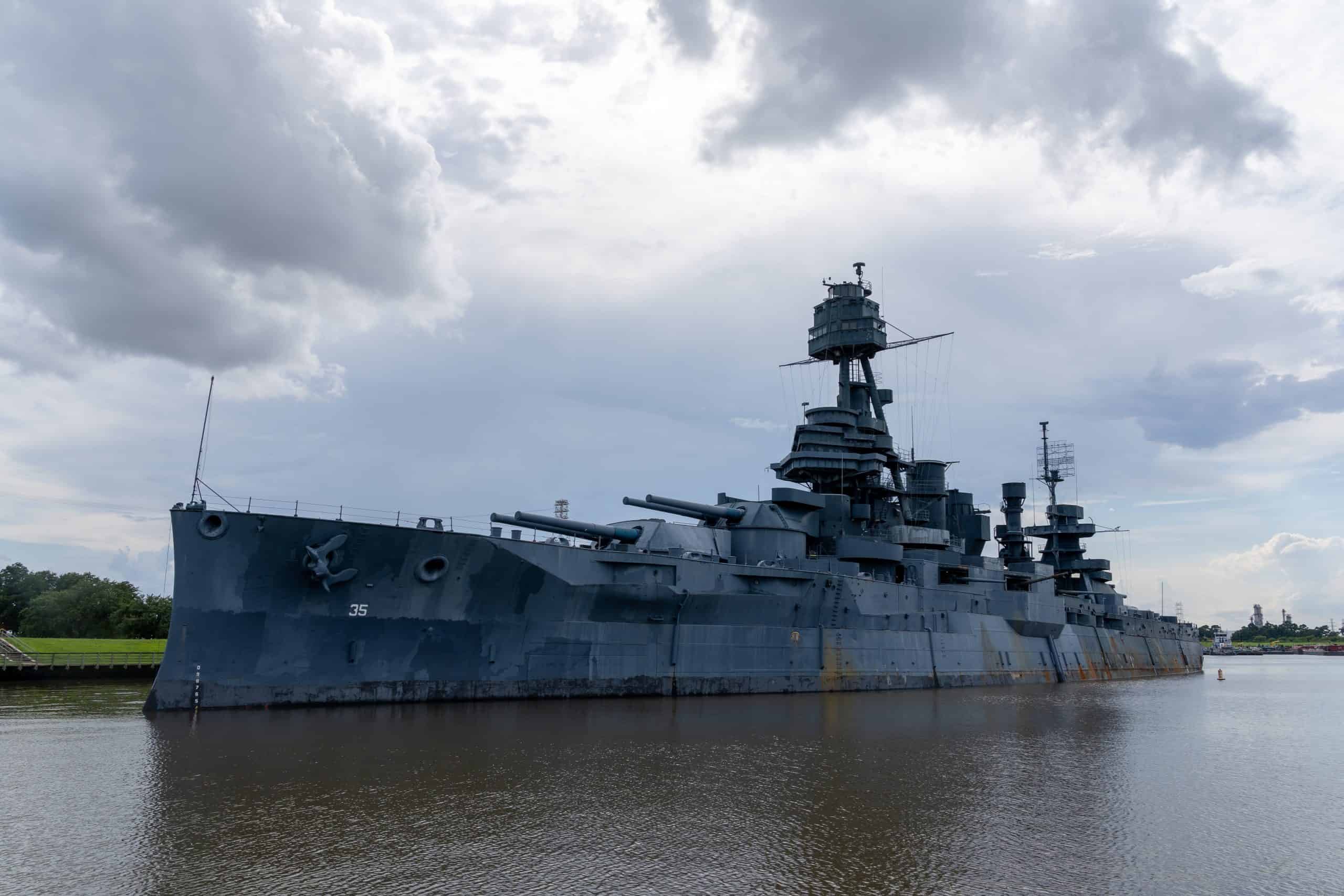

Naval warfare is positively ancient, with old wooden ships being used throughout Antiquity all the way to the modern carriers that command the sea today. There is something special about a warship, however, and how it captivates the attention of militaries, civilians, and engineers. Certain vessels transcend conventions of the time, becoming legendary in their own right. We see this especially when looking at massive technological leaps forward, like during the First and Second World Wars. The ships we’re covering today aren’t just solid designs, but the sort of warships that left an indelible impact on politics, strategy, and pop culture alike. Today, we’re looking at some of the most iconic warships in all of history, why they mattered, and why they’re still household names even now.
HMS Victory
©Tony Baggett/Shutterstock.com
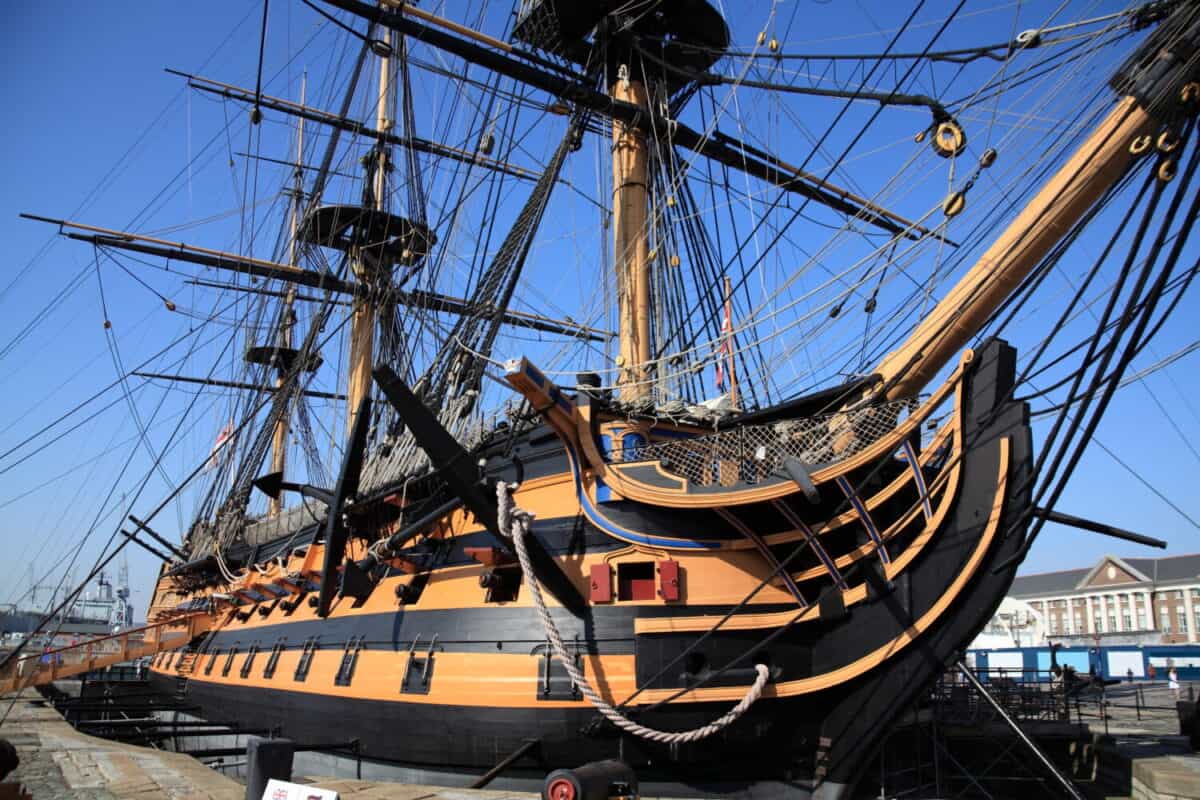
The HMS Victory was first launched in 1765, being one of the most technologically advanced ships of the line to join the British fleet. Throughout its long and storied history, it engaged Spanish and French forces alike, quickly distinguishing itself with a rather admirable service record. However, what makes the HMS Victory such a legendary ship isn’t so much its record of service, but one of the pivotal battles it took part in. On October 21, 1805, it was the flagship of Vice-Admiral Horatio Nelson, where it squared off against Napoleon’s fleet at the Battle of Trafalgar.
It would prove to live up to its namesake, prevailing against France’s seemingly unstoppable military conquest. Its commanding officer, Nelson, would meet his end at the Battle of Trafalgar, after taking a musket ball to his left shoulder, which impacted his spinal column. Nelson would die at the age of 47, helping take part in one of Britain’s most legendary naval engagements to date. The Franco-Spanish coalition that had threatened Europe was laid low, with their defeat coming later at Waterloo.
The Victory represents a true mastery of the sea in the age of sail, and is a potent symbol of Britain’s maritime heritage. Given different circumstances, it could’ve just been like any other ship of the line fielded by a European power. At the Battle of Trafalgar, she led from the front, almost meeting a watery grave, but ultimately prevailing in the end.
USS Constitution
By 1797, the American Navy was becoming a fledgling force. It lacked the sheer power of a navy like the United Kingdom’s, but that was due to change. The USS Constitution was commissioned in 1797, being one of the first domestically built frigates to join the United States Navy. It quickly made a name for itself during the War of 1812, where it earned the nickname “Old Ironsides” after volleys of British cannon fire were seen to bounce off the wooden hull.
Naturally, this was a huge morale boost for the young nation. The War of 1812 was an existential threat to American sovereignty, and having a ship withstand the onslaught of the greatest navy of the time was a boon for the folks back home. Its durability and success in combat quickly elevated its status, making for one of the most iconic ships to sail under the American flag.
The Constitution holds the distinction of being the oldest commissioned warship still afloat. Visitors can see the legendary ship at Boston Harbor, where it serves as a museum vessel to this very day. It’s certainly worth the trip, especially for military history buffs who are looking to learn more about the early days of the United States Navy.
USS Monitor
©Photographer for US Navy / Public Domain – Original / License
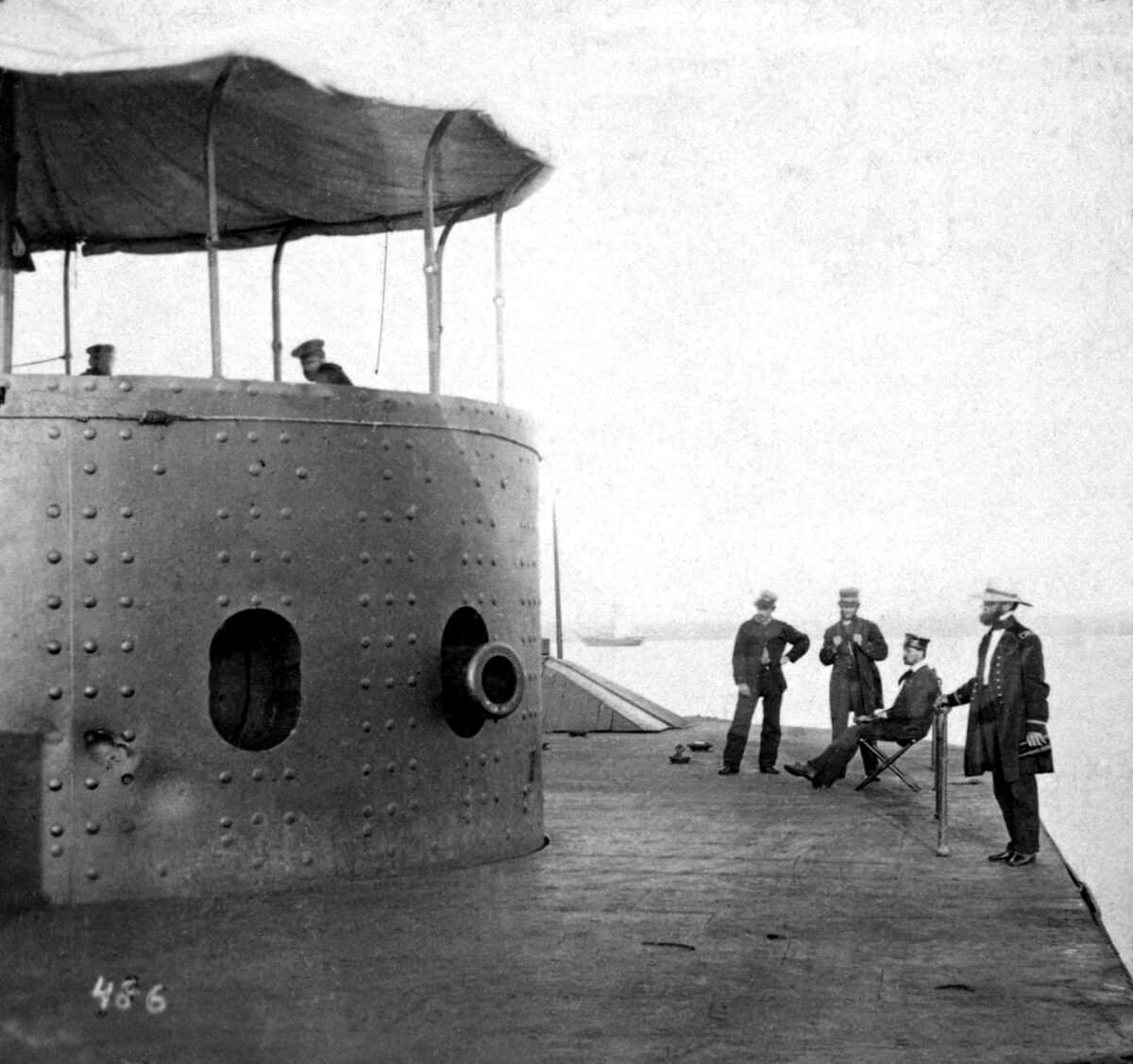
For thousands of years, warships were built of wood and driven by oars or sails. The American Civil War was one of the first major conflicts to challenge that notion, pushing the needle forward once more on naval technology and sparking a whole new arms race. The Monitor was the first truly ironclad vessel to take to the waterways, bearing such revolutionary technologies as an armored hull and revolving gun turret.
It came against the CSS Virginia on March 9, 1862, marking the first engagement between ironclads. The battle itself was inconclusive, with neither vessel able to strike a fatal blow on the other before depleting their ammunition and withdrawing. One thing was certain, however, the age of wooden warships had ended.
We see this time and time again throughout history, where a single vessel can make a marked change in how naval warfare is conducted. There are a few more notable examples, one of which we’ll cover later on. However, the impact of the Monitor on navies across the world cannot be understated. The turret design and inclusion of armor were a game-changer, which would push technology further forward as every nation sought to gain an edge against the other.
Bismarck
The Kriegsmarine of the Third Reich isn’t what we would call a notable naval power, although they did make a fair showing of themselves throughout the Second World War. Of note, however, is the Bismarck, which was one of the most powerful warships built at the time it was launched in 1939. The Bismarck factored heavily into the Third Reich’s surface fleet strategy throughout the war.
It quickly gained infamy at the Battle of the Denmark Strait, where a well-placed shot sank the HMS Hood, a storied vessel in its own right. Said infamy would light a fire under the Royal Navy, and the hunt was on to take the warship out before it could wreak more havoc on the Allies. The chase itself lasted for weeks, culminating in a dramatic sinking on the 27th of May, 1941, after wave after wave of bombardment and torpedoes struck it.
It was a devastating loss for the Germans, as it was the linchpin of their entire surface fleet strategy. Like the next entry, it signals the devastating implications of modern naval warfare. The sudden sinking of a flagship could lead to thousands of experienced hands meeting their ends. If anything, modern naval warfare has only grown deadlier with the passage of time and the rise of new weaponry like anti-ship missiles.
Yamato and Musashi
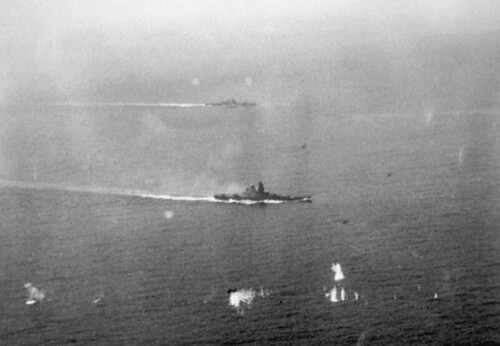
©"The Japanese super battleship Yamato, with 18.1-inch main guns, stirs a wake as it maneuvers during the battle off Samar. A Japanese heavy cruiser is visible of the Yamato’s port quarter." by WWII in View is licensed under PDM 1.0. – Original / License
Bigger is better, or so the old fallacy goes. At least that was the prevailing thought when the Imperial Japanese Navy commissioned the IJN Yamato and Musashi in 1941. These were some of the biggest ships to ever take to the water, boasting some truly impressive armament. Both the Yamato and Musashi weren’t built to challenge just a handful of vessels, but entire navies. Considering the sheer size of the vessels, with a displacement of around 72,000 tons at full combat load, there might have been some truth to this line of thinking.
These monstrous warships were outfitted with 9 460mm cannons, the largest to ever be fitted onto a warship to date. Despite the staggering firepower afforded to the Yamato and Musashi, their service record was rather limited. They were relegated to defensive operations, as they proved to be too valuable to risk on a serious naval engagement.
That didn’t matter, however, as American forces took both ships out. It wasn’t a wondrous new naval vessel that rolled off American shipyards that took both of these to the bottom of the drink by any measure, either. Airpower ruled the day, as overwhelming aerial attacks would eventually lead to both ships being lost. While a major accomplishment in sheer engineering, the tides of military doctrine were changing, and airpower was the great equalizer for any navy. The age of the battleships was over; the age of the aircraft carrier had begun.
USS Missouri
The USS Missouri is a rather unique vessel, at least when taken in the wider context of World War 2. I mentioned aircraft carriers were the dominant vessel of the Pacific, which is true. However, the Missouri was a traditional battleship. Commissioned in 1944, it had a rather lengthy service history, seeing action in World War 2 and the Korean War. It was decommissioned in 1955, being transferred to the US Navy’s reserve fleet before activation and refurbishment in the 1980s.
Its most iconic moment came on September 2, 1945, when representatives of Imperial Japan surrendered on its deck, marking the end of the Second World War. It would continue to serve, still showing that the battleship had a relevant role in American surface fleet operations while supporting aircraft carriers. While naval power had shifted to incorporate airpower, the old battleship saw action as recently as the Gulf War.
It would be decommissioned one last time in 1992 and eventually be stricken in 1995.
HMS Dreadnought
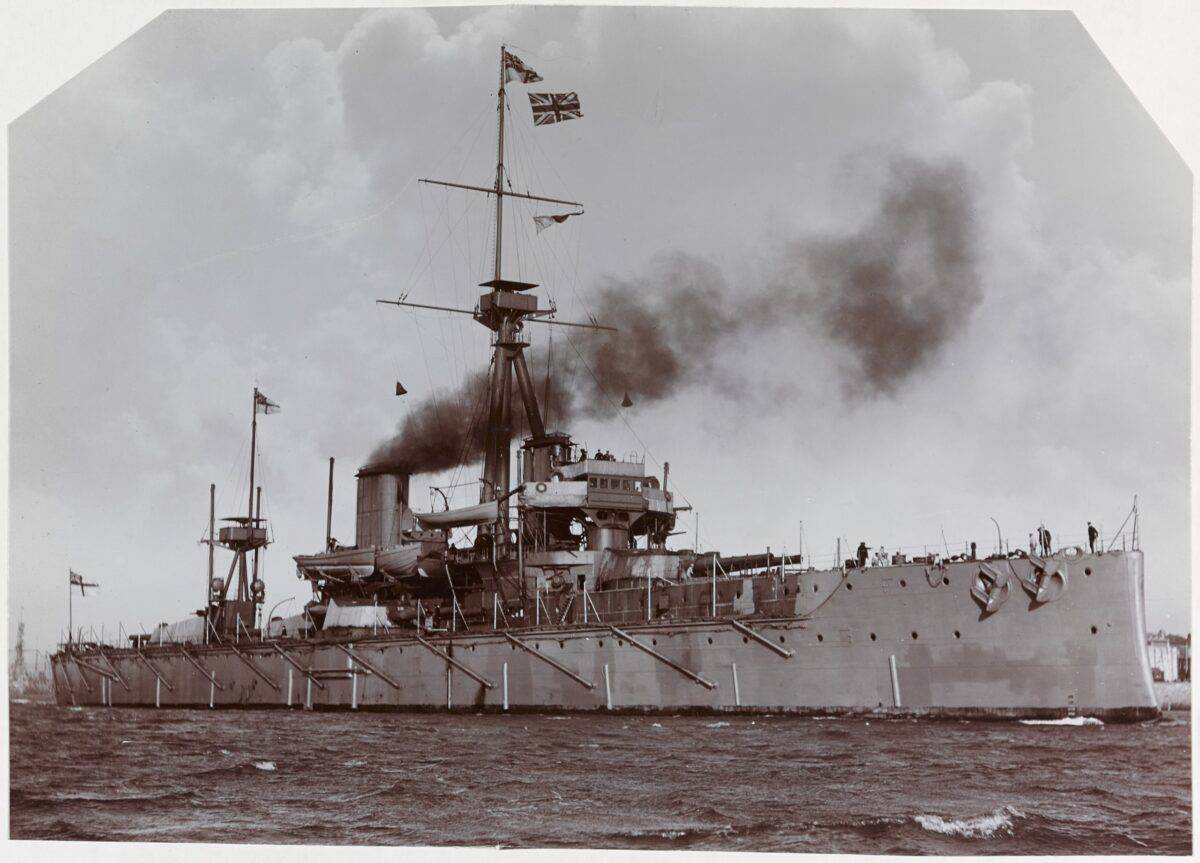
No list of iconic warships would be complete without mentioning the HMS Dreadnought. The late 19th century saw a massive naval buildup, as fledgling forces like the newly unified Germany and Italy sought to exert some degree of pressure on the Atlantic alongside Britain’s Royal Navy. Nations sank entire treasuries into building these fleets, spending fortunes to modernize their naval forces. That all changed in 1906 when the HMS Dreadnought launched for the first time, changing the world overnight.
The Dreadnought made use of the revolutionary all-big-gun construction, also making use of a steam turbine for propulsion. Those aforementioned surface fleets were rendered obsolete in an instant, sparking another global arms race that would lead to nations scrapping their surface fleets and starting from scratch. The HMS Dreadnought had an admirable service record, but it is best remembered for redefining naval design, setting the tempo for 20th-century naval power.
Conclusion
All of the ships mentioned today have a few things in common. They might not share construction, given the entries covering the age of sail, but they are more emblematic of massive cultural shifts in naval history. Some took place in legendary battles, while others ushered in eras of peace. No matter the occasion, these warships are significant entries in the annals of history, with their legacies being how they defined strategic planning, naval doctrine, and the fates of entire nations.
The image featured at the top of this post is ©Wirestock Creators/Shutterstock.com