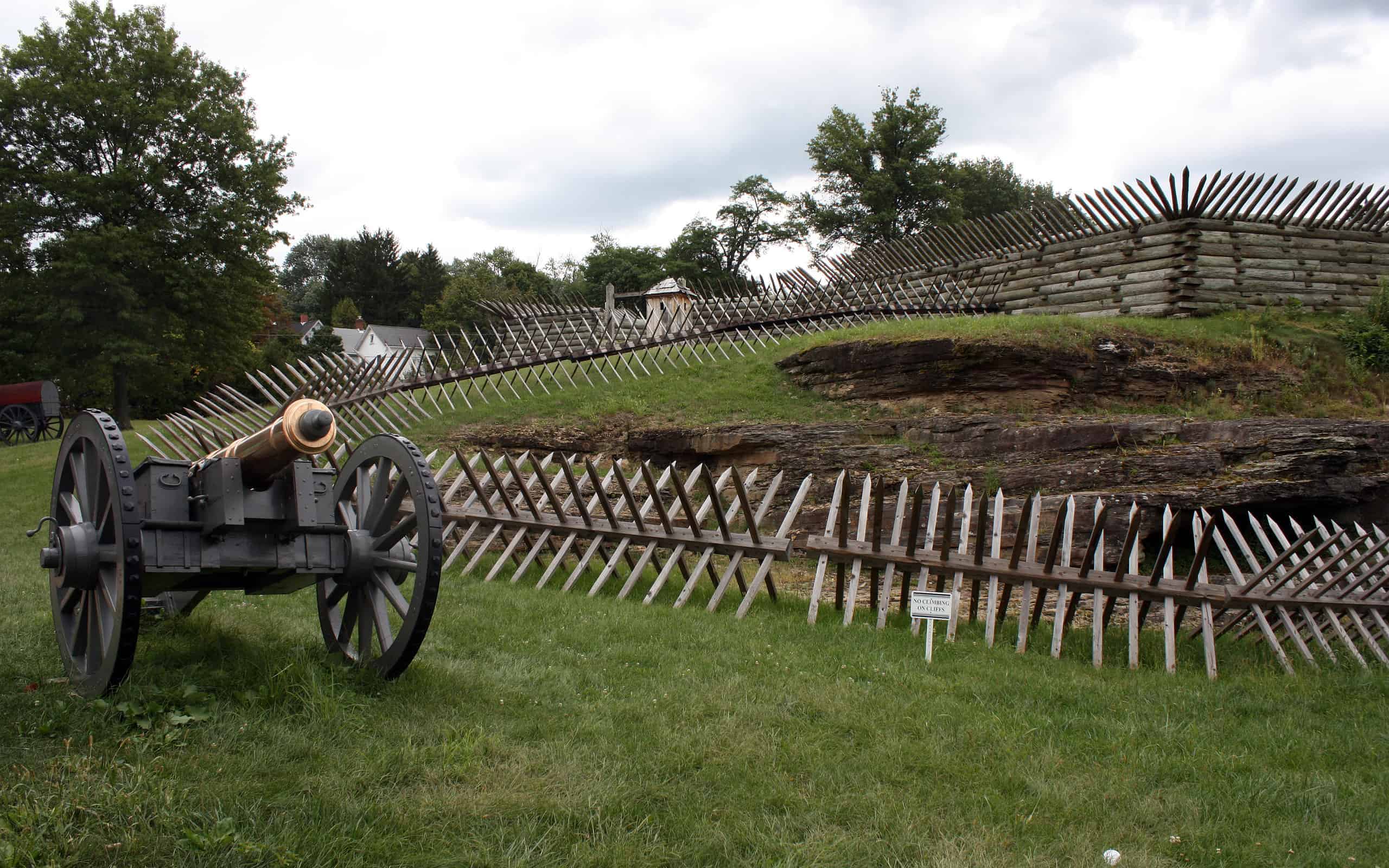

The vast majority of military history has seen the advantage go to defenders. A wall has a certain finality to it in terms of defense. Fortifications proved to be the bulwarks of history’s greatest empires, looking even at the famed Theodosian Walls that ringed Constantinople. The siege was a bloody, brutal affair, often relying on tactics centered around starvation and cutting down the stragglers when the walls finally broke.
The development of siege weaponry was never fully centered around brute force, but an application of wider scientific understanding. Physics, psychology, and engineering all played vital roles in the evolution of siegecraft and the subsequent development of defenses meant to curtail them. With that in mind, we’re looking at the most influential siege weapons in history, ranging from sheer brute force to the age of gunpowder.
Battering Rams
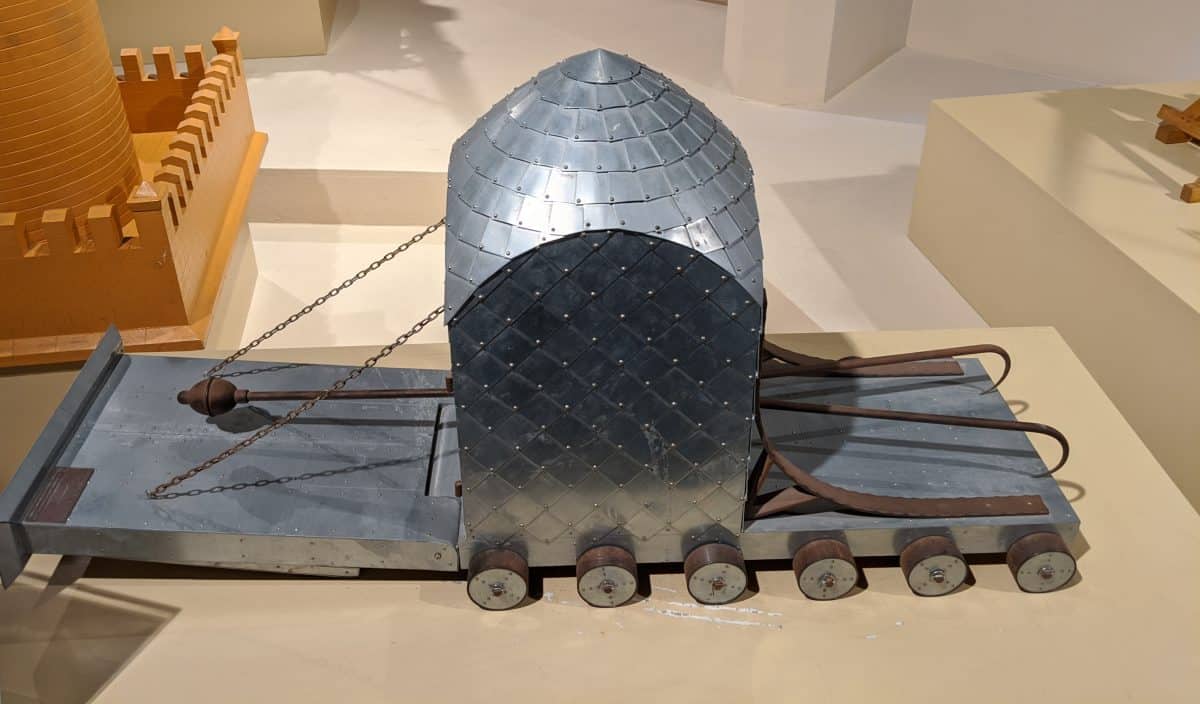
©"Arab armored 14th century battering ram, reconstructed model" by Mustafa-trit20 is licensed under BY-SA 4.0. – Original / License
You might as well start at the very beginning of it all when looking at any sort of influential siege weapons. The battering ram is the siege weapon in its most primitive state, dating back to ancient civilizations in Mesopotamia. The simplest form is little more than a felled log, but the most influential iteration came about in the Neo-Assyrian Empire.
The Assyrians took the ram from a crude tool to a more sophisticated platform. A housing was built around the beam that served as a mobile platform. Said housing was covered in wet hides to prevent fire arrows from scorching the wood. Attackers could line the ram up to the gates, closing off a city, and slam the door open with relative safety.
The battering ram saw the end of city-states like Babylon. Architects were forced to transition from simple walls to complex, layered bastions while incorporating defensive structures like moats. This had a profound effect on urban design for over 1,000 years.
Torsion-Based Devices
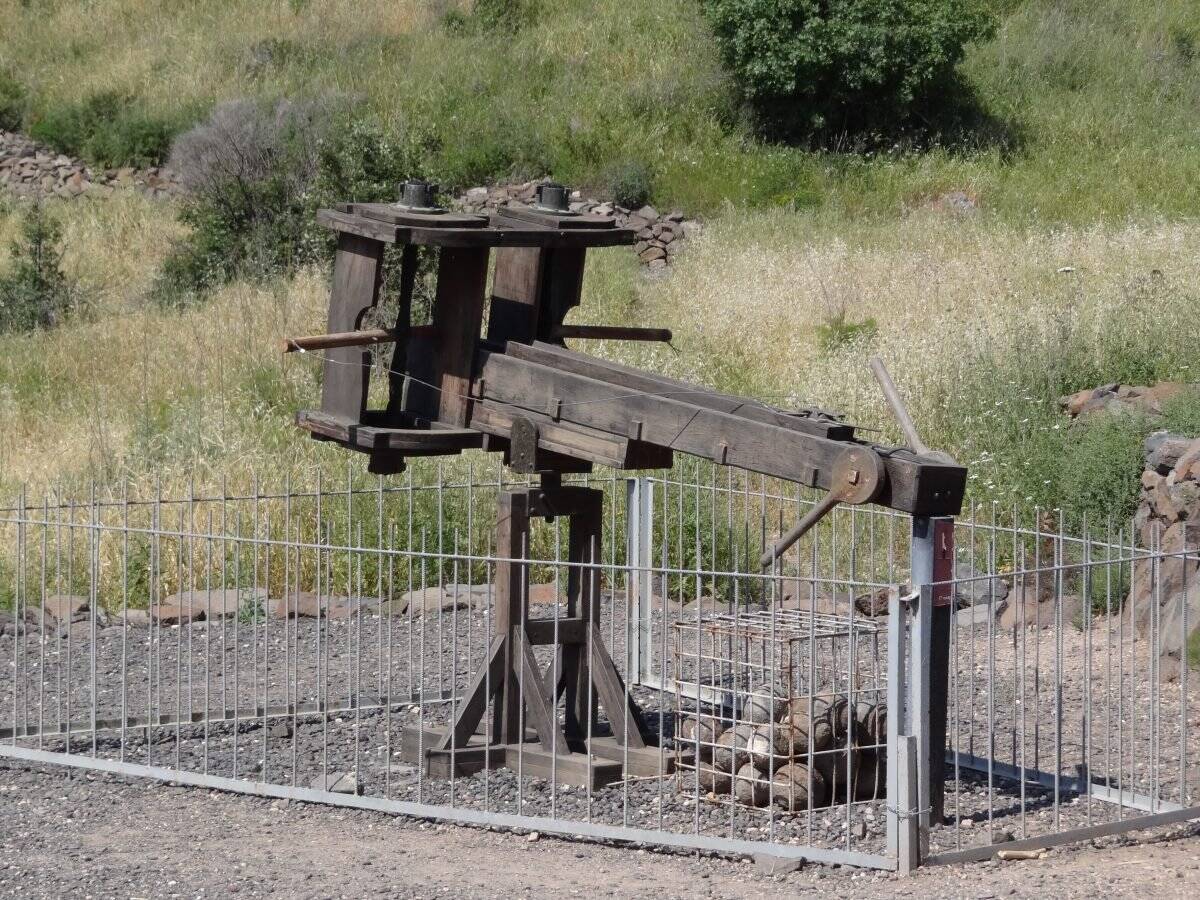
©"File:Gamla – Ballista model (2).JPG" by Hanay is licensed under BY-SA 3.0. – Original / License
The Ancient Greeks, and later Romans, moved beyond sheer brute force into the first true ventures into mechanical energy. Torsion-based devices, often using bundles of twisted sinew or ropes, acted as a spring for a projectile and introduced a whole new depth to mechanical engineering for the era.
The ballista, essentially a massive crossbow, and the onager, a catapult, used torsion to deliver projectiles with massive power and terrifying accuracy. Earlier tension-based weapons like the Gastraphetes could not scale up, but a Roman ballista readily fired bolts over 400 meters.
The introduction of mechanical force to siege weapons saw the discipline evolve into something far more professional. The Romans were renowned for their dedicated engineering corps, effectively turning the siege into a methodology rather than a desperate assault against insurmountable defenses.
Siege Towers
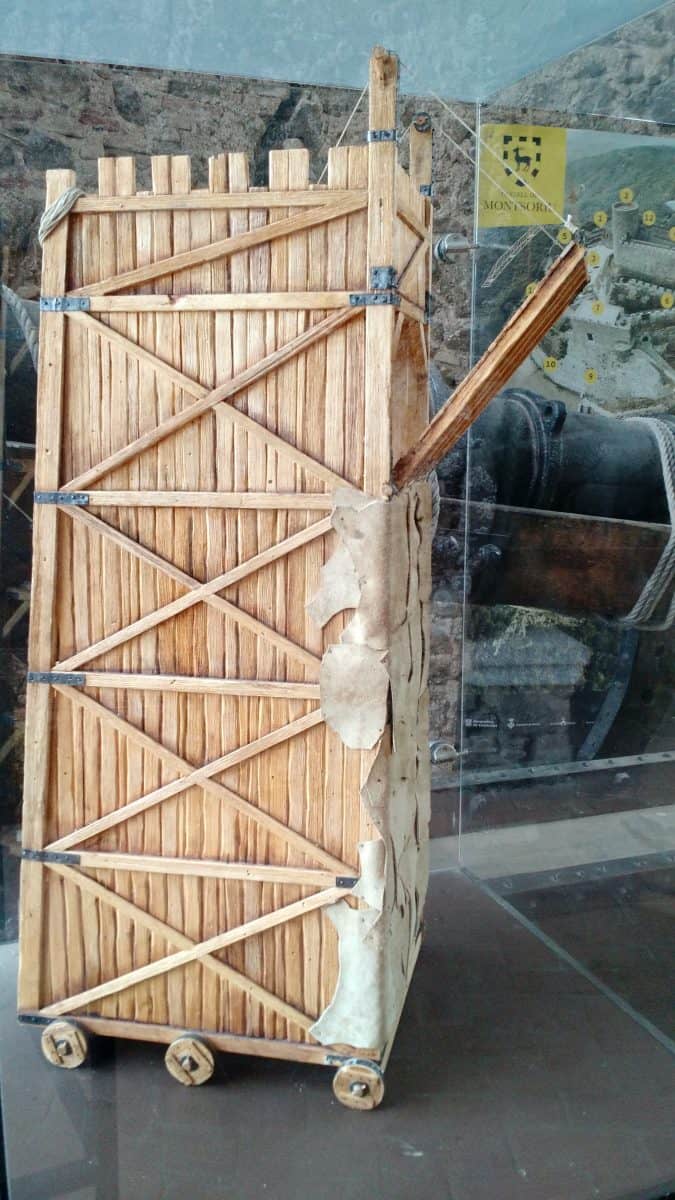
©"Catalan siege tower 1.1. Montsoriu Castle" by Auledas is licensed under BY-SA 4.0. – Original / License
The Siege of Rhodes in 305 BCE saw the Helepolis take to the field. Standing 9 stories tall and housing hundreds of men and various siege weaponry, the Helepolis intended to reach the full height of enemy walls, drop a gangplank, and allow for a direct assault.
The Helepolis is perhaps the most notable example of a siege tower, a purpose-built vehicle intended to negate the emplaced defenses and ramparts of any city. Generally built on-site, these siege towers were capable of taking the fight well past the city walls, leading to a one-sided slaughter in the event that the defenders weren’t prepared.
In terms of influence, siege towers necessitated the practice of active defenses, seeing rising defensive towers, counter-mines dug underground to collapse the ground, and more robust methods of burning these structures to the ground. The siege became an arms race in full, as both sides looked to counteract the other.
Trebuchets
©Tom Meaker/Shutterstock.com
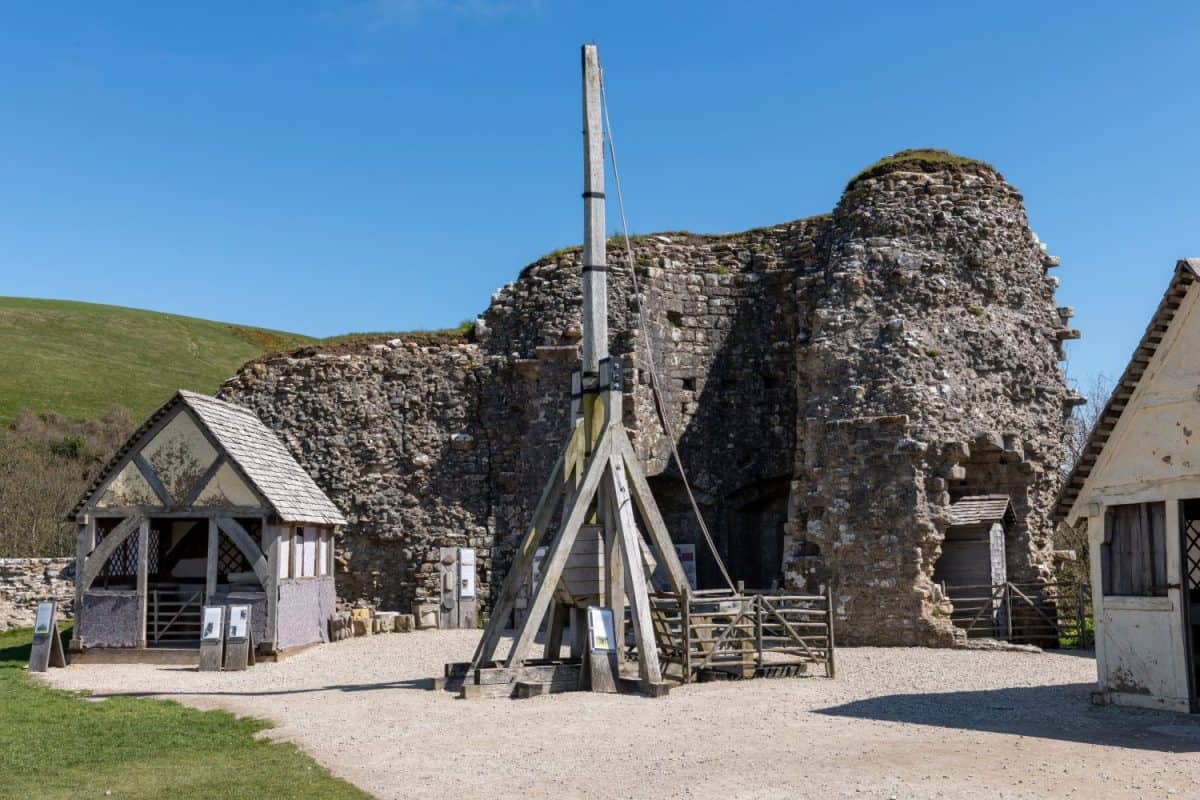
Antiquity saw the siege become a scientific practice, but it was truly perfected during the Middle Ages. Making use of inertia and gravity, weaponry like the trebuchet was capable of sending 200-pound stones flying with enough force to shatter granite. It took relatively little force to trigger the weapon, making use of counterweights to fire the projectile rather than human-powered torsion to cock the device.
The siege became an act of targeted demolition, rather than harassment, until the point of capitulation. It saw the defensive works and fortifications intended to counter-act siege towers fall by the wayside. Square castles, flat walls, and rather basic design work proved to be ineffective at deflecting trebuchet fire. The sheer power of a trebuchet cannot be understated, as it brought far more force to the table in terms of raw kinetic energy than comparable torsion-based artillery from earlier in history. Defensive towers would shatter, walls would burst, and invaders could come pouring in.
This saw the rise of concentric castle designs, with curved walls to deflect the impact of stones. Cylindrical towers also became more common in castle design. Without an immediate adaptation, it was entirely feasible for a trebuchet to batter away at a castle bit by bit until it finally collapsed. The great stoneworks of the ancient world were no match for mechanical leverage and gravity.
Bombards and Cannons

©Zack Frank/Shutterstock.com
I brought up the Theodosian Walls of Constantinople for a good reason at the start of today’s piece. Constantinople was thought to be impenetrable for centuries, and for good reason. Many tried, and many failed, in their attempts at taking the city. That all changed in the 15th century, with the 1453 Siege of Constantinople. It wasn’t some act of espionage or sheer brute force that brought the city to its knees, but rather the advance of science and chemical power.
The Basilic was a 27-foot-long bombard, made of brass, commissioned by Sultan Mehmed II of the Ottoman Empire. Gunpowder was slowly becoming the dominant force on the battlefield, as the age of footmen armed with spears and mercenary armies fell to the wayside in favor of professional armies carrying muskets and hauling cannons.
The walls of Constantinople fell in one fell swoop, and it marked the end of the Middle Ages. Sieges were no longer a matter of setting your forces against the walls of a city, but rather a shift in the whole of the social orders of the time. Castles weren’t guarantees of safety, and the minor lords who levied armies couldn’t amass the sort of wealth and resources to arm and train musketeers. Only a centralized state could do so. If there was ever a point in history where a siege weapon made a profound impact that completely altered the course of mankind, it was the refinement of the cannon.
Conclusion
The history of siege weaponry is a testament to mankind’s resilience and drive. While recorded history has shown us time and time again the innovations and counteractions meant to curtail these sorts of weapons, it was always going to be a losing battle. Moats could easily stop the battering ram, but those fell short against ballista and other torsion-based weapons. Taller defensive towers were intended to stop siege towers.
Trebuchets changed the way castles were built, and cannons saw them rendered completely obsolete. Each development in the history of the siege weapon ushers in a more profound societal change, as power shifts from city-states to minor lords to centralized states. Further, they drove innovation in the form of metallurgy, mathematics, engineering, and logistics.
While the modern era largely does not need a siege tower, you can see the lineage of such weapons in the combined arms doctrines and munitions used in any major military. Cannons were replaced by precision artillery pieces, and bunker-busting munitions have effectively made any sort of emplacement a vulnerability. The siege is still a fundamental cornerstone of warfare. If anything, it proves that the drive to build up walls to keep invaders out will be counteracted by the development of hammers to break them down.
The image featured at the top of this post is ©Michelle A. Leppert / CC BY-SA 3.0 – License / Original