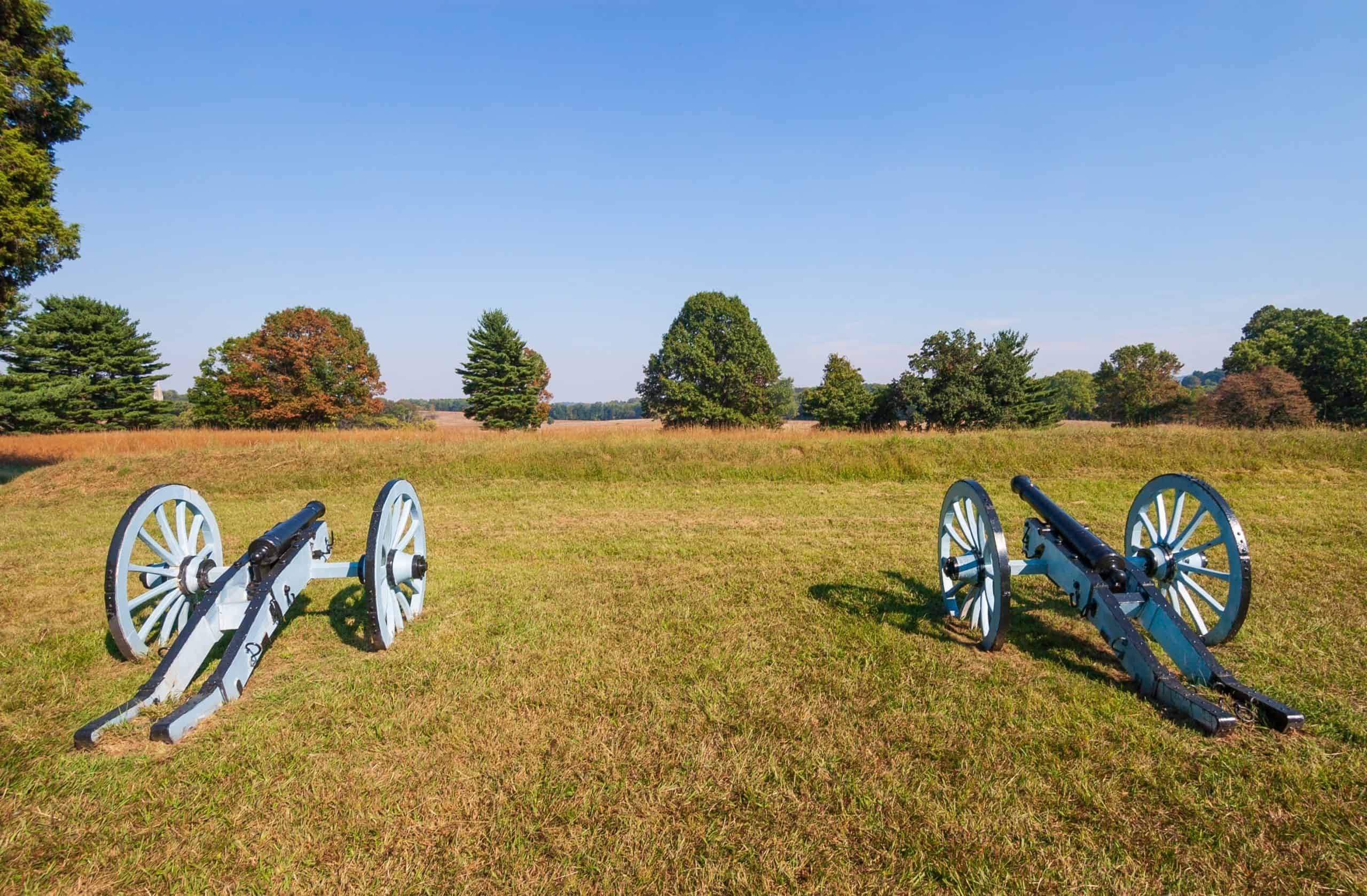

When we talk about the American Revolution, we usually use the same sort of tired tropes and characterizations. Warfare is complex, and can’t be readily distilled down to common elements like the Brown Bess musket, the Kentucky rifle, and the other weapons that seem to be dominant in the discourse surrounding the Revolution. What gets forgotten is the fact that the United States was far from a uniform force, often making use of ramshackle militias and civilian volunteers alongside material aid from the French. As such, these lesser-known aspects of the war reflect the messy, improvised, and technologically unconventional means by which the war was waged. These aren’t forgotten weapons in the strictest sense, but rather something that gets lost in the shuffle when discussing the constituent elements of the American Revolution.
Improvised Arms and Farm Implements
©"Scythe for sore eyes" by Pot Noodle is licensed under BY 2.0. – Original / License
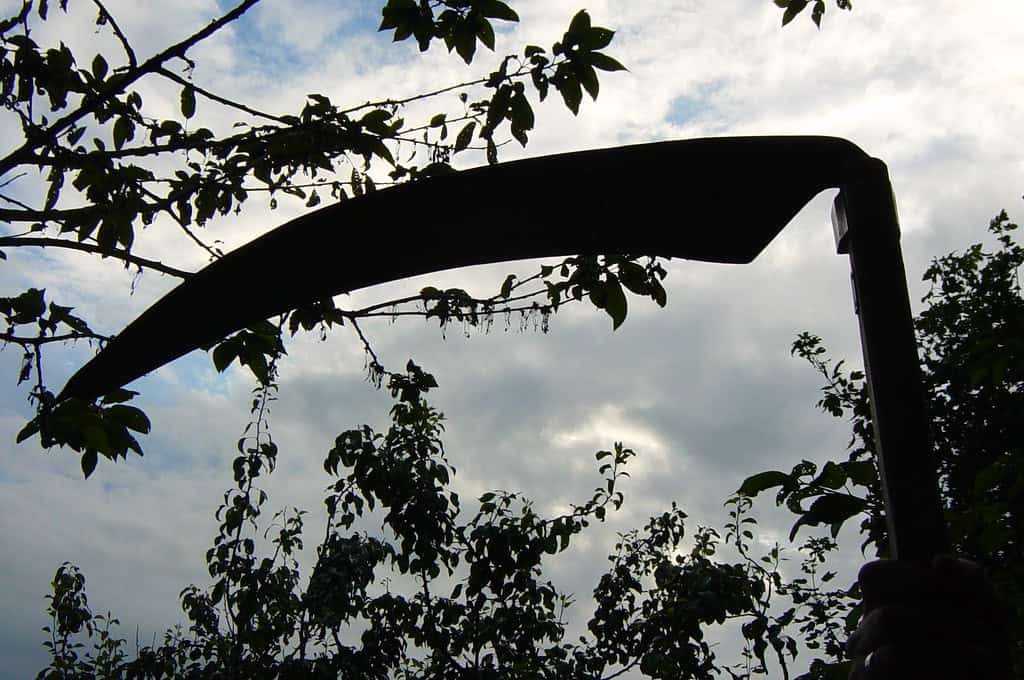
The era of pike and shot had largely gone by the wayside when the opening shots at Lexington and Concord were fired in 1775. However, you have to remember that the American people were lacking in weaponry, with standardized equipment being a pipe dream for the Continental Army in the very first year of the Revolution. Militia were often struggling to find equipment, with good quality military firearms being difficult to find for some. Farming implements were more than common. Farmers and tradesmen would enter the war with whatever they could find. Pitchforks, scythes, and more uncommonly, axes, were all pressed into service as makeshift polearms.
If anything, it shows the fighting spirit of the militias facing the English military. These weren’t professional soldiers, and a far cry from the United States Army of today. Instead, these were people looking to simply preserve their way of life. It hammered home the point that this wasn’t an army, but a whole people rising up in resistance.
Ferguson Rifle
©National Museum of American History / Public Domain – Original / License
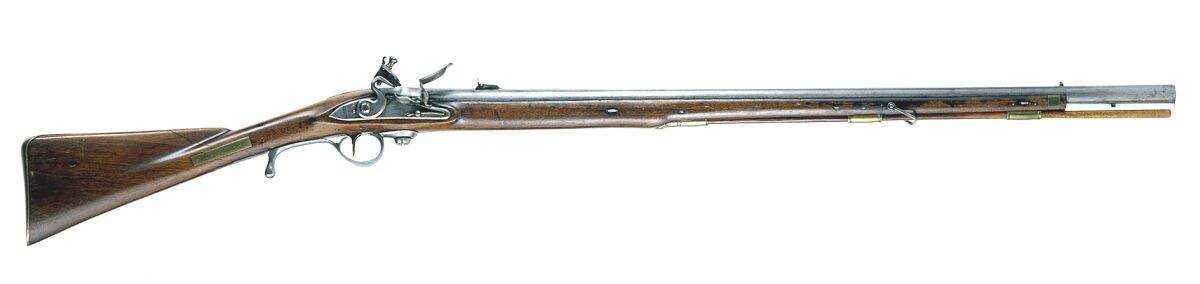
In a resounding case of being well ahead of its time, the Ferguson rifle would essentially predict the next trend in firearms technology. Designed by Patrick Ferguson, the Ferguson rifle made use of a breech-loading mechanism, one of the first viable instances to be fielded in any numbers by a military. This allowed soldiers to load their weapons while prone, enabling greater accuracy and faster reloads on the whole. For light infantry and skirmishers, this was a complete game-changer.
The rifle itself was produced in limited numbers, with around 200 built between 1776 and 1778. It saw combat use at the Battle of Brandywine and possibly at the Siege of Charleston. It largely fell by the wayside thanks to its complex manufacturing process, with the main gunsmiths of the British Army being unable to produce the request 100 units in 6 months. After Ferguson’s death at the Battle of King’s Mountain in 1780, the breech-loading rifle would be shelved until the 19th century.
Explosive Devices
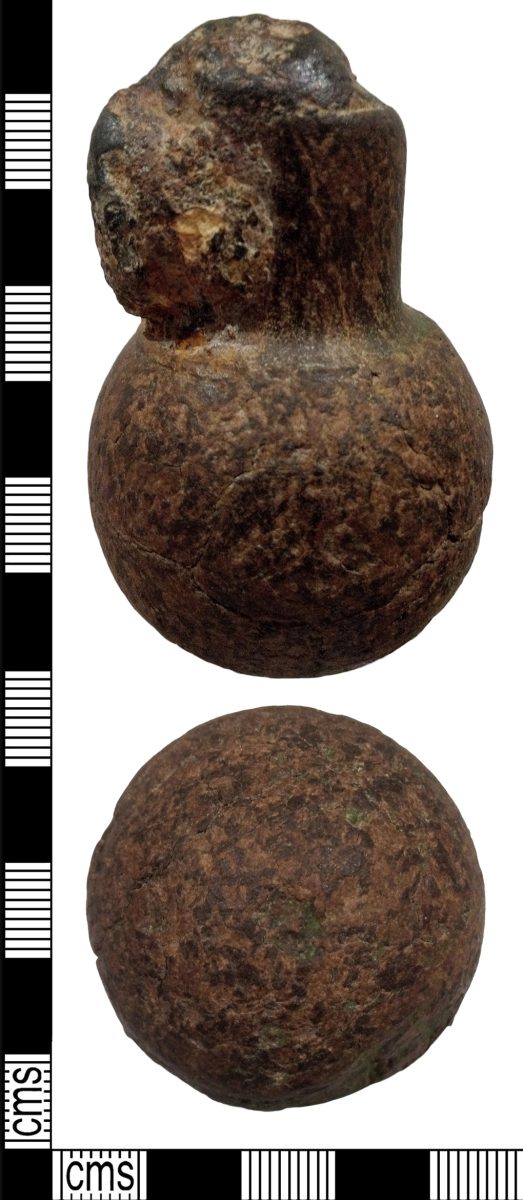
We often forget that explosive weapons were used throughout most of history, with grenades being a common sight throughout the 17th Century. English troops were accustomed to their use, as explosives were possibly thrown at the Battle of Holt Bridge in the English Civil War. Early grenades made use of cast iron shells, filled with black powder, and fitted with a fuse. They lacked the raw destructive power of modern explosives, as you might imagine. However, for use in skirmishing and boarding actions, they had no equal.
Explosives had a profound psychological effect on those attacked by them, especially as they were often deployed in confined spaces. Naval warfare along the Atlantic coast saw the use of explosives, with both American naval forces and their allies making use of explosives to stave off British boarding actions. They might be crude when considering the practical application of anti-personnel munitions in the modern era, but it was a sign of things to come.
Indigenous Weapons
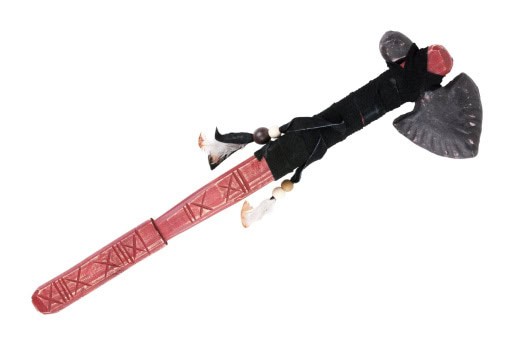
©Dimedrol68/iStock via Getty Images
The native people of the United States fought on both sides of the conflict, working with both Colonial Americans and the British military alike. As such, they brought their own weapons and expertise. While lacking the technological advantage of things like muskets and pistols, the war clubs, bows, and tomahawks were practical for the terrain. The indigenous people were masters of guerrilla warfare, and these weapons emphasized the stealthy, mobile way of fighting they practiced.
The use of these weapons underscored the global ramifications of the war itself. Rather than being something akin to a common rebellion, it was a war that entrenched itself in international waters, along with having a profound effect on the Native Americans. These weapons are often overlooked when discussing the war itself, with more focus being placed on set battles against storied commanders. It flies in the face of European conventions of warfare, but they were highly effective.
Fireships and Other Naval Vessels
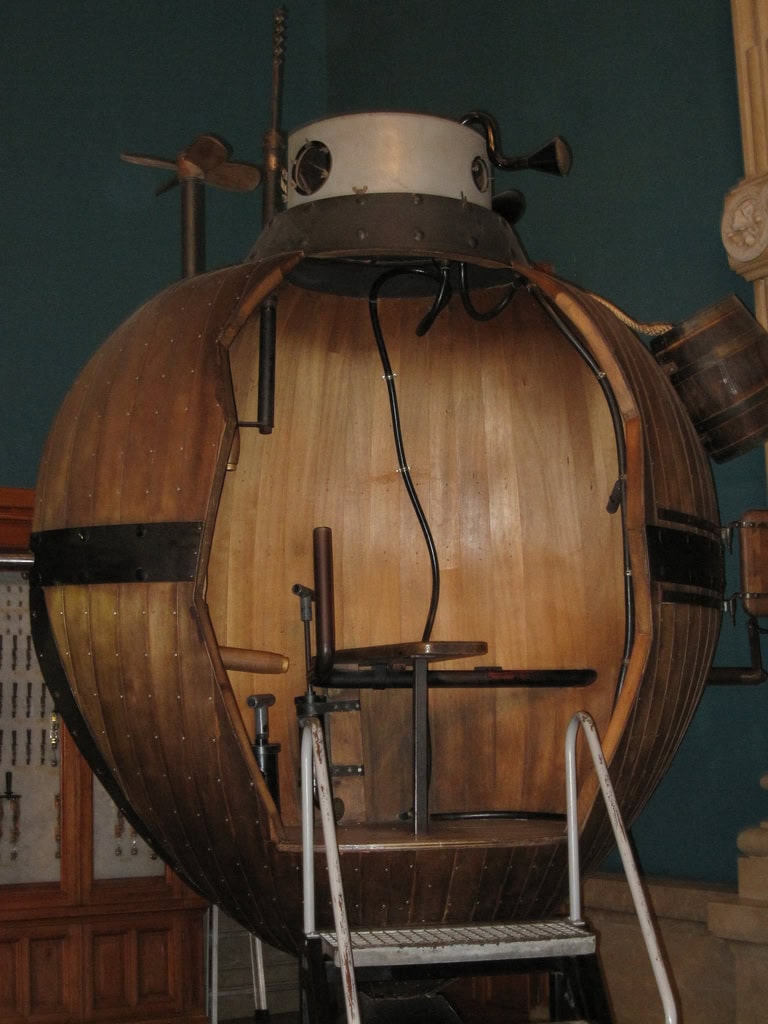
©"Bushnell's 'Turtle' submarine" by Kyriaki is licensed under BY-SA 2.0. – Original / License
Cannons had already changed the nature of naval warfare in the 15th century. However, the American Revolution saw many advances in naval warfare, like fireships. These were intended to disrupt British naval operations. The concept was relatively simple, making use of an empty vessel which was then set ablaze and directed toward enemy fleets. When used in conjunction with nighttime attacks, confusion and surprise enabled some rather damaging attacks to take place.
Curiously, the United States was hard at work on attempts to make a submersible naval vessel. The Turtle was the world’s first true submarine. Built in 1775 by David Bushnell, it was intended to stealthily attach explosive devices to British vessels while being completely undetected. Multiple attempts were made throughout 1776 to affix explosives to British ships in New York Harbor. All of these attempts failed, sadly, with the vessels being shelved shortly after.
Psychological Weapons
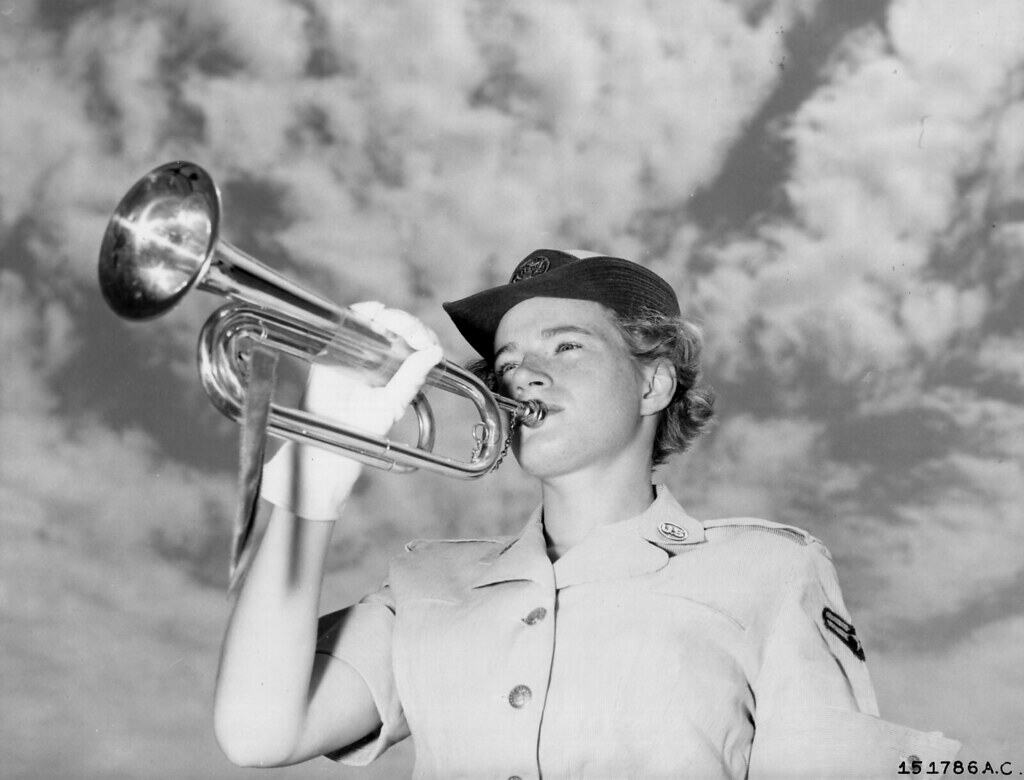
©"Vintage Woman Soldier Veteran Bugler, WAF U.S, Air Force 1950s" by Beverly & Pack is licensed under BY 2.0. – Original / License
The weapons used during the American Revolution weren’t solely selected for their lethal potential. It’s easy to get lost in the numbers and statistics associated with battles, especially those that have entered into somewhat mythical status. Psychology plays a key role in the morale and conduct of soldiers on the battlefield. Psychological weaponry has been utilized since ancient times, and it was no different during the American Revolution. The use of bugles, drums, and fifes was utilized for command, coordination, and for inflicting psychological attacks on the enemy.
Coordinated sound was a vital component of the pre-modern battlefield. Before the likes of radios and field telephones, the use of sound was a means of coordinating forces. To be honest, there is little else to instill a sense of dread than to hear a bugle call out to signal a flanking action for any military unit. Little is assured in battle plans, especially when meeting with the enemy, and knowing you didn’t account for another unit could be devastating for troop morale and cohesion. Curiously, despite the notions of meritocracy, certain personal weapons carried a degree of mystique and symbolic power.
Weapons like swords were reserved for officers. They were largely secondary to muskets and bayonets, as firearms had become the dominant force on the battlefield. Swords were still a sign of authority, much like the use of pistols. Psychological warfare wasn’t just intended for the enemy, but also a means of enforcing authority and command over forces that lacked any sort of unity, like the ramshackle forces of the United States.
Conclusion
The American Revolution wasn’t fought solely with muskets and bayonets, as pop history might have you believe. The war itself was characterized by the use of improvised weapons, indigenous arms, and experimental naval weapons. Like many of the wars throughout history, it was a time to push boundaries and get any sort of edge possible. The path to American independence wasn’t solely defined by the Brown Bess and Kentucky Rifle, but rather the grit and resourcefulness of those meeting in the battlefield.
The image featured at the top of this post is ©Zack Frank/Shutterstock.com