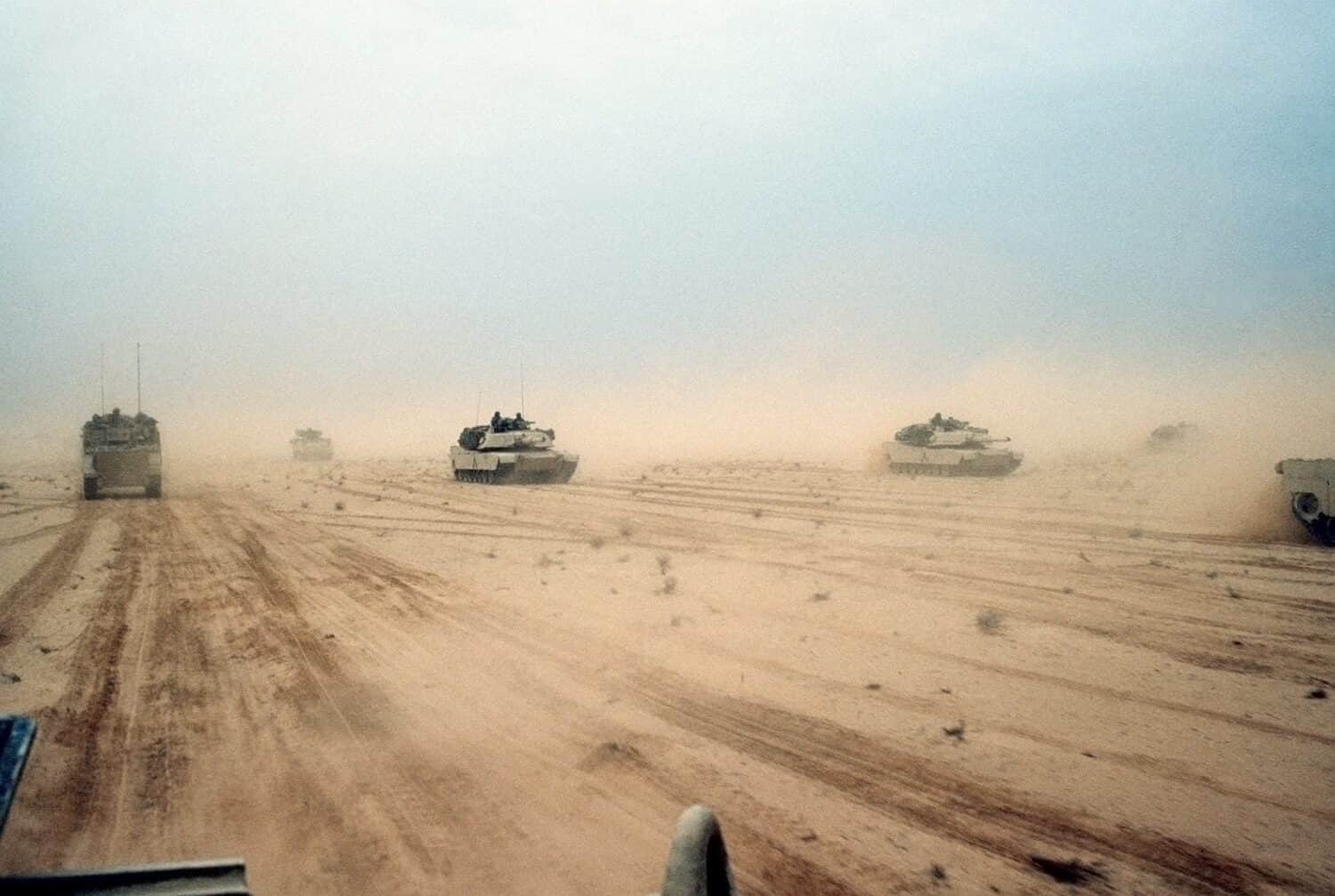

When considering battle tanks, people rarely ever think of speed. Armor, firepower, and their dominance on the battlefield are usually the top considerations. Mobility is a desirable quality for any sort of armored vehicle, however, and something that military engineers have pursued for decades at this point. While there is something to be said about how a tank is armored, armed, and crewed, having the agility to get into position is also vital.
With that in mind, we’re taking a closer look at battle tanks through the ages, from the advances in technology that fueled the Cold War’s arms race to the modern battle tanks of today. The modern battle tank isn’t just built for fire support, but also for the ability to strike, reposition, and survive through mobility.
T-80
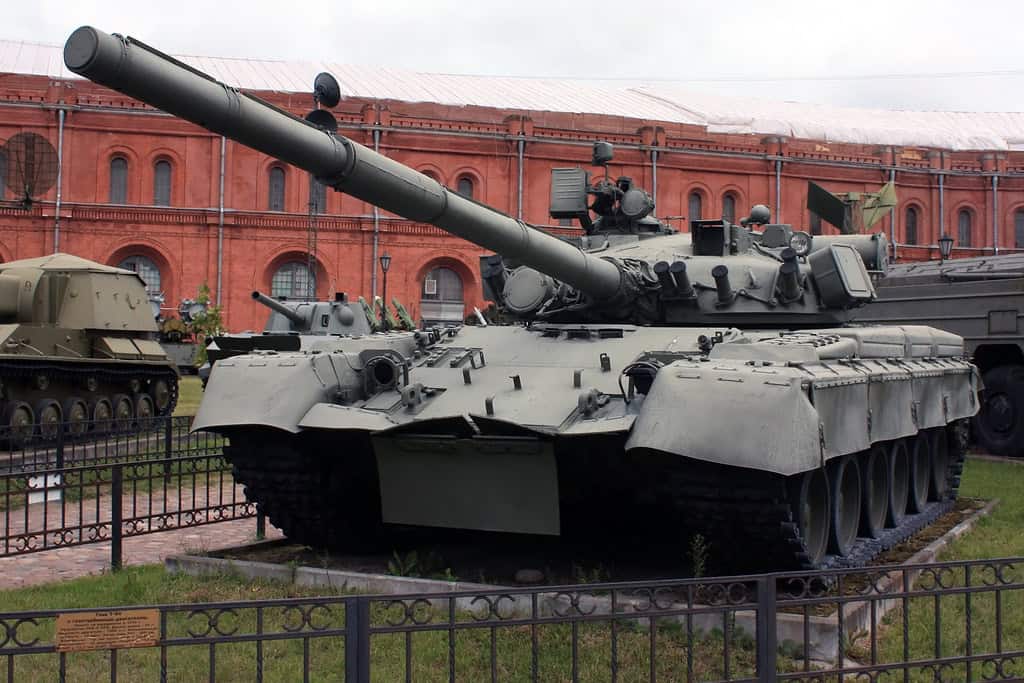
©"T-80 tank" by Vasilyev Serge is licensed under BY 2.0. – Original / License
The emphasis on speed, in addition to better survivability, is a direct consequence of engineering considerations during the later stages of the Cold War. Military planners on both sides were accounting for a conventional war, one that would span vast swathes of terrain across continental Europe. In the Warsaw Pact, this would take shape in the form of the T-80. Armor was the cornerstone of Soviet power, and something NATO planners were fearful of when wargaming scenarios. The T-80 represents a massive leap forward and is a marked departure from traditional Soviet tank designs.
Rather than relying on a standard diesel engine, it was one of the first battle tanks to make use of a gas turbine powerplant. This allowed for far greater acceleration than through traditional methods, enabling the T-80 to accelerate to speeds of around 44 miles per hour. With a weight starting around 40 tons, this was simply astonishing to behold.
While the gas turbine allowed for smoother, more efficient delivery of power, it wasn’t without its drawbacks. This technological leap forward was sorely needed, but it also came with more fuel consumption. In a vacuum, this is no big deal, but warfare is rarely tidy. Logistically, this presents a greater strain on supply lines, meaning operational range is greatly reduced unless armor is operating without support. As we’ll discuss, this shows the demands of these technological leaps forward, something that both the Warsaw Pact and NATO would have to consider in the event that the Cold War went hot.
Leopard 2
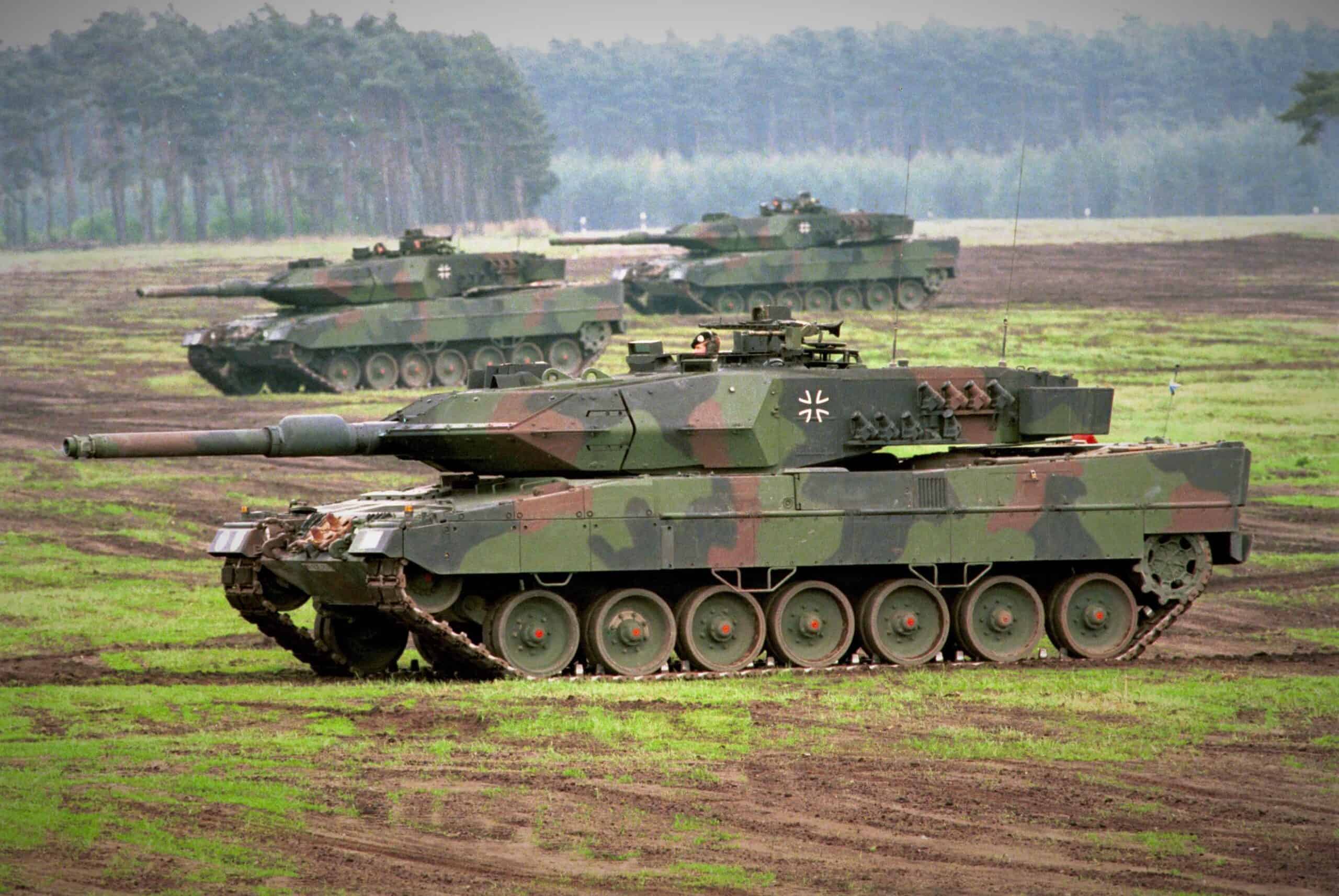
©Leopard 2 A5 der Bundeswehr by Bundeswehr-Fotos / BY 2.0 (https://creativecommons.org/licenses/by/2.0/) – Original / License
On the other side of the Iron Curtain, the Western European answer to the T-80 was being developed. The Leopard 2 remains a gold standard for a main battle tank, coupling a powerful engine with an advanced suspension system. The vehicle can maintain momentum while traversing treacherous terrain, all without losing agility. The Leopard 2 coupled extreme survivability with rather nimble speeds, achieving a top speed of around 42 miles per hour.
The Leopard 2 makes use of a V12 twin-turbo diesel engine, meaning fuel consumption isn’t as pronounced as the Soviet T-80 or American M1 Abrams battle tanks. Since entering service in 1979, it has been a rather popular choice for NATO client states, seeing use by Austria, Canada, Germany, and others.
As the successor to the well-regarded Leopard battle tank, the Leopard 2 is a design built on the lessons learned throughout the MBT-70 program started by the United States. While the United States would shelve MBT-70 designs, West Germany was still in need of a new battle tank. The resulting design is an enduring one, with modernized packages still being used to this day throughout Europe and parts of Asia.
M1 Abrams
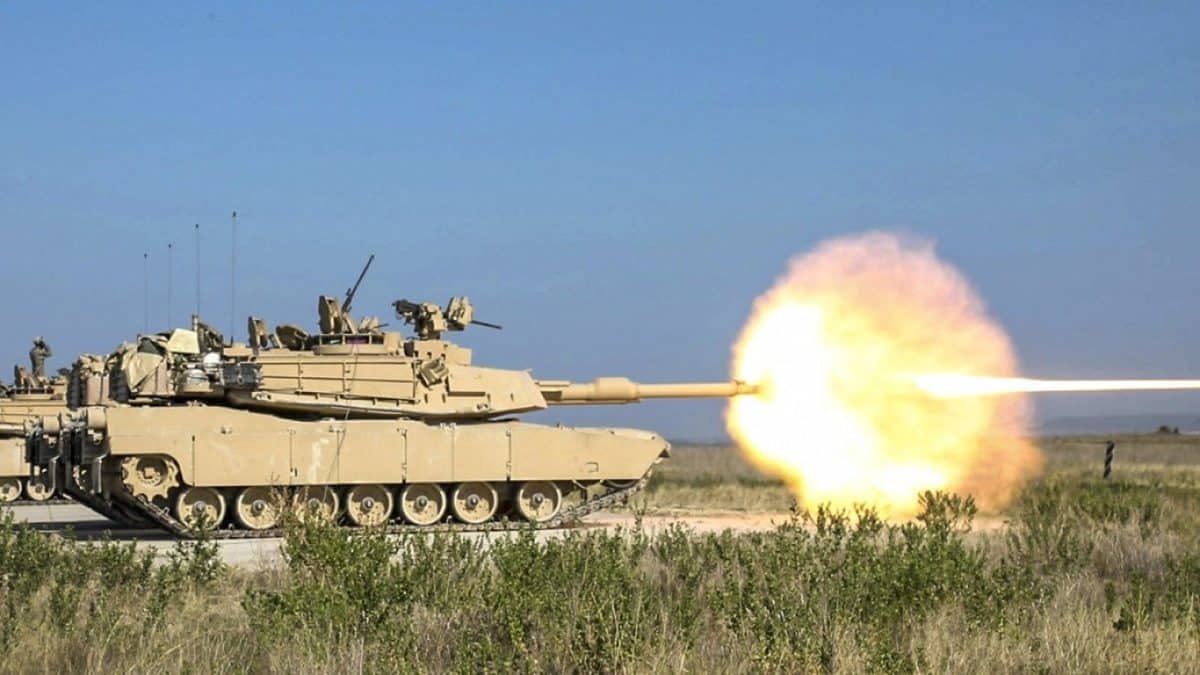
With a top speed of around 40 miles per hour, the M1 Abrams has some striking similarities to the T-80 battle tank. While American designers at General Dynamics Land Systems developed the Abrams independently, it makes use of a gas turbine powerplant just likes it Soviet counterpart. The Abrams has seen constant combat usage since the Gulf War, and has proven that speed has a quality all of its own with air superiority at your back.
While it does come with the same drawbacks as the T-80, namely the increased fuel consumption, the Abrams rarely operates without support while in theater. When combined with its potent armor and powerful main gun, you get a package that is nigh invulnerable when exposed to most conventional munitions for anti-tank use.
More modernized packages for the M1 have highlighted just how enduring the design is. Further, this extreme speed is achieved with a weight of around 74 tons, making the Abrams one of the heaviest battle tanks in operation today. While not as widespread as the likes of the Leopard 2 or T-80, the Abrams sees use by American allies like Ukraine, Romania, and Egypt, among others.
AMX-10 RC
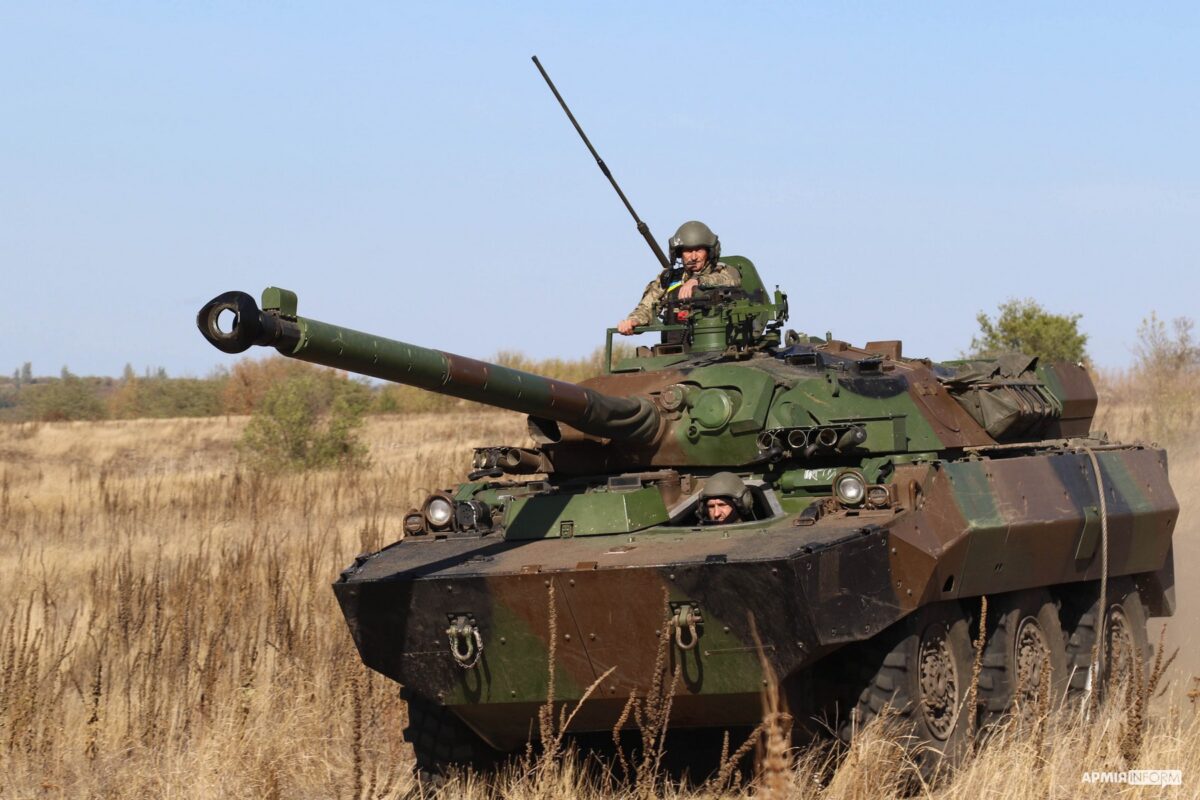
©"UA 37 bde AMX-10 RC 03" by АрміяInform is licensed under BY 4.0. – Original / License
The French AMX-10 RC is a rather unorthodox design compared to most traditional battle tanks. While caterpillar treads have been the norm since the First World War, the AMX-10 RC makes use of wheels, allowing it to achieve top speeds of around 53 miles per hour. While not a main battle tank by any measure, the AMX-10 operates off similar planning as something like the M2 Bradley, where speed, precision, and firepower make for an effective infantry support platform.
Mobility is the name of the game for this French assault vehicle, with lighter armor. This enables the AMX-10 to operate at far greater distances while minimizing fuel consumption on the whole. It might lack the raw firepower of something like the Leclerc, but it more than makes up for it by being first to the fight where it counts.
FV101 Scorpion
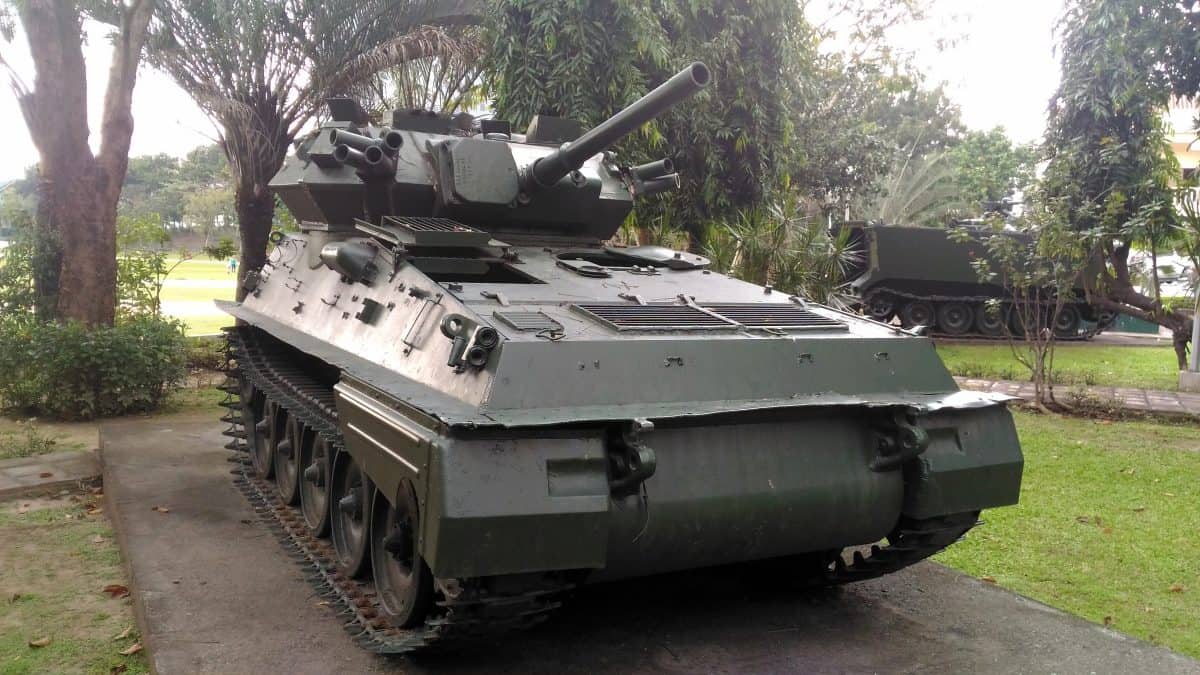
©"FV101 Scorpion Light Tank" by Rhk111 is licensed under BY-SA 4.0. – Original / License
Rounding out the fastest tanks built is the FV101 Scorpion, a Cold War-era British light tank that served from 1973 to 1994. Around 3,000 of these were produced, seeing use in conflicts like the Falklands War, the Gulf War, and most recently the border skirmishes between Cambodia and Thailand. At around 8 tons, the Scorpion is very much a light tank, relying more on speed and agility rather than armor and firepower.
The FV101 holds the record for the fastest production tank to ever see combat, with a top speed of around 45 miles per hour. Considering the operational range of around 450 miles, you’ve got a potent and quick vehicle that can take the fight to any enemy with adequate support around them. As the United Kingdom began transitioning to main battle tanks and infantry fighting vehicles, the FV101 slowly became an outdated design. It still sees use in some nations, but the United Kingdom has largely moved on to the Challenger 2 and upcoming Challenger 3.
Engineering for Modern Warfare
Speed isn’t just an attribute or statistic for modern tanks these days, but rather a part of a comprehensive package. When coupled with advanced technological packages and accompanying strategic disciplines, they are able to accurately engage targets while moving at high speeds.
Engineering for the fastest tanks to take to the battlefield these days isn’t solely about focused on firepower, or the trade-offs that exist when considering power plants, but rather the need to reinforce positions quickly, exploit weaknesses, and control the tempo of engagements.
As such, the ability to get into position quickly can spell victory for the tank that can fire the first shot before its opponent is even ready.
Conclusion
The fastest tanks we’ve covered today reveal a stark truth of the battlefield: mobility is just as important as armor or firepower. Speed doesn’t necessarily replace these aspects of any main battle tank, but rather enhances them. As we’ve seen with vehicles like the M1 Abrams, the ability to quickly move while being nigh-invulnerable to common anti-tank weapons makes for a highly powerful package.
The image featured at the top of this post is ©Everett Collection/Shutterstock.com