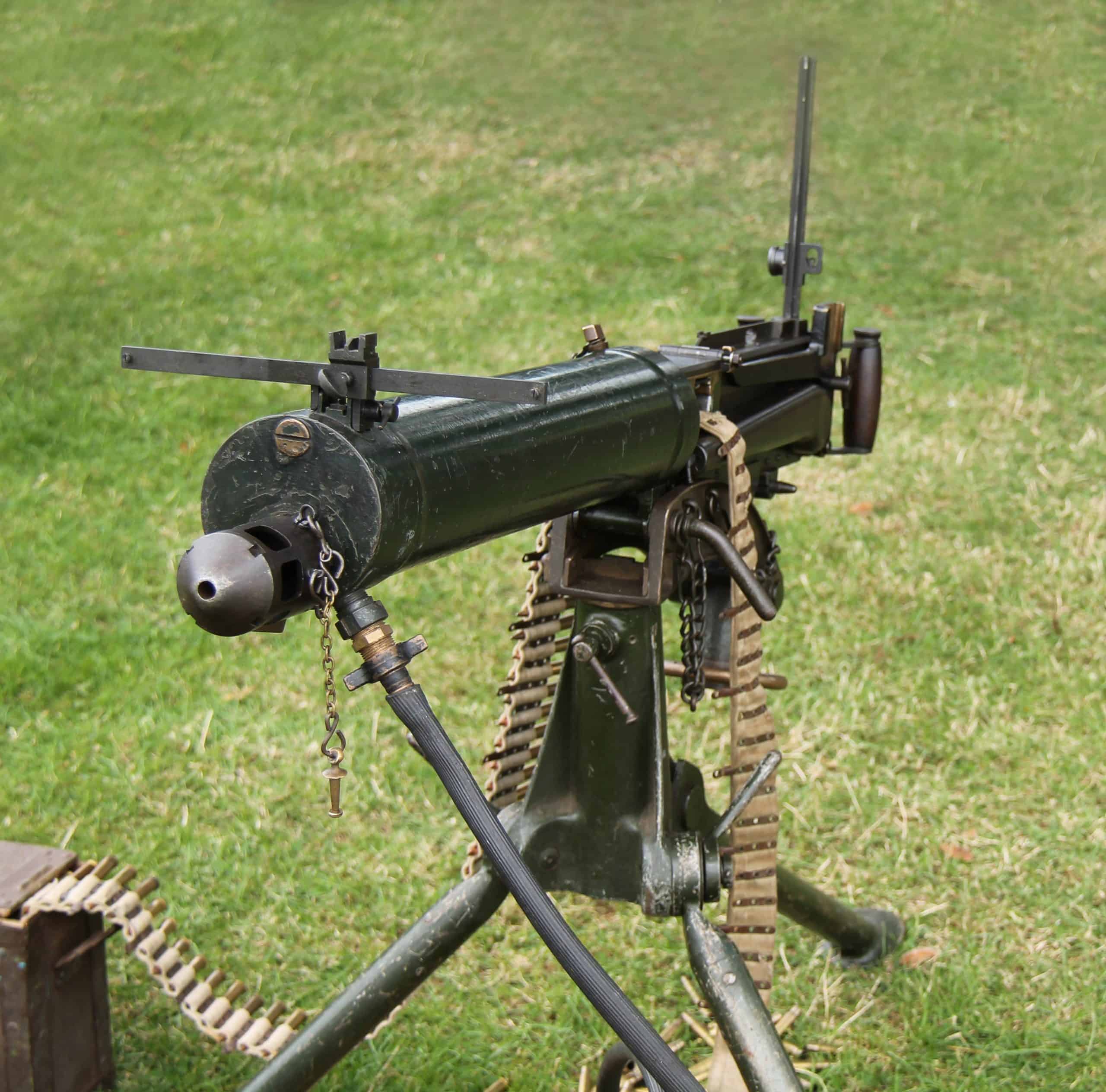

Few weapons have defined the tempo of modern warfare quite like the machine gun. It isn’t a new concept by any means, with the notion of rapid fire volleys being something dating back to the Age of Enlightenment. However, it became the most iconic weapon of the early 20th century, being one of the main driving forces in the stalemate and offensives that would ravage the Western Front across Europe in the First World War. As the needs of the average soldier have evolved with technological leaps forward, the machine gun has kept evolving right alongside them. Today, we’re looking at the origins of this weapons platform, its earliest predecessors, and where it is heading in the future.
Early Concepts
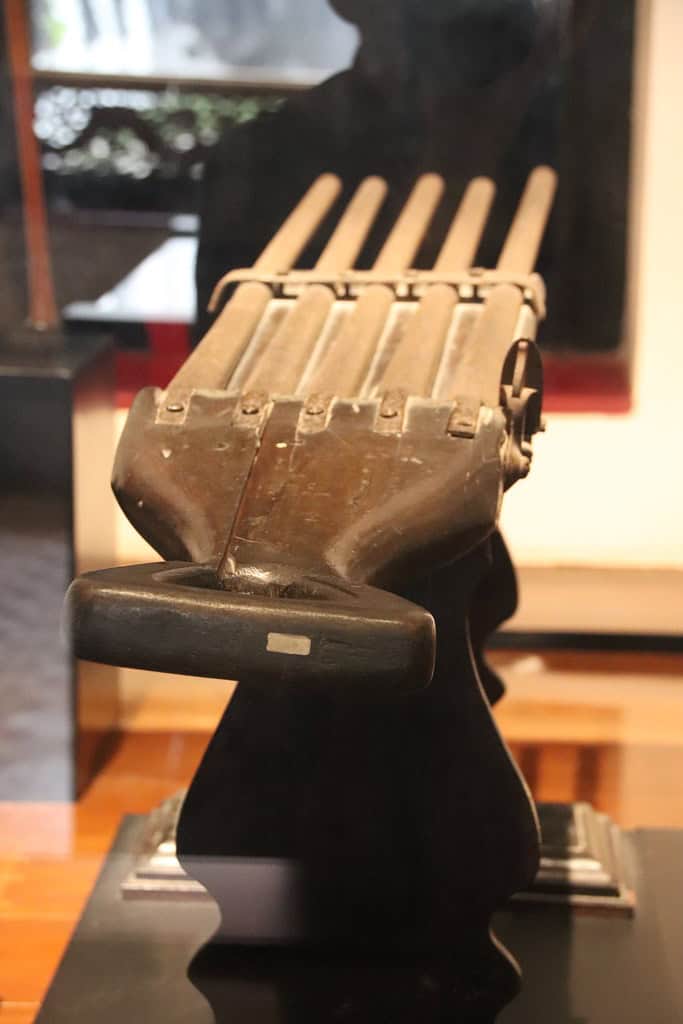
©"Five-Barrel Volley Gun" by Gary Lee Todd, Ph.D. is licensed under CC0 1.0. – Original / License
As we mentioned earlier, before the first true recoil-operated machine guns were developed, militaries around the world were looking to find a way to concentrate power. One of the earliest iterations of this concept is the volley gun, which dates back to around the 17th century or so. These are cannons with grouped barrels, which were capable of firing them all at once, like a massive shotgun, or in rapid succession. While effective in theory, they proved to be less than adequate for the task. Volley guns were cumbersome, heavy, unreliable, and took quite a while to reload. Further, the materials of the Age of Enlightenment weren’t quite up to snuff.
It wasn’t until the Industrial Revolution that the first true steps toward a viable rapid-fire platform started taking shape. The late 18th and early 19th centuries saw rapid advances in fields like metallurgy, machining, and most importantly, ammunition. Self-contained metallic cartridges would see use throughout the wars of the latter half of the 19th century, with some limited use in the American Civil War and notably seeing frequent use in conflicts like the Franco-Prussian War and Spanish-American War. The advent of the metallic cartridge was a boon for the development of a true rapid-fire platform, something that one inventor in the United States was quick to capitalize on.
Gatling Gun
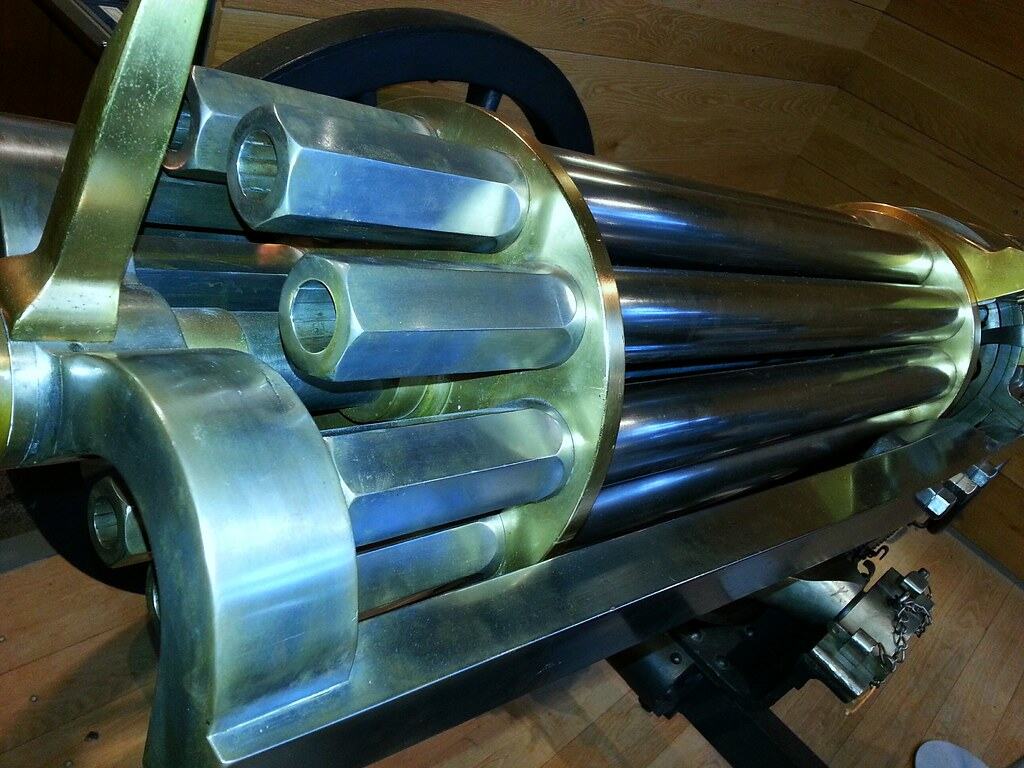
©"1 inch Gatling gun" by will668 is licensed under BY-ND 2.0. – Original / License
It wasn’t truly fully automatic, as it required an operator to crank the weapon and maintain the hopper to preserve the volume of fire. However, against unprepared enemies, it quickly proved to be quite effective. A few well-placed Gatling guns could make quick work of light infantry, as they simply had no response to the base of fire laid down by the weapon. Interestingly, it was met with some skepticism by top brass during the American Civil War. It would quickly prove its mettle years later, especially when deployed in colonial wars abroad.
Nonetheless, the want and potential for sustained firepower were there, and the late 19th century would see the first true machine gun invented.
Maxim Gun
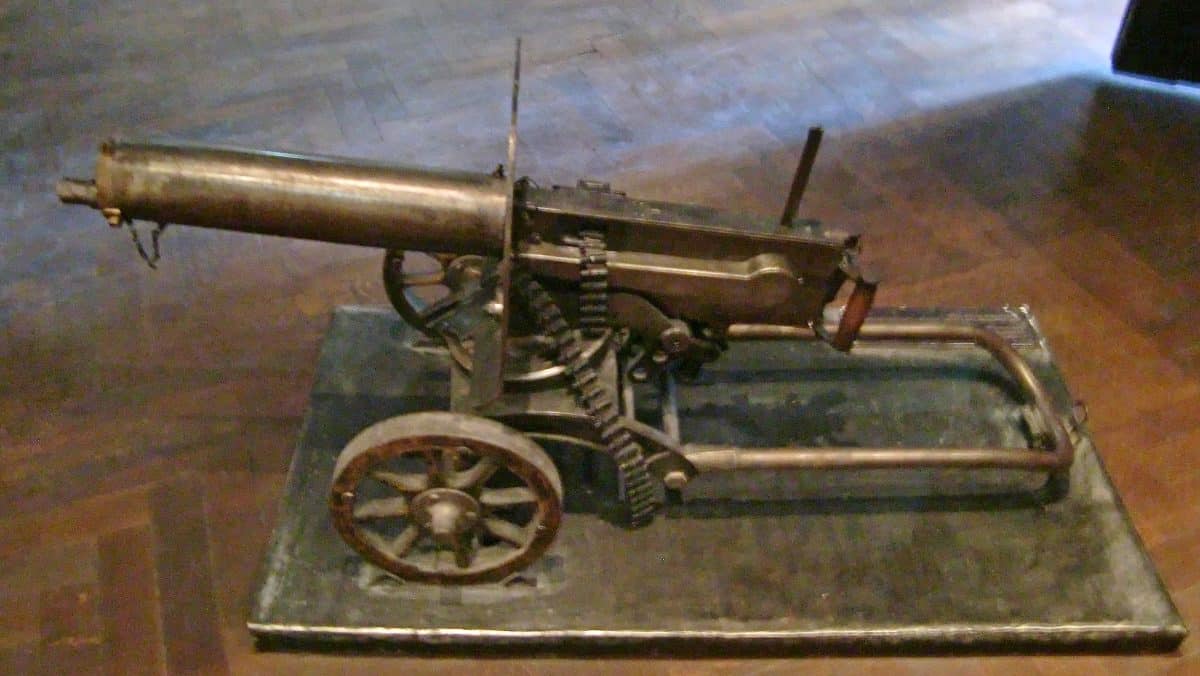
©"Maxim gun, Georgian national museum" by Jonathan Cardy is licensed under BY-SA 3.0. – Original / License
Sir Hiram Maxim is perhaps best remembered for his 1884 invention of the Maxim gun. It was the first true machine gun to be developed, making use of the action’s recoil to load and eject cartridges without the need to cycle the action. While somewhat hefty at around 60 pounds and requiring a dedicated crew to operate, the Maxim gun was instrumental in the development of early machine guns.
It started life as a far more complex design, making use of a rotating cam to reverse the movement of the breech block. This was simplified to a mere toggle lock, making for a more robust and easier action to manufacture and maintain. Further, it was able to maintain a fairly blistering rate of fire for the time, with early demonstrations achieving 600 rounds per minute, or an estimated 60 riflemen laying down a base of fire.
Compared to later designs, the Maxim was cumbersome, heavy, and required a whole team to operate. Further refinements on the design would see constant use in the Great War, with many of the weapons taking direct inspiration from the Maxim, if not being outright unlicensed copies. Needless to say, the face of warfare had changed, and the First World War loomed on the horizon.
World War 1
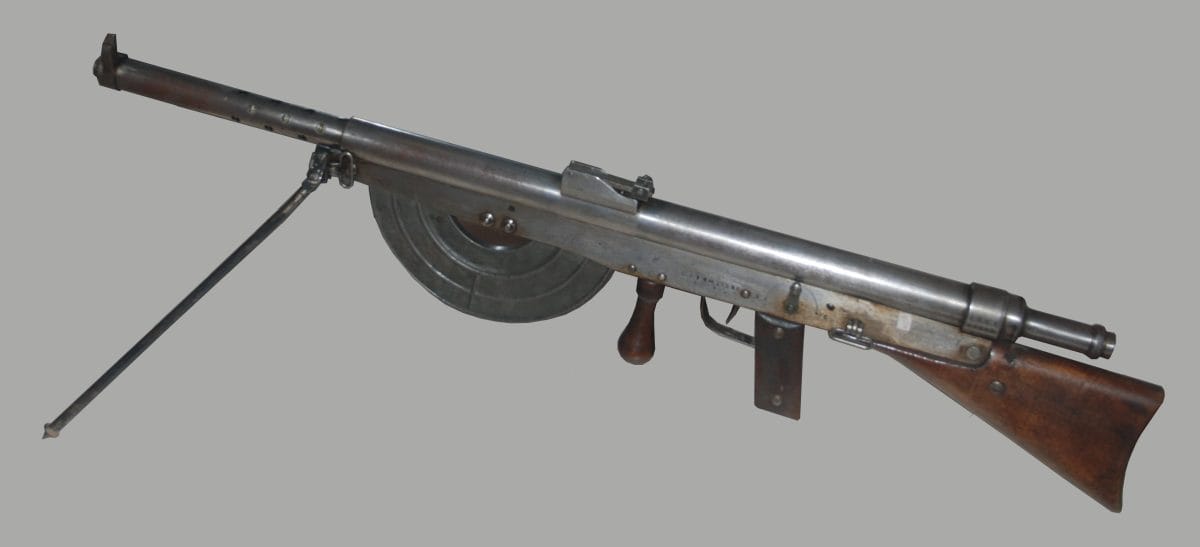
©"Chauchat Memorial de Verdun" by Janmad is licensed under BY 3.0. – Original / License
The machine gun had seen limited use in the waning years of the 19th century, being most relegated to colonial wars and military interventions. It would come into its own in 1914, as the first truly industrialized war began in earnest. We often think about the First World War in terms of the weapons seen, and the terrible effect they had on the soldiers who fought in the war. Beyond the chemical weapons and greatly improved artillery, few weapons left quite the same mark as the machine gun. Water-cooled heavy machine guns would be placed in defensive positions along the trenches and in fortified nests. While soldiers couldn’t always rely on artillery barrages to quiet the guns, both the Entente and Central Powers made use of machine guns to great effect.
On the Western Front, this meant that advances into No Man’s Land were a death sentence, as the looming threat of a blistering hail of automatic gunfire could doom entire assaults. Crews had been trained on the use of interlocking fields of fire, along with using them as ersatz artillery pieces through indirect fire. The earliest battles, like the German conquest of Belgium, showed just how devastating the machine gun could be when used defensively, with Imperial Germany taking horrific casualties against a vastly smaller force.
The nature of warfare had changed, and what was once a mere weapon had become central to entire schools of thought surrounding light infantry and other aspects of the battlefield.
World War 2
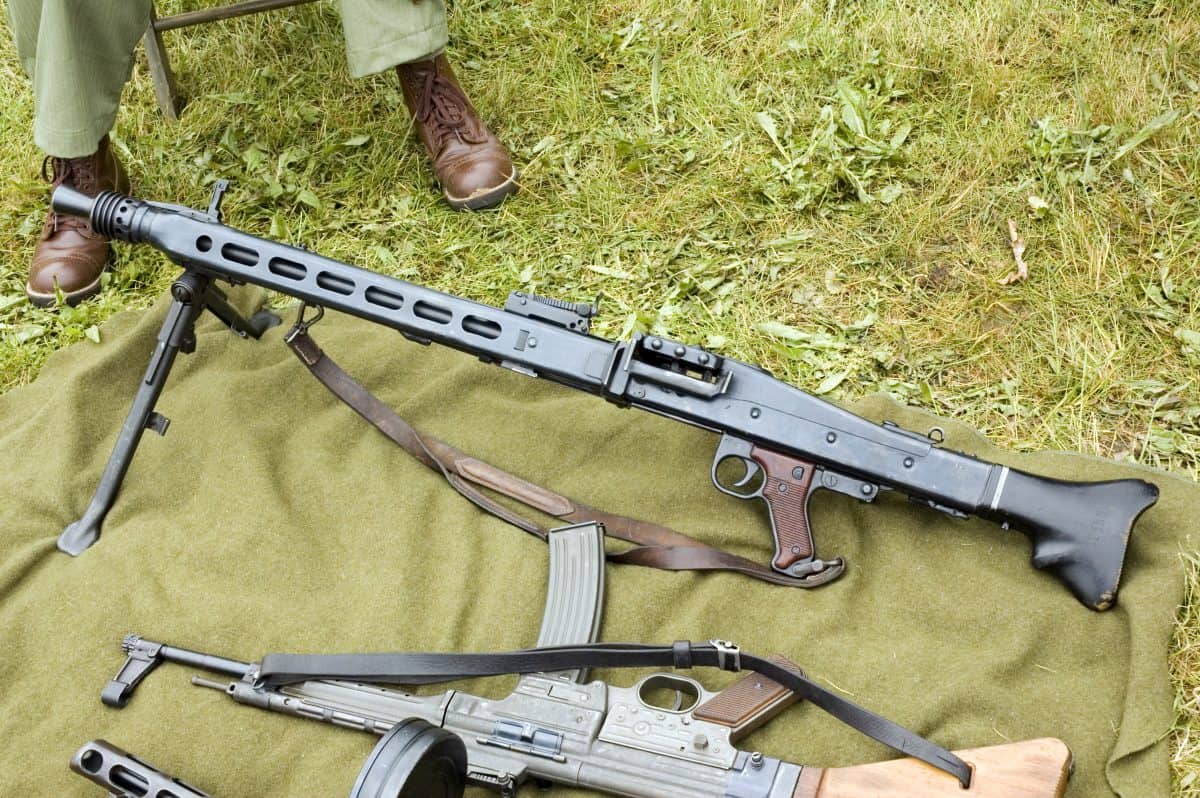
©"MG42-1" by Phanatic is licensed under BY-SA 2.0. – Original / License
The interwar period saw the nations of the world experimenting with their use of the machine gun. Nations like the United States would make use of different types, light, medium, and heavy, with each being applied to specific use cases. However, as the largest war in human history began to unfold, the varying conditions of the many theaters of combat highlighted the need for adaptability. Nazi Germany was rather forward-thinking in its interwar planning, making use of a single machine gun, or general-purpose machine gun, to serve as both an offensive and defensive weapon.
In fact, the German machine guns, like the pre-war MG34 and later MG42, represented some elements that have become standard in the decades since. Both made use of quick-change barrels, rather than water-cooled jackets like the MG08 of the First World War. This made for a lighter weapon, which was key since the machine gun was the central element of the German fire team, while allowing for sustained volleys of fire. They were belt-fed, making use of non-disintegrating metallic links.
The later MG42 earned a fearsome reputation on the battlefield, thanks in part to its extreme rate of fire. A well-placed MG42 could be devastating, with 1200 rounds per minute sawing through anything that walked in its field of fire. Many lessons would be learned on the effective use of machine guns throughout the Second World War. Some, like the famed M2 heavy machine gun, are still in use to this very day. The examples set by the Germans would be instrumental in the development of later infantry-deployed automatic weapons.
The Cold War
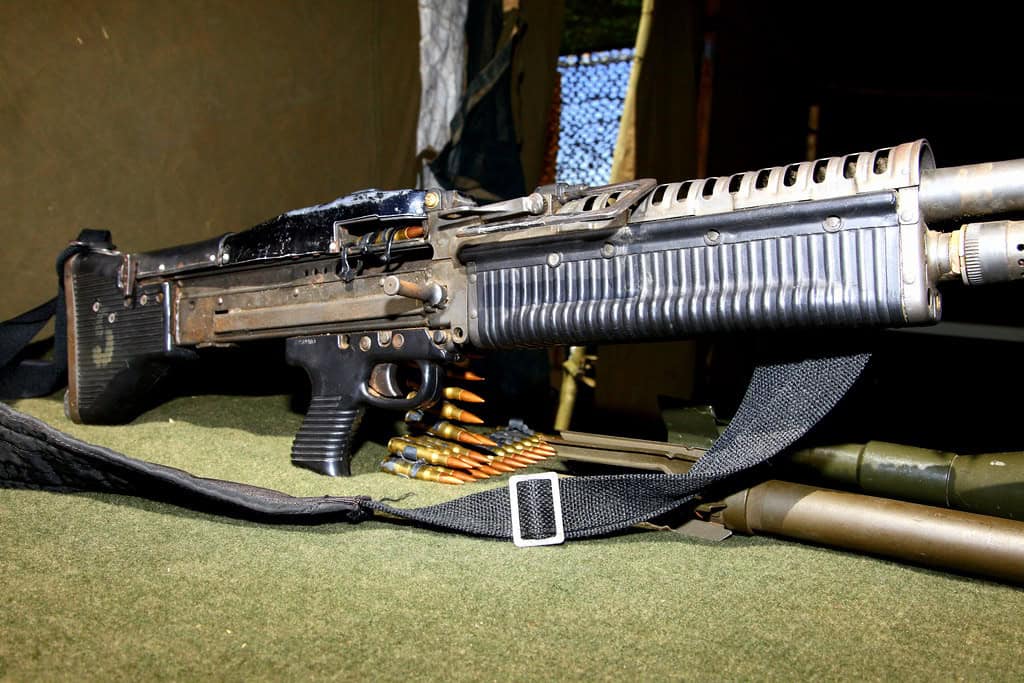
©"M60 machine gun" by bill85704 is licensed under BY 2.0. – Original / License
The Cold War began just as the fires of World War 2 were waning. Machine gun development advanced, thanks in part to the many hard lessons learned throughout the war. A greater emphasis was placed on mobility, with rapid deployment being central to the planning of infantry tactics in the United States. Combined arms warfare had been refined, but took another leap forward, as infantry, armor, airpower, and naval vessels all operated in close concert with one another.
The general-purpose machine gun saw widespread adoption, with the West German MG3 serving as a direct iteration of the MG42. Other notable examples of time frames are weapons like the FN MAG, which would serve as the basis for the American M240, the Soviet PK, and the American M60. A balance between portability, firepower, and reliability took center stage. Advances in new materials meant these automatic weapons were lighter without having to sacrifice durability or firepower.
Heavy machine guns continued to see extensive use, with the American M2 and Soviet DShK being utilized to devastating effect as vehicle-mounted weapons. Despite the emphasis on general-purpose machine guns, a large caliber automatic weapon was still highly effective against aircraft, lightly armored vehicles, and fortified positions.
The Modern Era
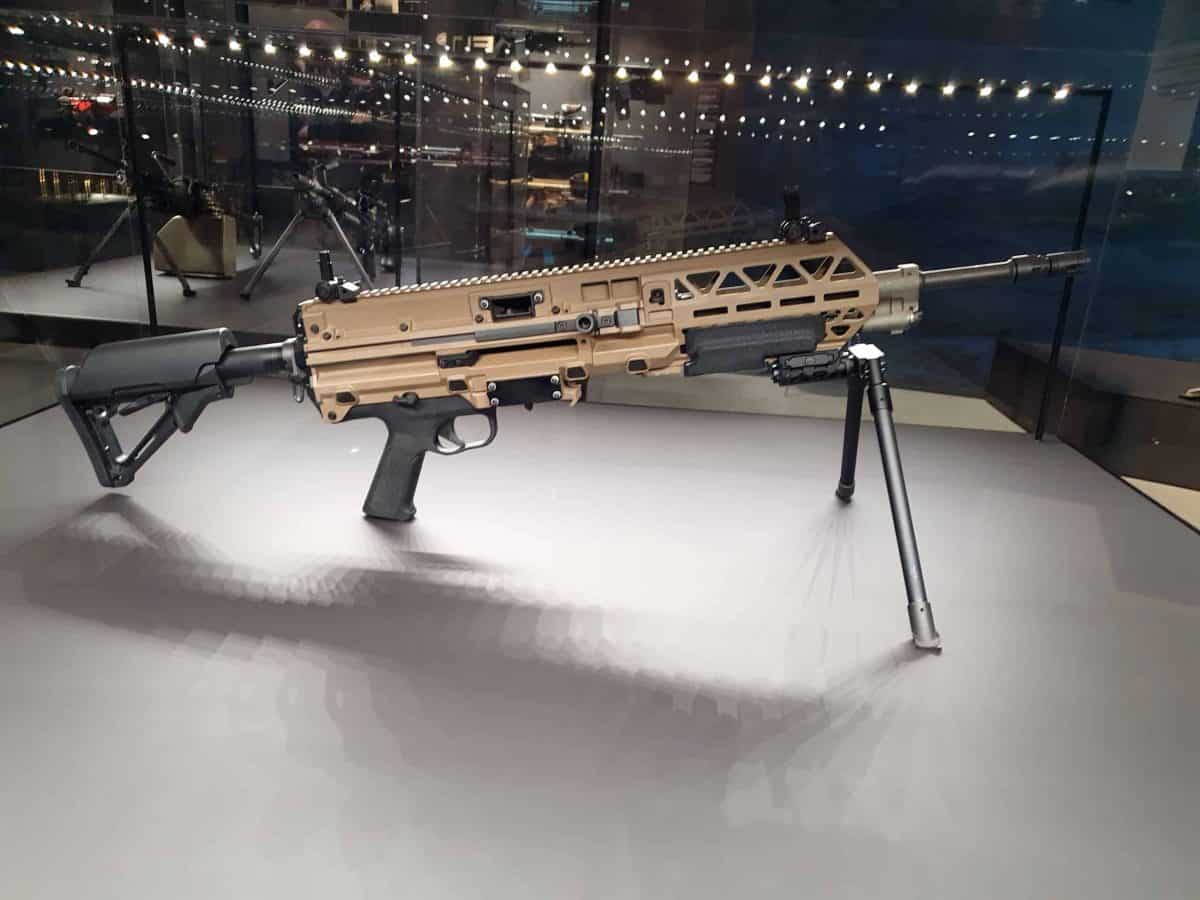
The machine guns of the modern era benefit from more than a century of development. Modern designs have had the good fortune to capitalize on the lessons learned from billions of rounds fired across battlefields all around the world. These days, a new machine gun is a blend of ergonomics, durability, and modularity, especially given the prevalence of optics and fire control systems.
Advances in materials engineering have had a profound effect on the development of new platforms. Polymers, lightweight alloys, and refined manufacturing processes have made the modern machine gun a very different weapon from the Maxim gun of the 19th century.
Digital technology is the latest advance to be capitalized upon for automatic weapons. Networked targeting systems, advanced thermal optics, and battlefield data integration mean that machine guns are acting as part of a larger system rather than being a standalone support weapon. Weapons like the MG 338 are showing the path forward, but the overall intent behind them remains largely unchanged.
Conclusion
Few weapons platforms have benefited from technological advances in quite the same way as the machine gun. The need for sustained volumes of fire has seen crude implementations like volley guns evolve into platforms like the H&K MG5. Further, each step forward is a direct reflection of the industrial capacity, military planning, and technology of a given era. Machine guns have shaped military tactics, dictating the tempos of battles, while permanently altering the balance of offensive and defensive measures. Technology may change, but the need for high-volume firepower still remains, making the machine gun a fundamental consideration for any modern military.
The image featured at the top of this post is ©daseaford/Shutterstock.com